REVIEW · KATHMANDU
Annapurna Base Camp Trek
Book on Viator →Operated by Nepal Mountain Trekkers - Day Tours · Bookable on Viator
Stepping into the Annapurna wall feels unreal. I love how this route blends rhodo forests and Gurung villages with the big payoff of Annapurna Base Camp at 4,130m, and I really like the way the team is set up for you to walk steadily with support from a trained guide (Shiva shows up in at least one standout review) and a porter (Bishal was praised for doing his job well). One drawback to plan for: the higher days get steeper, rockier, and colder, and you’ll need a steady pace rather than a sprint.
This is also one of those “full-service” trek packages where the value isn’t just the trekking—it’s the glue that keeps you moving: Kathmandu hotels, Pokhara time, airport transfers, trekking permits (TIMS and ACAP), and meals plus lodging during the trek. On top of that, you get gear help with a sleeping bag and down jacket rental, which is a big deal if you’re not traveling with proper cold-weather kit already.
The other consideration is simple: this trek suits moderate fitness more than beginner couch-to-mountain fantasies. If you know you get breathless on climbs, plan to take your time, use the breaks your guide recommends, and treat altitude as part of the schedule—not a surprise.
In This Review
- Key highlights you’ll feel (not just read)
- Kathmandu warm-up: Thamel, airport pickup, and getting your footing
- Pokhara transfer: why that next step matters
- Day 3 to ABC route basics: Naya Pul, Jhinu Danda, and your first altitude lesson
- Chhomrong and Bamboo territory: forests, terraces, and steady climbing
- Dovan to Deurali: the trek turns steeper, and views start getting sharper
- Machhapuchhre Base Camp and Annapurna Base Camp: your big payoff at 4,130m
- Returning down to Bamboo: easier walking, sunrise payoffs, and the mental reset
- Day 8 back toward Jhinu Danda: retracing, but with new landmarks
- Day 9 downhill to Nayapool: farming views, bridges, and the sense of ending
- Kathmandu again: Durbar Square time and a final view of the hills
- Price and value: what $906.67 actually buys you
- Who should book this Annapurna Base Camp trek?
- Should you book it?
- FAQ
- How long is the Annapurna Base Camp trek in this package?
- What is the highest altitude you reach on this itinerary?
- Where does the trip start and end?
- Is airport pickup included?
- What meals are included during the trekking days?
- Are permits included?
- Do you get a guide and porter?
- Is cold-weather gear provided or rented?
- How much hotel time is included before and after the trek?
- Is there a hot springs stop?
Key highlights you’ll feel (not just read)
- Pokhara transfer early on so you start the trekking loop without wasting days in transit
- Well-paced route through classic places like Jhinu Danda, Deurali, and Machhapuchhre Base Camp on the way to ABC
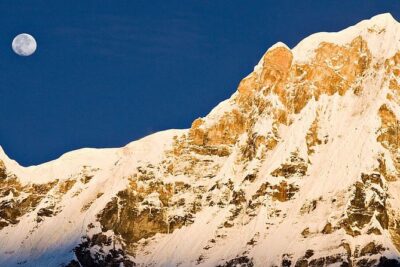
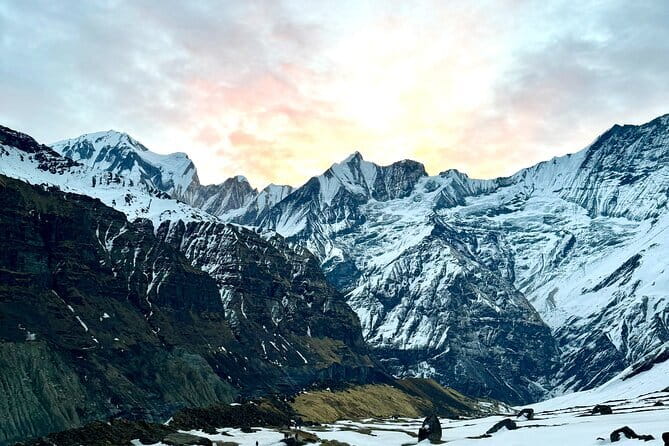
- Annapurna Base Camp at 4,130m with the kind of peak views that change how you understand the Himalaya
- Natural hot springs at Jhinu Danda for recovery after long trail hours
- Permits and trek support handled with TIMS + ACAP, trained guide, and a porter system (1 porter for 2 trekkers, max 30kg)
- Small group size (max 15) which usually means less waiting around and more flexibility with pacing
Kathmandu warm-up: Thamel, airport pickup, and getting your footing
Your trip starts with a smooth handoff in Kathmandu. After you land at Tribhuvan International Airport, a representative picks you up and drives you to your hotel after you finish immigration. You’ll likely get your first real Nepal moment just by walking out into the traffic and then into a calmer pocket of Thamel, where Hotel Green Horizon puts you right in the action.
That matters more than it sounds. A trek begins long before the first step upward. Being in Thamel means you can sort out last-minute details fast (like checking your layers, buying small trail essentials, or simply resting your legs after travel).
You also get introduced to the trek setup on your next morning. The starting point includes your guide briefing and a chance to ask practical questions before you’re already on the trail. In one account, Suman greeted guests warmly at the airport, and that kind of human touch is exactly what you want before multi-day trekking begins.
What I like about this first phase: you’re not left to guess. The pickup, hotel base, and guide intro create a low-stress runway.
What to watch: you’re still dealing with arrival fatigue. Don’t treat this like a sightseeing sprint—save your energy for Pokhara and the days that follow.
You can also read our reviews of more tours and experiences in Kathmandu.
Pokhara transfer: why that next step matters
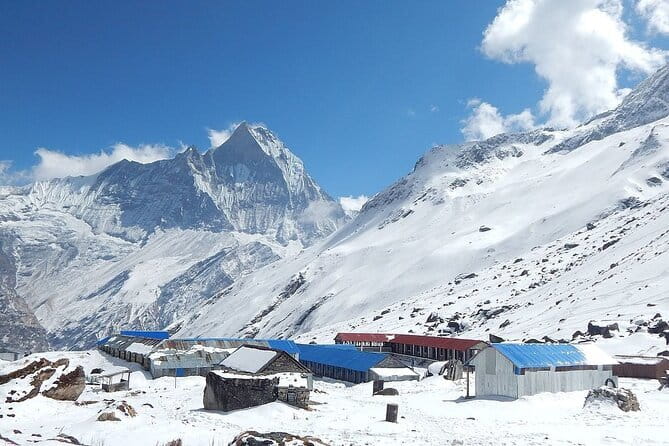
From Kathmandu, you move to Pokhara the very next day. The overview describes a short 30-minute flight, while the route description reads as a scenic drive. Either way, the goal is the same: get you to Pokhara quickly so the trek can start sooner.
In Pokhara, you stay near Lakeside. You’ll have time to stretch out and wander around the area’s mix of souvenir stops, lakeside viewpoints, and local atmosphere. It’s not a place that forces formality. It’s where you can do the “pre-trek reset”: walk around lightly, hydrate, and make sure your pack feels right.
One key value of the Pokhara day is that it breaks up your travel rhythm. By the time you hit Naya Pul on trek day, you’re ready to work—rather than still stuck in a travel blur.
Potential drawback: Pokhara days can be tempting to fill with extra activities. If you overschedule, you pay for it on the first trek day. Keep it simple.
Day 3 to ABC route basics: Naya Pul, Jhinu Danda, and your first altitude lesson
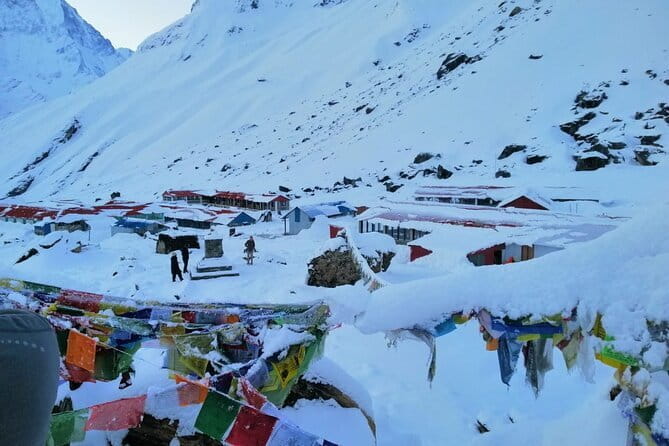
Your trek loop starts near Naya Pul. After a drive to the Naya Pul hub, you begin trekking alongside the Modi River. The trail to Jhinu Danda is your early test: it’s a chance to feel the climb rhythm without yet demanding peak-day stamina.
Jhinu Danda is special because you get both scenery and a recovery tool. The plan includes time to explore and then soak your legs in the natural hot springs at the base of the ridge. After a long walk, hot water is one of the few things that feels fair.
Here’s the practical takeaway: on an ABC trek, the first day isn’t about pushing altitude hard. It’s about learning how your body responds while moving uphill, and building trust that your pace works.
What you’ll likely notice: after a day of walking, you’ll have a clearer sense of how to breathe, how often you’ll want short pauses, and whether your boots need tightening up.
Good to know: the trail route passes through small settlements and flagstone steps near Tolga, then connects toward Jhinu Danda via the Modi River corridor. Expect changes in footing and regular stops for breath.
Chhomrong and Bamboo territory: forests, terraces, and steady climbing
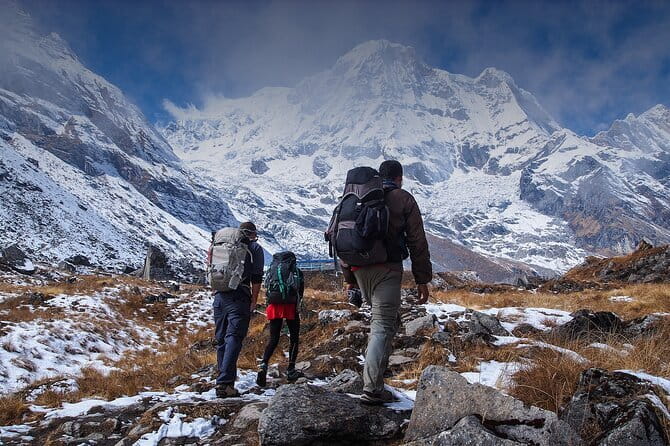
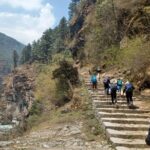
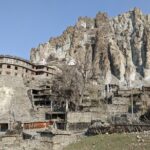
Day 4 moves you from Jhinu Danda toward Chhomrong and onward through bamboo and rhododendron zones. The trail begins around terraces and then works through stone stair sections and crossings—so your legs get practice with both steep drops and renewed climbs.
You pass by Chhomrong village, then head into a stretch that’s all about bamboo forest and terraced fields. You’ll also go through smaller settlements like Siruwa before reaching Bamboo Lodge Restaurant for overnight. Bamboo days on ABC routes often feel like a “walk and listen” kind of day: you’re surrounded by forest texture and the trail surface tends to keep you moving at a consistent effort.
Why this day matters: it helps you acclimate by building endurance without requiring an immediate “highest view right now” moment.
Possible drawback: the route includes steep marching sections. That’s not a surprise, but it’s where you need patience. If you overcook your pace here, it will echo later.
Dovan to Deurali: the trek turns steeper, and views start getting sharper
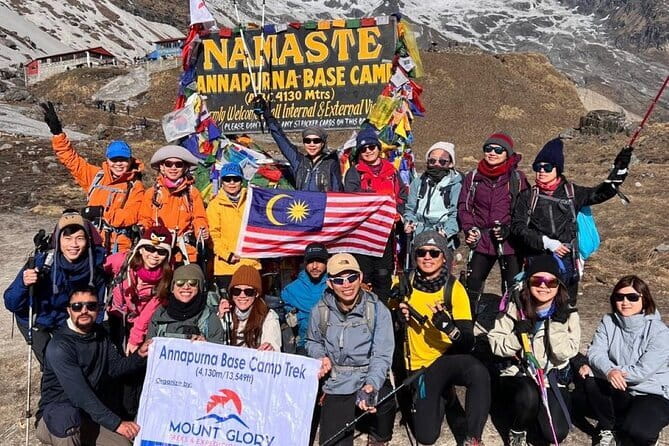
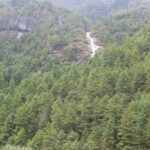
On Day 5, the trek shortens to prepare you for the higher push. You go from the Dovan area and then head toward Deurali. Along the way, you’ll cross streams and walk through rhododendron and oak forest, with occasional waterfall crossings.
Deurali comes with a notable shift: vegetation becomes sparser and the terrain turns rockier, which usually means your body feels the altitude more quickly. The description includes a view-opening section near the Himalaya Hotel and a route toward the Hinku cave area, where Deurali village comes into view.
I like how this is staged: it’s not a straight line up to ABC. You get a day that helps you transition from forest walking to harder, more exposed terrain.
What to plan for: colder air and a firmer footing. If you’re the type who gets cold hands or feet, this is where you start using your warm layers proactively rather than waiting until you feel miserable.
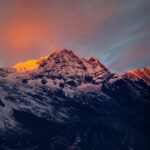
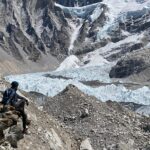
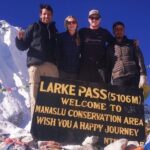
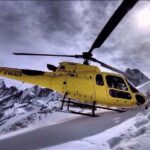
Machhapuchhre Base Camp and Annapurna Base Camp: your big payoff at 4,130m
Day 6 is the climax, and it’s built around two key experiences: reaching Machhapuchhre Base Camp and then pushing on to Annapurna Base Camp. The day starts with a gentle climb over steep terrain, passing the settlement of Bagar before you reach Machhapuchhre Base Camp.
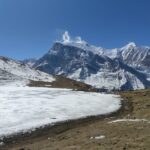
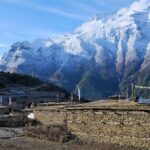
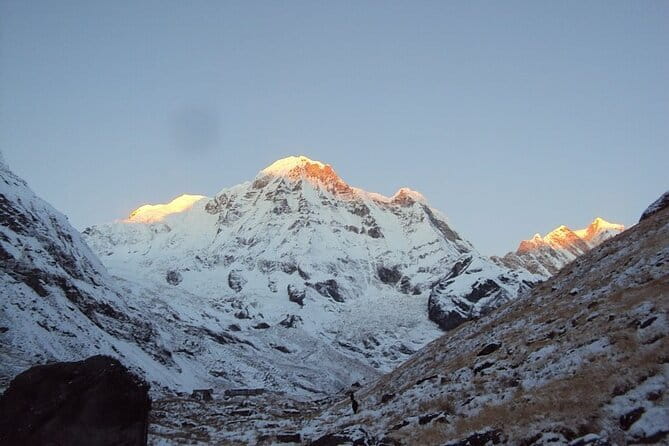
This stop gives you a visual warm-up. From there you can see Fishtail Mountain (Machhapuchhre) along with peaks like Hiuchuli, Annapurna South, Annapurna I, Annapurna III, Gagapurna, and more.
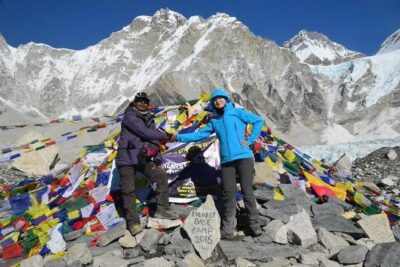
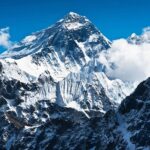
Then you branch toward Annapurna Base Camp, where the trail widens and the views land hard. You arrive at ABC at 4,130 meters and get an overnight stay. It’s the kind of moment where you stop thinking about steps and start thinking about what you’re actually looking at.
What I love about the way this day is set up: the route gets you to a secondary viewpoint first (Machhapuchhre Base Camp), so ABC doesn’t feel like a sudden cliff jump. You’re acclimating visually as well as physically.
Real consideration: this is not the day to show off. Keep your pace controlled and let the guide handle timing. Altitude punishes hero moves.
Returning down to Bamboo: easier walking, sunrise payoffs, and the mental reset
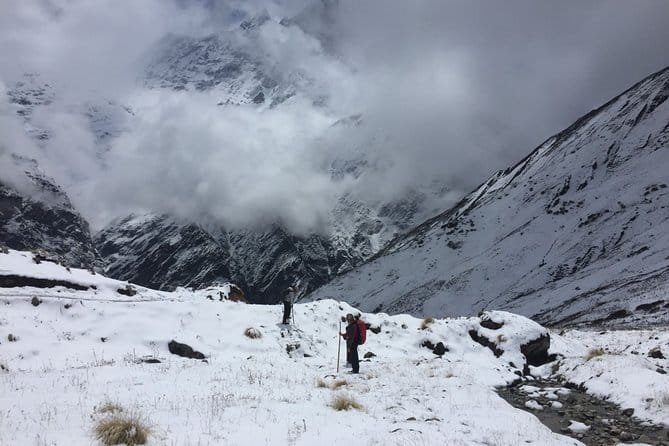
Day 7 turns you back toward Bamboo on a relatively easier downhill route along the Modi River corridor. This is also where sunrise matters. The plan includes an exceptionally beautiful sunrise over the Himalayas, and you’ll walk through areas prone to avalanche with a wooden bridge on the route back.
Even when the walking is easier, don’t treat it like “rest day.” You’re still at altitude, your legs are adjusting to downhill impact, and you’ll want to maintain hydration.
Why the return section is valuable: it gives your body time to recover while still feeding your mind with views.
Possible drawback: downhill can mess with your knees. Trek poles (if you have them) are helpful for controlling steep steps, but the bigger fix is pace.
Day 8 back toward Jhinu Danda: retracing, but with new landmarks
Day 8 retraces part of the route, starting with an uphill climb toward Khuldighar, which hosts a helipad. Then the plan moves onward to Sinuwa and past settlements like Tilche and Chhomrong, plus stone steps and bridge sections.
You also reach Taulung, a junction village where trails branch toward Landruk, Tadhapani, and Kot Danda. The naming matters because on these routes, junctions signal choices and how the trail network is woven.
The day ends at Jhinu Danda again. After about an hour, you’re back at the natural hot springs for another chance to soak and recover.
What I think makes this day work: you get the comfort of knowing the route is familiar, but the physical experience is still different after you’ve climbed higher on Day 6.
Day 9 downhill to Nayapool: farming views, bridges, and the sense of ending
On Day 9, you trek down from Jhinu Danda toward Nayapool, following through the Modi Khola valley. The route includes stone stair sections, farms with crops, wooden bridges, and even suspension bridges along the hillside.
This is the day where your brain starts counting what you’ll do after the trek. You’re still walking, but it feels more like transition than survival.
The plan ends at Nayapool, marking the end of the trek’s physical journey. After that, you’re essentially moving back into transport mode.
Possible drawback: by this point, your muscles might feel tired even if the trail seems “easier.” Keep the pace steady and don’t ignore hydration.
Kathmandu again: Durbar Square time and a final view of the hills
Day 10 brings you back to Kathmandu with a scenic drive from the Pokhara valley. You arrive in Kathmandu and check into your hotel, then you have time to explore.
The included optional activity listed is Kathmandu Durbar Square, with time for souvenir shopping and wandering through Thamel and surrounding streets. It’s a useful endcap: culture after days of mountain-only focus.
Day 11 completes the loop with a transfer to Tribhuvan International Airport at least three hours before your onward flight.
Price and value: what $906.67 actually buys you
At $906.67 per person for an 11-day trek, this package feels like solid value when you look at what’s included versus what usually costs extra on treks like this. You’re not just paying for guiding on the mountain.
The included pieces you should care about most:
- 3 nights in Kathmandu + 2 nights in Pokhara
- All lodging and foods during the trek (breakfast, lunch, dinner included)
- Professionally trained English-speaking guide, plus an assistant guide and porter system
- Permits (TIMS + Annapurna Conservation Area fees)
- Gear rental for sleeping bags and down jackets
- Farewell dinner
- Airport pickup and drop services
- Taxes and company service charges
What’s not included (and you should budget for): visa fee, international flights and extra baggage charges, foods in Kathmandu and Pokhara, travel insurance/rescue costs, personal expenses, and tips for guides and porters.
How to judge whether it’s worth it for you: if you’re traveling without cold-weather gear and you don’t want to coordinate permits and logistics yourself, this price makes a lot of sense. If you’re already fully kitted, have trekking permits lined up, and prefer DIY, then it may feel pricey. For most people, the included structure is the point.
Who should book this Annapurna Base Camp trek?
This trek fits you best if:
- you want the classic Annapurna Base Camp route with clear stages (forest to rockier climbs, then peak payoff)
- you prefer a guided setup where permits, meals, lodging, and gear rental are handled
- you like the idea of a small group (max 15) and a porter system (1 porter for 2 with max 30kg)
- you value recovery time with the Jhinu Danda hot springs stop
It’s less ideal if:
- you’re looking for a short, easy walk with minimal elevation strain
- you’re unwilling to dress and prepare for cold at higher altitudes
- you expect fully private, zero-sharing arrangements (this runs as a group experience)
Should you book it?
If your dream is to reach Annapurna Base Camp at 4,130m without spending your time juggling permits, meal planning, and cold-weather gear, I think you should seriously consider booking this. The route includes the “must-hit” stops—Jhinu Danda hot springs, Deurali, Machhapuchhre Base Camp, and then the ABC summit moment—with a support system that’s set up to keep you moving.
My main caution is your mindset: treat it as work, not a stroll. Go slow when it gets steeper, keep warm as the air changes, and let the guide pace you. Do that, and this trek can feel like a clean, unforgettable loop rather than a stressful grind.
FAQ
How long is the Annapurna Base Camp trek in this package?
The trek is listed as 11 days (approx.).
What is the highest altitude you reach on this itinerary?
You reach Annapurna Base Camp at an altitude of 4,130 meters above sea level.
Where does the trip start and end?
It starts at Nepal Mountain Trekkers in Kathmandu and ends back at the same meeting point.
Is airport pickup included?
Yes. The itinerary includes airport pickup and drop service, with transfer to your Kathmandu hotel after arrival.
What meals are included during the trekking days?
All lodging and foods during the trek are included, with breakfast, lunch, and dinner provided.
Are permits included?
Yes. TIMS card and Annapurna Conservation Area (ACAP) fees are included.
Do you get a guide and porter?
Yes. The package includes a professionally trained English-speaking trekking guide, an assistant trekking guide, and a porter system (1 porter for 2 trekkers with a max load of 30kg).
Is cold-weather gear provided or rented?
Yes. Trekking sleeping bags and down jackets are available for rent.
How much hotel time is included before and after the trek?
You get 3 nights in Kathmandu and 2 nights in Pokhara, with hotel stays included before and after the trekking portion.
Is there a hot springs stop?
Yes. You trek to Jhinu Danda and can relax in the natural hot water springs there.