REVIEW · KATHMANDU
Annapurna Base Camp Trek – 11 Days
Book on Viator →Operated by Base Camp Adventure Pvt. Ltd. · Bookable on Viator
11 days to walk into the Annapurna giants. This Annapurna Base Camp trek strings together classic mountain views, village life, and a few big-trophy moments like Poon Hill sunrise and a soak at Jhinu Danda. You’ll spend the day walking at a steady mountain-trail pace, with support that keeps the logistics from eating your energy.
I especially like that the package handles a lot of the heavy-lifting pieces upfront. You get trekking sleep gear plus a down jacket, and you’ll stay in best-available guest houses on trek. I also like the included licensed English-speaking guide and the oxymeter check, which helps you stay more aware as altitude creeps up.
One drawback to plan for: you still need your own personal trekking equipment and you should be ready for long walking days and early mornings. This trip calls for moderate physical fitness, so if you’re starting from zero, you’ll want a training plan before you go.
In This Review
- Key things I’d circle before you book
- Why Annapurna Base Camp feels like the real Nepal mountain experience
- Kathmandu to Pokhara: getting your bearings before the trail
- Pokhara to Nayapul and the first bridge crossing: easing into the Annapurna trail
- Rhododendron forests to Ghorepani: the slow build before the big morning
- Poon Hill sunrise on Day 4: the early start that pays off
- Jhinu Danda hot spring reset on Day 5
- Stone stairs, Chhomrong Khola, and the middle-of-trek rhythm (Day 6)
- Deurali to Machhapuchhre Base Camp: where the mountains get personal (Day 7)
- Descending from Machhapuchhre Base Camp back toward the lower trail (Day 8)
- Upper Chhomrong and Jhinu Danda again: finishing strong on Day 9
- Day 10: down to Nayapul, then back to Pokhara
- Day 11: Pokhara to Kathmandu and your last morning in Nepal
- Price and value: what your $986 is actually covering
- What’s not included: plan for personal gear, insurance, and staff tips
- Safety and fitness: the honest way to think about altitude
- Who this Annapurna Base Camp trek is best for
- Should you book this Annapurna Base Camp trek?
- FAQ
- How long is the Annapurna Base Camp trek in this package?
- Where does the experience start and end?
- What time does the trek start?
- Is this a private trek or a group tour?
- What’s included in the price for this trek?
- Does the tour include oxygen/health monitoring?
- Are meals included during the trek?
- What do I need to bring since it’s not included?
Key things I’d circle before you book
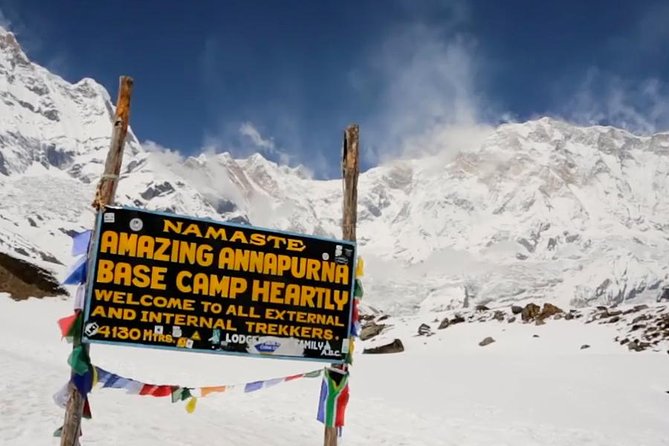
- Poon Hill sunrise: an early push for views over Annapurna and Dhaulagiri ranges.
- Jhinu Danda hot springs: a real recovery break after hiking days.
- Licensed guide support: route know-how plus English-speaking help with trail decisions.
- Oxymeter altitude checks: built-in monitoring with oxygen saturation and pulse/heart rate.
- Guest-house trekking stays: you’re sleeping indoors, not tenting, on the route.
Why Annapurna Base Camp feels like the real Nepal mountain experience
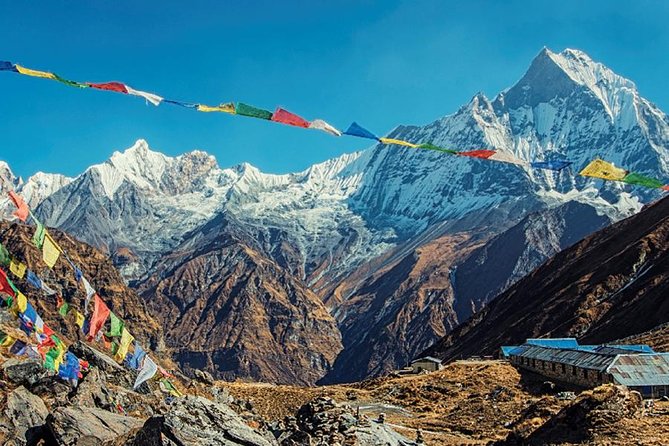
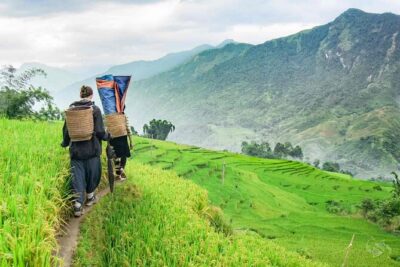
Annapurna Base Camp is popular for a reason. In a single trek you get forests, stone stairs, suspensions bridges, terraced villages, and then that moment when the mountains stop being background and start being the main event. It’s a classic “walk into the big scenery” route, without needing technical climbing skills.
What makes this 11-day version especially workable is the mix of gradual altitude gain with days that give you time to adjust. You’re not just suffering for a summit photo; the route is designed so each day has a point—forests one day, viewpoints the next, hot springs as a morale boost, then the long approach to Base Camp.
And yes, the cultural side matters here. You’ll pass through local settlements and village trails rather than only hiking through empty mountain corridors. That’s when the trek turns from a sightseeing walk into something more human: daily life, guest-house rhythms, and the slow pace that mountain paths require.
You can also read our reviews of more tours and experiences in Kathmandu.
Kathmandu to Pokhara: getting your bearings before the trail
The tour begins in Kathmandu with a very early 6:15 am start time. You’ll travel by surface transfer to Pokhara via the Prithvi Highway on a tourist bus. This part matters more than you might think, because it sets expectations: you’ll see rivers, terraced farms, and village towns sliding by, and you’ll get a feel for Nepal’s geography before you step onto the trail.
Day 1 is essentially transit plus visual warm-up. If you’re prone to motion sickness, bring what usually helps you—this drive is long enough to matter, even with scenic views.
Pokhara is your staging point, so don’t treat it like a vacation stop. It’s where you’ll reset your body and gear, then move toward the trekking start.
Pokhara to Nayapul and the first bridge crossing: easing into the Annapurna trail
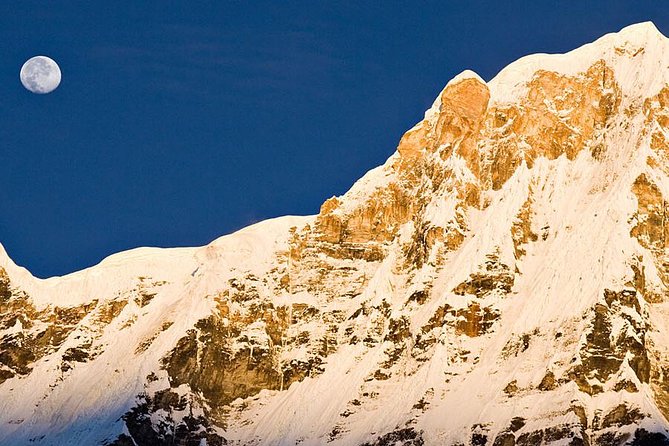
On Day 2, you drive to Nayapul and begin the hike by crossing the suspension bridge over the Modi River, then heading toward Birethanti. This is a good “on-ramp” day. You’re starting with trail time but not jumping into the most punishing segments right away.
From there the trek threads through areas that feel lived-in: crossing village paths and moving along established routes. It’s a reminder that this is not just wilderness; it’s a functioning travel corridor where guest houses and trail routines keep the whole area moving.
Tip: plan to pace yourself on Day 2. Suspension bridge moments can spark adrenaline. The mountains still win later, so don’t spend all your energy in the first hour.
Rhododendron forests to Ghorepani: the slow build before the big morning
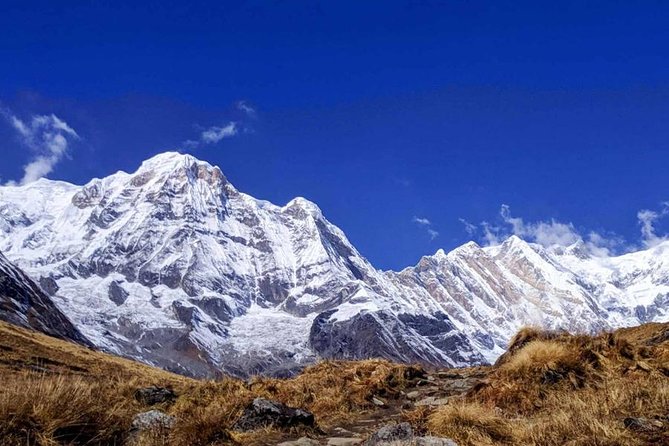
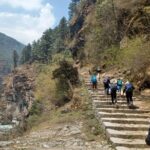
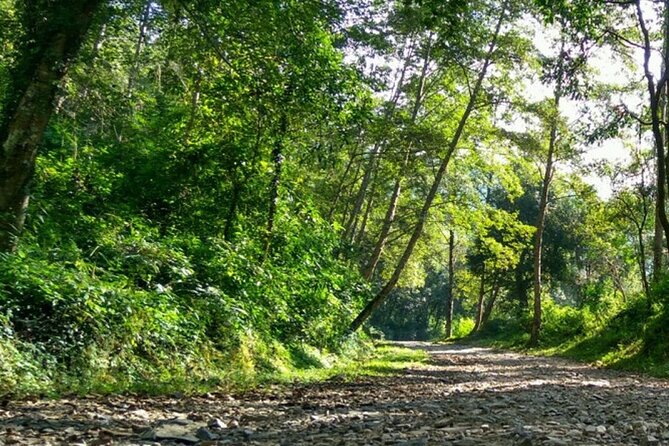
Day 3 takes you through thick rhododendron forest and past villages like Banthanti and Nangethanti on the way to Ghorepani. You’ll also tackle uphill segments with stone stairs, which is typical for this region—good legs will make the difference, but smart pacing matters more than speed.
Ghorepani is one of those strategic stops. You’re gaining elevation, but you’re also positioning yourself for the next day’s sunrise push. The big view isn’t tonight—it’s coming soon.
Why I like this day: the forest walking tends to feel varied. Instead of seeing only one type of terrain, you get changing light under trees and then glimpses of bigger peaks that keep you motivated.
Poon Hill sunrise on Day 4: the early start that pays off
Day 4 is centered on an early ascent to Poon Hill to watch sunrise over the Annapurna and Dhaulagiri ranges, plus additional peaks in the area. If you want the classic highlight, this is where it happens.
The day is described as an ascent to Poon Hill along snowy trails. That’s your clue to take the cold seriously even when you feel “almost there.” Sunrise hikes can be chilly and sometimes slow-moving, so keep layers ready and move steadily.
After the sunrise experience, the trek continues with uphill and downhill segments on forested trails, leading onward toward your next stop. This is one of those days where mental focus helps: first goal is sunrise, second goal is not letting the downhill trick you into going too fast.
Jhinu Danda hot spring reset on Day 5
Day 5 includes a suspension bridge crossing over Kimrong Khola and then a route toward Jhinu Danda, where you can rest in the hot springs. The idea is simple: after days of walking, you get warmth and a chance to loosen muscles.
This is also a morale builder. Hot springs are the kind of thing you don’t forget because your body feels the benefit, not just your camera.
What to watch for: hot springs are relaxing, but they can make you feel warmer than your surroundings. Don’t stay in wet clothes longer than you need to. Dry off, put on layers, and then keep hiking.
Stone stairs, Chhomrong Khola, and the middle-of-trek rhythm (Day 6)
Day 6 is described as an easy walk through rhododendron forest with orchids and ferns, then stone-stair descents and ascents around key river crossings like Chhomrong Khola. You’ll go down through stairs, cross, then climb again toward Sinuwa.
This day’s value is rhythm. After the excitement of sunrise and hot springs, you get a more traditional trekking feel: forest, steps, gradual height management, and the steady work of moving forward.
A practical note: “easy walk” in mountains still means time on your feet. If you arrive tired, that’s normal. Try to keep your pace smooth and your breaks short so you don’t cool down too much.
Deurali to Machhapuchhre Base Camp: where the mountains get personal (Day 7)
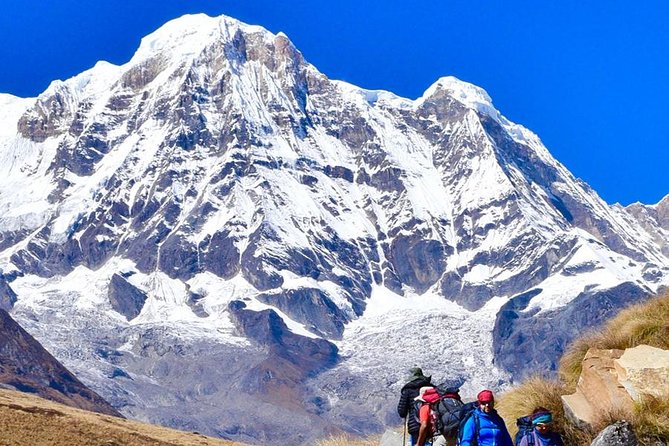
Day 7 focuses on ascending to Deurali, walking stone stairs, and then reaching a viewpoint area on the way to Machhapuchhre Base Camp around 3700m. The trek here follows moraines of the glacier area—terrain that feels more “geology museum” than village trail.
This is where the Annapurna Base Camp story starts to feel real. You’re higher, the air is sharper, and mountain views become more constant. Machhapuchhre Base Camp also keeps a special feel because it sits in the orbit of famous peaks and glacier movement.
If you’re carrying a lot of fatigue, this is a good day to avoid over-pushing. Moraines can be uneven underfoot. Let your guide’s pacing help you avoid slipping into a too-fast pattern.
Descending from Machhapuchhre Base Camp back toward the lower trail (Day 8)
On Day 8, you descend to Machhapuchhre Base Camp through the moraine route, then follow trails of Modi Khola through rhododendron and fir forests. You’re still going toward Base Camp, but this day is partly about controlling effort and keeping your legs stable on descents.
A key benefit here: forests and river trails can feel mentally softer than rocky alpine terrain. It’s not easier physically, but it tends to be easier on the eyes and helps with fatigue management.
If your knees get cranky on downhills, this is a day to use trekking poles if you bring them. The tour includes support and mapping, but poles can still be your best friend.
Upper Chhomrong and Jhinu Danda again: finishing strong on Day 9
Day 9 is a loop-style day in the description: ascend through an amusing forest to Sinuwa, head down to Chhomrong Khola, then ascend stone stairs to upper Chhomrong. After that you descend to Jhinu Danda and enjoy another warm dip in the na… the hot spring area is the point.
Getting hot springs again right after a climb is a smart morale choice. It also gives you a chance to reset before the final trekking days.
The main consideration: this day includes both up and down. That combination can be tough even if the altitude is manageable that day. Treat descents carefully, because that’s when fatigue and slippery footing show up.
Day 10: down to Nayapul, then back to Pokhara
Day 10 is described as descending to Nayapul following trails of Modi Khola and enjoying the scenery along the way. From Nayapul, you return to Pokhara by tourist bus.
This is a “legs first” day. You’ve done the hardest altitude work already, but downhill can be surprisingly draining. Keep your steps short and controlled.
That evening in Pokhara, you’ll have time where your schedule is freer. The tour notes that in the evening you can choose to relax in town or do your own planning.
Day 11: Pokhara to Kathmandu and your last morning in Nepal
On Day 11, you leave Pokhara early in the morning by tourist bus back to Kathmandu. The drive takes you past greenery, villages, and familiar terrain patterns you saw on the outward trip.
Once you arrive, the tour ends back at the meeting point, and you can take it easy. If you have energy, this is a good day for a slow meal and simple souvenir shopping—nothing demanding.
Price and value: what your $986 is actually covering
At $986 per person for an 11-day Annapurna Base Camp trek, the real question is what’s included in the day-to-day reality. In this package, you’re getting far more than a basic guided walk.
Included value highlights:
- Down jacket, sleeping bag, and duffel bag: this can save serious money and makes packing easier.
- Permits and entry fees handled for you: trekking here depends on permissions, and this takes that task off your plate.
- Best-available guest-house accommodation (mainly twin sharing): you’re not living outdoors every night.
- Daily meals are covered in a set structure: breakfast (10), lunch (9), dinner (8) are included.
- Licensed English-speaking trekking guide plus a support team with food, accommodation, insurance, and transportation for staff.
- Oxymeter to check pulse, oxygen saturation, and heart rate, plus first aid medical kits.
What that means for you: you spend less time coordinating gear, meals, beds, and permissions. In mountain treks, cutting admin stress is real value, because your energy is your currency.
The main cost surprises to watch for are the items that are not included: drinks, travel insurance, international airfare, airport departure tax, personal trekking equipment, and tips for trekking staff.
What’s not included: plan for personal gear, insurance, and staff tips
The trip explicitly does not include alcoholic and other drinks, laundry, and your travel insurance. It also doesn’t cover international airfare or airport departure tax, and it doesn’t provide personal trekking equipment.
So how do you prepare without guessing too much? Think in categories:
- Cold-weather and rain readiness: you’ll get a down jacket and sleeping bag, but you’ll still need your own day layers and weather protection.
- Walking tools: the description doesn’t say trekking poles are included, so if you use them, bring them.
- Footwear and core gear: you’ll need what you normally rely on for multi-day trekking.
Tips: the tour notes tips for trekking staffs are not included. If tipping is part of your travel ethics, plan a budget rather than improvising at the end.
Safety and fitness: the honest way to think about altitude
This trek requires moderate physical fitness, and you’ll be walking day after day with stone stairs, uphills, and downhills. That’s the real fitness test—not one big climb, but the repetition.
On safety, the package includes an oxymeter for oxygen saturation, pulse, and heart rate checks. That doesn’t replace good judgment, but it does mean you’ll have a tool for monitoring how you’re doing.
Also, the itinerary includes early starts for key days like the sunrise plan. If you struggle with mornings, practice getting up early at home. It’s a small thing that makes the trek feel harder or easier.
Who this Annapurna Base Camp trek is best for
This is a strong fit if you want a classic Annapurna Base Camp experience with a lot of planning handled for you. If you’re the type who likes knowing the route will be managed, permits are handled, and meals and guest-house stays are taken care of, you’ll likely appreciate how structured it feels.
It can also work well for first-time long trekkers, as long as you’re honest about your base fitness and you follow a steady pace. The guidance and monitoring support is built in, and the days are designed with highlight moments rather than all-or-nothing pressure.
It might be less ideal if you’re highly minimalist and want to bring zero extra gear, since you still need to supply personal trekking equipment.
Should you book this Annapurna Base Camp trek?
I’d consider booking if you want the classic trail with practical support: a licensed guide, permits handled, guest-house comfort, and a package that includes key cold-weather items like a down jacket and sleeping bag. The included oxymeter and first aid kit are also reassuring touches for mountain trekking.
I wouldn’t book on autopilot if you’re not prepared for early mornings and repeated uphill/downhill walking. If you’re unsure about your fitness, do a training phase first, then book. In mountains, preparation is part of the trip you’re buying.
If your goal is to get to Annapurna Base Camp while spending less time solving logistics and more time enjoying the trail, this one lines up well.
FAQ
How long is the Annapurna Base Camp trek in this package?
The trek is listed as 11 days (approx.).
Where does the experience start and end?
It starts in Kathmandu, Nepal, and ends back at the same meeting point in Kathmandu.
What time does the trek start?
The start time is 6:15 am.
Is this a private trek or a group tour?
It’s a private tour/activity, so only your group will participate.
What’s included in the price for this trek?
Included items cover down jacket, sleeping bag, and duffel bag; trekking permits and entry fees; surface transfers from and to Kathmandu; best-available guest-house accommodation (mainly twin sharing); an English-speaking licensed guide; trekking staff support; route map; meals (breakfast 10, lunch 9, dinner 8); an oxymeter; and first aid medical kits.
Does the tour include oxygen/health monitoring?
Yes. An oxymeter is included to check pulse, oxygen saturation, and heart rate.
Are meals included during the trek?
Yes. Breakfast is included 10 times, lunch 9 times, and dinner 8 times.
What do I need to bring since it’s not included?
Personal trekking equipment is not included, and travel insurance is also not included. Alcoholic and non-alcoholic drinks, laundry, and other personal expenses are not included either.