REVIEW · KATHMANDU
14-Day Everest Base Camp Trek
Book on Viator →Operated by Magical Nepal · Bookable on Viator
The Lukla flight sets the tone fast. This 14-day Everest Base Camp trek starts with a dramatic jump into the Khumbu at Lukla (2,860 m), then moves through forests, river valleys, Sherpa villages, and into big mountain country. I also like the small-group feel (max 8 travelers), which makes the pace feel human when altitude starts to tug at you.
The main catch is timing. Lukla flights can get rerouted to Ramechhap due to Kathmandu airport upgrades, and you may need to leave at about 2:00 a.m. for the drive—plus weather can also affect schedules.
In This Review
- Key things that make this trek worth your time
- Lukla flight and the first trek day: from Kathmandu to Phakding
- Phakding to Namche Bazaar: bridges, park checks, and your first Everest stare
- Namche acclimatization day: Everest View Point, Sherpa culture, and a smart rest
- Tengboche Monastery: the spiritual landmark and the mountain-photo payoff
- Dingboche and the Khumbu Valley shift: trees thin, views sharpen
- Lobuche: memorials, harder terrain, and the growing sense of altitude
- Gorakshep and Everest Base Camp: the 6–7 hour rocky workday
- Kalapatthar sunrise and the trek back toward lower altitude
- Guides, porters, and why the small-group setup helps
- Teahouses and meals: what included days really mean
- Price and value at about $1,600 per person
- Weather, Lukla logistics, and your best mental backup plan
- Should you book Magical Nepal’s Everest Base Camp trek?
- FAQ
- What’s the starting point for this Everest Base Camp trek?
- Do I need a passport-style ID or permits for the trek?
- How are the Lukla flights handled during the trip?
- Are meals included, and where do I sleep?
- How many travelers are on the trek?
- What fitness level do I need for this trek?
Key things that make this trek worth your time
- Lukla-to-Phakding launch: your first descent along the Dudh Koshi river, with immediate Everest Region vibes
- Namche Bazaar acclimatization: including an easy option to Everest View Point and a Sherpa museum stop
- Tengboche Monastery visit: a major Khumbu spiritual landmark and one of the best photo stretches
- Kalapatthar sunrise: the closest classic viewpoint for a full Everest-wall moment
- Everest Base Camp day: hard walking over rocky, glacier-debris ground, then back for the real payoff
- Guides and porters: support that keeps daily logistics steady (names you may hear include KP Bhatta, Dilman, Jay, Narayan, and Pemba Sherpa)
Lukla flight and the first trek day: from Kathmandu to Phakding
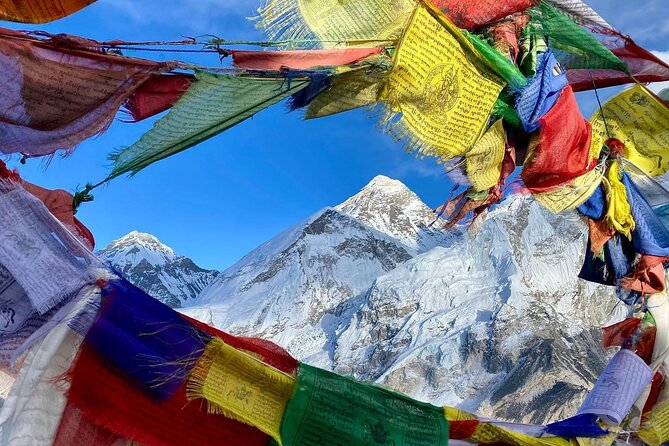
Day 1 is all about getting your feet and your paperwork lined up. You’re met at Tribhuvan Airport and transferred to a Kathmandu hotel (2 nights total in Kathmandu are included). Day 2 starts the actual trek with the flight from Kathmandu to Lukla, followed by your first walking day.
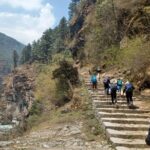
The route drops you into the Everest Region right away. From Lukla, you trek about 3–4 hours to reach Phakding, descending toward the Dudh Koshi ghat and following the riverbank. On paper, it reads easy-ish. On the ground, you’ll feel the altitude and the rhythm of Nepal’s mountain trails: steady steps, frequent pauses for photos, and the constant sense that the mountains are bigger than the maps make them look.
Practical tip: treat this first day as a warm-up, not a race. The trek is long. Your legs should arrive in Phakding feeling like they can still do tomorrow.
You can also read our reviews of more tours and experiences in Kathmandu.
Phakding to Namche Bazaar: bridges, park checks, and your first Everest stare
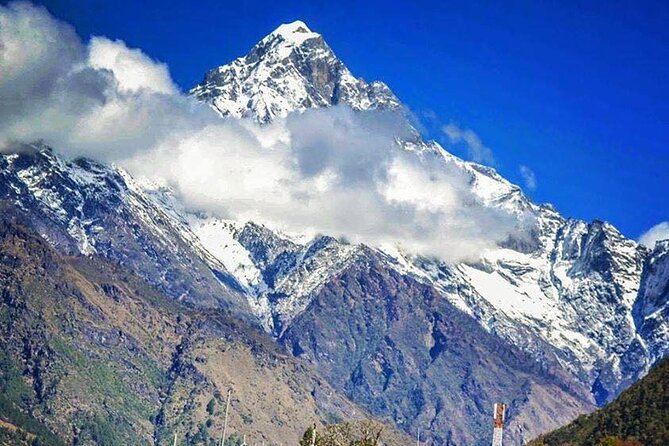
Day 3 is your “this is real” day. You cross the Dudh Koshi again on a long suspension bridge, then move through pine forests toward Sagarmatha National Park, where permits are checked. You’ll get a downhill moment to Jorsale for lunch, then the day turns into a climb to Namche Bazaar.
There’s one bridge you’ll hear about often because it’s a landmark in the region: the Hillary Suspension Bridge. It’s a fun crossing and a good marker—after this, Namche is no longer theoretical. When you finally step into Namche Bazaar, you’re rewarded with your first strong view of Everest.
Even if this day feels hard, it’s also a win. You’re building endurance without yet needing “hero mode.”
Namche acclimatization day: Everest View Point, Sherpa culture, and a smart rest
Day 4 is your altitude reset in Namche Bazaar. This is one of the most valuable days on the whole trek because your body needs time to adjust before you go higher.
You can take a 2-hour hike to Everest View Point, which is a classic way to stretch without overdoing it. The day also gives you time to explore Namche at a comfortable pace. If you like local context, there’s a Sherpa museum, and on Saturday there’s a small outdoor market.
Why this matters: acclimatization isn’t a luxury on this route. It’s the difference between feeling annoyed by altitude and feeling rough by altitude.
Tengboche Monastery: the spiritual landmark and the mountain-photo payoff
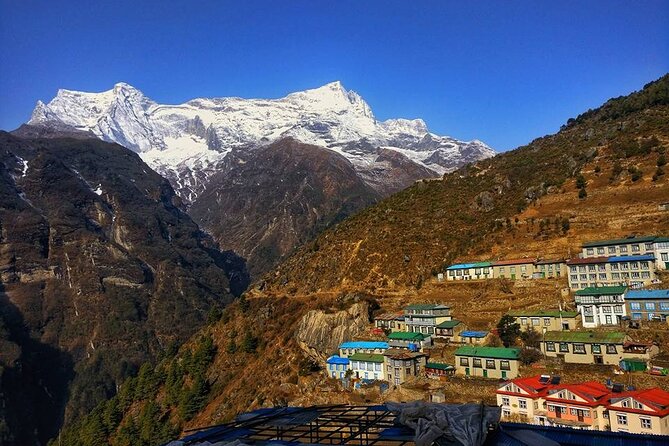
Day 5 takes you to Tengboche, famous for the largest monastery in the Khumbu region. You visit the monastery and receive blessings—simple, sincere, and very much part of how Sherpa life connects to the mountains.
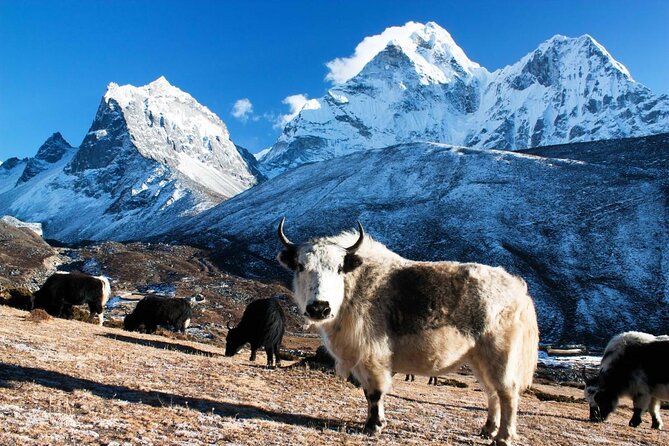
Practically, this is also a major viewpoint stretch. From the area around Tengboche, you get standout views of Ama Dablam, Thamserku, and Khumbila. Those names might sound like trivia until you’re standing there and realizing why they’re treated as sacred.
If you’re the type who likes photos but also likes to understand what you’re photographing, this stop is one of the best balance points on the itinerary.
Dingboche and the Khumbu Valley shift: trees thin, views sharpen
Day 6 starts with alpine forest trekking and then moves into a different landscape as you approach Dingboche. You pass villages where you can see how locals live, then walk through the Khumbila Khola Valley before ascending to a ridgeline.
The big change today: fewer trees, more shrubs. And the mountain lineup grows more dramatic. As you near Dingboche, you’ll start seeing Taboche and Nuptse, plus other major peaks.
Day 7 is another acclimatization day. It’s not extra hiking for show. It’s a day to rest, explore, and let your body catch up. You can check out the surrounding Chhukung and Imja Valleys. This area matters for future trekking ideas too, since Imja Valley connects to routes that can include Island Peak and Makalu Barun National Park.
If you’re trying to decide how aggressive to be with your own pace: do the minimum on rest day. Your reward will come when you’re fresher for the Base Camp block.
Lobuche: memorials, harder terrain, and the growing sense of altitude
Day 8 moves you to Lobuche. The trekking feels more serious because the altitude is higher and the terrain is less forgiving. You’ll climb to the top of a hill where you find memorial stupas for people who lost their lives on Everest.
This is also a strong “mountain wall” day. You’ll be stunned by views of Lobuche, Pumori, and Nuptse.
I find this stop changes how the trek feels emotionally. Everest is not just scenery. It’s a place with human stories behind it.
Gorakshep and Everest Base Camp: the 6–7 hour rocky workday
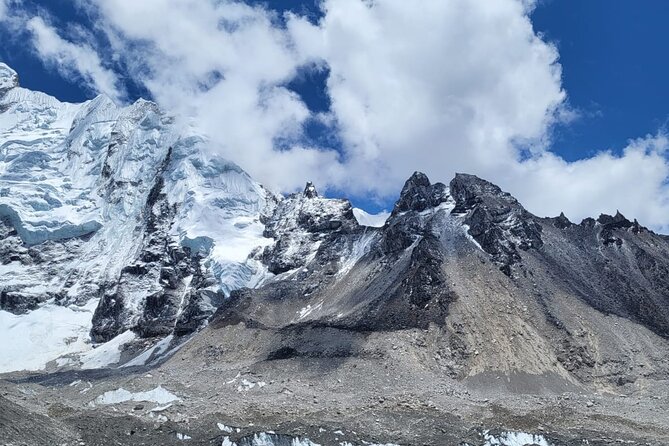
Day 9 is the day you’ve been waiting for: reaching Everest Base Camp. You start from Gorakshep, and the day has a sneaky shape—easy at first, then increasingly rocky.
The trek from Gorakshep to Base Camp and back is about 6–7 hours of serious walking, much of it over rocky ground formed by glacier debris. You’ll see the Khumbu Glacier and the Icefall, and you might run into climbers heading toward their attempt.
This is the day to go steady. The ground isn’t “nice trail.” It’s uneven, and your feet will notice. The right move is short steps, firm footing, and frequent brief pauses to keep your breathing under control.
After Base Camp, you return to Gorakshep for the overnight. Yes, you’ll feel it in your legs. That’s normal. The bigger test is the next morning.
Kalapatthar sunrise and the trek back toward lower altitude
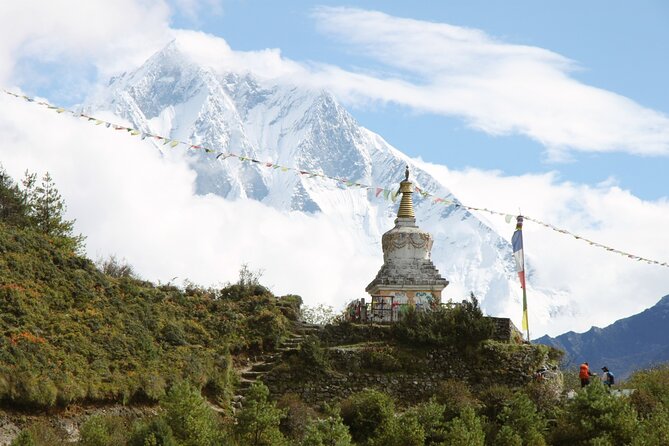
Day 10 is your Everest sunrise day from Kalapatthar. You rise before dawn to catch sunrise over Mount Everest, with Nuptse, Nupse, Changtse, and Lhotse lit by the first rays of light.
Kalapatthar is as close as you get to Everest in terms of classic views without actually climbing the peak. It’s also a good moment to understand why this trek is so famous. Everest isn’t a distant postcard from here. It’s a giant presence.
Then comes the practical part: after breakfast back down from Gorakshep, you continue to Pheriche. If the group still has energy, you may be able to walk on to Panboche as an optional continuation.
Day 11 is mainly downhill back toward Tengboche and then Namche Bazaar, where you spend the night. Day 12 brings you to Lukla. You cross the Hillary Suspension Bridge again and reach Lukla in the afternoon for a traditional group farewell party.
Guides, porters, and why the small-group setup helps
This trek runs with a guide for 12 days and a porter for 11 days. That matters more than it sounds. On longer mountain days, having your support team keep logistics smooth lets you focus on pacing, hydration, and your own steps.
In the past, guides leading Magical Nepal EBC treks have included people like KP (Krishna Prasad Bhatta), Dilman, Jay, Narayan, and Pemba Sherpa. Across those stories, the consistent theme is strong care and problem-solving. Even if you never need it, it’s reassuring to know the trek is managed by people who’ve done this route many times.
Also: max 8 travelers helps. In a big group, altitude fatigue turns into crowding. Here, it’s easier to spread out on steep sections and keep the day calmer.
Teahouses and meals: what included days really mean
You’ll stay 11 nights in mountain teahouses. Meals are included for 12 breakfasts, 12 lunches, and 12 dinners during the trek. That’s a real value piece because eating at higher elevations can be more expensive and less predictable if you’re relying on cash and luck.
A detail I like from past trek experiences is that the food tends to feel like part of the support, not just fuel. Some people specifically mention getting treats like apples with dinner, which may sound small, but it’s a nice morale boost on a long, demanding route.
In Kathmandu, lunch and dinner aren’t included. Breakfast is covered for the trek days, but plan to budget for a couple of meals while you’re in the city.
Price and value at about $1,600 per person
At $1,600, the price isn’t cheap, but it’s also not just paying for scenery. You’re paying for the hard parts that make EBC possible and safer:
- Kathmandu–Lukla–Kathmandu flights
- Sagarmatha National Park entry and local permits
- Transfers for domestic and international legs
- A guide for 12 days and a porter for 11 days
- 2 nights in Kathmandu and 11 teahouse nights
- Most meals during the trek
What you’ll still pay extra for: your own travel insurance, and lunch/dinner in Kathmandu.
So the value question becomes: do you want an experienced team handling permits, timing, and day-to-day pacing? If yes, this price often feels fair compared to piecing together flights, permits, and staffing yourself—especially for Lukla, where schedules can change.
Weather, Lukla logistics, and your best mental backup plan
This trek requires good weather. And even when weather is decent, there’s a second wrinkle: Lukla flight routing.
At certain times, flights may switch to Ramechhap because of Kathmandu airport upgrades. If that happens, the plan calls for leaving Kathmandu around 2:00 a.m. for the drive (about 4 hours), and the return drive after trekking is 4 to 6 hours depending on traffic. You don’t have to love early mornings, but you do have to accept them as part of the Everest start.
My practical advice: pack like a person who might wait. Build in patience for flight delays and don’t treat schedule changes as failure. On the route, you’ll be doing the same thing—adjusting to altitude and conditions one step at a time.
Should you book Magical Nepal’s Everest Base Camp trek?
Book it if you want the classic EBC route with structured acclimatization, teahouse comfort with meals handled, and a small group that keeps the pace more manageable. The itinerary also hits the big “must-see” points: Namche Bazaar, Tengboche Monastery, Kalapatthar sunrise, and the Base Camp day that’s long and rocky but unforgettable.
Hold off or plan extra carefully if you’re not comfortable with logistics that can include very early departures and weather-dependent flights. You also need strong physical fitness—this is not a gentle walk in the park. It’s a serious trek with days around 5 hours and some longer days.
If you want Everest without chaos, this is the kind of trip that’s built to keep you moving for the right reasons: good guidance, steady planning, and enough flexibility to handle real mountain conditions.
FAQ
What’s the starting point for this Everest Base Camp trek?
You start in Kathmandu, with the meeting point at Tribhuvan Airport. The trek ends back in Kathmandu.
Do I need a passport-style ID or permits for the trek?
Yes. The trek includes Sagarmatha National Park entry and local entry permits, and permits are checked on the route (for example around the park entrance area).
How are the Lukla flights handled during the trip?
You fly Kathmandu to Lukla at the start, and fly Lukla to Kathmandu (or Ramechhap) toward the end. At certain times, flights may route to Ramechhap instead of Kathmandu, and you may need to leave Kathmandu around 2:00 a.m. for the drive.
Are meals included, and where do I sleep?
You sleep in mountain teahouses for 11 nights, and meals are included for 12 breakfasts, 12 lunches, and 12 dinners during the trek. In Kathmandu, lunch and dinner aren’t included.
How many travelers are on the trek?
This experience has a maximum of 8 travelers, so it stays small-group sized.
What fitness level do I need for this trek?
The tour notes that you should have a strong physical fitness level, since you’ll be trekking most days with some longer days and serious walking on rocky terrain near Base Camp.