REVIEW · KATHMANDU
Private Manaslu Circuit Trek at Himalayas
Book on Viator →Operated by Himalayas On Foot - Day Tours · Bookable on Viator
Manaslu feels calmer than most big-name treks. This 13-day private route puts you close to Mt. Manaslu views, Tibetan-influenced villages, and the big-mountain feeling of Larkya La, without the crowd chaos you get elsewhere. You’ll walk through subtropical beginnings, high alpine terrain, and cold passes where the air gets serious fast.
I like that the trip is built around real logistics: you get a government-licensed guide (with insurance and food) plus an oximeter and first-aid kit, which matters on a restricted trek. I also like the value structure: tea house or lodge stays are included, and meals are covered for most trek days (breakfast 13, lunch 13, dinner 12).
One consideration: altitude and effort are non-negotiable. The route tops out around 5,160 m at Larkya La, and the trek expects moderate physical fitness. Also, you’ll need to plan around what’s not included, like porter service for your bag and all drinks on the trail.
In This Review
- Key things worth noting before you go
- Manaslu Circuit: calmer trekking with serious Himalayan views
- Price and what you actually get for $1,500
- Permits, restricted-area rules, and your guide on the ground
- Day-by-day: from Machha Khola to Larkya La and back
- Safety, altitude, and pace: what works on a private trek
- Lodges, cold mornings, and gear you might not expect
- Should you book this private Manaslu Circuit trek?
- FAQ
- How long is the Manaslu Circuit trek?
- Where does the trek start and end?
- Is pickup from Kathmandu included?
- Are permits included?
- What kind of accommodation do you use during the trek?
- Are meals included?
- Do I need a porter?
- What is the highest altitude on this route?
Key things worth noting before you go
- Restricted trekking permits are included (Manaslu Restricted Permit plus MCAP and ACAP), which helps keep the experience organized and legal
- Private group, only your people means your pace can be matched, including day-to-day rhythm
- Acclimatization built in with dedicated high-altitude days around Manaslu Base Camp and Samdo
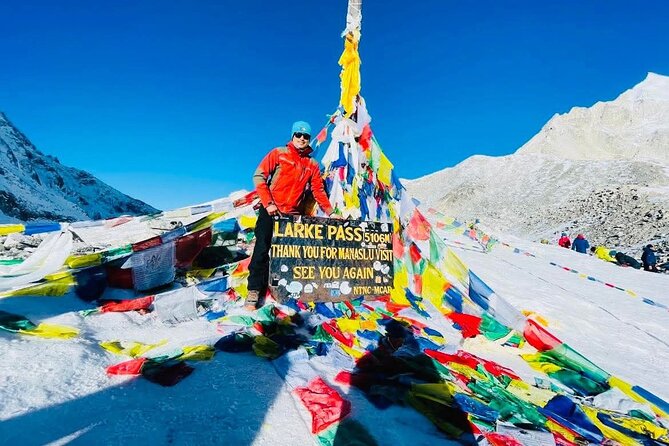
- Larkya La is the big test with views of Cho Danda and Larkya Peak and a high, cold pass day
- Tea house/lodge stays are included during the trek, so you’re not constantly chasing lodging plans
- Emergency plan exists on paper with helicopter service arranged through your travel insurance in case of emergency
Manaslu Circuit: calmer trekking with serious Himalayan views
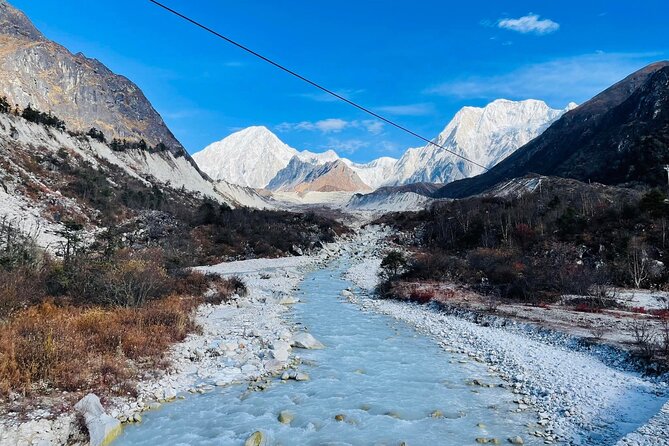
If you want the Himalayas without the treadmill feeling of mega-popular trails, Manaslu is a strong pick. The trek stays in a restricted area, which naturally keeps numbers down, and that changes the whole mood. You tend to move with your group, not through waves of strangers.
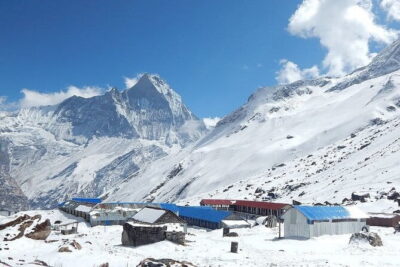
The scenery payoff is big and varied. You start low, in a bus-and-foothills rhythm, then climb through village life and steeper alpine sections. As you gain altitude, the Tibetan-influenced culture becomes easier to spot in prayer wheels, mani walls, and monasteries. On a good day, the Manaslu range sits over the trail like a constant reminder of what you’re working toward.
There’s also an emotional shift as you get higher. Early on, you’re mostly watching the mountains and learning the village rhythm. Later, the trek becomes about breathing, pacing, and how you manage energy on cold mornings. That’s why the acclimatization days aren’t “extra.” They’re part of making this route doable.
Finally, this is a private tour, so your guide can tailor the pace. Names that come up in past groups include Yaka and Raj, praised for matching a walking rhythm and keeping things safe and comfortable, plus Laxman for carrying bags when needed.
You can also read our reviews of more tours and experiences in Kathmandu.



Price and what you actually get for $1,500
At $1,500 per person, this price isn’t just for walking. It’s for the hard parts of running a restricted trek: permits, logistics, and a licensed guide with insurance. You also get transportation by bus from Kathmandu to Machha Khola (the trek’s starting point) and a bus return from Dharapani to Kathmandu.
Here’s what’s included that makes the cost easier to swallow:
- Trek guide: government-licensed guide with insurance and food
- Permits included: Manaslu Restricted Permit, Manaslu Conservation Area Permit (MCAP), Annapurna Conservation Area Permit (ACAP)
- Accommodation during the trek: tea house/lodge stays
- Meals included for most trek days: breakfast 13, lunch 13, dinner 12
- Gear support if needed: sleeping bag, down jacket, and duffle bag (if necessary)
- Safety basics: first-aid kit and oximeter
- A farewell dinner in Kathmandu
What’s not included (important for budgeting):
- All meals in Kathmandu
- Porter for your bag
- Drinks during trekking (hard and soft drinks)
- Travel insurance (and rescue/evacuation coverage)
- International airfare, visa fee and tax
- Tipping the guide and porters
- Any upgraded Kathmandu accommodations
For value, the key question is this: do you want a private, permits-included package with daily meals and lodge support? If yes, the price makes sense fast. If you already have permits sorted and guides lined up, it would be a different story.
Permits, restricted-area rules, and your guide on the ground
Manaslu’s restricted status isn’t trivia. It’s the reason the trek stays organized and why you’ll see infrastructure that keeps things smoother. In this package, you’re covered on that side with the Manaslu Restricted Permit plus conservation area permits (MCAP and ACAP).
You’ll also be in the hands of a professional guide who is government-licensed and comes with insurance and food. That reduces the usual “who’s responsible?” anxiety that hits when you’re trekking far from big services. In higher altitude travel, small coordination issues become big ones quickly, so having that structure matters.
Safety support is also clearly thought through. You get a first-aid kit and an oximeter, which is a practical baseline for altitude management. And there’s a stated emergency approach: a helicopter service can be arranged and is paid through your travel insurance. The practical takeaway for you is simple—don’t treat insurance as paperwork. Trekking at these elevations is the whole point of buying coverage.
Because this is private, your group is smaller than standard shared treks. You’ll likely be able to keep a steadier rhythm, and guides like Yaka and Raj have been credited for matching pace while staying comfortable and safe. That means fewer stop-start days, which is exactly what you want when the air is thin and the day schedule matters.
Day-by-day: from Machha Khola to Larkya La and back
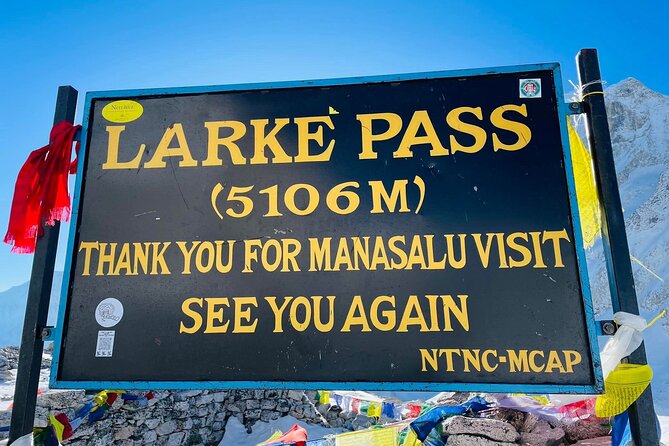
This route is classic Manaslu in feel: steady climbing, village days, then the high-altitude push. The walking hours vary, but the altitudes build gradually until the pass day. Below is what each day is setting up for.
Day 1 (Kathmandu → Machha Khola), max 1,400 m
Travel about 7–8 hours by bus. It’s a long start day, and the goal is to get you to the trail head area and settle in. Expect a mostly travel-and-arrival rhythm rather than a big hiking day.
Day 2 to Jagat, max 1,410 m (6–7 hours walking)
Trail is narrow and you’ll cross the Tharo Khola. You reach Khorlabesi, and there’s a hot spring along the way. This is a good day to practice your pace and get used to the “walking while watching” style of trekking here.
Day 3 to Pewa, max 1,860 m (travel about 7 hours)
You move onward from Jagat toward Pewa. The route description suggests more of a progression day than an ultra-long slog, but you still gain altitude steadily.
Day 4 to Namrung, max 2,630 m (about 6 hours)
Scenic trekking day. You leave Pewa and rise to Namrung, which typically signals that you’re transitioning from lower village terrain into bigger mountain country.
Day 5 to Lho, max 3,180 m (about 4 hours)
This day is described as rather short. Short days can be a gift at altitude, because you still accumulate experience while keeping your fatigue in check.
Day 6 to Sama Gaon, max 3,530 m (about 7 hours)
Another longer push. Sama Gaon is one of the high village points that helps you build acclimatization before the big base camp and pass segment.
Day 7 Acclimatization at Manaslu Base Camp, max 4,400 m
This is your acclimatization day. You gain a lot of altitude by the time you reach this level, so the point is to help your body adjust. Think of it as rest with purpose.
Day 8 to Samdo, max 3,690 m (4–5 hours walking)
You trek about 4–5 hours to Samdo, descending toward the Budhi Gandaki River and heading toward Manaslu Base Camp area trails. The description also mentions the Larkya La trail approach, so you’re moving closer to the pass system.
Day 9 Acclimatization in Samdo, max 3,690 m
Another high-altitude day. You can explore the village, and there’s also an optional hike up the valley toward one of the trade passes for views toward Tibet. Even if you keep it gentle, it’s the kind of day that helps you feel ready for what’s coming.
Day 10 toward Larkya Phedi or Larkya Base Camp, max 4,460 m (4–5 hours)
You cross a wooden bridge over Budi Gandaki and then cross two streams. You’re not at the pass yet, but you’re staging yourself for the long, cold day ahead.
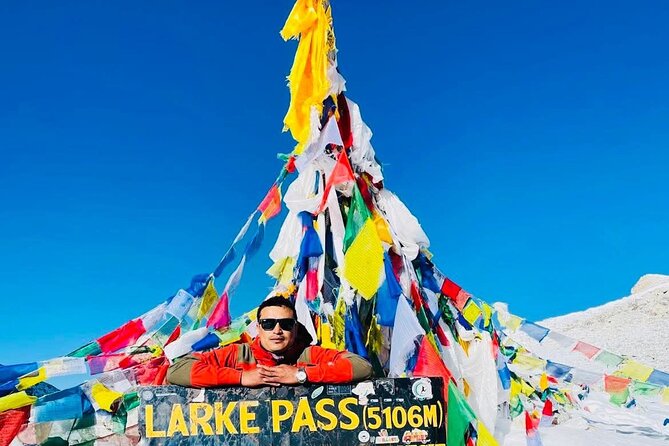
Day 11 Larkya La Pass day, max 5,160 m (7–8 hours)
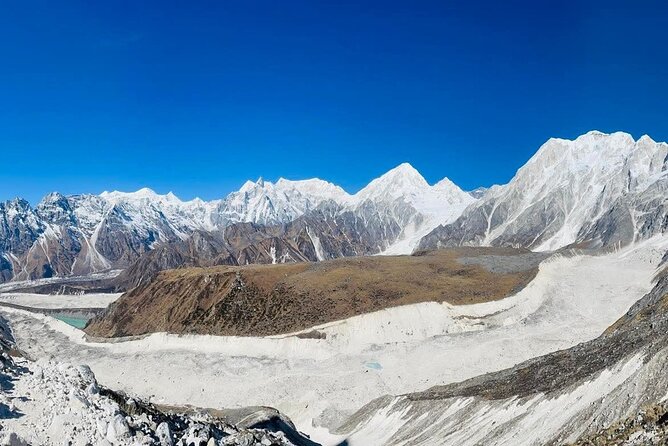
This is the big one. You reach a valley after a short walk, with views of Cho Danda and Larkya Peak. Then the trail heads through moraines of the glacier area. It’s the day where careful pacing and steady breathing really matter.
Day 12 descent toward Bimthang, max 3,720 m (about 9 hours travel/route)
A return-day feeling, moving down to Bimthang. You’ll be tired, so the focus becomes getting the body recovered enough for your final travel day.
Day 13 Bimthang/Dharapani return area, max 1,963 m (8–10 hours travel), Dharapani
You finish by moving down toward Dharapani and spend the day on the way back. This is usually a “swinging the legs less and watching more” kind of day after the pass effort.
If you’re the type who likes to know what’s coming, this itinerary is refreshingly straightforward: acclimatization days exist, and the pass day is clearly defined as the maximum-altitude effort.
Safety, altitude, and pace: what works on a private trek
The route’s altitude profile is the story. You reach high elevations, then you get acclimatization pauses, then you go for the pass. That structure is why the trek can work for people with moderate fitness. It still won’t be easy. But it’s not random climbing.
A licensed guide with insurance helps because they’re the one adjusting pacing, encouraging breaks, and keeping an eye on how the group is coping. Past groups have praised guides for matching walking pace and keeping the journey comfortable and safe, which matters when the itinerary includes both longer travel segments and steep, colder stretches.
The oximeter and first-aid kit inclusion is a big practical point. It doesn’t make altitude risk disappear, but it gives you tools for monitoring. If someone in your group is breathing slower or feeling worse than expected, you want support that can respond early rather than late.
Also, you should be realistic about what your body is doing. On pass days, the goal is not to win. The goal is to arrive. Keep your effort smooth and avoid the habit of sprinting on early switchbacks when everything feels possible.
One more thing: drinks aren’t included. Dehydration is a fast way to make altitude feel worse, so plan to spend time and budget on water and any needed warm drinks. This is one of those “small” details that turns into a big deal when temperatures drop.




Lodges, cold mornings, and gear you might not expect
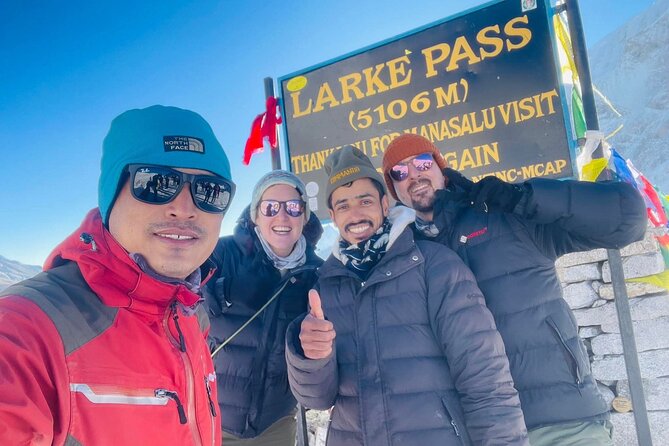
This trek uses tea house or lodge accommodation during the trek. That’s a comfort baseline compared with camping, and it fits the restricted-area logistics. Still, tea house nights in the higher Himalayas can get chilly fast. Your best bet is to treat cold mornings as normal, not surprising.
Good news: the package includes a sleeping bag and down jacket and duffle bag if necessary (with return after the trek). That reduces the gear headache for many people, especially if you’re coming from abroad and don’t want to deal with bulky luggage.
What you’ll still need to supply yourself is the personal layer system and daily comfort items. Your goal is warmth without bulk. If you’re the type who runs hot and hates sweating, you’ll still want layers you can vent. If you run cold, you’ll want enough insulation that you can handle waiting at higher elevations without getting miserable.
Food is covered on the trek days, which helps you keep energy up. Past experiences with Manaslu treks have credited well-placed food stops and comfortable lodge days, so you’re not stuck eating only whatever you find in the first building you reach.
Because porter service is not included, you should decide early how you want to handle your day bag. If you plan to keep a small pack, you’re more comfortable on steep or cold switchbacks. If you’re carrying everything, you’ll feel it in your shoulders and back by day 9 or 10, when fatigue piles up.
Should you book this private Manaslu Circuit trek?
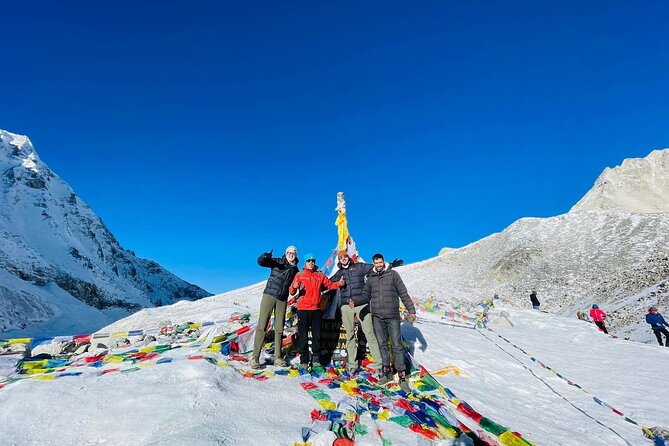
Book it if you want a structured Manaslu experience where permits, meals, lodge nights, and a licensed guide are bundled, and you’d rather keep your group private than shuffle through a shared-crowd schedule. This is also a smart choice if you value acclimatization days that are baked into the plan rather than improvised on the fly.
I’d think twice if you don’t like high-altitude trekking. Larkya La hits about 5,160 m, and the trek expects moderate physical fitness. Also, if you’re counting on drinks, porter help for your bag, or full meal coverage in Kathmandu, you’ll want to budget those gaps.
If you do book, I’d prepare with two priorities: arrive with a fitness routine that can handle long walks, and buy travel insurance that actually covers the altitude and rescue support mentioned in the plan. Do that, and this trek can feel like the Himalayas at a human pace.
FAQ
How long is the Manaslu Circuit trek?
The duration is listed as 13 days (approx.). The route includes driving time from Kathmandu to the trek start and a return drive from Dharapani back to Kathmandu.
Where does the trek start and end?
The trek starts from Machha Khola (reached by bus from Kathmandu) and ends at Dharapani (with a bus ride back to Kathmandu).
Is pickup from Kathmandu included?
Yes, pickup is offered.
Are permits included?
Yes. The package includes the Manaslu Restricted Permit, the Manaslu Conservation Area Permit (MCAP), and the Annapurna Conservation Area Permit (ACAP).
What kind of accommodation do you use during the trek?
You’ll stay in tea house or lodge accommodation during the trek days.
Are meals included?
Yes for trekking days: breakfast is included for 13 days, lunch for 13 days, and dinner for 12 days. Meals in Kathmandu are not included.
Do I need a porter?
A porter is not included (and tipping porters is also not included). That means you should plan to carry your own bag or arrange porter help separately.
What is the highest altitude on this route?
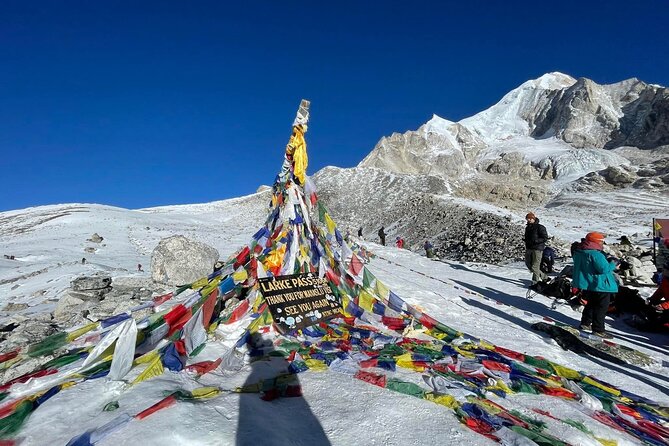
The highest altitude listed is about 5,160 m at Larkya La Pass.