REVIEW · KATHMANDU
Manaslu Circuit Trek
Book on Viator →Operated by Nepal Guide Treks and Expedition P. Ltd. · Bookable on Viator
Manaslu feels remote in the best way—quiet trails, huge peaks, and real village life with guides like Pradip or Sonam Sherpa. I love the chance to cross Larkya La Pass (5,135m) and I also love the protected-area feel as you travel through Manaslu Conservation Area (MCAP) and Annapurna Conservation Area (ACAP). It’s a trek where you watch mountains change with the light, and you don’t have to fight crowds to see it.
The trade-off is the altitude math and the weather. You’ll be walking long days, and heavy snowfall at the high pass can affect whether you cross on a given departure—so you need flexibility, steady pacing, and real trekking readiness.
In This Review
- Key things that make this Manaslu Circuit Trek worth your time
- Manaslu vs. the big-name treks: why it feels calmer
- The big views: Manaslu, Ganesh Himal, and the mountain light show
- Larkya La Pass: the day that defines the trek
- How hard is it, really? A realistic sense of the walking
- Tea-house nights: comfortable enough, basic in the way that feels honest
- Culture along the trail: Tibetan-influenced villages and everyday life
- Routes after the earthquake: what “well restored” means for you
- Guides and porters: the small details that keep things smooth
- Price and value: what you’re paying for (and what you’re not)
- Best season and weather reality: plan for clear skies, but keep backup thoughts
- Getting ready: fitness without turning it into a mountaineering project
- Small group size and start details that matter
- Who should book this Manaslu Circuit Trek?
- Should you book this tour?
- FAQ
- What is the meeting point for the Manaslu Circuit Trek?
- How long is the Manaslu Circuit Trek?
- What is included in the trek meals and lodging?
- Are permits included?
- What is the highest point on the trek?
- Do I need technical mountaineering skills?
- What fitness level do I need before I go?
- How large is the group?
- What’s the price, and what’s not included?
- Is there a cancellation policy for a full refund?
Key things that make this Manaslu Circuit Trek worth your time
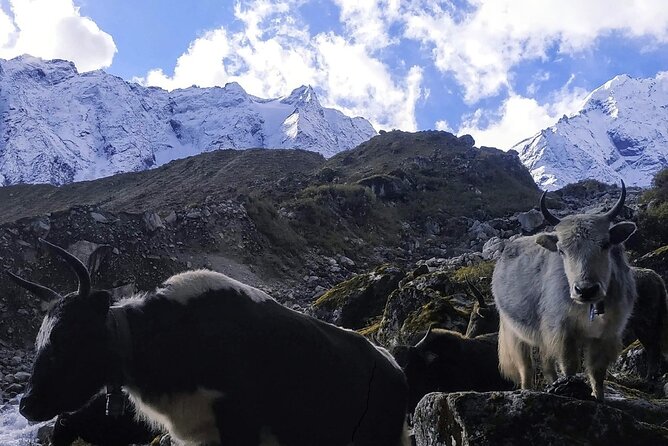
- Larkya La Pass at 5,135m gives you one of the real highpoints of the route
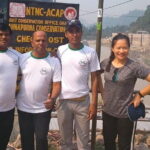
- Protected-area trekking (MCAP + ACAP) keeps the experience feeling remote and rules-focused
- Small-group feel with a maximum of 15 travelers
- Tea-house nights with breakfast, lunch, and dinner organized by the trek team
- Side treks within hours for extra viewpoints and culture stops
- A guide-and-porter setup that helps keep you moving safely through the harder sections
Manaslu vs. the big-name treks: why it feels calmer
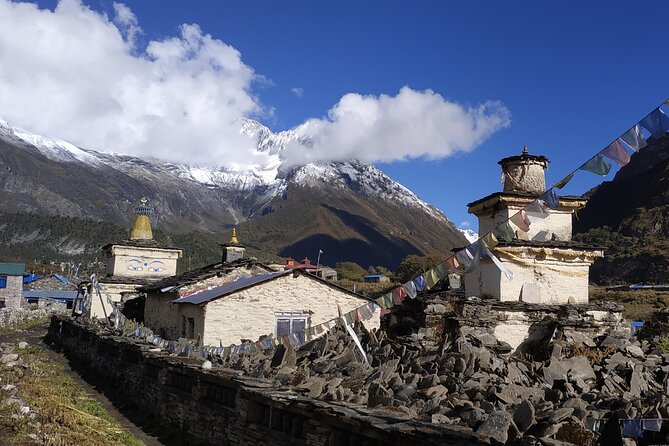
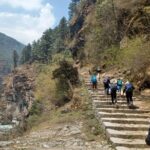
Manaslu Circuit trekking has a different vibe than the Everest and Annapurna routes. The big difference is demand. This trail typically stays quieter, so you spend more time listening to the wind and footsteps, and less time weaving through lines of hikers. That matters on a long trekking day because it helps you settle into your own rhythm.
You also get that classic midwest Himalaya feel—mixed forest at lower elevations, then widening views as you climb. The route takes you through areas tied to conservation (MCAP and ACAP), so you’re moving through landscapes where local stewardship and trekking rules play a real role. The result is a trek that feels more like travel through lived-in territory than a theme-park hike.
You can also read our reviews of more tours and experiences in Kathmandu.
The big views: Manaslu, Ganesh Himal, and the mountain light show
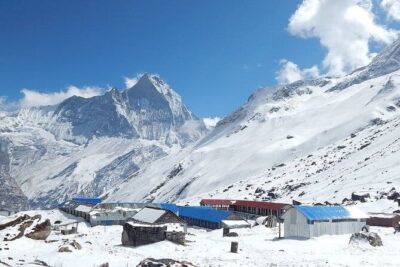
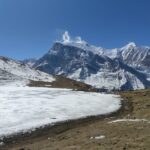
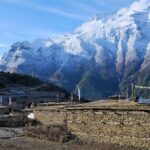
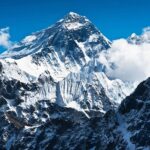
One of the headline reasons people come is the mountain backdrop. You’ll be in the orbit of Mt. Manaslu (8,156m), plus views toward Ganesh Himal (7,406m) and plenty of other snow-capped peaks. You don’t have to be a peak-bagger to appreciate this—what hits hardest is how the mountains color-shift across the day.
In practical terms, this means you’ll look up again and again during breaks, not just at the top of climbs. Early starts often give you clearer sightlines, and afternoon light can make ridges pop in a way that feels almost layered. It’s the kind of scenery that makes you stop taking photos and start actually watching.
Larkya La Pass: the day that defines the trek
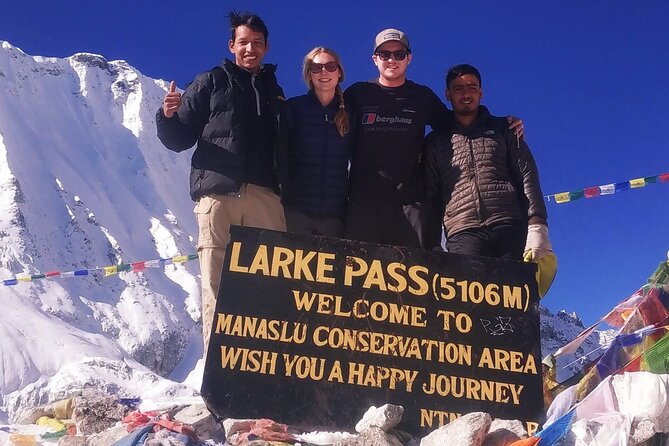
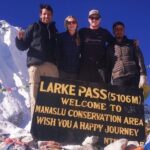
The route’s signature challenge is Larkya La Pass at 5,135 meters. Even if you don’t think you’re a tough hiker, this pass is where the trek earns its reputation. You’re dealing with thinner air, cold temperatures, and the kind of weather that can change fast.
Here’s what you should take seriously: snow conditions can vary. Some departures can mean heavy snow on the approach, and there have been instances where groups didn’t cross the pass because it was unsafe. That’s not a failure. It’s part of the reality of high-altitude trekking—conditions drive decisions, and a good team will prioritize safety over ego.
What helps you handle the pass day is a slow, steady walk and a willingness to go by how you feel rather than by speed targets. The trek is set up so you’re not carrying a huge personal load—your private backpack stays light—but you still need to be physically ready for a long day at altitude.
How hard is it, really? A realistic sense of the walking
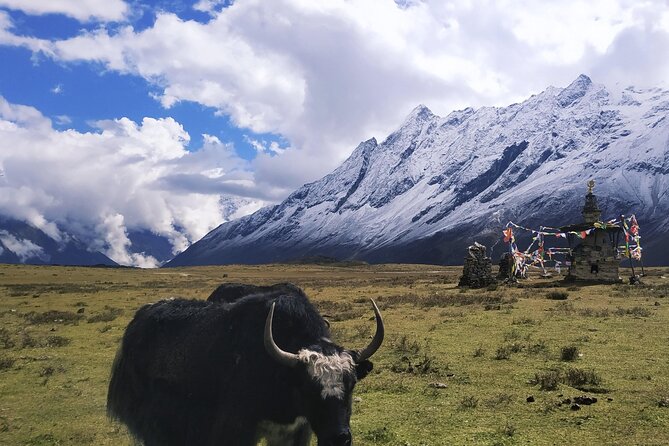
This trek is described as moderately strenuous, but the lived experience is more specific: expect many days where you’re walking around 5 to 6 hours, and some days can average closer to 15 km and about 8 hours of hiking. That’s a big swing, and it depends on your pace, weather, and the day’s elevation profile.
The good news: you don’t need technical climbing skills. This isn’t a mountaineering expedition. Your challenge is endurance, altitude, and staying consistent. If you’ve done a short trekking trip before, you’ll have an advantage—but it’s not required to have mountaineering experience.
The bigger “how you’ll do” factor is altitude management. If you start feeling off, pushing harder usually makes things worse. The advice here is plain: slow down, take breaks, and don’t treat altitude like a race.
Tea-house nights: comfortable enough, basic in the way that feels honest
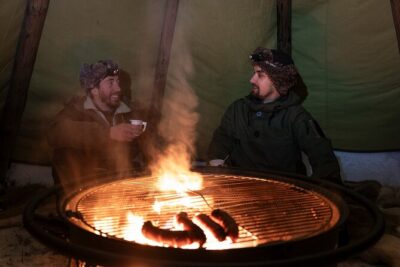
Tea houses are part of the Manaslu Circuit rhythm. You get tea-house lodge accommodation during the trekking period, and your meals during the trek are organized as breakfast, lunch, and dinner. In other words, you’re not scrambling each night trying to find food or figuring out where to sleep.
One practical expectation: tea houses are basic, and that’s exactly what you should plan for. Rooms are simple, and facilities reflect the remote setting. But the key point is that they’re generally comfortable enough for recovery after long walking days, and the food is designed for trekkers who need warm calories fast.
You’ll see variety on the menu depending on where you are and what’s available. During the trek, you can typically choose items in categories like Nepali/continental-style meals, Tibetan options, Indian options, and sometimes Italian dishes. The menu isn’t gourmet, but it’s functional and sustaining.
Culture along the trail: Tibetan-influenced villages and everyday life
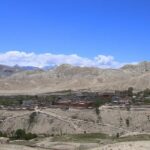
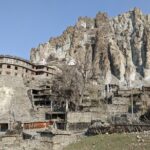
Manaslu isn’t just a mountain circuit; it’s also a cultural one. The route passes through traditional villages with Tibetan culture influence, and you’ll notice differences in home design, clothing styles, and local routines as you travel.
What makes this valuable is how close the culture stays to your day-to-day trekking. You’re not doing a single scheduled cultural stop and then vanishing into the mountains. Instead, the villages are part of how you move—where you eat, where you rest, and where you see how people live with the seasons.
There are also opportunities for side treks and short destination detours within a few hours. That’s great if you want extra viewpoint time without turning the trip into a totally different expedition.
Routes after the earthquake: what “well restored” means for you
The trail has been repaired and re-equipped after the earthquake aftermaths. For you, that matters because it changes the on-the-ground experience: fewer surprises in path conditions, and better-functioning tea-house infrastructure compared to what you might imagine for a remote area.
In practical terms, that means you can plan your days around trekking time and recovery, instead of constantly adjusting because of major route problems. You still need to be flexible for weather, but the basic ability to move through the region is in place.
Guides and porters: the small details that keep things smooth
This trek runs with a highly experienced trekking guide and the required number of porters. A good team changes the whole feel of the mountains because it lowers the stress load. You spend energy hiking instead of managing logistics, permits, or route uncertainty.
In the field, guides you may see associated with this kind of trek include Pradip, Dorji, Dendi, and Ang Dawa, with porters like Min, Karma, Rabin Tamang, and others. Names vary by departure, but the pattern is consistent: a guide who knows how to pace the group and manage altitude decisions, plus porters who help carry what you don’t need on your back.
Also, the trek team takes care of staff food, clothing salary, and insurance. That’s not just admin detail—it’s part of why the operation is stable.
Price and value: what you’re paying for (and what you’re not)
The cost is $1,955 per person. In terms of value, the best way to judge it is by what’s included.
Included items that justify the price:
- 4 nights stay before and after the trek, plus a welcome and farewell dinner
- All meals during the trekking period (breakfast, lunch, dinner) and tea-house lodge accommodation
- Manaslu region special permit plus ACAP permits
- All taxes/VAT and necessary paperwork
- Guide and porters for the trek
- Staff insurance and support costs
Not included (what you should budget for):
- Personal expenses and bar bills/drinks
- Rescue and evacuation
- Tips/gratitude for staff
You should also consider what travel comfort looks like. In Kathmandu and other cities on the route, accommodations are calculated using three-star categorized hotels/resorts in major cities, with options like single, double, triple, or twin sharing. Tea houses cover the rest of the journey.
At the end of the day, you’re not just paying for a walking route. You’re paying for a working system: permits, meals, lodging arrangement, and the people who keep you moving at altitude.
Best season and weather reality: plan for clear skies, but keep backup thoughts
The trekking seasons are typically:
- Autumn (September, October, November) for clear, sunny mountain visibility
- Spring (March, April, May) for similar clarity and warmer conditions
If you want fewer crowds, December, January, and February can work too—just know that you’re accepting colder conditions. Light snowfall can happen, and it can affect pass-crossing decisions at the top end.
And during monsoon (June, July, August), rain can ruin the experience, so it’s usually not the season to aim for if you care most about visibility and trail quality.
Getting ready: fitness without turning it into a mountaineering project
You don’t need mountaineering technical skills. But you do need walking stamina.
The plan the trek recommends is simple: do about an hour of physical workout daily for a couple of weeks before you come (jogging, hiking, cycling, gym work—whatever gets you consistent). Think of it as preparing your legs and lungs, not training for a summit attempt.
On the trek itself:
- Expect altitude to slow you down.
- Walk steady, not fast.
- Use breaks before you’re completely drained.
If you do that, the “moderately strenuous” description becomes manageable.
Small group size and start details that matter
The group limit is 15 travelers maximum. That helps keep the pace sane and makes it easier for the guide to manage altitude decisions without turning the trek into a herd.
The start is set at Tribhuvan Airport in Kathmandu at 9:45 am. There’s also pickup offered, and the trip uses a mobile ticket. Service animals are allowed, if that applies to your situation.
Who should book this Manaslu Circuit Trek?
Book it if you want:
- Remote trekking with a calmer feel than the most famous routes
- High-altitude payoff without technical climbing
- A mix of mountain views and Tibetan-influenced culture
- A guided setup with permits, meals, and tea-house lodging handled
You might think twice if:
- You’re not ready for long walking days and slower altitude pacing
- You want a guarantee of crossing every high point regardless of weather
- You want nightlife and constant creature comforts (tea houses are basic by design)
Should you book this tour?
If your priority is a quieter, authentic Himalayan circuit with real village days and a serious high-pass moment, this one makes a lot of sense. The value holds up because permits, meals, tea-house lodging, and the guide/porter team are included, and the route infrastructure has been restored after earthquake impacts.
Just go in with the right mindset: you’re trekking in the Himalaya, not on a paved hiking trail. Bring patience for altitude, pack smart for cold and snow possibilities, and accept that the mountains sometimes set the rules.
FAQ
What is the meeting point for the Manaslu Circuit Trek?
The trek starts at Tribhuvan Airport in Kathmandu, Nepal, with a start time of 9:45 am.
How long is the Manaslu Circuit Trek?
The duration is approximately 19 days, 6 hours, and 2 minutes.
What is included in the trek meals and lodging?
During the trekking period, the tour includes all meals (breakfast, lunch, dinner) and tea house lodge accommodation.
Are permits included?
Yes. The tour includes a special permit for the Manaslu region and permits for Annapurna Conservation Area (ACAP), along with taxes and necessary paperwork.
What is the highest point on the trek?
The trek includes crossing Larkya La Pass at 5,135 meters.
Do I need technical mountaineering skills?
No. Technical mountaineering skills are not required for this trek.
What fitness level do I need before I go?
The trek is suitable for adventure-motivated trekkers who can walk about 5 to 6 hours per day with a light private backpack. A moderate fitness level is recommended, plus about an hour of daily workout for a couple of weeks prior to travel.
How large is the group?
The trek has a maximum group size of 15 travelers.
What’s the price, and what’s not included?
The price is $1,955. Not included are personal expenses, bar bills and drinks, rescue and evacuation, and tips/gratitude for staff.
Is there a cancellation policy for a full refund?
Yes. Free cancellation is offered up to 24 hours in advance of the experience start time for a full refund, based on local time cutoff rules.