REVIEW · KATHMANDU
Khopra Ridge Trek
Book on Viator →Operated by Top of The World Treks Pvt.Ltd · Bookable on Viator
Ridge views without the Annapurna crowds. I love how this route stays less developed, with simple home-stay lodges that bring you close to everyday village life. I also like the payoff of major viewpoint days around Kopra Ridge (3,870m) and Khayer Lake (4,827m). The trade-off is comfort is basic, and the itinerary climbs high enough that you’ll want a moderate fitness level and real altitude respect.
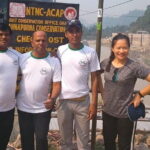
You start with Kathmandu orientation: the Thamel area, dinner in the tourist district, then a classic early visit to Swayambhunath to get your bearings before trekking. And throughout the hike, the guiding and porter team (including Biru Tamang and Bhoj, plus the porter group) is repeatedly praised for care, flexibility, and keeping things smooth—especially when the trail gets steep or your energy dips.
In This Review
- Key things that make Khopra Ridge worth your time
- Why Khopra Ridge feels different in the Annapurna region
- Getting oriented in Kathmandu: Thamel, dinner, and Swayambhunath
- From Nayapul to Ghandruk: the flight-and-walk launch
- Rhododendron days to Tadapani: Annapurna views with a sunset payoff
- Mulde viewpoints and the Dhaulagiri of Nepal chapter
- Khayer Lake (4,827m): the long walk that earns its reputation
- Paudwar and Tatopani: village descents, suspension bridges, and hot springs
- Pokhara reset days: lake boats and the Peace Stupa
- Back to Kathmandu: early Durbar Square and free time to shop
- The $1,461.49 value question: what you’re paying for
- Accommodation reality: basic on the trail, comfort where it matters
- Who should book Khopra Ridge, and who should wait
- Should you book with Top of the World Treks Pvt.Ltd?
- FAQ
- How long is the Khopra Ridge Trek?
- What locations are included in the trip?
- What is the highest point on the trek?
- What kind of accommodation should I expect on the trek?
- Are meals included in the trek price?
- Is this tour private?
Key things that make Khopra Ridge worth your time
- A newer, less-developed route in the Annapurna region with very basic home-stay-style nights
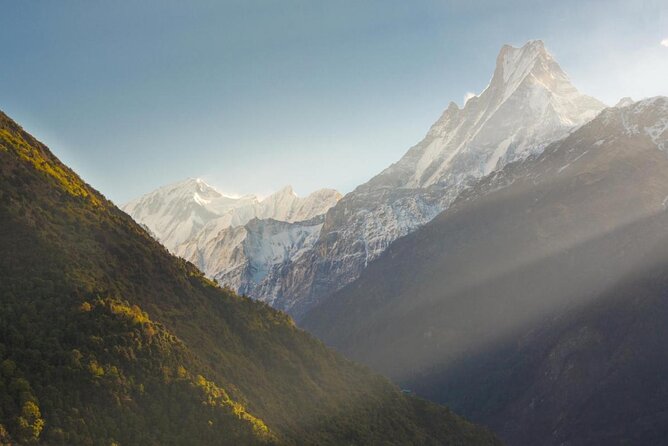
- Ridgeline viewpoints that include Kopra Ridge (3,870m) plus the high Khayer Lake walk (4,827m)
- Rhododendron and forest variety on most hiking days, not just “up and down rocks”
- Wildlife spotting chances mentioned in the plan, including mountain thar and Danfe pheasant
- Hot-spring recovery at Tatopani after village walking and suspension-bridge crossings
- Two big culture anchors: Swayambhunath and Kathmandu Durbar Square, plus the Pokhara Peace Stupa
Why Khopra Ridge feels different in the Annapurna region
Khopra Ridge sits in the Annapurna orbit but avoids the most crowded “headline” trekking flow. That matters because your hiking feels more local. Instead of expecting modern lodge culture every night, you’re moving through a quieter rhythm—thick rhododendron forest, small settlements, and home-stay-style stops where you’re not just passing through scenery.
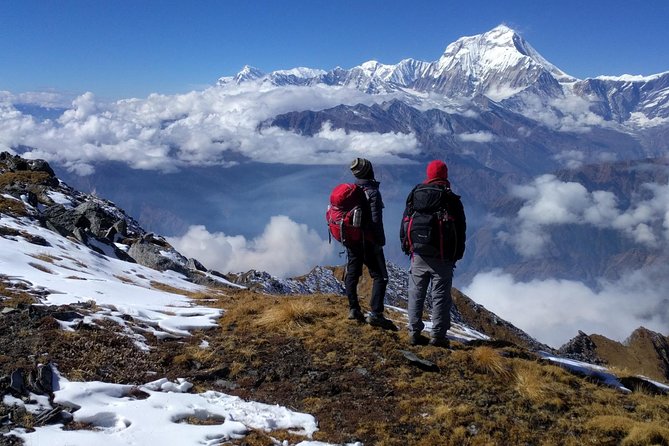
The other big difference is the viewpoint style. This isn’t just one “wow” moment. You get a sequence of lookouts: first with big Annapurna views coming into Tadapani, then an opening of the range above the tree line, and later the ridgeline day from Kopra Ridge. By the time you’re on the Khayer Lake hike, you’re already acclimating to the idea that mornings are for standing still and taking photos you’ll actually want to look at later.
That viewpoint focus also explains the moderate fitness requirement. You’re not just walking comfortably at low elevations for two weeks. You’re climbing high enough that breath and pacing matter.
You can also read our reviews of more tours and experiences in Kathmandu.
Getting oriented in Kathmandu: Thamel, dinner, and Swayambhunath
Day 1 is all about landing and settling in. After arrival, you’re met by a member of Top of the World Treks, then transferred to the Thamel area by bus for about 45 minutes. You get time for a cup of tea, a shower, and a first look at Kathmandu at night—before an early night. This is a smart start. It helps your body recover from travel and helps your mind switch from city chaos to trail focus.
Day 2 adds the best kind of Kathmandu warm-up: Swayambhunath. It’s a Buddhist stupa and monastery site said to be over 2,000 years old and one of the oldest of its kind. The plan gives you a chance to scan the valleys from the viewpoints, plus you may spot monkeys. Even if you’ve seen stupa photos before, being up there in person helps you understand Nepal’s spiritual texture, not just its mountain hype.
The afternoon is practical: trekking prep and checking kit and packing. If you’re doing your first serious trek, Thamel is also where you’ll likely do last-minute gear shopping. The plan frames it as an adventure—because it is. Expect to compare prices, ask questions, and double-check sizes and items.
From Nayapul to Ghandruk: the flight-and-walk launch
On Day 3 you fly from Kathmandu to Pokhara (about 45 minutes). It’s a classic Nepal move: use time efficiently, reduce early fatigue, and get your trekking legs working sooner without the long land travel.
Then you transfer to Nayapul and start walking to Ghandruk. Ghandruk is listed at 1,940m and is described as typical of the region with Gurung culture and excellent mountain views, including Annapurna South, Himchuli, Machhapuchhre, and Annapurna III.
This first trekking section is important for two reasons:
- It eases you into the trail rhythm without going straight for the highest elevations.
- It gives you the first taste of the Annapurna range so your brain knows what it’s working toward.
One practical note: this stretch can feel “early” in the trip. You’ll want to keep your pace sensible, save energy, and let the views do the bragging.
Rhododendron days to Tadapani: Annapurna views with a sunset payoff
Days 4 and 5 are where the hike starts to feel like a living system rather than a line on a map. Day 4 moves through rhododendron forest, with chances to spot monkeys and different birds and flowers. That kind of wildlife and plant variety doesn’t just make photos prettier; it makes the hike mentally easier. You’re not staring at the same uphill slope for hours.
You then sleep in Tadapani (2,300m), positioned for sunset and sunrise views. Those are the kinds of moments that turn a tough day into a story. Even if the clouds roll in later in the week, the plan’s structure gives you repeated “morning light” chances.
Day 5 changes gears slightly. You leave the more developed Annapurna sanctuary trail and move to a less travelled path. The route goes through thick rhododendron forest toward local water buffalo pastures. Then you emerge above tree line and arrive at Dobato for lunch and camp at 3,400m.
This is a big theme on the Khopra Ridge itinerary: forest walking early, then increasing exposure and stronger range views later. Your body also adapts in stages, which helps.
Mulde viewpoints and the Dhaulagiri of Nepal chapter
Day 6 includes a memorable pattern: early hike to a view point, then down for breakfast, then continue trekking. You head up to Mulde view point for panoramic views of the Annapurna and Dhaulagiri ranges. It’s a picture-stop built into your schedule, which is exactly what you want at this stage.
After breakfast at Dobato, you continue to Upper Chistibung (3,000m). The plan mentions descending through forest and pastures, then reaching Deaurili (Lower Chistibung) where you cross a suspension bridge and walk through forest again with a gradual ascent.
Day 7 is the “above the tree line” push. You climb steadily, with wildlife chances including mountain thar and Danfe pheasant. It’s described as something to take slowly, with lots of photo breaks. Then you arrive at Kopra Ridge (3,870m) for the night.
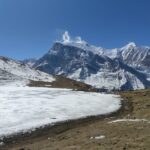
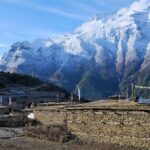
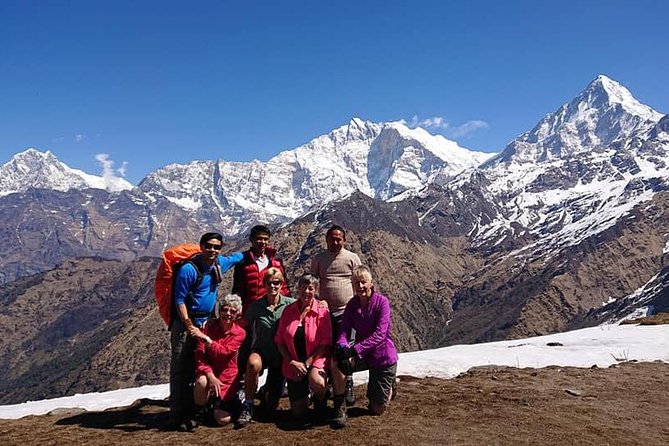
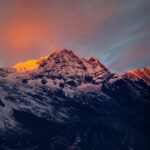
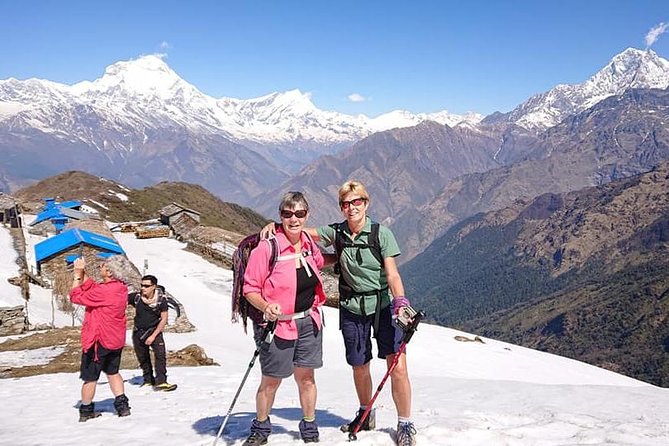
Kopra Ridge is the main ridgeline moment in the plan, with Annapurna South about 6km away, plus Fang and Nilgiri to the north. To the west you can see the Dhaulagiri range. When a trek gives you that much in one spot, it’s not just bragging rights—it’s a sign you’ll likely get clear days for at least part of the week.
Khayer Lake (4,827m): the long walk that earns its reputation
Day 8 is a second night in Khopra, which is a clever move. Instead of forcing every view into one exhausting summit day, you get time to explore the area.
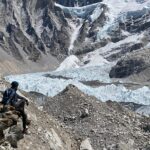
The main activity: a hike up to Khayer Lake and the temple (4,827m). The plan calls it a long walk, but says you won’t be disappointed because the views are worth it.
Here’s how I’d think about this day if you’re planning your energy: you’ve already done high walking at Kopra Ridge. So this hike is best treated as a controlled climb—short breaks, steady breathing, and no hero pacing. If you take it slowly, you get the reward: being high enough to feel the air thin and the horizon wide.
This is also where altitude management becomes real. The itinerary already moves through high points, so treat the Khayer Lake day as your “pay attention” moment, not a day to test your limits.
Paudwar and Tatopani: village descents, suspension bridges, and hot springs
Day 9 shifts gears to a descent. You walk down steep sections, passing open ground through buffalo pastures before entering oak and rhododendron forest. Then you reach Paudwar for the night.
Day 10 is another descent day, but with a different reward. You descend through fields to a small river and cross a suspension bridge. Then you continue down to Tatopani (1,190m), where you spend the night and enjoy spring water at the hot springs.
Tatopani is one of those “trail reset” experiences that makes the whole trip feel survivable. After days above and around tree line, the combination of lower elevation, village pace, and hot-spring soaking is exactly what you want for recovery. Even if you don’t soak for long, the warm water breaks the cycle of stiff legs and tight calves.
Pokhara reset days: lake boats and the Peace Stupa
Day 11 ends trekking. From Paudwar you travel by local bus to Beni, then taxi to Pokhara. On this day, you’re also directed toward a museum stop in Pokhara: the plan includes the term Pokhara Museum.
Day 12 is your proper recovery day in Pokhara. You take boats across Fewa Lake, then walk up to the World Peace Stupa. The plan highlights views of the mountains and the city of Pokhara from there, plus a chance to learn about Buddhism. Afterward you walk back down the other side. If the group wants, there’s also a chance to visit the Mountaineering Museum.
Even if you’re not a museum person, the Peace Stupa works because it gives you a different angle on the mountains. You’re not staring from a ridge at clouds and rock; you’re seeing a wider region from a calmer setting. It also helps you mentally close the loop after the trek.
Back to Kathmandu: early Durbar Square and free time to shop
Day 13 starts with an early morning trip back to Kathmandu. You head to the tourist bus park, catch a drive into the city, return to the hotel, and then get the rest of the day free for shopping and rest. This is where Thamel makes sense again: you’ll likely want snacks, souvenirs, and trekking-related items you held off on earlier.
Day 14 continues with Kathmandu Durbar Square in the morning. Extra days are possible at your own cost, and the operator says they can arrange it. In other words: if you need a few more days because the flight schedule or jet lag demands it, you’re not forced to rush.
One line in the plan that I like for practical travelers: after days trekking, they stress using the best available accommodation and food, and that you can choose from a menu. Also, the plan says the price includes all meals on trek. That’s a real value point because food budgets can sneak up quickly on high routes.
The $1,461.49 value question: what you’re paying for
At $1,461.49 per person for an approx. 14-day trip, the value isn’t only about the trek itself. You’re paying for a full Nepal rhythm: city orientation, internal flights and transport, guiding, porter support, and meals on trek.
The “what you get” that feels most important in the plan:
- Guides and porters are repeatedly described as caring, professional, and flexible. Biru Tamang and Bhoj are named in feedback, along with porter groups that provide physical and mental support.
- Time pacing is built in. The plan uses early starts, view points, and rest into the schedule rather than making every day a forced march. That reduces burnout risk.
- Meals on trek are included, and you choose what you eat from the menu available. That’s useful because it removes daily decision stress while still letting you avoid food you don’t like.
Where you might feel the cost differently is comfort expectations. The plan is honest that lodges and tea houses are basic and often home-stay style on this less-developed route. If you need modern hotels every night, that mismatch will sting.
Also note the itinerary style: some entry tickets are marked as included on certain days, while other admission notes show not included. So if you’re budgeting tightly, keep a little buffer for entrance fees and small add-ons you decide last minute.
Accommodation reality: basic on the trail, comfort where it matters
The trek’s most distinctive lodging approach is contrast. On the hiking days—especially on the less developed sections—you should expect very basic lodges and home-stay arrangements. That’s not a flaw; it’s part of what makes this route feel closer to daily life. You’re less in a “tourism corridor” and more in the edges of a working region.
Then, where the trip turns back into city time (Pokhara and Kathmandu), the operator emphasizes using only the best lodges and hotels and feeding you well. That balance is worth paying for. Most people don’t want to suffer in city hotels after a high day on the ridgeline. The schedule gives you that reset.
Practical tip: pack for basic rooms. Bring a small personal towel, plan for limited hot water expectations, and keep your sleep layers ready.
Who should book Khopra Ridge, and who should wait
This trek is a strong match if you want:
- A view-first Annapurna experience with Kopra Ridge and Khayer Lake as major goals
- A route that’s less polished, more village-focused, with home-stay style nights
- A balanced trip length that includes Pokhara lake time and Kathmandu culture anchors
- Support that feels human. Feedback highlights guide care and flexibility, and porters who assist not just physically but emotionally.
Think twice if you:
- Need consistently comfortable accommodations every night
- Don’t handle altitude well, since the plan includes major points like Kopra Ridge (3,870m) and Khayer Lake (4,827m)
- Prefer shorter hikes with no long walk days, because at least one high portion of the trip includes a long Khayer Lake outing.
Should you book with Top of the World Treks Pvt.Ltd?
If you want Annapurna views but you’re tired of the same overdeveloped trekking pattern, this Khopra Ridge route makes sense. The blend of less-developed trail days, big ridgeline scenery, and real recovery time in Pokhara is a smart structure.
Book it if:
- You’re comfortable with basic lodging and you’d rather experience village life than hotel comfort every day.
- You appreciate guided planning that can slow down and adjust to you. Named guides like Biru Tamang and Bhoj are praised for professionalism and flexibility.
- You value included trek meals. That takes a real daily headache off your plate.
Skip or postpone if:
- You’re only interested in “comfortable the whole way” trekking.
- You’re aiming for a very easy hike. This has high altitude segments and long walking days, even if pacing is built in.
If your goal is to stand above the Annapurna world and still feel connected to Nepal beyond the postcard, Khopra Ridge is a compelling choice.
FAQ
How long is the Khopra Ridge Trek?
The trek is listed as approximately 14 days.
What locations are included in the trip?
The itinerary includes Kathmandu (Thamel, Swayambhunath, and Kathmandu Durbar Square), Pokhara (Fewa Lake and the World Peace Stupa, plus optional Mountaineering Museum), and the trek through the Annapurna region via villages such as Nayapul, Ghandruk, Tadapani, Dobato, Kopra Ridge, Khayer Lake, Paudwar, and Tatopani.
What is the highest point on the trek?
The highest point mentioned is Khayer Lake and its temple at 4,827m.
What kind of accommodation should I expect on the trek?
The route is described as less developed, with lodges and tea houses that are very basic and often home-stay style.
Are meals included in the trek price?
Yes. The plan states that the price includes all meals on trek, and you can choose food from the menu available.
Is this tour private?
Yes. It is described as a private tour/activity, with only your group participating.