REVIEW · KATHMANDU
Annapuran Base Camp Trek
Book on Viator →Operated by Well Plan Trekking · Bookable on Viator
Annapurna Base Camp is no casual stroll. This trek blends mountain drama with real village life as you walk through Gurung country, then work your way up toward Mt. Annapurna’s base camp inside the sanctuary of peaks. Two things I really like are that your trip is guide-led with English support (plus porters who take on the carrying) and that the essentials—permits and trekking meals—are handled up front. One consideration: the big challenge is altitude, and the trek plan runs much longer than the quick duration label suggests, so confirm the exact schedule before you pack your bags.
If you want a trip that stays calm when weather turns weird, this operator’s lead guide Ram and porter Santosh show up in feedback as people who prioritize safety and route knowledge. One guest even described hail during a climb near Deurali and said Ram helped manage it with rain gear, which is exactly what you want when clouds roll in. You also get a private setup—your group only—plus airport pickup and drop by private car in Kathmandu.
In This Review
- Quick key points (the stuff that matters)
- Annapurna Base Camp: how this 11-day trek really flows
- Kathmandu arrival and getting oriented at 1,300m
- Pokhara transfers and the launch point for the trek
- Walking into Ghandruk: villages, Gurung culture, and community stops
- Ghandruk → Sinuwa: building rhythm before Deurali
- Climbing to Annapurna Base Camp at 4,130m
- ABC → Bamboo: the descent phase that still works your legs
- Bamboo → Jhinu Hot Spring: the well-earned soak
- Jhinu Hot Spring → Nayapul → Pokhara → Kathmandu
- Price and value: what you’re paying $741.34 for
- Lodging and meals: what your days feel like
- Support on the trail: guide Ram, porter Santosh, and safety-first habits
- Weather, pacing, and altitude: how to prepare like a grown-up
- Who should book this Annapurna Base Camp trek?
- Should you book Well Plan Trekking for Annapurna Base Camp?
- FAQ
- How long is the Annapurna Base Camp trek on this trip?
- What is included in the price?
- Are trekking permits included?
- Do I need travel and rescue insurance?
- How do transfers work between Kathmandu and Pokhara?
- Is pickup offered in Kathmandu?
- What kind of accommodation will I get during the trek?
- What meals are provided on the trek?
- What physical fitness level do I need?
- Is the tour private?
- Can I cancel for a full refund?
Quick key points (the stuff that matters)
- Permits and TIMS included so you’re not scrambling at the last minute
- English-speaking trekking guide with route knowledge and safety focus
- Porters/sherpa helpers included with meals, accommodation, salary, and insurance
- 3 meals a day during the trek plus tea or coffee
- Mountain stays in private rooms (shared toilet), so you’re not living in dorm chaos
- A classic “villages to base camp” route with a cultural stop in Ghandruk
Annapurna Base Camp: how this 11-day trek really flows
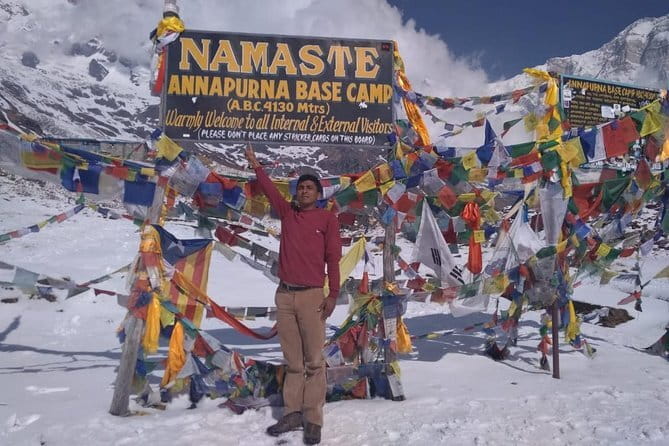
First, a quick reality check. The short tour summary says 2 days (approx.), but the day-by-day walking plan provided is clearly an 11-day itinerary with multiple driving legs and a full round-trip from Kathmandu to the Annapurna region and back. When you’re comparing options, treat that detailed plan as the true backbone—and ask the operator to confirm your exact dates and walking days in writing.
In practical terms, you’ll do a mix of driving and hiking. Kathmandu and Pokhara handle your “start and recovery” time, while the middle days are the real climb—up to Annapurna Base Camp at 4,130m (13,549 ft)—followed by a descent that feels long even when it’s technically “downhill.”
You can also read our reviews of more tours and experiences in Kathmandu.
Kathmandu arrival and getting oriented at 1,300m
Your trip starts in Kathmandu (listed meeting point: Kathmandu 44600). Arrival day is paced as a true arrival—no forced hiking on day one—and you’ll be sleeping at about 1,300m (4,264 ft).
The inclusion that helps here is airport pickup and drop by private car. That means you can land, get your bearings fast, and not burn a whole afternoon figuring out transportation. Since the trip also includes 2 nights in Kathmandu with breakfast, you’re not squeezed into a one-night scramble before the drive.
Pokhara transfers and the launch point for the trek
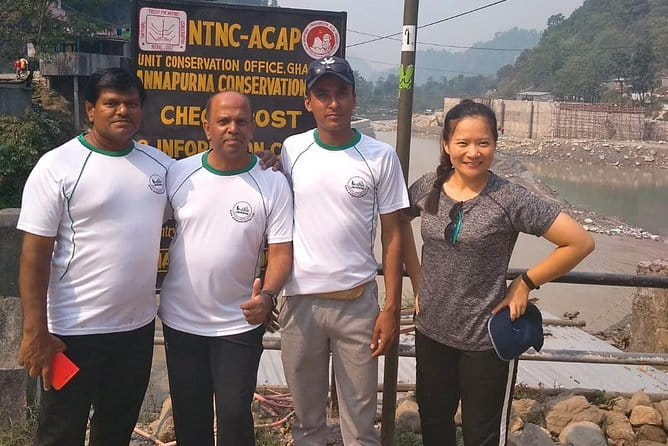
After Kathmandu, you’ll do a 6–7 hour drive down to Pokhara at 820m (2,690 ft). This is not just a commute—it’s part of the acclimatization rhythm. You’re dropping in altitude before you start hiking again, and that tends to make the early walking feel more manageable.
Then you’ll head to the trek’s start area near Nayapul and walk into Ghandruk at 1,940m (6,364 ft). The early days are designed for steady effort: you’re hiking roughly 5–6 hours on some days rather than stacking every leg to the maximum.
Walking into Ghandruk: villages, Gurung culture, and community stops
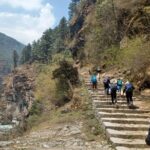
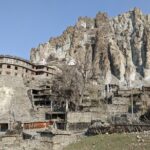
One of the most interesting parts of this route is that it’s not only about reaching a dot on a map. The plan explicitly takes you through Nepal’s model village Ghandruk and includes a first notable excursion among the Gurung and Dalits communities.
In plain terms, this gives your trekking days texture. When you stop in villages, you’re not just refueling; you’re seeing how people live in the hills—how communities relate to the trekking season, and what a “base camp trek” looks like when it passes through someone’s neighborhood. If you like your trips to feel human, that matters.
You’ll sleep at Ghandruk (1,940m) after that first walking day from the Nayapul area. It’s also a good moment to let your legs settle before you start climbing more aggressively.
Ghandruk → Sinuwa: building rhythm before Deurali
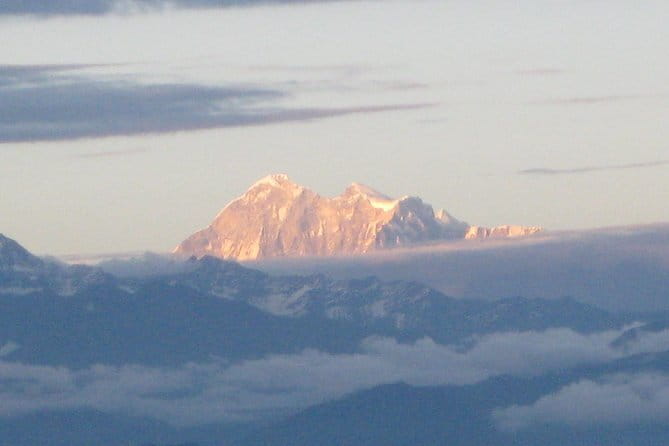
Next is the leg from Ghandruk (1,940m) to Sinuwa (2,360m/7,742 ft), listed at 5–6 hours. This day is often where trekking becomes real: you’re moving steadily, and the altitude is rising enough that you feel it, but not yet at the “headache and huffing” stage for most people.
Then comes Sinuwa → Deurali at 3,230m (10,597 ft) for about 6 hours. Deurali is a key staging point, and that staging is the point. You’re gaining altitude in steps, not in one giant leap, which is what you want for comfort and safety on a trek like this.
If you’re the type who likes a plan, this is a nice setup: each day gives you a target altitude and a time window, so you know what kind of energy you need before you start walking.
Climbing to Annapurna Base Camp at 4,130m
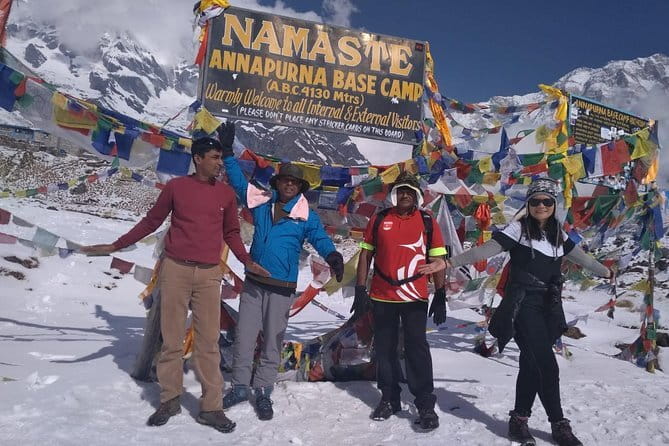
The big day is Deurali → Annapurna Base Camp (ABC) at 4,130m (13,549 ft). It’s listed at around 5 hours.
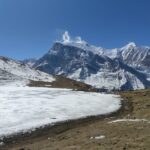
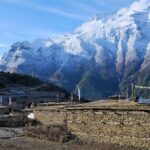
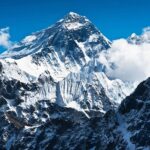
ABC is the moment most people picture when they think of the Annapurna region. You’re not just walking to a scenic viewpoint—you’re walking into the high-altitude “center” of the route. That’s also why the route chooses to build up gradually over several days before the base camp push.
One detail worth noting from the practical info you’ve been given: weather can change quickly. In feedback associated with this operator, there’s mention of poor conditions early on and even hail on a day near Deurali, with the guide preparing rain gear. That’s a real reminder: pack for cold and wet, even if the forecast looks friendly.
ABC → Bamboo: the descent phase that still works your legs
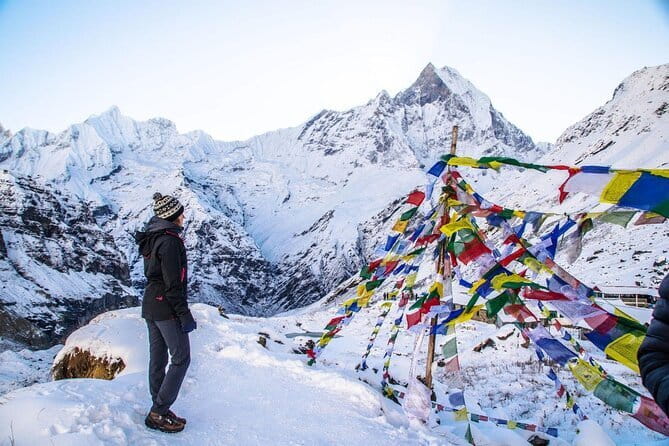
After base camp, you don’t immediately “float downhill.” The plan has Annapurna Base Camp → Bamboo (2,340m/7,677 ft) for about 6 hours.
That altitude drop is big in number form, but your body still feels the descent. If you’ve ever come down a steep trail and felt your knees complain later, you know why the operator includes porters/sherpa helpers. Less weight on your back can save you when the trail turns uneven and your steps get careful.
This is also where staying mentally steady helps. Base camp days often feel like a climax, and then you’re asked to keep walking. Treat Bamboo as your “reset village” stop.
Bamboo → Jhinu Hot Spring: the well-earned soak
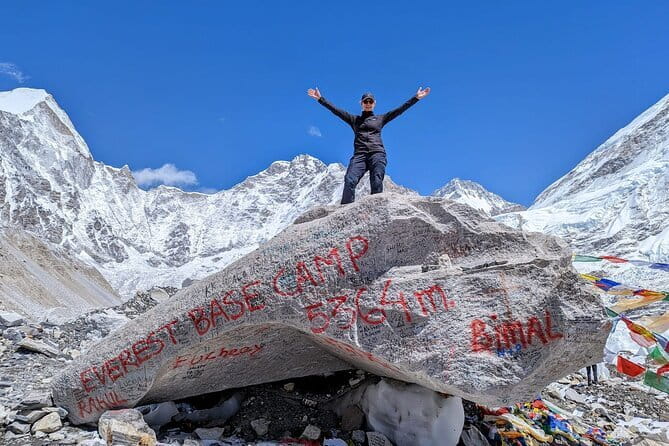
Next is Bamboo → Jhinu Hot Spring (1,780m/5,839 ft) for about 5 hours. This leg brings you down further into warmer territory, and the payoff is the hot spring stop.
The itinerary makes it feel like a reward rather than just another checkpoint. After multiple days of uphill effort and the strain that comes with descending, soaking is the kind of “I paid for this” moment that makes trekkers smile even when it’s chilly out.
If you’re deciding what trekking style fits you: this is ideal if you want a classic ABC experience with a concrete recovery stop built in.
Jhinu Hot Spring → Nayapul → Pokhara → Kathmandu
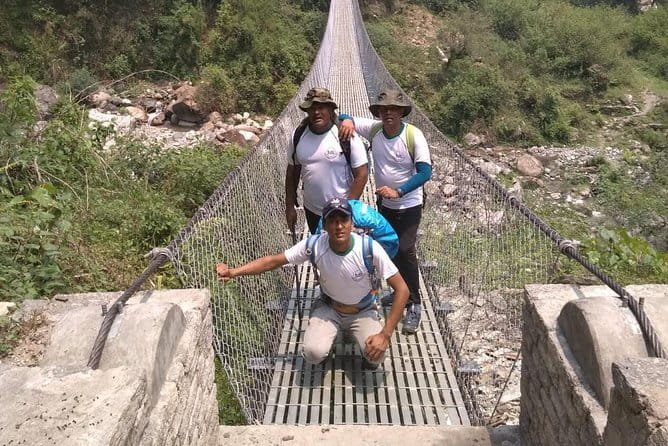
After Jhinu, you’ll walk to Nayapul and then drive to Pokhara. The plan lists Jhinu Hot Spring → Nayapul at about 7 hours, followed by a drive back to Pokhara.
Then you’ll do the longer drive: Pokhara → Kathmandu (7–8 hours). This last leg is the part many people underestimate. You may feel “done” emotionally, but your body still has to sit through a long road transfer.
The plan does include breakfast in Kathmandu and Pokhara stays, and the trekking meals are covered. So you’re not left worrying about food quality mid-transfer, which can be a relief.
Price and value: what you’re paying $741.34 for
The listed price is $741.34 per person. On a trek like Annapurna Base Camp, the real value is rarely just the hike. It’s the logistics you don’t want to manage yourself at altitude.
Here’s what’s included that affects value:
- 2 nights Kathmandu + 2 nights Pokhara with breakfast
- Experienced English-speaking trekking guide
- Airport pickup and drop by private car in Kathmandu
- Kathmandu–Pokhara–Kathmandu by tourist bus
- Permits: Annapurna Conservation permit and TIMS
- Porters/sherpa helpers with meals, accommodation, salary, and insurance
- 3 trek meals per day with tea or coffee
- Mountain accommodation: soft comfort, private room, shared toilet
What’s not included (and can change your total cost):
- Travel and rescue insurance (you’ll need this yourself)
- Alcohol and bar bills
- Personal expenses like phone calls, laundry, shower costs, and similar items
- Tips for the guide and porter
- Kathmandu and Pokhara lunch and dinner
For many people, the biggest value is the permits and the human logistics: guide + helpers + meal planning. If you’ve ever tried to cobble together permits, transport, and lodge options, you’ll understand why that’s worth paying for.
Lodging and meals: what your days feel like
During the trek, you’ll stay in mountain accommodations described as soft, comfort, private rooms with shared toilets. That’s a meaningful upgrade compared with dorm-style trekking lodges—privacy helps when you want to rest and recover between long walk days.
Meals are also included: breakfast, lunch, and dinner during the trek, each paired with tea or coffee. That matters because on a trek, hunger and decision fatigue add up. If someone is already organizing food, you can focus on pacing and conserving energy.
One practical thing to keep in mind: shared toilets are still shared. Pack basics like a small towel and whatever hygiene items you personally prefer.
Support on the trail: guide Ram, porter Santosh, and safety-first habits
This is one of the most praised angles in the info you were given: support quality. Multiple mentions center on the lead guide Ram being well known for route planning and safety, and on porter Santosh for making the trek smoother and more manageable.
Now, I can’t promise you’ll get these exact same people. But the recurring theme is clear: the operator’s model leans heavily on experienced guidance and strong porter support—not just handing you a map and hoping for the best.
Also, weather readiness showed up in feedback: when conditions worsened near Deurali and hail occurred, the guide helped handle it using rain gear. That’s the kind of competence you want in the mountains.
Weather, pacing, and altitude: how to prepare like a grown-up
The route climbs from around 820m in Pokhara up to base camp at 4,130m, with high points like Deurali at 3,230m. That’s not a walk in the park. Even when the daily hike hours look moderate, your breathing changes with altitude, and your energy shifts.
If you’re slow, that’s not a dealbreaker. Feedback includes an example of someone moving at a slower pace and still completing the trip safely. The bigger issue is planning: start early in each day, don’t chase the group too hard, and let the mountain set your tempo.
Since hail and rain gear readiness were part of someone’s real experience on this route, pack layers you can actually use. Bring a rain shell, warm gloves if you run cold, and shoes with grip you trust on wet stone.
Who should book this Annapurna Base Camp trek?
This trek is a good fit if:
- You want the classic Annapurna Base Camp experience with structured pacing
- You like the idea of including Ghandruk and community excursions, not only mountain views
- You prefer private group travel with a guide and porter support
- You’re comfortable with a moderate fitness level and multiple days of hiking
You might think twice if:
- You’re looking for a quick, easy “weekend trek” (the walk plan is clearly longer than the short duration label)
- You don’t want shared toilet facilities in the mountain lodges
- You’re not willing to budget for tips, personal expenses, and—most importantly—your own travel insurance
Should you book Well Plan Trekking for Annapurna Base Camp?
I’d book this if you want a guided, permit-covered trek that removes a lot of the headache from planning. The inclusion list hits the big decision points: permits, guide, porters, meals, and private-room lodging in the mountains. And if you care about cultural stops like Ghandruk, this route is built to deliver that too.
Before you pay, do one simple thing: confirm the exact trek length and dates. The itinerary you’ve been given reads like an 11-day plan, while the summary mentions 2 days (approx.). Get the clarification, then move forward with confidence.
Also, don’t skip insurance. The trek provider doesn’t include travel and rescue coverage, and with altitude involved, it’s not a place to cut corners.
FAQ
How long is the Annapurna Base Camp trek on this trip?
The summary says 2 days (approx.), but the detailed day-by-day plan is written as an 11-day itinerary. Confirm the exact number of trekking days and the schedule with the provider before booking.
What is included in the price?
Included are 2 nights in Kathmandu and 2 nights in Pokhara with breakfast, an English-speaking trekking guide, airport pickup and drop in Kathmandu by private car, Kathmandu–Pokhara–Kathmandu by tourist bus, trekking permits (Annapurna Conservation permit and TIMS), porter support, and 3 trek meals per day with tea or coffee. Mountain accommodation during the trek is also included.
Are trekking permits included?
Yes. The Annapurna Conservation permit and TIMS are included.
Do I need travel and rescue insurance?
Yes. Travel and rescue insurance is not included.
How do transfers work between Kathmandu and Pokhara?
Kathmandu to Pokhara and back are included by tourist bus.
Is pickup offered in Kathmandu?
Yes. There is airport pickup and drop by private car in Kathmandu.
What kind of accommodation will I get during the trek?
You’ll stay in mountain accommodations described as soft, comfort, private rooms with shared toilet.
What meals are provided on the trek?
You get breakfast, lunch, and dinner during the trek, with a cup of tea or coffee included with meals.
What physical fitness level do I need?
The trip is for travelers with a moderate physical fitness level.
Is the tour private?
Yes. It’s listed as a private tour/activity, so only your group participates.
Can I cancel for a full refund?
The policy listed is free cancellation up to 24 hours in advance for a full refund.