REVIEW · CUSCO
Salkantay Trek 4 Days to Machu Picchu by Glamping Sky Lodge Dome
Book on Viator →Operated by Quechuas Expeditions · Bookable on Viator
Four days, one shocking pass. This Salkantay trek to Machu Picchu, finished with glamping dome comfort, mixes high passes, cloud-forest walks, and a morning run up to the ruins.
I especially like the dome lodging at camp (a real upgrade over sleeping on the ground) and the way your team keeps the whole day moving with hot drinks, solid meals, and extra support when the altitude bites.
One consideration: you start ridiculously early and the trek reaches about 4,650 m on the high point, with cold nights and a real chance of snow. If you’re not ready for that, the “amazing” part will feel more like suffering.
In This Review
- Key Things I’d Focus On
- Why Salkantay Beats a Straight Ruins Day
- Getting Off to the Right Start: Cusco Pickup and the Early Grind
- Day 1: Mollepata, Cruzpata Mountain Lunch, and Soraypampa’s Cold Reality
- Day 2: The 4,650 m Pass, Possible Snow, and the Cloud Forest Comeback
- Day 3: Upper Jungle, Lluskamayo River, Waterfalls, and Fruit-Heavy Valleys
- Day 4: Machu Picchu at Sunrise—Bus Option or a 1.5-Hour Climb
- Dome Sky Lodge Glamping: Comfort, Warm Food, and Camp Life
- Guides Matter: What I’d Choose Based on the Team Style
- Price and Logistics: Is $761.91 a Good Value?
- What to Pack for Real Cold and Real Altitude
- Who This Trek Suits (and Who Should Rethink)
- Should You Book This Salkantay 4-Day Glamping Trek?
- FAQ
- FAQ
- What’s the total duration of the trek?
- What time do you get picked up in Cusco?
- Is Machu Picchu entrance included?
- Can I go to Machu Picchu for sunrise?
- What lodging is included during the trek?
- What meals are included?
- Do you include vegetarian meals?
- How much can I carry personally?
- What fees are not included?
- Is the booking refundable or changeable?
- What’s the group size?
Key Things I’d Focus On
- Glamping dome nights keep you warmer and more comfortable than basic camping
- A real Machu Picchu sunrise option (first bus around 5:30) plus a guided orientation walk
- Small-group feel with max 19 travelers and an assistant guide for bigger groups
- High-altitude progression across day 2’s pass, with time to adjust as you descend
- Chef-led food you’ll actually look forward to after long climbs
- Horsemen/porters manage the bulk (7 kg max per person) so you hike lighter
Why Salkantay Beats a Straight Ruins Day
If your main goal is Machu Picchu, sure, you can show up and take photos. But Salkantay is the part that changes you. You’re not just visiting a site—you’re moving through dramatic altitude zones that the Andes drop through quickly: high views, cold night air, then cloud forest, then upper jungle with waterfalls and fruit.
This particular operator leans into comfort without turning it into a luxury spa. You still hike hard. You still feel the altitude. But you’re not left to figure out camp logistics alone. The team handles the cooking setup, the camp gear, and the climb support so you can focus on the route and the moment.
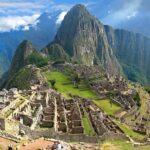
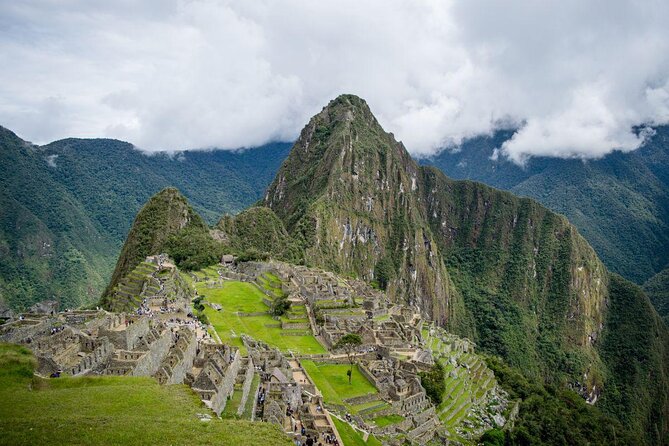
And yes, the finale matters: you’re hiking (or taking the first bus) to Machu Picchu early enough to catch the light when the ruins feel most alive.
You can also read our reviews of more tours and experiences in Cusco.
Getting Off to the Right Start: Cusco Pickup and the Early Grind
You’ll be picked up from your hotel very early—around 4:30 a.m.—and drive about three hours to Mollepata. As soon as you arrive, breakfast happens while the cook and horseman pack the camping setup and cooking gear. Then you get moving.
Why this matters: early starts are the price you pay for avoiding late-day cold, crowds, and slowdowns. You’ll feel tired at first, but the schedule is built to keep you on a safe route through changing weather and daylight. It also helps you reach camp while you still have visibility to settle in and enjoy the views.
Also look at the schedule reality: you’re not just waking up early once. By day 4, you’re up again around 4 a.m. for Machu Picchu. Plan your sleep in Cusco accordingly.
Day 1: Mollepata, Cruzpata Mountain Lunch, and Soraypampa’s Cold Reality
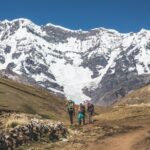
Day 1 is the warm-up that’s still uphill. After breakfast in Mollepata, you hike for about three hours with early climb effort to get to Cruzpata.
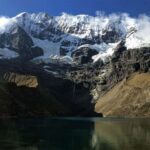
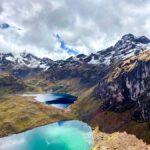
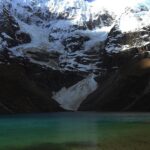
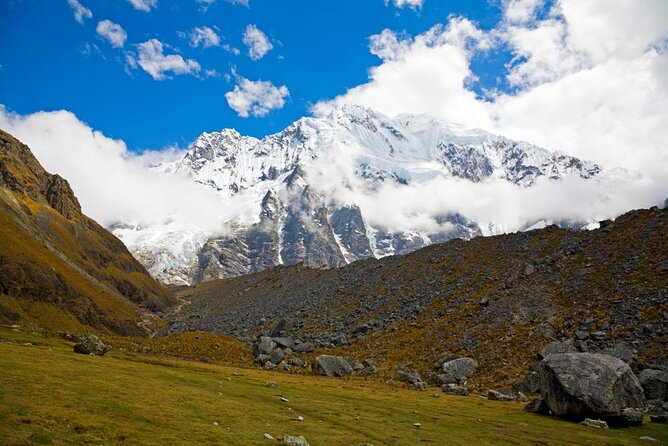
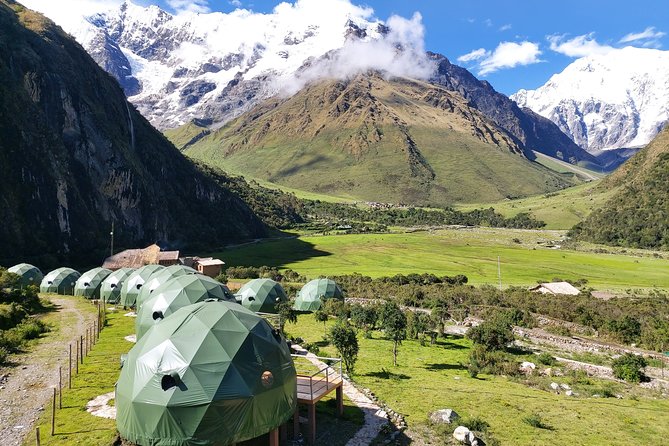
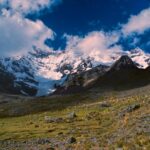
The big moment here is lunch with panoramic views of major peaks: you’ll see Humantay (4,120 m) and Salkantay (6,271 m) from up high. Even if your legs are protesting, that lunch view usually snaps you into focus: this trek is doing exactly what it promises.
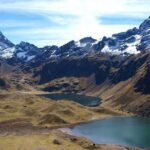
Then you continue toward Soraypampa (3,800 m), your first campsite. This site is described as the highest and coldest of the trip. In other words: don’t assume day 2 is the only uncomfortable day. Even day 1 can feel sharp at night.
Practical takeaway: this is where the included comfort details pay off. You’ll have dome lodging later, and you’ll appreciate the sleeping bag setup (provided, rated to -11°C). If you run cold easily, treat day 1 night seriously.
Day 2: The 4,650 m Pass, Possible Snow, and the Cloud Forest Comeback
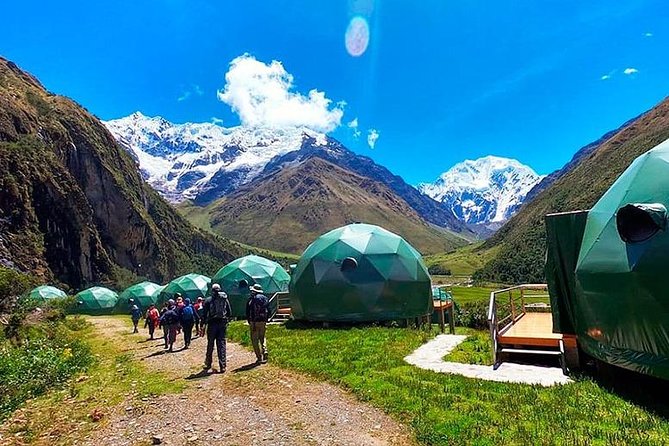
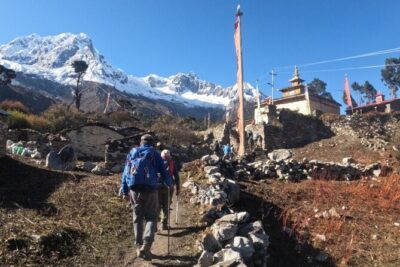
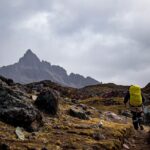
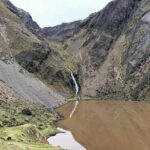
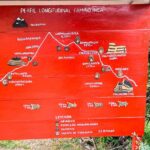
Day 2 is the longest and the hardest. Breakfast starts and then you begin hiking around 5:30 a.m. For the first four hours, it’s uphill to the trek’s high point: 4,650 m. The pass sits roughly halfway between Salkantay (right side) and Tucarhuay (left side). Expect incredible views—and yes, there’s a possibility of snow up there.
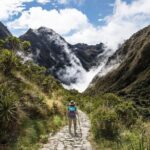
After resting, you start descending. That transition is the reward. The route goes from high, thin-air climbing into a dramatic cloud forest area. It can feel like you stepped into a different world: cooler air softens, trees appear thicker, and the trail becomes less about raw altitude effort and more about steady moving.
Lunch happens at Huayracpunku, then you keep walking toward the jungle edge until you reach Chaullay. After that, local transportation (about one hour) takes you to Loreta La Playa Coffee Campsite.
Why I like this structure: it prevents the trek from being only “suffer uphill.” You earn the climb with a clear payout—then you get a real environmental change as you descend.
What to watch for: the high point comes early in the day. If you start too fast, altitude can hit hard. Go slow, take breaks, and use whatever techniques your guide recommends during the ascent.
Day 3: Upper Jungle, Lluskamayo River, Waterfalls, and Fruit-Heavy Valleys
Day 3 shifts the tone. You start around 6:30 a.m. and head into the upper jungle. You cross the Lluskamayo River and pass smaller brooks along the way.
The walking time is about six hours to reach La Playa. This is where you’re likely to notice the Andes doing their “two worlds” thing: valleys open up, waterfalls show up, and tropical plants and fruits become part of what you’re seeing instead of just what you’re climbing toward.
This day is also mentally important. If days 1 and 2 have you thinking only about elevation and endurance, day 3 gives you space to enjoy motion again. Your legs may still be tired, but the scenery changes enough that you stop counting steps and start noticing details.
Day 4: Machu Picchu at Sunrise—Bus Option or a 1.5-Hour Climb
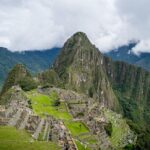
Day 4 is the big finish. You wake up early (around 4:00 a.m.) for breakfast and depart about 4:30 a.m. You can climb to Machu Picchu, which takes about 1.5 hours.
There’s also an option to catch the first bus at around 5:30, about a 25-minute ride, so you can appreciate Machu Picchu as the sun rises.
Either way, you get a walking tour of about 2 hours guided by your guide. After that, you explore on your own.
This part is more than a checkbox. Going early affects how Machu Picchu feels—light, air, and atmosphere are simply different when you’re not arriving later in the day. You’re also more likely to have your guide point out the details you’d otherwise miss (terrain logic, Inca design choices, and the way the site sits in the mountains).
Dome Sky Lodge Glamping: Comfort, Warm Food, and Camp Life
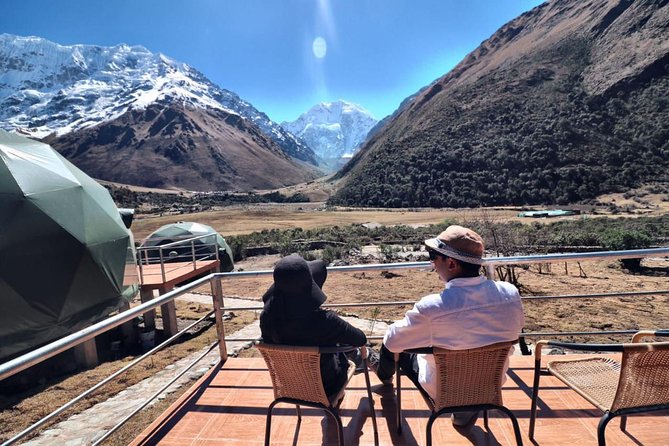
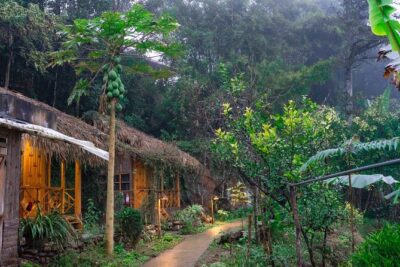
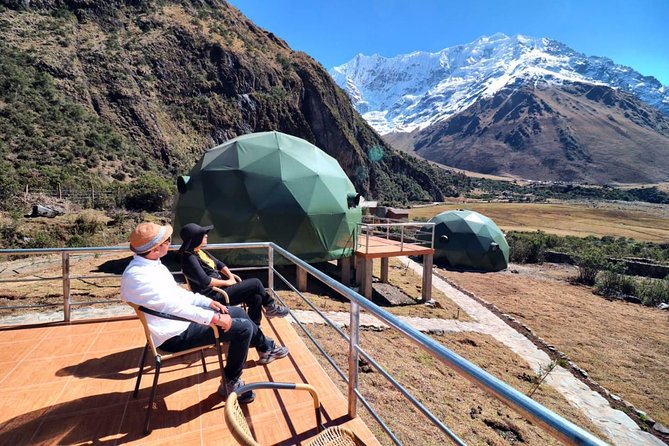
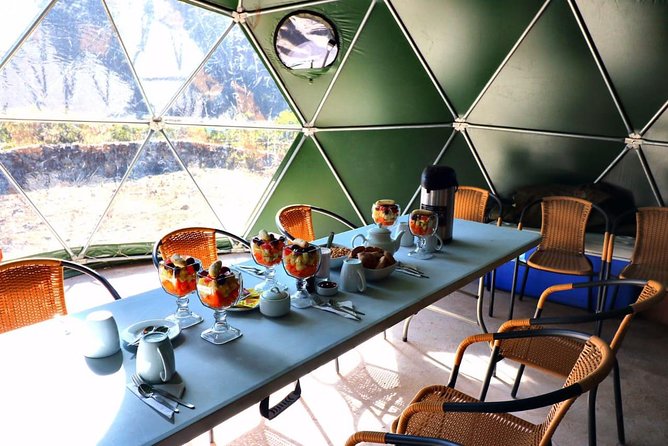
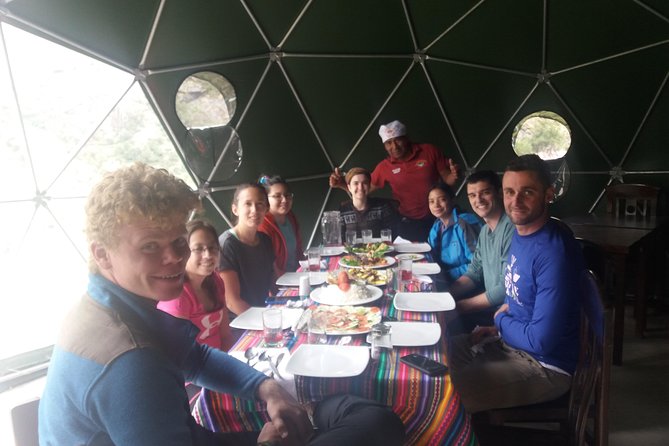
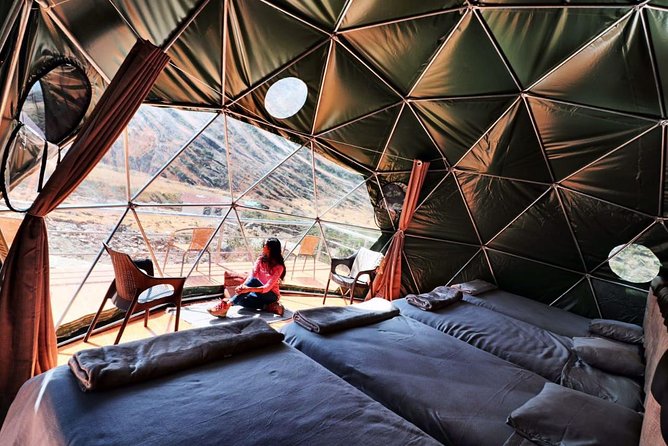
This trek is marketed as glamping, and the value shows up in small things that add up after long days. You sleep in Sky Lodge domes—not a thin tent on cold ground. Several guides and staff also emphasize comfort basics like staying warm at night and having hot drinks available in camp.
Food is a standout. The trek includes 3 dinners and 3 afternoon hot teas, plus 3 breakfasts and 3 lunches with specific exceptions (breakfast day 1 and lunch day 4 are not included). Even when you’re exhausted, the chef setup is what makes the whole day feel manageable.
In the reviews I read, guide names like Fernando and Nildo came up again and again, and so did the chef. People specifically praised the cooking quality (including how the chef managed impressive meals in mountain conditions). Chef Julian was also mentioned directly in one account. The common thread is simple: you don’t feel like you’re just eating to survive.
And then there are the horsemen, the unsung part of the operation. They carry your camp load and cooking equipment and handle the heavy logistics. You’re only responsible for your own hiking kit, with the stated limit that horsemen/porters carry about 7 kg of your personal belongings.
If you want a trek that feels structured and safe, camp life is where that shows.
Guides Matter: What I’d Choose Based on the Team Style
On paper, every guided trek looks similar: a leader, a route, camp, food, then Machu Picchu. In reality, the guide decides whether the hard moments feel scary or just hard.
From the accounts included here, guides like Fernando, Nildo, and support guides such as Steven and Adela were praised for being patient and responsive to different fitness levels. One highlight I’d take seriously: guides were described as checking in during altitude moments and encouraging people when energy dropped. Another detail that matters for real trekking: guides shared practical ideas for acclimating and staying comfortable in thin air.
This tour also includes a professional guide (English and Spanish) and an assistant guide when there are over 8 people, which helps keep the group together and reduces the chance that slower walkers get left behind.
Also: don’t underestimate the morale factor. At least one review mentioned Fernando playing football with the group during the trek—silly, sure, but it’s also proof that the tone stays human, not just procedural.
Price and Logistics: Is $761.91 a Good Value?
At $761.91 per person, the price isn’t cheap. But you’re paying for a lot of real infrastructure and protected time.
Here’s what’s included (big items):
- Hotel night in Aguas Calientes with private shower and bathroom
- Sky Lodge dome accommodation (optionally configured by bed size)
- Professional guide, plus assistant support for larger groups
- Cook and cooking equipment, plus horseman/porters (with the 7 kg carry limit)
- Duffel bag and rain ponchos
- Meals: 3 breakfasts, 3 lunches, 3 dinners, plus afternoon hot teas
- Tourist bus from Cusco to Challacancha (trailhead)
- Machu Picchu entrance fee
- Return transport: train from Aguas Calientes to Ollantaytambo, and bus back to Cusco
Then there are a few things not included:
- Breakfast day 1 and lunch day 4
- Salkantay & Humantay entrance fees (stated as 20 soles)
- Machu Picchu-linked trekking fees for Salkantay/Humantay area (also stated as PEN 20 per person)
To judge value, compare what’s hard to replicate cheaply: someone staffing camp, carrying cooking gear and camp setup, coordinating the guide-to-group ratio, and handling the Machu Picchu day and return train logistics. Those pieces add up fast if you try to DIY.
For me, the dome lodging and the included return train are what push this into the “fair value” category—especially if you want a trek that’s challenging but not chaotic.
What to Pack for Real Cold and Real Altitude
You don’t need fancy gear beyond good-quality basics, but you do need to plan for cold. The provided list includes a sleeping bag rated to -11°C / 12°F (big deal for high camps), plus rain ponchos from the trek.
Packing highlights you should actually care about:
- Layering: a wind-stopper/poly fleece and a lightweight sweater help manage temperature swings
- Rain protection: rain poncho or rain jacket, plus wind/rain pants
- Footwear: trekking boots in good shape, plus 4 pairs of wool/synthetic socks
- Cold protection: a wool or fleece hat and gloves
- Night visibility: headlamp
- Hydration and water safety: water bottle and sterilizing tablets (Micropur)
Also bring your own day backpack and trekking poles if you have them (walking poles are recommended). If you’re unsure about your boots, don’t guess—do a few walking sessions at home first so your feet aren’t learning mid-trek.
Who This Trek Suits (and Who Should Rethink)
This is for people with strong physical fitness. Day 2 includes a long uphill climb to about 4,650 m, and you’ll be walking in changing terrain across multiple altitudinal zones.
This trek also suits you if:
- You want the classic Salkantay-to-Machu Picchu payoff
- You prefer camp comfort, not floor-sleeping in basic tents
- You value guides who explain what you’re seeing and keep the group supported at altitude
It might be a rough match if:
- You hate early mornings (pickup around 4:30 a.m. and Machu Picchu morning around 4:00 a.m.)
- You’re not comfortable with cold nights even with a provided sleeping bag
- You expect a gentle walking pace throughout
Should You Book This Salkantay 4-Day Glamping Trek?
I’d book it if you want Salkantay’s big Andean variety without turning camp nights into a misery test. The dome lodging, full meal setup (with a couple exceptions), guide support, and included return train are the reasons this feels like a smooth, well-run adventure instead of a logistics puzzle.
I’d hesitate if early starts and altitude are your biggest concern. Day 2’s high point and the potential for cold (even snow) mean you should be ready to move steadily, hydrate, and accept that some days feel hard.
If you’re physically prepared and you care about comfort that actually matters, this is the kind of trek where you come back with sore legs and clearer perspective. The Andes do the talking—and your guide team helps you hear it.
FAQ
FAQ
What’s the total duration of the trek?
The trek is designed as a 4-day experience, with timing across four days that culminates at Machu Picchu and includes an overnight in Aguas Calientes.
What time do you get picked up in Cusco?
You’ll be picked up from your hotel around 4:30 a.m., and the start time listed for the experience is 5:00 a.m.
Is Machu Picchu entrance included?
Yes. Machu Picchu entrance fee is included.
Can I go to Machu Picchu for sunrise?
Yes. There’s an option to catch the first bus at 5:30 (about 25 minutes) to see Machu Picchu as the sun rises, or you can walk up (about 1.5 hours).
What lodging is included during the trek?
You’ll stay in Sky Lodge Dome accommodation during the trek, plus one night in a hotel in Aguas Calientes with a private shower and bathroom.
What meals are included?
The package includes 3 breakfasts, 3 lunches, 3 dinners, and 3 afternoon hot teas. Breakfast on day 1 and lunch on day 4 are not included.
Do you include vegetarian meals?
Yes. Vegetarian meals are available with no extra cost.
How much can I carry personally?
Horsemen/porters carry food and camp cooking equipment and personal belongings up to 7 kg, using a duffel bag for your belongings.
What fees are not included?
Breakfast day 1 and lunch day 4 are not included. Also, Salkantay & Humantay entrance fees are listed as 20 soles per person, and there is an additional stated fee of PEN 20.00 per person.
Is the booking refundable or changeable?
No. The experience is non-refundable and cannot be changed for any reason.
What’s the group size?
The tour/activity has a maximum of 19 travelers.