REVIEW · RISHIKESH
6 Days Phulara Ridge Trek
Book on Viator →Operated by Himalaya Shelter · Bookable on Viator
One ridge day can change your whole week. This 6-day Phulara Ridge trek in the Sankri range delivers big panoramic payoff—views from over 12,000 feet, plus forests, bugyals (high meadows), and camps that feel properly set up for trekkers. I especially like the way the route mixes quiet pine trails with open ridgeline drama, so the scenery keeps shifting instead of repeating.
I also really like the practical, comfort-minded camp setup: clean sleeping bags and mats, proper tents (including dining and toilet tents), and a team that runs the kitchen well. On a longer Himalayan walk, that matters more than people expect. The main drawback to consider is logistics around permits and luggage—non-Indian passport holders face an extra forest permit charge, and porter/mule support is for camping equipment, not personal bags.
In This Review
- Key highlights you’ll remember (and why)
- Getting to Sankri: the Dehradun start you shouldn’t rush
- Day 1 vibe in Sankri: settle fast, enjoy the ranges
- Kedarkantha day: pine forest quiet and Juda ka Talab’s alpine payoff
- Karsu Thatch and Bhoj Gadi: wooden bridge, wildflowers, and that postcard feel
- Phulara Ridge: narrow edges, sunrise energy, and the 12,000-foot feeling
- Pushtara Bugyal descent: meadow walking that refreshes your legs
- Descent toward Taluka village and back to Sankri: wildlife, flowers, and local life
- Day 6 return to Dehradun: finish strong, and choose your extra night
- Price and value: what $215 actually covers (and what can cost extra)
- The staff factor: why guides and food quality matter on ridge treks
- Who should book this trek, and who should think twice
- FAQ
- FAQ
- Where does the trek start and what time does it begin?
- How long is the trek?
- What part of the trek has the big ridgeline views?
- What’s included in the camping setup?
- Are meals included?
- What about transportation and accommodations?
- Do non-Indian passport holders need extra permits?
- Can I use a porter to carry my personal luggage?
- How many people are in the group?
- Is the trek affected by weather?
- Is a service animal allowed?
- Should you book the Phulara Ridge Trek?
Key highlights you’ll remember (and why)
- Phulara Ridge views from a high, narrow ridgeline with wide mountain range sightlines
- Pine forest mornings with chances to spot birds like treepies and woodpeckers
- Alpine lake side excursion to Juda ka Talab from the Kedarkantha area
- Wildflower and meadow camps around Karsu Thatch and Bhoj Gadi
- A well-run camp system with tents, toilets, dining space, sleeping bags, and mats
- Small group size (max 11) for a more personal trekking feel
Getting to Sankri: the Dehradun start you shouldn’t rush
The trip meets you in Dehradun at Prime Surgicals (Doon Plaza Complex, Gandhi Road, Paltan Bazaar area). The start time is 6:30am, so you’ll want to be ready early rather than “almost on time.” This matters because the day-to-day rhythm depends on getting to the Sankri side by the first overnight.
Once you’re on the road, you’re in for a long but scenic transfer—about 8 to 10 hours—as you pass through the Uttarkashi district and the towns around the Tons River. I like this kind of approach for treks: you’re not sitting bored for hours. You’re moving through real terrain, watching river valleys and mountain foothills change, and by the time you reach Govind National Park, the whole trip already feels like it has momentum.
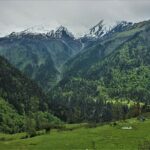
Sankri itself is a village inside Govind National Park, and the first night has a simple goal: settle in and catch the light. If you’re into mountain sunsets, this is a good moment to slow down—Swargarohini ranges show up dramatically, especially as the day cools.
One practical note: the trek uses an air-conditioned mini bus for the vehicle part. That’s comfort you feel on the front end, before you switch into walking mode.
You can also read our reviews of more tours and experiences in Rishikesh.
Day 1 vibe in Sankri: settle fast, enjoy the ranges
After the drive, you’re not thrown straight onto steep trails. You arrive in Sankri, get a chance to stretch your legs around the area, and then enjoy an evening with the Himalayas in the background. This first night is part of why the whole trek feels manageable: you start breathing mountain air with your body already warmed up from travel rather than jumping into a full day right away.
You’re also coming to this place with the knowledge that your hike runs through forested sections of the park. That gives the experience an added layer: you’re not just walking near scenery—you’re walking inside it.
When you sleep in Sankri and wake up the next morning, the tone changes from road-trip energy to ridge-and-meadow focus. If you’re the type who gets anxious when plans feel too rushed, this pacing will feel kind.
Kedarkantha day: pine forest quiet and Juda ka Talab’s alpine payoff
The trek begins with a gentle climb through dense pine forest. I love how quickly the sound changes—less road noise, more wind through branches and small wildlife movement. You get a tranquil vibe right away, and you’re walking in a world that feels older than the trail itself.
The route gives you chances to look up as well as ahead. The trek info highlights birds like treepies, woodpeckers, and drongos, and honestly, this is where I’d focus my attention. It’s easy to burn energy staring at the next bend; spotting living things instead makes the whole day feel richer.
As you continue uphill, you’ll reach a clearing with a single Dhaba during the trek. It’s a quirky detail, but it’s also helpful—during long walks, small landmarks reduce the feeling of “we’re never going to reach anything.”
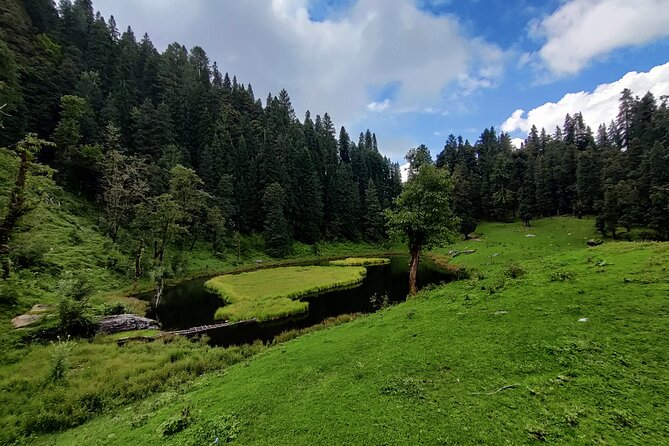
Then comes a key moment: reaching Sikolta, dropping bags, and doing an excursion to Juda ka Talab, an alpine lake. Even if you’re not a hardcore nature photographer, you’ll understand why lakes matter here. They create scale—your brain can tell you’re in high country even before you hit the more dramatic ridge day.
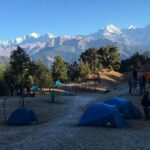
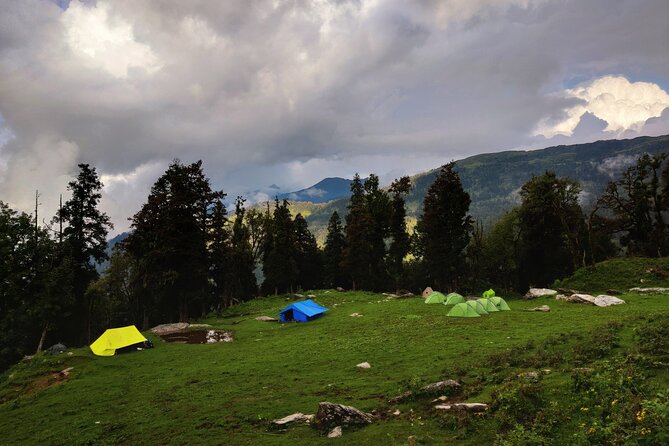
Overnight camping happens here, with a camp setup that the tour is very clear about: good-quality dome or A-shaped tents, sleeping bags and mats, plus kitchen and dining tents so you’re not eating in the cold outside if weather turns.
Possible drawback to keep in mind: camping days can feel long (the day length is listed as 12 hours), so if you’re fragile about sleep or hate basic facilities, plan your expectations and lean into the camp routine.
Karsu Thatch and Bhoj Gadi: wooden bridge, wildflowers, and that postcard feel
The next day moves through forest again, this time toward small water sounds and trail moments that feel “found,” not forced. You cross a wooden bridge where you can listen to the burble of a brook underneath. That kind of sensory cue helps with trekking focus. You’re not only thinking about distance—you’re moving through a soundscape.
After a short steep ascent, the trail opens into Karsu Thatch, described as a verdant area with yellow wildflowers. There’s also an abandoned wooden house nearby, which adds visual texture. It’s the sort of scene that makes the trek feel like it has story, not just checkpoints.
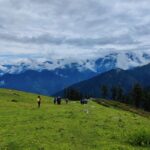
Then comes the meadow stretch around Bhoj Gadi with lush green grass, set against snow-capped peaks in the distance. This is one of the most beautiful campsites on the trek, and it’s also strategically placed. You get a breath of open view before the ridge day—the contrast makes the ridge feel even bigger.
If you want a small “treknerd” tip: this is a great day to take time slowly. When you’re about to face narrow ridgeline terrain later, training your brain to settle into slower moments now pays off.
Phulara Ridge: narrow edges, sunrise energy, and the 12,000-foot feeling
This is the day you came for. You start with a dazzling sunrise and then trek toward the main ridge moment. The big shift happens after about an hour from Bhoj Gadi: you descend to Phulara Ridge—and that’s where the experience turns dramatic.
The ridge is described as narrow, with edges sloping down into valleys on either side. Practically, that means you’re constantly aware of footing, not panicked, but alert. The view is the reward: a panoramic spread of Garhwal Himalaya ranges, including Swargarohini, Kalanag, and Bandarpoonch.
From your point on the ridge, you get the sense the mountains are sitting right there. The trek overview also frames the sightline as around 250 degrees, which fits the feeling you’ll have when you turn your head and the whole horizon is alive with peaks and depth.
Over in the real world, the ridge day is also where small-group dynamics help. With a maximum of 11 people, you’re less likely to get lost in traffic-like line trekking. Your guide can space the group, keep an eye on pace, and help you settle into the day without rushing your photo stops.
Pushtara Bugyal descent: meadow walking that refreshes your legs
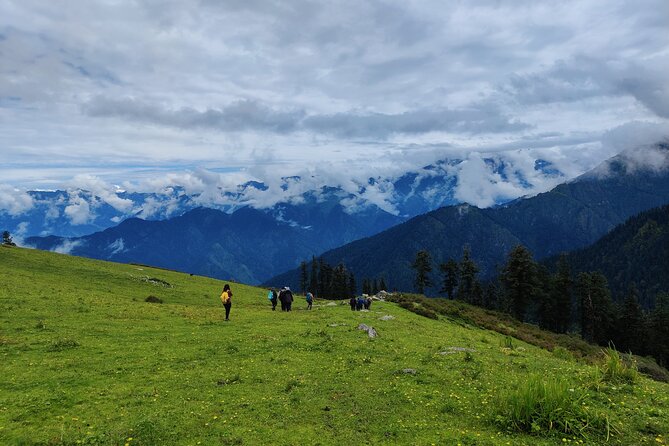
After the ridge, you transition into a gentler rhythm: a descent into Pushtara Bugyal, the Pushtara meadows. This section works like a reset button.
Instead of narrow edges and steep-focus attention, you’re walking through open greens. It’s a welcome change after the exhilarating climb, and it helps you mentally shift from ridge intensity into “enjoying the walk” mode.
This also matters physically. When the terrain alternates like this—high intensity, then open meadow—you end up using different muscles and your body gets a chance to recover before the final descent toward villages.
If you’re the type who gets slightly anxious on exposed terrain, this is the day where you’ll feel yourself exhale again.
Descent toward Taluka village and back to Sankri: wildlife, flowers, and local life
The next day starts a different kind of trek: moving toward civilization. You head toward Taluka and keep descending along the trail.
As you cross Pushtara meadows, you move through lush forests again. You’ll also see yellow wildflowers repeatedly, which gives your brain little “memory anchors” as the trek winds down. These are the moments that help you connect the last ridge day to the earlier forest days.
There’s also wildlife detail worth paying attention to: you may see groups of langoors moving across trees. Even if you don’t get a perfect sighting, the movement in the canopy keeps the walk interesting.
As the trail nears Taluka, you’ll start noticing scattered settlements, then reach the quaint village itself. The tour emphasizes friendly villagers and curious children who may ask for candy. That’s not a “do this, get that” cultural moment—it’s simply how village life intersects with trekking routes here.
After meeting the village side of the journey, you ride back by vehicle to Sankri for the final overnight. This penultimate night is helpful if you want to sleep with a full sense of progress: you’re not just “still walking,” you’re already transitioning to the finish.
Day 6 return to Dehradun: finish strong, and choose your extra night
On the final day, the plan is straightforward: you travel back to Dehradun by late afternoon or early evening. The experience ends back at the same meeting point, so you don’t have to re-navigate logistics once you’re tired.
If you’d like to extend beyond the trek, the option to visit Rishikesh or Tapovan is mentioned as a good way to end on a high note. This is a smart way to “land” after days of walking and camping. Your body needs downtime, and those locations can give you that without feeling like you’re just sitting.
Price and value: what $215 actually covers (and what can cost extra)
At $215 per person for 6 days, this trek looks best when you focus on what’s included. You’re not only paying for the view; you’re paying for a whole working camp and logistics system.
Included items (big-ticket value):
- Air-conditioned mini bus for the group transfer
- Accommodation on the first day to the second last day (double/triple occupancy)
- A certified guide, cook, and support staff
- Camping gear: tents, sleeping bags, and mats
- Dining and kitchen tent setup, plus toilet tents
- Meals: breakfast (5), lunch (4), dinner (5)
- Porter and mule support for camping equipment (not personal luggage)
These are the kinds of costs that add up fast on your own. The porter/mule detail is the key fine print. Your trek becomes lighter because equipment is carried, but your personal bag still needs your plan.
Possible extra charges to watch:
- For non-Indian passport holders, there’s an additional INR 1000 forest permit
- For personal luggage, porter/mule charges are INR 450 per day per bag (under 12 kg)
If you travel with minimal personal luggage, the trek value improves a lot. If you plan to pack heavy, budget for that porter/mule option.
The staff factor: why guides and food quality matter on ridge treks
The best part of this trek, based on real feedback, isn’t just “pretty scenery.” It’s how the team supports you while keeping the day enjoyable.
I’m drawn to the repeated theme of professional, caring staff and food that feels like more than fuel. One review specifically praised Joshi bhai for food service. Another highlighted a guide named Shailedar as friendly and someone who made sure the trek wasn’t just finished, but enjoyed. There’s also mention of Jyoti as an inspiration throughout the journey, and names like Bachhan ji, Mukesh, and Arjun being helpful to the group.
You can use that information as a practical decision tool. On exposed days like Phulara Ridge, you want a guide who watches the group, spaces pace, and doesn’t push people past safe limits. Reviews also mention that if stopping is needed, they do it rather than forcing everyone onward.
And camp cleanliness matters too. One review called out tents and sleeping gear in perfect condition and clean. That directly affects your sleep quality, and sleep quality affects your next day on the ridge.
Who should book this trek, and who should think twice
This trek fits best if you:
- Want high-reward views without needing extreme technical climbing
- Enjoy a mix of forest, lake excursion, and open meadow walking
- Prefer a small group size (max 11) and a structured camp setup
- Care about food and clean gear because you’ll be outside for long hours
Think twice if you:
- Are sensitive to long trekking days (the days are listed at around 12 hours for key hiking days)
- Expect that personal luggage will be carried for free (it won’t)
- Need everything to run no matter the weather, since the experience requires good weather and can be rescheduled or refunded if canceled for poor conditions
You don’t need to be an ultra-athlete. But you should be comfortable with moderate physical effort, since the tour asks for moderate fitness.
FAQ
FAQ
Where does the trek start and what time does it begin?
The meeting point is Prime Surgicals, Doon Plaza Complex, 59 Gandhi Rd, Dehradun, Uttarakhand, and the start time is 6:30am.
How long is the trek?
It’s listed as 6 days (approx.).
What part of the trek has the big ridgeline views?
Phulara Ridge is the main ridgeline highlight, reached after trekking from Bhoj Gadi, with views over multiple Garhwal Himalayan ranges.
What’s included in the camping setup?
The tour includes clean sleeping bags and mats, along with good quality A-shaped or dome tents, plus kitchen and dining tents and toilet tents.
Are meals included?
Yes. Breakfast is included 5 times, lunch 4 times, and dinner 5 times.
What about transportation and accommodations?
An air-conditioned mini bus handles the group vehicle transfer. Accommodation is included on the first day through the second last day on double or triple occupancy.
Do non-Indian passport holders need extra permits?
Yes. There is an additional charge of INR 1000 as a forest permit for non-Indian passport holders.
Can I use a porter to carry my personal luggage?
Porter and mule support is for camping equipment, not personal luggage. Personal luggage porter/mule charges are INR 450 per day per bag (under 12 kg).
How many people are in the group?
The maximum group size is 11 travelers.
Is the trek affected by weather?
Yes. The experience requires good weather, and if it’s canceled due to poor weather, you’ll be offered a different date or a full refund.
Is a service animal allowed?
Yes. Service animals are allowed.
Should you book the Phulara Ridge Trek?
If you want a trek where the big day (Phulara Ridge) feels earned by earlier forest quiet, wildflower meadows, and an alpine lake detour, this one makes sense. I’d book it if you value a well-run camp system—clean tents, sleeping gear, and food that keeps your energy up—plus the chance to walk with a small group and a guide team that has earned positive marks for friendliness and professionalism.
If you’re trying to travel ultra-light and avoid any permit or personal-luggage add-ons, pack smart and confirm how much you’ll carry. Do that, and you’ll be set up for a ridge-and-meadow adventure that feels genuinely Himalayan rather than just a checklist hike.