REVIEW · POKHARA
Pokhara: Annapurna Base Camp Trek Multi-Day Guided Tour
Book on Viator →Bookable on Viator
Annapurna Base Camp feels close here, step by step. This Pokhara-to-ABC trek runs on a pre-planned route with a guide up front, so you can focus on villages, rhododendron forests, and huge mountain views instead of logistics.
I love the steady rhythm of tea-house nights and the big early payoff at Poon Hill for sunrise over Annapurna and Dhaulagiri. I also like that permits and national-park fees are handled for you, plus hotel pickup and drop-off in Pokhara.
One consideration: you’ll start some days early and climb steep sections (including Ulleri’s stone steps), so this fits best with strong physical fitness and a willingness to walk a full day. And since meals are not included, you’ll need to budget for food and drinks along the way.
In This Review
- Key things to know before you go
- Pokhara-to-Annapurna Base Camp: what this guided trek actually feels like
- Price and value: what $480 covers (and what costs extra)
- Trail days from Hile to Annapurna Base Camp: your step-by-step route
- Day 1: Pokhara drive to Nayapul, then Hile
- Day 2: Ulleri stone steps to Ghorepani
- Day 3: Poon Hill sunrise, then Tadapani
- Day 4: Chhomrong village and the Kimrong Khola suspension bridge
- Day 5: Bamboo, rhododendron, and continuing toward Deurali
- Day 6: Annapurna Base Camp day, via Modi Khola and Machhapuchhre Base Camp
- Day 7: Sunrise, back down to Bamboo, then Jhinu Danda hot springs
- Day 8: Nayapul return to Pokhara
- Tea houses, permits, and pickup/drop-off: the logistics that matter
- Poon Hill sunrise and the route’s repeat-view payoff
- Jhinu hot spring: why this ending is more than a bonus
- Who this trek suits best (and who should choose something else)
- What to bring and how to prep so the trek feels easier
- Should you book this Annapurna Base Camp guided trek?
- FAQ
- How long is the Pokhara to Annapurna Base Camp trek?
- Where does the trek start and where does it end?
- Are accommodations included?
- Are national park fees and permits included?
- Do I need to pay for meals during the trek?
- Is this a private tour?
- Do you offer hotel pickup and drop-off in Pokhara?
- What age and fitness level is required?
- What is the cancellation refund timeline?
- Do I need to send passport information before booking?
Key things to know before you go
- Guide-led comfort and safety: A professional guide leads and provides commentary, which helps the trip feel organized even when the trail turns rugged.
- Permits handled up front: TIMs and park fees are included, so you spend less time chasing paperwork.
- Sunrise built in: Poon Hill is timed for morning light over Annapurna and Dhaulagiri.
- Real village treks, not just viewpoints: You pass through places like Birethanti, Chhomrong, and Ghandruk-area stops on the route.
- Jhinu hot spring recovery: You finish with a soothing dip after descending back toward Bamboo.
- Management focus on smooth logistics: In the feedback connected to this operator, names like Sunil Dahal (management) and guides such as Dadhi and Ramu show up alongside notes about getting the trek done successfully.
Pokhara-to-Annapurna Base Camp: what this guided trek actually feels like
This is the kind of Annapurna Base Camp trek that feels like it runs on rails—at least until you hit the steep bits, the suspension bridges, and that moment when the mountains look bigger than your brain expects. You start from Pokhara, ride to the trailhead, and then settle into a multi-day walking rhythm with a guide leading the way.
What makes this trip especially workable is the combination of structure and local flavor. Your days are planned around real stops: riverside walking by the Bhurungdi Khola and Modi Khola, forest sections with rhododendron, and village days where you see how people live along the route. You’re not guessing what comes next, and the guide’s commentary helps connect the scenery to the geography and the route’s logic.
The other “quiet win” is that the basics are handled: accommodations in small tea houses/guest houses for the nights, permits and park fees, and transport between Pokhara and the trail. That matters because on treks, small delays compound fast. With a private setup (only your group), you also avoid the stop-start feeling that can come with larger group dynamics.
You can also read our reviews of more tours and experiences in Pokhara.
Price and value: what $480 covers (and what costs extra)
At $480 per person for an ~8-day trek, the real question is value—what you’re not paying for because it’s bundled.
Here’s what’s included:
- 7 nights in small tea houses/guest houses (per the tour inclusions)
- Professional guide
- Hotel pickup and drop-off in Pokhara
- National park fees and permits (TIMs and permits)
- All taxes, fees, and handling charges
- Private tour (only your group participates)
- Mobile ticket
The big cost drivers on an Annapurna trek are usually guide time, permits, and logistics/transport. By packaging those items, you end up with a simpler budget: you’re mostly paying for the trekking itself plus the essentials to make it legal and organized.
What’s not included:
- Meals and drinks
So yes, food adds up—especially on a multi-day hike. But you’re not stuck paying for a pre-set meal plan you might not like. You can purchase what you want at each stop, and your guide can help you make practical choices when the trail day gets long.
If you’re traveling as a small party, this can be strong value. You get private guiding, yet the trip’s price still reflects a shared trekking operation.
Trail days from Hile to Annapurna Base Camp: your step-by-step route
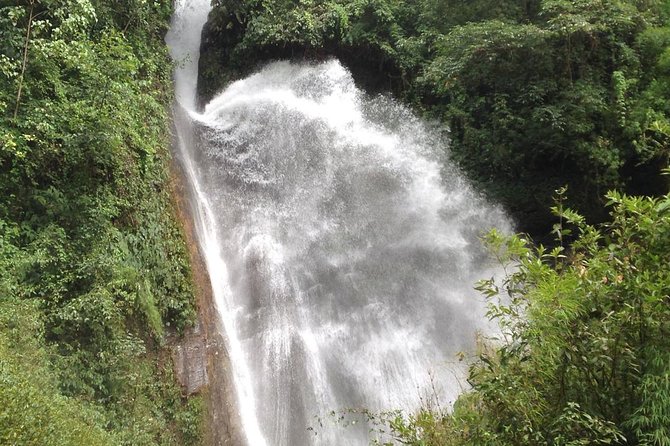
This itinerary moves through classic Annapurna trekking territory: river valleys, forest ladders, village stops, then high-country payoff at Base Camp, followed by a hot-spring reset.
Day 1: Pokhara drive to Nayapul, then Hile
You’ll ride from Pokhara to Nayapul (about 1.5 hours), then start trekking through Birethanti. From there, the route climbs uphill following the Bhurungdi Khola (river). You’ll reach Hile for the night.
Expect this day to feel like a warm-up that still works your legs—enough effort to get your trekking rhythm, but not the brutal “top of the world” day yet. You’ll get early exposure to village life and the way the trail threads through fields and settlements.
Day 2: Ulleri stone steps to Ghorepani
Today includes the famous climb up Ulleri, with its steep stone steps. After that, you move through rhododendron forests and pass Banthanti, then continue to Ghorepani, where you overnight.
The forest portion is a nice break from only seeing rock and trail dust. It also helps that this day sets you up for the next morning’s Poon Hill sunrise push. You’ll likely feel this as an endurance day, not just a speed day.
Day 3: Poon Hill sunrise, then Tadapani
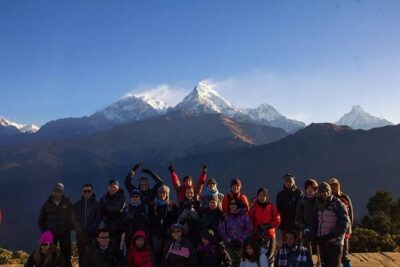
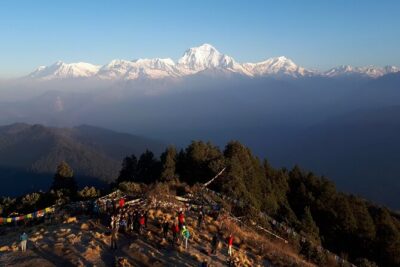
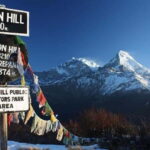
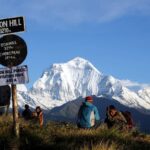
You’ll wake early for a hike to Poon Hill for sunrise views across the Annapurna and Dhaulagiri mountain ranges. Then you descend to Ghorepani for breakfast before trekking toward Tadapani.
This is one of those mornings where the effort feels worth it because you’re getting the view at its best—first light, calmer weather, and that sharp clarity you don’t always get later. After breakfast, the trek to Tadapani keeps you moving through scenic terrain, with a full day of walking ahead.
Day 4: Chhomrong village and the Kimrong Khola suspension bridge
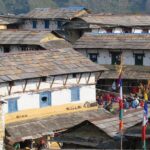
You’ll descend through dense forest with occasional mountain glimpses, then cross a suspension bridge over the Kimrong Khola. After that, you work uphill to reach Chhomrong, a Gurung village known for standout mountain views.
Chhomrong is the kind of place where you feel the trek shifting from “walking through” to “arriving at a viewpoint-centered stop.” Expect it to feel busier than some villages because it’s positioned for people who are heading toward the higher country. Even so, it still stays grounded and local.
Day 5: Bamboo, rhododendron, and continuing toward Deurali
Today starts with a descent into the Chhomrong Khola area and another suspension bridge crossing. Then you ascend to Sinuwa and trek through more rhododendron forests before reaching Bamboo and continuing toward Deurali.
This day can feel like it’s testing your steadiness—more ups and downs than you might expect, but the forest walking helps break up the monotony. It’s also a key acclimatization rhythm day before Base Camp.
Day 6: Annapurna Base Camp day, via Modi Khola and Machhapuchhre Base Camp
You’ll trek along the Modi Khola with big snow-capped views all around. You pass Machhapuchhre Base Camp (3,700m) and then continue to Annapurna Base Camp.
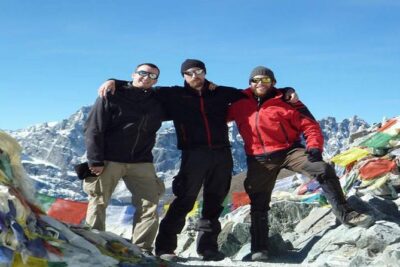
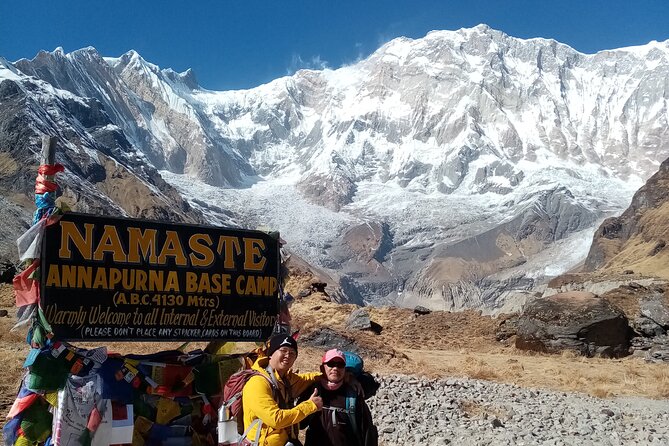
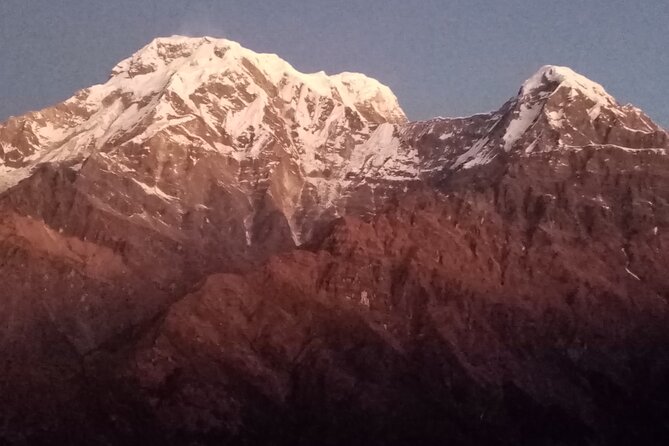
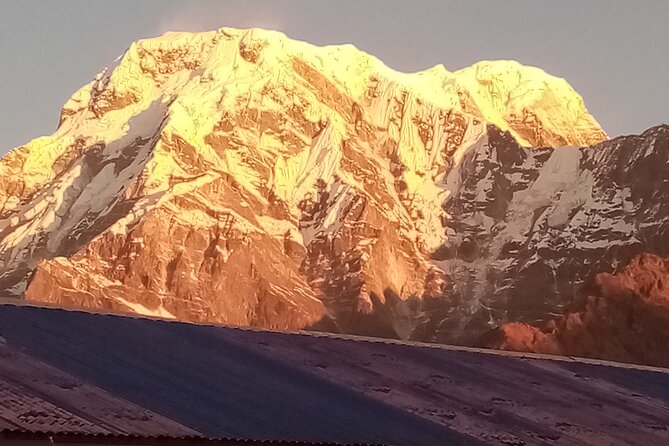
This is the day you’ve been building toward. At Base Camp, you’re surrounded by dramatic peaks, including Annapurna I, Annapurna South, and Hiunchuli, plus other surrounding summits. It’s short in hours compared to some other days on the route, but it’s a high-stakes day for your energy and attention.
Day 7: Sunrise, back down to Bamboo, then Jhinu Danda hot springs
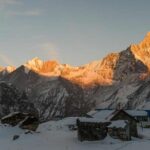
You’ll wake early again and enjoy sunrise views. Then you descend back toward Bamboo, retracing steps, and continue to Jhinu Danda. The reward is a natural hot-spring dip at Jhinu Danda.
This is where you cash in on the trek. Even if your legs feel toast, the hot springs are a smart way to reset. It also adds a fun cultural flavor at the end: not just “walk down and go home,” but “walk down, then soak.”
Day 8: Nayapul return to Pokhara
You trek further down to Nayapul, and your driver returns you to Pokhara. Then there’s a transfer to your hotel. Trip ends.
Day 8 can feel long because you’re done with climbing, but you still have walking and travel time. The good news: you’re finishing on momentum, with the trip structure doing the heavy lifting.
Tea houses, permits, and pickup/drop-off: the logistics that matter
I like this tour because it takes care of the stuff that can make treks stressful: permits, fees, and the start/end handoff.
You get hotel pickup and drop-off in Pokhara, which removes the need to coordinate transport on your own. You also get accommodations in small tea houses or guest houses each night—simple places that fit the trekking route and help you keep moving without searching for lodging.
The permits piece is a big deal. With national park fees and TIMs/permits handled, you don’t have to worry about compliance mid-trek. If you’ve done other treks where paperwork becomes a last-minute scramble, you know how much mental energy that can steal.
One practical note: you’ll need to send a scanned copy of each passport plus a digital passport-size photo prior to the trip. That’s not “fun,” but it’s the kind of boring requirement that keeps the trip smooth.
Poon Hill sunrise and the route’s repeat-view payoff
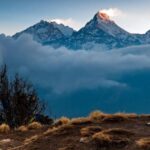
Most Annapurna treks offer views at the end. This one also pays you earlier, with sunrise at Poon Hill over Annapurna and Dhaulagiri.
Why I think this is worth it:
- Sunrise tends to give better light for seeing mountain silhouettes and texture.
- Morning walks often feel easier because temperatures are lower.
- It breaks the trek into a clear story: early payoff, then build to Base Camp.
You also get another sunrise moment on Day 7, when you’re heading back down toward Jhinu Danda. So even though Base Camp is the headline, the trek gives you more than one “watch the sky change” moment.
And yes, expect steep sections. Ulleri’s stone steps on Day 2 are a classic head-nod challenge, and the route’s ups and downs keep you working. But if you pace yourself and keep breathing steady, the views make the effort make sense.
Jhinu hot spring: why this ending is more than a bonus
A trek ending with hot springs is never just a gimmick. It’s a smart recovery plan layered into your itinerary.
After a return day from the higher country, Jhinu Danda gives you a chance to relax in natural hot springs. This helps you feel human again at the end of a physically demanding week. It also makes Day 7 more than a simple descent—it becomes a transition from hiking mode back to comfort mode.
If you’re traveling with friends or family, this can be a great “we made it” moment because it’s shared, relaxing, and doesn’t require you to keep walking to enjoy it.
Who this trek suits best (and who should choose something else)
This tour is best for people who:
- Have strong fitness and are okay with long walking days
- Like a structured itinerary with a guide
- Want the key paperwork and fees handled
- Are comfortable buying your own meals and drinks
It’s also open to a younger traveler, with a minimum age of 5, as long as children are accompanied by an adult. So it’s flexible on age, but the physical component still matters.
If you’re injury-prone or want a very gentle walk with lots of flat paths, you might find parts of this itinerary demanding. The trek includes steep climbs, including Ulleri, and multiple days of ascent and descent.
What to bring and how to prep so the trek feels easier
Since this is a guided trek, your guide will handle routing and pacing, but you still control comfort.
I’d plan around three basics:
- Foot support: good hiking shoes and socks that won’t quit on long days
- Layers: mornings can feel cold, especially as you gain elevation
- Hydration and snacks: even though meals are available to purchase, you’ll want a simple plan for keeping energy steady between stops
Also remember the photos and passport scan requirement. Getting that done early saves last-minute stress.
Lastly, be ready for the early starts: sunrise days are part of the deal here. If you hate waking up before the sun, you’ll still do it—but it’ll feel harder.
Should you book this Annapurna Base Camp guided trek?
If you want Annapurna Base Camp without playing logistics games, I think this is a smart booking. You get permits handled, pickup/drop-off, tea-house stays, and a guide who leads you and talks you through what you’re seeing. The itinerary also doesn’t ignore the emotional payoff: Poon Hill sunrise, plus another sunrise moment, then the hot-spring reset at Jhinu Danda.
Book it if:
- You want private guiding for your group
- You prefer a plan already mapped out for you
- You can handle steep days and early starts
- You’re fine budgeting for meals and drinks on the trail
Skip it (or compare alternatives) if:
- You’re looking for a low-effort trek
- You want a fully included meal plan
- You’re not comfortable with the requirement of sending passport scans and photos ahead of time
In short: this trek is a solid value package for a serious walking journey, with the kind of structure that keeps the focus on the mountains.
FAQ
How long is the Pokhara to Annapurna Base Camp trek?
It runs for 8 days approximately.
Where does the trek start and where does it end?
You start from Pokhara with pickup, drive to Nayapul, begin trekking from there, and finish back at Nayapul with a drive back to Pokhara and hotel transfer.
Are accommodations included?
Yes. You get 7 nights of accommodation in small tea houses or guest houses, following the itinerary.
Are national park fees and permits included?
Yes. National park fees and permits (TIMs and permits) are included.
Do I need to pay for meals during the trek?
Yes. Meals and drinks are not included, but you can purchase them during the trek.
Is this a private tour?
Yes. It’s private, meaning only your group participates.
Do you offer hotel pickup and drop-off in Pokhara?
Yes. Pickup and drop-off in Pokhara are included.
What age and fitness level is required?
The minimum age is 5 years, and children must be accompanied by an adult. Travelers should have a strong physical fitness level.
What is the cancellation refund timeline?
You can cancel up to 6 days in advance for a full refund. Cancel 2–6 days before for a 50% refund. Cancel less than 2 days before and you won’t get a refund.
Do I need to send passport information before booking?
Yes. You’ll need to send a scanned copy of each passport and a digital passport-size photo for each traveler prior to the trip.