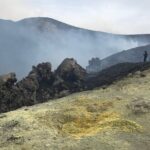
Volcano power feels close on this Etna trek. You’ll ride up from the Riviera dei limoni, take the cableway from Rifugio Sapienza, then hike across lava from the 2002 and 2017 eruptions to crater edges with wide views.
I really like the small-group feel and the way the guide turns a scary subject into something you can actually understand. I also like the day’s pacing: you move from old mule paths and black lava flows up to a lunar-like summit where sulphur smell and gas emissions are part of the experience. One caution: this is not an easy stroll—walking on volcanic sand, ashes, and uneven rocks means you need solid fitness and good shoes.
In This Review
- Key things to know before you go
- From the Lemons Coast to Etna Park: the ride that sets the tone
- Cableway up to 2,500m: when the hike really begins
- The 2002-to-2017 route: walking between Barbagallo Craters and Summit terrain
- Summit crater ridge: lunar air, sulphur, and views that feel unreal
- North-slope descent to Piano delle Concazze: volcanic sand and ash canyons
- Picnic break: lunch is on you
- Valle del Bove: the Ox Valley viewpoint stop
- Price and value: what $145.12 buys on Etna
- Included gear and what you should pack anyway
- Fitness level, group size, and who this trek fits best
- Should you book the Etna trekking tour?
- FAQ
- How long is the Etna trekking tour?
- What language is the tour offered in?
- Where does the tour start and end?
- What time does the tour start?
- What is included in the price?
- Is lunch included?
- How many people are in a group?
- What if the weather is bad?
- Can I get a full refund if I cancel?
Key things to know before you go
- 4×4 jeeps + cableway cut travel time and help you reach real hiking altitude fast
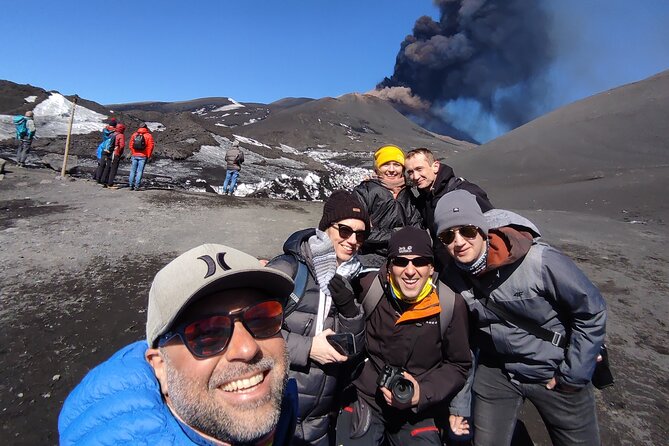
- 2002 and 2017 lava routes mean you walk through fresh-looking volcanic features, not just views from afar
- Summit crater atmosphere includes strong sulphur smells and visible gas moving with the wind
- North-slope descent covers volcanic sand and ash-covered canyons, which can feel loose underfoot
- Piano delle Concazze + observatory area gives a high point break at around 2,800m
- Valle del Bove (Ox Valley) adds a focused 1-hour viewpoint segment
From the Lemons Coast to Etna Park: the ride that sets the tone
Your day starts at Bar & Restaurant Mareneve in Fornazzo (Via Mongibello, 41, 95010). You’ll usually meet in the morning window, around 9:00 to 9:30, and then climb toward Etna on 4×4 jeeps.
What I like about the early part is that it doesn’t feel like dead time. You leave the Riviera dei limoni and pass through Etna’s villages before the road turns into a route that runs across the volcano’s slopes. Along the way, you cross older mule-driver paths (mulattiere) and coalmen paths—routes that make it easier to picture how people worked and lived around this mountain long before modern trekking.
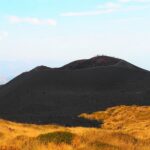
You also start seeing the “black highways” effect: cold, dried lava flows that run like hardened roads down the mountainside. That visual matters, because later you’ll be walking over the same kinds of ground—just at higher altitude and in different textures.
You can also read our reviews of more tours and experiences in Sicily.
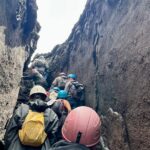
Cableway up to 2,500m: when the hike really begins
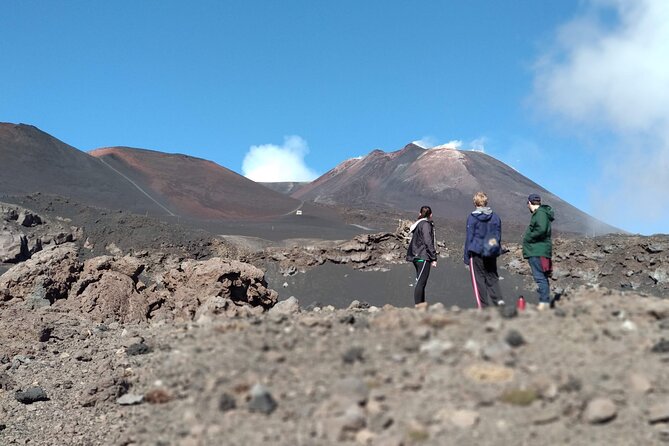
Once you reach the south slope ski station area at Rifugio Sapienza (around 1,800m), the cableway brings you up to roughly 2,500m. This jump is a big deal for value: it saves energy and gives you more time on the actual volcanic walking.
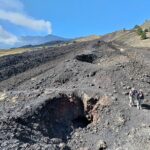
From 2,500m, your trek moves along lava terrain tied to past eruptions. You start working your way through an area associated with the 2002 eruption, and the route continues toward higher crater features. The path is clearly designed for hikers, but you should still expect a steady, physical effort—altitude and uneven footing both do their job.
If you’re the type who hates feeling rushed, this stage is a good moment to slow down and let your body adjust. The views open in stages, and once you’re higher, every stop feels like it comes with a new angle on the volcano’s shape.
The 2002-to-2017 route: walking between Barbagallo Craters and Summit terrain
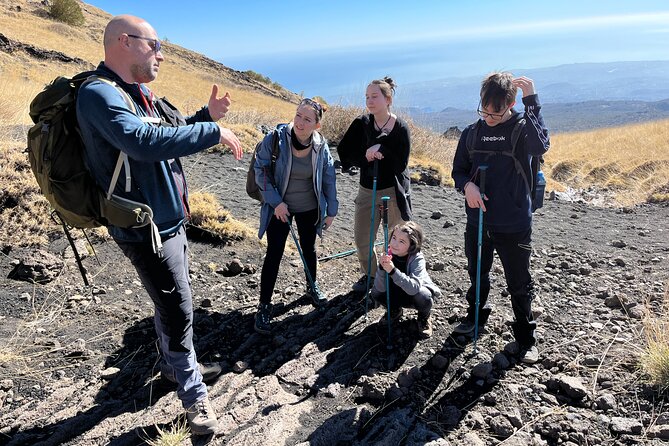
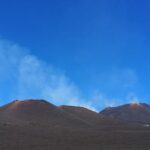
As you climb, the hike runs among volcanic traces that formed from different events. The 2002 eruption gave life to the Barbagallo Craters at around 2,900m, and the route continues along lava flows tied to the South East Crater’s activity starting in 2017.
Here’s the practical point: you’re not just hiking “on Etna.” You’re hiking across a timeline. The ground changes texture and color, and the shapes you see start to make sense when your guide explains what each feature represents.
This is also where small-group context helps. With a maximum of 10 people, you’re less likely to get stuck in a line that breaks your pace. Your guide can also keep an eye on footing, especially when the ground looks solid but turns sandy or gritty in sections.
Summit crater ridge: lunar air, sulphur, and views that feel unreal
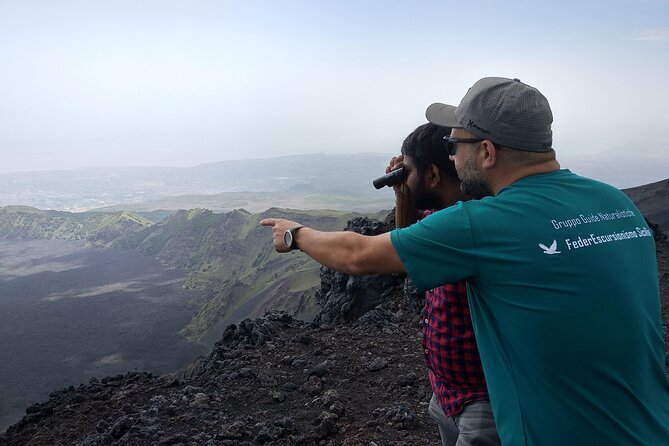
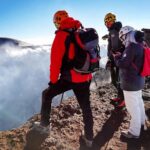
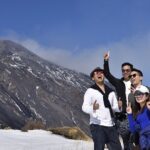
Reaching the top zone is the part most people remember. The scenery shifts into a lunar-like environment: almost no vegetation, a strong sulphur smell, and gas emissions that can be visible depending on wind and conditions. It’s also common for clouds to sit below you, which makes the summit feel like the top of the world.
This is the point where you can get the most intense “scale” effect. You’re walking near the edge of major crater terrain—so the horizon looks long, and the mountain’s power feels less abstract. On a clear day, views can stretch to the Aeolian Islands, the Calabrian coast, and a large portion of the Sicilian interior.
One thing I’d plan for: wind. Gas movement and smell are affected by conditions, and on the summit it can feel sharp. Your guide provides wind jackets on request, but even if you get one, you’ll still want layers and a hat that handles sun and gusts.
North-slope descent to Piano delle Concazze: volcanic sand and ash canyons
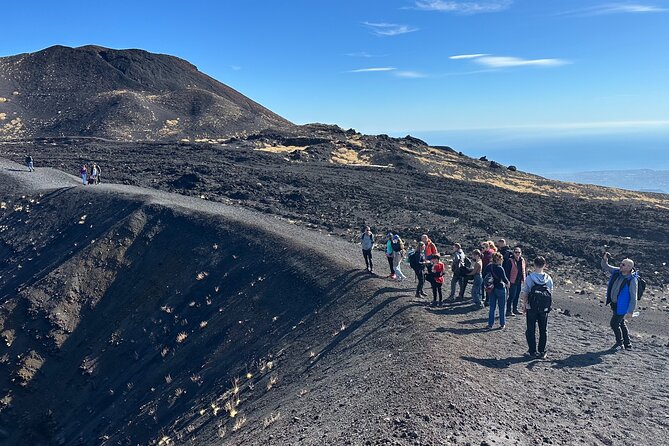
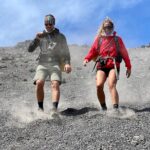
After exploring along the central crater edge, the route turns to a descent on the north slope. This side of the trek is different in texture. You’ll step on rocks shaped by fire, then transition into areas where you can sink your boots into volcanic sand.
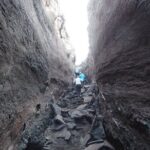
The ground can form sandy canyons covered with ashes and lapilli (small volcanic fragments). This is where trekking poles can help a lot—if you request them in advance, your guide can bring them to the meeting point. With loose footing, poles give you three-point stability and can save your knees on the downhill.
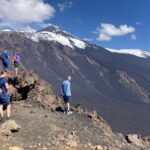
Eventually, you reach Piano delle Concazze at around 2,800m, where there’s an observatory area. Even if you’re not a volcanology nerd (no shame), it’s a useful stop. You’re at a point where people study the mountain, and it makes the visuals click: this place isn’t just scenery. It’s a living lab.
Picnic break: lunch is on you
You’ll stop for a picnic once there’s a comfortable area for a break. Important: packed lunch is not included in the tour price. You can bring your own lunch, or grab something at local shops at the beginning of the tour.
My advice: treat lunch like part of your preparation. If you wait until you’re hungry and tired high up, choices can feel limited. Pack something you can eat quickly, and keep it easy to open and close—hands can get cold or slippery with ash dust.
Valle del Bove: the Ox Valley viewpoint stop
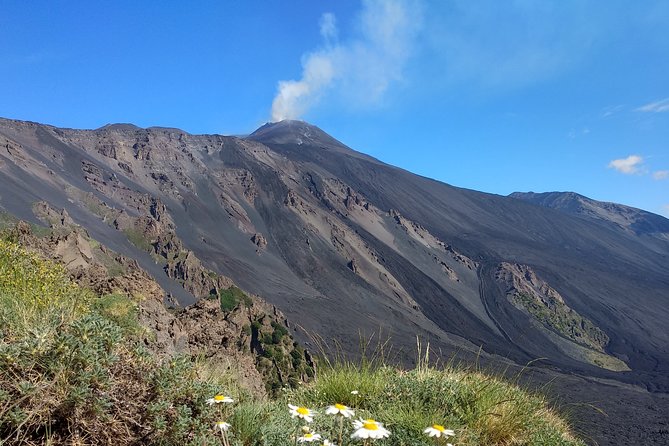
The other main segment on the itinerary is a focused stop at Valle del Bove, with about 1 hour allotted for the viewpoint experience. This area is famous for the Ox Valley look, and you’ll get a clear vantage point without needing to turn it into a long side hike.
This is a good moment to reset after the higher walking. Even if the views are the star, the shorter time block helps you catch your breath, take photos, and mentally mark where you are in the day. If clouds build during the summit portion, a viewpoint stop like this can still be worth it, because it helps you connect what you saw above with what you can interpret from below.
Price and value: what $145.12 buys on Etna
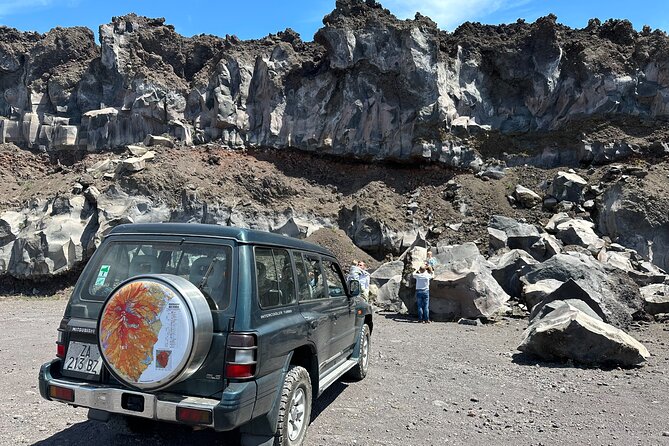
At $145.12 per person, the value comes from more than just the route. You get an authorized tour guide, insurance, and a helmet—plus breakfast to start your day with fuel. The tour is listed as offered in English, with a mobile ticket for easier entry.
You’ll also benefit from equipment support if you plan ahead. The operator can provide hiking poles, backpacks, wind jackets, and hiking boots—if you share your shoe size and needs in advance. That’s a big deal if you’re traveling light or if you don’t want to lug gear through Sicily.
Lunch isn’t included, so your total “day budget” depends on what you bring or buy. But for many people, the included breakfast plus a self-packed lunch still feels reasonable considering you’re getting guide time, insurance, and specialized altitude access.
Also, the tour info notes admission tickets as free, which can matter if you expected extra fees for park or entry. (Still, always keep an eye on what you’re asked to show on the day since the tour uses mobile ticketing.)
Included gear and what you should pack anyway
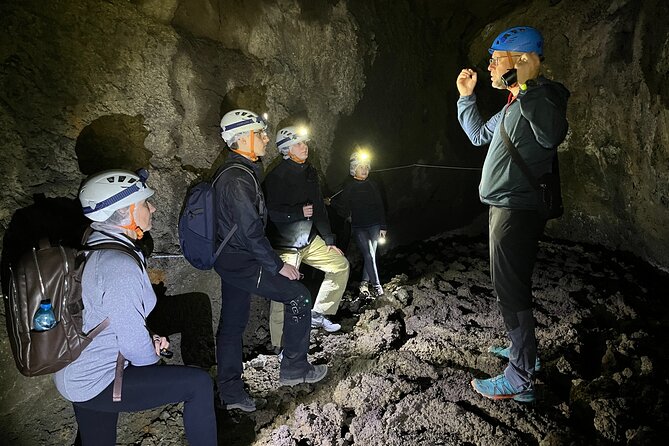
What’s included is clearly set up for a safer hike: helmet, insurance, and optional trekking support. That said, you’ll still want to show up ready for volcano weather, because conditions can change fast.
Here’s what you should plan for as a hiker mindset:
- Layers: summit wind can feel cold even when lower slopes feel warmer
- Gloves and a hat: useful for wind and sun at altitude
- Lunch: either pack it or buy it near the start of the tour
- Footing confidence: volcanic sand and ash can feel loose; wear shoes you trust
If you requested boots or a wind jacket, confirm you get the right size and fit at the meeting point. A helmet is provided, but comfort matters too—tight straps can become annoying after hours of walking.
Fitness level, group size, and who this trek fits best
This tour asks for strong physical fitness. That’s because you’re dealing with altitude, long walking hours, and sections with volcanic sand and ash-covered ground. Even if you’re an active traveler, you’ll feel the effort more than on a standard countryside hike.
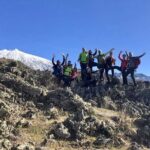
The group size cap is 10 travelers, which is a nice balance. You get enough people for a lively day, but not so many that you constantly stop and start. With a small group, the guide can also adapt pace and help when footing gets tricky.
Service animals are allowed, which is helpful for some travelers. But accessibility-wise, the requirement for strong fitness and the nature of volcanic terrain mean this probably won’t work for everyone with mobility limits.
Should you book the Etna trekking tour?
If you want the “walk right onto the volcano” version of Sicily, this is a strong pick. I like that the itinerary covers both the dramatic high points (crater edges with sulphur air and wide views) and the less glamorous parts that make the experience real (ash, lapilli, and volcanic sand). It’s not just about standing at a photo spot.
You should book it if:
- you enjoy hiking and don’t mind rough ground
- you want a guide who can explain what you’re seeing
- you want a day that blends transport, cableway altitude, and multiple volcanic settings
You might skip or look for an easier option if:
- walking on loose volcanic surfaces sounds stressful
- you don’t feel confident with steep or uneven terrain
- you’re sensitive to strong smells and wind at altitude
One last note for decision-making: the experience depends on good weather. If it’s canceled due to poor weather, you’ll be offered a different date or a full refund. So if Etna is high on your priority list, it helps to have flexibility in your schedule.
FAQ
How long is the Etna trekking tour?
The duration is listed as about 6 to 7 hours, but the itinerary information also notes up to around 11 hours. Exact timing can vary with conditions and route flow.
What language is the tour offered in?
The tour is offered in English.
Where does the tour start and end?
It starts at Bar & Restaurant Mareneve, Via Mongibello, 41, 95010 Fornazzo CT, Italy, and it ends back at the same meeting point.
What time does the tour start?
The meeting window is 9:00 AM to 9:30 AM.
What is included in the price?
Included are an authorized tour guide, insurance, a helmet, GST, breakfast, and the option to provide hiking poles, backpacks, wind jackets, and hiking boots (if you share your size in advance).
Is lunch included?
No. Packed lunch is not included. You can bring your own lunch or grab food at local shops at the beginning of the tour.
How many people are in a group?
The maximum group size is 10 travelers.
What if the weather is bad?
The tour requires good weather. If it’s canceled due to poor weather, you’ll be offered a different date or a full refund.
Can I get a full refund if I cancel?
Yes. You can cancel up to 24 hours in advance for a full refund. If you cancel less than 24 hours before the start time, the amount you paid is not refunded.