REVIEW · SICILY
Summit Etna North 3380mt: 4×4 and trekking
Book on Viator →Operated by Guide Vulcanologiche Etna Nord · Bookable on Viator
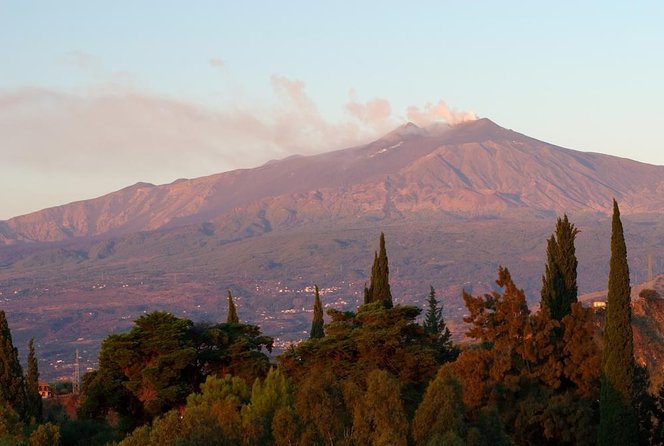
Etna’s north side feels raw and real. This guided climb mixes 4×4 panoramas with a serious crater hike up to 3,380 m, using volcanology guides who adjust the route as conditions change. I love the way the plan pushes you beyond the usual quick photo stop and into actual summit crater terrain, and I love the small-group pace (max 10) that makes a huge volcano feel manageable. The only real catch: the trekking is demanding at high altitude, and if you’re not used to walking uphill, you may feel it fast.
You’ll start from Piano Provenzana, a less-crowded Etna base inside older lava territory, then ride higher through forests, fractures, and lava-scape geology. At the top, you’ll walk the crater rims of the main active areas the guides aim for—North-East, Voragine, Bocca Nuova, and South-East—when it’s safe to do so. A possible drawback to plan around: breaks and photo time can feel limited when the guide is keeping the group moving toward the safest path.
In This Review
- Key reasons to choose this Etna north 3380 m trek
- Piano Provenzana: where the day starts on Etna’s north flank
- The 4×4 panoramic climb: why the north route makes sense
- Crateri Sommitali track: from forests to summit crater country
- The summit walk: aiming for active craters up to 3,380 m
- The descent on scoria: fast legs, slow breaths
- Pace, breaks, and why your fitness level matters
- What’s included (and what you may pay on the spot)
- Timing options: morning start vs the afternoon run
- Who should book Summit Etna North 3380 m, and who should skip it
- Should you book this Etna north 3380 m trek?
- FAQ
- How long is the Summit Etna North 3380 m experience?
- What time does the tour start?
- Is the group size small?
- What gear is included for the hike?
- Do I need to pay anything extra besides the tour price?
- Is this suitable for children or health conditions?
Key reasons to choose this Etna north 3380 m trek
- North-side access that’s quieter than the most common Etna routes, with smaller groups
- 4×4 ride across real volcanic terrain before you lace up for the summit walk
- Guides make route calls on the fly based on heat, gas, fractures, and wind
- Crater-rim walking at high altitude (up to about 3,380 m) with clear views when weather cooperates
- Training wheels, not just a guide: helmets, poles, shoes, and jackets are included
Piano Provenzana: where the day starts on Etna’s north flank
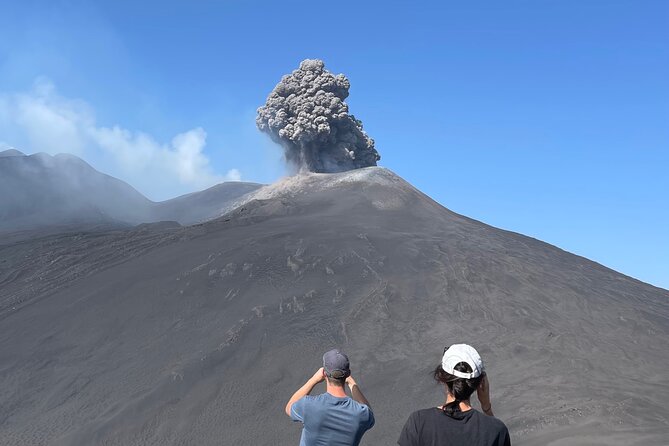
Most Etna trips start like a factory line. This one starts in Piano Provenzana, on the north side—less crowded, more connected to the lava scenery you’re here for. You meet at CHIOSCO BAR MARENEVE DI FERRARO Etna nord–Piano Provenzana, Via Provenzana, 95015 Linguaglossa CT.
Before you move, you can settle in: restrooms are available, and there’s a café where you can grab a coffee or tea plus a pastry. That matters because the schedule is early—morning departures usually leave between 8:00 and 8:15, after a 7:45 a.m. meeting. If you choose the afternoon option, it runs from May to October with a start around 1:00 p.m.
One detail I really like here is the background of the ground under your feet. Piano Provenzana was destroyed by the October 27, 2002 eruption, and the area you see now is shaped by lava flows from that event. It’s a reminder that this isn’t a theme-park volcano. You’re walking into an active system that keeps changing.
Practical note: access roads to the starting area are fully drivable. If you come in winter, pack snow chains or winter tires so you’re not stuck.
You can also read our reviews of more tours and experiences in Sicily.
The 4×4 panoramic climb: why the north route makes sense
From Piano Provenzana, you’ll board authorized 4×4 vehicles with the volcanological guides. This ride isn’t just transport. It’s your first geology lesson, moving you across lava fields and toward lateral craters as altitude climbs—up to around 2,960 m, where the hike starts.
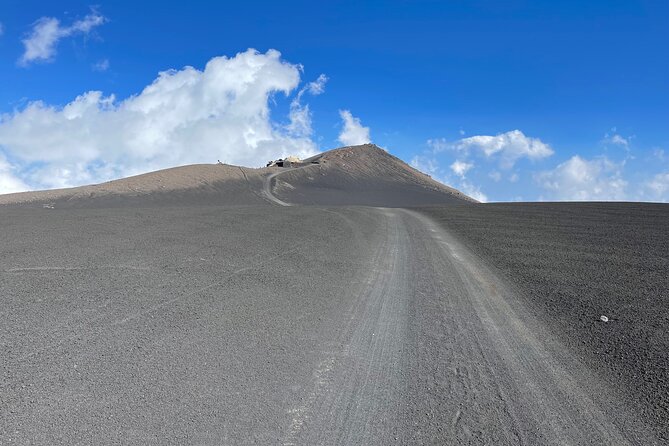
The route on Etna’s wild north side uses an unpaved panoramic track (about 9.5 km for the main drive segment, depending on the exact timing). You’ll cross landscapes that feel very different at different elevations: forests below, more recent lava flows in the middle, and a high-altitude desert look as you get closer to the summit zone.
What you get with the 4×4 ride is not only fewer miles on your legs; you also get better scale. Views from this angle show northern Sicily and, on clearer days, far reaches like the Aeolian Islands and the Strait of Messina. The guide experience matters here too—your team accompanies you during both the drive and the walk, so questions don’t have to wait until the end.
There’s also a realism factor. You may hear terms like eruptive fractures and channels because you’re literally traveling past them. That helps you understand why the summit hike can change.
Crateri Sommitali track: from forests to summit crater country
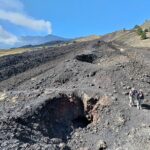
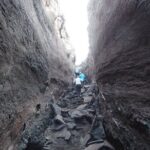
Once the drive portion has put you at the right elevation (around 2,960 m for the transition into the main crater hike), the focus turns to the terrain called Itinerario Crateri Sommitali. You’re moving through a zone that climbs from roughly 1,800 m up toward the summit approach, with the route crossing features such as fractures and deep lateral craters—one segment described as up to about 40 meters deep.
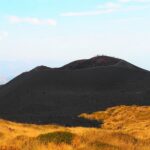
This is where you feel how Etna’s north side differs from the more common southern experiences. Here, you’re on a less-touristy flank with fewer groups. That usually means less crowd pressure and more time to notice the volcano details: the way vegetation thins as you climb, how recent lava looks rougher and darker, and how the ground can feel uneven and unstable in places.
Your guides keep the group together and scan for what matters for safety: gas, heat, fractures, and wind. If you’re hoping for one fixed “perfect path” to a specific crater, you should expect flexibility. The whole point of going with volcanology guides is that they choose the safest route toward the most active crater area they can reach on that day.
The summit walk: aiming for active craters up to 3,380 m
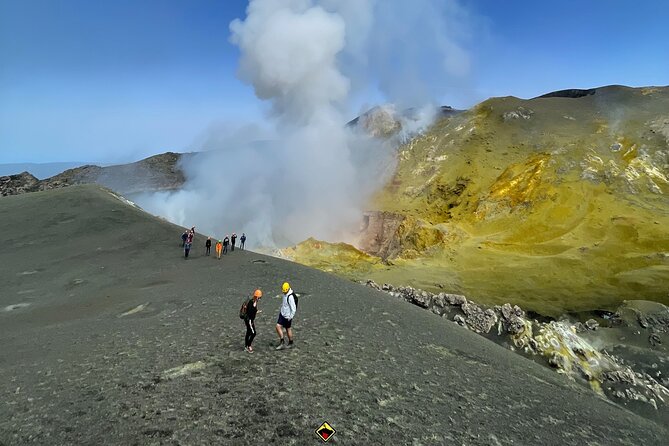
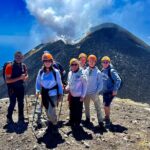
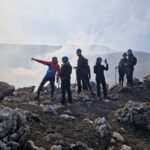
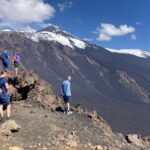
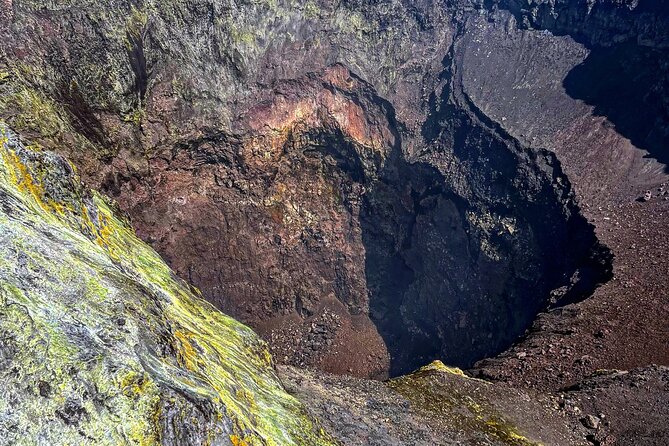
At about 2,960 m, the real workout begins. The summit hike is guided and described as roughly 5 km with around 550 m of ascent, taking you through the summit area where the guides can target the main active craters: North-East, Voragine, Bocca Nuova, and South-East.
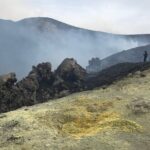
Because volcanic activity changes daily, you don’t follow a rigid “one size fits all” map. The guides adapt the route if conditions shift—especially with heat, gas, or fractures. You’ll be walking high, near crater rims, in an environment that includes fumarolic gas and vivid mineral colors on the rocks. Even when the day is clear, the feeling can be intense: wind, altitude, and the constant sense of a living volcano.
Altitude is the big consideration. The trek spans roughly 2,960 to 3,380 m. That means you should be fit and prepared for mild altitude effects. If you have any medical concerns, tell the guides early so they can advise you on pacing. The guidance is firm here: this is not suited for people with cardio-vascular problems, breathing problems, or hypertension.
Also plan for cold. One clear tip from late-season conditions: it can get around 2°C at the top in late September. Dress in layers even if the morning starts mild. Sunglasses and sunscreen help too—light can bounce hard off pale volcanic ground.
The descent on scoria: fast legs, slow breaths
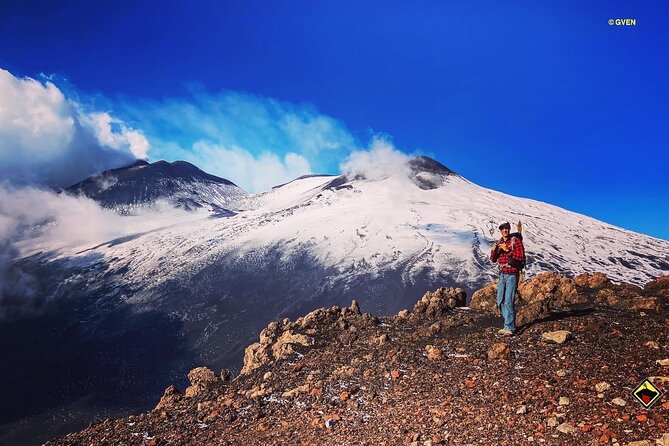
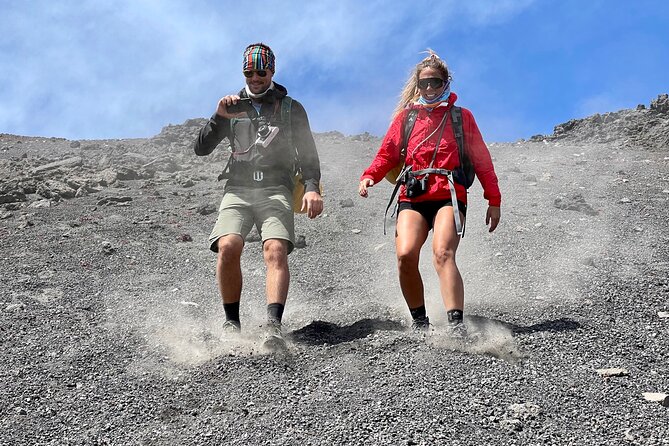
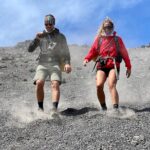
After crater-rim time, you descend via soft scoria channels. The description for the return is about 4 km downhill with around a 600 m drop, and the day totals roughly 8–9 km of hiking over about 5 hours, including the 4×4 segments.
Descent is often harder than people expect. Scoria can be loose underfoot, and volcanic soil can be inconsistent and unstable. You’re not looking at smooth trail tread. You’re stepping on volcanic material that can shift, so go slow and keep your footing precise.
Then you’ll take the 4×4 ride back to Piano Provenzana—typically 25–30 minutes—so your knees don’t have to finish the job.
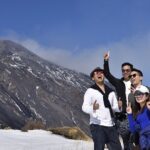
Pace, breaks, and why your fitness level matters
This tour is rated highly, and the guides’ professionalism is a big reason: pacing is adjusted so most people can keep up. I like that you’re not just tossed into a line and told to run the mountain. In the experience’s best moments, your guide will slow down, build in short rests, and keep the group moving based on energy and safety.
Still, here’s the honest part: the summit hike reaches around 3,300 m+ and includes a steep climb. One review flagged the trek as very difficult, with limited breaks and a sense of time pressure—especially for those arriving last. Even with a great guide, the mountain doesn’t care about your schedule.
My advice:
- If you walk regularly and handle steep uphill hikes, you’ll likely enjoy the day.
- If you only do casual walking, consider that this is a high-altitude effort with rough footing.
- If you want long photo stops, plan to keep them quick and follow the guide’s timing.
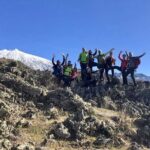
Good news: the group size max is 10, so you’re not fighting for space. Guides I saw named include Francesco, Andreo, Nikos, and Vincenzo—each praised for adapting pace and explaining what you’re seeing.
What’s included (and what you may pay on the spot)
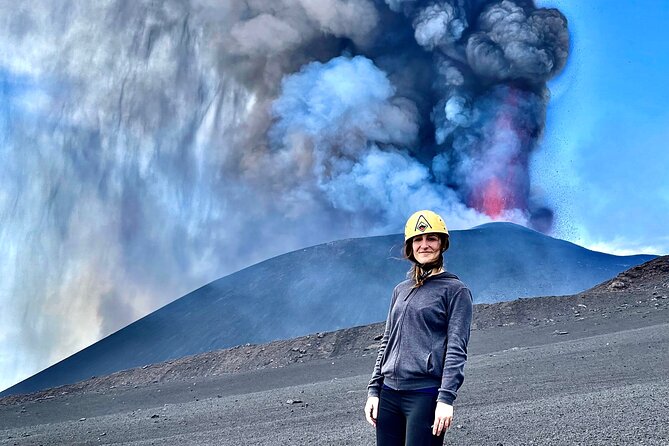
You get a full safety and comfort kit: trekking shoes, trekking poles, socks, protective helmets, a backpack, and jackets. Accident insurance is included, and you’ll hike with an authorized volcanological guide.
Packing still matters. The tour notes that a K-way (rain jacket), hat, and gloves are not included, so bring them if you’re traveling in autumn, winter, or spring—or if the forecast looks unsettled. Also, avoid contact lenses because volcanic gases and ash can cause problems.
Now for price value. The listed price is about $78.61 per person, but there’s an important extra cost to understand: an off-road vehicle segment from 1800 m to 2825 m round trip is €60 per person to be paid on the spot. That means your final total may be higher than the base price depending on how your specific timing and pickup line up.
Parking can also cost extra if you drive yourself. Expect a parking ticket of €5 for weekdays and €8 on Sundays and public holidays.
So is it good value? Yes—if you want an actual guided crater experience with equipment and a north-side route. The included gear saves you from renting on the spot, and the guide-led safety planning is the reason this isn’t just a hike you can wing alone. But you should budget for the on-the-day off-road payment and bring your own rain/warm layers.
Timing options: morning start vs the afternoon run
Most people pick the morning for the freshest light and best odds of clear views. The morning format meets at 7:45 a.m. at Piano Provenzana and departs around 8:00–8:15.
There’s also an afternoon option: starting around 1:00 p.m., available from May to October. If weather is stable and you like a later start, that can be a fun choice. Just remember: cloud, wind, and crater conditions can change any day, so the guides may adjust the route for safety.
This is also a weather-dependent excursion. If conditions aren’t right, you’ll be offered a different date or a full refund.
Who should book Summit Etna North 3380 m, and who should skip it
This is best for you if:
- You can handle steep uphill hiking and a solid descent (around 8–9 km total).
- You’re comfortable with altitude around 3,300–3,380 m.
- You want a less crowded Etna experience from the north side, with smaller groups and a real crater walk.
- You want guides who explain what you’re seeing and adapt to daily volcanic conditions.
It’s a poor fit if:
- You have cardio-vascular problems, breathing problems, or hypertension.
- You’re not used to regular physical activity.
- You’re traveling with children under 12 (not suited for kids under that age).
Service animals are allowed, but beyond that, follow the tour guidance closely and speak with the guides about any health concerns. They’re there to reduce risk and keep the group safe.
Should you book this Etna north 3380 m trek?
If you want the crater experience—real active volcanic terrain, guided crater-rim walking, and a north-side route that feels less like a conveyor belt—this is a strong pick. The included helmets, shoes, poles, jackets, and the guide-led route choices make it a smart value for people who plan to hike seriously.
But if your biggest goal is a relaxed, easy Etna visit with lots of long pauses and minimal exertion, this may feel too tough and too paced. If you’re fit and ready for altitude and uneven volcanic ground, book it. If not, consider a gentler Etna option first and save this summit trek for when your conditioning is ready.
FAQ
How long is the Summit Etna North 3380 m experience?
It runs about 5 hours on average, depending on conditions.
What time does the tour start?
You meet at 7:45 a.m. and depart around 8:00–8:15 in the morning. There is also an afternoon start around 1:00 p.m. from May to October.
Is the group size small?
Yes. The tour has a maximum of 10 travelers.
What gear is included for the hike?
Included items are trekking shoes, trekking poles, socks, a backpack, jackets, and protective helmets, plus accident insurance.
Do I need to pay anything extra besides the tour price?
The off-road vehicle segment from 1800 m to 2825 m round trip is not included and costs €60 per person paid on the spot. Parking is also extra if you drive yourself, and lunch is not included.
Is this suitable for children or health conditions?
It’s not suited for children under 12. It’s strongly discouraged for people with cardio-vascular problems, breathing problems, or hypertension, and you should let the guides know about any health conditions before you start.