REVIEW · SICILY
Etna South Trekking in summit area
Book on Viator →Operated by ETNAHIKER · Bookable on Viator
A volcano hike that works even when the summit closes. This Etna South trek keeps you on the southern slope, where the terrain is always changing and you can still get big views of the crater zone. I especially like that it’s designed as a smart alternative when conditions don’t allow the full summit-area reach.
Two things I’d bet on: the crater-and-Valle del Bove views near the top zone, and the comfort of having boots, a softshell jacket, and a helmet handled for you. One consideration: it’s weather-driven. If conditions aren’t right, the outing may be moved or refunded, so plan some flexibility.
You’ll also want moderate fitness. This isn’t a couch-to-viewpoint stroll, and the volcanic ground can be uneven underfoot.
In This Review
- Key points to know before you go
- Why Etna South Works When the Summit Isn’t Possible
- Where You Start: La Terrazza Dell’Etna Etna Sud in Nicolosi
- The 4.5-Hour Flow: What Your Morning Feels Like
- Stop 1 on Mount Etna: Craters, Valle del Bove, and Recent Lava Evidence
- Gear That’s Included (and How to Use It)
- Guides You’ll Actually Learn From (Luca, Max, Giuseppe)
- Pace, Fitness, and What to Wear on Volcanic Ground
- Price Check: Is $57.84 Good Value for Etna South?
- Weather and Access: Your Best Strategy
- Should You Book EtnaHiker’s Etna South Trek?
- FAQ
- Where does the Etna South Trekking start?
- What time does the tour begin?
- How long is the trekking experience?
- Is private transportation included?
- What gear is included?
- What’s the physical fitness level required?
- How large is the group?
- What happens if the tour is canceled due to weather?
- Is there a ticket included for the Mount Etna stop?
Key points to know before you go

- Small group (max 15): Easier to move, clearer guidance, and less waiting around on a crowded volcanic site.
- Southern-slope plan: You get the most scenic parts without relying on summit access being open.
- Included safety gear: Boots, softshell jacket, and helmet are provided, so you can travel lighter.
- Stop 1 with admission: You get a focused Mount Etna viewpoint stop tied to access of the area.
- WhatsApp-style coordination: Communication is fast and practical, which helps when you’re meeting in the morning.
- July 2019 lava context: You’ll be looking at fresh-feeling evidence of recent volcanic activity.
Why Etna South Works When the Summit Isn’t Possible

Etna has a personality problem: when the volcano is active, the rules can change. This is exactly why an Etna South trekking format makes sense. You’re still in the summit area zone visually, but the route is planned on the southern slope—so the operator can keep the hike running even when reaching the highest summit points isn’t allowed.
What I like about this approach is that it respects reality. You’re not paying for a fantasy itinerary. You’re paying for a trek that’s tied to what Etna lets you do that day.
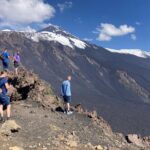
And the southern side has its own payoff. Even if you’ve seen pictures of Etna, you’ll notice the way lava terrain looks different from one section to another—hard edges, darker rock, and evidence of flows that shape the ground over time. This trek is built for people who want to see the volcano as a living system, not as a static landmark.
The timing also helps. Starting early (the scheduled start is 8:30 am at La Terrazza Dell’Etna Etna Sud) usually means clearer visibility and cooler temperatures than later in the day.
You can also read our reviews of more tours and experiences in Sicily.
Where You Start: La Terrazza Dell’Etna Etna Sud in Nicolosi
Your meeting point is La Terrazza Dell’Etna Etna Sud, in Piazza Vittorio Emanuele, 95030 Nicolosi (CT), Italy. You’ll head back there at the end of the trek, so you’re not juggling a complicated drop-off-and-pick-up situation.
The tour says it’s near public transportation, but it also notes that private transportation isn’t included. In plain terms: arrive on your own, meet the group, and you’ll be guided from there.
Practical tip: arrive a few minutes early, especially if you’re trying to match the local rhythm of a small operator meeting spot. One review mentioned an actual group start around 9:00 am, even though the schedule lists 8:30 am—so don’t plan to wander in right at the minute your watch hits the start time.
You’ll receive confirmation at booking time, and you’ll get a mobile ticket. I like mobile tickets for this kind of tour because you’re less likely to lose anything physical on a rugged morning.
The 4.5-Hour Flow: What Your Morning Feels Like
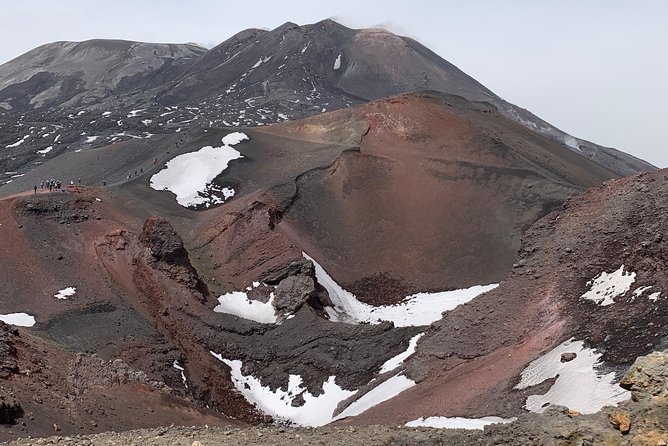
The trek runs about 4 hours 30 minutes. In that time, the day is structured to balance walking with a meaningful viewpoint stop.
Expect this as a morning that moves. You’re not just going uphill and stopping once. The timing works because Etna’s best payoffs sit in the higher zone, and you’ll spend a chunk of the outing actually looking and learning while you’re there.
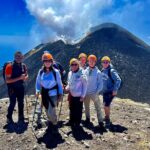
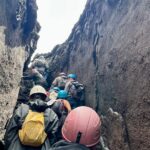
Before you set out in earnest, the operator includes equipment for you: trekking boots, a softshell jacket, and a helmet. That matters because Etna weather can be tricky—wind and cool temps can show up fast, especially near higher ground. If you show up in basic sneakers, you’ll feel the difference right away.
Once you’re suited up and on-route, the pace is aimed at people with moderate physical fitness. That means: you should be comfortable walking on uneven surfaces and sustaining effort for a few hours.
Stop 1 on Mount Etna: Craters, Valle del Bove, and Recent Lava Evidence
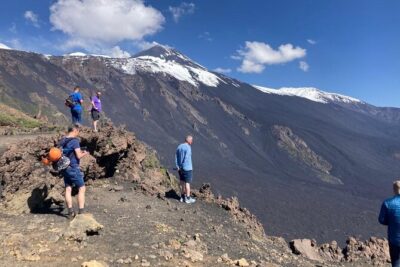
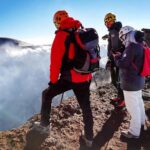
The standout formal moment is Stop 1: Mount Etna. It’s built around a viewpoint experience, with a dedicated window of about 30 minutes and admission ticket included.
Here’s what you should expect to focus on at this stop:
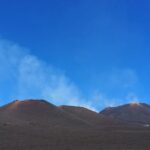
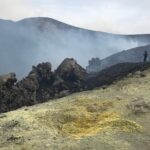
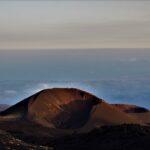
- Summit craters and the way the crater zone looks from the southern perspective
- Valle del Bove (a major volcanic depression that’s famous in Etna country)
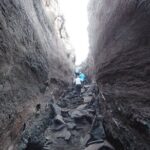
- A channel / lava flow cave element tied to the visible geology
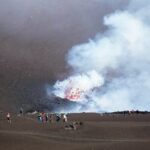
- Recent lavas dated July 2019, which gives you a real timeline anchor instead of just seeing rocks that are hard to place
This is the part where the trek stops being purely scenic and starts feeling like science you can stand inside. You’re looking at terrain shaped by eruptions that are recent enough to feel relevant. Instead of vague “long ago,” you get a date reference, which makes the whole volcano story easier to understand.
A quick consideration: viewpoint areas can be windy and exposed. Even with a jacket provided, bring your comfort zone. If you run cold, you’ll want to bundle smartly before the hike.
Gear That’s Included (and How to Use It)

One of the biggest value drivers here is the included gear: trekking boots, a softshell jacket, and a helmet.
I love this setup for three reasons:
- You travel lighter. You don’t have to pack bulky boots or worry about whether your shoes are “good enough” for lava rock.
- You get the right basics. Walking boots matter on uneven volcanic ground, and a jacket helps with comfort if conditions shift.
- The helmet signals the right mindset. This is not a casual photo walk. Even when everything is calm, the setting is rugged.
What you still control:
- Wear clothing you can move in.
- Bring water and snacks if you’re able—none are listed as included.
- Keep your phone protected. You’ll be in the outdoors and you’ll likely rely on your device for fast coordination.
If you’re using the WhatsApp-style communication noted in reviews, a good move is to keep your phone charged the night before and check messages once you’re near the meeting point.
Guides You’ll Actually Learn From (Luca, Max, Giuseppe)

The human side is a big part of why this trek gets such strong feedback.
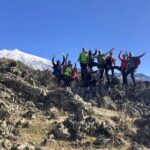
You may meet Luca as an English-speaking guide—one review specifically called out easy communication and an uncomplicated organization. Another review also credited Luca and Max for good preparedness and friendliness, with a clear sense that the guides know how to keep a small group moving smoothly.
There’s also praise for Giuseppe, including for delivering an unforgettable experience on an Etna sunset trek format. While that’s a different time of day than this morning start, it’s a strong signal that the operator’s team focuses on atmosphere and pacing—not just walking.
How this helps you: a good volcanic hike is part geology, part safety, and part storytelling. You don’t want a guide who just says “look there.” You want someone who helps you interpret what you’re seeing so the photos mean something later.
If you’re hoping for a lively but organized group day, this is exactly the kind of outing where the guide quality shows.
Pace, Fitness, and What to Wear on Volcanic Ground

The tour is listed for people with moderate physical fitness. Translation: you should be able to walk for extended stretches on uneven terrain without needing frequent sit-down breaks.
Volcanic paths can be rocky and abrasive. Even with provided boots, you’ll want to respect your footing. The hike isn’t long by total hours, but it can feel more intense than a flat-route walk because of surface friction and elevation.
What to wear:
- Comfortable layers (because the included jacket doesn’t replace a full layering system)
- Gloves if you tend to get cold
- Socks you trust in boots (blisters can happen fast when you’re wearing gear you didn’t break in)
Who this fits best:
- People who want Etna views but don’t want to gamble on a summit scramble
- Anyone who likes small-group guidance and clear structure
- First-timers to Etna who want an easy-to-follow way to understand crater terrain
Price Check: Is $57.84 Good Value for Etna South?

At $57.84 per person, this is positioned as a value-oriented outing, and the math mostly checks out because several key costs are bundled.
You’re paying for:
- A guided trekking format on Etna’s southern slope
- Included safety and comfort gear (boots, softshell jacket, helmet)
- A structured viewpoint stop with admission ticket included (Stop 1 on Mount Etna)
- A small group cap (max 15)
What’s not included: private transportation. That’s normal for meeting-point style tours, but it means you should budget time and transport to reach Nicolosi’s meeting location.
Compared to hiring gear and buying separate entry into volcanic areas, the included package reduces the hassle factor. For me, value on Etna isn’t only about dollars. It’s about not fighting logistics while you’re standing on lava rock trying to see craters.
Weather and Access: Your Best Strategy
This experience requires good weather. If it’s canceled due to poor weather, you’ll be offered a different date or a full refund. That flexibility is important on Etna because visibility and safe walking conditions are tied to what the sky does.
So here’s the best planning mindset: check forecasts in the morning, but keep your schedule loose enough that a reschedule won’t ruin your trip.
Also note that this tour format is often used when volcano activity doesn’t allow reaching the summit area. That’s not a downgrade. It’s the whole point of doing Etna South. You still get major Etna sights in a way that adapts to conditions.
Should You Book EtnaHiker’s Etna South Trek?
Book it if you want Etna without the stress of summit-only access. You’ll get crater-zone views, a clearly defined Mount Etna stop with admission, and you won’t have to haul gear because boots, a jacket, and a helmet are included.
Don’t book it if you’re chasing a simple, flat walk or if you’re very sensitive to uneven footing. Also be honest about weather: you’ll need conditions that allow the trek.
If you like structured guidance, small groups, and learning how to read volcanic terrain, this is a very solid choice in Nicolosi. It’s one of those tours where the value isn’t just the scenery—it’s the way the day is arranged to make Etna make sense.
FAQ
Where does the Etna South Trekking start?
It starts at La Terrazza Dell’Etna Etna Sud, Piazza Vittorio Emanuele, 95030 Nicolosi (CT), Italy. The activity ends back at the same meeting point.
What time does the tour begin?
The scheduled start time is 8:30 am.
How long is the trekking experience?
The duration is approximately 4 hours 30 minutes.
Is private transportation included?
No. Private transportation is not included, so you’ll need to get yourself to the meeting point.
What gear is included?
Trekking boots, a softshell jacket, and a helmet are included.
What’s the physical fitness level required?
The tour is described as suitable for people with moderate physical fitness.
How large is the group?
The maximum group size is 15 travelers.
What happens if the tour is canceled due to weather?
If it’s canceled due to poor weather, you’ll be offered a different date or a full refund.
Is there a ticket included for the Mount Etna stop?
Yes. The Mount Etna viewpoint stop includes an admission ticket.