REVIEW · POKHARA
7 Days Annapurna Base Camp Trek from Pokhara
Book on Viator →Operated by Swami Narayan Travels Pvt Ltd · Bookable on Viator
A good trek has a plan; this one has a pulse—villages, bridges, and big Himalayan payoff built into each day, plus an English-speaking guide to keep you moving smart. This Annapurna Base Camp route threads through classic stops like Naya Pul, Ghandruk, Chhomrong, Annapurna Sanctuary, Machhapuchhare Base Camp, and the final push to Base Camp. One thing I really like is how the hiking days mix steady climbs with believable recovery time for views. One possible drawback: it is still a serious trek, and the route assumes strong physical fitness for the longer trekking days and higher altitude.
You also get real-world convenience. Hotel pickup, round-trip private car transfer, and guesthouse accommodation are included, so you spend less time organizing logistics and more time pacing your breathing. If you like your guides hands-on, the tour is designed for that, and names you might hear from past teams include Mr. Saroj and guide Mr. Krishna.
That said, meals are not included, and you should budget for food along the trail plus your own pace, snacks, and hot drinks.
In This Review
- Key Highlights You’ll Actually Care About
- First Day: From Pokhara to Nayapul, Then Ghandruk’s Village Heart
- Day Two: Chhomrong and the Moment the Trek Starts Looking Serious
- Day Three: Into the Annapurna Sanctuary Toward the Himalaya
- Day Four: Machhapuchhare Base Camp and the Final Lift to Annapurna Base Camp
- Day Five: Trek Down to Bamboo and the Art of Recovery
- Day Six: Hot Spring Time Near Ghandruk
- Day Seven: Phedi to Pokhara and Closing the Circle
- Price and What You’re Getting for $287.92
- Who This Trek Is Best For
- A Few Practical Tips Before You Go
- Should You Book This Annapurna Base Camp Trek?
- FAQ
- FAQ
- How long is the Annapurna Base Camp trek from Pokhara?
- Where does the trek start from?
- Are hotel pickup and drop-off included?
- Is the trekking permit and TIMS card included?
- Do I get an English-speaking guide?
- What type of accommodation is provided?
- Are meals included in the price?
- Is the trip private or group-based?
- What fitness level do I need?
- Can I cancel for a full refund?
Key Highlights You’ll Actually Care About
- Pokhara-to-trail logistics handled: hotel pickup/drop-off and round-trip private car transfer
- Permits and TIMS included: trekking permit and TIMS card are part of the package
- Guesthouse stays: accommodation is included, so you’re not hunting rooms day by day
- A guide that keeps things smooth: English-speaking trekking guide included throughout
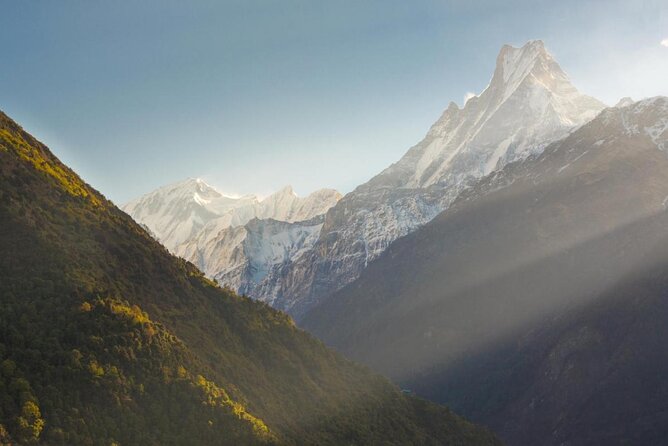
- A route with classic Annapurna variety: villages, forests, suspension bridge scenery, and the Base Camp approach
- Hot spring and downhill recovery moments: a planned stop near Ghandruk with the option to soak
First Day: From Pokhara to Nayapul, Then Ghandruk’s Village Heart
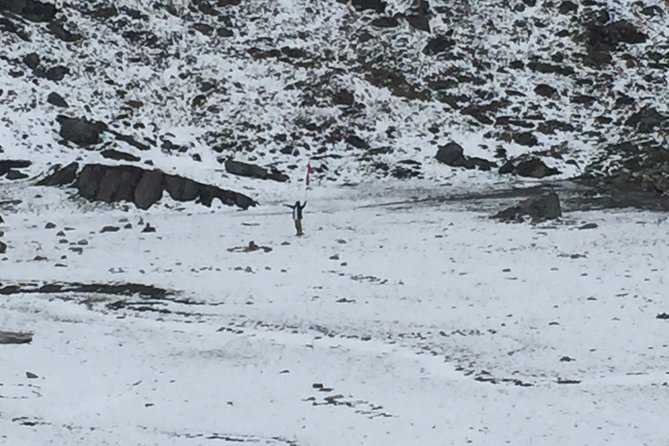
Your trek starts with a drive from Pokhara to Naya Pul (about 1 hour 30 minutes). This is the kind of start that helps you avoid the chaos of figuring out transport on your own. You’ll then begin the first proper hiking day with a trek to Ghandruk (about 6 hours).
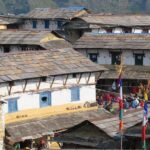
Ghandruk is the first taste of why people keep returning to this region. The route goes through countryside village life of the Gurung community, where you’ll see daily routines tied to the seasons. Expect a mix of stone paths and village views that make you feel like you’re hiking through a real place, not a theme park.
Practical note: Day 1 is long enough to wake up your legs but not so brutal that it crushes you for the whole week. I like that balance. If you’re prone to starting too fast, this is where you learn restraint early.
What to watch for: Ghandruk sits at a higher elevation than Pokhara, so even if you feel fine at the beginning, your breathing can change as the day goes on.
You can also read our reviews of more tours and experiences in Pokhara.
Day Two: Chhomrong and the Moment the Trek Starts Looking Serious
On Day 2, you trek from Ghandruk to Chhomrong (about 6 hours). This is a key day because it often feels like the trek shifts from village sightseeing into sustained mountain trekking.
Chhomrong is known for being a major junction on this classic itinerary. Even without a museum vibe, the setting does something important: it frames the Annapurna region as a place where the terrain is the main character. You’ll likely notice the way the trail contours and how the views come in layers, not all at once.
This is also a good day to focus on rhythm. If you keep your pace steady, you’ll arrive feeling like you still have energy for the days ahead. If you race uphill early, you’ll pay for it later.
Value angle: A 6-hour day with a planned next stop is a smart build-up. It helps you acclimate while still keeping momentum.
Day Three: Into the Annapurna Sanctuary Toward the Himalaya
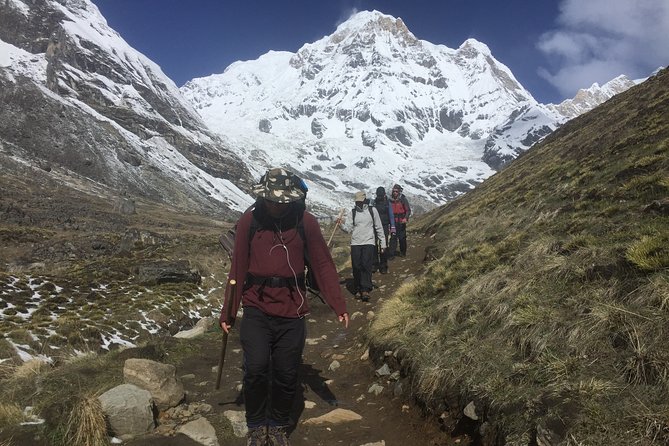
Day 3 is your long trek day: about 7 hours to Annapurna Sanctuary (often described as trekking toward the Himalaya area). This is the day people remember, because “sanctuary” isn’t just a name. The terrain and atmosphere tend to feel more dramatic, with the mountains pressing closer as you move onward.
The trail through this region is where the route’s variety becomes obvious. You’re moving beyond a simple village-to-village walk. You’ll be in a more natural, mountain-pocket environment where forests and natural formations shape how the path feels day to day.
Why this matters for you: if you’ve never hiked in the Himalaya before, this is when you learn what altitude and effort feel like together. The good news is you have enough support in the plan—an English-speaking guide, guesthouse accommodation waiting for you, and a schedule that doesn’t randomly lurch.
Possible drawback: It’s a full day. If you’re carrying extra weight (heavy camera gear, lots of snacks you didn’t ration), you’ll feel it here.
Day Four: Machhapuchhare Base Camp and the Final Lift to Annapurna Base Camp
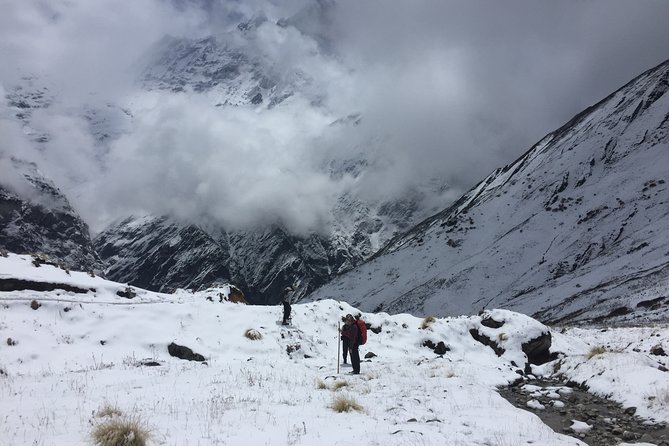
Day 4 is split into two parts. First, you trek to Machhapuchhare Base Camp (about 5 hours). Then you continue onward, with about 2 hours to reach Annapurna Base Camp.
This is one of the most meaningful days because it’s not just about reaching the finish line. It’s about earning it in stages. Machhapuchhare Base Camp sits in a strong position on the route, and getting there gives you a sense of scale before you commit to the final push.
The final approach to Annapurna Base Camp, at around 4130–4310 meters depending on how you measure the exact reference point, is the moment the whole trip turns into a single memory. You’ll see why this area gets described as paradise-like by people who come back for more.
From a value standpoint: including a guesthouse night and having the guide help you pace the two-part day is worth something. This is not the day to improvise.
What to watch for: altitude fatigue can make even a short section feel long. Take your time, drink water, and don’t assume your legs will behave just because yesterday went well.
Day Five: Trek Down to Bamboo and the Art of Recovery
After the excitement of Base Camp day, Day 5 is a long descent: trekking down to Bamboo (about 6 hours). This is where smart hikers do something counterintuitive: they slow down and treat downhill like its own workout.
Downhill can be harder on your knees than the climb is on your lungs. If you have decent trekking poles and use them, you’ll likely feel better by the end of the day. If you don’t, your thighs may complain in a way that makes you reassess your footwear choices.
The Bamboo stop also helps restore the trip’s balance. You’re not rushing straight into a big wall of elevation again. It’s a recovery day with a goal, which is exactly what your body likes after the highest point of the itinerary.
Practical tip: bring blister support and a simple foot-care routine. Even a small issue can become annoying when you’ve already had intense elevation shifts.
Day Six: Hot Spring Time Near Ghandruk
Day 6 brings a lighter-feeling change of pace: trek to the Hot spring (about 4 hours), starting from the Bamboo area and returning toward Ghandruk. The schedule is shorter here, and the hot spring option is a classic kind of reward that helps your muscles reset.
Even if you choose not to soak for long, the idea is still valuable: you get time to relax and feel like the trek is winding down in a satisfying way. This is also an opportunity to check how your body is handling altitude after the peak day.
Why you’ll like it: shorter hours mean you can focus on comfort—hydration, food, and sleep—without racing to meet a strict timeline.
Day Seven: Phedi to Pokhara and Closing the Circle
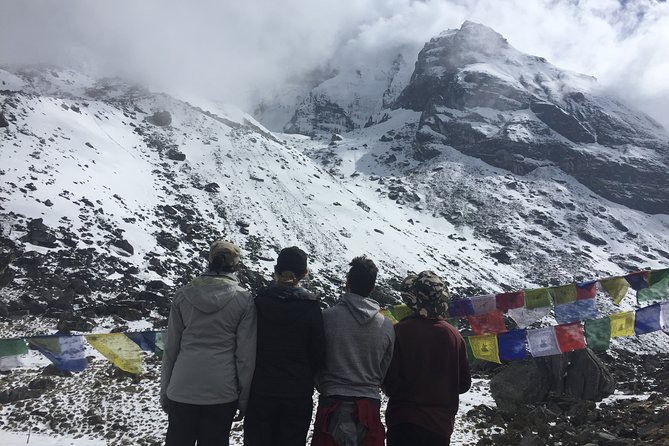
On the last day, you trek down to Phedi (about 4 hours), then drive back to Pokhara (about 45 minutes). This is a satisfying finish because it turns the final descent into a clean handoff back to modern life.
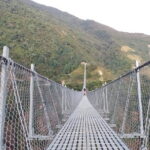
You’ll end with hotel transfer and time to return to whatever comfort you like after a week on the trail. It’s also a good moment to slow down and reflect on the trek’s real texture: villages, suspension bridge scenery, forests, and the way the mountains change as you walk.
One consideration: the last day descent can still feel tiring. It’s shorter than earlier days, but your legs may be carrying fatigue from the whole route.
Price and What You’re Getting for $287.92
At $287.92 per person for an approx. 7-day Annapurna Base Camp trek, you’re paying for more than just a guide on a route. This package includes hotel pickup and drop off, a round trip transfer by private car, the trekking permit and TIMS card, English-speaking guide support, and guesthouse accommodation.
The main extra cost is obvious: meals and personal expenses are not included, and you should also plan for optional gratitude. If you’re the type who likes steady, organized logistics—permits sorted, transfers handled, lodging arranged—then this price can feel fair because it reduces the time and decision fatigue that often adds stress on big trekking itineraries.
Where costs can quietly rise: if you prefer higher-end food, extra snacks, or want to stock up on trail supplies, those are your call.
Who This Trek Is Best For
This trek fits best if you’re ready for multi-hour days and you want a classic Annapurna Base Camp route with village variety and mountain payoff. The tour specifically calls for strong physical fitness, so if you’re aiming for a casual stroll, you might feel disappointed by the trekking time.
It also makes sense for people who want a private trip setup—only your group participates—while still getting an English-speaking guide and included guesthouses.
If you like learning from the people running the program, you may find the team approach warm and supportive. Past trips highlighted owners and guides such as Mr. Saroj, Mr. Krishna, and trekking team members connected with Prem and DB (names shared from prior experience). Even if your exact team differs, the overall style is clear: they focus on looking after details so you don’t have to.
A Few Practical Tips Before You Go
Here’s how I’d set yourself up for a smoother week, using what the itinerary implies.
Pack for long trekking days
Shorter days still add up. Bring layers for changing weather and a small pack that you can carry without feeling miserable by Day 3.
Use your time on the trail
This route includes village days, sanctuary terrain, and a peak day with a final push. If you treat every stop as a photo mission, you’ll rush. If you treat it as a pace mission, you’ll arrive happier.
Plan for meals even if you’re not paying for them here
Since meals aren’t included, figure out what you’ll want: simple local meals, snacks, and warm drinks. Budgeting early keeps the trip from feeling like a surprise bill.
Should You Book This Annapurna Base Camp Trek?
Book it if you want a structured Annapurna Base Camp itinerary from Pokhara that handles the heavy logistics: private car transfers, permits/TIMS, an English-speaking guide, and guesthouse stays. The price also looks strongest when you value organization over DIY planning.
Skip or rethink if you’re not ready for a trek that includes multiple 6–7 hour hiking days, a peak-day effort at high altitude, and the kind of foot and knee stress that comes with sustained uphill and downhill. You’ll have a better time if you come in fit, not hoping the trail will act like a fitness class.
FAQ
FAQ
How long is the Annapurna Base Camp trek from Pokhara?
The trek is listed as about 7 days.
Where does the trek start from?
It starts with a drive from Pokhara to Nayapul, then you begin trekking from there.
Are hotel pickup and drop-off included?
Yes. Hotel pickup and drop-off are included.
Is the trekking permit and TIMS card included?
Yes. The trekking permit and TIMS card are included in the package.
Do I get an English-speaking guide?
Yes. An English-speaking trekking guide is included.
What type of accommodation is provided?
You get accommodation in guest houses during the trek.
Are meals included in the price?
No. All meals and personal expenses are not included.
Is the trip private or group-based?
It’s a private tour/activity, and only your group participates.
What fitness level do I need?
The tour notes that travelers should have strong physical fitness.
Can I cancel for a full refund?
Yes, free cancellation is offered. You can cancel up to 24 hours in advance for a full refund.