REVIEW · LOMBOK
Mount Sangkareang Trekking 2D1N 3200msl – Tetebatu
Book on Viator →Operated by Jonny Tour Guide · Bookable on Viator
Tetebatu is the quiet way into Rinjani. This 2D1N Sangkareang trek focuses on a shorter climb (to about 3,200m) with a gentler route through tropical forest, then rewards you with major crater and island views at sunrise.
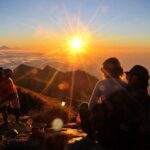
I especially like the hike itself: long stretches under big trees, often cooler because the canopy blocks the sun, so the day feels more manageable than you’d expect. And I love the payoff—standing at the second summit for sunrise while staring at Segara Anak and the wider Rinjani range, with Bali and the Gili islands on the horizon when visibility is good.
One drawback to flag: you’ll start early. Day 2 includes a 04:00 coffee/tea moment and a short summit push, so if you hate mornings and steep effort, this one will test you.
In This Review
- Key things to know before you go
- Why the Sangkareang Second Summit is a smart 2-day Rinjani taste
- Tetebatu start: monkeys, crater-rim trails, and that cool forest feel
- Day 1 camping in Mount Rinjani National Park: tent sleep, real perm-it country
- Day 2 at 04:00: the sunrise push to Mount Sangkareang
- What you’ll see from Mt Sangkareang: Segara Anak, Baby Volcano, and big horizon lines
- Coming back down: pacing the 1.5-hour climb-to-post then the long jungle descent
- Guides and porters: the difference between a trek and a good trek
- Price and value: what your $195 actually covers
- Who this trek fits best (and who should reconsider)
- Practical advice: how to prepare for cool forests and a cold summit morning
- Should you book this 2D1N Sangkareang trek from Tetebatu?
- FAQ
- How high is the Mount Sangkareang second summit on this trek?
- How long is the trek overall?
- Where do I meet for the start?
- What’s included in the price?
- Do I need to pay entrance fees separately?
- Is tipping included?
- What fitness level do I need?
- Is the trek dependent on weather?
- Is this a private tour?
Key things to know before you go
- Beginner-friendlier timing for Rinjani: 2 days, not a long multi-day ordeal
- Shaded rainforest trekking with a cool feeling under dense canopy
- Overnight tent camping at a camping ground inside the national park
- Early sunrise summit with hot tea/coffee and biscuits at the top
- Real panoramic views: Segara Anak crater lake, Baby Volcano, and distant islands
Why the Sangkareang Second Summit is a smart 2-day Rinjani taste
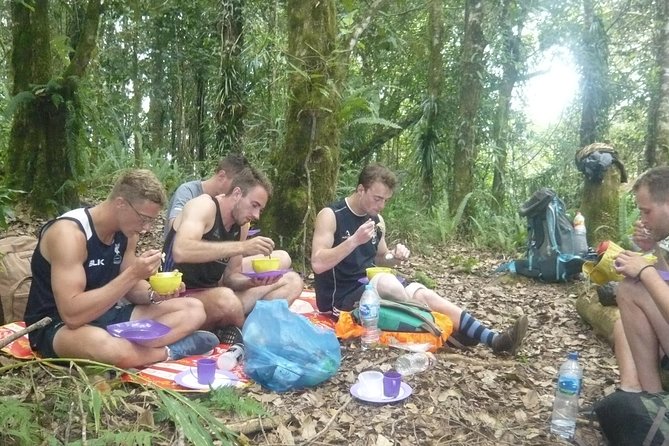
This trek aims at the “second summit” of Mount Rinjani, locally referred to as Mount Sangkareang, at roughly 3,200 meters above sea level. It’s the kind of route that lets you get the Rinjani experience without spending days hiking around the whole caldera.
What makes it appealing is the mix of scenery and effort. You start from Tetebatu at about 700 meters, then work your way through dense forest and shaded trails. The hike still feels strenuous in places, but it’s paced for people with moderate physical fitness, not just hardcore athletes.
The views are the big reason to choose this option. From the summit area you get sweeping lookouts over the crater system, including Segara Anak Lake and nearby volcanic features. On a clear morning, you can also see as far as Mount Agung (Bali) and the Sumbawa/Gili direction along the horizon.
You can also read our reviews of more tours and experiences in Lombok.
Tetebatu start: monkeys, crater-rim trails, and that cool forest feel
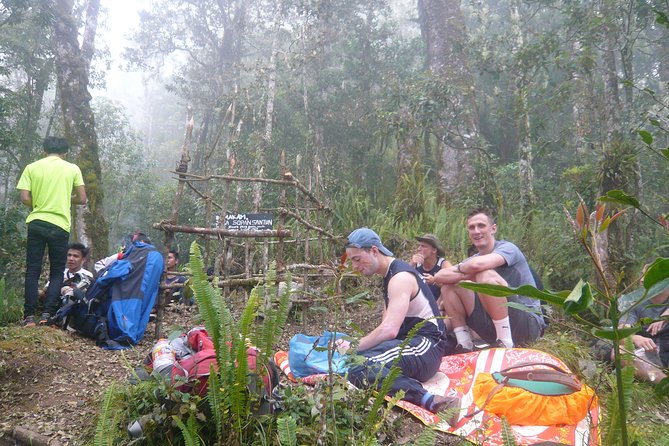
Your day begins in Tetebatu. The recommended move is simple: arrive at the meeting point 30 minutes before 8:00am, then get going toward the crater rim area.
Before the climb really settles in, you pass through Tetebatu’s monkey forest. It’s not a zoo stop; it’s a real forest area, where you may spot black and gray monkeys. It’s a quick way to get into the local vibe and see the landscape before you trade it for trail time.
After about 30 minutes of walking from the monkey forest, the path shifts into dense forest. You may feel cooler here because thick leaves and large trees reduce direct sun. You’ll hike for around 1 hour 30 minutes before reaching the first break point at Pondok Belan. This break matters because it gives you a rhythm—pace early, then settle into the climb.
If you’re the type who likes photos, this is the time to slow down. Early light under the trees can make the route feel calmer and more scenic, even before the big mountain drama starts.
Day 1 camping in Mount Rinjani National Park: tent sleep, real perm-it country
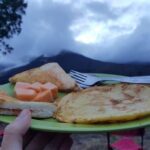
After the first day’s hike segment, you reach the camping area in Mount Rinjani National Park and overnight in a tent. The tour includes all camping equipment, plus dinner and breakfast later, so you’re not scrambling for gear once you commit.
This is where the trek becomes more than a walk. Night in this volcanic region feels different because you’re fully inside the national park world—no quick exits, no popping back to a hotel when you’re tired. You’re there to rest, recharge, and get ready for the early summit push.
The practical value here is that the plan is built around the logistics of a mountain night. You’re not just paying for scenery; you’re paying for guides/porters, entrance access, and the camping setup that keeps the experience doable in 2 days.
One more thing: since this is a strenuous climb at altitude, how you sleep counts. In this kind of environment, expect cooler temperatures and less convenience than a standard bed. A tent night is part of the charm, but it’s also part of the effort.
Day 2 at 04:00: the sunrise push to Mount Sangkareang
Day 2 starts early—there’s a pre-dawn coffee or tea and a light snack at 04:00. This isn’t for fun; it’s to line up your summit timing so you reach the second summit with enough daylight for sunrise and photos.
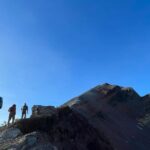
From the campsite, the trek to the second summit takes about 2 hours. That’s a short window, but it still involves altitude effort. You’ll likely feel the climb more on day two because your legs are already used to hiking.
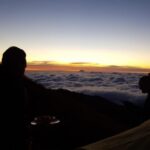
Once you reach the summit, the plan is straightforward: enjoy sunrise, take in the views, and then have hot tea/coffee and biscuits right at the top. You’ll also get time for photography. This small food stop at altitude is more important than it sounds—it helps you warm up and reset after the climb.
If you’re deciding whether to do sunrise on this route, here’s my angle: in a short trek, sunrise is the moment that makes it feel complete. It turns two days of effort into a clear story you’ll remember.
What you’ll see from Mt Sangkareang: Segara Anak, Baby Volcano, and big horizon lines
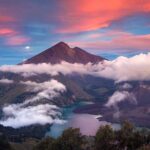
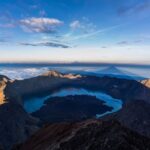
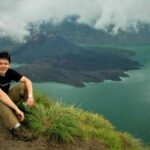
The summit view is built around the crater system. You’ll enjoy the look over Segara Anak Lake, sitting inside the volcano’s caldera. You’ll also see volcanic features like the Baby Volcano, which helps you understand the scale and structure of the region.
The horizontal views are the extra payoff. The tour highlights sightlines toward Mount Agung in Bali, plus the Sumbawa islands and the Gili islands in the distance. Those are not guaranteed every day—visibility matters—but the route is designed to give you those horizon lines when the weather cooperates.
This is why the second summit option is such a good use of limited time. A full Rinjani itinerary can feel like a commitment marathon. Here, you’re still paying your effort tax, but the reward is concentrated: crater lake, volcanic context, and the island horizon in a single sunrise moment.
If you want a practical photo tip: prioritize sunrise framing over chasing every viewpoint during the ascent. Once you’re on top, you have the best chance to capture both the caldera and the distant islands in one shot.
Coming back down: pacing the 1.5-hour climb-to-post then the long jungle descent
After the summit stop, you return to the campsite for rest and breakfast. Then you start the descent.
First, you climb down for about 1.5 hours back to Post 3. Even though it’s called a descent sequence, that initial segment can still feel like work because you’re transitioning your body from summit effort to longer downhill walking.
Then comes the longer part: a descent of about 5 hours along a remote trail through the jungle back toward Tetebatu Village. The route is described as picturesque and makes good use of the forest setting, so you’re not just moving through loose rock the whole time—you’re back in the greenery.
After lunch at Post 1, the day finishes with a gentle walk for about 1 hour through Tetebatu Village. The goal is to end feeling like you arrived back into a real community, not like you crawled off a mountain and disappeared.
The main pacing lesson: go slow on the downhill. Your knees will thank you later, and your energy will hold better through the long jungle stretch.
Guides and porters: the difference between a trek and a good trek
This trek is only as smooth as the team running it. The positive energy in the guides is a consistent theme: English-speaking guides, good humor, and a calm approach when you get tired.
I’ve seen guide names tied to excellent experiences, including Yan, Ferry, Jalal, and Choup. Porters show up in many accounts too, like Aziz and Ahim, and that matters because porters take the heavy load, letting you focus on your breathing and footing.
One practical advantage: communication seems fast and helpful before the hike. People describe reaching out by WhatsApp and getting quick answers, which reduces pre-trek stress. In mountain travel, that’s not a small detail—it prevents misunderstandings and helps you arrive mentally ready.
Also, these teams know the mountain rhythm. When you’re dealing with early starts and altitude, it helps when the guide sets expectations clearly and then follows through. That’s what you want: organized day timing, attention on the trail, and a clear plan for the summit window.
Price and value: what your $195 actually covers
At $195 for 2D1N, you’re not just buying access to a trail. You’re paying for a full bundle that usually costs extra when booked separately.
Included items cover the essentials:
- Guide and porters
- All camping equipment
- Trekking entrance ticket
- Transport pick up & drop off
- Dinner
- Breakfast (2)
- Lunch (2)
That package is the core of why this price can feel fair. The national park setting plus tent camping plus meals plus staff is what makes it work as a short trek.
What’s not included is the human layer of gratitude: tipping for guide and porter and personal expenses. If you like strict budgeting, you’ll need to plan a little extra for that. It’s small compared to the overall cost, but it’s part of how mountain work is supported.
If you care about value, focus on this: you’re buying convenience and reduced hassle as much as scenery. A guided 2-day national park hike is rarely cheap when it’s done properly.
Who this trek fits best (and who should reconsider)
This is a good match if you want:
- a short Rinjani experience without a long itinerary
- a shaded forest trek feel
- a realistic chance to reach the summit point around 3,200m with moderate fitness
- a clear payoff in the form of sunrise and crater/island views
It may be a tough fit if you:
- dislike 04:00 wakeups
- aren’t comfortable with physical strain on steep trail days
- struggle with longer downhills on 5 hours of descent
That said, the route is described as having a gentler trek route that’s aimed at beginners. The honest version is still this: you’ll work. But the structure keeps it doable for people who train lightly and hike steadily.
Practical advice: how to prepare for cool forests and a cold summit morning
Even without a formal gear list, the trip’s timing and setting tell you what to plan for. Expect cooler air because the forest can feel cold under dense leaves, especially early. Day 2 sunrise means low temperatures at the top, so having warmth layers matters.
Shoes matter too. You’ll be on a jungle trail and then dealing with a long descent. Good traction and ankle support will help your confidence.
Also, pace yourself on day one so you don’t burn out before the camp night. The trek rhythm is about reaching the camping ground safely and then doing the short summit push to enjoy the sunrise.
Finally, bring your patience for the quiet, not the rush. This is a mountain night and a summit sunrise plan. When you treat it like an experience—not a checklist—the day feels smoother.
Should you book this 2D1N Sangkareang trek from Tetebatu?
Yes, if you want the Rinjani second summit experience in a time-sane format. This route delivers the key ingredients: shaded forest walking, tent camping in the national park, and a sunrise summit moment with crater and island views.
Book it with confidence if you’re comfortable with moderate fitness and you can commit to an early start. You’ll get a well-run program that includes guide/porters, entrance access, camping equipment, and meals, so you’re not piecing the experience together yourself.
Skip it only if sunrise mornings and long downhill hiking sound miserable. In that case, you’ll likely enjoy the idea of Rinjani more than you’d enjoy the physical reality of getting there.
FAQ
How high is the Mount Sangkareang second summit on this trek?
The second summit is about 3,200 meters above sea level.
How long is the trek overall?
It runs for 2 days and 1 night (approx.).
Where do I meet for the start?
The start meeting point is Jonny’s Places on Jl. Raya Tetebatu in Tetebatu, Lombok Timur, Indonesia. The end is back at the same meeting point.
What’s included in the price?
Dinner, breakfasts (2), lunches (2), a guide and porter service, all camping equipment, trekking entrance ticket, and transport pick up and drop off.
Do I need to pay entrance fees separately?
Entrance tickets are included in the trekking portion of the package.
Is tipping included?
No. Tipping for guide and porter is not included.
What fitness level do I need?
The trek is described as requiring moderate physical fitness.
Is the trek dependent on weather?
Yes. It requires good weather, and if it’s canceled due to poor weather you’ll be offered a different date or a full refund.
Is this a private tour?
Yes. It’s private, and only your group participates.