REVIEW · MARRAKECH
Morocco desert trek (8 days)
Book on Viator →Operated by Wandern Marokko Fahim · Bookable on Viator
Sahara dreams, done at a walkable pace. This 8-day trek links Marrakech, the Drâa Valley, and the big dune country around Erg Chigaga, with four days of hiking and a camel-supported rhythm that keeps things comfortable for most people.
I love two things right away. First, you get a real introduction to the desert in manageable stages, not a nonstop slog. Second, the food is proper desert camp cooking, and it’s not just fuel—think warm, tasty meals after long sand hours. One consideration: you’re rating this “easy,” but sand is still sand, so you should expect slower steps and plan your energy for dunes and dry plains.
In This Review
- Key things to know before you go
- How the Trek Starts: 8:00 Departure From Marrakech
- Day 1: High Atlas Passes, Telouet Kasbah, and Ait Ben Haddou Ksar
- Day 2: Drâa Valley to M’hamid and Your First Dromedary Camp Night
- Day 3–6: Four Hiking Days Through Erg Chigaga and Surrounding Dunes
- Day 3: Dunes, a small oasis, and a camp near an old caravanserai
- Day 4: Erg Chigaga’s long stage across dunes and past an ancient souk
- Day 5: Crossing the big dune, then hiking along the Drâa riverbed
- Day 6: Endless dry plain mornings, then dunes to Chegaga
- Camp Life: Tents, Mats, Water Filters, and Meals That Actually Matter
- Day 7: Leaving the Dunes for Foum Zguid and Your Ouarzazate Night
- Day 8: Returning to Marrakech Through Ounila Valley and Telouet
- Price and Value: What You’re Paying For at $1,156.92
- Difficulty and Who This Trek Fits Best
- What to Pack (So the Easy Rating Stays True)
- Tips, Entrances, and Small Costs That Matter
- Should You Book This Morocco Desert Trek?
- FAQ
- What is the meeting point and start time in Marrakech?
- How long is the trek and how much of it is hiking?
- What group size should I expect?
- Is the hiking difficult?
- Will I sleep in tents or hostels?
- What’s included for meals and camp setup?
- What should I bring that isn’t included?
- Are tips included?
- Can I cancel if my plans change?
Key things to know before you go
- Small-group feel (2–12 people): you move like a tight unit, not a crowd.
- Dromedary-supported hiking: less to carry on your back, more focus on walking and scenery.
- 4 days of hiking: daily durations run roughly 4 to 6.5 hours, with long dune stretches.
- Drâa Valley and oases: palm groves, dry riverbeds, and camp locations tied to real routes.
- Ait Ben Haddou and Telouet stops: Atlas history day-one sets the cultural tone early.
- A guide who explains more than the route: Hassan is known for patient culture-and-nature stories, including local plants and animals.
How the Trek Starts: 8:00 Departure From Marrakech
You meet in central Marrakech at the Hôtel Restaurant Café de France, near Jamaa el-Fna, with a start time of 8:00 am. That early morning departure matters. It gets you out past the city’s rush while the roads are calm, and it gives you a full first day to settle into the rhythm of travel by minibus.
Right after pickup, you’ll head toward the south over winding Atlas roads. The day includes a couple of key heritage stops—so even before the desert part gets going, you’re already moving through Morocco’s “layers,” from cooler high-country foothills to the warmer, drier south.
You can also read our reviews of more tours and experiences in Marrakech.
Day 1: High Atlas Passes, Telouet Kasbah, and Ait Ben Haddou Ksar
Day 1 is a classic Atlas-to-south transition. You drive through the High Atlas via the Tizi n’Tichka area toward Telouet, then onward to Aït Ben Haddou and Ouarzazate for the night.
Two stops stand out on this first day:
- Telouet and Kasbah El Glaoui: you’ll visit the kasbah here, with a picnic that breaks up the travel time.
- Aït Ben Haddou Ksar: you also tour the ancient ksar, one of the most famous fortified settlements in the region.
What I like about this setup is that it prevents the trip from feeling like a long bus ride that you just tolerate. You get real context—how people lived, defended, and traded—before your trek starts in the dunes.
Timing-wise, you’re on the road about 4 hours, then you sleep in an inn in Ouarzazat. That overnight early on helps. You’re not trying to figure out desert sleep logistics on your very first night.
Day 2: Drâa Valley to M’hamid and Your First Dromedary Camp Night
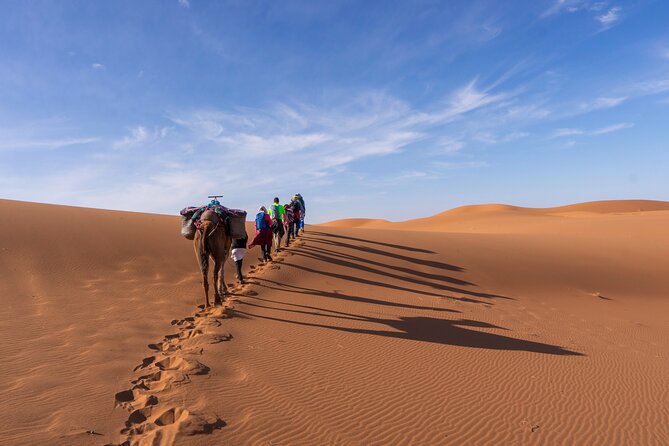
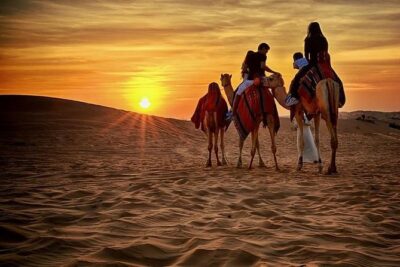
Day 2 is the bridge into the desert. You’ll drive further south through the Drâa Valley, past older villages and palm groves, until you reach the edge of the desert at M’hamid. This is where the dromedaries and the escort team come in.
Here’s the practical rhythm:
- After you load the dromedaries, you do an easy walk for about an hour (or so) to the first camp area at Rass Enakhl.
- You sleep outdoors in camp, with the day built to keep your energy for the dune days ahead.
That initial day of walking is short on purpose. It’s how you learn how sand feels underfoot and how camp life works—without turning the trip into a boot-camp.
The driving time is about 5 hours, with around 1 hour of hiking.
Day 3–6: Four Hiking Days Through Erg Chigaga and Surrounding Dunes
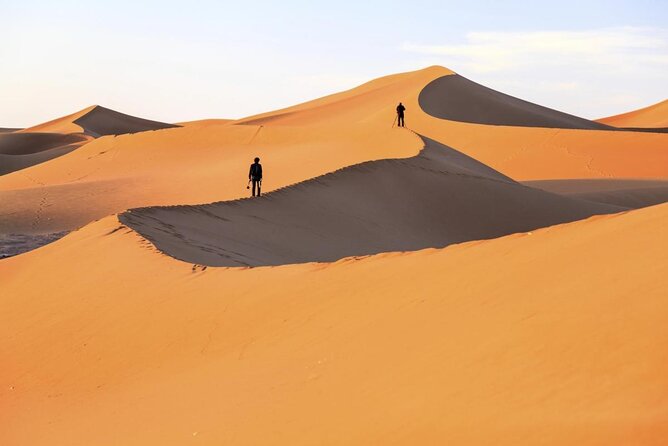
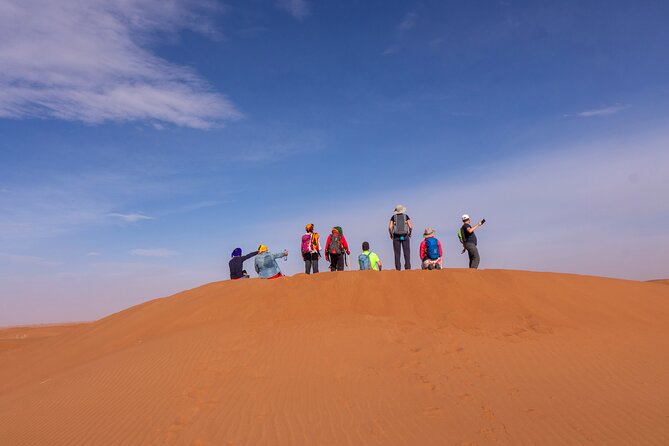
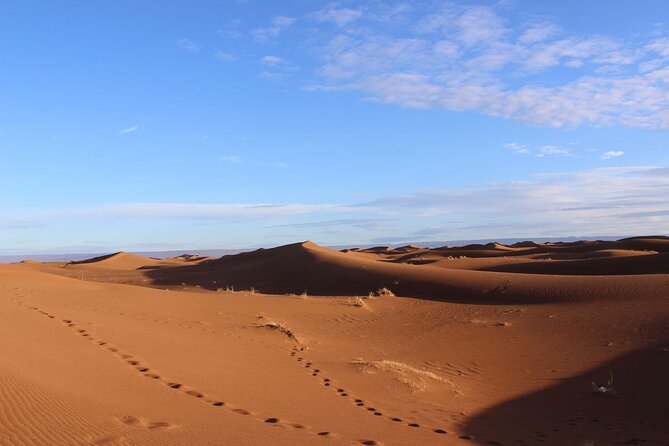
This is the core of the trip. You’ll spend four hiking days around Erg Chigaga—sand dunes, dry plains, and occasional oasis pockets. Even with an easy overall difficulty rating, the desert has its own pace. Your route changes the effort: you’ll sometimes feel it most on longer dune crossings, not on the easy-sounding days.
Day 3: Dunes, a small oasis, and a camp near an old caravanserai
Day 3 starts with dunes and then passes a small oasis before shifting into dry plain and more dunes. By late day you reach a camp near an old caravanserai near Marabout Sidi Naji. Lunch happens at camp, and the afternoon is yours.
Hiking time is about 5 hours. It’s long enough to feel the desert, short enough to still enjoy the camp scene afterward.

Day 4: Erg Chigaga’s long stage across dunes and past an ancient souk
Day 4 is your longer hike. You start again with dune walking, then cross a vast dry plain and pass ruins of an ancient souk. You eat lunch along the way, then continue to a camp near the large Erg Zeher dune.
Hiking time runs about 6 to 6.5 hours, which is the day that most people will remember as the “stretch” day. The good news: you’re not doing this alone. The escort team and dromedaries handle the practical loads, so you’re focused on moving.
Day 5: Crossing the big dune, then hiking along the Drâa riverbed
Day 5 has a satisfying sequence: you cross Erg Zeher, then hike across a dry plain and more dunes to reach the Drâa riverbed. After that, you walk along the riverbed toward Erg Smer for camp.
This is more than just a pretty route. Riverbeds in this part of Morocco tell you where water once flowed—so even if the ground is dry, the route feels tied to real movement over centuries. Lunch happens at camp, then you get leisure time.
Hiking time is about 4 to 5 hours.
Day 6: Endless dry plain mornings, then dunes to Chegaga
Day 6 starts with crossing the Drâa riverbed again and then continues through a seemingly endless dry plain. After lunch, you move over sand dunes to camp at Chegaga.
Hiking time is about 4 to 5 hours. It’s a good day for people who want solid desert walking without the longest-hours stress of Day 4. Your “easy” label really makes sense here: it’s steady work, not technical climbing.
Camp Life: Tents, Mats, Water Filters, and Meals That Actually Matter
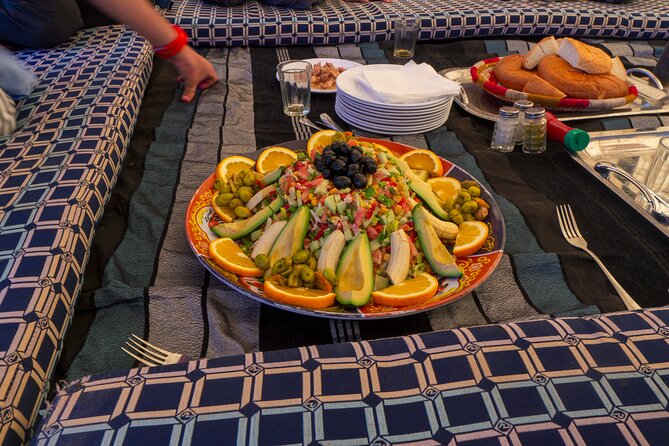
The comfort level on this trek comes down to what you’re sleeping in and how food works after walking all day.
You’re provided with:
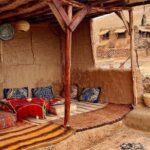
- Tents and mats
- Cooking and kitchen utensils
- Water filters
So you’re not expected to solve every desert survival problem. Also, meals are included in a clear pattern: breakfast (7), lunch (8), and dinner (7). That’s a lot of food coverage, which is one reason this trek can feel like good value. When your day is shaped by walking times and camp locations, predictable meals reduce mental load.
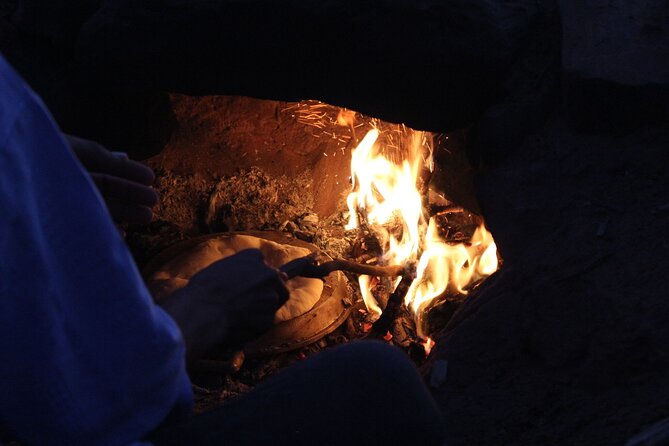
Food quality comes up a lot in the feedback. The camp cooking is described as very authentic and tasty, and the cook’s work is a big part of why people feel satisfied after long dune hours.
One more plus: the guide’s style. Hassan is described as patient and knowledgeable about culture and history, but he also talks about local animals and plants. That matters because desert days can otherwise feel repetitive if you’re not learning what you’re seeing.
Day 7: Leaving the Dunes for Foum Zguid and Your Ouarzazate Night
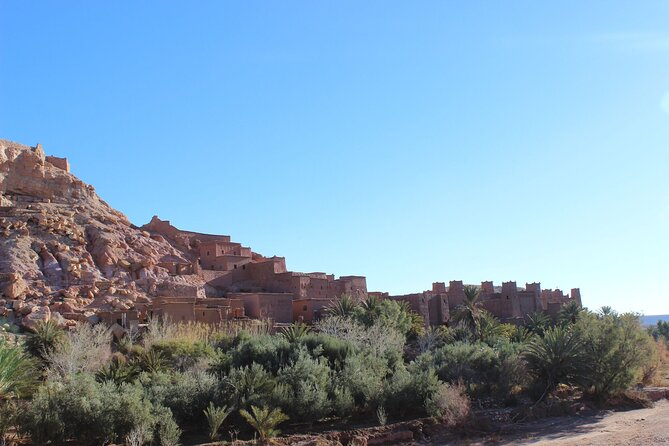
After camp at Chegaga, Day 7 changes pace. A jeep takes you to Foum Zguid, then you continue by minibus toward Ouarzazate (or possibly back around Aït Ben Haddou), where you sleep in a hostel.
This day is mostly transport, with time for the journey: about 6 hours on the move, with hiking time listed at 0. It’s a good reset. Your body gets a break, but you’re still moving through the south rather than just ending the trip abruptly.
Day 8: Returning to Marrakech Through Ounila Valley and Telouet
On Day 8, you head back north to Marrakech. The route goes through the Ounila Valley via Telouet. Travel time is about 4 hours, and the trek ends back at the same meeting point.
One small planning note: the return is a full finish, and any extra night in Marrakech is on you. If you’re connecting flights or want a buffer day, build it into your schedule.
Price and Value: What You’re Paying For at $1,156.92
At $1,156.92 per person, this trek isn’t cheap. But it also isn’t just a “walk with a view” package. You’re paying for logistics that are hard to do independently in this region, especially with dune camps.
What stands out as value for the price:
- A team that handles trekking cooking, escort work, and the dromedaries
- Camp infrastructure like tents, mats, utensils, plus water filters
- Meals included for most of the days on route
- A small-group range (2–12) that keeps the experience personal
And you’re also getting a cultural foundation on Day 1—Kasbah El Glaoui, the Aït Ben Haddou ksar—so you’re not only paying for sand.
The main “gotcha” on cost is the items not included: a sleeping bag (comfort temperature 0°C), plus tips for guide/escort/driver, and any entrances in Marrakech. If you already own the right sleeping bag and you budget for tips, the price makes a lot more sense.
Difficulty and Who This Trek Fits Best
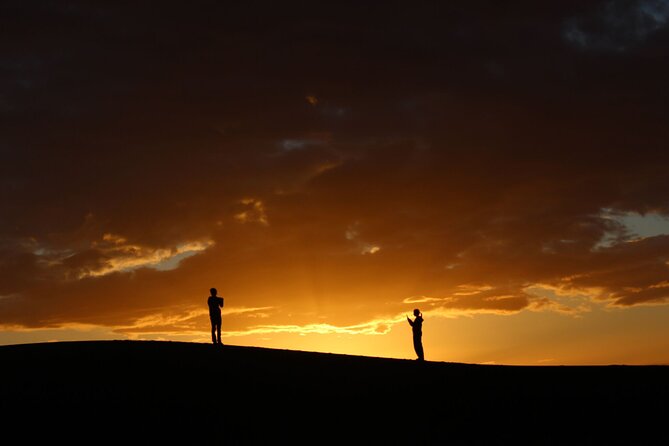
The trek is rated easy, with about four days of hiking and stages that are designed to be manageable even at a slower desert pace.
This works best if:
- You want real desert time without technical trekking.
- You’re okay with hours spent walking over sand and across dry plains.
- You want an organized camp experience where the team does the heavy lifting.
It may not be ideal if:
- You hate sand underfoot and want flat, firm ground.
- You’re sensitive to long dune crossings on the longer day (Day 4).
- You expect hotel-style comfort each night—camp is part of the deal.
A helpful real-world sign: people have done these day trips comfortably in groups that included travelers in their 50s and 60s, as long as they’re ready for the desert pace.
What to Pack (So the Easy Rating Stays True)
You aren’t shown a full packing list, but the important item is clear: you must bring a sleeping bag (comfort temperature 0°C). Without it, the “easy” hiking won’t matter if you’re not sleeping well.
Also plan for desert walking:
- Layers for big temperature swings (warm in the day, cooler at night).
- Sun protection for dune days.
- A mindset for slower steps in sand.
Everything else—camp setup and water filtration—is handled for you, which is exactly what you want on a trek like this.
Tips, Entrances, and Small Costs That Matter
A few extras can affect your final trip budget:
- Tips are not included, and the guidance given is 110 Euro for the guide, escort team, and driver.
- Entrances and meals in Marrakech are not included.
- Flight into Marrakech and travel insurance aren’t included.
If you’re the kind of traveler who hates surprise costs, set aside the tip amount and decide what you want to do about Marrakech entrances in advance.
Should You Book This Morocco Desert Trek?
Book it if you want a desert trek that’s organized, small-group, and built for walking steadily rather than power-hiking. The combination of Erg Chigaga dunes, Drâa Valley oases, and cultural stops like Aït Ben Haddou gives you variety without turning the schedule into chaos.
Skip it or look for a different format if you want mostly flat trails, or if you’re not ready for the effort changes that come with sand, even on an easy itinerary.
If you do book, the best move is simple: bring a proper 0°C sleeping bag, pace yourself on dunes, and pay attention when Hassan explains what you’re seeing. That’s where the desert stops being just a photo stop and becomes a story you understand.
FAQ
What is the meeting point and start time in Marrakech?
You meet at the Hôtel Restaurant Café de France near Jamaa el-Fna in Marrakech, with an 8:00 am start time.
How long is the trek and how much of it is hiking?
The experience runs about 8 days total, with roughly 4 days of hiking.
What group size should I expect?
The group size is minimum 2 and maximum 12. It’s also set up as a private tour for your group only.
Is the hiking difficult?
Difficulty is listed as easy. You’ll still walk several hours on sand and dry plains on certain days, especially during the longer stages.
Will I sleep in tents or hostels?
You camp in tents during the trekking nights. On Day 7, you sleep in a hostel in Ouarzazate or Aït Ben Haddou. The tour ends on Day 8 back in Marrakech.
What’s included for meals and camp setup?
You get dinner (7), breakfast (7), and lunch (8). Camp setup includes tents, mats, kitchen utensils, and water filters, plus a trekking cook and escort team with dromedaries.
What should I bring that isn’t included?
A sleeping bag is not included, with comfort temperature listed as 0°C.
Are tips included?
No. The listed guidance for tips is 110 Euro for the guide, escort team, and driver.
Can I cancel if my plans change?
You can cancel up to 3 days in advance for a full refund. If you cancel less than 3 days before the start time, the amount paid won’t be refunded.