Ha Giang and Sapa in one trip hits fast. You get big North Vietnam road views and real village trekking, plus nights in community homestays instead of only hotels. It’s a tight 6-day loop that mixes motion, walking, and local food at a pace that feels more like a journey than a checklist.
What I really like is the homestay style—you sleep in a traditional setting, eat with your host family, and even get the chance to experience Red Dao herbal bathing. I also appreciate the hands-on support for motorbiking: the equipment quality is rated as good, and instructions are provided step-by-step, with the option to ride yourself if you have an international driving license.
One drawback to plan for: the schedule includes long transport days and some steep, tiring hiking moments. If you want flat, easy walks and lots of downtime, this one may feel like too much.
In This Review
- Key highlights you’ll feel on the ground
- Ha Giang Loop + Sapa Trekking: how this package really feels
- Price and what you actually get for $380
- The rhythm of long travel days: sleeper bus and transfers
- Day 1: starting in Hanoi’s Old Quarter and heading for Ha Giang
- Day 2: Quan Ba Heaven Gate, Thẩm Mã Pass, and Dong Van’s core
- Day 3: Ma Pi Leng Pass and the road to Du Gia homestays
- Day 4: Du Gia Waterfall, Lung Tam weaving village, then straight to Sapa
- Day 5: Muong Hoa Valley villages—Y Linh Ho, Lao Chai, and Ta Van
- Day 6: Giang Ta Chai’s Red Dao view, then Sapa and the Hanoi ride
- Motorbike riding: easy rider, plus the self-drive option
- Who this tour suits best (and who should think twice)
- Should you book this 6-day Ha Giang Loop and Sapa trekking trip?
- FAQ
- How long is the tour?
- Where do I meet at the start?
- Does the tour include transportation from Hanoi to Ha Giang and back?
- Are meals included?
- Is trekking part of the experience?
- What kind of accommodation do I get during the Ha Giang part?
- Is motorbike riding included, and can I drive myself?
- How big is the group?
- Is free cancellation available?
Key highlights you’ll feel on the ground
- Ha Giang Loop views plus Sapa trekking in a single, well-paced itinerary
- Homestay nights built around eating together and living like locals
- Trekking focus (about 5–15 km/day) instead of car-only sightseeing
- Motorbike equipment and clear guidance for confidence on the road
- Group size capped at 12, which usually means easier coordination
- Muong Hoa Valley villages with classic terraced-field scenery
Ha Giang Loop + Sapa Trekking: how this package really feels
This is the kind of tour I’d recommend when you want variety without jumping between too many different travel days. You’ll start in the Ha Giang region, where the scenery is dramatic and the roads keep your attention. Then the trip transitions into Sapa, where the focus shifts to walking between villages and terraced fields.
The big idea is balance. You won’t spend the whole time riding in a vehicle and stopping for photos. The program is built around trekking distances (about 5–15 km/day), so you actually move through the countryside. That walking time is where the culture and landscape start feeling personal—simple paths, village routines, and the rhythm of daily life.
You should also know what kind of comfort to expect. This isn’t a luxury ride-through. Accommodation during the Ha Giang portion is community-based, and the homestay style is more about connection than convenience. If you enjoy modest setups and don’t need hotel-level amenities, you’ll likely love it.
You can also read our reviews of more tours and experiences in Hanoi.
Price and what you actually get for $380
At $380 per person, the value comes from how much is included. The package bundles transportation and meals into the fixed price, which is where many budget tours quietly fall apart once you add up extras.
Here’s what’s explicitly included:
- Transportation (including the overnight bus segment and later bus transfers)
- Entrance fees
- Meals: 5 breakfasts, 5 lunches, 3 dinners
- Pickup is offered
That meal coverage matters in the North Vietnam highlands. Once you’re moving between villages and viewpoints, it’s not just about eating—it’s also about staying on schedule. Having lunch and dinner handled means you spend less time negotiating menus and more time walking and exploring.
The entrance fees being included also helps with friction. A lot of tours sell you sightseeing, then charge for access. Here, the ticket costs are already covered.
What you should plan to pay for yourself:
- Tips
- Personal expenses
- Anything not listed as included
The rhythm of long travel days: sleeper bus and transfers
This tour uses overnight and scheduled bus travel to protect daytime sightseeing. Day 1 starts with you meeting in Hanoi’s Old Quarter for an overnight journey by sleeper bus toward Ha Giang, with the ride time listed at about 6 hours. The point is simple: you use the night to get closer to the start of the loop.
Then, after the Ha Giang portion ends, you shift gears to Sapa. The transfer from Ha Giang to Sapa is listed as about 6 hours, and you arrive in Sapa around midnight. The program then moves into sleep and recovery before trekking.
By Day 6, you’re back on the move again. After your final village hike, you get to Sapa in the afternoon, wash up, and then take a bus back toward Hanoi (listed as a 6-hour route, with pickup around Saparis Station Hostel). In other words: there are travel stretches. But you’re not sitting in traffic all day. Much of the heavier travel is handled by bus time blocks.
Day 1: starting in Hanoi’s Old Quarter and heading for Ha Giang
The tour begins with a meeting at the Old Quarter in Hanoi. You’re told to be on time based on your voucher time, and the start time is listed as 8:30 am. Then you board a sleeper bus for the overnight ride to Ha Giang (about 6 hours).
This start matters because it sets the tone for the whole trip. You’re not arriving in Ha Giang and immediately trying to do hard trekking the next morning. Instead, the itinerary gives you the kind of pacing where Day 2 begins with viewpoints and cultural stops, then the driving and hiking intensity builds.
A practical tip: if you hate sleeper buses, bring earplugs and something for your neck. Even with the tour taking care of the transport, you’ll enjoy the trekking more if you arrive with your head clear.
Day 2: Quan Ba Heaven Gate, Thẩm Mã Pass, and Dong Van’s core
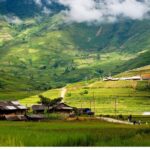
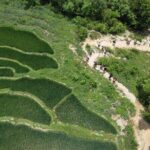
Day 2 is where the trip shows you Ha Giang’s signature look: limestone mountains, valleys, and terraced fields. You start with Quan Ba Heaven Gate, reached by road to a high viewpoint. From here, the stop is built around panoramic views across Tam Son valley—winding limestone mountains and terraced patterns laid out like a patchwork.
Next comes the Dong Van Karst Plateau Geopark segment via Thẩm Mã Pass, described as part of the legendary Happiness Road (QL4C). This is a scenic mountain-road stop with dramatic curves between Yên Minh and Đồng Văn. It’s short (about 30 minutes), but it fits the day’s pattern: see a major view, then move on before fatigue sets in.
Then you head to Dinh Vua Meo (Vuong Palace). It’s set in Sa Phin Valley and linked to Vuong Chinh Duc, known as the Hmong King. The stop is listed at about 1 hour, which is a good length for something cultural without dragging the day down.
The day ends with Dong Van, where you spend a long block of about 10 hours. This long time slot suggests a major base period—enough time to settle, eat, and get ready for what comes next. Dong Van is described as the heart of the UNESCO-recognized Dong Van Karst Plateau Geopark area, with rugged limestone mountains and terraced fields.
How to think about Day 2: it’s not yet about the hardest walking. It’s about warming up your eyes. Once you get a feel for limestone peaks and valley farms, Day 3 and beyond will make more sense.


Day 3: Ma Pi Leng Pass and the road to Du Gia homestays
Day 3 is a classic Ha Giang day: big pass views, then arrival and homestay life. The itinerary lists Ma Pi Leng Pass for about 2 hours between Đồng Văn and Mèo Vạc. This is one of Vietnam’s most breathtaking mountain passes, with a road stretch noted at about 20 km along the Happiness Road.
After the pass, you stop at Mèo Vạc for around 2 hours. The tour frames this as a remote mountainous district in Ha Giang, surrounded by limestone peaks and steep valleys. Even if you only spend part of the day there, it’s a key moment: you’re leaving the denser karst core and moving into a more remote-feeling pocket of the province.
Then you arrive at Du Gia village around 16:00. The tour includes checking into a homestay, showering, relaxing, and dinner with the family. This is where the experience changes from scenery tour to human tour.
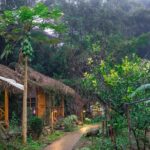
About the homestay: it’s described as community-based with traditional wooden houses, and the program highlights the chance to live in a stilt-house style setting, cook together, eat together, and try Red Dao herbal bathing. I like this approach because it avoids the fake-buddy version of cultural tourism. You’re not just being shown a room—you’re sharing time.
What to consider: you’ll be in a rural village setting. That can mean simpler bathrooms and less predictability than a hotel. If you accept that up front, you’ll likely enjoy the night much more.
Day 4: Du Gia Waterfall, Lung Tam weaving village, then straight to Sapa
Day 4 starts with nature first: Du Gia Waterfall, described as a multi-tier waterfall about 6 meters high, pouring into the area below. You have about 2 hours here, which is enough time to see it and still keep the day moving.
Then you shift to culture with Lung Tam Village, a traditional Hmong weaving village known for linen and brocade craft. The stop is listed at about 1 hour. For me, this type of stop works best when you treat it as a “slow glance.” If you rush it, it turns into shopping. If you pause and watch the process, it becomes more meaningful.
After that, you continue to Ha Giang, where the Ha Giang Loop finishes around 15:00–16:00. The itinerary then says you can shower at the end point and wait for the bus pick-up to Sapa (about 6 hours). You arrive in Sapa mid-night and get a room to sleep.
This day is packed because it has two jobs: finish the loop and reposition for trekking. The upside is that you avoid wasting a whole extra day just moving. The downside is that you may not feel fully rested when Sapa trekking starts. Build in a calm mindset for the night transfer.
Day 5: Muong Hoa Valley villages—Y Linh Ho, Lao Chai, and Ta Van
Day 5 is Sapa’s heart area: Muong Hoa Valley and its village chain. You begin with Y Linh Ho Village about 5 km southwest of Sapa, listed for around 3 hours. The tour describes it as a tranquil Hmong and Dao settlement in the valley, staying rustic. This stop gives you a calmer start, before the day connects you to the most famous terrace scenery.
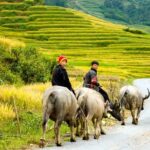
Then comes Lao Chai Village, about 7 km southeast of Sapa in the Muong Hoa Valley. The stop is listed at about 2 hours. Lao Chai is known for terraced rice fields and ethnic culture, and the tour frames it around Black Hmong community life.
Next is Ta Van Village, about 3 km from Lao Chai. The itinerary lists it for a long block (18 hours), which likely includes trekking time plus your overnight stay setup. Ta Van is described as home to Hmong, Giay, and Red Dao groups, with roughly 150–200 households.
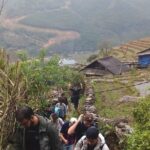
This is also where the trekking style matters. The overall tour plan says daily hikes often land around 5–15 km. Even if each segment isn’t long on paper, you’ll still feel the altitude and the footwork: uneven paths, stairs in the terraces, and steady uphill/downhill changes.
My advice: wear hiking shoes you’ve already tested. For Vietnam’s village trails, comfort wins. If you’re trying to break in new shoes, you’ll regret it by Day 5.
Day 6: Giang Ta Chai’s Red Dao view, then Sapa and the Hanoi ride
Day 6 is your final walking day. You start with Giang Ta Chai Village, described as a charming Red Dao village about 5 km from Ta Van, sitting on a terraced landscape. The stop is listed for around 3 hours and includes trekking routes winding through bamboo groves and crossing terrain along the village approach.
Then you reach Sapa, with the tour ending in the afternoon (listed around 14:00–15:00). You get picked up back to Saparis Station Hostel, and you can shower before waiting for the bus back to Hanoi. The itinerary notes bus departures every hour and the overall Sapa to Hanoi ride is about 6 hours.
So the experience closes in a practical way: you’re not stranded in Sapa with no plans. You’ll have your return transport handled, and the schedule tries to get you back to Hanoi without an extra overnight.
One detail I like: the Hanoi return is framed as arranged by the provider, with a luxury bus pickup from Saparis Station Hostel. That means you finish the trip with a bit more comfort than the initial sleeper-bus departure.
Motorbike riding: easy rider, plus the self-drive option
Even though the trip includes trekking, it still spends key time on the road. The Ha Giang Loop portion is where motorbiking fits the experience, and the reviews specifically highlight motorbike gear quality as good.
One practical point from the feedback: if you have an international driving license, you can drive yourself. That’s important if you want control and don’t want to feel like a passenger the whole time.
If you’re not planning to ride yourself, the setup is still useful. You can enjoy the views while your driver handles the road choices. Either way, what matters is confidence: the tour provides clear guidance for each step, so you know what comes next.
If you’re someone who gets anxious on curvy mountain roads, this tour sounds like it helps with that anxiety by giving structured instructions rather than leaving you to figure everything out on your own.
Who this tour suits best (and who should think twice)
This tour is best for you if you want:
- A mix of road scenery and walking without switching to separate trips
- An authentic homestay experience (not just a guesthouse stop)
- A moderate adventure vibe: some tiredness is normal, but the day structure is clear
- A small-group feel (max 12 travelers)
You should think twice if:
- You need constant hotel-style comfort
- You strongly prefer flat, easy walks and low stair/steep trail days
- Long bus segments feel like a deal-breaker (this tour uses overnight and transfer drives to make the schedule work)
If you’re curious about ethnic village life, terraced farming areas, and the Ha Giang passes, you’ll likely feel like you’re getting more than the usual highlights.
Should you book this 6-day Ha Giang Loop and Sapa trekking trip?
If your goal is a trip with both views and real walking, I’d say this is worth serious consideration. The biggest selling points are the combination of Ha Giang road highlights with Sapa trekking, plus the homestay nights that help the culture feel lived-in rather than staged.
I’d book it if you’re okay with a packed schedule and you treat the homestays and trails as part of the experience, not a compromise. The price also looks fair for what’s included—transport, entrance fees, and most meals are already covered, so you’re not doing constant expense math on the road.
FAQ
How long is the tour?
The package is listed as 6 days (approx.).
Where do I meet at the start?
The meeting point is in Hanoi’s Old Quarter, and the start time is listed as 8:30 am. Your voucher time should also tell you exactly when to arrive at the meeting point.
Does the tour include transportation from Hanoi to Ha Giang and back?
Yes. The itinerary includes an overnight sleeper bus from Hanoi to Ha Giang, and it also includes a bus back from Sapa to Hanoi (listed as about 6 hours) with pickup arranged from Saparis Station Hostel.
Are meals included?
Yes. The tour includes breakfast (5), lunch (5), and dinner (3).
Is trekking part of the experience?
Yes. The tour description says it focuses on trekking about 5–15 km per day.
What kind of accommodation do I get during the Ha Giang part?
You stay in community-based homestays, typically traditional wooden houses and stilt-house style lodging, with activities like cooking and eating together. Red Dao herbal bathing is also mentioned.
Is motorbike riding included, and can I drive myself?
Motorbiking is part of the Ha Giang Loop experience. The reviews say motorbike equipment is good, and if you have an international driving licence, you can drive yourself.
How big is the group?
The tour has a maximum of 12 travelers.
Is free cancellation available?
Yes. Free cancellation is available if you cancel up to 24 hours in advance for a full refund.