REVIEW · POKHARA
4Nights 5Days PoonHill Trek
Book on Viator →Operated by Dadhi Ram Thapa · Bookable on Viator
Five days, one big sunrise. This trek from Pokhara strings together village paths, forest walks, and river views, then saves the loudest wow moment for 3210 meters at Poon Hill.
I love how the itinerary gives you both the early-morning drama of mountain light and the calmer rhythm of trekking through Ulleri and Ghorepani.
The only real drawback: the route is all about steady walking plus a lot of stairs, and you’ll want a baseline level of fitness for 5–6 hour trek days.
My second favorite part is the human touch—your English-speaking guide Dadhi Ram Thapa. The way he’s described is very consistent: professional about safety, helpful on the trail, and easy to travel with (with humor included), so the experience feels organized even when you’re hiking in the dark for sunrise.
If you hate cold starts or you’re looking for a totally flat hike, this may test you. You’ll be up early on day 3, and the stairs can add up even when the route feels “easy” in theory.
In This Review
- Key Highlights You’ll Want to Know
- Sunrise-First Trek from Pokhara: What Makes This 5 Days Feel Worth It
- Price and Logistics: What $300 Covers (and What You Need to Budget)
- The Guide Factor: Why Dadhi Ram Thapa Changes the Feel of the Trek
- Day 1: Pokhara to Ulleri Football Ground Through Rivers and Forest Trails
- Day 2: Ulleri to Ghorepani and the Community Stop Moment
- Day 3: Poon Hill Sunrise at 3210 m, Then Downshift to Tadapani
- Day 4: Tadapani to Jhinu Danda and the Steam-Bath Reward
- Day 5: Back to Nayapul, Then Car Drive to Pokhara Lakeside
- Tea Houses, Pace, and the Stair Reality
- What to Pack for This 5-Day Trek (Based on the Actual Trip Shape)
- Who This Trek Is For (and Who Might Prefer a Different Plan)
- Should You Book the 4 Nights 5 Days Poon Hill Trek?
- FAQ
- Is pickup available for this trek?
- Are permits included in the price?
- Are meals included?
- What kind of accommodation do you get?
- Is the Poon Hill sunrise included, and what views should I expect?
- What is the cancellation window?
Key Highlights You’ll Want to Know
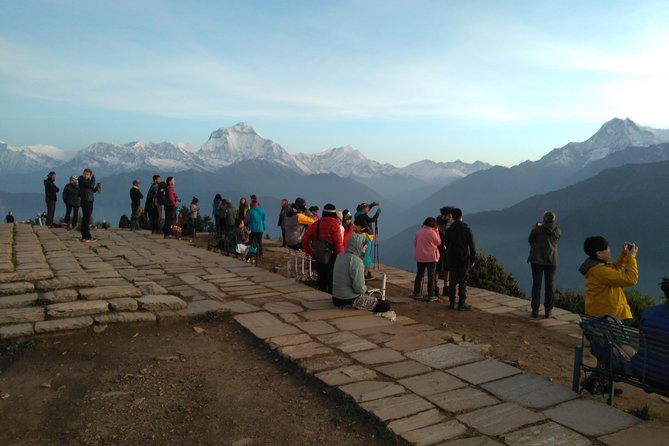
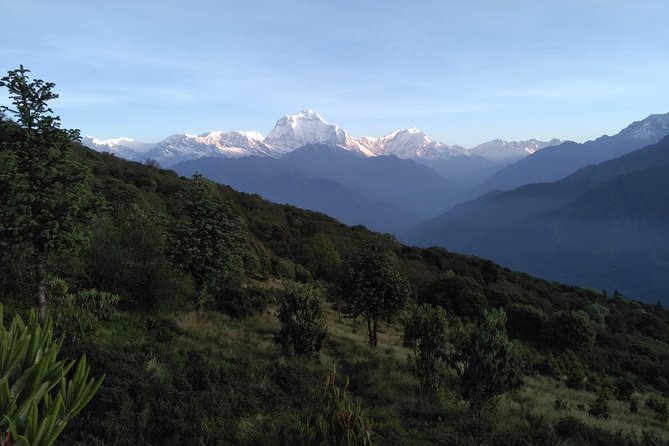
- Poon Hill sunrise from 3210 m with views across the Annapurna and Dhaulagiri range
- Tea-house accommodation built into a smooth 4-night/5-day structure
- Jhinu Danda hot spring steam bath after a scenic trek with mountain views
- English-speaking guide, Dadhi Ram Thapa, focused on safety and group comfort
- Permits (TIMS) included, so you’re not scrambling for paperwork on arrival
- Private transfer and pickup offered, plus a car ride back to Pokhara lakeside
Sunrise-First Trek from Pokhara: What Makes This 5 Days Feel Worth It
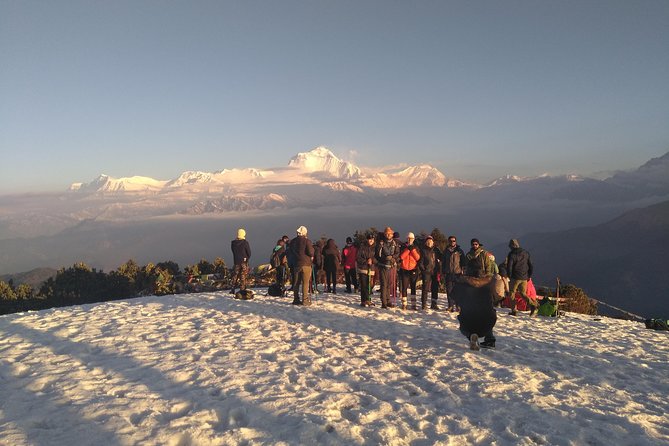
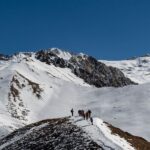
This is a classic “best-of” trek shape. You get enough time to climb into the viewpoints, then you also have real hiking days where the path runs through rivers, forests, and villages. It’s not only about the photo moment. You’ll actually be moving through the Annapurna region day by day, with a rhythm that feels doable for most people who can handle long walks.
And then there’s Poon Hill. Sunrise here is the centerpiece, and the altitude target (3210 meters) matters. It’s high enough that the morning air feels different, and the timing turns the hike into a mission: headlamps on, steady pace, quiet minutes waiting for the sky to change. If you like being outside early—this part delivers.
You can also read our reviews of more tours and experiences in Pokhara.
Price and Logistics: What $300 Covers (and What You Need to Budget)
At $300 per person, you’re paying for the structure that makes a trek feel manageable: permits, a guide, tea-house stays, and private transfers. It’s not just “someone brings you somewhere.” You get the groundwork that usually costs time and energy on your own.
Here’s what’s included:
- TIMS and permit
- Private transfer
- Tea-house accommodation
- English-speaking trekking guide
Meals and drinks are not included. That means you’ll still be choosing where and what to eat each day, and you’ll want to bring some spending flexibility. If you like to keep meals consistent, plan a simple routine: pick a place that’s convenient for that stop and go with what’s offered.
Also not included:
- Rescue cost in case of emergency
- Tips
That last line is important. Trekking works best when you factor in the guide and staff as part of the experience. And rescue coverage is not something you want to gamble on—if there’s even a small chance of an accident, you’ll want solid travel insurance.
The Guide Factor: Why Dadhi Ram Thapa Changes the Feel of the Trek
A guide can turn logistics into comfort. With Dadhi Ram Thapa, the big themes are safety, attention to the group’s well-being, and lots of practical knowledge. That matters a lot when your itinerary starts early and your trail includes stairs.
You’ll also feel the difference in small moments: how pacing is handled, when breaks make sense, and how the plan stays sensible even when the conditions are dark before sunrise or damp around the hot spring area.
What I like for you as a traveler: this trek is physically simple compared to high-altitude expeditions, but it still requires awareness. A good guide keeps it calm. And the best description of Dadhi’s style is straightforward: helpful, patient, professional, and people seem to feel safe with him.
Day 1: Pokhara to Ulleri Football Ground Through Rivers and Forest Trails
Your trek begins with a private car ride from Pokhara to Nayapul. Then it’s on foot from Nayapul to Ulleri, roughly 5 to 6 hours of trekking.
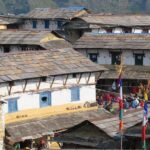
Why this day is worth your attention: it sets the tone. You start moving through river views and forest paths, plus village life along the way. It’s a gentle on-ramp to the mountains. You’re not rushing toward the highest point; you’re building the habit of walking.
There’s also a stop at Ulleri Football Ground, with an admission ticket included. That detail is a good hint: this isn’t only a “walk through” itinerary. You’ll likely pause long enough to take in local life rather than treating everything as a speed-run between elevations.
Possible consideration: your first day is long. If you start aggressively, your legs may feel it later when the stairs show up more. The smart move is to settle into a steady pace, hydrate early, and save your energy for the early mornings ahead.
Day 2: Ulleri to Ghorepani and the Community Stop Moment
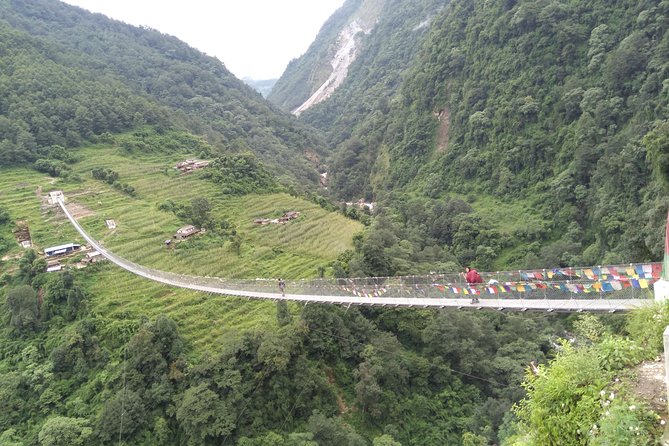
Day 2 is about a mid-length trek: Ulleri to Ghorepani takes about 5 hours. The path keeps a steady mix of green forest, river scenery, and mountain views.
You also make a stop at Ghorepani Community hospital. An admission ticket is listed as free here, which again suggests this stop is more than a quick marker on a map. It can add a human layer to the trek—this region is not only scenery. It’s lived-in places with community spaces.
Why I like this day in the overall plan: Ghorepani is your base rhythm for the sunrise plan. Getting there with time and a sensible pace helps you feel ready when you’re called out early on day 3.
If you’re sensitive to fatigue, plan your pace like a marathon runner, not a sprinter. The best sunrise days come from saved legs.
Day 3: Poon Hill Sunrise at 3210 m, Then Downshift to Tadapani
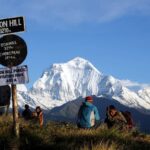
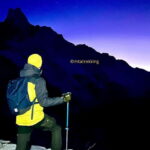
This is your alarm-clock day. You’ll go early to Poon Hill for sunrise, then trek back toward Ghorepani and continue on to Tadapani.
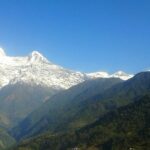
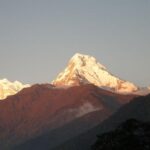
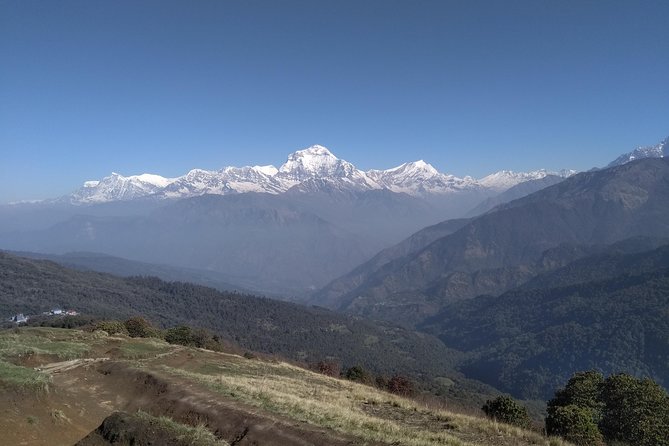
What you’re chasing here is the view: Annapurna and Dhaulagiri range panoramas. The trek becomes a quiet climb first, then a “hold your breath” moment when the light hits the peaks. That shift is what makes Poon Hill famous, and it’s why this 5-day trek earns its place.
The itinerary lists the Poon Hill segment as short (you’ll spend a limited chunk of time on this key stop), but don’t assume it’s easy in the dark. Steep angles and stairs still apply. Your legs will know it.
Once sunrise is done, you’ll trek back and then continue toward Tadapani to set up your next night. This downshift matters. It keeps the day from feeling like nonstop exertion.
Day 4: Tadapani to Jhinu Danda and the Steam-Bath Reward
Day 4 is where the trek starts to feel more fun. You trek from Tadapani to Jhinudanda for about 6 hours, with mountain views including Annapurna and Fishtail (Machhapuchhre is the peak tied to Fishtail).
As you walk, you’ll get forest and river scenery again—very much the “keep moving, keep looking up” style of this route.
Then comes the reward: the Jhinu Danda hot spring steam bath, with an admission ticket included. This is the day you’ll appreciate sore legs the most, even if you don’t love the idea of being in steam. It’s also a psychological reset. After a long hike day, the hot spring changes your body temperature and your mood.
Consideration: hot springs and steam areas can be crowded and a bit unpredictable in comfort. You’ll want to be flexible about timing, keep your towel and water situation simple, and treat it like a practical recovery stop, not a luxury spa.
Day 5: Back to Nayapul, Then Car Drive to Pokhara Lakeside
The final day is a return hike to Nayapul, followed by a car drive back to Pokhara.
The trek segment is estimated at about 6 hours, so it’s not just a quick walk-off. You’ll likely feel your legs after the previous days, but this is also the day when your route is familiar enough that it feels calmer.
There’s a stop at Pokhara Lakeside, with admission listed as free. That’s a nice way to finish: you end your trekking bubble with an easy place to sit, eat, and look back at what you just did.
Tea Houses, Pace, and the Stair Reality
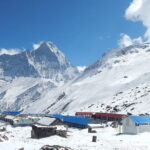
This trek includes tea-house accommodation. Tea houses on this route are set up for hikers, so you’ll have a predictable rhythm of sleep and meals (even though meals themselves aren’t included in the package).
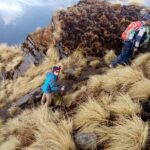
The biggest practical note: several people describe the route as easy, but with a lot of stairs. That’s a common contradiction on trekking itineraries. “Easy” often means the altitude is controlled and the route is well-known. “Hard” often means your legs still work. Plan for that.
What I suggest for you:
- Wear shoes you already trust
- Take your time on descents
- Use trekking poles if you like them (they reduce knee stress)
- Start day 3 slowly even if you’re excited for sunrise
What to Pack for This 5-Day Trek (Based on the Actual Trip Shape)
Because day 3 is early, and day 4 includes a hot spring, your packing should match the calendar of this itinerary.
You’ll want:
- Warm layers for pre-sunrise cold
- A light rain layer or something that handles mist
- Comfortable socks and shoes for stairs
- Headlamp for early starts (even with a guide, timing matters)
- A small pack for water and essentials during each trek segment
- Something you can change into or rinse after the hot spring steam bath
Since meals and drinks aren’t included, also think about snacks. If you prefer consistency, bring a few items you like for the trail days.
Who This Trek Is For (and Who Might Prefer a Different Plan)
This experience is designed so that most travelers can participate. That fits people who want a moderate Himalayan trek without a long, high-commitment acclimatization schedule.
It’s especially a good fit if:
- You want one big sunrise day at Poon Hill (3210 m)
- You like walking through forests, rivers, and real villages
- You’d rather outsource permits, tea-house booking, and transfers
- You value a guide who’s safety-minded and friendly, like Dadhi Ram Thapa
It might not be the best fit if:
- You struggle with stairs or long days on your feet
- You need meals included in your package price
- You don’t want any extra spending during the trek for food and drinks
Should You Book the 4 Nights 5 Days Poon Hill Trek?
If your priority is a classic, well-paced trek with a true sunrise payoff and a hot-spring recovery day, I’d say yes. The itinerary is built around the two strongest experiences: Poon Hill sunrise and the Jhinu Danda steam bath. And because permits, tea-house accommodation, a guide, and private transfers are included, you’re buying a plan that reduces stress.
Book it if you’re ready for early mornings and you can handle 5–6 hour trekking days with stairs. Skip it if you want a more relaxed, low-step hike or you’re hoping meals are fully covered.
If you do book, one practical move stands out: plan your insurance for rescue coverage (since it’s not included), and bring layers for the cold early start. Then let the mountains do what they do best—change the way you look at the sky by morning.
FAQ
Is pickup available for this trek?
Pickup is offered, and private transfer is included. You’ll also use car drives on the trekking start (Pokhara to Nayapul) and on the return to Pokhara.
Are permits included in the price?
Yes. TIMS and the permit are included.
Are meals included?
No. All type of meals and drinks are not included.
What kind of accommodation do you get?
Accommodation in tea house is included for the trekking nights.
Is the Poon Hill sunrise included, and what views should I expect?
Yes. You’ll go early to Poon Hill for sunrise and mountain views, including the Annapurna and Dhaulagiri range.
What is the cancellation window?
Free cancellation is available up to 24 hours in advance for a full refund. If you cancel less than 24 hours before the start time, the amount paid is not refunded.