REVIEW · HANOI
2-Day Trekking in Sa Pa from Ha Noi by sleeping bus
Book on Viator →Operated by SAIGONESE TREKKING HOUSE · Bookable on Viator
Rice terraces beat any postcard. This 2-day Sapa trek is built for people who want the real Muong Hoa valley, not just a quick look from the town center. I love how the route mixes rice terraces, bamboo shade, and village life with knowledgeable local guides, like Sisi and Dzi. I also like the homestay night in Ta Van with shared meals and conversation. The one thing to plan for is the physical side: this walk adds up, and you should have moderate fitness (plus good shoes), especially if trails feel slippery.
Day two keeps the pace moving through deeper hamlets and viewpoints, so you’re not stuck in one place. You’ll cover about 15km total with lunch and breaks, and you’ll get plenty of help along the way—local women are often ready to assist when footing gets tricky. With a maximum of 10 people in the group, you’ll get more real talk than crowd chatter.
In This Review
- Key things I’d plan around before you go
- Quick highlights to know before you pack
- Entering the Sapa “real place” loop from Hanoi
- Sleeping bus Hanoi to Sapa: the long ride that pays off
- Day one: Sapa town to Y Linh Ho and Lao Chai
- Y Linh Ho: peaceful valley time
- Lao Chai: first look at terrace living
- Ta Van Village homestay: the night that makes the trip
- Day two: bamboo shade, Red Dao culture at Giang Ta Chai, and Su Pan views
- Bamboo forest section: the walking reset
- Giang Ta Chai: Red Dao customs and herbal medicine
- Su Pan: rest with panoramic reward
- How hard is it really, and what to bring
- Price and value: why $89 can work (if you want the homestay)
- Best-fit for your style of travel
- Should you book this Sapa 2-day trek?
- FAQ
- How long is the Sapa trekking experience?
- How much does the 2-day trekking tour cost?
- Where is the meeting point in Sapa?
- What time does the tour start?
- What is included in the price?
- What is not included?
- How many people are in the group?
- Is the trek suitable for me if I’m not very fit?
- What happens if the weather is bad?
Key things I’d plan around before you go

This trek includes tickets, bottled water, lunch, and breakfast, which helps keep the budget tidy at a time when Sapa can nickel-and-dime you. You also get the convenience of round-trip sleeping bus between Hanoi and Sapa, plus motorbike/car transfers for the comfort parts after the walking. If you’re sensitive to long travel days, think of this as a packed schedule: you start early, return late, and your stamina matters.
Quick highlights to know before you pack

- Small group size (max 10 people): easier questions, more personal guidance on the trail
- Ta Van homestay night: Giay minority village stilt houses, shared dinner, and cultural stories
- Muong Hoa valley villages: Y Linh Ho and Lao Chai add genuine village rhythm
- Bamboo forest stretch: shaded walking between Giang Ta Chai and Su Pan
- Red Dao customs at Giang Ta Chai: learn about traditional herbal medicine and village ways
You can also read our reviews of more tours and experiences in Hanoi.
Entering the Sapa “real place” loop from Hanoi

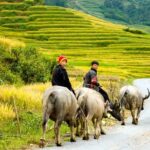
Sapa is famous for foggy peaks and photo-friendly rice terraces. What I like about this trek is how it nudges you beyond the main tourist strip and into the valleys where daily life actually happens. You’re not just walking “pretty paths.” You’re moving between villages in the Muong Hoa area, with time to pause, look, and understand what’s around you.
The trip also respects your time. You don’t need to spend days arranging transport and guides separately. A sleeping bus connects Hanoi and Sapa, and then the walking and local transfers take over. That’s a smart way to see Sapa without burning an entire vacation day on logistics.
And because the group is small, the guide can slow down when you want photos or when someone needs a breather. It feels less like a conveyor belt and more like a planned route with room for questions—something you’ll notice the moment you meet your guide.
Sleeping bus Hanoi to Sapa: the long ride that pays off
The tour uses a sleeping bus for the Hanoi-to-Sapa segment. That matters because it turns travel time into rest time—at least in theory. Night buses don’t make everyone sleep deeply, but they help you arrive with less lost daylight.
Plan for a typical pattern: you set off from Hanoi on the overnight bus, arrive in Sapa the next day, and then start trekking. Your tour starts at 7:00am at the Saigonese Trekking House in Sapa (02 Nguyễn Chí Thanh). Even if your bus arrival timing varies, you can use this as your anchor point to build confidence: you’ll be met and guided from the start.
What’s included also helps. You’re not paying separately for entrance fees tied to the stops, and you’ll have bottled water plus a basic meal plan (lunch and breakfast). That’s one less thing to think about when you’re tired from the journey.
Day one: Sapa town to Y Linh Ho and Lao Chai

Day one begins with your guide meeting you at the bus station and getting you moving straight away. This is a good approach because it reduces the “what now?” stress that hits many first-timers in Sapa.
From there, the trek goes village-first. You’ll walk to the first village (about 5 hours on the first day including lunch time), then continue through the Muong Hoa valley scenery.
Y Linh Ho: peaceful valley time
Y Linh Ho is described as beautiful and calm, and that’s the point. This isn’t just a transit stop. It’s a chance to slow down and take in what the valley feels like when you’re not rushing between viewpoints. Expect easier pacing compared with the steepest stretches, plus time to take in the way homes sit within the hills.


Lao Chai: first look at terrace living
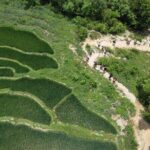
Lao Chai sits about 7 km southeast of Sapa town. On a trek like this, that distance translates into more than miles. It turns into a different rhythm—fewer vehicles, more attention to how people live with the land.
The guide is there to point out what you’re seeing, not just where you should stand for photos. That’s where names like Sisi matter: she’s described as knowledgeable about the local area and different tribes, including how people make a living in the region. Even if you only catch parts of that conversation while walking, it changes how you interpret the scenery.
Ta Van Village homestay: the night that makes the trip

This trek’s biggest difference from many quick Sapa day tours is the overnight homestay in Ta Van Village. You’ll spend around 12 hours here, and that time is the heart of the experience.
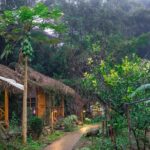
Ta Van is a Giay minority village near the river. You’ll see stilt houses and learn how this community organizes daily life around water, weather, and farming schedules. The homestay setup includes dinner and story time with your hosts, which is where the trip stops being “just trekking” and becomes cultural exchange.
A practical note: homestays are not the same as hotels. You’ll likely sleep in a simpler setup, and the comfort level depends on the family. The trade-off is the reason you booked in the first place: shared meals, real conversation, and an evening that helps you understand how villagers think about the valley.
If you care about authenticity (and you enjoy quiet moments), this is the night that justifies the price.
Day two: bamboo shade, Red Dao culture at Giang Ta Chai, and Su Pan views

Day two is where the trail leans into variety. You’ll move from one kind of experience to another: bamboo forest shade, deeper village corners, and then panoramic viewpoints.
Bamboo forest section: the walking reset
The bamboo forest route connects Giang Ta Chai to Su Pan. This is the part you’ll feel in your body. Tall bamboo creates shade and makes the air feel cooler, which matters if you’re walking in sun or haze. It also helps break up fatigue: you’re not staring at the same type of scenery for hours.
Giang Ta Chai: Red Dao customs and herbal medicine
Giang Ta Chai is home to the Red Dao people. It’s described as deeper in the valley, surrounded by bamboo forests and waterfalls, and it’s a scenic spot to learn about traditional herbal medicine and Red Dao customs.
This is where a guide’s explanation really helps. Without context, waterfalls and plants are just pretty. With context, you start noticing how people use local knowledge for daily needs. It turns “seeing” into “understanding.”
In the reviews, Dzi is mentioned for making the experience better with great guidance and spectacular scenery. That lines up with what you’ll want from day two: a guide who can connect the dots between what you see and how the community lives.
Su Pan: rest with panoramic reward
Su Pan is a quiet village overlooking the valley, known for terraced fields and rugged mountain views. This stop is essentially your visual payoff. You rest, take photos, and soak in the wider view before heading back to Sapa.
Then comes the comfort part: from Su Pan you return to Sapa town by motorbike or car, and in the evening the bus leaves back to Hanoi and arrives late at night.
That mix—walking time plus ride time—is smart. It helps you enjoy the views without feeling like you’re walking nonstop until exhaustion.
How hard is it really, and what to bring

The tour is marked as having a moderate physical fitness level requirement. That means you don’t need to be an ultra-hiker, but you should be ready for uneven paths and longer periods of walking.
The reviews match that reality:
- The trekking can be challenging, but local support helps.
- One account notes around 5 hours of walking including lunch on day one.
- Another account says the total distance is about 15km with lunch and breaks.
So here’s the takeaway for your planning: you’re going to be on your feet for a meaningful part of each day. If you usually avoid hikes, this could feel like a lot. If you can handle a long walk on uneven ground, you’ll be fine.
What to bring (based on what’s likely important for this route, even when not spelled out):
- Shoes you trust on wet and rocky ground
- A light layer for morning chill and changing weather
- A small daypack for water and essentials
- A rain-ready option if clouds roll in
Also remember: this experience requires good weather. Bad conditions can change schedules, and you should be flexible enough to swap dates if needed.
Price and value: why $89 can work (if you want the homestay)

At $89 per person for a roughly 23-hour to 1-day style experience (with the overnight travel), the price looks reasonable if you understand what you’re paying for.
You’re not only paying for walking. You’re paying for:
- A guided route through multiple villages
- Entrance/ticket coverage tied to stops
- Bottled water
- Lunch and breakfast
- The overnight homestay experience in Ta Van
- Transfers in Sapa and the motorbike/car return segment
- The round-trip sleeping bus connection from Hanoi
Many Sapa tours either keep it super short or keep it cheap by cutting cultural components. This one spends money where it counts: local guiding, village access, and an overnight with a family. If those are your priorities, the value improves fast.
If your goal is maximum comfort and minimal walking, you might decide it’s not worth it. But if you want “real Sapa” with a family night and proper village-to-village trekking, the price fits the experience.
Best-fit for your style of travel
You’ll likely enjoy this tour if you:
- Want guided context for local tribes and village life
- Like small groups so you can actually talk to your guide
- Are curious about life beyond Sapa town
- Don’t mind a moderate trekking day in exchange for stronger memories
You might want a different option if you:
- Hate uneven terrain
- Expect a hotel-like homestay comfort level
- Prefer to stay in town for the whole trip
A good sign is how the guides are described. Sisi is noted for being accommodating, patient, and knowledgeable. Dzi is noted for improving the experience with strong guidance. That combination matters when the trek gets steep or when the weather shifts.
Should you book this Sapa 2-day trek?
If your mental picture of Sapa includes villages, rice terraces you walk through, and an overnight in a family home, I’d book this. The homestay in Ta Van is the standout element, and it’s exactly what turns the trip from sightseeing into understanding.
I’d especially consider booking if you:
- Want a small group (max 10 people)
- Appreciate a guide who can explain how tribes live and work
- Are okay with a full two-day rhythm that includes late bus return
If your fitness is low or you’re only interested in a short, flat walk, this may feel like too much. But for the right traveler, it’s a strong value way to see more of Sapa than the town center.
A final practical note: it depends on weather. Since the experience requires good conditions, have a little flexibility in your dates. When the day is clear, the views from Su Pan and the terrace paths land much better.
FAQ
How long is the Sapa trekking experience?
The tour runs for about 23 hours to 1 day (approx.), including the overnight sleeping bus travel and the trekking schedule.
How much does the 2-day trekking tour cost?
It costs $89.00 per person.
Where is the meeting point in Sapa?
The meeting point is Saigonese Trekking House, 02 Nguyễn Chí Thanh, TT. Sa Pa, Sa Pa, Lào Cai, Vietnam.
What time does the tour start?
The start time is 7:00am.
What is included in the price?
Entrance tickets are included, along with bottled water, lunch, and breakfast.
What is not included?
Insurance and tips are not included.
How many people are in the group?
The group has a maximum of 10 people.
Is the trek suitable for me if I’m not very fit?
The trek is for people with a moderate physical fitness level. You should be comfortable with walking time from Sapa to the villages.
What happens if the weather is bad?
This experience requires good weather. If it’s canceled due to poor weather, you’ll be offered a different date or a full refund.