REVIEW · SICILY
ETNA – Trekking to the Craters Eruption of 2002
Book on Viator →Operated by Gruppo Guide Etna Nord · Bookable on Viator
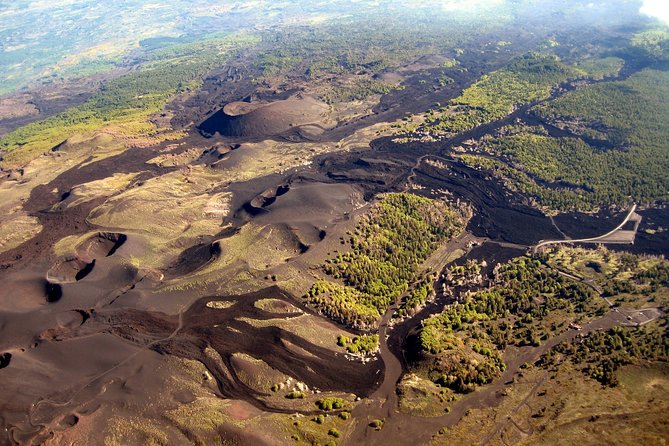
Etna is not a museum. It is moving, breathing, and throwing off heat, even when you’re just walking to the craters from Piano Provenzana. This 2–3 hour guided trek takes you along the eruptive fracture of 2002, past lava ground, through woods, and toward side craters like a bottoniera.
What I like most is the way the route mixes volcanic terrain with real-world walking. You get lava fields, then beech and larch (laricius pine) woods, so the hike doesn’t feel like one long, samey climb. Second, I love that you’re not just looking at rocks—your guide turns what you see into an explanation you can actually picture, from volcanic activity to how conditions shape what you can safely experience.
One thing to consider: this hike depends on good weather. If wind and conditions aren’t friendly, plans can change or the trip may be moved or refunded, so you’ll want some flexibility in your Sicily schedule.
In This Review
- Key highlights worth knowing
- Piano Provenzana start: where the hike begins on Etna Nord
- Why the 2002 eruption craters are the point of the trek
- The route itself: lava, woods, and side craters like a bottoniera
- Guides who turn geology into something you can picture
- Pace, group size, and what to expect from the walking time
- What to bring: water, wind, and comfort that actually helps
- Price and value: what you’re paying for at $36.14
- Who this trek is best for (and who should think twice)
- Should you book ETNA Trekking to the Craters of the 2002 Eruption?
- FAQ
- How long is the ETNA Trekking to the Craters of the 2002 Eruption tour?
- What’s included in the price?
- What should I bring since water and snacks aren’t included?
- Where does the tour start, and when?
- Is the tour in English, and how big is the group?
- Are service animals allowed?
- What happens if the weather is bad or I need to cancel?
Key highlights worth knowing
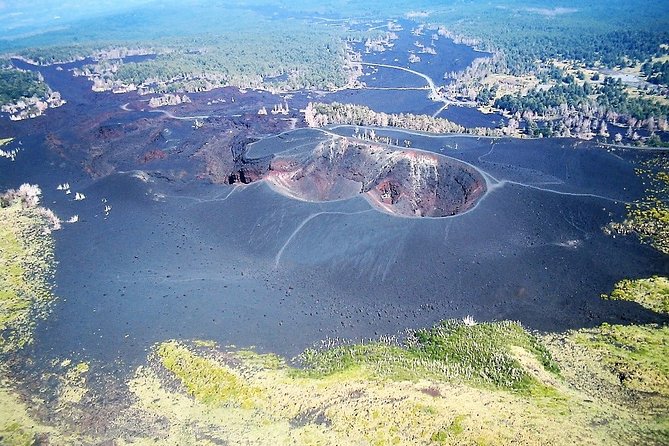
- 2002 eruptive fracture walk: you’re trekking the aftermath, not just admiring Etna from a distance.
- Small-group feel (max 12): easier pacing and more attention from the guide.
- Expert-led volcanic talk: guides like Fabio, Sylvia, Giuseppe, and Marco bring the science down to walking level.
- Mixed terrain: lava fields, then beech and larch pine woods, plus side craters like a bottoniera.
- Poles included: helpful on uneven ground, especially if the surface is dusty or rough.
Piano Provenzana start: where the hike begins on Etna Nord
You meet at Piano Provenzana, on Etna Nord (95015 Linguaglossa CT), with the start time set for 10:00 am. That matters more than you’d think. Starting in the morning usually means more stable visibility and a calmer feel before wind ramps up—on Etna, the weather can go from fine to frosty fast.
From the first minutes, you get the sense that this trek is built for walking, not for a quick look-and-go. You’re not being rushed through a viewpoint. Instead, you’re guided along a specific route that links the geology with the experience of moving through it.
Also, the tour uses a mobile ticket, which is exactly what you want when you’re traveling light. No paper to track, no last-minute scrambling. Just keep your phone charged enough for check-in.
You can also read our reviews of more tours and experiences in Sicily.
Why the 2002 eruption craters are the point of the trek
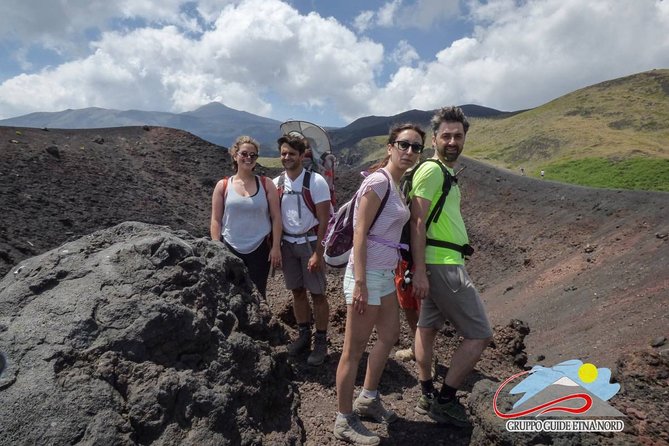
This isn’t a generic Mount Etna “see the volcano” outing. The focus is the eruption of 2002—especially the eruptive fracture and the craters connected to it. That changes the feel of the hike. You’re not walking toward a vague summit view. You’re walking through a chapter of Etna’s recent history that still shapes the ground around you.
The reward is a direct, physical sense of how volcanic activity becomes terrain you can hike on. Lava doesn’t vanish after it cools. It stays—turning into rough surfaces, changing how water drains, and influencing what kinds of plants can grow later. When your guide points out the features as you pass them, the mountain stops being scary and starts being understandable.
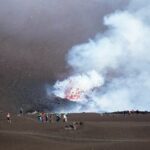
And there’s a sound element too. One of the biggest wow factors people describe is the noise and presence you get near the craters. Even when you’re not standing at a dramatic overlook, the volcanic setting feels immediate.
The route itself: lava, woods, and side craters like a bottoniera
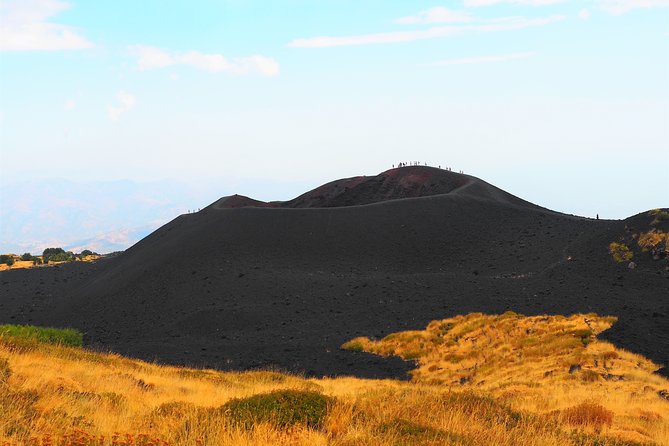
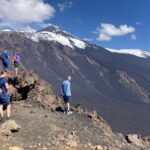
The trek follows the 2002 eruptive fracture and mixes several types of ground and scenery in a way that keeps your attention on your feet and on what’s around you.
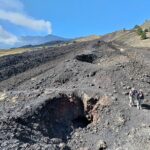
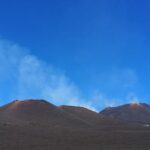
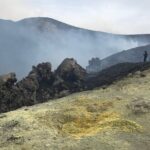
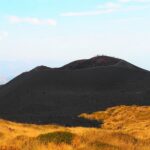
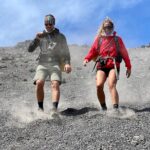
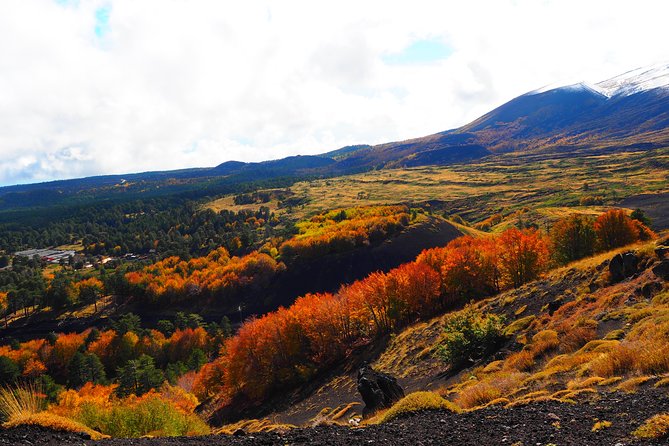
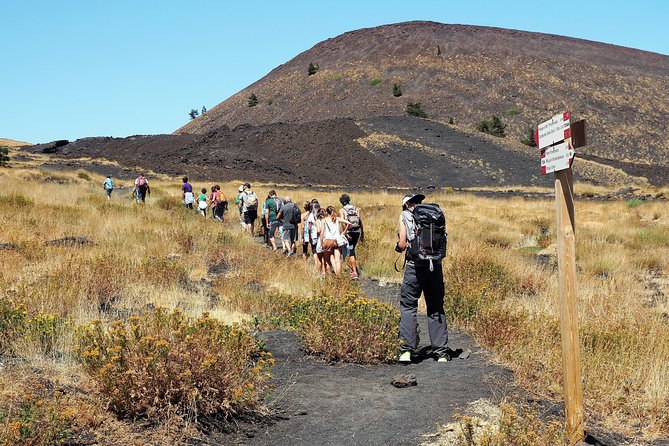
You start on lava field terrain, where the ground can look almost lunar—dry, textured, and unmistakably volcanic. This is the part where telescopic poles (included) can help a lot. Even if the hike isn’t meant to be brutal, crater terrain tends to be uneven, and poles take stress off your knees.
Then you move into beech and larch (laricius pine) woods. That shift is more than a nice break from rock. It gives you a better sense of how Etna cycles from raw impact to recovery over time. It also makes the hike feel less like a single-note adventure and more like a walk across changing chapters of the mountain.
Along the way, you visit side craters, including one called a bottoniera. Side craters are often less famous than the main headlines, but they’re fascinating because they show how eruptions spread and create multiple features rather than one clean, single target.
The trek is typically described as manageable for most people, and the distance is often around 5 km. Still, keep your expectations realistic: wind, ash dust, and uneven ground can make an easy route feel more work than the number of kilometers suggests.
Guides who turn geology into something you can picture
What makes this experience click is the guidance. The guides don’t treat Etna like a checklist. They explain what you’re seeing in a way that sticks.
Fabio is one name that comes up with a strong theme: passion. People describe him as having deep volcanic knowledge, including the chemistry behind volcanic activity, and the ability to adjust the day so you get the most possible crater coverage given the wind and sulfur in the area. In other words, it’s not just facts—it’s smart decision-making on a mountain that changes minute to minute.
Sylvia gets praised for storytelling and for helping during the trickier parts of the route. When you’re walking on volcanic ground, the “hard” part is often not steep climbing, but footing and balance. A guide who checks in during those moments makes the whole trip feel safer and more confident.
Giuseppe stands out for group management and pacing. One report described him handling a group of 14 while keeping a pace that let everyone hike comfortably, with lots of information and an obvious focus on safety. If you like your tour organized and your guide calm, this is exactly the vibe to look for.
Marco is noted for adding a naturalist touch—sharing info about the flora of the Etna park. That pairs well with the mixed route: lava field, then woods. It turns the walk into more than geology-only.
Bottom line: if you care about understanding what you’re seeing—not just photographing it—this tour fits your style.
Pace, group size, and what to expect from the walking time
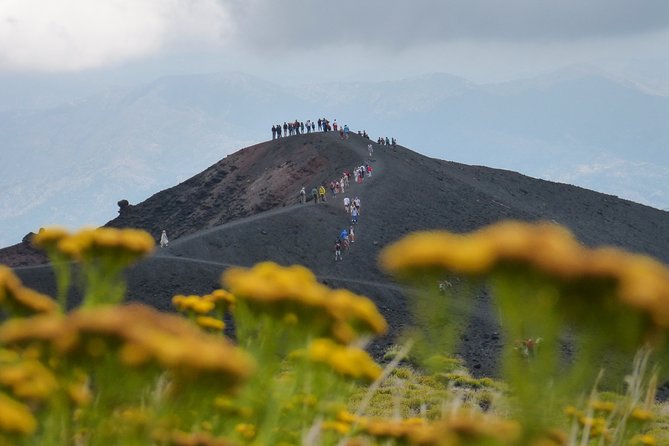
The stated duration is about 2 to 3 hours, so you’re not committing to an all-day outing. That’s a plus in Sicily, where you might also want to squeeze in beaches, towns, or a second activity.
The group size is capped at 12 travelers. Small groups matter because they make it easier for the guide to keep an eye on everyone’s footing and stamina, and they reduce the pressure of getting in single-file with a big crowd. That small-group setup usually means quicker explanations, more stop-and-go time for questions, and a less chaotic experience at crater points.
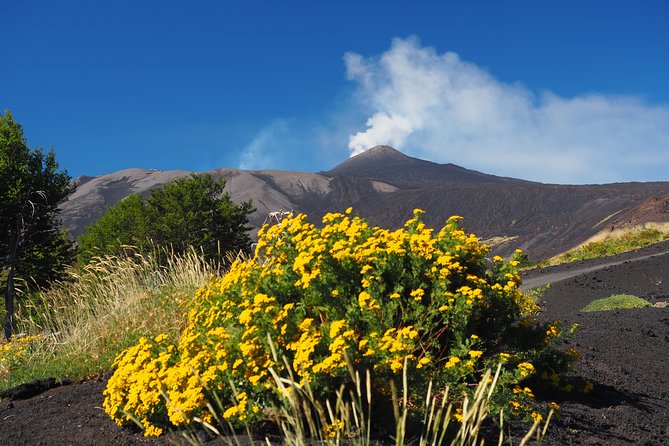
Still, Etna is Etna. Even on an organized trek, you’ll feel the mountain’s personality: wind gusts, drifting sulfur smell, and the way the surface texture changes underfoot. Your best move is to keep your head up and listen for guidance on where to step.
If you’re hiking with teens or you want an active day without a fitness test, this is often described as not difficult. But if you’re sensitive to windy exposure or strong smells, choose a day with good conditions and pack accordingly.
What to bring: water, wind, and comfort that actually helps
Here’s the practical part. Bottled water, coffee/tea, and snacks are not included. So plan for your own hydration and quick energy. Even a 2–3 hour trek can make you thirsty, especially if the air is dry and you’re working through uneven ground.
Also, remember that Etna craters can mean wind. Even when the hike is short, gusts can chill you. One of the helpful bits that shows up in real experiences is that guides may offer loans like walking shoes, a windbreaker, and extra walking sticks at no extra charge. Don’t bet your whole comfort plan on that happening every time—but it’s a good sign that the operator cares about keeping you safe and comfortable.
Your best “always works” packing list:
- Water (enough for your pace)
- A snack for energy
- Wind protection (even if the forecast looks mild)
- Closed-toe shoes with decent grip
And yes, bring your phone for photos, but don’t rely on it for check-in if your battery is low. Etna days have a way of draining phones fast.
Price and value: what you’re paying for at $36.14
At about $36.14 per person, the value is less about cost alone and more about what you get for that time. You’re paying for:
- A guided trek with a focus on the 2002 eruption features
- Admission ticket included
- Telescopic poles included
For a short trek, the big cost driver is the guide and the access/structure that lets you walk safely around crater terrain. When the guide is strong—like Fabio with his volcanic knowledge, or Sylvia with her hands-on support—the price starts to feel fair quickly.
If you compare this to doing it on your own, you’ll likely realize you’d spend money anyway on transportation, timing, and sorting out what to see. This tour compresses all of that into a few hours with a knowledgeable guide and a built route.
The only extra costs you should expect are the basics: water, snacks, and drinks.
Who this trek is best for (and who should think twice)
This hike is a strong match if you want a guided Mount Etna experience without spending half your day on a bus or doing a long endurance challenge. The route is often described as manageable, with enough stops for explanations, and it’s a great way to get a real feel for crater terrain.
It also works well for families with teens who like walking. One family group described enjoying the hike together, with the guide keeping a safe pace and sharing plenty of information.
If you dislike wind or you’re very sensitive to strong sulfur smells, you should treat the weather requirement as a real factor, not a footnote. Because the trip is weather-dependent, you’ll get the best experience on a stable day. When conditions are off, they can adjust dates.
Finally, if you want English support, you’re set. The tour is offered in English, and that makes the guide’s explanations much easier to absorb in real time.
Should you book ETNA Trekking to the Craters of the 2002 Eruption?
I’d book it if you’re chasing three things: an active but not marathon hike, a strong guide-led explanation, and a specific focus on the 2002 craters rather than a vague “Etna views” outing.
You’ll especially enjoy it if you like tours that help you understand what you’re seeing as you walk—Fabio’s volcanic passion, Sylvia’s supportive guidance, Giuseppe’s calm pacing, or Marco’s nature talk are all examples of what this type of hike can deliver.
Don’t book it if you can’t be flexible about weather, or if you’re unwilling to bring your own water and snacks. This is a short trek, but it’s still a mountain walk. Pack for wind and keep your expectations grounded in crater terrain.
If your schedule can handle one good weather window, this is one of the cleaner ways to experience Etna up close—without turning it into a full-day ordeal.
FAQ
How long is the ETNA Trekking to the Craters of the 2002 Eruption tour?
It lasts about 2 to 3 hours.
What’s included in the price?
You get an admission ticket included and telescopic poles.
What should I bring since water and snacks aren’t included?
Bottled water, coffee and/or tea, and snacks are not included, so you’ll want to bring your own.
Where does the tour start, and when?
You start at Piano Provenzana – Etna nord, via Provenzana, 95015 Linguaglossa CT, Italy, and the start time is 10:00 am.
Is the tour in English, and how big is the group?
Yes, it’s offered in English, and the maximum group size is 12 travelers.
Are service animals allowed?
Yes, service animals are allowed.
What happens if the weather is bad or I need to cancel?
The experience requires good weather. If it’s canceled due to poor weather, you’ll be offered a different date or a full refund. You can cancel for a full refund up to 24 hours in advance.