REVIEW · PARO
9 Days Druk-path Trek with Cultural sightseeing
Book on Viator →Operated by Bhutan Travel Club · Bookable on Viator
Bhutan has a way of slowing you down.
This 9-day Druk-path trek mixes big cultural sites with a real hiking rhythm, from Paro’s iconic temples to Thimphu’s major sights—without wasting hours behind the wheel.
What I like most is the balance: Tiger’s Nest (Taktshang) is a proper altitude warm-up before the trek, and the days are paced so you actually get time to look around, not just pose and move on. I also like that you’re not winging it—your English-speaking guide, driver, trekking crew, and gear support are all part of the package.
One consideration: you do need moderate physical fitness, and several days involve steady uphill/downhill on trails that reach high passes.
In This Review
- Key things to know before you go
- Paro’s valley views, plus an itinerary that actually breathes
- Day 1 to Day 2 in Paro: dzongs, oldest lhakhang, and a temple in chorten form
- Day 3: Tiger’s Nest on a 1,000-foot cliff (and why it’s timed right)
- Day 4: Jili Dzong trail through blue pine and fir, ending with yaks on the horizon
- Day 5: ridges, saddle to Jangchu La pass, and Sand Ox Lake trout country
- Day 6: dwarf rhododendron paths, Janetso Lake, and yak-herder camp peeks
- Day 7: downhill to Thimphu through blue pine, plus Phajoding and Changangkha
- Day 8 in Thimphu: Buddha Dordenma views, folk heritage houses, textiles, and postcards
- Day 9: goodbye Paro, on your way home
- Price and value: what $2,800 covers, and what you should budget for anyway
- Who this trek is perfect for (and who should think twice)
- Should you book this 9-day Druk-path trek?
- FAQ
- What is the price per person?
- What days and places does the tour cover?
- What kind of fitness level is required?
- Are meals included?
- What is included for trekking logistics?
- Is airfare included?
- What additional fees should I budget for?
- What is the cancellation window for a full refund?
Key things to know before you go
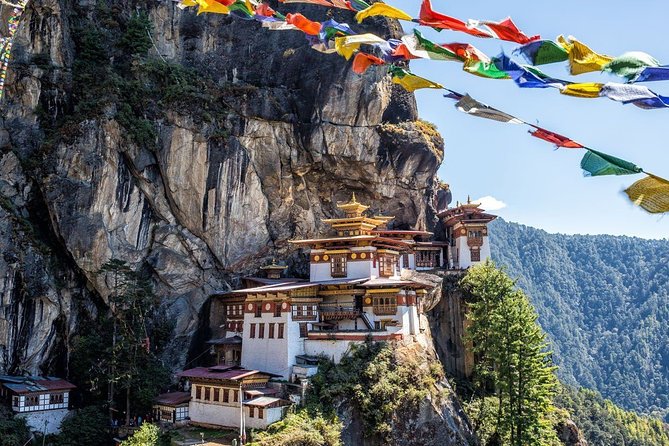
- Tiger’s Nest first, then trekking: a 2-hour hike to a cliffside monastery that helps you acclimatize.
- Actual mountain trail time: ridge walking and pass crossings around the 4,040m to 4,180m range.
- Cultural stops built into the route: lhakhangs, dzongs, and monastery visits don’t feel like add-ons.
- Low driving, higher looking time: the itinerary is designed to keep transfers shorter and exploration longer.
- Strong support team: English-speaking guide/driver plus a trekking crew and included trekking equipment and haulage.
- Good value, but plan for extra fees: the trip price covers many costs, yet the daily tourism tax and visa aren’t included.
Paro’s valley views, plus an itinerary that actually breathes
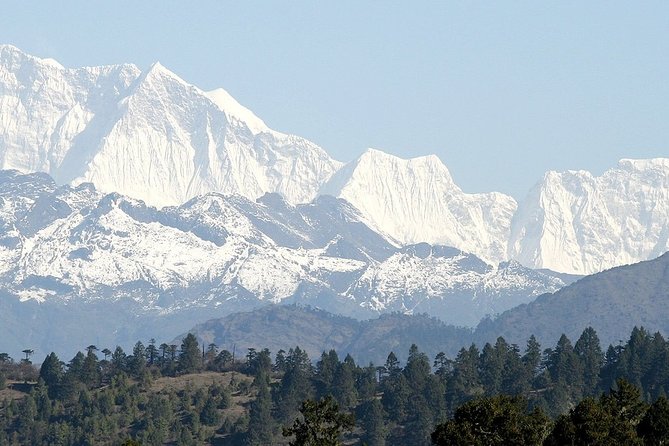
Your trip starts in Paro, and it’s hard to ignore the dramatic setting when you arrive—views close to the Himalayas, with peaks mentioned like Mount Everest and Kanchenjunga (plus local stars like Jomo lhari and Jichu Drakey). After landing, you go straight into the rhythm: meet your guide, get settled, then take it easy with an evening stroll and dinner.
This matters more than it sounds. Bhutan’s rulebook is simple: give your body and mind time to catch up with the altitude and the pace. Doing that on Day 1 helps you enjoy Day 2 and Day 3 without turning the first temple visits into a slog.
For lodging, you’ll be in 3-star hotels included in the price. That’s not luxury-style, but it’s a practical base—clean, comfortable enough to recover well, especially when trek days ramp up.
You can also read our reviews of more tours and experiences in Paro.
Day 1 to Day 2 in Paro: dzongs, oldest lhakhang, and a temple in chorten form
Day 1 (Paro town and a relaxed evening)
After checking in, you get a gentle start: sightseeing on foot around town, plus dinner. This is the kind of start that lets you sort your gear and pace yourself. No big hiking on arrival day is a smart move in Bhutan.
Day 2 (Paro Rinpung Dzong + Kyichu Lhakhang + Dungtse Lhakhang)
Day 2 hits two of the big cultural anchors in Paro:
- Paro Rinpung Dzong: the fortress sits over the Paro river, and it’s the kind of place where you can feel Bhutan’s defensive-and-religious history in one view.
- Kyichu Lhakhang: it’s described as the oldest Buddhist temple in Bhutan, built in the 8th century. That’s the sort of detail that turns a temple visit from pretty photos into a real sense of continuity.
Then you head to Dungtse Lhakhang, where the notable detail is the temple’s shape: it’s in the form of a chorten, and the itinerary notes it’s one of the few of its kind in Bhutan. I love stops like this because they answer a quiet travel question: why does Bhutan’s architecture look so varied, even when the spiritual theme is the same?
Optional add-on: there’s also a Zuri Dzong hike suggested as a short, easy way to stretch your legs (about 1 hour) before returning to town. If you want an easy win, take it.
In the evening, you explore Paro on foot and browse handicrafts shops. You’ll likely find plenty of locally made art and craft work—small, practical souvenirs you can actually carry home without turning your backpack into a gym bag.
Day 3: Tiger’s Nest on a 1,000-foot cliff (and why it’s timed right)
Day 3 is the trip’s headline: Paro Taktsang, or Tiger’s Nest. The hike is described as about 2 hours, and the payoff is a monastery built clinging to a cliff roughly 1,000 feet above the ground.
This day does two jobs at once:
- It’s the famous Bhutan moment most people plan around.
- It’s also an altitude helper before the longer trekking starts. You get a controlled taste of effort, so Day 4 feels like progression, not shock.
Also, the monastery’s mood is noted as solemn and meditative. Even if you’re not a meditation person, you’ll feel the difference once you get inside the spiritual quiet. This is one of those places where the physical effort and the atmosphere line up.
If you’re prone to getting chilled outdoors, pack layers. Cliff-side sites can be cool even when Paro feels warm.
Day 4: Jili Dzong trail through blue pine and fir, ending with yaks on the horizon
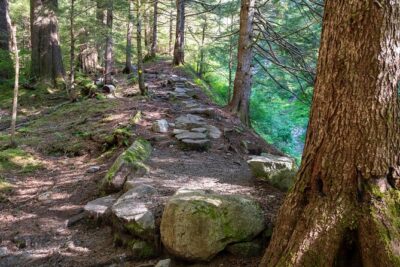
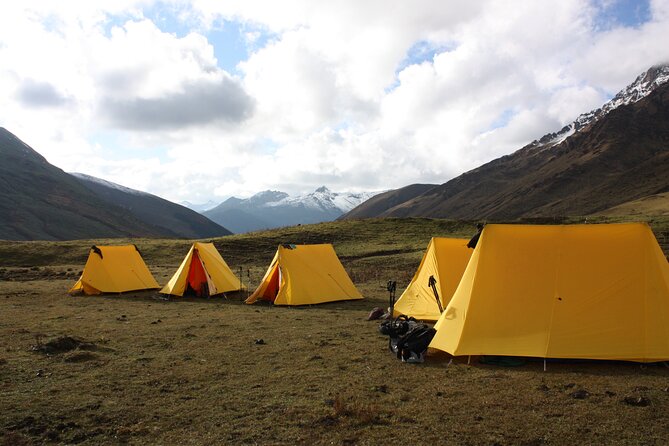
Day 4 begins with a drive on a farm road, then climbing into blue pine and fir forests toward Damche Gom, below Jili Dzong. After that, the trek proper starts.
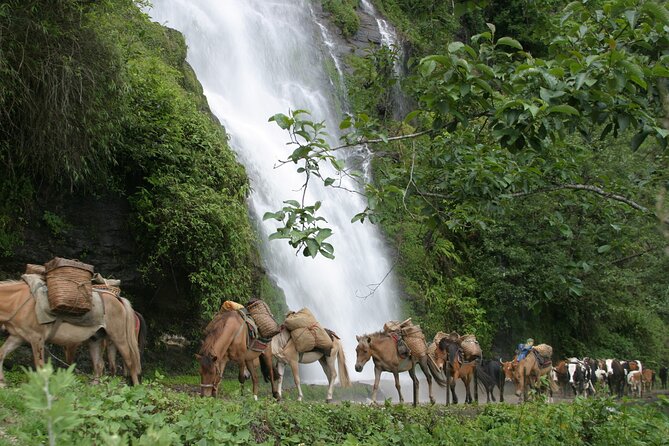
You begin with a climb for about 1.5 hours, then you move into gradual ascent through thick alpine forest and dwarf rhododendron trees. The itinerary also points out a potential delight: you may see yaks and yak herders around the campsite area.
That’s a big part of why this trek feels different from a straight-to-the-sightwalk itinerary. You’re not just moving through scenery—you’re walking a lived-in route where local animals and livelihoods show up.
Your trekking crew is set up for the evening, and trekking equipment and haulage are included, which helps keep your energy for the actual trail time. Translation: you’re not personally hauling heavy gear up the ridge, and your days feel less stressful.
Day 5: ridges, saddle to Jangchu La pass, and Sand Ox Lake trout country
On Day 5, the trail continues along the ridge. Clear weather is called out because views can be spectacular—this is one of the times where the weather gods matter. When it’s good, you’ll see a big sweep of the valley and mountains.
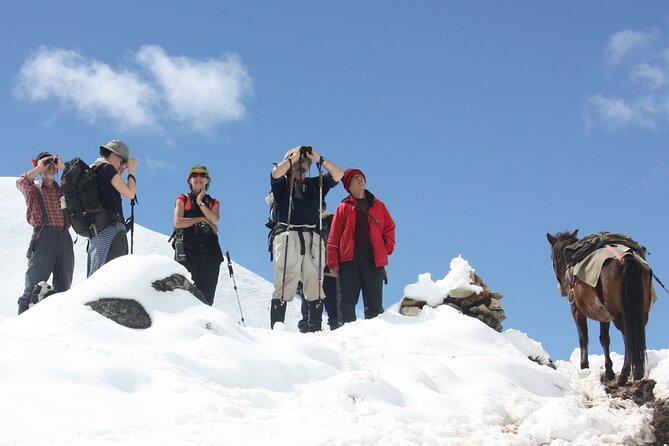
The route goes to a saddle at about 4,040m, then drops slightly before heading toward Jangchu La pass at about 4,180m. That sequence—rise, settle, rise again—is common on high trails. It’s not usually a one-hour grind; it’s more like a long conversation with your lungs.
The itinerary also mentions Jimilang Tsho (Sand Ox Lake), known for giant-sized trout. I can’t guarantee you’ll see fish (you’ll probably see more sky and rock than trout), but you will feel the pull of a lake that matters to local life and ecology.
This is also where being on a group itinerary helps: your crew, meals, and camp arrangements take the guesswork off your plate.
Day 6: dwarf rhododendron paths, Janetso Lake, and yak-herder camp peeks
Day 6 shifts into a quieter-feeling trek day. The trail passes through dwarf rhododendron trees and includes Janetso Lake. There’s also a chance to come across yak herder camps, with the itinerary specifically noting you can glimpse nomad life.
That’s one of the best parts of treks like this: you’re walking in the same spaces where herding happens. You’re not just looking at culture through a museum wall.
You camp close to Simkotra Tsho Lake, and the day is listed around 4 hours of trekking time. Practically, that’s a good day after the higher pass day. Your body gets recovery without becoming too lazy.
Day 7: downhill to Thimphu through blue pine, plus Phajoding and Changangkha
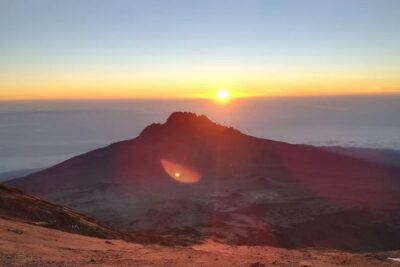
Day 7 is a classic trek “finish day”: after a gradual climb, you get the chance—if weather permits—to see Mount Gangkar Puensum (the highest mountain in Bhutan), along with other Himalayan peaks.
From the pass area, you move downhill to Phajoding monastery. Then, the trek continues downhill through a forested area of mostly blue pine to the point where you’ll be picked up and driven to your hotel. The trek time is listed as about 6 hours, but it’s downhill-focused after the pass, which often feels easier on knees than repeated uphills (though your legs still get a workout).
On the way to your Thimphu hotel, you visit Changangkha monastery. That’s your bridge from trail life into city sacred space, and it keeps your cultural momentum going.
That evening, you visit the Memorial Chorten Stupa and dine at a Babesa village restaurant for authentic Bhutanese cuisine. Then you sleep in a select hotel. After several days of trail meals, a real restaurant meal can feel like a small celebration.
Day 8 in Thimphu: Buddha Dordenma views, folk heritage houses, textiles, and postcards
Day 8 is all about Thimphu’s major sights, and it’s paced to keep it enjoyable after trekking.
First stop: Kuensel Phodrang, home to the 169-foot Buddha Dordenma statue. There’s also a short scenic walk in the park for city views. If you like photos, you’ll have plenty of chances here. If you don’t, you’ll still enjoy the calmer viewpoint before the museum rhythm begins.
Then you explore cultural institutions:
- Folk Heritage: a three-storey look at Bhutanese life-style and rural household artifacts, tools, and equipment.
- Royal Textile Museum and Academy: this is one of the best ways to understand Bhutan’s craft traditions without treating them like souvenirs only.
- Bhutan Post Office: yes, you can see famous stamps and even send postcards home.
Finally, you check out the Crafts Bazaar in the evening along Thimphu’s streets. This is a great place to buy something you’ll actually use—scarves, small art pieces, or textiles—because you’re not hunting through a giant mall layout. It’s more like a local shopping loop.
Day 9: goodbye Paro, on your way home
On Day 9, you keep it simple. After breakfast, your driver takes you to the airport in Paro. That’s it—no last-minute temple dash, no rushed souvenir sprint. It’s the kind of ending that lets you say goodbye without turning the trip into a checklist.
Price and value: what $2,800 covers, and what you should budget for anyway
At $2,800 per person, this is a mid-to-upper priced Bhutan trekking package. The good news: a lot is baked in.
Included items you should care about:
- Permits and monument entry fees (the listing notes monument entry fees worth about $200)
- All transfers and a new model SUV
- All meals and evening tea during hotel/restaurant days
- Drinking mineral water
- 3-star accommodations
- English-speaking tour leader and driver
- Trek support: trekking equipment and haulage, plus trekking crew services
- Extra mattresses for trekking
What’s not included (so you don’t get surprised):
- Airfare
- Travel and medical insurance
- Personal expenses, laundry, tips, and shopping
- Spa charges
- The daily Sustainable Development Fund/Tourism tax of USD 100 per day
- Visa fee of USD 40
So here’s the practical way to look at it: the base price buys you organization, support, permits, and a smoother trek logistics setup. Your main add-ons to plan for are the fixed national requirements (visa and the daily tourism tax), plus airfare and insurance.
Also note: the cancellation terms are relatively time-sensitive. If your travel dates are flexible, this may matter.
Who this trek is perfect for (and who should think twice)
This tour fits best if you:
- Want one of Bhutan’s signature hikes plus real multi-day trekking
- Prefer an itinerary with less driving and more exploration
- Have moderate fitness and can handle hours of trail walking
- Like cultural depth: dzongs, lhakhangs, and monastery visits are woven into the route
You might think twice if you:
- Need a very low-effort trip (some days are 4 to 6 hours of hiking)
- Are sensitive to altitude, because the route includes high passes around 4,180m and you’ll be moving through upper elevations even with gradual trekking
Should you book this 9-day Druk-path trek?
If you want Bhutan in two modes—temples and trails—this itinerary is built for you. The timing of Tiger’s Nest before the longer trek is smart, and the day-by-day structure keeps the experience from turning into a rushed sightseeing conveyor belt.
Book it if you like your travel with a plan, but not a prison. The trekking crew support, included gear, and steady cultural rhythm mean you can focus on walking, looking, and learning what you’re actually seeing.
Skip it if you’re after an all-spa, no-sweat vacation. Even with a relaxed feel and good support, this is still a trek with real elevation and trail time.
FAQ
What is the price per person?
The listed price is $2,800.00 per person.
What days and places does the tour cover?
It starts in Paro, includes trekking between Paro and Thimphu, and ends back in Paro.
What kind of fitness level is required?
Travelers should have a moderate physical fitness level.
Are meals included?
Breakfast, lunch, and dinner are included during the trip, and evening tea is also included.
What is included for trekking logistics?
Trekking equipment and haulage are included, along with services of a trekking crew and extra mattresses for trekking.
Is airfare included?
No. Airfare is not included.
What additional fees should I budget for?
The daily Sustainable Development Fund/Tourism tax is USD 100 per day, and the visa fee is US$ 40. Travel and medical insurance are also not included.
What is the cancellation window for a full refund?
You can cancel up to 6 days in advance for a full refund. Any cancellation closer than that follows the reduced-refund schedule listed for the experience.