REVIEW · PARO
8 Days Bhutan Cultural Tour with 2-Day Bumdrak Trek
Book on Viator →Operated by Bhutan Acorn Tours and Travel · Bookable on Viator
Bhutan gets personal on the hike to Bumdrak. This 8-day cultural tour from Paro mixes classic temple-and-city days with rural village life and two mountain days ending at Paro’s famed Taktsang (Tiger’s Nest). I especially like the way the trip pairs Bhutanese crafts and monuments with real time outdoors, including camping on a high meadow. I also like that the operator team is known for being responsive—Karma is repeatedly named as helpful, and Tashi shows up as a guide.
One watch-out: you’re looking at serious walking on trekking days, and Taktsang involves a steep climb plus entry fees that aren’t included. It’s not just sightseeing on a flat loop, so I’d plan your energy accordingly.
For the right traveler, this feels like a warm cultural circuit with a real mountain payoff. If you want polished, comfort-first tourism only, this may feel a bit active. If you want Bhutan up close—temples, homes, trail paths—this is a strong fit.
In This Review
- Key moments that make this tour worth your time
- Western Bhutan, not just the usual boxes on the map
- Day 1 in Paro and Thimphu: Ta Dzong, Thimphu’s first taste, and Buddha Dordenma
- Day 2: Tango Monastery hike plus Bhutan’s crafts and books
- Day 3: Dochula Pass viewpoints, Punakha Dzong, and a suspension bridge walk
- Day 4: Khamsum Yulley Chorten hike and Phobjikha’s winter world
- Day 5: Gangtey Nature Trail and Kyichu Lhakhang in Paro
- Day 6: Bumdrak trekking day—fir and pine, prayer flags, and a camp at 3,860m
- Day 7: Sunrise options, steep descents, and Taktsang’s big final climb
- Day 8: Paro airport transfer and a clean ending
- Price and value: what $2,740 covers (and what to budget extra)
- Who should book this, and who should rethink it
- Should you book this 8-day Bhutan cultural tour with Bumdrak trek?
- FAQ
- FAQ
- Is the National Museum entry included on this tour?
- Are meals included for the whole trip?
- What kind of lodging should I expect?
- How hard is the Bumdrak trek?
- Do I need to get a Bhutan visa before I travel?
- What’s the maximum group size?
Key moments that make this tour worth your time
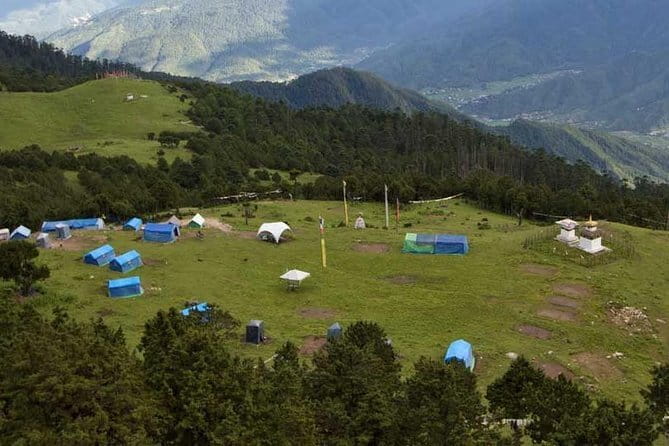
- Bumdrak at 3,860m: two days focused on sacred pilgrimage sites, prayer flags, and a mountain meadow camp.
- Temple-to-trail rhythm: you alternate between museums/monasteries and walking days so the culture sticks.
- Western Bhutan focus: Paro, Thimphu, Punakha, and Phobjikha give you variety beyond the usual highlights.
- Home-cooked experience: you get a village homestay night where you can help with dinner and learn local dishes.
- Small group feel (max 12): easier pacing and more room for questions than giant tour buses.
- Professional support: an experienced English-speaking licensed guide plus on-trip medical treatment coverage if you’re injured in Bhutan.
Western Bhutan, not just the usual boxes on the map
I like that this tour starts in Paro and then spreads out across Bhutan’s western districts instead of staying glued to one area. You’ll see the capital’s institutions, Punakha’s river-and-dzong setting, and Phobjikha’s high valley world—each with its own pace and feel.
This matters because Bhutan’s culture isn’t one single look. You’ll notice differences in architecture, farming life, and even how people experience seasons. And because the trip includes a proper trekking segment—rather than only day hikes—you get a sense of the country’s spiritual geography, not just its photo spots.
The group size (up to 12) also changes the experience. You’re less likely to feel rushed, and it’s easier for a guide to adapt when the day’s walking is steeper than expected.
You can also read our reviews of more tours and experiences in Paro.
Day 1 in Paro and Thimphu: Ta Dzong, Thimphu’s first taste, and Buddha Dordenma
You land in Paro, Bhutan’s only international airport, and your first cultural hit is the National Museum housed in Paro Ta Dzong. This old watchtower fortress (built in 1649) has a focused collection of Bhutanese artifacts—costumes, armor, weaponry, and everyday tools that explain how people lived, dressed, and worked. It’s a practical first stop: it gives you context before you start seeing temples everywhere.
Then you transfer to Thimphu, about a 55 km drive, usually under two hours with stops. That’s important because Bhutan’s road travel is part of the rhythm, not background noise.
Thimphu days here are built around variety without overstuffing you. You’ll get time at Buddha Dordenma (a huge bronze Buddha statue on a hilltop), a look at traditional textiles at the Gagyel Lhundrup Weaving Centre, and a chance to see archery at Changlimithang Archery Ground if a match is happening. Archery isn’t just a sport in Bhutan—it’s woven into community life—so even watching for a short spell helps you understand local culture faster than a museum caption can.
And yes, you’ll eat early. Lunch is arranged depending on your arrival timing, and dinner later is included as part of the plan. The first meal matters because it tells you what to expect: Bhutanese flavors that are hearty and simple, not overly complicated.
Day 2: Tango Monastery hike plus Bhutan’s crafts and books
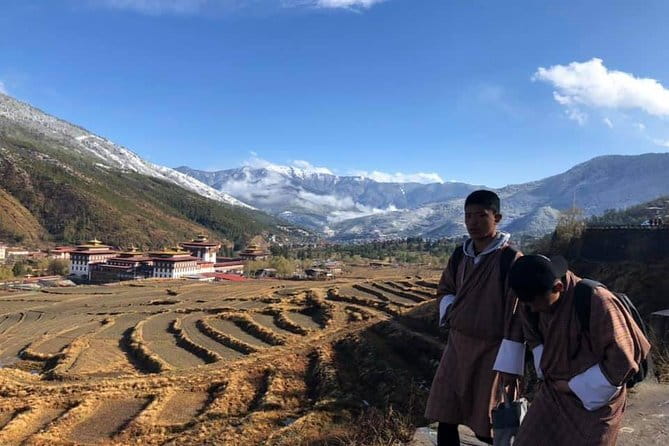
Day 2 starts with movement: a 2–3 hour return hike to Tango Monastery. The trail is described as easier than many monastery routes because parts are paved, and the uphill isn’t as steep as you might fear. You’ll walk through forested sections up toward Tango, and that forest time is more than scenery—it’s a chance to slow down and let Bhutan’s altitude and air quality change your pace.
After lunch, Thimphu gets another round of culture, this time through learning and making. You’ll visit the National Institute for Zorig Chusum, a place dedicated to the thirteen traditional arts and crafts. Nearby, the National Library and Archives of Bhutan is a quieter stop, but it’s powerful for anyone who wants to understand Bhutan’s backbone: the written record. The collection includes scriptures, manuscripts, and even wooden printing blocks used for religious textbooks. It’s a reminder that culture here isn’t only buildings and ceremonies—it’s also documents, teaching, and preservation.
One small drawback: not every stop’s entry fee is included. The museum entry in Ta Dzong is covered, but some places along the way are listed as not included for admission. Your guide can help you handle any additional ticket costs smoothly.
Day 3: Dochula Pass viewpoints, Punakha Dzong, and a suspension bridge walk
You move from Thimphu into Punakha Valley via Dochula Pass (at 3,150m). On a clear day, the views can show you some of Bhutan’s highest peaks, and the pass has its own spiritual history tied to Lam Drukpa Kunley. The best part of this stop is how it sets up the day: you start high, then drop into the river world of Punakha.
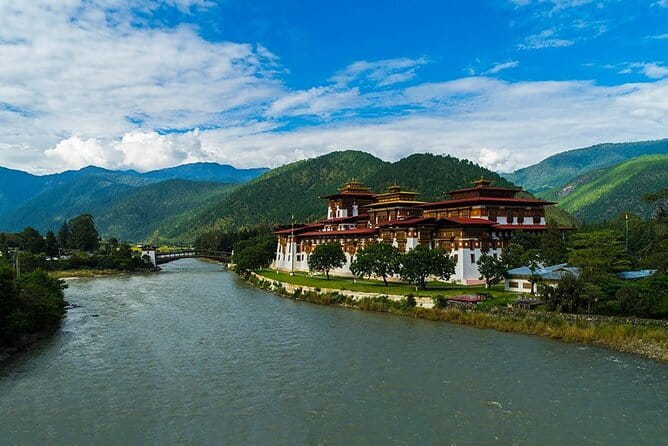
Punakha itself is a visual and architectural treat. You’ll visit the 17th-century Punakha Dzong, built in 1637 at the confluence of the Phochu and Mochu rivers. Even if you’re not a history nerd, the setting makes sense immediately: it’s positioned like a living centerpiece. The dzong’s wall paintings and woodwork reflect Bhutanese craftsmanship at a level that’s hard to appreciate at a distance.
Then you’ll walk to Punakha Suspension Bridge, described as the longest suspension bridge in Bhutan. It’s over the Phochu River, and the dzong sits between these two glacial-fed rivers—male and female, in the local way of describing nature. That framing turns a simple walk into a tiny lesson in how people understand the land.
Finally, you end the day in a more personal way: a village homestay in Yusakha (Namgay Zam Homestay). This is where the tour becomes more than a checklist. You can help with dinner and learn Bhutanese dishes, and if you’re interested, there’s also the option of a traditional hot stone bath. If that homestay isn’t available, you’ll use another option noted in the plan, but the goal stays the same: sleep near the people, not just near the sites.
Day 4: Khamsum Yulley Chorten hike and Phobjikha’s winter world
After breakfast, you hike up to Khamsum Yulley Namgyal Chorten, a ridge-top chorten built under the command of Ashi Tshering Yangdon Wangchuck, and consecrated in 1999. The plan says the round-trip hike takes about 2.5 hours. The big value here is the viewpoint: Punakha valley stretches below with the Mochu River snaking through fertile land.
Then you transfer to Phobjikha Valley, a U-shaped glacial valley at around 3,000m. The highlight is wildlife and seasonality. Phobjikha is the winter home for the endangered Black-necked Crane (November to March), and a festival happens each year on 11 November to celebrate the cranes’ arrival.
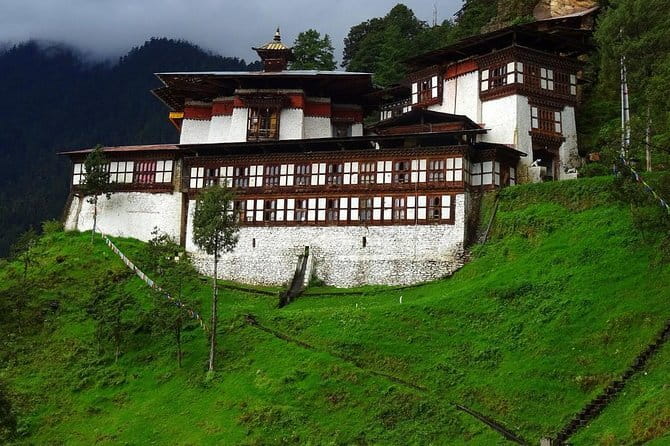
In the afternoon you visit Gangtey Monastery (Gangtey Gonpa), a major 17th-century monastery founded in 1613. The monastery has a monastic college where monks study philosophy for nine years. That’s the kind of detail that makes a monastery visit feel more grounded: you’re not only seeing architecture, you’re seeing an education system that shaped people’s lives for generations.
Day 5: Gangtey Nature Trail and Kyichu Lhakhang in Paro
Day 5 is your softer landing after two more structured days. You do the Gangtey Nature Trail, around a 5 km route that takes about 3 hours, passing woods, meadows, farms, streams, and traditional village houses. This short trail gives you something I really value on trips like this: a sense of daily livelihoods. You’re not in a “theme park of nature.” You’re walking where people grow, farm, and live.
After lunch, you transfer back to Paro and keep culture close by visiting Kyichu Lhakhang. This is one of the oldest monasteries in Bhutan, believed to be built in 659 A.D. and linked to the idea of subduing a demoness spirit to help Buddhism spread. Even if you don’t follow all the story details, you can feel how ancient the religious site feels compared with newer buildings.
The pacing here is smart. It keeps you from burning out before the big trek days.
Day 6: Bumdrak trekking day—fir and pine, prayer flags, and a camp at 3,860m
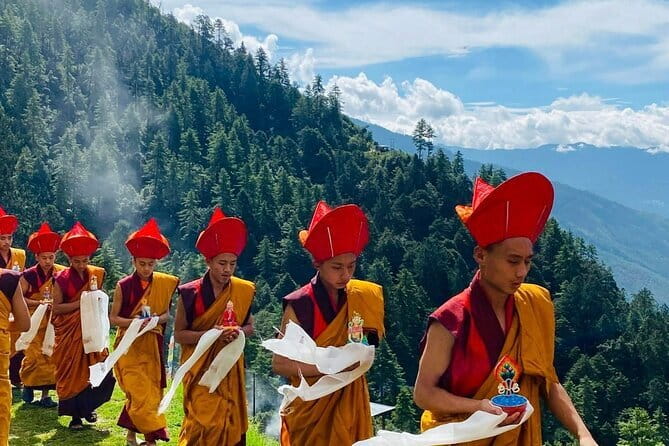
This is the day you came for. After an early breakfast, you drive about 30 minutes to the trek starting point at Paro Sangchoekhor Buddhist College, overlooking Paro valley. If you want, you can visit the monastery and receive blessings before you start. That small pre-trek moment matters because it frames the walk as pilgrimage, not only exercise.
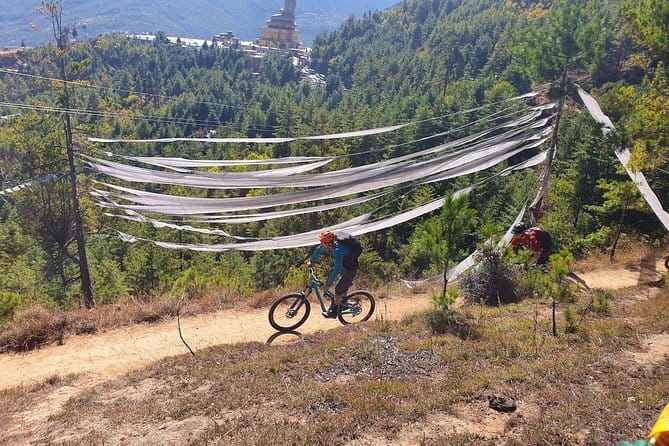
You then begin a steady climb through forests of fir and pine, following ancient trails. The route is described as especially beautiful around April, with rhododendron flowers along the way and colorful prayer flags hoisted at a cleared spot after about 2.5 hours of climbing. You’ll stop there for lunch (packed lunch), which gives you a real mid-trek reset instead of a rushed snack.
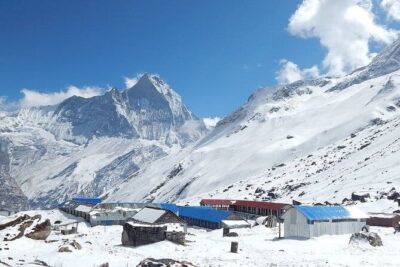
As you continue, you end at Bumdrak campsite at an elevation of 3,860m. Camping here is full-service outdoor camping on a mountain meadow. The setting is described as serene, with chortens (sacred Buddhist stupas) and prayer flags around the camp area, so the night feels like part of the spiritual landscape rather than just “we slept in tents.”
Later, you can visit the Bumdrak Monastery on a nearby cliff. Inside is a sacred cave blessed by 100,000 dakinis in the 8th century (as described in the tour plan). If you’re still energetic, there’s an extra hike to a summit viewpoint for panoramic views, estimated at about 45 minutes.
Day 7: Sunrise options, steep descents, and Taktsang’s big final climb
You’ll wake up early if you want a sunrise on a clear morning. The plan notes that you may also see the Himalayan Monal Pheasant near the camping tents, which is one of those details that makes the outdoors feel alive rather than staged.
After breakfast, you start the return journey via Taktsang. The downhill descent from Bumdrak is described as steep, but you move at your own pace and spend time exploring flora along ancient trails used by monks and pilgrims. This is where trekking days get real: the effort shifts from “up” to “down,” and your legs will feel it later.
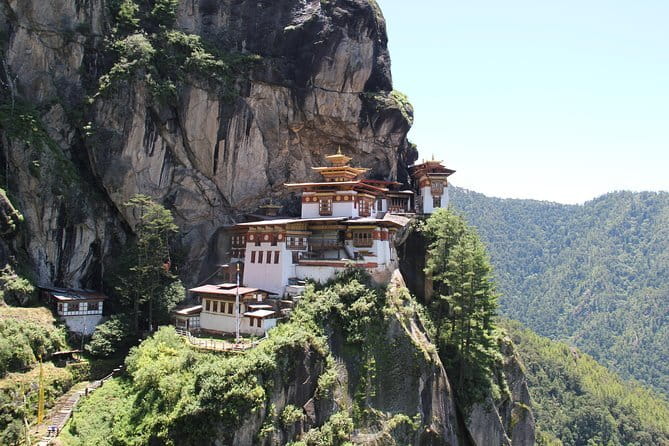
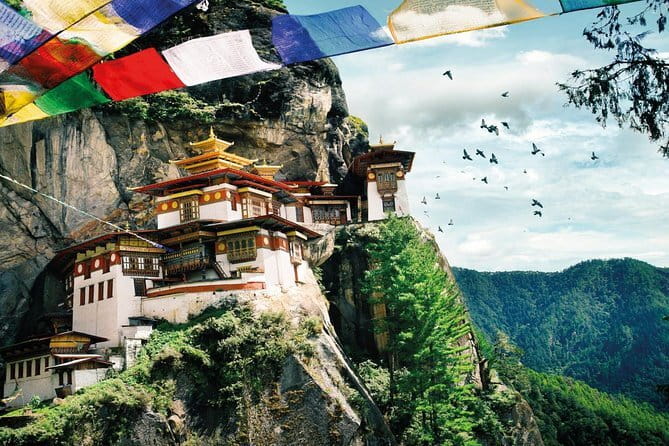
After descending for less than two hours, you reach the area that opens up views of Yoeselgang Monastery. You then pass Ugyen Tsemo, a 15th-century monastery, and continue toward Zangdogpelri, described as Guru Padmasambhava’s abode. From Zangdogpelri you can see Taktsang from a top-down angle, with the monastery perched on its sheer rock cliff.
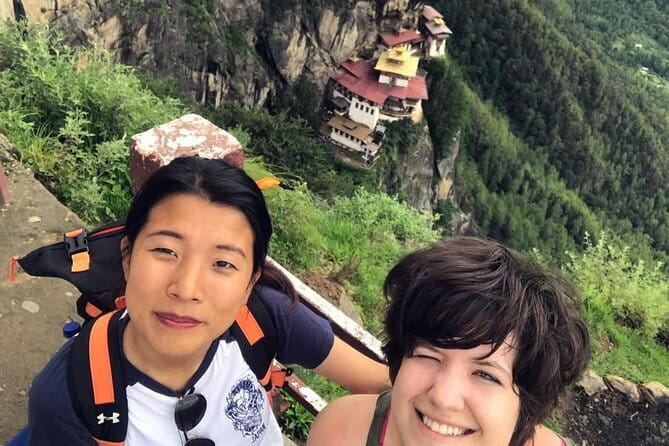
Finally, you visit Paro Taktsang. This is the most recognized site in Bhutan and one of the country’s best-known monasteries. It sits on an 800-meter rock cliff face, and the round-trip hike from the base is typically 4–5 hours—so you’ll want to treat it as your main event that day, not a quick add-on.
Taktsang’s history in this plan is tied to Guru Padmasambhava (Guru Rinpoche) and Tantric Buddhism introduced in the 8th century. Even if you’re not a scholar of Buddhism, you’ll understand the reverence once you see how much people slow down there.
Later in the day, you shift again into community mode with Sonam’s Homestay. You can eat authentic home-cooked local cuisines and learn Bhutanese dishes. If you’re interested (and willing to pay extra), the plan mentions the hot stone bath method using heated stones in a wooden tub, plus the local liquor called Ara if you want a taste.
Day 8: Paro airport transfer and a clean ending
The last day is refreshingly simple: breakfast, then transfer to Paro International Airport for your onward journey. Your guide and driver say goodbye, and that’s it.
I like tour endings like this. You’re not stuck on another “one more stop” right before travel. With Bhutan flights, timing can matter, and you don’t want your last hours to feel chaotic.
Price and value: what $2,740 covers (and what to budget extra)
At $2,740 per person, this tour isn’t cheap. But you’re paying for several things that add up fast in Bhutan: the licensed guide, the trekking permits and fees included for the National Museum, all meals, six nights in twin-sharing 3-star hotels, plus one night of full-service camping at 3,860m.
You also get all ground transportation, including round trip airport transfers, which is not just comfort—it saves you from piecing together logistics in a country where internal travel isn’t always simple.
Medical treatment coverage is also included if you sustain injuries while in Bhutan, which is a real peace-of-mind detail. And the trip includes an e-Visa fee and processing, with e-Visa delivery within 4–5 business days.
What you should budget separately: admission fees at sites listed as not included (the National Museum is included), tips for the guide and driver (not included), and travel insurance (recommended but not included). Also, Taktsang’s entry is listed as not included, so plan for that extra cost when you reach the cliff.
My practical take: if you compare this to doing Bhutan on your own while hiring drivers, guides, permits, and booking high-altitude camping, the pricing feels more like “cover the whole Bhutan machine” than “buy a sightseeing package.”
Who should book this, and who should rethink it
This tour is a great match if you want a real mix of Bhutan: museum learning, monastery visits, and village life, plus a trekking section that reaches sacred Bumdrak at 3,860m. If you enjoy walking and you’re comfortable with uphill and steep downhill, you’ll find the trek days rewarding rather than just exhausting.
It’s also a good choice for solo travelers who want structure. The group size is capped at 12, and the guide support is built in. The names Karma and Tashi show up in the feedback you provided, which suggests consistent handling rather than a random rotation of staff.
Re-think if you want minimal walking, because even the cultural days involve multiple stops and some routes with hikes (like Tango Monastery and Kyichu Lhakhang access). Also, if altitude makes you nervous, take it seriously and use the tour’s pacing rather than pushing through.
Should you book this 8-day Bhutan cultural tour with Bumdrak trek?
If you want Bhutan that goes beyond quick highlights, I’d book it. The best part of this itinerary is the balance: city and monastery days teach you what you’re looking at, then the Bumdrak trek gives those lessons a physical feeling—air, effort, prayer flags, and high-meadow camping.
If you do book, do three things to make it smoother. First, be honest with your walking ability and plan for steep downhill on Day 7. Second, carry basic trek comfort items even though meals and camp support are included. Third, expect some additional entry fees and keep a little extra cash for the not-included sites like Taktsang.
FAQ
FAQ
Is the National Museum entry included on this tour?
Yes. The tour includes entry fee for the National Museum (Paro Ta Dzong).
Are meals included for the whole trip?
Yes. The tour includes breakfast, lunch, and dinner, plus light snacks.
What kind of lodging should I expect?
You’ll have 6 nights twin-sharing accommodation in 3-star hotels and 1 night full-service outdoor camping on a mountain meadow at around 3,860m.
How hard is the Bumdrak trek?
It’s a trekking-focused part of the trip. The plan includes a day of climbing through fir and pine forests to Bumdrak campsite, and another day with a steep downhill descent before reaching Taktsang.
Do I need to get a Bhutan visa before I travel?
The tour includes visa fee and processing, and you receive an e-Visa within 4–5 business days.
What’s the maximum group size?
The tour has a maximum of 12 travelers.