REVIEW · ERFOUD
Ouarzazate to Marrakech: 3-Day Desert Tour with Camel Trek
Book on GetYourGuide →Operated by MOROCCO TRIP · Bookable on GetYourGuide
Camel rides beat regular sightseeing fast. This 3-day route strings together Ait Ben Haddou, the Todra Gorge cliffs, and a real-time Erg Chebbi desert crossing with sunrise and sunset rides. I especially like the mix of iconic sights plus hands-on desert time, and the camp setup that feels organized, not chaotic. The main drawback to plan for is the long minibus driving between regions.
What makes this trip feel good is the human side. You’re in a small group (max 17), and the driver/guide team gets praise for being kind, attentive, and on-the-ball, with names like Yonis, Moncef, Simo, and Omar showing up in people’s stories.
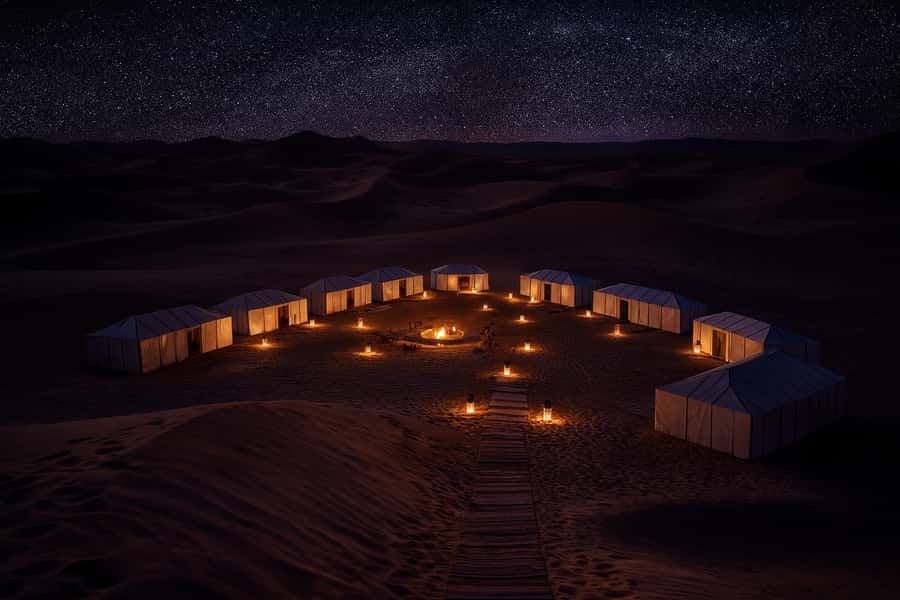
I also like that the desert part isn’t just a photo stop. You sleep in private tents with proper facilities in the camp setup, and the meals and camp atmosphere are built around the night sky and a shared fire moment.
In This Review
- Key things that make this desert tour worth it
- Day 1: Ouarzazate to Dades Gorges via Ait Ben Haddou
- Day 2: Todra Gorge cliffs, Tinghir oasis, and the Merzouga dunes
- How desert camping feels: tents, meals, and the night rhythm
- Day 3: Back toward Marrakech with a real finish line in sight
- Price and value: what $124 really buys you
- Logistics that can matter: pickup timing, Ait Ben Haddou meeting, and driving time
- What to bring so the desert days feel comfortable
- Who should book this tour
- Should you book this Ouarzazate–Marrakech desert tour?
- FAQ
- What’s the duration of the Ouarzazate to Marrakech desert tour?
- Where does pickup happen?
- Is lunch included?
- Are drinks included?
- Do I ride camels at both sunrise and sunset?
- Is sandboarding included?
- What languages are available for the live guide?
- What should I bring for the trip?
- Is the tour suitable for people with mobility impairments?
Key things that make this desert tour worth it
- Erg Chebbi sunrise and sunset camel rides: two chances for golden-hour magic
- Ait Ben Haddou Kasbah: UNESCO site seen in major films and still very real
- Todra Gorge walk under 300-meter cliffs: a serious vertical view, up close
- Sandboarding and desert camp time: not just riding, also playing and relaxing
- Tents with real comfort: showers and toilets are part of the camp setup
Day 1: Ouarzazate to Dades Gorges via Ait Ben Haddou
Day 1 starts with pickup in Ouarzazate and heads straight toward one of Morocco’s best-known kasbahs: Ait Ben Haddou. This is a UNESCO World Heritage Site, and it’s also familiar from movies like Lawrence of Arabia and Game of Thrones. Even if you’ve seen it on a screen, seeing the kasbah’s mud-brick forms in daylight hits differently.
You’ll get lunch in the Ait Ben Haddou village area. Lunch is not included, so budget for it, and keep some cash or a card handy. After that, the drive continues through the Road of the Thousand Kasbahs, which is exactly what it sounds like: repeated clusters of fortress-style buildings on the way into the valleys.
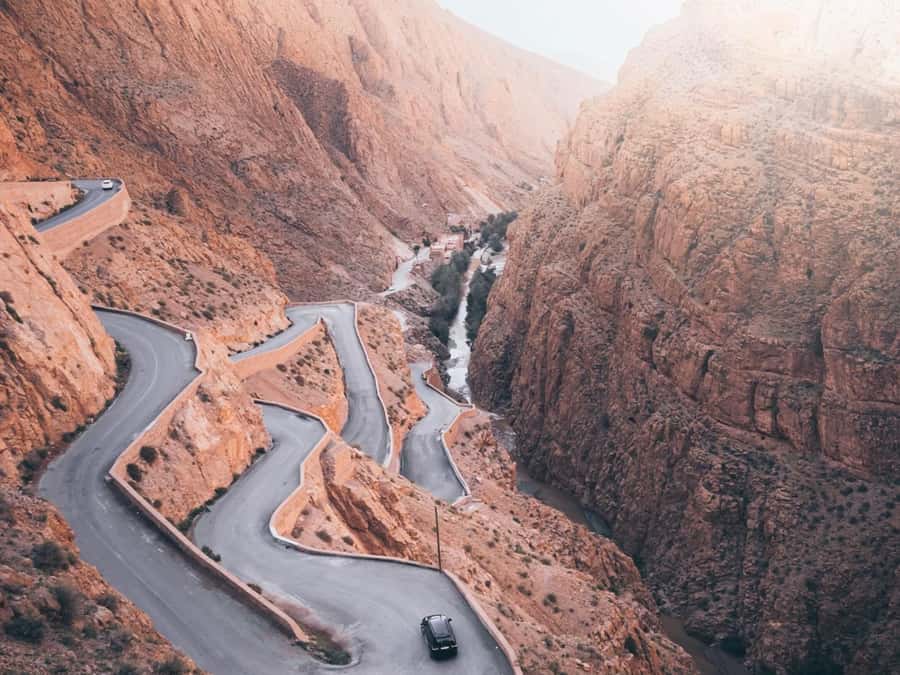
Next comes Dades Gorges. The best part here is how the scenery shifts from kasbah textures to dramatic valley walls and winding roads. If you’re prone to motion sickness, this is one of the days to take it seriously—bring medication if you use it, because you’re spending long stretches on the minibus.
You stay the night in a hotel/riad in Dades Valley, and dinner plus breakfast are included. Some people also call out that the hotel can feel nicer than you’d expect, with perks like a pool or bar. Even if your hotel is simpler, the key value is that it’s one full night of recovery before the desert leg.
You can also read our reviews of more tours and experiences in Erfoud.
Day 2: Todra Gorge cliffs, Tinghir oasis, and the Merzouga dunes
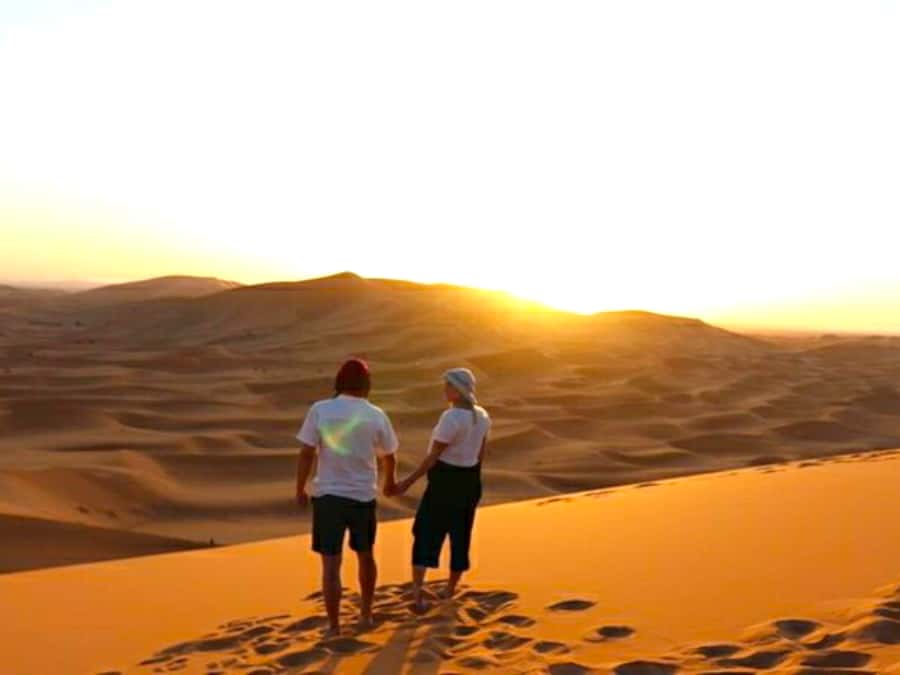
Day 2 is where the trip turns from “road trip” into “real adventure.” You start with Todra Gorges, famous for walking beneath towering cliff walls that can reach around 300 meters. It’s a narrow, dramatic space, and it’s one of those places where your brain goes quiet because there’s so much scale in every direction.
From Todra, you travel toward Merzouga, with a stop tied to the Tinghir oasis area. This is your visual contrast day: after the canyon tightness of Todra, you get that greener river-and-palms feel around Tinghir. The mental reset matters, because the next stretch is dunes and night sky.
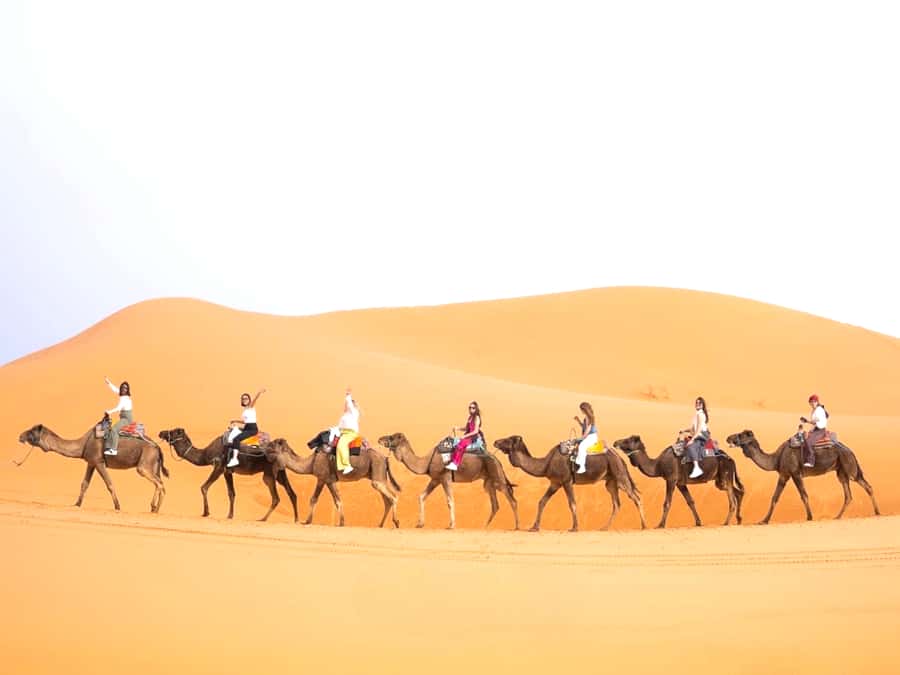
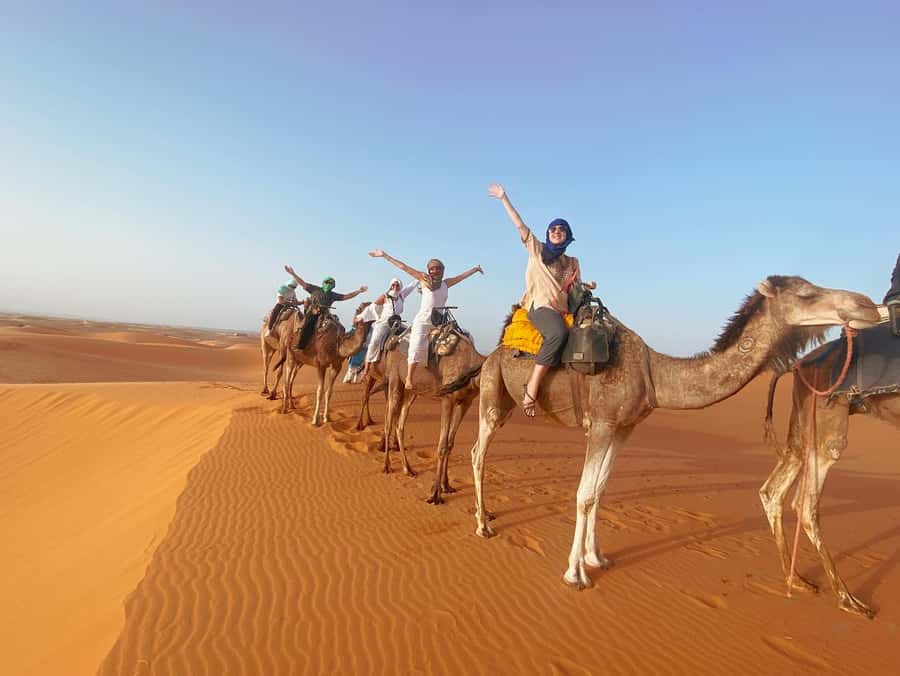
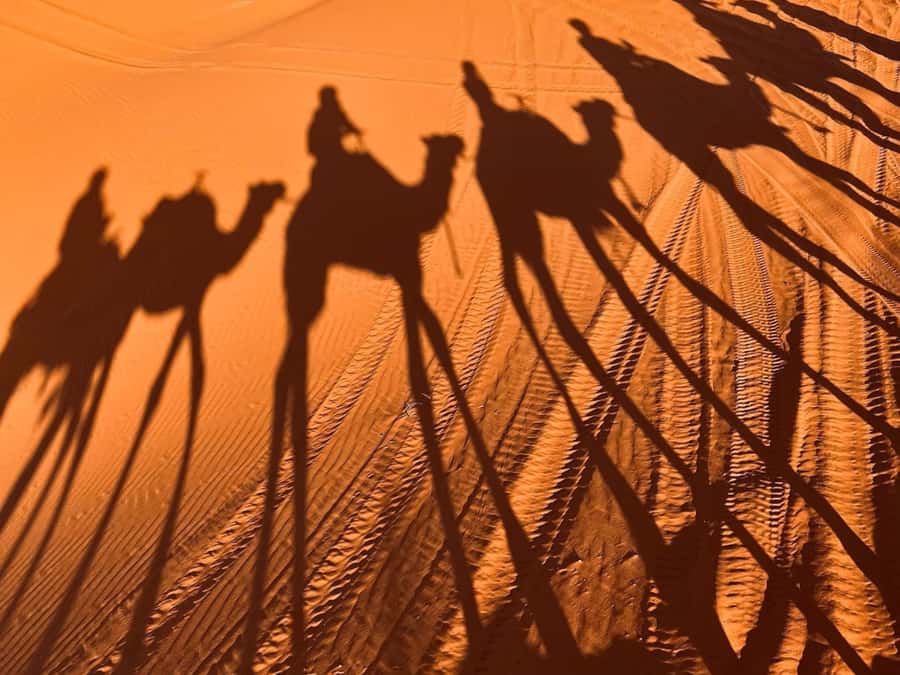
Then you meet the camel guides in the Merzouga area and start the camel trek across the dunes of Erg Chebbi. This is the heart of the tour, and it’s not just a ride for a few minutes. You get the rhythm of walking at desert speed—slow enough to look around, long enough that it feels like you’ve truly left the road behind.
Included in the desert day are sunset and sunrise camel rides. Practically, that means you’ll likely do sunset during the trek into camp, then return for sunrise on Day 3. When people gush about this part, it’s usually because the timing gives you light changes you can’t recreate in a quick daytime stop.
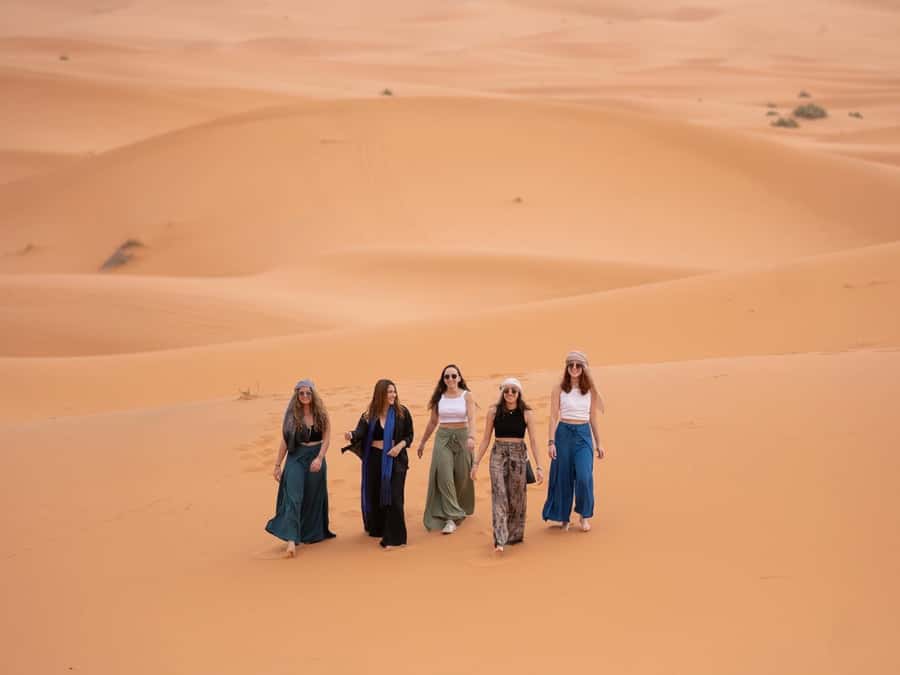
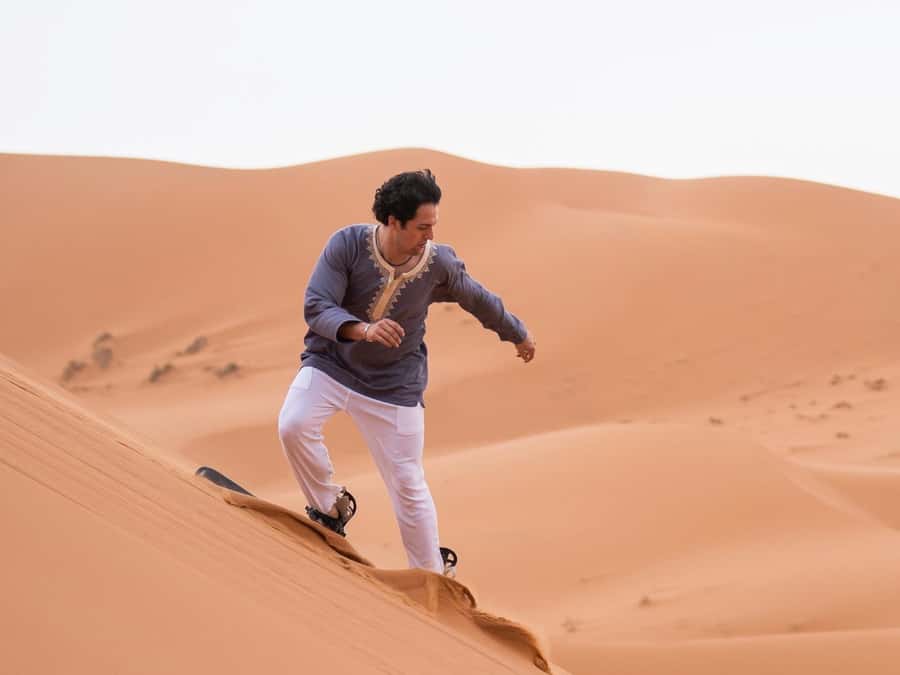
Sandboarding is also included. It’s one of the best ways to turn the dunes into something physical and fun instead of only scenic. Wear clothes you don’t mind getting dusty, and keep your sunscreen on—sand reflects light hard.
That night, you sleep in a desert camp under the stars. Many camps here are set up for real comfort: showers, toilets, and private tent space are part of the experience in the setup used on this tour. The camp vibe often includes music and dancing around the fire, and it’s the sort of social moment where you stop thinking about schedules and just enjoy being there.
How desert camping feels: tents, meals, and the night rhythm
This tour does a smart thing: it treats desert time like a complete experience, not a quick interlude. You get comfortable and private tents, and your camp night includes dinner as well as breakfast the next morning. That matters because dinner is when you’re usually tired, sand-covered, and ready for something warm.
The camp atmosphere is also built for the shared moment. People talk about sitting by the fire with music, and it can include playful exchanges between locals and the group. It’s not a museum event; it’s more like a communal evening that helps you understand how desert nights work as a social rhythm.
One practical note: warm clothing is not optional. The provided packing list includes warm clothing, and you’ll feel why once the sun drops. Even if you start the day in hot air, nights in the desert can feel cold enough that a jacket becomes your best friend.
Also plan for dust. Your tent is private, but sand finds its way into seams, zippers, and shoes. Bring a small towel if you like to keep yourself sane. If you like photos, do them soon after arrivals and before the wind picks up—light fades fast.
Day 3: Back toward Marrakech with a real finish line in sight
After breakfast at the desert camp, Day 3 brings you back toward Ouarzazate, then onward to Marrakech in the evening. This is a long day by design: you get a sunrise camel moment first, then the tour shifts back into road mode.
The value of sunrise riding is that it flips the desert mood. Sunset often gets all the attention, but sunrise has a calmer, quieter feel, and you’ll usually notice more detail in the dunes as the light spreads. If you’re the type who wakes early anyway, you’ll be grateful the schedule gives you that payoff.
On the return drive, the tour includes stops to appreciate the landscapes. The exact stops can vary, but you should expect short breaks where you can stretch, take pictures, and reset before the final run toward Marrakech. Keep some water accessible, even though drinks aren’t listed as included.
By the time you reach Marrakech in the evening, you have choices: continue sightseeing or go straight to your accommodation and decompress. Either way, the tour’s structure helps you avoid trying to manage desert logistics on your own. In other words, you spend less time figuring things out and more time inside the experience.
Price and value: what $124 really buys you
At $124 per person for a 3-day tour, the big question is what’s covered beyond the desert ride. Here’s what you’re paying for in practical terms:
- Transport by A/C modern minibus with a driver/guide (max 17 passengers)
- A proper first night in Dades Valley with dinner and breakfast
- Sunrise and sunset camel rides in Erg Chebbi
- Private tents for desert camping
- Sandboarding
- Breakfasts and dinners across the trip
So the cost isn’t only for camels. It’s also for moving you across southern Morocco with organized timing, plus the built-in meals that prevent you from losing time searching for food.
Two items to keep in mind: lunches and drinks aren’t included. That’s normal for many multi-day tours, but it affects your daily budgeting. If you’re the kind of person who likes a restaurant lunch in a scenic stop, plan for that cost. Drinks outside meals are also on you.
If you’re comparing this to booking separate pieces (kasbah tour, gorge stop, camp, camel logistics), this package format often wins on convenience. You’re also traveling as part of a small group, which tends to feel more personal than large coach-style tours.
Logistics that can matter: pickup timing, Ait Ben Haddou meeting, and driving time
The tour typically starts in Marrakech, and you join the group in Ouarzazate. The group usually arrives in Ouarzazate around 13:00. If you’re coming in from Marrakech the same day, keep buffer time so you’re not rushing to catch pickup.
Pickup is hotel/riad pickup, or the closest accessible point if the riad is tricky to reach by vehicle. That’s helpful, but it can mean a short walk with your luggage. Pack like you’ll be carrying bags at least once.
Ait Ben Haddou has one special coordination note. If you do not visit Ait Ben Haddou, your pickup is arranged from your Ouarzazate riad or hotel on tour day. If you do want to visit Ait Ben Haddou, and you arrive at Ouarzazate via airport, you’ll need to arrange a taxi to get there and meet the local guide and group. The company provides local guide contact info one day before the trip, which makes it easier to line up.
Driving time is the one real tradeoff. Day 1 and Day 3 involve long stretches on the road. If you’re sensitive to motion or if you hate being in transit, this might feel like the hardest part. The upside is that you’re traveling with a professional driver-guide and you’re not navigating the route yourself.
What to bring so the desert days feel comfortable
You’ll get the most enjoyment if your body isn’t fussing. Follow the provided list:
- Passport or ID card
- Comfortable shoes (for gorges and walking stops)
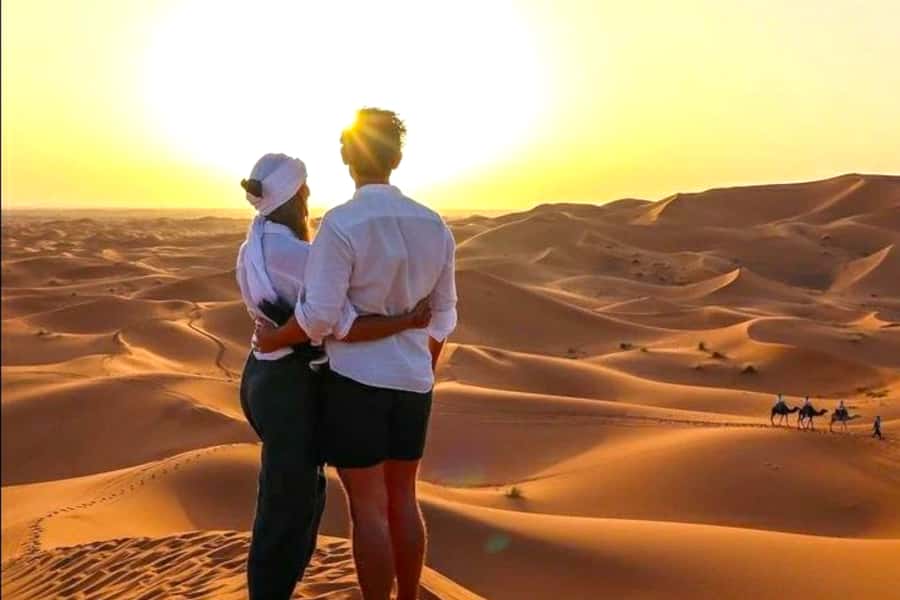
- Sunglasses and sunscreen (sun + sand glare)
- Warm clothing (especially for nights)
- Hat
I also suggest you bring a small scarf or buff if you get bothered by dust. It’s not listed, but desert walking often produces sand in hair and on lips.
For camera lovers: charge everything before the trip. You’ll have sunrise and sunset moments, plus Todra Gorge views, and you won’t want your battery dying at the worst time.
Who should book this tour
This works best if you want a packed taste of southern Morocco without managing complicated transfers. You’ll like it if you care about hands-on time—camel trekking, sandboarding, and an actual camp night—while still wanting iconic stops like Ait Ben Haddou and Todra Gorge.
It’s also a good fit if you appreciate calm organization. People describe the driver-guide team as courteous and attentive, with names like Yunis/Yonis, Moncef, Simo, Youssef, Mourad, Imad, Ridouan, Kiki, Hesham, and Abdelkhalek standing out as friendly and helpful.
Two kinds of people should think twice:
- Anyone who needs mobility-friendly arrangements, since it’s not suitable for people with mobility impairments.
- Anyone who really hates long driving days, because the itinerary includes significant transit time between regions.
Should you book this Ouarzazate–Marrakech desert tour?
If your goal is a real desert experience in just three days, this tour makes sense. You’re getting Erg Chebbi camel rides at both ends of the day, a Todra Gorge walk under tall cliffs, and desert camping with practical comfort like showers and toilets in the camp setup.
Book it if you want structure and value: transport, rides, sandboarding, and meals are all included in a way that reduces hassle. Skip or adjust your expectations if you’re uncomfortable with long minibus hours or if mobility is a concern.
If you’re weighing it against doing everything independently, this package is the simplest path to the big Morocco highlights without turning the trip into logistics work.
FAQ
What’s the duration of the Ouarzazate to Marrakech desert tour?
It runs for 3 days.
Where does pickup happen?
You get hotel pickup and drop-off, or the closest accessible point to your riad.
Is lunch included?
No. Lunches are not included.
Are drinks included?
No. Drinks are not included.
Do I ride camels at both sunrise and sunset?
Yes. Sunrise and sunset camel rides in Erg Chebbi are included.
Is sandboarding included?
Yes. Sandboarding experience is included.
What languages are available for the live guide?
The live tour guide can speak Arabic, English, French, and Spanish.
What should I bring for the trip?
Bring passport or ID, comfortable shoes, sunglasses, sunscreen, warm clothing, and a hat.
Is the tour suitable for people with mobility impairments?
No. It’s listed as not suitable for people with mobility impairments.