REVIEW · CASABLANCA
8-Day Morocco Adventure: Imperial Cities & Sahara Desert Trek
Book on Viator →Operated by Morocco First Gate · Bookable on Viator
Blue streets, Roman ruins, and Sahara stars. You’ll crisscross Morocco’s biggest “must-see” cities and then slow down hard in the dunes of Erg Chebbi, with a camel ride timed for sunset and a desert night built for stargazing. I like the way this trip mixes guided time in the medinas with long stretches of road views that make the country feel bigger than any guidebook page.
The second thing I love is the comfort factor in the desert: you sleep in private tents with ensuite bathrooms and showers, not basic rooftop bedding and hope. One consideration: lunches and most monument entrance fees aren’t included, so if you like paying as you go and doing every ticketed stop, expect extra spending.
In This Review
- Key Things That Make This Morocco Adventure Work
- How the Tour Price Adds Up (and Where Extra Costs Hide)
- From Casablanca Connections to Real Time on the Road
- Rabat and Chefchaouen: Two Warm-Up Stops Before the Main Circuit
- Volubilis and Meknes: Roman Stones and 17th-Century Morocco
- Fez Mellah Guided Day: Where Craftwork Meets the Old City Maze
- The Drive to Merzouga: Atlas Mountains, Cedar Forests, and Fossil Country
- Camel Ride at Erg Chebbi: Sunset Time and the Camp Setup
- Sunrise, Todra Gorge Walk, and Dades Gorge Nights
- Ait Benhaddou and the Tichka Pass: UNESCO Time Before Marrakech Energy
- Marrakech with a Guide: Jamma el Fna, Koutoubia, and Garden Stops
- Casablanca Finale: Hassan II Mosque and Corniche Views
- Should You Book This Morocco Imperial Cities and Sahara Trek?
- FAQ
- What is included in the trip price?
- Are monument entrance fees included?
- Will I have comfortable facilities in the desert camp?
- Is this a private tour or a group tour with strangers?
- Is pickup offered?
- What happens if weather is poor?
Key Things That Make This Morocco Adventure Work
- Rabat + Chefchaouen early: you start with the capital vibe and the blue-city views before heading inland
- Fez with a local guide in the medina: expect a guided walk covering Mellah, craft shops, tanneries, and more
- A full desert “package” at Erg Chebbi: one camel ride per person plus a starlit camp night
- Desert-to-valleys pacing: sunrise, then a return route through Erfoud and into Todra and Dades
- Ait Benhaddou on the way to Marrakech: UNESCO site time with the Tichka Pass drive
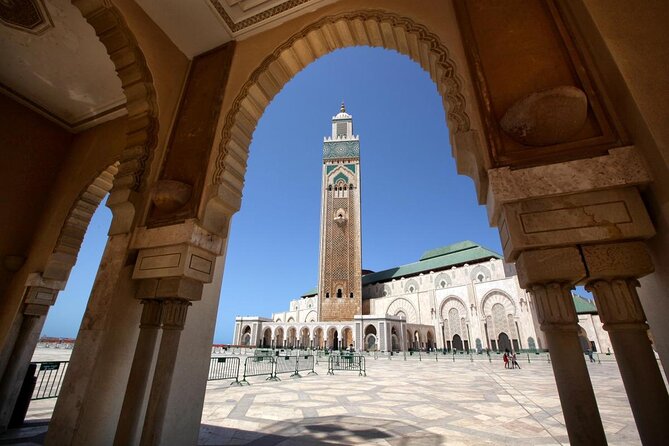
- A grand final in Casablanca: Hassan II Mosque and the corniche area to close strong
How the Tour Price Adds Up (and Where Extra Costs Hide)
At $825 per person, this is priced like a trip that tries to take the guesswork out of transport and sleeping. You’re getting private A/C transportation, hotel stays, a driver (plus fuel and local taxes), and the core “big experiences” like the camel ride and the guided city time.
What’s not included matters: entrance fees for monuments and most lunches and dinners. Even if you eat simply, the daily “small” purchases can add up. If you’re the kind of person who wants to see every ticketed site and also pay for extra meals on your own schedule, set aside a budget for that.
You can also read our reviews of more tours and experiences in Casablanca.
From Casablanca Connections to Real Time on the Road
The tour starts in Casablanca, and you’ll be traveling by private A/C vehicle with a driver for the full route. That’s a big deal in Morocco. Long drives are part of the deal, but having one team handling transport reduces stress when plans shift due to traffic or timing.
If you care about smooth mornings, this route is built for it. You’ll start days with hotel breakfasts and guided walking windows, then shift into drive time. Based on feedback from past groups, the driver support is often a highlight, with names like Youssef, Abdel, Anir, Mohamed, and Mahmoud showing up as people who take care of the details and keep the day moving at a comfortable pace.
Rabat and Chefchaouen: Two Warm-Up Stops Before the Main Circuit
You begin with Rabat, Morocco’s capital. You start with breakfast at your hotel, then head out to explore the city with plenty of time to get your bearings. Rabat is a smart first stop because it doesn’t feel as chaotic as some other medinas. It’s easier to adjust your pace—then you’ll be ready for the harder-working old city days later.
After that, you move to Chefchaouen, the famous blue city in the Rif Mountains. The drive is long (about 5–6 hours), but that’s part of why this stop is included. You get mountain scenery and a chance to reset before the inland leg.
A practical tip: wear shoes you can walk in for hours. Even if a city day isn’t nonstop, you’ll do more walking than you might expect once you’re inside neighborhoods and around viewpoints.
Volubilis and Meknes: Roman Stones and 17th-Century Morocco
One of the strongest “in-between” days is the stretch that connects Fez’s region back toward the Roman and imperial past. You’ll go through the Rif mountains and stop at Volubilis, a Roman archaeological site with ruins that show how long Morocco has been a crossroads.
After Volubilis, you head to Meknes for its 17th-century heritage. Meknes is a nice change of pace from the super-famous medinas. You’ll explore the city and include stops like Bab el-Mansour and Moulay Ismail’s shrine, which brings a different kind of architecture and reverence to your day.
Why I like this day for your value: it breaks up the long drive into meaningful chunks. You’re not just “passing through”; you’re collecting history on the way to the main medina experience.
Fez Mellah Guided Day: Where Craftwork Meets the Old City Maze
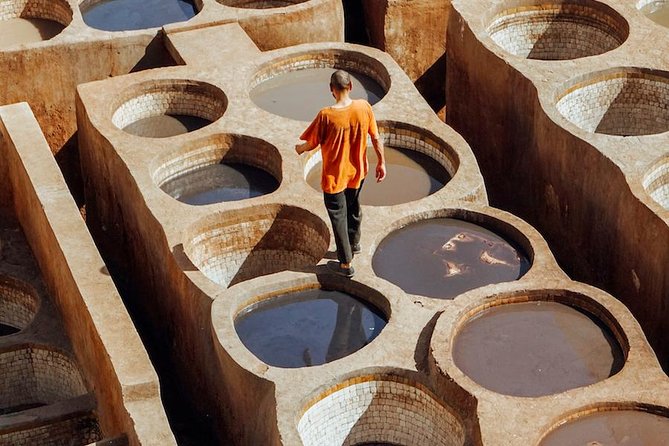
Fez is the big medina test. The guided day focuses on the Mellah, one of the areas that helps you understand how Fez worked as a walled city. You’re guided through narrow streets lined with everyday life—fruit stalls, spices, craft items, and the kinds of objects people still make by hand.
Expect a guided tour that includes key sights such as the King’s Palace area and tanneries (plus potters and other traditional craft stops). The point isn’t only sightseeing. It’s learning how the city’s workshop culture shapes what you see around you.
You’ll also eat lunch in a traditional restaurant in the middle of the medina. That helps a lot because it reduces the risk of getting stuck translating menus while also trying to find your way through busy alleys.
One consideration: medinas involve walking and crowds. If you’re sensitive to tight spaces or long uphill/downhill routes, build in breaks when your guide suggests them.
The Drive to Merzouga: Atlas Mountains, Cedar Forests, and Fossil Country
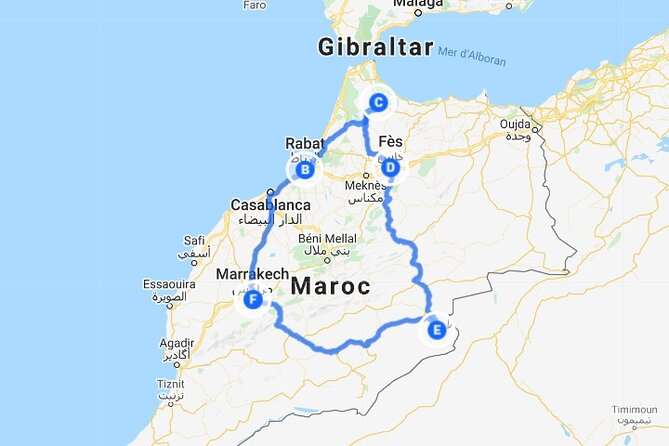
Your desert transition day takes you through a classic Morocco route: from the Middle Atlas with Ifrane and the cedar forests of Azrou, then down toward Midelt for lunch. Ifrane is a surprisingly European-looking stop for Morocco, but it’s useful. It’s a break in scenery and helps you reset your expectations before the desert tones start.
Azrou matters too. It’s known for cedar wood handicrafts, so you’re more likely to see work that reflects the forests you just passed.
From Midelt, you continue toward Erfoud and the dunes of Erg Chebbi. The drive is part of the story: fossils and palm-grove pockets start to appear, and suddenly the desert doesn’t feel like one big blank space. It feels like a whole region with textures.
Camel Ride at Erg Chebbi: Sunset Time and the Camp Setup
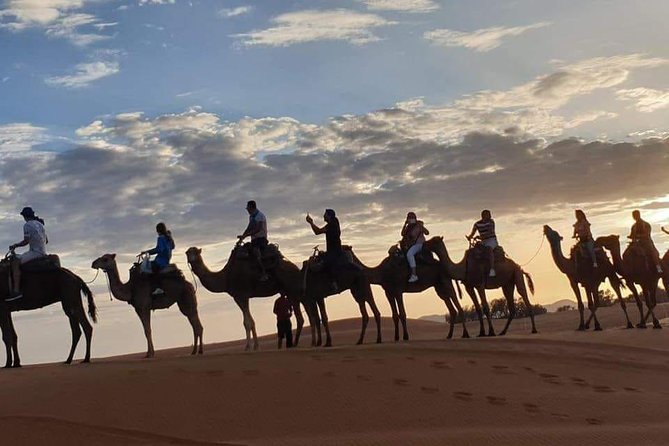
When you reach Erg Chebbi, you don’t just jump out and wander. There’s an off-road transfer to the dunes where camels are waiting. Your luggage gets loaded and carried, so you’re not juggling bags while trying to enjoy the ride.
The camel ride is timed for the majestic Sahara sunset, then you ride toward the camp. When you arrive, you’re greeted with tea and smiles, shown to your tent, and then you settle before dinner.
This is where the trip feels “worth it” for most people. A lot of desert experiences can become uncomfortable quickly—dust, long waits, basic facilities. Here, the camp setup includes comfortable private tents with ensuite bathrooms and showers, which changes the whole tone of the evening.
After dinner, there’s a fire lit and a festive atmosphere with musical plays from staff and cameleers under the stars. That combination is why people remember desert nights long after they forget road distances.
Sunrise, Todra Gorge Walk, and Dades Gorge Nights
The next morning starts early with sunrise and breakfast in the open air at the camp. Then it’s time to leave dunes behind and head back to asphalt roads.
You’ll return either on camels or by 4×4, depending on the flow of the day. That flexibility helps because it means you don’t feel locked into one method after a long night.
Once back near Erfoud, you’ll notice why the region is known for fossils. After lunch, you head toward Todra Gorges for a short walk through the canyon area, then continue to Dades Gorge for dinner and overnight.
Dades is another great “feel” stop. It gives you valley scale after the open desert. If you’ve spent the last day watching sand curves under the sun, Todra and Dades bring back edges—rock walls, narrow passages, and cooler air in the gorge.
Ait Benhaddou and the Tichka Pass: UNESCO Time Before Marrakech Energy
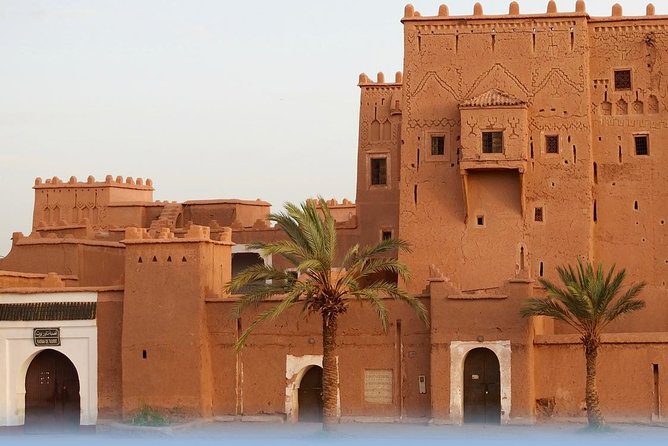
After breakfast, you continue along the route through gorges and valleys, including El Kelaa Magona (often associated with the Valley of the Roses) and the road locals describe as the road of a thousand Kasbahs. Along the way, you’ll visit Ouarzazate and have time to stop for lunch in the area.
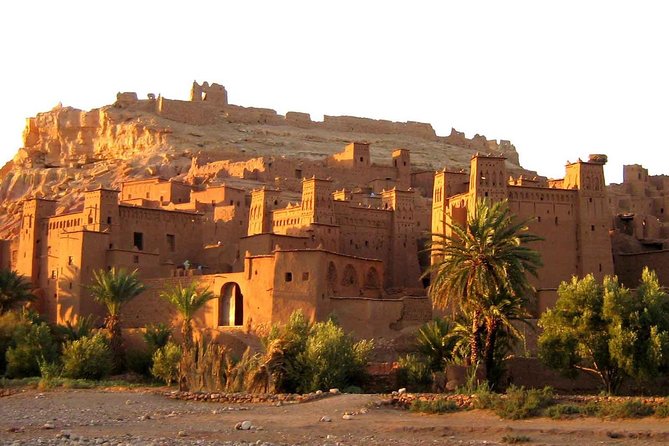
Then comes Ait Ben Haddou, the UNESCO-listed village where films have been shot (including titles like Gladiator and Lawrence of Arabia). This visit is more than a photo stop. You get time to explore the protected site, and you can feel why filmmakers keep returning to it: the architecture has a built-in sense of story.
From there, you drive over the Tichka Pass to reach Marrakech. The pass itself is one of those drives that makes you grateful for the vehicle and breaks. Big roads, big views, and your arrival into a city feels earned.
Marrakech with a Guide: Jamma el Fna, Koutoubia, and Garden Stops
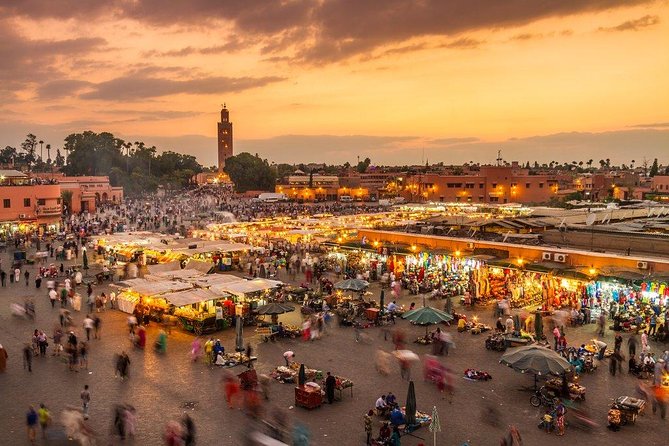
Marrakech is guided for the main day, and that’s the right move. You’ll explore the city’s major sights with time around Jamma el Fna square, Koutoubia Mosque, souks, palaces, and museums. The tour also includes neighborhoods like Gueliz and garden time at Menara Garden and Marjol garden.
I like Marrakech with structure because it keeps you from getting trapped in the maze with no plan. A guide helps you prioritize what’s worth the time you have, especially if you’re also dealing with fatigue from desert nights and long drives.
Also, if you’re planning souvenir shopping, do it with a plan. Souks are famous for a reason, but it’s easy to spend too much time wandering without noticing how quickly the day disappears. One solid market pass beats ten rushed ones.
Casablanca Finale: Hassan II Mosque and Corniche Views
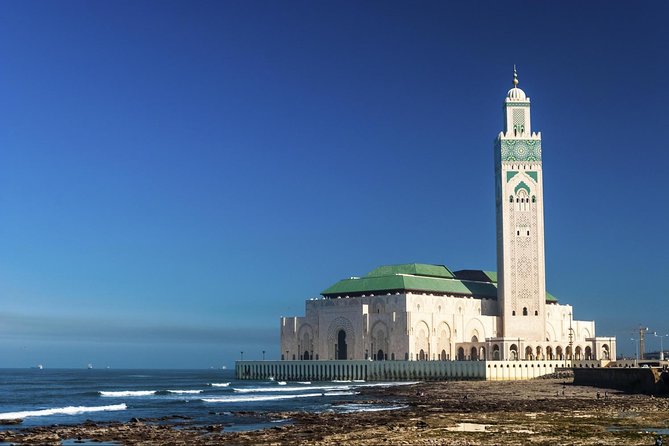
You end back in Casablanca. The final visit is to the Hassan II Mosque, plus the corniche area. This is a satisfying way to close because it shifts from the inland medina style to something more modern and open.
If you’ve been walking for days—medina alleys, desert transitions, gorge steps—this day gives you a calmer finish. You return to your hotel for rest at leisure.
Should You Book This Morocco Imperial Cities and Sahara Trek?
Book it if you want a trip that hits the big Moroccan highlights without forcing you to figure out logistics. You get private transport, hotel stays, guided city days in key places like Fez and Marrakech, and a desert overnight at Erg Chebbi with private-tent comforts and ensuite bathrooms.
Skip it or reconsider if you hate long driving days, or if you need a very predictable budget. The essentials are included, but lunches/dinners and monument entrance fees aren’t. Also, this experience depends on good weather, so cloudy or rough conditions can change the plan.
If your ideal Morocco trip looks like imperial cities on foot plus one unforgettable desert night, this route makes a lot of sense.
FAQ
What is included in the trip price?
It includes private A/C transportation and hotels, a driver with fuel and local taxes, camel ride (one camel each), breakfast (7), dinner (2), and a city guide.
Are monument entrance fees included?
No. Entrance to monuments fees are listed as not included.
Will I have comfortable facilities in the desert camp?
Yes. At Erg Chebbi, you sleep in private tents equipped with ensuite bathrooms and showers.
Is this a private tour or a group tour with strangers?
This is a private tour/activity. Only your group will participate.
Is pickup offered?
Pickup is offered.
What happens if weather is poor?
The experience requires good weather. If it’s canceled due to poor weather, you’ll be offered a different date or a full refund.