REVIEW · CASABLANCA
7-days: Casablanca to Chefchaouen then Fes and Sahara Desert – Camel Trekking
Book on Viator →Operated by Sahara Riders · Bookable on Viator
That blue-white feeling of Morocco starts fast. In one week, you’ll bounce from Chefchaouen’s Rif mountain vibe to Erg Chebbi dunes for a camel trek, then wind down through classic sights toward Marrakech. It’s built as a small group trip (max 20), so you get the comfort of a guide and driver without feeling like a huge bus tour.
I like that breakfasts are included throughout, and the day-by-day plan mixes big-name stops with genuinely local moments like markets, co-ops, and nomad-area visits. I also appreciate how the route is paced for variety: imperial-medina lanes in Fez, monkey territory near Azrou, canyon cliffs at Todra, and starry desert night sandwiched in the middle.
One consideration: you’re in a vehicle for a lot of the week. Some transfer days are long, so if you hate road time, plan on bringing something to pass the hours and keep your expectations realistic about sightseeing windows.
In This Review
- Key things I’d zero in on
- Casablanca to Chefchaouen to Fez: Why this route feels efficient
- Hassan II Mosque timing when you arrive early
- Chefchaouen’s blue medina and Ras El Ma
- Fez days: medina lanes, Jewish quarter, ceramics, and a riad night
- Ifrane, Azrou monkeys, Ziz Valley fossils, and arriving at Erg Chebbi by sunset
- Merzouga desert day: Lake Merzouga, Khamlia Berber pizza, and camel trekking
- Todra Gorge and Boumalne Dades: cliffs, rugs, and a more grounded night
- Ait Ben Haddou, Tizi n Tichka, and ending in Marrakech’s red city
- Price and logistics: what $2,320.48 per person buys you
- Who this camel trek trip suits best
- Should you book this Morocco tour?
- FAQ
- Where does this tour start, and what time does it begin?
- Does the tour include breakfast?
- Is there a camel trek and a desert camp night?
- Which big sights are part of the route toward Marrakech?
- How big is the group?
- Is a mobile ticket included?
- What happens if weather is poor?
- Can I get a full refund if I cancel?
Key things I’d zero in on
- Small group size (max 20): easier conversations, faster help, less chaos at stops
- Desert night setup: you sleep in a Berber tent after riding out into the dunes
- Real variety: Chefchaouen, Fez, Ifrane/Azrou monkeys, Ziz Valley, Todra Gorge, Ait Ben Haddou, Marrakech
- Included food start: breakfasts are covered, with other meals left flexible
- Guide storytelling: Moroccan history and culture explained as you move between regions
Casablanca to Chefchaouen to Fez: Why this route feels efficient
This tour is basically a “most-of-Morocco” sampler done the practical way: you don’t waste days doing the same kind of sightseeing. You start on the Atlantic side in Casablanca, then push north into the Rif mountains for Chefchaouen, move into Fez for a proper medina day, and then head south toward the desert through places like Ifrane and the Ziz Valley.
The big win for you is the combo of motion and meaning. You’re not just stopping for photos; you’re being guided through how each region works—what people eat, what crafts look like, and why certain cities feel the way they do. The group size matters here. With up to 20 people, you’ll usually have enough time to ask questions without feeling rushed.
And yes, the desert is the headline. But the way the week is stitched together makes the desert feel earned: you go from stone cities and mountain towns into canyon terrain, then into sand.
You can also read our reviews of more tours and experiences in Casablanca.
Hassan II Mosque timing when you arrive early
If you arrive one day earlier, you’re advised to visit the famous Hassan II Mosque. That’s a smart add-on because it helps you avoid starting the tour with a “catch up” scramble.
On tour day, pickup starts at 8:00 am, and mosque access is described as possible depending on arrival. The ticket is free, which is nice because it removes one more decision from your trip math.
If you’re the type who enjoys architecture and you like seeing a place when your energy is fresh, arriving early for Hassan II is a good move. If not, don’t worry—this tour still gives you plenty of other “wow” moments right away.
Chefchaouen’s blue medina and Ras El Ma
Chefchaouen is the kind of place that makes you slow down without trying. You’ll drive from Casablanca through the Rif mountains, then spend time in the blue-and-white medina area, including the main square and the Kasbah built back in the 18th century.
Here’s what you’ll actually feel in Chefchaouen:
- The medina feels intimate and walkable compared to big cities
- Cafes and markets keep things active, so it’s not just a photo stop
- You get time to wander on your own, then come back to the group rhythm
There’s also a short stop at Ras El Ma. Even though it’s brief, it fits the tour well—little reset moments like this keep the day from becoming one long “on the move” blur.
Overnight in Chefchaouen is a practical bonus. That means you experience the town beyond daytime traffic, when the colors and streets feel quieter and more real.
Fez days: medina lanes, Jewish quarter, ceramics, and a riad night
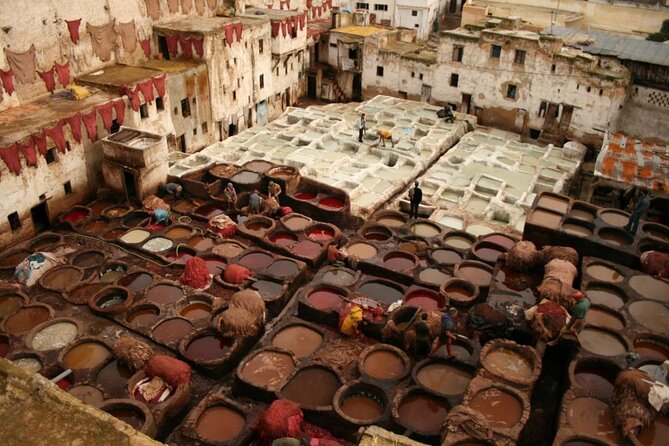
Fez is where the tour becomes more than scenery. You’ll drive there after time in Chefchaouen, and once you’re in the Fes el-Bali area, you’ll start with independent exploration and then switch to a guided deep look.
The guided portion is where you’ll get the value. You’ll explore with a local guide including outside the King’s palace area, the medina, the Jewish quarter, and ceramic manufactories. That last part matters more than it sounds: crafts are one of the easiest ways to understand daily life in Fez, because you can see skill being used, not just displayed.
Then there’s the overnight in a riad. The tour notes the riad directly, which is a clue that you’ll sleep in a traditional style rather than a generic roadside hotel. Even if you don’t go “romantic riad mode,” the setting usually makes evenings in Fez feel calmer.
If you want to maximize Fez without burning out, this tour’s structure helps. You get a mix: some time to meander alone, then guided context to make sense of what you’re seeing.
Ifrane, Azrou monkeys, Ziz Valley fossils, and arriving at Erg Chebbi by sunset
After Fez, you head south toward the desert. The first big shift is Ifrane, described as the Swiss of Africa. It’s a contrast stop: a different atmosphere than medinas, and a good place to reset your head before the drier terrain.
From there, you go to Azrou for wild monkeys. You’ll take pictures, then stop for lunch. The practical tip here is simple: if you know you’ll want photos, wear shoes you can walk in comfortably. These stops are quick, and you’ll probably end up moving more than you expect.
Next comes the Ziz Valley and a canyon-like stretch of scenery. You’ll also stop in an area known for fossils. That kind of “science break” keeps the driving days from feeling repetitive.
Finally, you reach Erg Chebbi in the evening and get sunset colors. That timing is the smart play. Dune light changes quickly, and arriving by sunset gives you an immediate payoff before the deeper desert experience the next day.
You overnight in a hotel there, which matters because it keeps the week from jumping between sleeping setups too abruptly.
Merzouga desert day: Lake Merzouga, Khamlia Berber pizza, and camel trekking
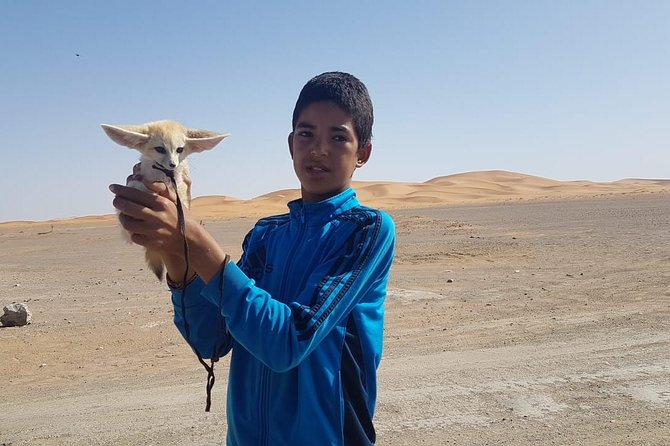
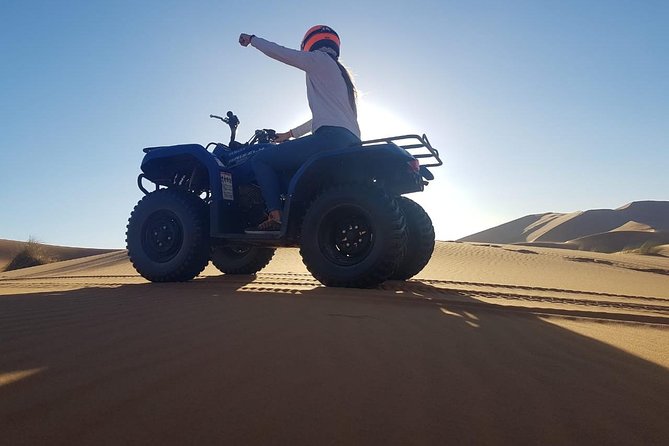
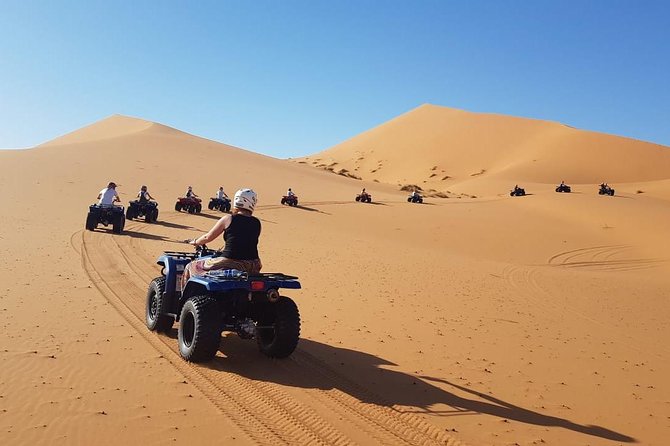
This is the heart of the trip. Your desert day includes a sequence of smaller experiences that build toward the camel trek.
First, you visit the Lake of Merzouga, with flamingos possible if water is available. Since this is noted as seasonal, treat it as a bonus rather than a guarantee.
Next is Khamlia for lunch—often described as Berber pizza. That’s a good example of what you’re buying with a guided desert trip: access to local stops that you might miss if you were trying to plan everything alone.
Then comes the camel trekking part. You ride to the desert camp and spend the night in a Berber tent. Even with a short trek, it’s usually enough to make the desert feel like a place you’ve actually entered, not just driven past.
You also get time for sunset in Merzouga, which is one of those moments that doesn’t need a speech. When the dunes change color, your brain finally switches from travel mode to “slow down and look” mode.
Practical note: desert nights can get chilly depending on season. The tour doesn’t spell out temperatures, so pack layers you can manage.
Todra Gorge and Boumalne Dades: cliffs, rugs, and a more grounded night
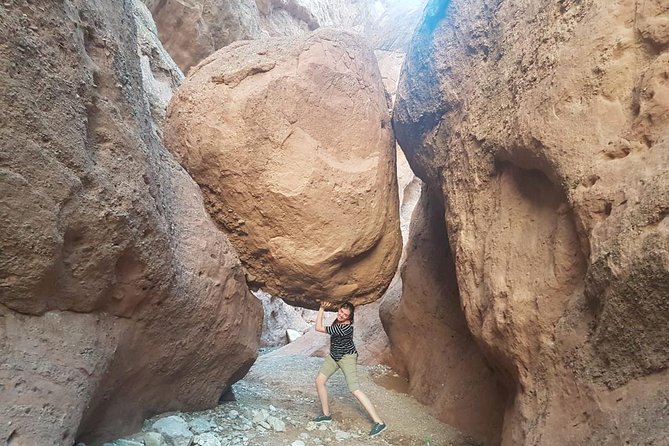
Leaving the desert, you head to Todra Gorge, described as Morocco’s Grand Canyon—around 1000 feet high with vertical limestone cliffs. It’s one of those spots where you’ll naturally spend time just looking up. The scale is hard to fake with photos.
There’s also a stop at a Berber co-operative where you can see and buy handmade rugs, kilims, and carpets. Even if you don’t plan to purchase, it’s worth paying attention to how they’re made. Crafts here connect to livelihood, not just souvenirs.
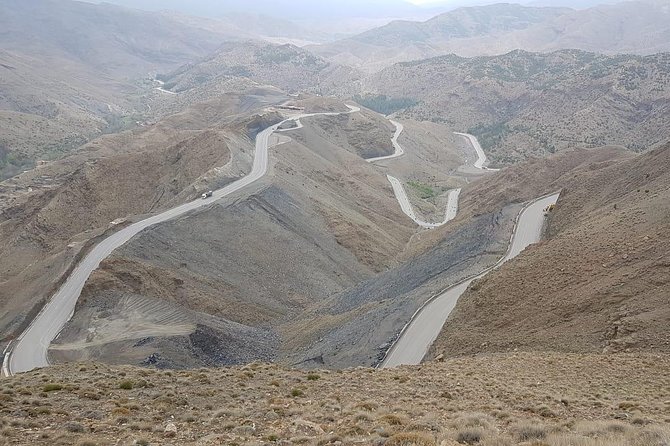
Overnight is in Boumalne Dades, a base that pairs well with Todra because it puts you closer to the winding road through the Dades Valley region. This stretch of the week tends to feel more “real Morocco” than “Instagram Morocco,” and that contrast is part of the tour’s charm.
Ait Ben Haddou, Tizi n Tichka, and ending in Marrakech’s red city
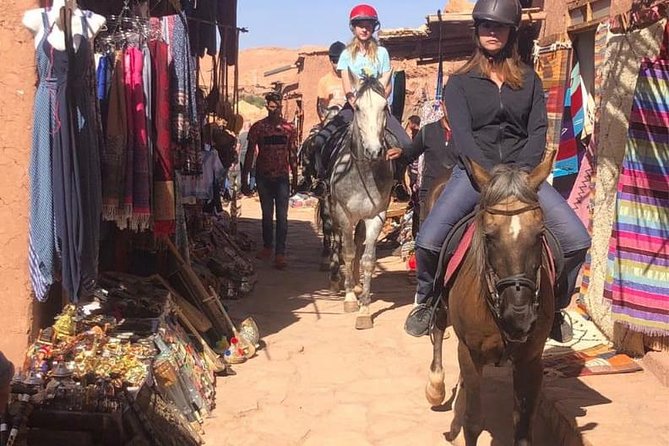
Your final day brings a string of heavy-hitters, done in a way that keeps you moving through different viewpoints.
You start with the valley known for pink roses, linked to rose products. You’ll stop for pictures and visits, which is a nice change from dunes and canyon cliffs—color in the open air.
Then you visit Amridil, noted for old kasbahs and specifically identified as among the best. After that, the tour heads to the city of cinema, which signals you’re in the Ouarzazate area vibe.
Next up is Ait Ben Haddou, one hour to visit the old Kasbah. It’s the kind of site where time passes quickly because the details are on every side. If you’re the type who likes to read the surroundings, budget a little extra time in your head even if the schedule is short.
You finish with Tizi n Tichka, with panoramic views—then end your services in Marrakech, described as the red city with a busy medina and square.
This ending is satisfying because you return from remote terrain to a city with energy. It gives you contrast: sand and stone, then markets and movement.
Price and logistics: what $2,320.48 per person buys you
At $2,320.48 per person for about seven days, you’re paying for more than transportation. You’re paying for a full route that includes:
- Breakfasts included each morning
- Guided sightseeing in key places like Fez el-Bali
- A desert experience with camel trekking and a night in a Berber tent
- Entry fees that are listed as free or included at several stops (like Hassan II mosque, and Todra Gorge’s cooperative stop is noted as included)
You’re also paying for the “less thinking” factor. This is a group tour with pickup offered and a driver + guide handling logistics. For many people, that’s the real value: you don’t have to stitch together desert camp logistics, timing, and multi-day driving yourself.
Now, the realism check: long-distance Morocco driving isn’t comfortable for everyone. This tour moves a lot, and some days are packed with stops. If you want a slow, boutique rhythm, this may feel fast. If you want to see a lot without micromanaging details, it’s easier to justify.
Also, you’re starting in Casablanca and ending in Marrakech. That one-way structure is often why the price isn’t “cheap.” You’re covering a big geographic loop, and you’re not just doing a single-city package.
Who this camel trek trip suits best
This tour is a great fit if you:
- Want big scenery plus guided context (not just hopping between attractions)
- Prefer a small group (max 20) so you can actually ask questions
- Like the idea of a desert night that includes both the trek and the camp experience
- Don’t mind early starts and long travel days as the trade-off for seeing multiple regions
It may be less ideal if you:
- Want lots of downtime each day
- Get grumpy with frequent vehicle transfers
- Are hoping for a trip where every meal is included (only breakfasts are stated)
Should you book this Morocco tour?
If you want a one-week route that strings together Chefchaouen, Fez, the Erg Chebbi dunes, Todra Gorge, and an Ait Ben Haddou finale, this is an easy “yes” to consider. The included breakfasts, the guided Fez medina day, and the desert camp night with camel trekking are exactly the kind of built-in value that usually costs extra if you plan it yourself.
I’d book it if you like variety and can handle long drive days. If you hate road time or you want a more relaxed pace with more free meals built in, you’ll likely feel the squeeze.
One last note: guides like Youssef are repeatedly mentioned as professional, personable, and proud of Moroccan culture. Since you’re buying a guide-led experience, that kind of match can make the trip feel personal, not just logistical.
FAQ
Where does this tour start, and what time does it begin?
Pickup is offered, and the start time is 8:00 am.
Does the tour include breakfast?
Yes. All breakfasts are included. Other meals are up to you.
Is there a camel trek and a desert camp night?
Yes. You ride out into the desert and sleep in a Berber tent one night, with camel trekking included.
Which big sights are part of the route toward Marrakech?
You’ll visit stops including Chefchaouen, Fez (Fes el-Bali), Todra Gorge, Ait Ben Haddou (Kasbah), and viewpoints such as Tizi n Tichka, finishing in Marrakech.
How big is the group?
This tour has a maximum of 20 travelers.
Is a mobile ticket included?
Yes, mobile tickets are listed as a feature.
What happens if weather is poor?
The experience requires good weather. If it’s canceled due to poor weather, you’ll be offered a different date or a full refund.
Can I get a full refund if I cancel?
Free cancellation is available. To get a full refund, you must cancel at least 24 hours before the experience’s start time.