REVIEW · GHANDRUK
From Pokhara: 10-Day Poon Hill and Annapurna Base Camp Trek
Book on GetYourGuide →Operated by Adventure in Nepal · Bookable on GetYourGuide
Ten days, two impossible views. This trek is interesting because it ties Poon Hill sunrise together with the big, close-up feel of Annapurna Base Camp. I like how you pass real places on the way up: villages, terraced fields, rhododendron forests, and then a high-altitude sanctuary walk. I also like that the itinerary builds toward the peaks instead of rushing you. The main drawback to plan for is effort: you’ll face steep steps and long days, plus cold at higher altitude.
If you want a private, guided route that still feels authentically Nepali, this one fits. The route moves from Pokhara to Nayapul, then climbs through classic stops like Tikhedhunga/Ulleri and Ghorepani, heads toward Chhomrong and Bamboo, and finally reaches the Annapurna Sanctuary before dropping to Jhinu Danda hot springs.
In This Review
- Key things that make this trek work
- Poon Hill sunrise plus Annapurna Base Camp: what you’re really signing up for
- The 10-day route in plain English (and what each day feels like)
- Day 1: Pokhara to Nayapul to Tikhedhunga (1,577m)
- Day 2: Tikhedhunga to Ghorepani (2,874m) via Ulleri steps
- Day 3: Ghorepani to Poon Hill sunrise and back to Tadapani (2,630m)
- Day 4: Tadapani to Chhomrong (2,170m)
- Day 5: Chhomrong to Bamboo (2,310m)
- Day 6: Bamboo to Deurali (3,230m)
- Day 7: Deurali to Annapurna Base Camp (4,130m)
- Day 8: Annapurna Base Camp sunrise, then back to Bamboo
- Day 9: Bamboo to Jhinu Danda (1,780m) with hot springs
- Day 10: Jhinu Danda to Nayapul to Pokhara
- Guides, pace, and safety: where this tour earns trust
- Guesthouses and the comfort reality at altitude
- Price and value: what $310 includes and what you’ll pay extra
- When to go: seasons, weather, and sunrise odds
- What to bring, and the rules that keep things simple
- Who this trek is for (and who should skip it)
- Should you book this Poon Hill and Annapurna Base Camp trek?
- FAQ
- How long is the trek?
- What’s included in the price?
- Is food included?
- Do I need travel insurance?
- What’s the best season to trek?
- What’s the highest point on the route?
- What should I bring?
- What is not allowed during the trek?
- Is it suitable for everyone?
Key things that make this trek work
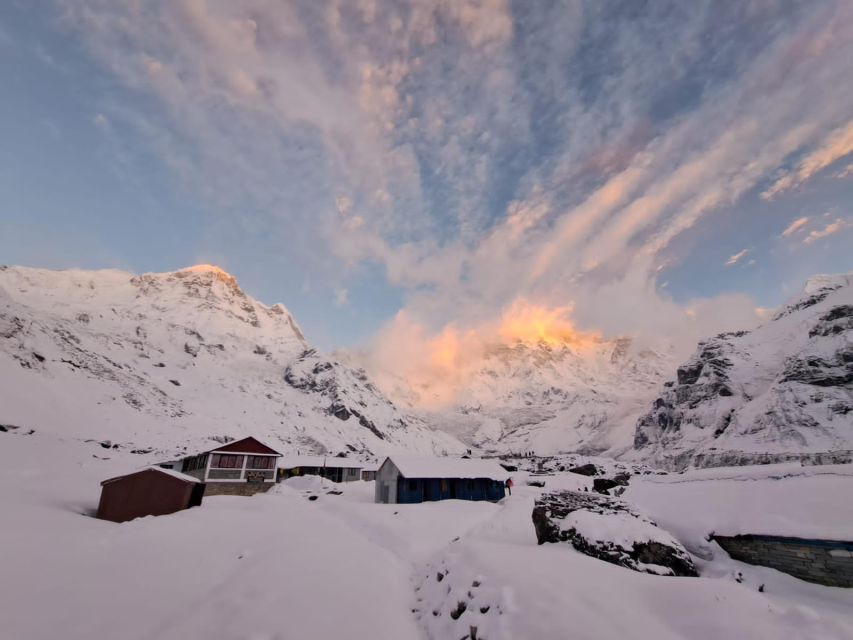
- Two sunrise moments: Poon Hill early in the trip and Annapurna Base Camp sunrise later
- Real village rhythm: terraced fields, Gurung villages like Chhomrong, and foresty sections
- A professional guide who can adjust: pace changes happen when altitude hits (more than once)
- Guesthouse stays included: you’re not hunting for beds day to day
- Big logistics handled: transfers from Pokhara and official permits are part of the package
Poon Hill sunrise plus Annapurna Base Camp: what you’re really signing up for
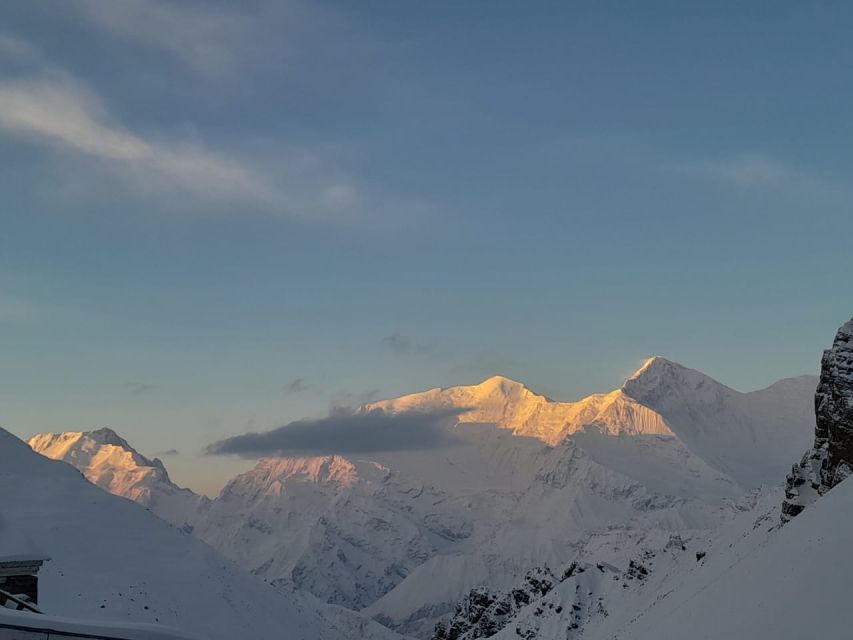
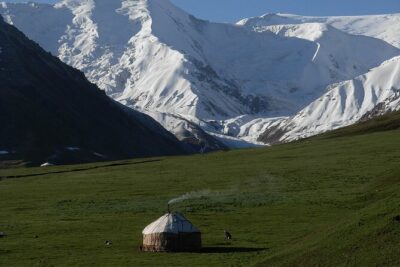
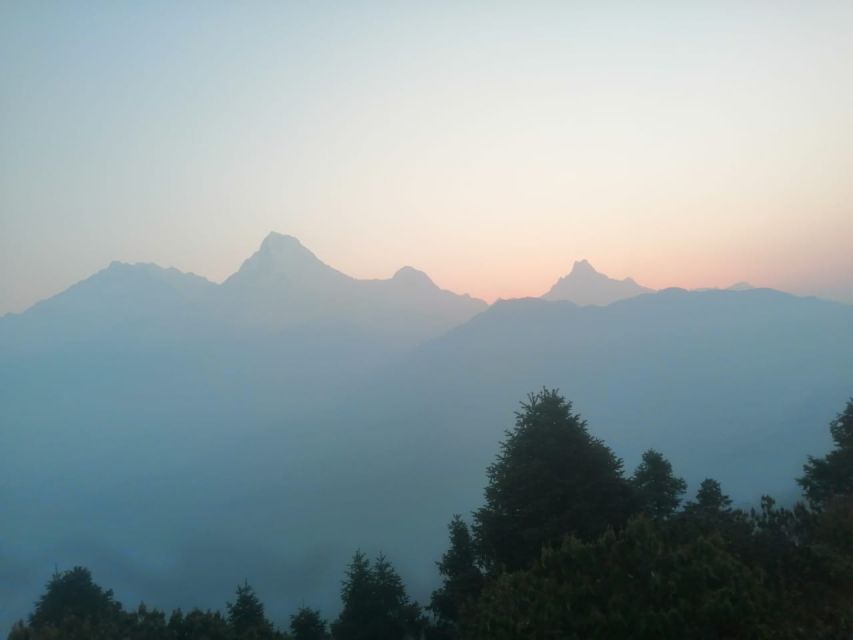
This trek is built on contrast. One morning you’re climbing to Poon Hill for a panoramic sunrise over the Annapurna and Dhaulagiri ranges. Later, you’re trekking deeper into the Annapurna region until the Annapurna Sanctuary opens around you, with towering peaks rising above.
I like that it’s not just a “to-do list” of viewpoints. You spend days moving through different kinds of terrain and communities. Day 1 starts with Modi Khola valley trail and terraced fields. Day 2 and beyond shift into forest walking with rhododendron. Then you get that high, stark sense of altitude near the sanctuary and base camp.
The experience also has a practical upside: you’re guided by a professional English-speaking trekking guide, in a private group. That matters on a route like this because the “right pace” is the difference between enjoying the walk and getting hammered by the climb.
You can also read our reviews of more tours and experiences in Ghandruk.
The 10-day route in plain English (and what each day feels like)
Here’s how the days line up, and what makes each segment worth your time.
Day 1: Pokhara to Nayapul to Tikhedhunga (1,577m)
You start with a morning drive from Pokhara to Nayapul, about 1.5 hours. Then you begin the trek following the Modi Khola. Expect small villages, terraced fields, and the steady feeling that you’re starting to climb.
Tikhedhunga is a common first “ramp-up” stop. It’s high enough to feel like trekking has started, but not so high that you’ll be suffering immediately.
Why it matters: it gets your legs working gently before the bigger step-ups arrive.
Day 2: Tikhedhunga to Ghorepani (2,874m) via Ulleri steps
The day starts with Ulleri: steep stone steps, the kind that makes you question your life choices for a few minutes at a time. After that, the trail continues through charming villages and rhododendron forests.
You reach Ghorepani at 2,874m. This area is known for big mountain views, especially over the Annapurna and Dhaulagiri ranges. You’ll likely feel the air get thinner as the day winds down.
Possible consideration: Ulleri steps are the first real “legs day.” If you’re not used to uphill stairs, you’ll want to keep your effort controlled.
Day 3: Ghorepani to Poon Hill sunrise and back to Tadapani (2,630m)
This is the morning everyone talks about. You wake up early, trek up to Poon Hill (3,210m), and aim for panoramic sunrise views over the Annapurna.
After sunrise, you descend back to Ghorepani for breakfast, then continue on. The rest of the day is forest-and-valley walking through rhododendron-filled areas until you reach Tadapani (2,630m).
Why it’s special: Poon Hill is short-distance, high-impact. It’s early, but it’s also the fastest way to feel like you’re in the Himalayas.
Day 4: Tadapani to Chhomrong (2,170m)
Today shifts into a more rolling rhythm. You start with a gradual descent through lush forests, then pass Gurjung village. After that, you drop toward the Kimrong Khola, then climb back up to Chhomrong (2,170m).
Chhomrong is a large Gurung village with strong views—Annapurna South and Machhapuchhre (Fishtail) show up clearly from here. Staying overnight in a village like this is where the trek stops feeling like a hike and starts feeling like you’ve joined the local pace for a week.
Day 5: Chhomrong to Bamboo (2,310m)
You descend from Chhomrong to the Chhomrong Khola and cross a suspension bridge. Then you climb up to Sinuwa and walk through thick bamboo and rhododendron forests until Bamboo (2,310m).
What to watch: the bridge-and-climb combo can feel up and down in a way that surprises people who thought it was all steady uphill. Just keep your breathing even.
Day 6: Bamboo to Deurali (3,230m)
This day keeps you moving through bamboo forest and along the Modi Khola valley. The route passes by spots like the Himalayan Hotel and Hinku Cave on the way up to Deurali (3,230m).
You’ll feel the altitude more on this stretch. It’s not just height; it’s the thin-air effort of walking uphill with steady focus.
Why it matters: Deurali is a key step before the route opens toward the sanctuary.
Day 7: Deurali to Annapurna Base Camp (4,130m)
Today is the big transition. You trek through a narrow valley that opens up toward the Annapurna Sanctuary. Along the way, you pass Machhapuchhre Base Camp (3,700m), then continue until you reach Annapurna Base Camp (4,130m).
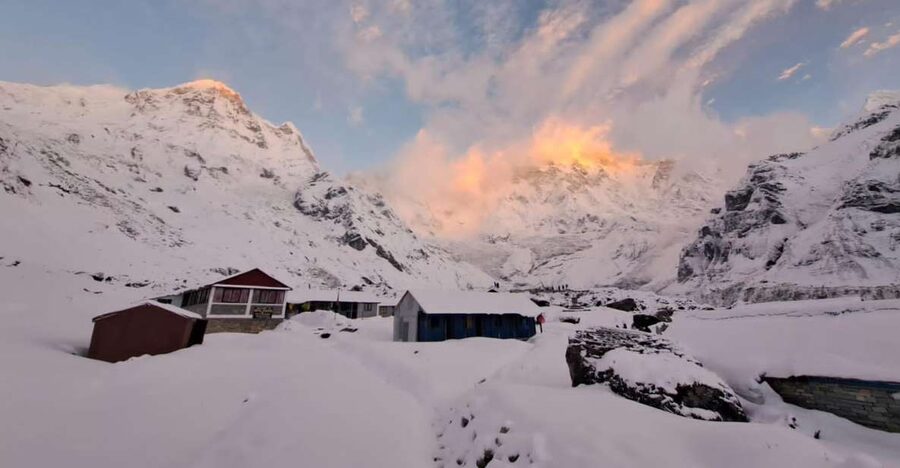
You arrive surrounded by towering peaks, including Annapurna I (8,091m). Staying overnight here makes the “scale” sink in. It’s not just seeing mountains; it’s being in their shadow.
Day 8: Annapurna Base Camp sunrise, then back to Bamboo
Another early morning: you wake up for sunrise views over the mountains, then you start descending from Annapurna Base Camp.
You trek back through Deurali and Bamboo and land at Bamboo for another overnight. The descent is easier on lungs, but still hard on knees. This is where trekking poles help if you use them.
Practical note: the trip still has a rhythm. You’re not “done” after base camp. You’re shifting from peak impact to recovery days.
Day 9: Bamboo to Jhinu Danda (1,780m) with hot springs
You continue descending through forests. You pass through Chhomrong for lunch and then go down further to Jhinu Danda (1,780m).
Then comes a big payoff: natural hot springs at Jhinu Danda. This isn’t fancy spa. It’s simple, warm water—perfect for sore legs.
Day 10: Jhinu Danda to Nayapul to Pokhara
You trek from Jhinu Danda to Nayapul, then drive back to Pokhara to end the trek.
Guides, pace, and safety: where this tour earns trust
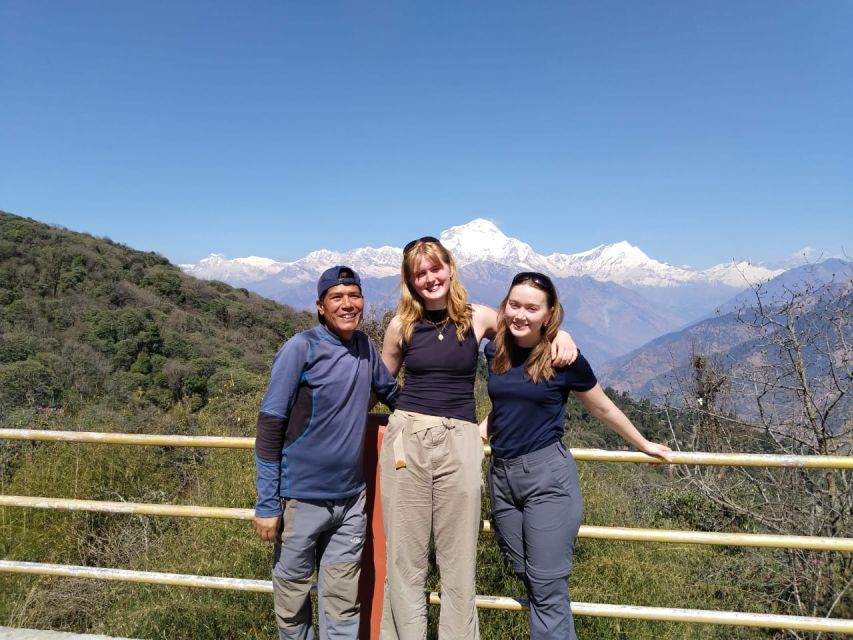
The guide is part of the product here. You get a professional English-speaking trekking guide, plus a private group setup. That matters because the itinerary still needs human judgement as conditions change.
In real conditions, altitude doesn’t always follow the schedule. One hiker had issues with altitude, and their guide (Arjun) adjusted the trek by extending it by three days so the person could keep going safely. That’s the kind of flexibility that can make the difference between “I pushed through” and “I got the full experience.”
I also like how guides handle weather. One trip in September ran into several rainy days and heavy cloud cover. The guide kept encouraging the group to keep moving and pointed out when views briefly opened. That’s smart trekking: you don’t stare at fog forever, but you also don’t panic if weather shifts.
Names you may hear include Biru (mentioned as patient and well-organized), Arjun (mentioned for altitude-aware adjustment), and Bikram (mentioned as kind, helpful, and strong on local knowledge). If the guide you get has that style, you’ll likely feel safe and un-rushed.
And yes, you may have a porter. One account described a porter carrying about a 20kg backpack and moving quickly, often staying ahead without taking away from the hiking experience.
Guesthouses and the comfort reality at altitude
Accommodation is included in guesthouses throughout the trek. That’s the right way to think about it: you’re not in hotels, and you shouldn’t expect the same creature comforts you get back in Pokhara.
On the flip side, it’s very efficient. You don’t spend time negotiating beds or searching for rooms each night. The guide handles bookings, so you can focus on walking.
One important cost heads-up from an altitude perspective: high places can cost more for basic extras like heaters, WiFi, battery charging, and hot shower access. One experience noted you should expect around 30 to 40 USD per day for those kinds of add-ons at higher altitude. That’s not included, so budget for it if you care about staying connected or staying warm.
Price and value: what $310 includes and what you’ll pay extra
At $310 per person for 10 days, you’re paying for a guided, organized trek that includes a lot of the hard-to-plan pieces. Included items cover:
- hotel pickup and drop-off
- professional English-speaking trekking guide
- trekking permit and official documents
- private car transfer Pokhara to Nayapul to Pokhara
- guesthouse accommodation
- emergency first aid kit with guide
- private tour
- Poon Hill entrance
Food and drinks are not included, but they’re available for purchase along the way. That’s normal for this kind of trek.
Also not included:
- travel insurance
- rescue coverage in an emergency (the provided info says rescue is covered by your travel insurance)
- gratitude/gratuity (optional)
So is the price a good deal? For many people, yes—because you’re not just buying a trail map. You’re buying guide time, permits, official logistics, and the transfers. If you tried to DIY the whole thing, you’d likely spend money anyway, plus you’d take on the risk of dealing with permits and day-to-day decisions on your own.
The biggest “surprise” cost is usually not food—it’s optional services at altitude (hot showers, charging, heaters) plus your personal spending.
When to go: seasons, weather, and sunrise odds
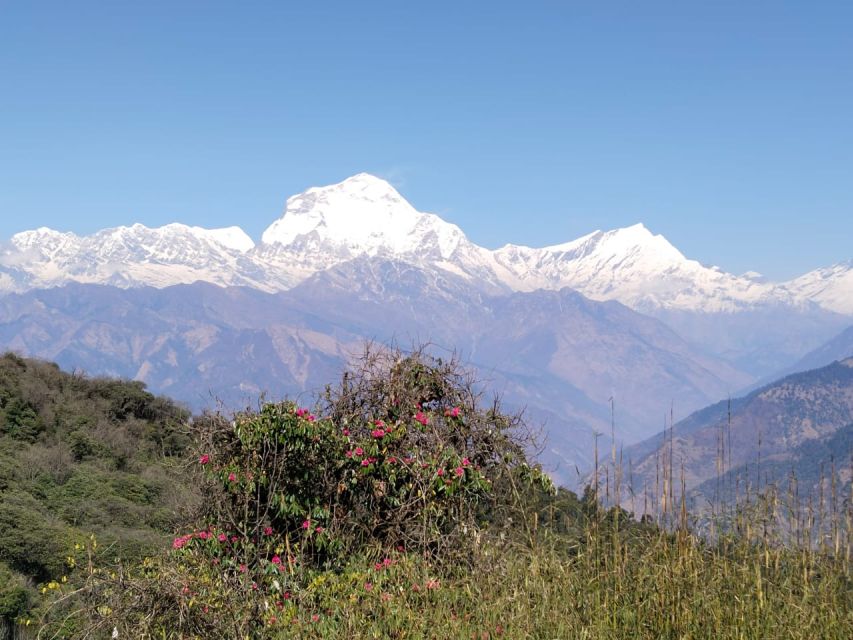
The best time to trek is spring (March to May) and autumn (September to November). Those windows tend to offer stable weather and clearer mountain views.
But this trek also makes it clear that mountain weather can change fast. One itinerary in late September faced three days of rain with only one sunny day. Cloud cover can block views, especially around key sunrise moments.
Here’s the practical takeaway: you can’t control weather, but you can control your plan. Choose a season that historically gives you better odds, and keep your expectations flexible. With a good guide, you’ll still hike the route, and you’ll still get moments when the peaks appear.
What to bring, and the rules that keep things simple
The tour info lists a straightforward checklist:
- passport or ID card
- comfortable shoes
- travel insurance
- passport-sized photo
Plan for temperature changes. Even in good seasons, nights at higher altitude can feel cold, and the weather can shift quickly.
There are also a few rules:
- pets are not allowed
- plastic bottles are not allowed
If you follow those, you’ll avoid hassles at checkpoints and on the trail.
Who this trek is for (and who should skip it)
This trek is not suitable for:
- pregnant women
- wheelchair users
Beyond that, it’s a good match if you:
- want a private guided trek with a flexible pace
- enjoy village life as much as views
- want two high points of scenery (Poon Hill and Annapurna Base Camp)
- don’t mind early starts and real uphill days
If you’re a slow hiker, that’s still workable. One account described walking 3 to 6 hours per day and not feeling rushed, with the guide adjusting to body pace.
Should you book this Poon Hill and Annapurna Base Camp trek?
Book it if you want one organized package that handles permits, transfers, and guesthouse stays, while still giving you authentic days on foot. The combination of Poon Hill sunrise and reaching Annapurna Base Camp in 10 days is a strong value for people who want a classic Annapurna “best-of” experience without turning it into a logistics project.
Skip or rethink if your priority is a low-effort trip. This route includes steep steps (Ulleri), suspension bridge crossings, bamboo-and-forest stretches, and a high-altitude push to 4,130m. Add in the chance of rain or cloud in shoulder timing, and you need a hiking mindset, not a casual stroll mindset.
If you do book, ask your guide early about pace and altitude plans. The ability to adjust—like extending days when needed—is one of the reasons this trek gets such strong confidence.
FAQ
How long is the trek?
It’s a 10-day trek, starting from Pokhara and ending back in Pokhara.
What’s included in the price?
The package includes hotel pickup and drop-off, a professional English-speaking trekking guide, trekking permits and official documents, private car transfers between Pokhara and Nayapul, guesthouse accommodation, an emergency first aid kit with your guide, a private tour setup, and Poon Hill entrance.
Is food included?
No. Food and drinks are available to purchase along the route.
Do I need travel insurance?
Travel insurance is not included. Emergency rescue is stated as covered by your travel insurance, so it’s important to arrange it before you go.
What’s the best season to trek?
The best time is spring (March to May) and autumn (September to November), when conditions are usually more stable and mountain views are clearer.
What’s the highest point on the route?
Annapurna Base Camp is at 4,130m. You’ll also hike to Poon Hill at 3,210m earlier in the trek.
What should I bring?
Bring your passport or ID card, comfortable shoes, travel insurance, and a passport-sized photo.
What is not allowed during the trek?
Pets are not allowed, and plastic bottles are not allowed.
Is it suitable for everyone?
It’s not suitable for pregnant women or wheelchair users.