REVIEW · GHANDRUK
Pokhara: 7 Day Annapurna Base Camp Trek
Book on GetYourGuide →Operated by Linkage Tour & Travel · Bookable on GetYourGuide
The Annapurna Base Camp is a big wow in a tight week. What I really like is the way this trek mixes Gurung villages and forests with a steady push toward real Himalayan scale, plus the guide-led pace that helps you manage the steeper days. One consideration: the climb can feel hard in the first stretch, especially if you are not used to trekking uphill at altitude, and you will need to take your time.
I also appreciate how the trip is built around specific, scenic “hinge points” along the Modi Khola route. On my watchlist are Ghandruk’s views toward Machhapuchhre and the day you reach ABC—when the peaks fill the sky and the whole effort turns into a clear finish line. Guides like Pratiksha, Hari, and Sandesh also show up repeatedly in people’s experiences for a reason: they focus on safety, rhythm, and making the tea-house stops feel easy.
If you want the simplest post-trek wind-down, note that ending at Jhinu Danda is a smart move. You get to soak sore legs in the natural hot springs before the mostly downhill return, which feels like a reward instead of a chore.
In This Review
- Key highlights worth getting excited about
- From Pokhara to the trailhead: why the start feels smoother
- Ghandruk (1,939 m) to Lower Sinuwa (2,249 m): villages, suspension bridges, and forest rhythm
- Deurali (3,230 m): the gorge days start to matter
- Annapurna Base Camp day (4,130 m): when the week turns into a memory
- Back down to Sinuwa (2,249 m): sunrise payoff and altitude relief
- Jhinu Danda Hot Springs (1,760 m): the best excuse to stop moving
- Final day: Jhinu to Nayapool and back to Pokhara
- What you’re actually paying for: value at $215 per person
- Guides, safety, and pacing: the ABC experience is the people
- Daily lodging and tea houses: what “standard tourist lodges” means in practice
- Who this trek is best for
- Should you book the 7-Day Annapurna Base Camp trek from Pokhara?
- FAQ
- What is the price for the 7 Day Annapurna Base Camp trek?
- What’s included in the tour price?
- What is not included?
- Do I get pickup from my hotel in Pokhara?
- How high do you go on the trek?
- What language will the guide speak?
- What should I bring for the trek?
- Can I cancel for a full refund?
Key highlights worth getting excited about
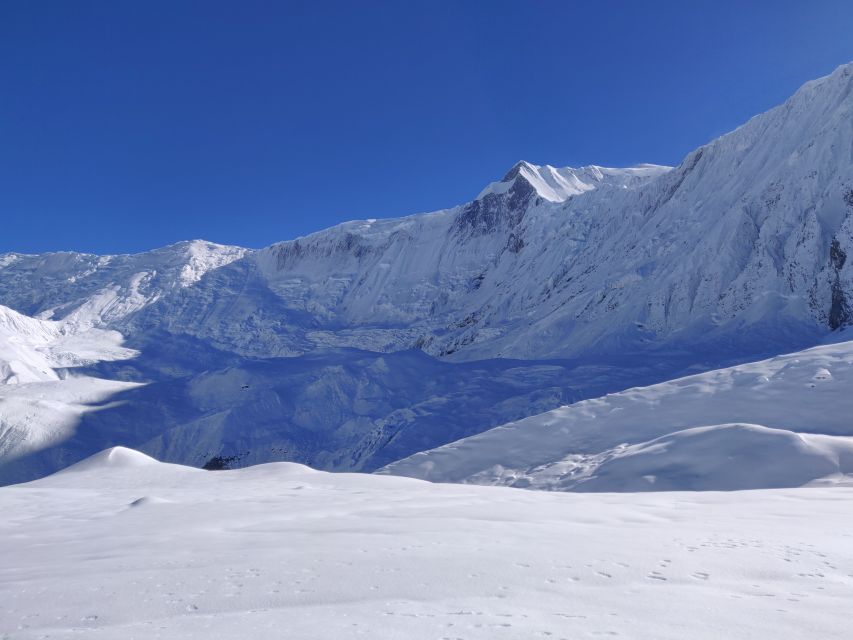
- Annapurna Base Camp at 4,130 m with a peak-surrounding amphitheater view
- Machhapuchhre (Fishtail) angles on approach, including sights near Machhapuchhre Base Camp
- Gurung culture in Ghandruk, plus terraced fields and classic mountain village rhythm
- Rhododendron and bamboo forests along the Modi Khola corridor
- Jhinu Danda Hot Springs as a practical muscle reset
- Guide flexibility when conditions hit, like snow, monsoon rain, or altitude issues
From Pokhara to the trailhead: why the start feels smoother
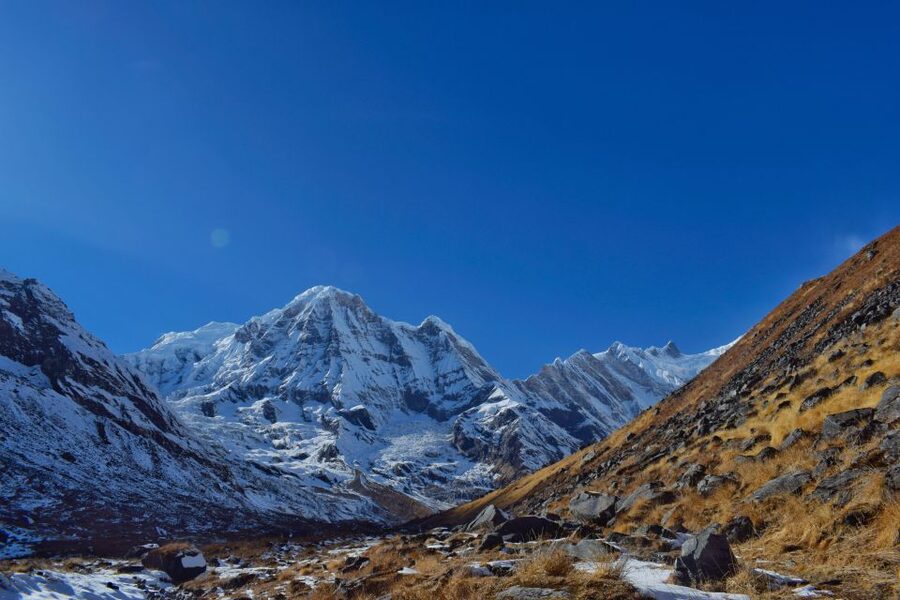
Pokhara makes this trek easier to launch than it looks. The plan begins with hotel pickup around lakeside and a drive to Nayapool, so you’re not burning your first day just crossing Nepal’s valleys. From there, you start trekking through villages and terraced fields and head toward Ghandruk, a Gurung village known for strong community life and big mountain views.
Day 1 is at Ghandruk (about 1,939 m / 6,360 ft). The walking is very manageable compared with what comes later, and that matters. It gives you time to settle into trekking mode before the altitude stacks up.
What I like about this first push is the balance: you get scenery early, but you also get enough “warm-up” walking to feel your legs start working. And if weather surprises you, you’re not starting the trek with the harshest climbs already in your legs.
You can also read our reviews of more tours and experiences in Ghandruk.
Ghandruk (1,939 m) to Lower Sinuwa (2,249 m): villages, suspension bridges, and forest rhythm
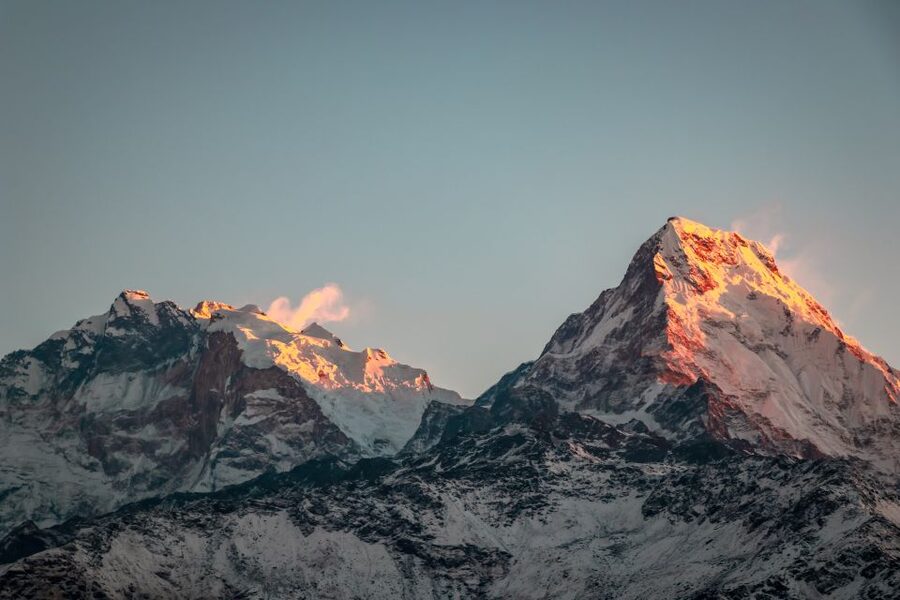
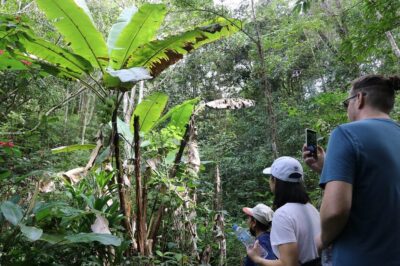
On Day 2, you trek uphill and downhill through rhododendron forests and small settlements, which keeps the day from becoming one long grind. A standout here is crossing suspension bridges over the Modi Khola, the river corridor that keeps showing up throughout the trek.
Lower Sinuwa (about 2,249 m / 7,380 ft) is where you sleep. That number is higher, but the point of this day is more about flow than suffering. You’re gaining altitude gradually, moving through different terrain, and learning the feel of the trail under full Nepal mountain scenery.
This day also helps you understand the trekking “logic” of the ABC route: you earn your height through many short climbs and descents rather than one constant wall. If you pace well, Day 2 becomes a confidence builder.
Deurali (3,230 m): the gorge days start to matter
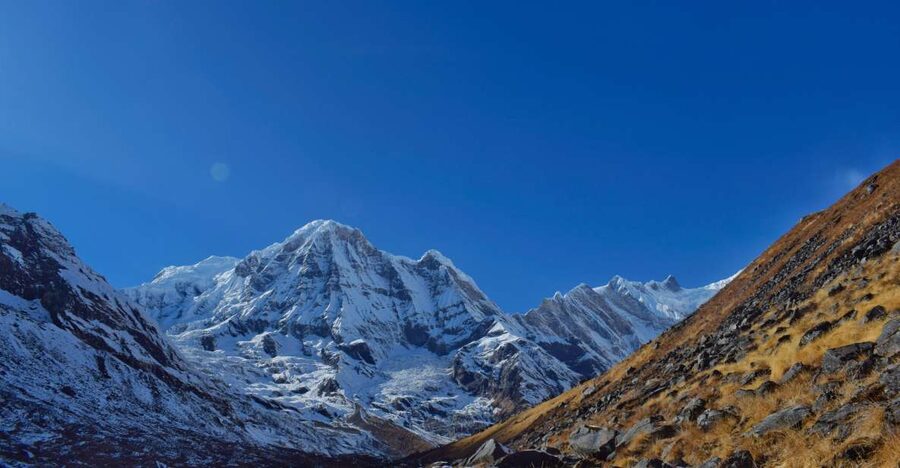
Day 3 takes you from Sinuwa to Deurali (about 3,230 m / 10,595 ft). The route goes through dense bamboo and oak forests and past places like Dovan and Himalaya, then follows the Modi Khola gorge.
This is where the trek begins to feel more serious. You’re still moving through forest, but you are also climbing into a more dramatic, cliff-and-waterfall world. If you tend to go fast, resist that habit here. The people who have the best experience are the ones who let the guide slow the rhythm down and keep breaks frequent.
This is also the day where altitude can start raising flags. One real example from a supported trek plan: when altitude sickness hit, a guide adjusted logistics quickly and helped restructure the route rather than forcing an unsafe push. That kind of on-the-ground flexibility is hard to replicate if you’re DIY.
Annapurna Base Camp day (4,130 m): when the week turns into a memory
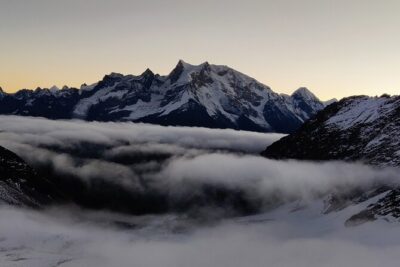
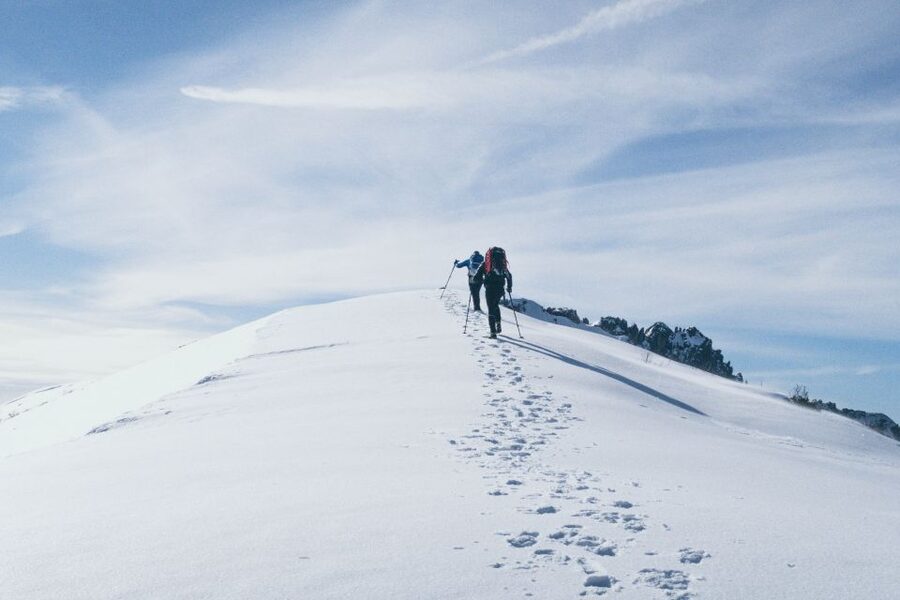
Day 4 is the big summit-style payoff without being a technical climb. You ascend through alpine meadows and pass Machhapuchhre Base Camp, with standout views of Fishtail (Machhapuchhre) and the Annapurna massif.
You reach Annapurna Base Camp at about 4,130 m / 13,550 ft and then you take in the view from a natural “peak amphitheater.” That wording isn’t just marketing. The setting makes you feel like the Himalayas are closing in around you, and it changes how you look at the trek you just walked.
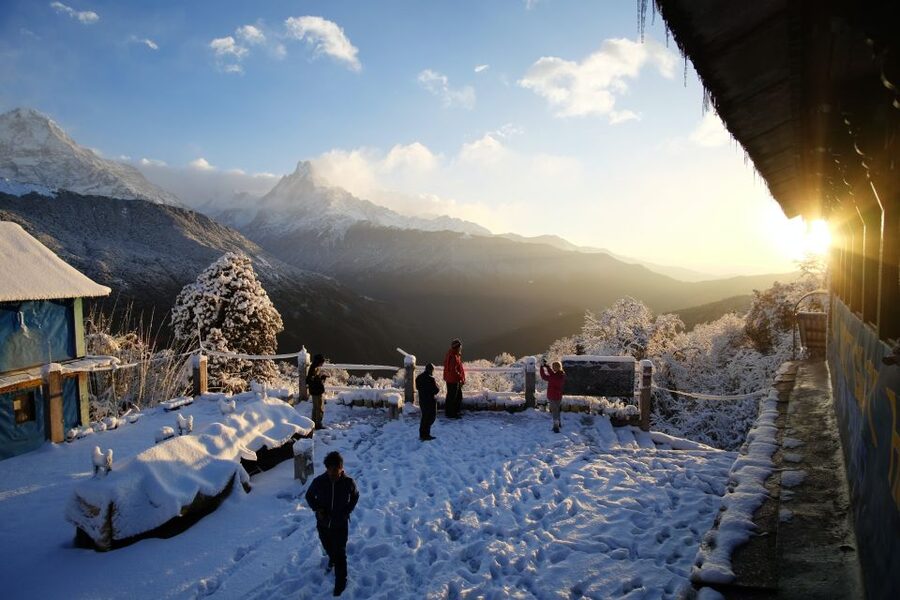
Weather can add drama here. Some seasons bring snow near ABC and even as people leave the base camp area, and that turns the view into something harsher and more photogenic. Monsoon season can be muddy and rainy, but you still get the same final aim: stand at ABC and see the Annapurna range unfold at close range.
Back down to Sinuwa (2,249 m): sunrise payoff and altitude relief
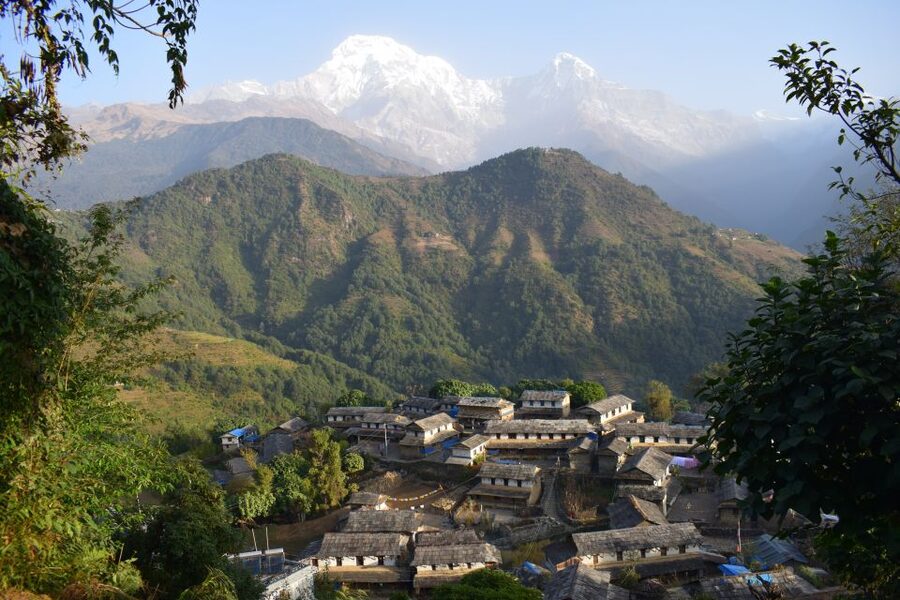
Day 5 is ABC to Sinuwa (about 2,249 m / 7,380 ft). The plan includes waking up for a magical sunrise over Annapurna I, then breakfast, then retracing your steps downhill.
This is a smart recovery day built into the itinerary. Downhill at altitude can still feel heavy, but it’s relief compared to climbing. You again pass through bamboo and rhododendron forests, and the route feels like it “resets” your body while still keeping scenery constant.
If you’re the kind of person who worries about whether the trek is worth it once you’re exhausted, this day answers that question. You already got the peak moment; now you get to enjoy the trail without the pressure of pushing higher.
Jhinu Danda Hot Springs (1,760 m): the best excuse to stop moving
Day 6 is Sinuwa to Jhinu Danda Hot Springs (about 1,760 m / 5,770 ft). The walk is downhill to the river, and then you get to relax in the natural hot springs.
This is one of the most practical parts of the whole week. Seven days of trekking is hard on legs, and the hot springs stop turns tired muscles into a reset button. It also makes the day feel like a reward, not just a transit step.
A small but important tip: bring swimming stuff if you plan to use the springs. People who did the hot springs stop have said it’s worth being prepared, because you’ll want to actually enjoy the soak instead of just watching the water.
Final day: Jhinu to Nayapool and back to Pokhara
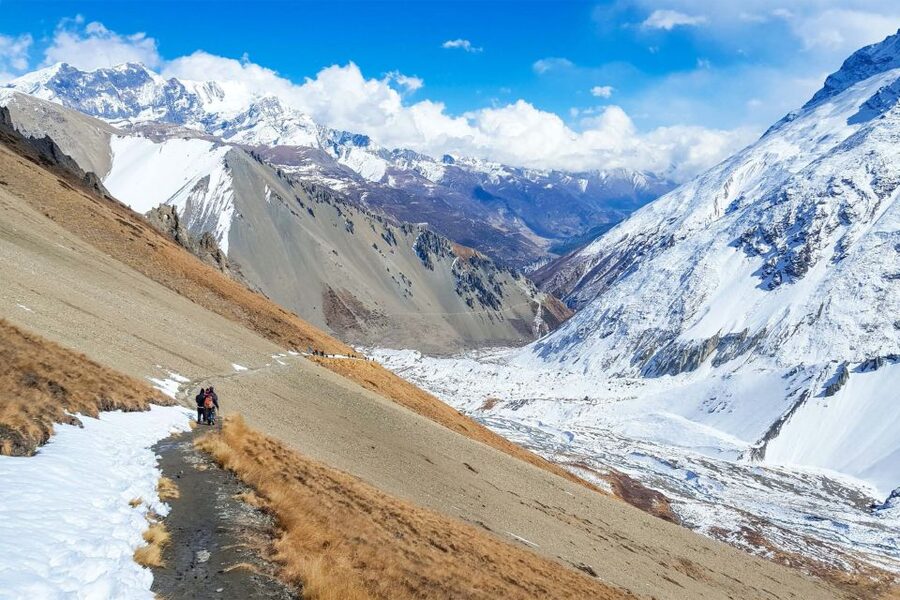
Day 7 brings you down gradually through farmlands and villages to Nayapool, then you drive back to Pokhara. This is a gentle landing day after the base camp effort, and it matters for your overall enjoyment.
At this point, your body is thinking in different terms. You’re not hunting altitude anymore—you’re returning to the valley rhythm and the lakeside calm.
I like this kind of finish because it lets you celebrate the week without rushing straight into long-term travel fatigue.
What you’re actually paying for: value at $215 per person
At $215 per person for 7 days, the value comes from what’s included, not from what you see on paper. This trip covers:
- Hotel pickup/drop-off in Pokhara (lakeside area)
- Private roundtrip transportation
- Annapurna Conservation Area Permit (ACAP) and government permits
- Standard tourist lodge accommodations for the nights on trek
- Government-certified guides
- A first aid kit
- Luggage storage in Pokhara
- Trekking poles and a duffel bag if you need them
What’s not included is also clear: food and drinks are on you. Porter service is available for $15 per day if you want extra load help.
Here’s how I think about the pricing if you’re deciding: you’re paying for friction removal. Permits, transport, lodge coordination, and a certified guide reduce uncertainty. If you had to arrange those details on your own, you’d spend time and still might feel less confident when weather or altitude gets weird. The guide part matters on this route because pacing and decision-making are part of the trek, not just “someone walking in front of you.”
Guides, safety, and pacing: the ABC experience is the people
This trek repeatedly stands out for guide quality and responsiveness. Guides such as Pratiksha, Deepak, Hari, Krishna, Bidur, Narayan, Deepchandra, Paras, Sandesh, Bibek, Santosh, and Sangam show up in experiences for a reason: they adapt.
What that adaptation looks like in real life:
- Matching your rhythm when the first incline feels tough
- Keeping you feeling safe on steep or tiring stretches
- Communicating clearly in English, Hindi, or Nepali
- Working with tea houses so you get comfortable, familiar overnight options
- Adjusting the plan when someone is struggling with altitude or conditions
One especially useful example: when altitude sickness stopped reaching the base camp, a guide arranged jeep transport and still helped the group get a rewarding alternative like Poon Hill. That tells you something important: you’re not trapped in a rigid script if conditions change.
Daily lodging and tea houses: what “standard tourist lodges” means in practice
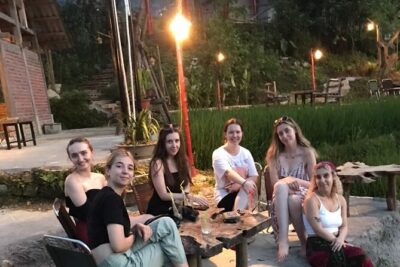
You’ll sleep in private accommodation in standard tourist lodges. That’s the normal ABC setup: simple, practical rooms along the route, with meal options at the lodge or nearby tea-house areas.
Because you’re buying food and drinks separately, your day-to-day cost control is in your hands. If you’re budget-minded, choose simple meals. If you’re tired, it’s worth prioritizing what will actually fuel your climb the next day.
The big win is that your guide can help you arrive at appropriate meal stops at the right times. A comfortable tea-house relationship is the kind of detail that sounds boring until you’re hungry and altitude is making your brain feel small.
Who this trek is best for
This is best if you want a classic Annapurna journey in a tight 7-day format and you’re comfortable with a trek that includes steep sections and altitude gains.
You’ll likely enjoy it most if:
- You like village trekking (Gurung communities and small settlements)
- You want big viewpoints without a technical mountaineering skill set
- You’re open to pacing changes and frequent breaks
- You want a supported plan so the logistics don’t steal your attention
It may be less ideal if you want a super-casual walk with zero strain. Even with a guide slowing you down, the climb is real—especially as you head toward Deurali and then up to ABC.
Should you book the 7-Day Annapurna Base Camp trek from Pokhara?
If you want the Annapurna Base Camp experience without the uncertainty of permits, transport, and daily coordination, I think this is a smart book. The guide support and private transportation reduce hassle, and the itinerary includes a muscle-friendly finish at Jhinu Danda hot springs.
I’d only hesitate if you know you struggle with altitude or you hate steep climbs. In that case, you still might make it work with a flexible guide and realistic pacing, but you should be ready to adjust expectations if your body asks for it.
If your goal is simply to stand at Annapurna Base Camp at 4,130 m and soak in the Himalayan-scale view, this 7-day plan is one of the more efficient ways to do it.
FAQ
What is the price for the 7 Day Annapurna Base Camp trek?
The price is listed as $215 per person.
What’s included in the tour price?
It includes hotel pickup and drop-off, private roundtrip transportation, ACAP permit and government permits, private accommodation in standard tourist lodges, government-certified guides, a first aid kit, and luggage storage in Pokhara. It may also include a duffel bag and trekking poles if needed.
What is not included?
Food and drinks are not included. A porter is available to hire for $15 per day.
Do I get pickup from my hotel in Pokhara?
Yes. Pickup is included from any hotel in lakeside, Pokhara.
How high do you go on the trek?
You reach Annapurna Base Camp at about 4,130 m (13,550 ft).
What language will the guide speak?
The live tour guide can speak English, Hindi, and Nepali.
What should I bring for the trek?
You should bring a passport or ID card.
Can I cancel for a full refund?
Yes. Free cancellation is available up to 24 hours in advance for a full refund.