REVIEW · LUANG PRABANG
From Luang Prabang: Thin Pha Trail & Tad Sae Falls Trek
Book on GetYourGuide →Operated by Tiger Trail Travel Laos · Bookable on GetYourGuide
That first boat hop sets the tone. You hike the Thin Pha Trail through jungle-covered limestone hills and farmland, then cool off at Tad Sae Waterfall on the Nam Khan River. I like how the day isn’t just a scenic walk; it includes real village stops like Ban Houay Fai and Ban Thin Pha, where you can ask questions and see how life actually works.
I also like the mix of effort and reward: about a 12 km trek (roughly 4–5 hours of walking) with lunch included, plus a relaxing river ride to break things up. The one thing to keep in mind is that Tad Sae can be underwhelming—or even skipped—in the low-water season, and the hike is steady with some elevation, so comfortable shoes matter.
In This Review
- Key things I’d focus on before you book
- Thin Pha Trail and Tad Sae Falls: what the day is really like
- Morning pickup and the short ride out of town
- Crossing the Nam Khan by boat to reach the trailhead
- Ban Houay Fai: where the hike starts to feel human
- Trek through rice paddies and forested limestone terrain
- Lunch at Ban Thin Pha: why this trail is named
- The middle of the trek: flora, fauna, and stop-and-listen moments
- Ending the hike at Ban Houay Yen and switching to boat mode
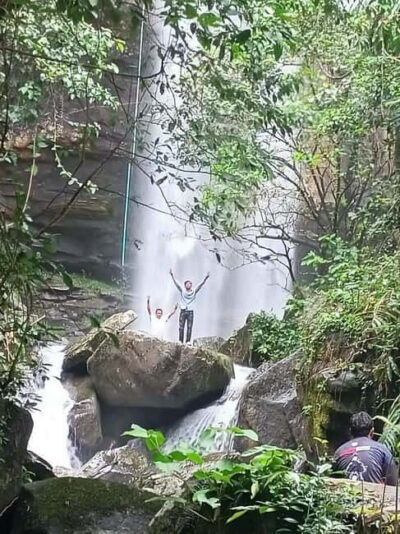
- Tad Sae Waterfall on the Nam Khan: swim time, if water allows
- Rain or shine: how weather changes the feel of the trail
- Group size: public small group vs private comfort
- Price and value: is $95 fair for this route?
- Who should book this Thin Pha Trail trek
- Quick tips so your day goes smoothly
- Should you book this Luang Prabang trek?
- FAQ
- How long is the Luang Prabang Thin Pha Trail & Tad Sae Falls trek?
- What distance do I hike?
- How long is the walking portion?
- Where do I meet, and when does the tour depart?
- Is hotel pickup included?
- Is lunch included?
- Do I get to visit Tad Sae Waterfall every season?
- Can I enter the waterfall?
- Is the tour suitable for everyone?
- What should I bring or avoid?
Key things I’d focus on before you book
- Thin Pha Trail village commute feel: you trek portions that villagers use day to day, not just a sightseeing route
- Ban Houay Fai + Ban Thin Pha stops: you get context on Khmu and Hmong life and traditions
- Nam Khan motorboat ride: short but scenic, and it breaks up the hike
- Tad Sae depends on water levels: swimming is season permitting, and in dry periods it can be low or dry
- A safety-minded guide style: guides like Sohn (reported) check paths and bridges closely to keep you on track
- No large bags allowed: travel light, because you’ll be moving and you can’t stash big luggage
Thin Pha Trail and Tad Sae Falls: what the day is really like
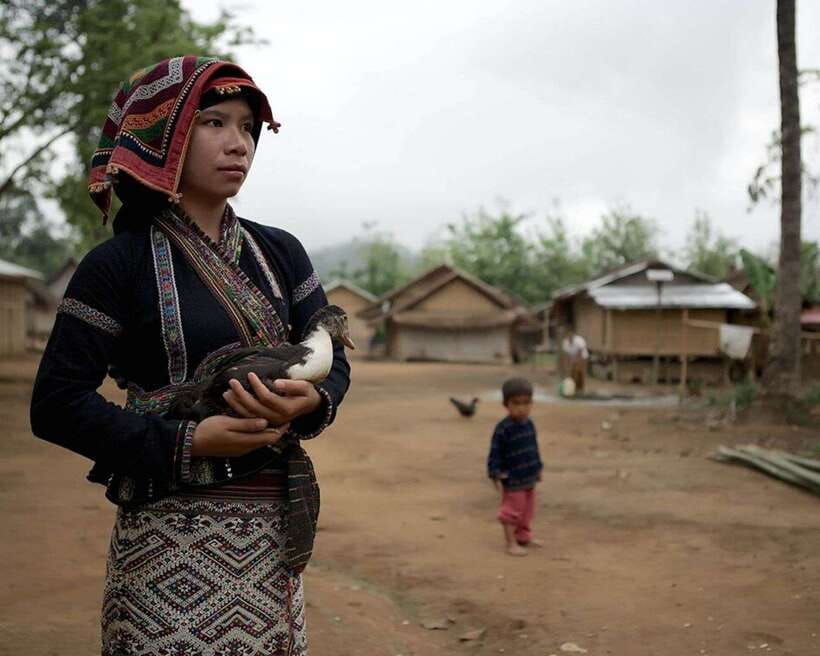
This is the kind of Luang Prabang tour that feels like a whole mini-adventure instead of a checklist. You start away from town, cross the Nam Khan River, and then walk into foothills where rice paddies, deciduous forest, and limestone terrain blend together. The trail has enough variety to keep your legs honest and your eyes busy, and the village stops give the walk meaning.
The best part for me is the balance: you’ll get movement outdoors, but you’re not doing a punishing grind. The trek covers about 12 km, with elevation around 300–900 meters, and it typically takes 4–5 hours of walking time within an ~8-hour total day.
You can also read our reviews of more tours and experiences in Luang Prabang.
Morning pickup and the short ride out of town
Most days, you’ll meet at the Tiger Trail Travel office area, with the schedule built around an early departure (meet around 8:20am for an 8:45am departure). If you choose hotel pickup, it’s free and you’ll wait in the lobby about 15 minutes before pickup.
Then it’s a short transfer out of Luang Prabang to an adventure camp area. This matters more than it sounds: leaving town early helps you start the hike while it’s cooler, and you also get more daylight for the boat and waterfall stop later. On the practical side, remember the day involves walking and moving around, so you shouldn’t plan on hauling a big bag.
Crossing the Nam Khan by boat to reach the trailhead
Before you start stepping, you cross by motorboat. It’s not a long cruise—more of a convenient launch point—but it gives you a change of scenery fast. The Nam Khan is part of the story here, because your end of day includes another boat segment along the river.
If you’re prone to seasickness, you should think twice. The tour notes it is not suitable for people prone to seasickness, and even short rides can still trigger symptoms if you’re sensitive. On the other hand, if you’re okay with boats, this little crossing adds variety without stealing time from the hike.
Ban Houay Fai: where the hike starts to feel human
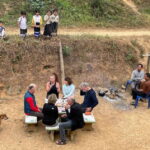
Your first village stop is Ban Houay Fai, a Khmu village. This is where the tour turns from exercise into understanding. You’re not dropped in and left alone; you go with a licensed English-speaking guide, and the guide helps you frame what you’re seeing—customs, daily life, and the kinds of practical questions you can ask while you’re there.
It’s also a good moment to get your bearings. You’ll be walking through a mix of farmland and forest, and having the context early makes the whole day feel connected. Plus, it sets expectations for the rest of the trek: this route isn’t just for views, it’s for meeting people along the way.
Trek through rice paddies and forested limestone terrain
After the first stop, you continue along ridges and rocky slopes, weaving through paddies and countryside. The tour describes the route as passing through deciduous forest and farmland, and that matches what you should expect on foot: shifting surfaces, some uneven sections, and changing textures under your feet.
You’ll likely notice the terrain climb and then ease off at points, with elevation ranges listed at roughly 300–900 meters. That doesn’t mean it’s all steep stair-stepping, but it does mean you should plan for a steady effort, especially in humid conditions. Bring the kind of shoes you can grip on dirt paths and rocky stretches. You’ll also want to keep an eye on footing during wet weather, since the tour runs rain or shine.
Lunch at Ban Thin Pha: why this trail is named
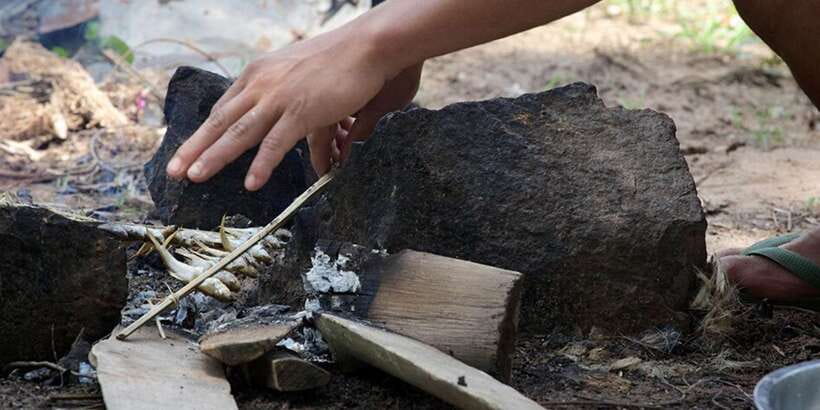
Lunch is at Ban Thin Pha, the Hmong village after which the trail gets its name—Thin Pha Trail. This is the point where the day feels most like a shared route. You’re not just visiting; you’re walking a segment that’s part of everyday movement for people nearby.
This is also where you get a change in perspective. If you’ve been thinking of trekking as a remote nature experience, the village lunch anchors it in community life. You’ll have lunch included, and drinking water is included too—nice on a day that mixes sunlight and shade.
One more practical note: don’t expect a perfectly flat walk. The itinerary references ridges, limestone grottos, and rocky slopes. That’s exactly the kind of terrain that makes lunch and breaks feel earned.
The middle of the trek: flora, fauna, and stop-and-listen moments
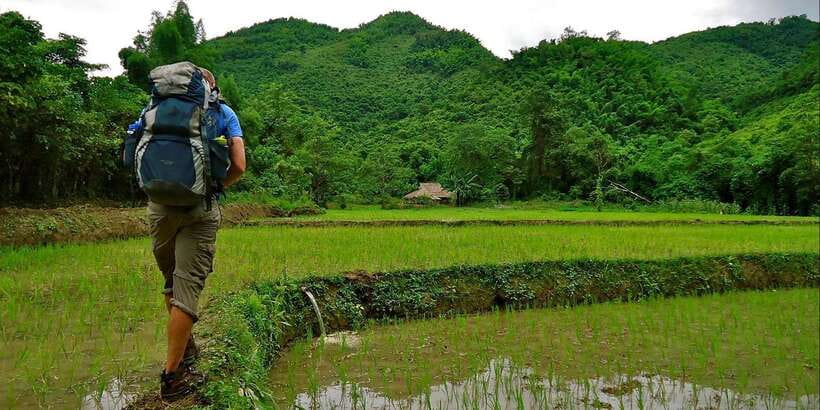
The heart of the route is a long stretch that combines views with observation time. The tour encourages you to stop, look, listen, and ask your guide about what’s around you. That’s the difference between taking photos and actually understanding the setting.
You might see domestic animals like buffalos and goats, and on some days people have reported spotting animals like elephants. You shouldn’t plan your entire day around animal sightings, but this is the sort of route where life shows up naturally. The trail also moves through mountains and valleys, so your “what’s around me” list can change from one hour to the next.
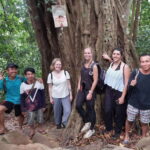
Guides matter here. In past days, guides like Sohn have been described as careful about safety—double-checking paths and even bamboo bridges—while also answering questions. That kind of on-the-ground attention helps you relax and enjoy the walk instead of constantly worrying about what’s next.
Ending the hike at Ban Houay Yen and switching to boat mode
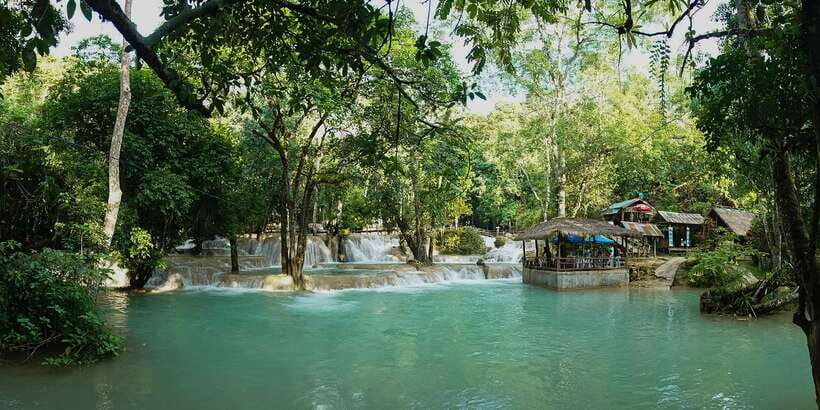
The trek wraps at the riverside village Ban Houay Yen. At that point, the mood shifts: instead of walking, you wait for a boat that takes you down a beautiful stretch of the Nam Khan.
This is a smart pacing choice. You’ve already covered the main trekking effort, so the boat ride becomes your decompression zone. You’ll also get to experience the river from a different angle than the earlier crossing, and you’ll be in position for the Tad Sae stop.
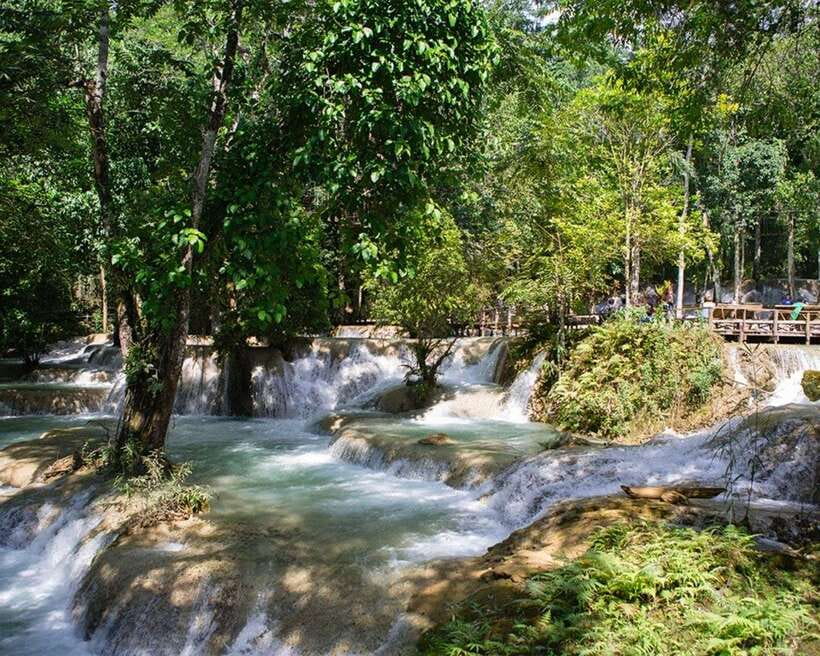
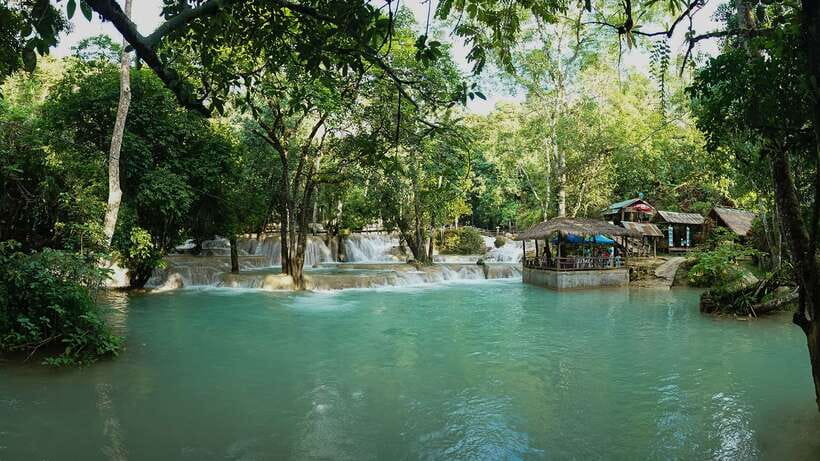
Tad Sae Waterfall on the Nam Khan: swim time, if water allows
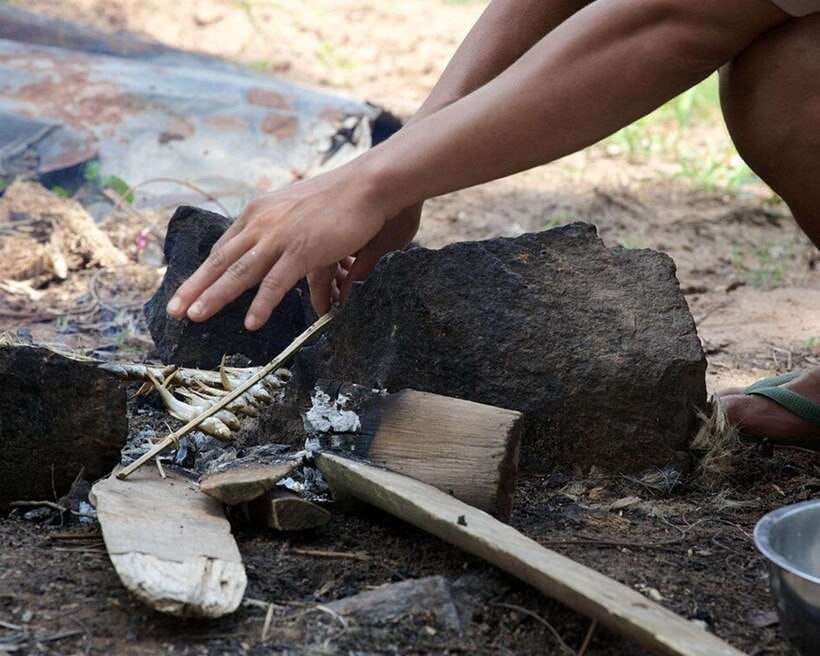
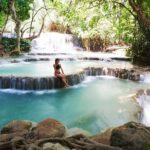
Tad Sae is the reward stop. In the wet season, it’s a chance to soak, swim, and explore the falls. But here’s the important reality check: during the low-water season from February to July, Tad Sae can be very low or even dry, and it may be omitted from the itinerary.
So what does that mean for your planning? If you’re going during peak wet season, you can treat the waterfall as a highlight you’ll likely enjoy for longer. If you’re traveling in the dry stretch, go in expecting more of a scenic break than a full-on swimming experience. The itinerary is the same overall, but the falls can be altered by nature.
Also bring the small item that people always forget: if you plan to enter the waterfall, the tour notes you should include a towel in your day bag. There’s no towel provided.
Rain or shine: how weather changes the feel of the trail
The tour happens rain or shine, so your day plan should assume wet conditions are possible. In practice, rain usually changes two things: footing and water flow.
Footing gets more slippery on rocky slopes and muddy farmland edges. That’s why comfortable grip is more important than fashion. Water flow affects Tad Sae too—wet season generally means better waterfall conditions, while low water months can reduce or remove the swimming part of the stop.
If you like straightforward, practical adventures, you’ll appreciate that the tour doesn’t try to sell you a fragile fantasy. It runs; you walk; you adapt.
Group size: public small group vs private comfort
You can choose between a public small group or a private group. That matters because a private option can help if you want more time for questions at villages or a slower pace on the trail.
The tour also states it’s not recommended for people with severe mobility impairments. Even if you feel okay walking short distances, this is still a 12 km trek over uneven terrain, and the route includes features like bamboo bridges mentioned in guide behavior. If you’re unsure, it’s worth choosing a different, gentler Luang Prabang activity.
Price and value: is $95 fair for this route?
At $95 per person for an ~8-hour day, you’re paying for more than a walk. You’re getting:
- a licensed English-speaking guide
- motorboat transport for both the start crossing and the river segment near the end
- lunch and drinking water
- entrance fees and local permissions
- a village fund fee that supports the communities you visit
That’s what makes the price feel reasonable. It’s not just “pay for nature.” You’re paying for organized route guidance, meals, transport, and village contributions. It’s also a kind of experience that doesn’t run well as a DIY plan unless you already know the area and local contacts.
The only cost/value mismatch to watch is Tad Sae conditions. If you travel in low water months and the falls are dry or omitted, the value shifts more toward the trekking and village parts. The hike itself remains the core, so make sure you’re booking for that—and not only for waterfall sightseeing.
Who should book this Thin Pha Trail trek
You’ll probably love this tour if you want a Luang Prabang experience that’s active and social, not just scenic. It’s especially good if you enjoy:
- walking through villages and asking questions in real places
- seeing how farmland and forest connect to daily life
- a mid-level trek (12 km total) without needing technical hiking gear
It also fits well if you’re already doing other Luang Prabang “big sight” stops and want a more off-to-the-side day. And the boat rides are a nice bonus if you like water scenery but don’t want a full-day cruise.
Skip it (or think hard) if:
- you’re prone to seasickness
- you can’t manage uneven trails and elevation
- you need guaranteed swimming at the falls (Tad Sae can be low/dry in dry season)
Quick tips so your day goes smoothly
- Wear comfortable, grippy shoes. The terrain is mixed and can get slippery.
- Travel light. Luggage or large bags aren’t allowed, so pack essentials.
- If you might enter the falls, pack a towel.
- Bring a day bag and keep water and small items easy to access.
- Plan for time outdoors, including stops and chats. The best moments are often the in-between ones.
Also, if your guide takes safety seriously (and they should), listen to their route notes. Past groups have highlighted guides checking paths and bridges closely—follow that lead and you’ll feel calmer as the trail gets steeper or rougher.
Should you book this Luang Prabang trek?
If you’re the type of traveler who likes your experiences grounded in real daily life, this is an easy yes. The Thin Pha Trail gives you that “I’m walking through the area, not just around it” feeling, and the village stops add context that makes the day more memorable than another waterfall visit.
Book it if Tad Sae is a bonus, not the whole reason. In wetter months, you’ll likely get the full swim-and-soak payoff. In low-water season, you’ll still get a meaningful hike, a river ride, and time with Khmu and Hmong communities—just without guaranteed waterfall drama.
FAQ
How long is the Luang Prabang Thin Pha Trail & Tad Sae Falls trek?
The total tour lasts about 8 hours.
What distance do I hike?
The trekking distance is about 12 kilometers (7.5 miles).
How long is the walking portion?
You’ll walk for about 4–5 hours, with the total schedule fitting into the full 8-hour day.
Where do I meet, and when does the tour depart?
You meet at the Tiger Trail Travel office. The tour meets around 8.20am for an 8.45 departure.
Is hotel pickup included?
Pickup is optional, and you can be picked up from your hotel in Luang Prabang for free. You should wait in the lobby area about 15 minutes before pickup.
Is lunch included?
Yes. Lunch is included, along with drinking water.
Do I get to visit Tad Sae Waterfall every season?
Tad Sae is described as available in the wet season for swimming (season permitting). In the low water season from February to July, the falls can be very low or dry and may be omitted.
Can I enter the waterfall?
You can enter and explore Tad Sae in wet season conditions. If you plan to enter the waterfall, bring a towel since one is not provided.
Is the tour suitable for everyone?
It is not recommended for people with severe mobility impairments. It is also not suitable for people prone to seasickness, since there’s a motorboat ride.
What should I bring or avoid?
Wear comfortable shoes. A towel is recommended if you plan to enter the waterfall. Luggage or large bags are not allowed.