REVIEW · GONDER
4 Days Trekking to Simien Mountain National Park
Book on Viator →Operated by Ethio Target Tours · Bookable on Viator
Simien cliffs turn every step into a postcard. This 4-day trek through Simien Mountains National Park gets you deep into Ethiopia’s high country, with UNESCO-level scenery and more than a dozen peaks over 4,000m, including Ras Dejen. I especially like that the trip is set up at the park headquarters in Debark, where permits are arranged and your scout is picked up before you start hiking.
My other favorite is the way the route mixes jaw-dropping escarpment viewpoints with real day-to-day local life, like walking through barley fields and stopping in Gich for a traditional coffee ceremony. One consideration: the terrain and altitude can feel serious, especially on the higher ridges and summit pushes, so you’ll want moderate fitness and a calm pace.
In This Review
- Key Highlights You’ll Actually Feel
- Why Simien Mountains Trekking Here Feels Like More Than a Hike
- Getting From Gondar to Debark: The Trip Starts Before You Hike
- Day 1: Easy-Going Escarpment Walk, Geladas, and Sankaber Overnight
- Day 2: Gich Abyss, the Jinbar Waterfall, Barley Fields, and Coffee in Gich Village
- Day 3: Giant Lobelia and Imet-Gogo Cliffs Above the Volcanic Valleys
- Day 4: Buwahit 4430m, Walia Ibex Chances, Ras Dejen Views, and the Drive Home
- Price and Logistics: Why $275 Can Be Good Value Here
- Who This Trek Fits Best (and Who Should Rethink It)
- Practical Tips That Make the Trek Feel Easier
- FAQ
- FAQ
- Where does the trek start?
- Is pickup offered?
- What time does the trek begin?
- How long is the trek?
- What does the trek cost?
- How big is the group?
- What kind of fitness level do I need?
- What are the age requirements?
- Are park admissions included?
- What if the weather is poor?
- Should You Book This 4-Day Simien Trek?
Key Highlights You’ll Actually Feel
- Park setup in Debark: permits handled at the headquarters and you hike with a local scout.
- Gelada baboons on Day 1: an easy intro walk that still delivers wildlife.
- Gich Abyss and the 500m Jinbar waterfall: cliff views where the drop feels unreal.
- Gich village coffee ceremony: a gentle cultural stop between big scenery days.
- Giant lobelia to Imet-Gogo cliffs: dramatic volcanic terrain and striking valley views.
- Buwahit 4430m with Ras Dejen in view: high-point payoff plus the drive back to Gondar.
Why Simien Mountains Trekking Here Feels Like More Than a Hike
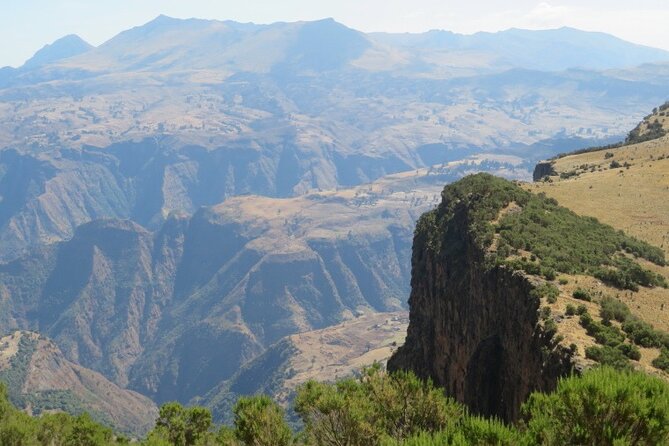
The Simien Mountains are one of those rare places where the geography seems designed for storytelling. You’re in one of Africa’s largest mountain ranges, studded with peaks above 4,000m, and the area was protected early—designated a national park in 1966 and later recognized as a UNESCO World Heritage site in 1978. That matters because you’re not just walking through scenery; you’re moving across a protected landscape with a lot of endemics, birds, and wildlife that depend on these specific highland habitats.
On this trek, you’ll see that “big Ethiopia” feeling in a practical way: escarpment after escarpment, sudden cliff edges, steep drop-offs, and viewpoints that keep changing as you walk east along the northern side. The trails are described as extensive and high quality, which is good news—because in mountains, the best sightseeing still depends on safe, walkable paths.
And yes, the wildlife is a major draw. You can expect gelada baboons (especially on the early section), and the higher days put you into terrain where Walia ibex is a real possibility. If you’re the kind of person who can’t stop looking at birds and tracks, this park makes that habit pay off.
The challenge comes from altitude and exposure more than from technical climbing. You’re doing ridge travel with vertical drops in places, and on Day 3 and Day 4 the route rises high enough that your body will notice.
You can also read our reviews of more tours and experiences in Gonder.
Getting From Gondar to Debark: The Trip Starts Before You Hike
You’ll start from Gondar Airport (or the tour can pick you up from your hotel). Then you ride a paved road for about 100 km to Debark, roughly two hours. This is a nice way to begin because it takes the pressure off early logistics—you’re not negotiating rough roads before your first steps.
At the Debark park headquarters, the crew handles the critical stuff: permits and getting your scout. This is one of those behind-the-scenes details that makes the trek feel smoother. Instead of worrying about paperwork while you’re excited and slightly jet-lagged, you get organized and ready for hiking.
After that, there’s another drive segment of about an hour before the first walk. The day is long enough to feel like a “real start,” but not so long that you’re dropped into a high-altitude grind without easing in.
Day 1: Easy-Going Escarpment Walk, Geladas, and Sankaber Overnight
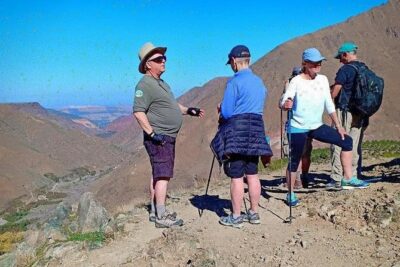
Day 1 is built to get you oriented. You’ll walk along the northern edge of the escarpment, which gives you constant sightlines over Ethiopia’s northern foothills and plains. Even the “intro” hike has that big-mountain energy because you’re viewing the land from above rather than trekking on flat ground.
The wildlife moment on this day is gelada baboons. Seeing them early is a morale boost. Geladas are one of the icons of the Ethiopian highlands, and having them on an easier first hiking day helps you settle into the rhythm of slow walking, frequent looking, and taking breaks without feeling rushed.
What I like about this setup is how it balances acclimation with payoff. You’re on your feet, you’re outside, and you’re absorbing altitude conditions without going straight for the highest climbs. At the end of the day, you’ll overnight at Sankaber, setting you up for a more dramatic escarpment-and-abyss day.
Day 2: Gich Abyss, the Jinbar Waterfall, Barley Fields, and Coffee in Gich Village
This is the kind of day that makes people remember Simien Mountains forever.
You’ll follow the northern escarpment eastward, then descend into the Kaba Valley before climbing again. The goal is to reach Gich Abyss and a cliff viewpoint where the drop looks far too steep to be real. One standout feature here is the Jinbar River waterfall, which plunges about 500 meters into the abyss. It’s the sort of spot where you’ll want more time than you think you need—just to stand still and let the scale sink in.
The hike on this day includes a lunch stop at the Jinbar River after about two hours of walking. Then you shift from cliffs to agriculture: you’ll walk through fields of barley and continue toward the idyllic Gich village.
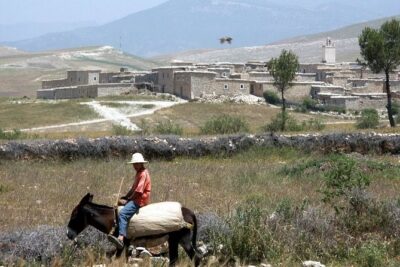
This is where the trek becomes more than scenery. In Gich, you can enjoy a traditional coffee ceremony in a hut and learn about local farm life. It’s not an hour-long performance designed for tourists; it’s a meaningful pause where you see how people live alongside the mountains you’re hiking through.
Afterward, the day finishes with a short walk to Gich camp for overnight. This is a sensible progression: you move from cliff drama to village warmth, and then you settle in.
Day 3: Giant Lobelia and Imet-Gogo Cliffs Above the Volcanic Valleys
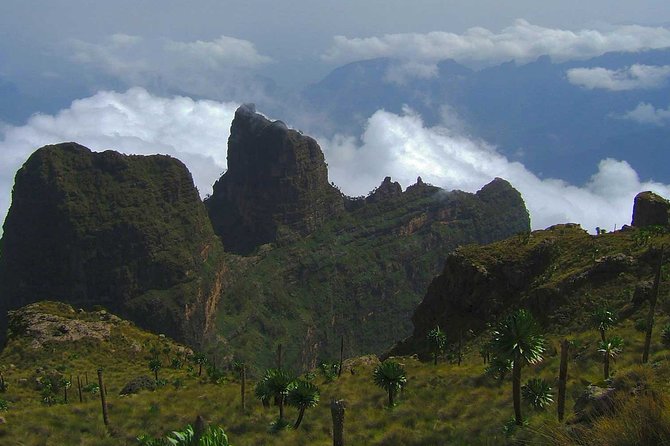
Day 3 is where the Simien terrain starts showing its personality. You’ll stroll through fields of giant lobelia, which is exactly the kind of highland plant life that makes this park feel biologically special. If you like natural history, this is your reminder that you’re not just walking through space—you’re walking through ecosystems shaped by altitude.
Then you’ll reach Imet-Gogo (3926 m), where the cliffs open up into superb mountain-valley views. In the distance you’ll see strange domes, and the route helps you see them from up close later in the trek. This is smart trail design: it creates a “look now, understand later” feeling as the scenery changes around you.
After taking in the views, you descend into the Jinbahir River Valley. The description of the landscape here is key: Imet-Gogo can look like volcanic chunks have been blown away, and the trail’s perspective makes that make sense.
One of the more intense moments comes from the escarpment edge travel. The trail follows the border of the drop, with sections that are described as completely vertical for several hundred meters. You don’t need technical skills to handle it, but you do need respect for exposure—keep your steps steady and don’t rush.
You’ll climb to a summit around 4070 m, which is the day’s big altitude checkpoint. Even if you don’t push hard, your body will feel the elevation. This is where a good guide rhythm matters: slow, consistent pacing beats dramatic speed every time.
Day 4: Buwahit 4430m, Walia Ibex Chances, Ras Dejen Views, and the Drive Home
The final day is the payoff. You’ll climb Buwahit (4430 m)—the second-highest peak in the Simien Mountains. This is the kind of ascent that feels like it belongs on a mountain bucket list, but the real win is what comes afterward: views of the surrounding highlands, including the chance to spot Ras Dejen (4543 m), Ethiopia’s highest peak.
This is also where the Walia ibex enters the conversation. The route is in the right habitat, and the day is timed for the kind of wildlife sighting that can happen when you’re quiet, still, and paying attention rather than constantly rushing to the next point.
After the high point, you’ll descend back down to Chenek camp. Then the logistics shift from hiking to comfort: a car is waiting to pick you up and drive you back to Gondar, about four hours.
This makes Day 4 a complete loop—effort, reward, then a realistic end to the day when you can finally sit down and let your legs recover.
Price and Logistics: Why $275 Can Be Good Value Here
At $275 per person for a 4-day trek, this is one of those prices that feels reasonable once you remember what’s happening operationally. You’re paying for more than walking: you’re paying for a team to manage the park entry process in Debark, coordinate your scout, and move the route forward day by day in a protected national park.
The group size is also capped at maximum 8 travelers, which is a genuine quality factor on a hike like this. In big crowds, trails become slow and you miss wildlife and quiet moments. A smaller group also makes it easier to adjust pace on altitude days.
I also appreciate that pickup is offered (airport or hotel) and you get a mobile ticket. Those are small details, but in Ethiopia they help reduce confusion and friction—especially if you’re arriving from another flight or have limited time in Gondar.
From my perspective, the biggest value is that the trip is run by Ethio Target Tours, with a team approach that seems built around reliable service. In particular, the owner Solomon and guide Jon come up as friendly, helpful, and flexible when changes are needed. That sort of calm competence matters more on a trek than it does on a city tour.
Who This Trek Fits Best (and Who Should Rethink It)
This is best for you if:
- you want a real mountain trek with daily viewpoints and real altitude movement
- you care about natural history and wildlife (geladas early, possible ibex later, plus giant lobelia)
- you enjoy steady, guided hiking rather than a rushed checklist tour
- you’re comfortable with basic trekking expectations and don’t need a luxury setup
You might rethink it if:
- you have no altitude tolerance and tend to struggle at elevation
- you expect an entirely easy walk every day (this route includes summit climbs)
- you’re traveling only when weather is guaranteed (the trek requires good weather, and it can be canceled due to poor conditions)
The stated age range is 12 to 70, and the physical requirement is moderate fitness. That’s a wide window, but “moderate” still means you should plan for uphill days and reduced energy from altitude.
Practical Tips That Make the Trek Feel Easier
Even with a good route, your comfort matters. Here are practical things I’d plan for, based on the altitude profile and ridge exposure:
- Pace yourself on Day 3 and Day 4. Summit climbs at higher elevations feel different. Slow wins.
- Keep an eye on footing near steep escarpment sections. You don’t need fear; you need attention.
- Bring layers. Mountain weather can change fast, especially at higher elevations.
- Plan for long sitting and early starts. You’ll be hiking and then driving back to Gondar on the last day.
Also, this is a small-group trek, so be ready to work as a team. If you need moments to catch your breath, ask for them. Guides who handle your pace well can turn a hard day into a manageable one.
FAQ
FAQ
Where does the trek start?
It starts from Gondar Airport in Gondar, Ethiopia.
Is pickup offered?
Yes. Pickup is offered from Gondar Airport or your hotel.
What time does the trek begin?
Start time is 8:00 am.
How long is the trek?
It runs for about 4 days.
What does the trek cost?
The price is $275.00 per person.
How big is the group?
The tour has a maximum of 8 travelers.
What kind of fitness level do I need?
Travelers should have moderate physical fitness.
What are the age requirements?
The stated age range is 12 to 70.
Are park admissions included?
Admission tickets are listed as free for the experience.
What if the weather is poor?
The experience requires good weather, and if it’s canceled due to poor weather, you’ll be offered a different date or a full refund.
Should You Book This 4-Day Simien Trek?
Yes—if you want a mountain experience that’s serious about scenery and wildlife without turning it into a technical climbing project. The combination of escapement viewpoints, the Gich Abyss and 500m Jinbar waterfall, and the chance for Walia ibex makes this more than a “pretty hike.”
Book it especially if you value organization. Handling permits in Debark, traveling with a scout, keeping the group small (up to 8), and having a team led by people like Solomon and Jon can make a high-altitude trek feel controlled instead of chaotic.
The one reason to hesitate is altitude and weather dependence. If you’re fit, patient, and willing to go at a steady pace, this is a memorable Simien Mountains trek with real value for the money.