REVIEW · GUBA KHACHMAZ REGION
3-Day Hiking & Trekking Tour Remote Villages in Guba Azerbaijan
Book on Viator →Operated by Azerbaijan Traveller · Bookable on Viator
Three days, and you feel far north. This remote-village trek in Azerbaijan’s Guba-Khachmaz region walks you along historic routes of the Greater Caucasus, mixing altitude hikes with real community life across scattered settlements. I especially love the homestay with host families and how the itinerary ties together village visits, mountain trails, and local food.
The trade-off: Day 1 includes a steep ascent of about 1,160m, so this isn’t a good fit if you fear heights or want an easy walk with constant flat ground.
In This Review
- Key Takeaways Before You Go
- Why This Guba Trek Feels More Like Mountain Life Than Sightseeing
- The 3-Day Route: Griz, Galaykhudat, Khinalig, and Khinalug
- Day 1 to Griz Village: the Eh Yolu Hike and the 1,160m Reality Check
- Day 2: Kokosh Canyon Views, Galaykhudat Breaks, and Khinalig Homestay
- Day 3: Khinalug Views, Lada Niva Drives, and Guba’s Mosques and Red Town
- Homestay and Local Food: What You Gain Beyond the Hike
- Price and Value: Is $600 Fair for 3 Days of Trekking?
- What to Pack: Boots, Layers, and the Sticks You’ll Be Happy You Brought
- How Hard Is It, Honestly? Fitness and Altitude Notes
- Guide Quality: Expect a Warm, Organized Trek (with Gani at the Center)
- Should You Book This Remote Villages Trek in Guba?
- FAQ
- What’s the duration of the tour?
- Where does the tour start and when?
- Is pickup offered?
- How many people are in the group?
- What fitness level do I need?
- How difficult is the Day 1 hike?
- How high does the trek go?
- Will I stay with a host family?
- What should I pack for the hike?
- What happens if the weather is bad or I cancel?
Key Takeaways Before You Go
- Historic “Eh Yolu” trail to Griz: Day 1 is demanding and climbs fast, so it sets the pace early.
- Kokosh Canyon crossing on Day 2: You get canyon views, but you’ll need steady, moderate hiking fitness.
- Two village overnights and a home-style dinner: You’re not just passing through; you’re staying with families.
- Gurgur waterfall stop + Khinalig views: Breaks are built in, and the best moments happen during the walking.
- Small group size (max 15): Easier coordination on narrow trails and in villages.
- Guba culture at the end: Mosques, Genocide Memorial Complex, and Jewish Red Town make a strong finish after the hikes.
Why This Guba Trek Feels More Like Mountain Life Than Sightseeing
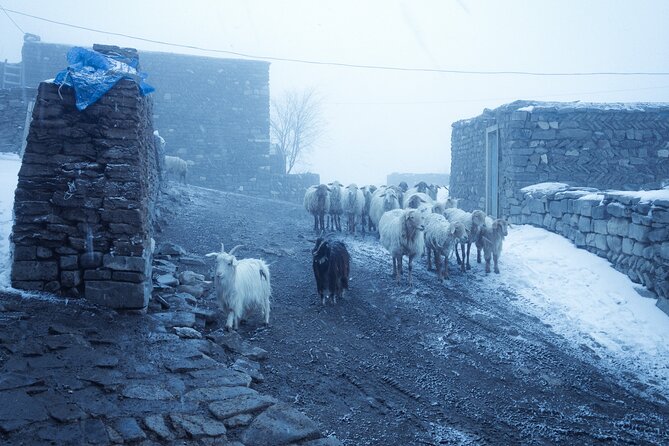
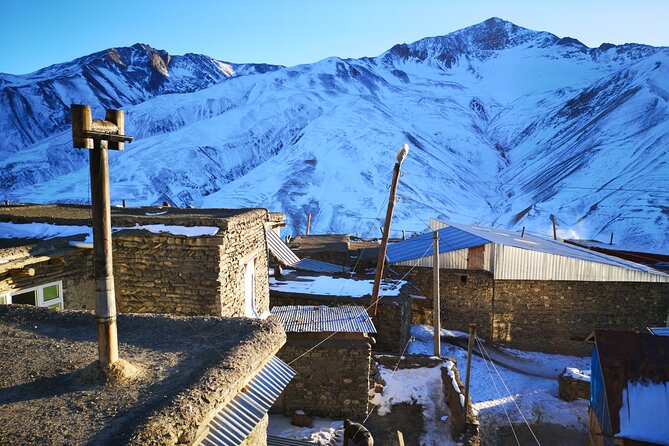
This 3-day hiking and trekking tour out of Guba is built around one idea: you don’t just look at the Greater Caucasus—you walk through it. The route links remote villages in the Guba-Khachmaz region using historic trails that older mountain people relied on, so the day-to-day rhythm feels purposeful.
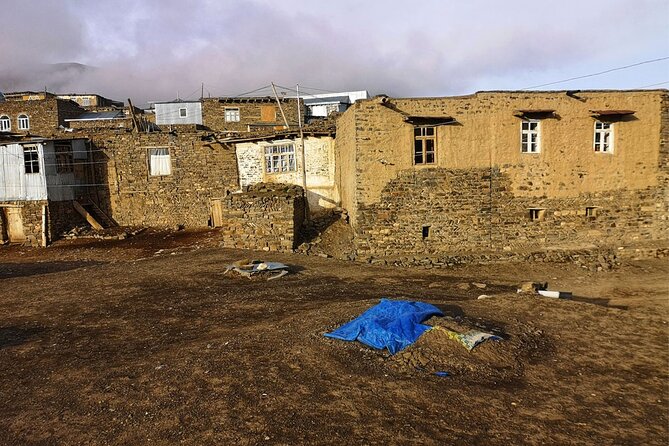
What makes it stand out is the mix of cultures you’ll see in the region. In Guba, you experience the coexistence of Shiites, Sunnis, and Jews, while the remote villages you hike to include ancient mountain communities such as the Khinaligis and Grizis. You’ll move between settlements rather than getting one “stage set” stop.
I also like that the tour doesn’t hide the effort. It tells you up front that you’ll climb and that you need the right hiking gear. If you enjoy planning your hike, pacing yourself, and earning views, this tour matches your mindset.
The 3-Day Route: Griz, Galaykhudat, Khinalig, and Khinalug
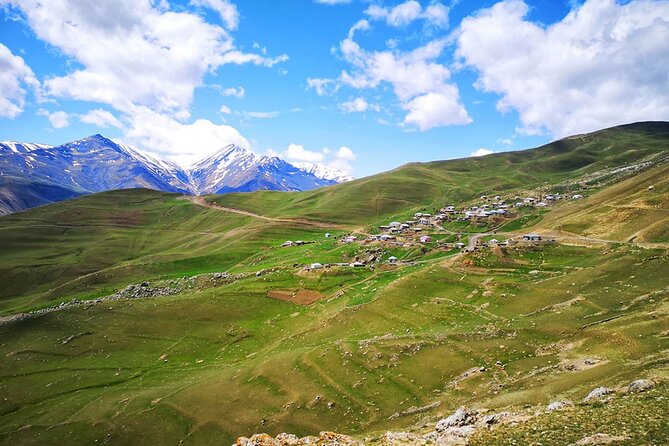
The itinerary is short, but it’s packed in the good way. You start with a drive from Baku to Guba, then you shift quickly into walking between villages on mountain trails.
Here’s the simple structure you should keep in your head:
- Day 1: Drive to the trail area, hike to Griz Village (the hardest climb day).
- Day 2: Hike through Qrız area, visit Gurgur waterfall and Kokosh Canyon viewpoints, then continue to Khinalig Village for a homestay dinner and overnight.
- Day 3: Sightsee in Khinalug, do a short ascent for views, then return to Guba and finish with key monuments and neighborhoods before driving back to Baku.
The pacing matters. This is not a “walk 20 minutes and call it a day” format. Even where the itinerary mentions easy trails, you still have full hiking days followed by village time and driving.
Day 1 to Griz Village: the Eh Yolu Hike and the 1,160m Reality Check
Day 1 starts with an early drive north from Baku into the Guba-Khachmaz region. Expect coffee/tea and snack breaks along the way to split up the long transfer and help you start the hike with fuel.
After lunch, you head toward Grizdahna and then begin the hike toward Griz Village via the historic Eh Yolu route. This is the day that deserves your full attention. The route is described as demanding and includes steep ascent with an elevation gain of about 1,160m.
Two practical notes make a big difference here:
- Trails are clearly visible, which helps navigation, but visibility doesn’t remove steepness.
- If you’re afraid of heights, this route is specifically noted as not suitable because of the steep climb.
The upside is that the difficulty day also usually gives the best payoff: you gain altitude quickly, and the route is designed for changing scenery and mountain nature as you go. If you’re the type of hiker who likes a challenge in the first day rather than saving it for later, this works in your favor.
Also, the schedule shows admissions as free for this day. Translation: fewer money-stops, less friction.
Day 2: Kokosh Canyon Views, Galaykhudat Breaks, and Khinalig Homestay
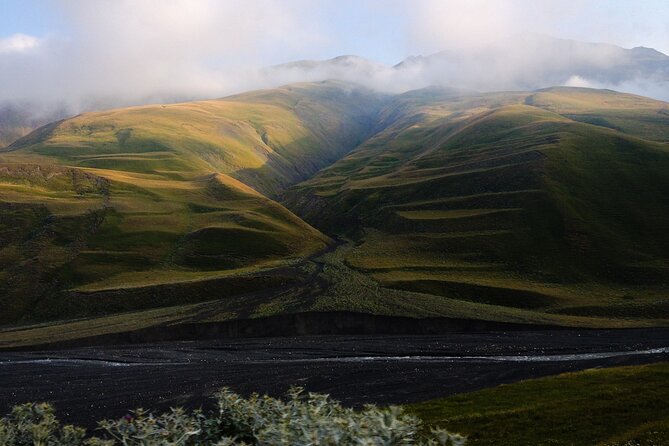
Day 2 begins with breakfast in Griz, then you hike toward Galaykhudat Village. Along the way, you stop at Gurgur waterfall and get views linked to Kokosh Canyon.
This section includes a clear fitness call-out: the Griz–Galaykhudat trail requires moderate fitness to cross Kokosh Canyon. The walking may not be the same steep ascent as Day 1, but it’s still physical—and your footing matters. If you’re comfortable hiking on uneven ground at altitude, you’ll likely handle this portion fine.
Lunch happens in Galaykhudat, then you continue onward toward Khinalig Village. The itinerary notes the next segment, Galaykhudat–Khinalig, as easy to complete, which is great because it gives you a momentum shift after the canyon portion.
Then comes the part that tends to make this tour feel unforgettable for people: you visit your host family for dinner in Khinalig and sleep in the village. This is where the tour stops being a hike-only product and becomes a human exchange. You get to see how mountain families live in a remote setting, not just how they talk about it.
The schedule also includes a free admission note for this day, so you’re spending your attention on the walking, meals, and family time.
Day 3: Khinalug Views, Lada Niva Drives, and Guba’s Mosques and Red Town
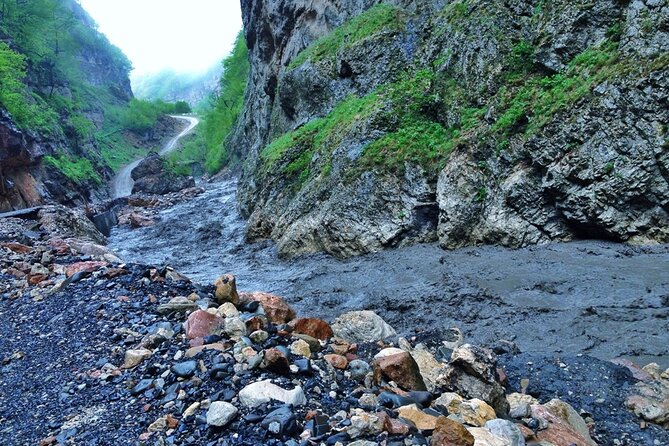
Day 3 starts with breakfast, then sightseeing in Khinalug Village. There’s also a short, low-commitment ascent—about half an hour—to nearby hills for distant views of the village. That’s a smart design choice. After two hiking days, you still get a viewpoint moment without paying for it with another long grind.
After Khinalug, you drive back toward Guba and switch vehicles to a Lada Niva for part of the route. You’ll also stop at several spots along the way for sightseeing.
When you reach Guba, the tour leans into cultural stops:
- Genocide Memorial Complex
- Mosques (with a clear dress expectation: women should wear a headscarf; men shouldn’t wear shorts)
- Jewish Red Town
This mix is practical. It helps you end the trek with context about the region beyond the villages you trekked to. It also spreads out your energy. You’ve already worked hard on the trail, so you can shift from hiking muscles to walking around monuments and neighborhoods.
The day is long in total—listed at around 12 hours—so plan for a final sit-down and some quiet recovery time after you get back to Baku.
Homestay and Local Food: What You Gain Beyond the Hike
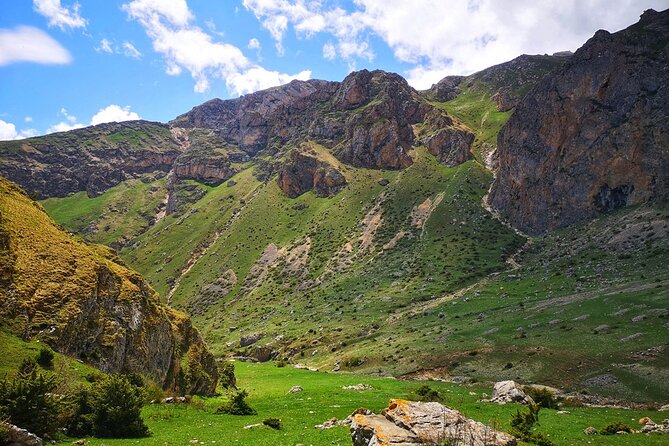
I love how this tour uses the homestay to answer the big question: what does remote village life actually look like day to day?
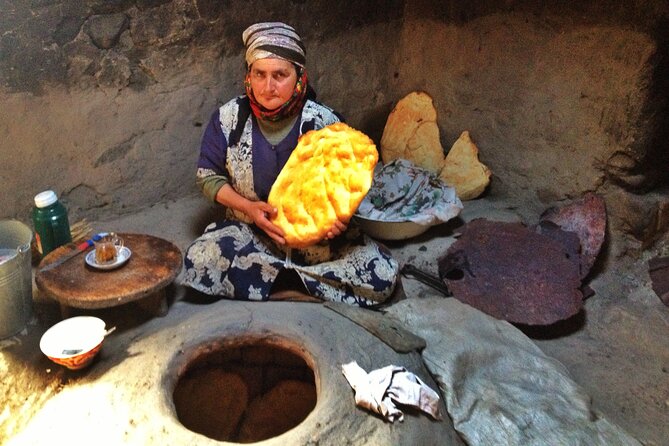
The itinerary is explicit that you’ll stay with host families in the villages you travel to. You’ll have breakfast built into the day (breakfast in Griz), lunch breaks along the route (including in Galaykhudat), and dinner at the host family in Khinalig. On top of that, the experience focuses on tasting local cuisine.
That matters because you’re not only collecting photos of mountains. You’re also learning what people cook, how evenings unfold, and what daily rhythms look like when families live far from big-city routines. In the reviews, people specifically call out how special it felt to stay with remote mountain families and see how they survive. That’s the heart of the value here.
One more detail I appreciate: the tour’s itinerary includes multiple religious and cultural communities across the wider Guba region, including Shiites, Sunnis, and Jews in Guba. Then you shift to ancient mountain peoples in remote villages. It’s a reminder that this isn’t one “single culture stop.” It’s a region of many identities living side by side, sometimes in separate places.
Price and Value: Is $600 Fair for 3 Days of Trekking?
At $600 per person, this trek isn’t a bargain-basement option. But for a 3-day, 2-night experience with a small group (max 15), village homestays, and multi-day hiking between remote settlements, it’s closer to “reasonable outdoors value” than “tourist package pricing.”
Here’s what supports the price:
- Guided trekking across multiple trails, including a demanding climb on Day 1.
- Homestay with host families, including dinner at Khinalig.
- A clear logistical base: drives from Baku to Guba and between trailheads, plus the return drive to Baku.
- Guide-provided items: the schedule says snacks, dry fruits, and water are provided, plus light toiletries like hand sanitiser and wet paper.
- Small group size. In remote areas, that’s not a luxury; it’s part of how the experience stays smooth.
Also worth noting: admissions are listed as free on the schedule for each day. That reduces the risk of surprise costs during your trip.
One consideration: the tour needs good weather. If weather forces a change, you should expect your plan to shift. The good news is that the tour is set up to offer another date or a full refund if it’s canceled due to poor conditions.
What to Pack: Boots, Layers, and the Sticks You’ll Be Happy You Brought
The tour’s packing list is practical, and it’s worth following closely because this is a real mountain trek.
Bring:
- Waterproof hiking/trekking boots
- Insulated jacket
- Backpack (20–30 L)
- Snacks and dry fruits are listed as provided by the guide, but you’ll still want a plan for your personal comfort.
- Light toiletries such as hand sanitiser and wet paper are provided by the guide.
Recommended:
- Gaiters
- Hiking/trekking sticks
I’d take the sticks seriously. On a steep Day 1 with elevation gain around 1,160m, using trekking poles isn’t just about speed—it’s about saving your knees and staying steady on uneven ground.
Also, dress matters for more than hiking. On Day 3, when you visit mosques, women should wear a headscarf, and men shouldn’t wear shorts. Pack a scarf you’re comfortable using quickly, and plan your bottoms accordingly.
How Hard Is It, Honestly? Fitness and Altitude Notes
This trek is for people with moderate physical fitness, and the itinerary doesn’t sugarcoat it.
You’ll hike routes with changing difficulty levels:
- Day 1 is described as demanding and not suitable for those afraid of heights, with steep ascent around 1,160m.
- Day 2 includes a moderate fitness requirement for crossing Kokosh Canyon.
- The Galaykhudat–Khinalig trail is listed as easy.
Altitude is also part of the challenge. The trek goes above sea level, with a maximum altitude noted up to 2,360m.
If you’re used to walking on uneven trails, you’ll probably feel the rhythm quickly. If you only do casual day hikes with smooth sidewalks, start training now: longer walks with hills, some stair work, and practice carrying a pack will help a lot.
Guide Quality: Expect a Warm, Organized Trek (with Gani at the Center)
This tour’s experience depends heavily on the guide, and the supplied feedback is consistent on one name: Gani.
People describe Gani as extremely knowledgeable and a pleasure to be around, which matters more than it sounds. When you’re hiking steep trails and moving through remote villages, you want a guide who can keep the schedule organized and help you feel confident about what comes next.
The itinerary also suggests strong structure: planned drives, meal times built into the day, and short sightseeing blocks so you’re not constantly in motion without breaks. That organization is exactly what turns a hard hike into a trip you remember positively rather than just surviving.
Should You Book This Remote Villages Trek in Guba?
Book it if you want:
- A real hiking experience on historic Greater Caucasus trails
- Time in remote villages with homestay and local meals
- A tour that mixes nature, altitude walking, and meaningful cultural stops in Guba
Skip it if:
- You fear heights or you want a low-effort walk. Day 1’s steep ascent is a deal-breaker for some people.
- You don’t have moderate hiking fitness, especially for Kokosh Canyon.
- You’re not ready for a long final day that runs close to 12 hours.
If you’re a steady hiker who enjoys small groups, authentic village time, and a guide-led plan that actually moves, this is one of the more memorable ways to explore Azerbaijan’s north beyond the main city stops.
FAQ
What’s the duration of the tour?
It’s a 3-day tour (about 3 days and 2 nights).
Where does the tour start and when?
The start is in Baku, Azerbaijan, with a start time of 9:00 am.
Is pickup offered?
Yes, pickup is offered.
How many people are in the group?
The maximum group size is 15 travelers.
What fitness level do I need?
You should have a moderate physical fitness level.
How difficult is the Day 1 hike?
Day 1 is described as demanding with a steep ascent of about 1,160m, and it is not suitable if you are afraid of heights.
How high does the trek go?
The trek travels above sea level up to about 2,360m altitude.
Will I stay with a host family?
Yes. You do a homestay with host families in the villages you travel to.
What should I pack for the hike?
Bring waterproof hiking/trekking boots, an insulated jacket, and a 20–30 L backpack. The tour also recommends gaiters and trekking sticks.
What happens if the weather is bad or I cancel?
The tour requires good weather. If it’s canceled due to poor weather, you’ll be offered a different date or a full refund. You can cancel for a full refund up to 24 hours before the experience start time.