REVIEW · SARDINIA
Tiscali mount guided hike
Book on Viator →Operated by Jebel Sardinia · Bookable on Viator
Cave-window views make this trek special. This day hike to Monte Tiscali turns a 6 km walk into something archaeological and wild at the same time, with a guide who helps you stay on track. I love the mix of Tiscali doline ruins and the feeling of walking through real Sardinia history—woods, limestone terrain, and a dramatic viewpoint.
The one thing to plan for is the entrance ticket: you pay it on the spot by cash (€6 per person), and lunch or water isn’t included.
In This Review
- Key highlights at a glance
- From Orosei at 8:30: a smooth start to a long, satisfying day
- Why Monte Tiscali hits different: a collapsed cave turned into ruins
- Getting on the trail: woods first, then karst terrain (and why the guidance matters)
- Midday rhythm: a narrow cleft and the valley reveal
- The doline moment: seeing the cave window inside and out
- Guide quality: when Sergio-style timing can save your day
- Price and value: what $78.44 buys you, plus the €6 cash add-on
- What to wear: smart casual is the baseline, shoes are the real decision
- How fit do you need to be for 6 km on Monte Tiscali?
- Who should book this Monte Tiscali hike (and who might not)
- Should you book the Tiscali guided hike from Orosei?
- FAQ
- Where does the tour start and what time?
- How long is the Monte Tiscali guided hike?
- How far do you hike?
- What’s included in the price?
- What is not included?
- Do I need to speak Italian?
- How big is the group?
- What kind of fitness level do I need?
- What should I wear?
- What if the weather is bad?
- What if I cancel?
Key highlights at a glance
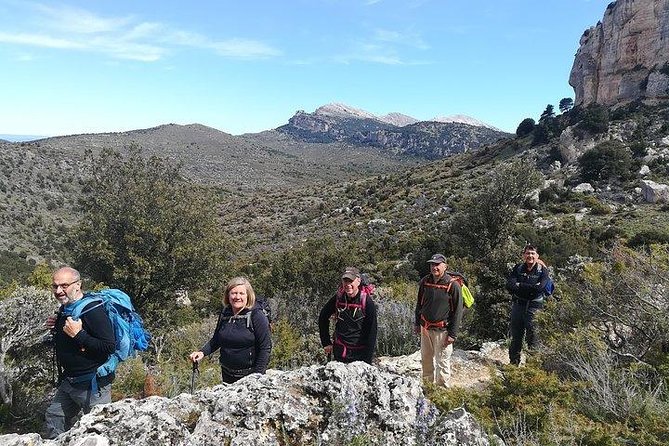
- Small group (max 15): easier pacing and more attention on the trail.
- Guided route up Monte Tiscali: you’re less likely to wander off on unfamiliar paths.
- About 4 miles (6 km): a solid half-day hike without feeling like a marathon.
- Doline ruins with a cave history: a collapsed roof 900,000 years ago shaped what you see.
- Charcoal-burner paths (19th century): you hike along tracks cut into the karst terrain.
- View stop from a narrow cleft: you get Lanaitto valley and the Mount Corrasi range in sight.
From Orosei at 8:30: a smooth start to a long, satisfying day
This excursion runs from 8:30 am and meets at Piazza del Popolo, 17, 08028 Orosei. You’re not left figuring out transportation or parking—there’s a round-trip shared transfer, and hotel pickup and drop-off may be available if you choose that option. That matters here because Monte Tiscali isn’t a quick walk from town. Getting to the trail with less hassle makes the day feel more “worth it,” especially if you’re traveling with limited time.
The day is guided end to end, with an overall time of about 8 hours. That includes travel, walking time, and the moments where the guide slows down to explain what you’re actually looking at (and not just where to step next).
You can also read our reviews of more tours and experiences in Sardinia.
Why Monte Tiscali hits different: a collapsed cave turned into ruins
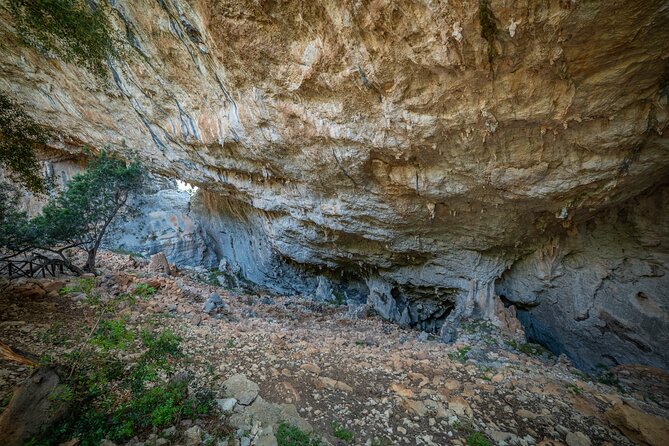
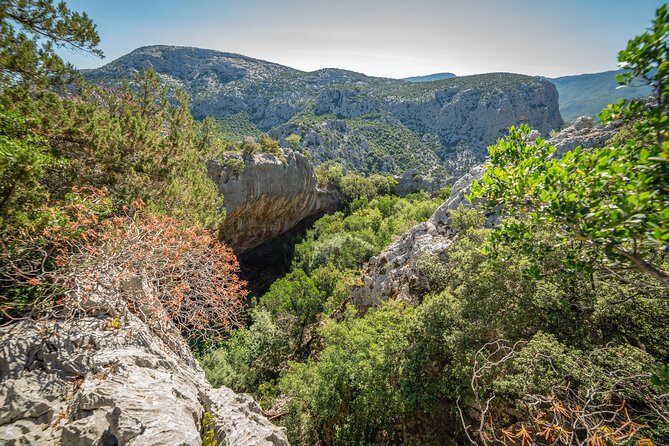
Monte Tiscali is important for two reasons that work together: the nuragic village remains inside a natural hollow, and the unusual ecology around it. The feature you’ll focus on is the doline, a collapsed cavern. The roof fell in long ago—about 900,000 years ago—which is why the site looks like a natural window into the mountain rather than a typical open-air ruin.
What you’re seeing is more than a viewpoint. The doline is the setting for an ancient settlement built by people who chose isolation and rough ground. You can look at the ruins and also wonder why here: shelter, defense, or simply the kind of rugged life Sardinia used to demand. A good guide helps you connect the dots between the stones, the terrain, and how people might have used this environment.
Then there’s the biological side. The Monte Tiscali area can host rare tree species, and—at least in the local story of the place—animals like agile moufflons and weasel may come around, including around night. Even if you don’t spot them, knowing the site is alive adds weight to the walk. It’s not just “look at the ruins,” it’s “walk through a place that still behaves like it has its own rules.”
Getting on the trail: woods first, then karst terrain (and why the guidance matters)
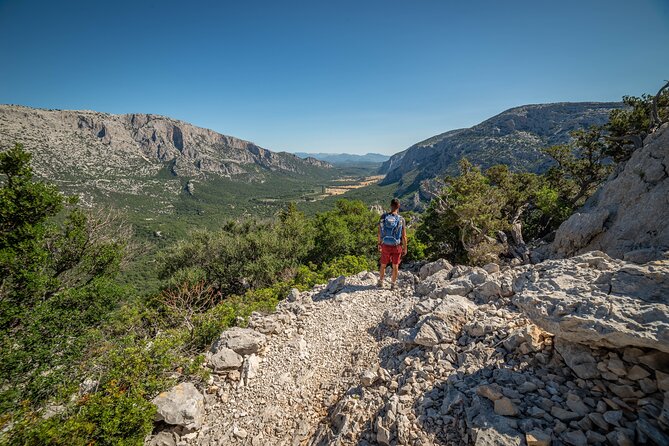
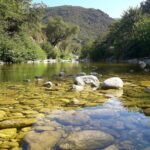
The trek starts in lush woods, which is a nice change from the harsher limestone feel you may associate with parts of Sardinia. Early on, you’re basically warming up on gentler ground while your guide sets the tone: where you’re going, what the terrain will do next, and how to move without rushing.
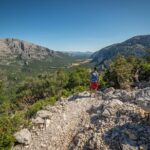
After that, the trail shifts into karst country. This is where a guided hike earns its keep. Karst terrain can be confusing—paths can split, and the “obvious” route isn’t always the correct one. The guide’s job is to keep you from spending half the hike trying to figure out your own geography. On unfamiliar trails, that’s the difference between a relaxing day outdoors and a stressful one.
You’ll also walk on paths that were excavated by charcoal burners in the 19th century. That detail is more than trivia. It tells you the route you’re walking wasn’t invented for tourists; it’s a working path carved into the landscape by people who needed to reach wood and produce charcoal. When you understand that, the hike feels grounded—like you’re following an older logic.
Midday rhythm: a narrow cleft and the valley reveal
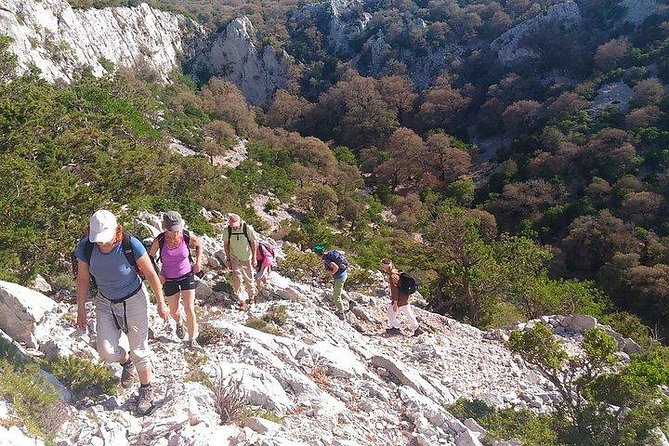
One of the most memorable parts is the approach to the viewpoint zone. After the middle stretches through the terrain, the hike passes through a narrow cleft. That squeeze matters: it changes your sense of space fast. You go from open walking to a more channel-like passage, then you pop back into wider views.
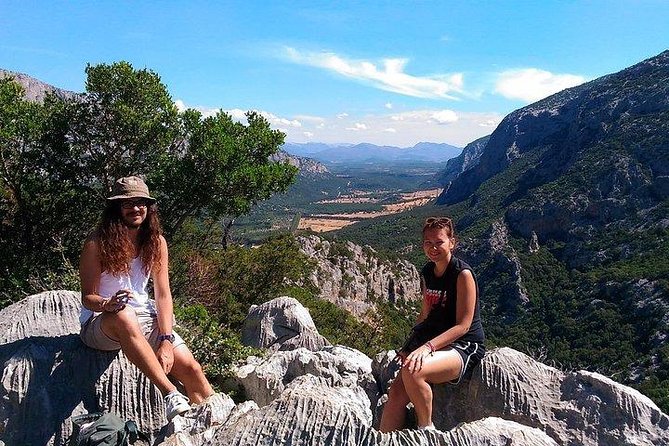
From there, you get a strong panorama of the Lanaitto valley and the Mount Corrasi range. This is the moment many people come for, and it’s easy to see why: it turns the doline from an isolated pocket into a bigger story, showing you how this mountain sits above the surrounding region.
If you like photos, treat this stop like a scene, not a snapshot. Pause for a look around—not just down. The goal is to understand how the mountain’s shape frames the site below.
The doline moment: seeing the cave window inside and out
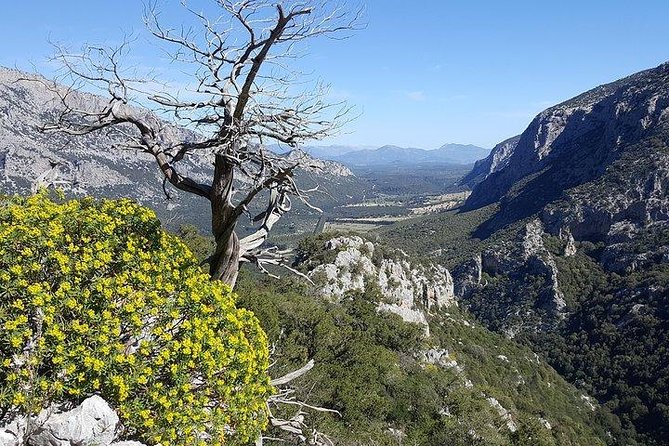
The ruins inside the doline are the anchor. You’ll see the site in a way that makes it feel both enclosed and exposed—part cave, part open quarry of time. The “window” effect is what makes this stop stick in your head. When you look at the opening from outside, it’s dramatic. When you step into the view from within the area, it changes your perspective completely.
This is also where a guide can really level up your experience. If the guide talks about what “collapsed roof” means in practical terms—how the site formed and why the village ended up here—you’re no longer just looking at a structure. You’re reading the landscape.
I also like that the walk and the explanation go together. You aren’t just dropped at the doline with a map. The route itself sets up the moment, so by the time you reach the ruins, you’ve already built context.

Guide quality: when Sergio-style timing can save your day
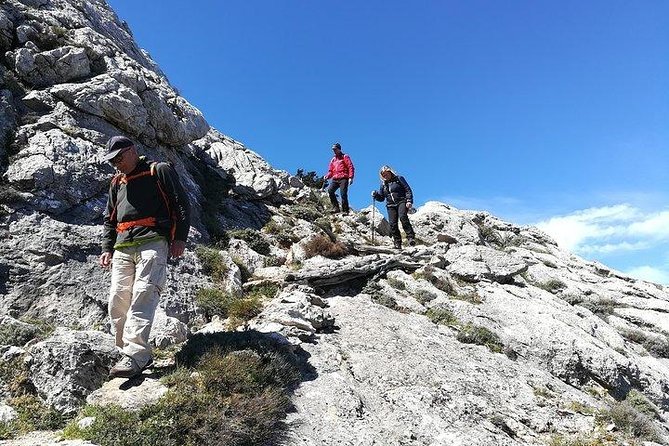
A great part of this experience is that the hike is run by guides who handle both navigation and storytelling. The communication quality stands out, too. One guide named Sergio is described as fluent and attentive with all levels of hikers, which is exactly what you want on a 6 km day when the ground can vary.
One practical detail I appreciate: timing the trek to miss rain. Sardinia weather can swing, and if the group hits the worst conditions at the wrong time, the day can feel longer and harder than it should. A guide who watches the timing and pacing makes the hike feel smoother, even if the terrain doesn’t cooperate.
For you, the takeaway is simple: if you’re booking this for the outdoors plus the history, pick a day when you can be flexible—and trust the guide to keep the hike moving at a safe pace.
Price and value: what $78.44 buys you, plus the €6 cash add-on
The listed price is $78.44 per person, for an 8-hour guided, small-group experience with round-trip shared transfer. That’s not just a walking tour. You’re paying for logistics (getting to and from Orosei), guide leadership, and a structured route to a specific archaeological site. When you compare it to DIY travel—plus the risk of losing time navigating—you can see why the price can feel fair.
Then there’s the entrance ticket, which you pay on the spot in cash at €6 per person. Plan that in your budget so you’re not scrambling at the end. Also remember: lunch and water aren’t included. That means you’ll want to bring your own or plan for your own food stop during the day (the tour doesn’t provide it).
Given the small-group size (up to 15), the fact it’s guided, and the transportation included, I’d call this a good value option if you want a confident route without spending your travel time working out directions.
What to wear: smart casual is the baseline, shoes are the real decision
The dress code is smart casual, which sounds a little fancy for a hike. Here’s the practical truth: smart casual works as long as your footwear can handle uneven terrain.
Because the route includes wooded sections, karst terrain, and a narrow cleft area, wear shoes with grip. If you’re traveling in warm weather, bring a light layer too—temperatures and comfort can shift with morning-to-midday sun and shade under trees.
Also, since the experience requires good weather and can be adjusted or canceled due to conditions, bring basic weather readiness: a compact rain layer can keep you happier if clouds roll in.
How fit do you need to be for 6 km on Monte Tiscali?
The tour asks for a moderate physical fitness level, and the hike is about 6 km (around 4 miles). That’s a distance you can handle if you walk regularly, but you should expect it to feel more “hike-like” than a flat city stroll due to terrain changes.
The best approach is pacing. Don’t sprint early. You’ll want energy for the viewpoint approach and the doline time, where you might slow down for walking steps and photos.
If you have knee issues or you dislike uneven footing, I’d think carefully. This isn’t described as extreme, but the terrain is varied enough that confidence on your feet helps.
Who should book this Monte Tiscali hike (and who might not)
This is a strong fit if you want:
- An organized guide-led hike so you spend less time worrying about route-finding.
- A mix of nature + archaeology, with the doline ruins as the centerpiece.
- A manageable distance (6 km) that still delivers big views.
You might reconsider if:
- You don’t handle uneven ground well.
- You prefer tours that include food and water, since lunch and water aren’t provided.
- You’re traveling with tight budget constraints if you have to pay the €6 cash entrance fee and want snacks.
If you’re the type who loves when a guide explains both the stones and the plants—trees, fauna, and the story behind where a community might have lived—this one will click.
Should you book the Tiscali guided hike from Orosei?
I’d book it if you want an efficient day that feels authentic: transport handled, a planned route to a real archaeological site, and a guide who keeps you safe on unfamiliar terrain. The doline setting—the collapsed cave feel plus ruins—makes it more memorable than a standard scenic walk. Add the valley viewpoint through the cleft, and you get the kind of “whole scene” hike that’s hard to reproduce on your own.
Before you go, do two things: bring cash for the €6 entrance ticket, and plan your food and water since they’re not included. If you can handle that, this is a solid choice for a half-distance day hike in Sardinia with real payoff.
FAQ
Where does the tour start and what time?
The meeting point is Piazza del Popolo, 17, 08028 Orosei NU, Italy, and the start time is 8:30 am. The activity ends back at the meeting point.
How long is the Monte Tiscali guided hike?
The duration is about 8 hours.
How far do you hike?
You hike about 4 miles (6 kilometers) to the Tiscali archaeological site.
What’s included in the price?
Included items are driver/guide, local guide, professional guide, round-trip shared transfer, and hotel pickup and drop-off if the option is selected.
What is not included?
You’ll need to pay the entrance ticket to Tiscali on the spot by cash (price listed as €6 per person). Lunch and water are not included.
Do I need to speak Italian?
The tour is offered in English. The experience may be run by a multi-lingual guide.
How big is the group?
The tour has a maximum of 15 travelers.
What kind of fitness level do I need?
It’s suited for people with moderate physical fitness.
What should I wear?
The dress code is smart casual.
What if the weather is bad?
The experience requires good weather. If it’s canceled due to poor weather, you’ll be offered a different date or a full refund.
What if I cancel?
There is free cancellation. You can cancel up to 24 hours in advance for a full refund. Cancellation timing is based on the experience’s local time.