REVIEW · SAO VICENTE
Santo Antão: Day Trip by Car or Trek
Book on Viator →Operated by Green Line Tours Cabo Verde · Bookable on Viator
Santo Antão on a day trip is all about momentum. You’ll start with the early ferry from São Vicente to the island of mountains, and then spend the day following a scenic route of crater views, farm valleys, and colorful towns with a local guide. I really liked how smoothly the route connects big, famous highlights with small, lived-in moments like that cool ridge air at Pico da Cruz.
Two things I loved most: first, having a guide who knows the island well and can explain daily life in plain language. In the reviews, names like Madu and Danny came up again and again, and the guide languages listed include English, French, Spanish, and Portuguese. Second, the day includes the rum stop, with a distillery visit where you can taste the local grogue. It adds personality beyond just photo stops.
The one drawback to think about is timing. This is a long day (about 7 to 11 hours) and you’ll be up early for ferry connections, plus there’s a lot of driving through higher roads, so it’s not ideal if you hate rushing or motion.
In This Review
- Key things to know before you go
- Santo Antão from São Vicente: why this day trip works
- Getting there: ferry crossing and the early start
- A quick tip for the ferry day
- Porto Novo arrival and the climb into mountain views
- Riding the ridge: separating valleys on Delgadinho
- Colorful Ribeira Grande and the lunch window
- Xôxô valley farms: where you see how people live
- Ponta do Sol and Boca de Pistola: the fishing rhythm
- Grogue distillery: a real included taste moment
- Drink note
- Paúl and the big Saint Anthony statue
- Coming back via Janela and the coastal road tunnels
- Price and value: is $104.68 per person a fair deal
- Who this tour suits best (and who should skip it)
- What you’ll be doing at each stop, in plain terms
- A note on guides and languages (this really matters)
- Should you book this Santo Antão day trip?
- FAQ
- Is pickup included for this Santo Antão day trip?
- Does the price include ferry tickets?
- How long is the full day excursion?
- What is included besides transportation and a guide?
- How many people are in each group?
- What languages are the guides available in?
- Can I cancel for a full refund?
Key things to know before you go
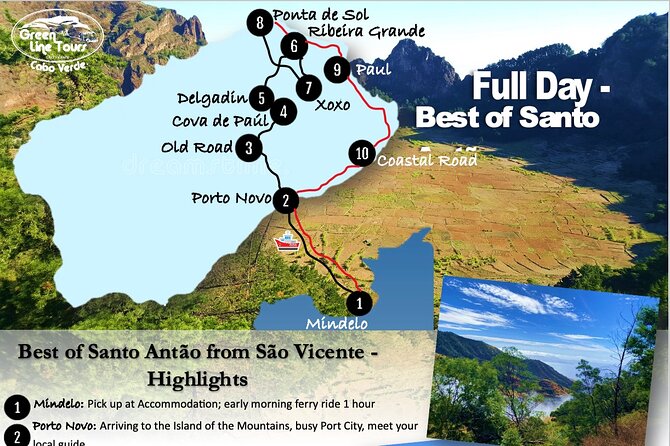
- Ferry option vs. no-ferry option: Your route changes depending on whether you start from São Vicente (roundtrip ferry) or start on Santo Antão.
- A tight highlights loop: You cover viewpoints like Pico da Cruz and Cova crater, plus viewpoints over two major valleys.
- Rum distillery is included: Grogue production is part of the schedule, and it’s not just a quick photo stop.
- Small group size: Maximum is 12 travelers, which helps the day stay organized.
- You can choose your pace: The experience offers a highlights-by-car day, or you can add a walk/hike/trek option with the guide.
Santo Antão from São Vicente: why this day trip works
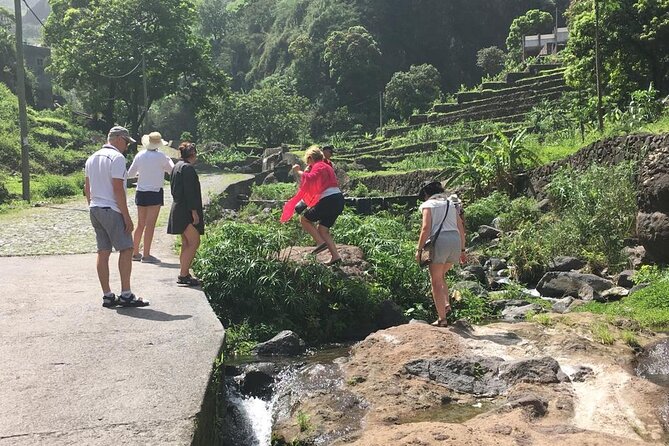
Cape Verde has a way of making you slow down once you’re there, but Santo Antão flips the script. From São Vicente, this trip is a fast route to a different side of the archipelago: steep hills, cloud mist, tiny settlements, and valleys where farms are basically your road view.
What makes this day trip especially good value is the way it stitches together three parts that otherwise take effort: getting to Santo Antão, getting around once you arrive, and hitting the main highlights without needing to plan timing on your own. You don’t just get scenery. You get context for why the island looks the way it does and how people make a living in that terrain.
Also, this is a good fit if your time on São Vicente is limited. Instead of spending days trying to coordinate transport and guides, you get a full circuit that’s built for a one-day visit.
Getting there: ferry crossing and the early start
Most people begin in Mindelo. If you choose the option that includes ferry tickets, you get an early pickup from your accommodation in Mindelo, then a transfer to the terminal for the ferry over to Santo Antão. The crossing takes up to about an hour, and you can stand on deck if weather allows.
There are two practical benefits to this setup. First, you’re not left guessing about ferry times. Second, you’re in a position to enjoy the sea trip if conditions are good. The schedule even mentions the chance of seeing dolphins, pilot whales, flying fish, and seabirds, plus the rock lighthouse at Ilhéu dos Pássaros (Bird’s Island).
If you’d rather start on Santo Antão instead, the tour can also begin from the island side (excluding ferry tickets). In that case, you still get guide coverage and transfers in Mindelo, but you’ll be doing the ferry part separately.
A quick tip for the ferry day
If you get even mildly seasick, plan ahead. Also bring something for breeze off the water and pack water for later, since lunch isn’t included.
Porto Novo arrival and the climb into mountain views
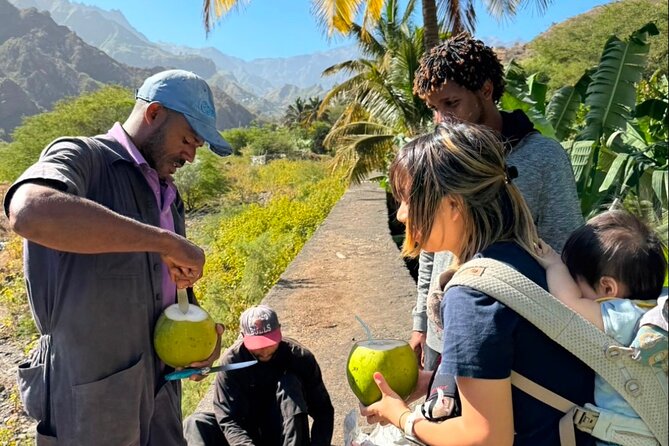
After landing on Santo Antão, the day funnels you into a classic mountain rhythm: ascend, pause for views, then keep moving.
You arrive in Porto Novo, and a guide meets you at the terminal. From there the route turns upward along the old cobblestone road, passing small communities with thatched-roof homes, donkeys carrying water, and farmers working the land. This is the part of the day that feels more real than postcard Santo Antão. It’s slower than the later driving, but it’s still efficient—short stops, with the guide pointing out what you’d otherwise miss.
Then you hit the first big viewpoint sequence:
- Pico da Cruz: You go above the clouds with cool air, pine forest, and eucalyptus. From up top, you get a view over Paúl, and the break in elevation makes the day feel like it changes gears.
- Cova crater: You stand on top and look down into the crater. The schedule notes that mist helps the farming community sustain itself. It’s one of those places where you can connect weather and agriculture fast.
If you’re hoping for a lot of long walking time, this isn’t designed as a multi-hour trek day by default. But you do have opportunities to step out, breathe, and take photos while still keeping the day moving to the valleys and coastal villages later.
Riding the ridge: separating valleys on Delgadinho
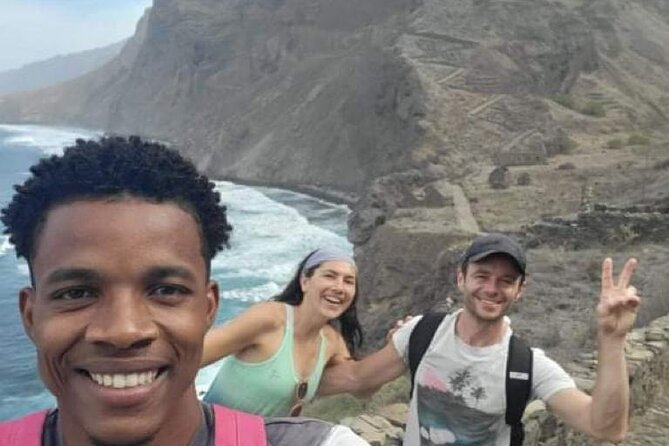
Next comes Delgadinho, described as a narrow mountaintop crossing that separates two major valleys: Ribeira Grande and Ribeira da Torre.
This is a smart stop because it gives you scale. From the ridge, you can see how the island’s geography shapes everything—where farms fit, where settlements grow, and where roads have to snake along. It’s also a photo-friendly moment, and the schedule explicitly calls it out for great pictures.
If you’re prone to getting car-sore, this is also a good time to refocus your body. Step out, move your legs, and then settle back in. The day is full of stops, but it’s still a day of driving.
Colorful Ribeira Grande and the lunch window
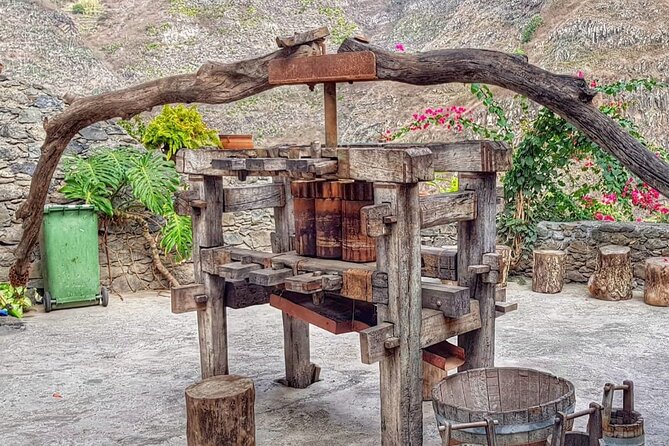
You arrive in Ribeira Grande (the route mentions the city area of Povação). This is one of the island’s more colorful hubs, with colonial and modern homes and street art.
The important practical detail here: there’s about one hour for lunch in town. Since lunch isn’t included, this is your chance to eat what you like. The schedule doesn’t specify restaurants, so you’ll follow what the guide recommends on the day.
I like this lunch structure because it avoids that common tour problem where everyone eats the same meal at the same time. Here you get a real break and more flexibility, even if you’re sticking to a tight schedule overall.
Xôxô valley farms: where you see how people live
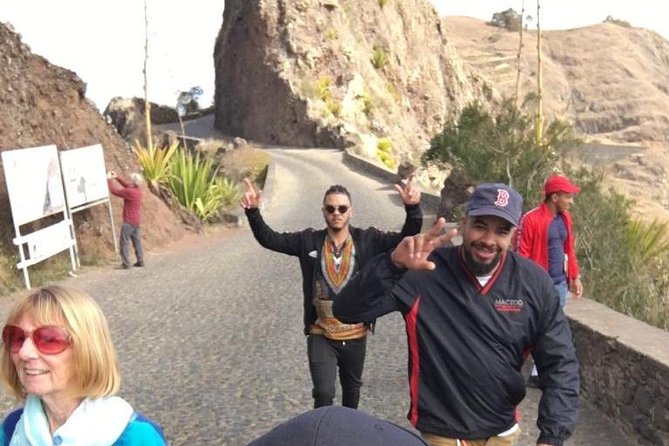
Then the route heads to Xôxô, in Ribeira de Torre, one of the greenest and most fertile valleys in Cape Verde. The day description is specific about what grows here: bananas, mangos, sugar cane, and breadfruit.
There’s also a community tank pool used by locals for swimming and fun. Even if you don’t plan to swim, it’s the kind of stop that gives you a feel for what daily life looks like when the valley isn’t just a view—it’s a working place.
This is one of those segments where the guide’s explanations matter. When someone can connect the plants, the water sources, and the terrain, the photos start making sense.
Ponta do Sol and Boca de Pistola: the fishing rhythm
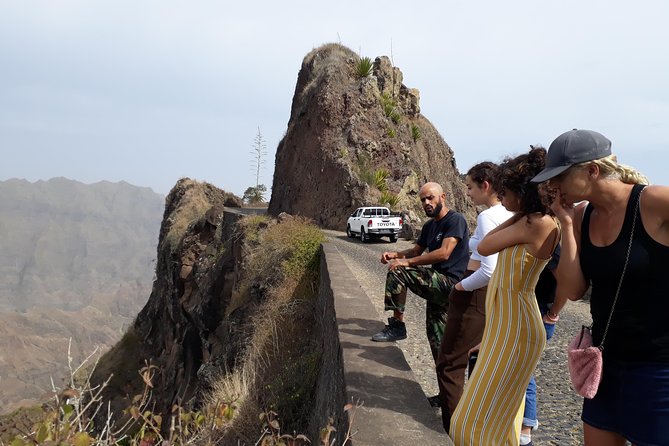
Next comes Ponta do Sol, a fishing village. The route points out Boca de Pistola (Mouth of the Pistol), described as an old port area tied to the arrival of fisherman and the catch of the day.
For me, this stop adds contrast. The morning was all elevation and mist. Now you’re at sea-level life. Even if the catch situation is different each day, the shape of the village and the port setting still make the stop feel meaningful.
This is also where you’ll likely get better at reading the island: where people gather, how fishing and farming coexist on a rugged coastline, and why certain roads keep turning back toward water.
Grogue distillery: a real included taste moment
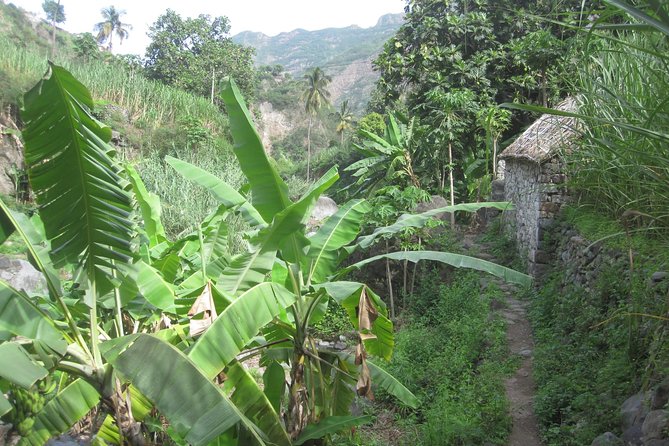
One of the clearest strengths of this tour is that it doesn’t treat rum like a souvenir. It includes a distillery visit with an entrance ticket.
The itinerary includes stops at Beth d’Kinha and again notes going to a rum distillery area in Paúl, where you can taste. The tour summary says entrance to Grogue (Rum) distillery is included.
What I like about this is that grogue is part of the island’s identity, and you get to see the process instead of just buying a bottle. And since the day already covers so much geography, this cultural stop gives your brain a break. It’s also a good example of how Santo Antão runs on small local producers.
Drink note
Alcoholic beverages aren’t included. The included part is the distillery entrance and access to tasting, so if you want more than the standard taste, plan to pay.
Paúl and the big Saint Anthony statue
Then you head toward the municipality of Paúl. The schedule mentions a grand Saint Anthony statue overlooking Villa das Pombas as protection.
It’s another viewpoint moment, but it also gives you a quick cultural anchor for the town. When you’re spending the day moving across different zones of the island, a recognizable landmark keeps your mental map straight.
After that, you also visit the area of Eito to reach the rum distillery stop again, with an opportunity to taste. In other words: Paúl isn’t only scenery; it’s tied to the local economy.
Coming back via Janela and the coastal road tunnels
Returning to Porto Novo, the route goes via Janela on a new coastal road. This is one of the easier-to-appreciate parts of the day because it shifts you from steep interior driving to coastal views and modern infrastructure.
The schedule specifically mentions fascinating mountain tunnels and the Farol de Fontes Pereira de Melo lighthouse. After hours of valleys and cloud-line stops, arriving by a coastline road feels like a reward.
Then you reach Gare Marítima porto de Porto Novo – ENAPOR in time for the afternoon ferry to São Vicente. Upon arrival, you get a transfer back to accommodation in Mindelo (for the option that includes the ferry).
Price and value: is $104.68 per person a fair deal
At $104.68 per person, this can feel like a lot until you break down what’s included. You’re paying for a full-day guide, private transportation, pickup and drop-off at the starting point, and in the common starting-from-Mindelo option you also get roundtrip ferry tickets.
You’re also getting entrance to the grogue distillery, plus a route that strings together multiple paid and time-sensitive moments: the ferry crossing timing, the main viewpoint sequence, and returning to catch the afternoon boat.
The tradeoff is that you’re buying efficiency. You’ll cover a lot, but it’s not a slow linger. If you want hours in one place, you’ll need to pair Santo Antão with extra nights. If you want the highlights in one day, this price structure tends to make sense.
My general rule: if your plan is just São Vicente plus one day on Santo Antão, this kind of tour is usually the easiest way to avoid wasted time.
Who this tour suits best (and who should skip it)
This experience is a great match if you:
- Have limited time on São Vicente and want a serious Santo Antão hit in one day
- Like guided explanation, not just driving past views
- Want an included cultural stop, especially the grogue distillery
- Are fine with early starts and a packed schedule
It’s less ideal if you:
- Get stressed by early timing and tight connections between ferry schedules
- Strongly prefer long walks and unhurried village time (this day is built for moving)
- Are sensitive to car travel on higher roads, since the route includes high altitude roads
Also, note the group size: maximum 12 travelers. That’s small enough for comfort but large enough that it’s not a totally private experience for everyone.
What you’ll be doing at each stop, in plain terms
Here’s what the day feels like as it moves:
- Mindelo ferry terminal: You set the rhythm. If conditions allow, you get a chance at marine sightings and the lighthouse at Bird’s Island.
- Porto Novo: The guide takes over right away so you don’t lose time figuring out the next turn.
- Old cobblestone climb: A slow peek at everyday island life—homes, animals, and farming.
- Pico da Cruz: Cool air and cloud-line views. This is the kind of place that makes the island feel layered.
- Cova crater: A dramatic pause at a natural form that also explains farming patterns.
- Delgadinho: Narrow ridge crossing and valley separation—easy to photograph.
- Ribeira Grande (Povação): Lunch time and street-level color.
- Xôxô valley: Fertile agriculture, plus a community tank pool scene.
- Ponta do Sol: Fishing village atmosphere at Boca de Pistola.
- Beth d’Kinha and Eito (rum stops): Distillery visit(s) and grogue tasting.
- Paúl and Saint Anthony statue area: A cultural landmark viewpoint before heading back.
- Janela coastal road + lighthouse: Coastal return with tunnels and Farol de Fontes Pereira de Melo.
- Return ferry: Back to São Vicente and transfer to Mindelo.
A note on guides and languages (this really matters)
The biggest repeated theme in the experience is the guide. Names like Madu and Danny appear in the feedback, and people mention that the guide made the day organized and that questions and photo stops were handled.
The tour also states guides can work in English, French, Spanish, and Portuguese. Even if your language isn’t the default, it’s worth picking the starting option and day that best fits your ability to follow the guide’s explanations at each stop.
This is one of those tours where the guide can turn a drive into a story.
Should you book this Santo Antão day trip?
If you’re doing Cape Verde for scenery and culture and you have only one day to spare on Santo Antão, I’d book it. You get the ferry experience, a tight loop through major viewpoints, time for lunch in town, and that included grogue distillery visit.
But if your ideal day is slow, quiet, and centered on one valley or one village, then Santo Antão deserves more than a day trip. For that style, you’d be happier adding a longer stay and going on a half-day plan.
If you do book, plan for an early start, wear comfortable shoes for short walks, and treat lunch as your flexible meal moment since it isn’t included. That mindset makes the whole day feel like a win, not a sprint.
FAQ
Is pickup included for this Santo Antão day trip?
Yes. The experience includes pickup and drop-off at the starting point. If you start in Mindelo with ferry tickets, you’ll also have hotel-to-harbor transfers included.
Does the price include ferry tickets?
It depends on your starting option. The option that begins in São Vicente includes roundtrip ferry tickets. The option that begins on Santo Antão excludes ferry tickets.
How long is the full day excursion?
The duration is about 7 to 11 hours.
What is included besides transportation and a guide?
Admission to the grogue (rum) distillery is included. Lunch and alcoholic beverages are not included.
How many people are in each group?
The maximum group size is 12 travelers.
What languages are the guides available in?
The local professional guides can work in English, French, Spanish, and Portuguese.
Can I cancel for a full refund?
Yes. Free cancellation is available up to 24 hours in advance for a full refund.