REVIEW · SARDINIA
Gorropu canyon guided hike
Book on Viator →Operated by Jebel Sardinia · Bookable on Viator
A canyon hike in Sardinia that feels wild.
Gorropu Canyon delivers towering cliffs over a riverbed plus a microclimate that lets strange plants thrive. I really liked the hands-on guidance through boulders and steep sections, and the way the flora and canyon story come to life with your guide. The trade-off is that it’s an active day with a moderate fitness level, and you’ll sometimes need to use your hands on rough terrain.
You also get a smooth day structure—morning departure, a real trek, and a return when you’re still feeling strong. The one thing to plan for is logistics: the canyon entrance is paid on the spot (cash) and lunch isn’t included, so you’ll want to bring (or budget) food and cash.
In This Review
- Key things to know before you go
- Gorropu Canyon at Gola di Gorropu: Why this hike is so memorable
- Orosei pickup and the drive toward Dorgali and Campo Base Gorropu
- Entering the hike: Flumineddu river wading and the first 2 hours of forest walking
- Inside the canyon: boulders, steep walls, and the route that gets rough
- Guides on this hike: what makes Sergio the reason people rave about it
- Timing, pace, and why early morning is smarter than it sounds
- What you do for lunch, and why bringing food helps
- Price and value: is $78.64 worth it for Gorropu?
- What to wear and bring for safe boulder walking
- Who this Gorropu canyon hike suits best (and who should think twice)
- Should you book Gorropu Canyon with Jebel Sardinia?
- FAQ
- Do I need to pay an entrance fee for the canyon?
- How long is the Gorropu canyon guided hike?
- Where do we get picked up?
- What time does the tour start?
- What fitness level do I need?
- What language is the tour offered in?
- What should I bring for lunch?
Key things to know before you go
- Small group (max 8) keeps the pace controlled and the safety talk practical
- Sergio-style guiding focuses on route choice so you negotiate boulders with confidence
- Gola di Gorropu start includes river wading and walking under canyon-influenced shade
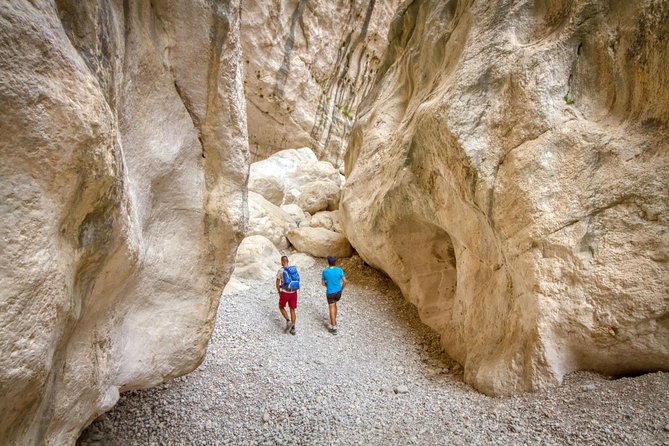
- Trail difficulty ramps up from easier ground to rougher, sometimes hand-on-rock moments
- Cool lunch stop with water pools makes a welcome break after the scramble
Gorropu Canyon at Gola di Gorropu: Why this hike is so memorable
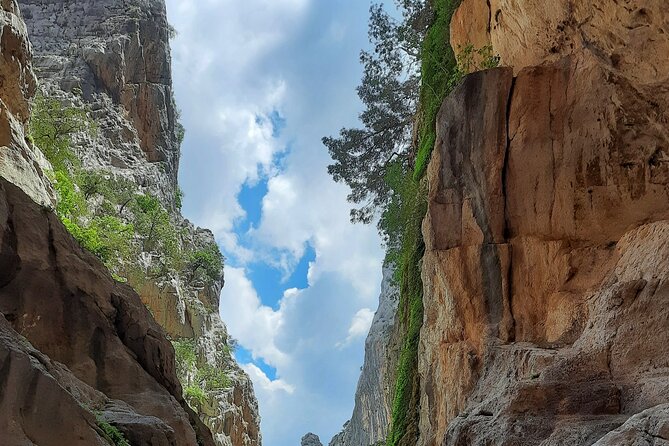
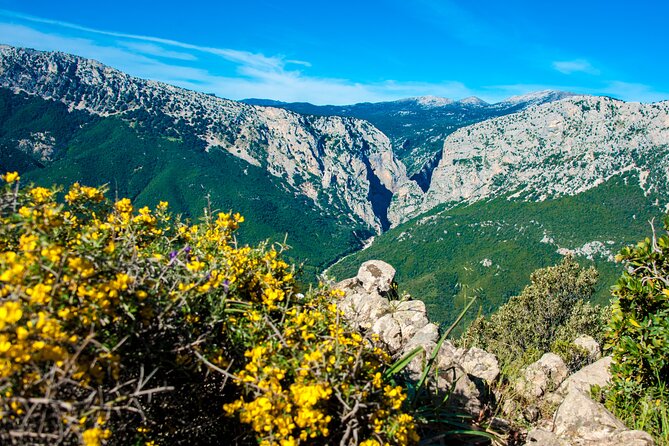
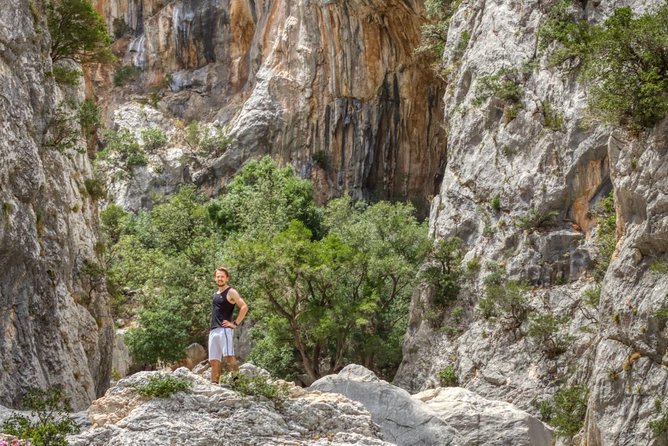
Gorropu Canyon is famous for scale. When you’re down in the valley, you see cliffs rising more than 400 meters above the river bed. That vertical drama matters because it changes how the hike feels: you’re not just “walking in a canyon,” you’re moving through a place with real depth, shadow, and sound.
One of the best parts is the setting. The approach runs through woodland with holm oaks and Mediterranean scrub before you enter the canyon system. Once you step in, the canyon’s unique conditions create a microclimate—cooler, different air, and a habitat that supports plants you won’t see just anywhere. Your guide may point out trees like phyllirea and an old yew tree, plus the endemic grass Acquilegia di Gorropu, which exists only in a very limited number of individuals inside the canyon.
If you like hikes where you learn something while you’re still moving, this one does it well. And if you just want the scenery, the canyon delivers that too—especially because the walk isn’t rushed and the route includes moments where you look up at the walls.
The best advice: treat this as a hike first, not a casual stroll.
You can also read our reviews of more tours and experiences in Sardinia.
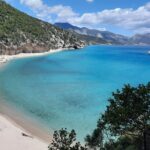
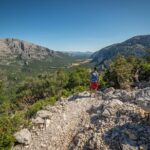
Orosei pickup and the drive toward Dorgali and Campo Base Gorropu
Your day starts in Orosei. The tour is built around pickup and drop-off from central Orosei, and the schedule has a start time of 8:30 am. That early departure is not just for convenience—it helps you get into the canyon before heat and crowds stack up later in the morning.
After pickup, the group typically drives out toward the area around Dorgali before reaching the Campo Base Gorropu area, which is where the hiking portion begins. One review-style detail that’s worth taking seriously: there’s a 700-meter descent on a dirt road by 4-wheel drive before you even hit the trail. So yes, this tour combines off-road travel with hiking, and the dirt-road ride helps position you for the real canyon walk.
The payoff is a less stressful start. Instead of spending hours figuring out how to reach trailheads on your own, you show up, get organized, and get moving.
Entering the hike: Flumineddu river wading and the first 2 hours of forest walking
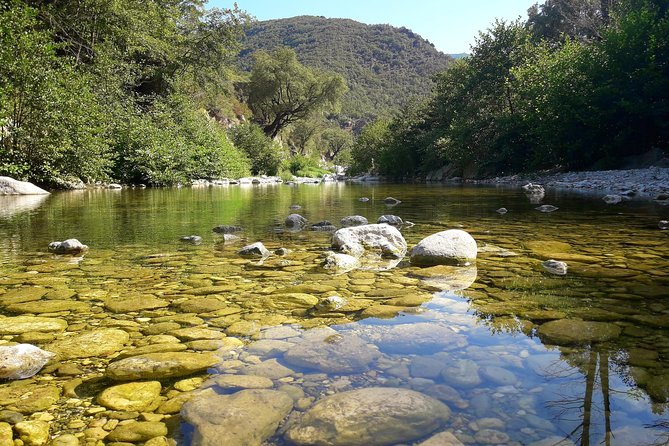
Right after you start, you’ll wade into the area around the Flumineddu river. It’s not described as a long swim—more like getting your feet into the canyon’s entry rhythm. Still, treat it as a signal: this is not the kind of hike where you can wear flimsy footwear and expect everything to be dry and easy.
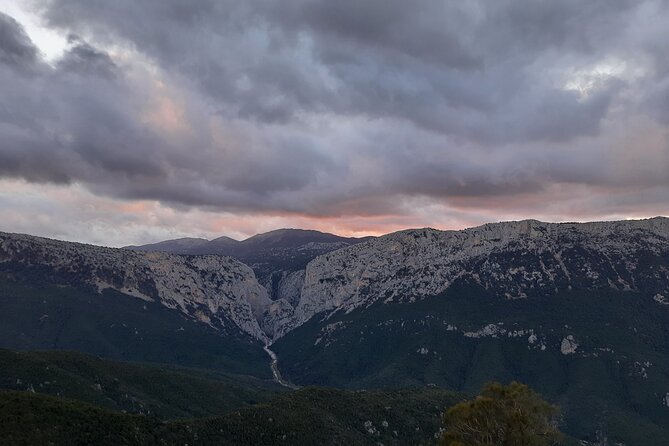
From there, the walk is through woodland formed by holm oaks and Mediterranean scrub. Expect a gradual build-in rather than a sudden jump into boulder chaos. Along the cliffs of Mount Oddeu, you’re walking with dramatic rock scenery nearby while the path eventually brings you to the entrance of Gorroppu Canyon—often described as less than 2 hours to reach the canyon entry point.
This stretch is also when your guide’s tone matters. A good guide doesn’t just show you where to step; they teach you how to move safely when the ground changes. Keep an eye out for guidance about balance, hand placement, and where the safer foot placements are when you transition from more trail-like walking to rockier sections.
Inside the canyon: boulders, steep walls, and the route that gets rough
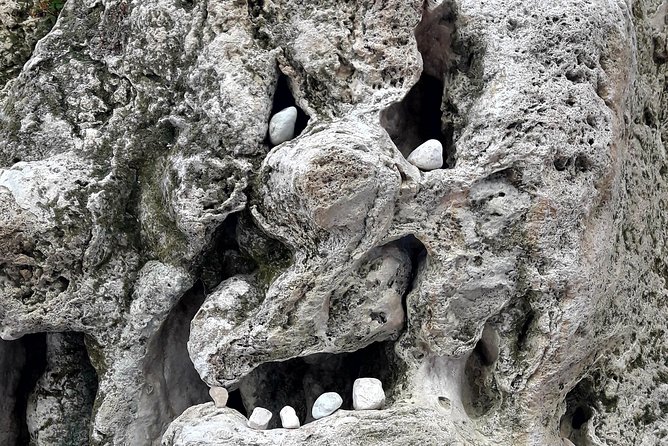
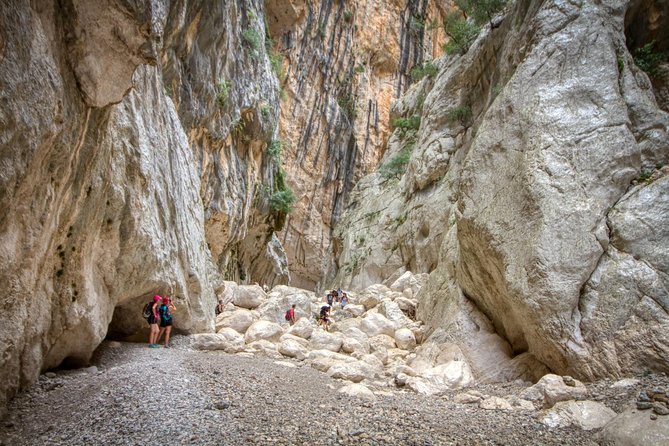
This is the part you came for: the canyon itself. Gorropu is one of the deepest canyons in Europe, and that depth shows up as sheer walls rising over the riverbed below. As you walk, you’ll experience a changing mix of ground—some sections are easier, then the path gets rougher, then it can become downright scrambly.
From the practical standpoint, the hike is described as having three difficulty sections, often labeled as:
- Green (easiest)
- Yellow (harder)
- Red (for the daring)
Even within those categories, the real factor is footing. You may pass over or around large boulders, and at the toughest points you might have to use your hands to get past rocks safely. The good news is you’re not thrown in alone. Your guide helps you know the safest way to negotiate the terrain, instead of leaving you to guess.
If the trail becomes impossible to continue forward, the plan is to turn back along your steps rather than trying to force a route. That “no hero moments” approach is what makes the experience feel safe without killing the adventure.
Also, expect the canyon to feel different from the outside. The microclimate affects how the hike feels in your body—cooler and less exposed than you might expect in Sardinia. It’s one more reason the canyon itself is so memorable: you’re moving through a naturally conditioned environment.
Guides on this hike: what makes Sergio the reason people rave about it
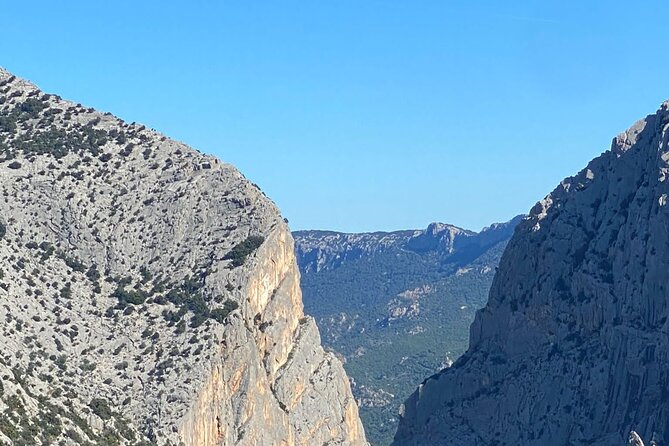
The most consistent thread in experiences like this is not the canyon. It’s the person guiding you through it. On this hike, the driver/guide and local guide work together, and the professional guiding matters because boulder walking needs real-time decisions.
One guide you’ll likely meet is Sergio. What stands out about his approach is that he’s organized and attentive to different abilities. One account notes that the hike stayed flexible so everyone could manage the pace and difficulty. Another mentions that Sergio breaks the route into sections and makes sure you’re moving safely—often by showing you where to place your feet and how to handle rock transitions.
Then there’s the commentary. You’re not stuck hearing a lecture while standing still. The guide talks as you walk: flora you’re seeing, history tied to the canyon, and what makes this microclimate unusual. People come away feeling like they didn’t just “collect views.” They understood what those views are, and why those plants and settings exist.
If you’re the type who wants a guide to be more than a badge—someone who can read your footing and your confidence—this style works.
Timing, pace, and why early morning is smarter than it sounds
The hike runs about 8 hours overall, with an 8:30 am start. That’s a long enough day that pacing becomes important. The canyon portion is a key chunk, and the approach and return make the full experience feel like a complete outing rather than a quick walk-through.
A real-world tip from how the day unfolds: doing it early helps with both heat and crowds. As morning stretches toward late morning, people arrive in greater numbers and the canyon feels busier. The earlier start means you arrive when the experience still has more room to breathe—especially if you’re sensitive to busy trails.
Pace-wise, plan to move steadily. This isn’t a “stop every five minutes for photos” kind of hike. Your guide will still give you moments for the scenery, but the route needs you present and moving.
What you do for lunch, and why bringing food helps
Lunch isn’t included. That’s a plain fact, but it changes your experience planning. The canyon also isn’t set up like a restaurant outing. One description mentions that there isn’t food available inside the canyon.
So you’ll want a plan: bring something you can eat comfortably during a break. Many people like eating where the water helps cool down—there’s described a lunch spot with fresh water pools where you can dip your feet in the cool water. That small detail matters on an active day. After boulders and steeper rough ground, a quick foot dip turns the break into a reset.
Keep it simple. Bring what you’ll actually eat quickly, not a complicated picnic you’ll dread carrying and preparing.
Price and value: is $78.64 worth it for Gorropu?
At $78.64 per person, this tour isn’t a bargain bus trip. It’s closer to paying for a day of guided canyon access, including transportation from Orosei and expert help when the terrain turns technical.
Here’s what you’re paying for in practical terms:
- A driver/guide plus local professional guidance
- Round-trip shared transfer from central Orosei
- The day is structured around reaching a specific canyon route safely
The canyon entrance itself costs extra—about €6 per person paid in cash on the spot. That’s not hidden, but it’s something you should mentally budget so you don’t get stuck mid-day.
When is it good value?
- If you want the canyon without figuring out access and route conditions yourself
- If you’d rather pay for safety and route guidance than try to improvise
- If you’re glad to have pickup and drop-off taken care of
When might it feel less worth it?
- If you’re only looking for a casual, flat walk
- If you hate paying an extra on-the-spot entrance fee and can’t do cash
Overall, for a guided canyon hike with pickup and a small group size, it tends to feel fair.
What to wear and bring for safe boulder walking
This hike includes rocky ground, boulders, and moments where you may use your hands. That means your footwear matters more than most visitors expect.
From experience-style advice: don’t wear flip-flops or sandals. Use trainers with grip (or real hiking shoes if you have them). If you’re wearing smooth soles, you’ll feel it when you scramble across uneven rock.
Also consider:
- Water and a snack for the day (especially since lunch isn’t included)
- Something light for changing conditions, since the canyon microclimate can feel cooler than outside
- A plan for keeping your hands free when the trail gets rough (avoid anything bulky that catches on rocks)
If you’re unsure about your fitness, don’t overthink it. Just be honest: you need a moderate fitness level, and the terrain isn’t gentle.
Who this Gorropu canyon hike suits best (and who should think twice)
This is a great fit for you if:
- You enjoy active days and don’t mind scrambling
- You want a guide who helps with safety and explains what you’re seeing
- You like learning about plants and local canyon details while moving
This might be a poor fit if:
- You want a fully flat, low-impact walk
- You’re uncomfortable using hands on uneven ground
- You’re traveling with limited mobility and can’t manage rough terrain
Families can do it too. One family experience included children as young as 6 and 9, and the guide kept things fun with good pacing and wildlife/plant talk. Still, children need an adult with them, and the hike requires staying engaged while the route changes.
Should you book Gorropu Canyon with Jebel Sardinia?
I’d book this if Gorropu Canyon is on your Sardinia “must” list and you’re comfortable with an active, guided scramble. The big win is the combination of small-group guidance, a clear route plan through rough sections, and the canyon’s real sense of scale and microclimate.
If you’re on the fence, here’s your decision shortcut:
- If you can handle uneven rock and want safety guidance, go.
- If you’re hoping for an easy stroll with minimal effort, pick a different type of hike.
One last practical note: the experience depends on good weather. If conditions aren’t right, you may be offered a different date or a full refund, so keep an eye on forecasts as your trip nears.
FAQ
Do I need to pay an entrance fee for the canyon?
Yes. The canyon entrance ticket costs €6 per person and must be paid on the spot by cash.
How long is the Gorropu canyon guided hike?
The hike is listed at about 8 hours (approx.).
Where do we get picked up?
Pickup and drop-off are provided from central Orosei (if you select that option).
What time does the tour start?
The start time is 8:30 am.
What fitness level do I need?
You should have a moderate physical fitness level. The trail includes rougher ground, boulders, and you may need to use your hands in tougher spots.
What language is the tour offered in?
The tour is offered in English (with your guide providing commentary during the hike).
What should I bring for lunch?
Lunch isn’t included, and you should be prepared to eat what you bring. There may not be food available inside the canyon area.