REVIEW · TBILISI
Trekking Tour from Tusheti to Khevsureti via Atsunta Pass
Book on Viator →Operated by TrekGeorgia · Bookable on Viator
Atsunta Pass is a serious finish. This 6-day trek across the Greater Caucasus links remote stone villages with three days of mostly human-free hiking, capped by a high pass day. I love the mix of gentler culture moments (like tower-studded Omalo and fortress village Mutso) and real wilderness trekking where you’re sleeping with the mountains. I also like that you’re not hauling everything yourself: horses handle luggage, so you can travel lighter. The one drawback to plan for is the fitness level—this is long, high-altitude walking, and you’ll need to be comfortable hiking 72 km over multiple days.
You start in Tbilisi at 9:00 am, get driven into Tusheti by 4WD, then gradually shift from village trails to gorge walking, and finally drop into Khevsureti’s dramatic stone settlements and gorges. It’s a small-group experience (max 15), with guided days, included meals, and basic camping gear for the wilderness nights.
In This Review
- Key things I’d mark on your map first
- Tusheti to Khevsureti: why this route feels so remote
- Value for your money: what you’re actually paying for
- Day-by-day walkthrough: what each day feels like
- Day 1: Omalo and Keselo Towers after a high drive
- Day 2: Dartlo hike and Kvavlo’s ruined towers
- Day 3: Up the Pirikiti Alazani gorge to Girevi
- Day 4: Gorge walking, ruined Chontio, and your first camp
- Day 5: The big altitude day to Atsunta Pass (3431m)
- Day 6: Down into Khevsureti—Mutso fortress and Shatili towers
- Accommodation and food: how comfortable (and how not) this trek really is
- Gear and fitness: what you must bring so the trek stays fun
- Guides and group vibe: small, focused, and practical
- Practical tips before you go
- Should you book this trek?
- FAQ
- FAQ
- What is the meeting point and start time?
- How long is the trek?
- How much walking is involved?
- What altitude is Atsunta Pass?
- Where do you sleep during the trip?
- Is camping gear provided?
- Are meals included?
- What about drinks?
- Do I need trekking poles or a backpack?
- What is the cancellation window?
- Who is this trek best suited for?
Key things I’d mark on your map first
- Atsunta Pass day hits 3431m with snack stops and big panoramic views
- Three days in the wilderness with no huts and very few people besides hikers
- Horses move the luggage, so your daypack stays manageable
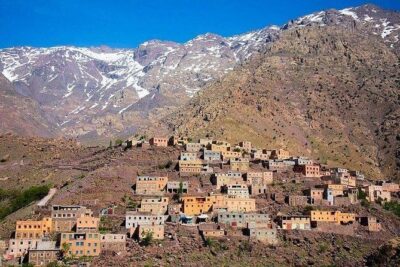
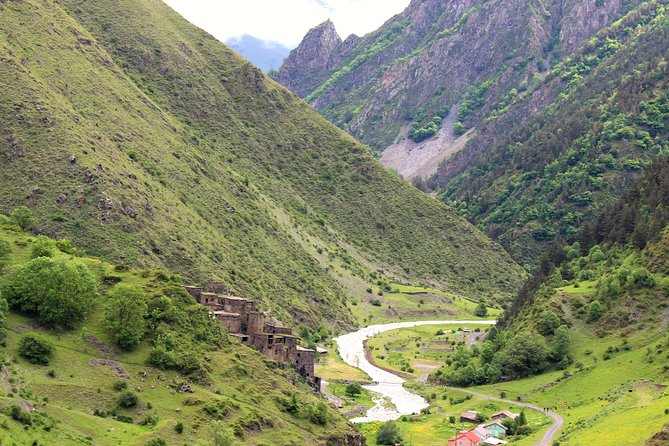
- Tusheti stone villages like Dartlo, Kvavlo, Parsma, and Girevi feel preserved and rugged
- Khevsureti tower villages: Mutso (fortress + renovated complex) and Shatili
- Max 15 people with expert mountain guides and a very guided-feeling rhythm
Tusheti to Khevsureti: why this route feels so remote
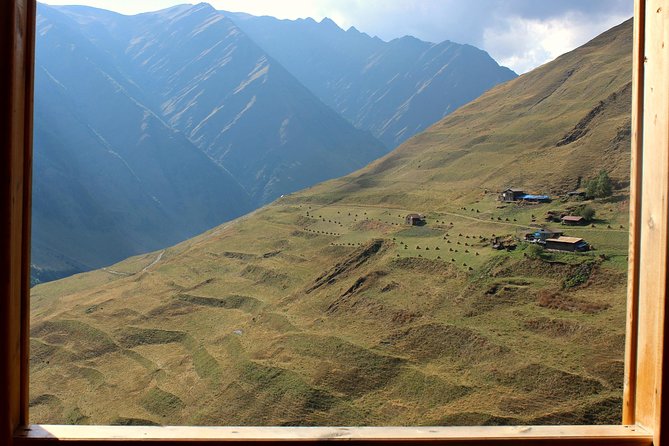
What makes this trek special is the way it escalates. Day 1 and 2 are Tusheti village walking—stone defensive towers, medieval layouts, and views over the Alazani river valleys. Then the trail starts slipping away from the easy world: narrow gorge paths, ruined villages, and crossings of small mountain rivers. After that, you’re in a true backcountry rhythm for about three days, with camping and no hut life.
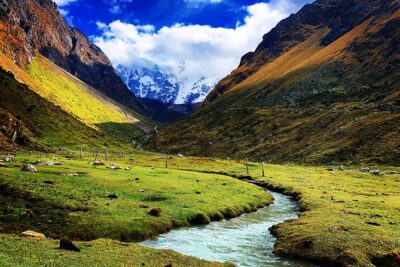
This isn’t just scenery for pictures. The trail itself is the story. You’ll spend the days moving through different “zones” of the Greater Caucasus—alpine meadows, rocky passes, pine country, and gorge hiking—then you’ll drop into Khevsureti where the settlement style changes fast. You go from Tusheti’s rugged defensive stone villages to Khevsureti’s famous tower architecture perched along narrow ravines. If you like being out where the trail matters more than the itinerary, this fits.
Also, the support structure is practical. You’re getting 4WD transfers from Tbilisi to Alavani and then up toward Omalo, plus a vehicle pick-up at the end from Mutso to Shatili and back to Tbilisi. And on the hiking days, the logistics are handled: meals are included, and you’re provided camping basic equipment (tents, sleeping bags, sleeping mats, cooking gear).
You can also read our reviews of more tours and experiences in Tbilisi.
Value for your money: what you’re actually paying for
At $1,620 per person for roughly 6 days, this is not a cheap trek. But the cost isn’t only “walking with a guide.” You’re paying for a lot of moving parts:
- Expert leadership for the full trek
- 4WD transfer up into Tusheti and vehicle transport at the end back toward Tbilisi
- Overnights in guesthouses (one with private facilities, three with shared facilities)
- Three camping nights with provided basic camp gear
- Horses for luggage transportation, which is a real advantage on a multi-day route
- Meals included (breakfast 5 times, lunch 6 times, dinner 6 times)
If you price out those components separately—guides, transfers, lodging, camping gear, and meals—the total starts to make more sense. The one thing to budget for is that drinks aren’t included, and you need your own trekking essentials like a backpack and trekking poles (those aren’t provided).
Day-by-day walkthrough: what each day feels like
Day 1: Omalo and Keselo Towers after a high drive
You meet at the Giant Bicycle monument, Rose Revolution Square in Tbilisi at 9:00 am, then set off by 4WD and road through the mountains. The drive includes crossing a pass at about 2850m, which already hints at the trip’s altitude theme.
When you arrive in Omalo, you’ll explore Omalo and Keselo Towers. This is a gentle start compared to what’s coming, but it’s not fluff. Tusheti tower structures weren’t built for comfort; they’re part of how these communities defended themselves and organized life in remote terrain. It’s a good way to get oriented before your feet start doing the heavy work.
Practical note: you’re doing a long driving day (listed as about 10 hours overall), so use the arrival evening to reset: water, warm layers ready, and an early sleep.
Day 2: Dartlo hike and Kvavlo’s ruined towers
Day 2 shifts into real trail time in Tusheti. You hike to Dartlo, a village described as recently renovated, with typical Tusheti-style stone medieval houses and defensive buildings.
Then you keep going toward Kvavlo, which is more ruined—overlooking the Alazani river and the surrounding mountains. This is the kind of place where the details matter: missing roofs, towers weathered by time, and the sense of how isolated these settlements once were.
The route distance is listed as 3.2 km one way, with an ascent around 400m (from about 1833 to 2182m), and it takes roughly 2 hours to cover one way. So you’re not spending all day on one loop, but you’ll earn the views.
One drawback to watch for: early on, you’ll still be managing altitude and legs at the same time. Pace matters. If you go out fast, the next day can feel harder than it should.
Day 3: Up the Pirikiti Alazani gorge to Girevi
Today you follow the Pirikiti Alazani river upstream through a narrow gorge. That gorge feel is important: narrow walking corridors, frequent changes in footing, and a sense that the trail is carved through the terrain rather than laid on top of it.
You stop by villages like Chesho and Parsma with stone towers and beautiful houses. Then you move onto a narrow walking path and reach Girevi.
Girevi is where the trip starts to feel more “working mountain” and less “village tour.” You’re approaching the area where the route gets wilder, with fewer signs of regular access.
Day 4: Gorge walking, ruined Chontio, and your first camp
After breakfast, you begin what the day calls the most demanding transition toward wilderness. You follow the narrow gorge above Girevi, cross small mountainous rivers, and pass the ruined village Chontio.
Then you stop near Kvakhidi in open alpine fields and alpine meadows, where you set up tents and have dinner.
This is a key day because it’s your mental shift. Up to now, guesthouse nights and village scenery create a comfort rhythm. On Day 4, you’re learning to function as a camping team—tents up, cooking setup, and settling in with the mountain air.
If you’ve never camped at altitude, here’s the practical approach: keep your layers ready and treat warmth like a system, not a wish. Air gets cold fast, especially once you stop moving.
Day 5: The big altitude day to Atsunta Pass (3431m)
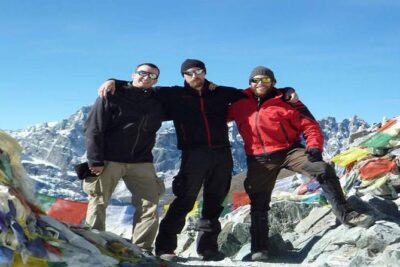
The early start is about getting to the highest point of the whole trip. You hike up to Atsunta Pass at about 3431 meters.
At the pass you stop for snacks and take in panoramic views over alpine meadows and the mountains around you. This is the day that justifies the weeks of planning and the gear prep.
After the pass, you descend toward the Khidotani ridge, then camp again in an open alpine meadow.
What I’d focus on here: altitude pacing. Even if you feel strong early, the last push to the pass is often where people overreach. Keep it steady, take breaks before you feel awful, and don’t chase speed. You’ll still reach the top.
Day 6: Down into Khevsureti—Mutso fortress and Shatili towers
Today starts with breakfast in nature, then you hike down to a narrow gorge and reach your first inhabited area in Khevsureti. You pass village Khone, then walk to Mutso, which is largely abandoned but still impressive for its towers and architectural style.
You can detour about 2 km to the Mutso fortress complex, which has been renovated. This is one of those contrasts that makes the day memorable: a place that looks quiet and deserted in daily life, yet still carries the weight of a fortified community.
Near Mutso, your transport is waiting. From there you drive to Shatili, then return to Tbilisi by comfortable vehicle. Shatili’s tower villages sit along narrow gorges, so you’ll see why this region earned its reputation for defensive stone architecture.
End of trip logistics: the experience ends back at the original meeting point in Tbilisi.
Accommodation and food: how comfortable (and how not) this trek really is
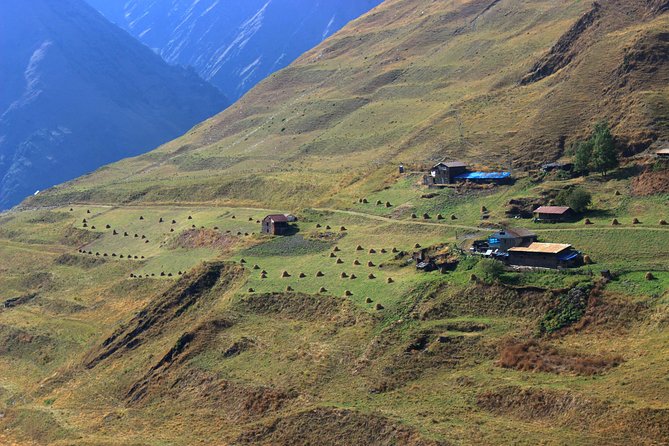
You’ll have four guesthouse nights plus two camping nights.
- Omalo (Day 1): guesthouse with private facilities
- Dartlo (Day 2): guesthouse with shared facilities
- Girevi (Day 3): guesthouse with shared facilities
- Shatili (Day 6): guesthouse with shared facilities
- Camping (Days 4–5): basic camping equipment provided (tents, sleeping bags, mats, cooking gear)
Meal coverage is solid: breakfast 5x, lunch 6x, dinner 6x. Drinks are the one thing not included, so if you like a specific beverage plan, bring it in a way you can access.
Comfort reality check: shared facilities are shared. That’s normal for remote regions. If you expect hotel-style privacy and constant hot water, you’ll be disappointed.
Gear and fitness: what you must bring so the trek stays fun
The tour provides camping gear, but it does not include your trekking basics: you need a backpack and trekking poles.
You also need to be honest with yourself about fitness. The trek involves about 72 km of walking over 6 days, with steep sections and altitude (including the 3431m pass day). The trip also lists a strong physical fitness level as required.
Here’s what helps most:
- Trekking poles for stability on gorge descents
- Layers for cold mornings and possible snow-covered peaks
- A daypack that’s comfortable for long walks (your luggage rides with horses)
- Footwear you trust for uneven paths and river crossings
If you’re coming off a long break from hiking, do a few shorter walks and a couple of longer hikes before you go. It will make Day 4 feel possible instead of punishing.
Guides and group vibe: small, focused, and practical
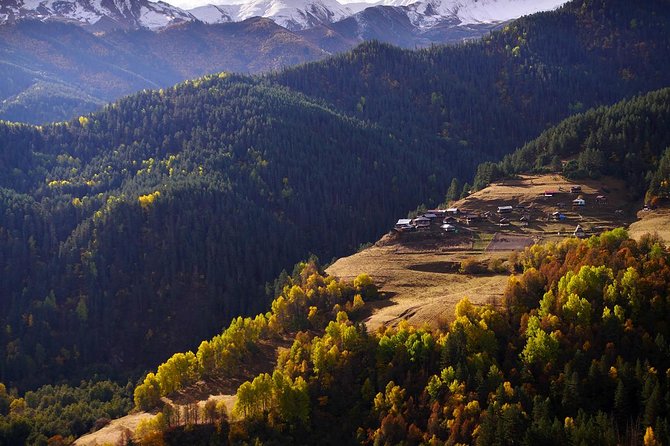
With a maximum of 15 travelers, you’re not in a huge cattle line. This matters on a route with narrow gorge segments and camping logistics. You also benefit from expert leadership across the whole trek.
The guide team names I’ve seen associated with TrekGeorgia routes include Tato, Dito, Dimitri, and—on private treks—Nutsa and Misha. If your guide is Tato, expect someone who knows the area and can teach along the way. If you’re with Dimitri, you’re likely to get a strong handle on the remote rhythm of the route. On any of these mountain walks, the real value is pacing, safety judgment, and knowing where the terrain will ask more of you.
Practical tips before you go
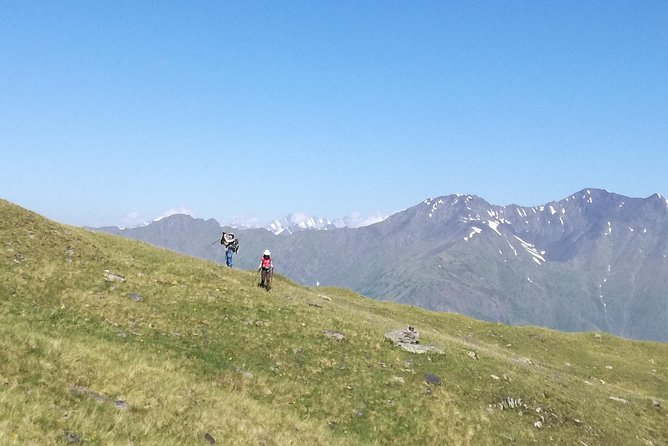
A few things that can save headaches:
- Bring a passport: a current valid passport is required on travel day, and you need passport details when booking.
- Luggage limits: you’re allowed 1 suitcase + 1 carry-on. Oversized items may be restricted, so ask ahead if you’re carrying something unusual.
- Plan your drinks budget: drinks aren’t included.
- Pack light for your body: even with luggage moved by horses, you’re still carrying what you need day-to-day.
- Start-time reality: you begin at 9:00 am in Tbilisi. Don’t plan a late breakfast.
Should you book this trek?
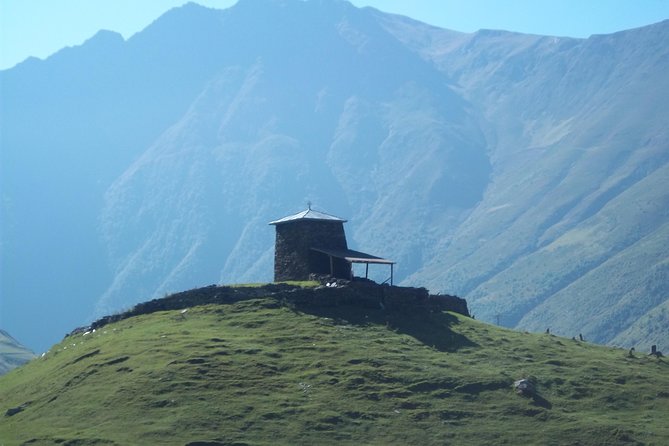
Book it if you want a true mountain-to-village trek that doesn’t stop at pretty viewpoints. This route is strong on authentic stone settlements in Tusheti and Khevsureti, and it delivers real wilderness hiking with camping and a memorable high pass at 3431m.
Skip it (or at least reconsider the difficulty) if you want mostly easy paths, frequent guesthouses, or hotel-level comfort every night. You’ll walk a lot, camp, and handle altitude. This is for hikers who like being tested in a good way—and who are okay with rugged conditions as part of the reward.
FAQ
FAQ
What is the meeting point and start time?
You meet at the Giant Bicycle monument at Rose Revolution Square in Tbilisi, Georgia, and the start time is 9:00 am.
How long is the trek?
It’s a 6-day trek (approx.).
How much walking is involved?
The tour lists about 72 km of walking in total.
What altitude is Atsunta Pass?
Atsunta Pass is listed at about 3431 meters above sea level (the summary also mentions around 3400m).
Where do you sleep during the trip?
You stay in guesthouses for four nights (with private facilities in Omalo and shared facilities on other guesthouse nights) and you camp for two nights.
Is camping gear provided?
Yes. Basic camping equipment is included, including tents, sleeping bags, sleeping mats, and cooking gear.
Are meals included?
Yes. Breakfast is included 5 times, lunch 6 times, and dinner 6 times.
What about drinks?
Drinks are not included.
Do I need trekking poles or a backpack?
Yes. Trekking poles and a backpack are not included, so you need to bring them.
What is the cancellation window?
You can cancel up to 6 days in advance for a full refund. A 50% refund is available if you cancel 2–6 days before the experience start time.
Who is this trek best suited for?
It’s best for people with a strong physical fitness level, since the route involves long walking days and a high pass, and the tour has a minimum age of 14.