REVIEW · TBILISI
8-Day Trekking Group Tour in Svaneti
Book on Viator →Operated by TrekGeorgia · Bookable on Viator
One road trip can feel like a movie.
This 8-day Svaneti trekking group tour strings together mountain villages, glaciers, and medieval tower culture, all with expert leadership and ride-ups that keep the hiking focused. I love the mix of scenic hikes and real community stops, and I also like that lodging and most meals are handled for you.
What you’ll like most is the pacing and the care from the guides. People have called out punctual, detail-minded leadership, and I can see why: the route includes safe crossings (like a horseback river pass) and thoughtful transitions between harder climbs and easier walking.
One consideration: expect real mountain effort. You’ll walk about 58 km total, and a couple of the big moments are at high elevation and on steep ground, so this is not a stroll.
In This Review
- Key highlights at a glance
- Why Svaneti towers, passes, and glaciers feel like a full story
- Day 1: The long drive west with the Enguri Dam and Dadiani Palace
- Day 2: Mazeri hike up the Dolra River and toward mineral springs
- Day 3: Guli Pass (2960m) to Koruldi Lakes and the Ushba views
- Day 4: Zhabeshi to the Mulakhi community on an easier, well-marked route
- Day 5: Tetnuldi slopes to Adishi village, passing a ski resort and wildflowers
- Day 6: Chkhunderi Pass (2655m), Adishi Glacier views, and the Adishi River horseback crossing
- Day 7: Trek to Ushguli from above, then museum and Lamaria church
- Day 8: Chalaadi Glacier and the Mestiachala River birth before returning to Tbilisi
- Price and value: what $1,340 buys you on this trek
- Lodging and comfort: guesthouses are part of the deal
- Fitness, hiking pace, and how to avoid frying your legs
- Should you book this Svaneti trek?
- FAQ
- Is this tour in English?
- Where does the trek start and end?
- What time does the tour start?
- How long is the trek and how far do you walk?
- What kind of fitness level do I need?
- What’s included in the price?
- What gear do I need?
- What if the weather is bad?
- Can I cancel for a full refund?
Key highlights at a glance
- Mestia to Ushguli trek with passes, glaciers, and medieval village visits
- Small group size (max 15) so you get hands-on guidance on the trails
- Cultural stops like the Dadiani palace and Ushguli Ethnographic Museum
- Varied hiking days from easy marked routes to high passes like Guli (2960m) and Chkhunderi (2655m)
- Guesthouse stays in several villages, with a mix of private and shared facilities
Why Svaneti towers, passes, and glaciers feel like a full story
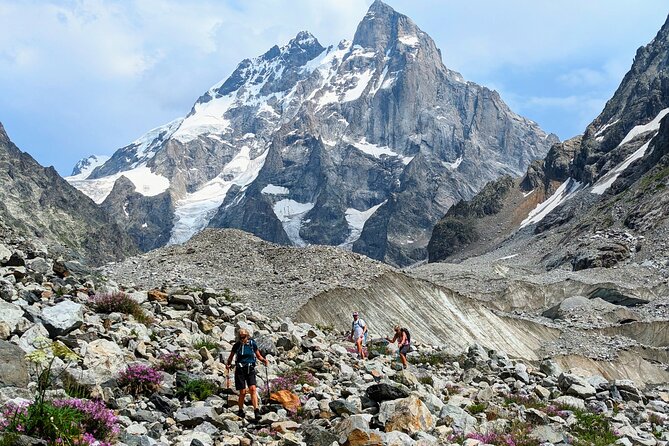
If you picture Georgia as just old cities and great food, Svaneti quietly rewrites that. Up in the Upper Svaneti villages, you’re surrounded by stone defensive tower-houses, churches, and the kind of preserved mountain living that makes the views feel grounded, not just pretty.
I love how this route doesn’t treat the scenery like wallpaper. You’re hiking toward specific landmarks you can name: Koruldi Lakes with Ushba nearby, Chkhunderi Pass with Adishi Glacier views, and Ushguli at the foot of Mt. Shkara. Each day has a “turning point,” so your legs and your eyes keep getting new reasons to pay attention.
The cultural side is practical too. You’re not just taking photos in passing. You visit a museum housed in an old tower-house in Ushguli and see a medieval Lamaria church, which helps the place click beyond the postcard look.
You can also read our reviews of more tours and experiences in Tbilisi.
Day 1: The long drive west with the Enguri Dam and Dadiani Palace
The tour starts at 7:00 am at the Giant Bicycle monument in Rose Revolution Square, Tbilisi. From there, you head toward Svaneti by vehicle, with major stops that break up the travel day.
First comes Zugdidi and the Dadiani Palace, tied to regional lordship in Western Georgia. It’s a smart “context stop” because it gives you a sense of how power and architecture shaped the region before you’re even hiking.
Then you reach the Enguri Dam area, one of the highest arch dams in the world at 271.5 meters. It’s not the type of stop people brag about at dinner, but it’s a real-world anchor: Georgia’s mountain engineering is just as serious as its mountain life.
After those stops, you drive into Upper Svaneti and continue on to Mazeri for the first night. The value here is simple: you arrive ready to hike, not exhausted from transport.
Day 2: Mazeri hike up the Dolra River and toward mineral springs
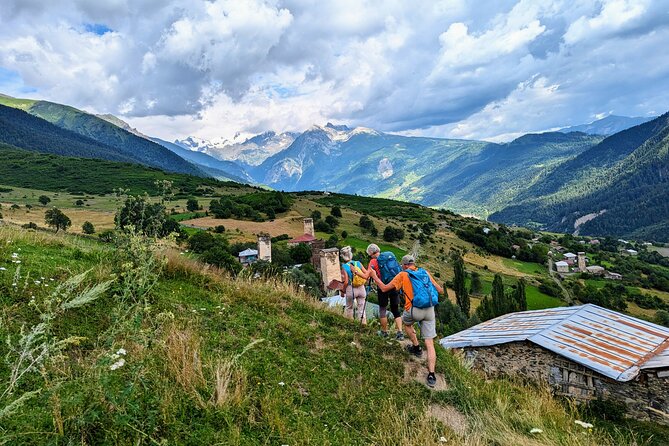
Mazeri is the kind of place that works as a slow start. You begin in the morning and follow the Dolra River upstream. The route is built around small, meaningful moments: mineral water springs, a small church with a picturesque setting, meadows, and a gradual pull into pine forests.
The hike steadily shifts from river travel to higher ground, and you finish with an ascent toward a border post area before turning back. The payoff is not one single wow-view, but a steady climb where the scenery changes enough to keep your attention without crushing you early in the trip.
One practical tip for this day: go easy on the first ascent. If you rush it, the legs you save for the pass days later will be gone.
Day 3: Guli Pass (2960m) to Koruldi Lakes and the Ushba views
This is where the trip starts feeling like a proper alpine hike. You head from the Mestia area to Koruldi Lakes via Guli Pass, sitting at 2960 meters.
The climb is described as needing good physical effort, and that matches what you should expect at that altitude. Your reward is Koruldi Lakes tucked under large peaks, including Ushba. Even if you’ve seen mountain photos before, the scale here tends to surprise people—because you’re walking through the “in-between” that makes the peaks feel closer and more jagged.
You’ll be out for about 10 hours, so this is a day to plan your energy. Bring a steady rhythm: short breaks, consistent steps, and don’t treat every “nice view” as a reason to stop for long stretches.
Day 4: Zhabeshi to the Mulakhi community on an easier, well-marked route
After a big pass day, Day 4 feels like a reset. You hike to the Mulakhi community of Zhabeshi village, and the route is described as easy, following an off-road vehicle path with a well-marked trail.
This matters because the best trekking trips manage your body. Your legs are already learning the altitude rhythm, so having one more relaxed day helps you absorb the trip rather than just survive it.
The tradeoff is that the day’s satisfaction comes from movement and village context rather than a dramatic summit moment. If you enjoy meeting the landscape at walking speed, this is a great day for that.
Day 5: Tetnuldi slopes to Adishi village, passing a ski resort and wildflowers
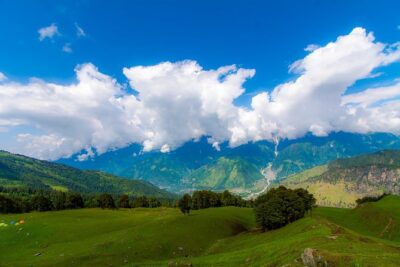
Day 5 pushes you back into mountain variety. You hike up toward the slopes of Tetnuldi, pass a ski resort, then descend through birch trees and rhododendron bushes.
You cross a small mountainous river and reach alpine meadows where Adishi appears. Adishi is known for stone towers and older houses built centuries ago. It’s positioned below Tetnuldi, along a roaring river, between high mountains—so the place feels both protected and dramatic.
This is about 6 hours of hiking. Expect the day to mix forest shade with meadow openness, which usually means your clothing strategy matters: layers for sun shifts, and something to handle wind.
Also, keep an eye on surfaces. Descents after a climb can be tougher than the uphill, especially when trails get uneven.
Day 6: Chkhunderi Pass (2655m), Adishi Glacier views, and the Adishi River horseback crossing
This is one of the “story days” on the trip. You start early and walk upstream along the river, then cross the Adishi River. Because it can be roaring, the plan includes a horseback crossing for safety.
That detail is a big deal. It’s not just an adventure flourish; it’s a practical solution that keeps the trip moving and reduces risk in a spot where footing and water speed matter.
After the river crossing, you climb up to Chkhunderi Pass (2655m). From there, the panoramic views include the Adishi Glacier. Lunch happens on the ridge top, which is a great setup: you get the hard part done, eat with views, and then shift into the descent with your body already fueled.
You descend into the Khaldechala river valley and walk for about two hours to Khalde village, which was destroyed in the 19th century by Russian soldiers. That stop adds real historical weight to the day—not just scenic hiking, but an encounter with how conflict reshaped mountain communities.
From Khalde, you take an off-road vehicle toward Iprali for the night.
Day 7: Trek to Ushguli from above, then museum and Lamaria church
Day 7 brings you into the most “iconic Georgia mountain village” moment: Ushguli. You trek through traditional Svaneti villages, passing Kala and Davberi, then go through forest before reaching Ushguli from above.
Ushguli sits at the foot of Mt. Shkara, near the confluence of the Enguri and Kvishiri rivers. It’s also listed as the highest permanent settlement in Europe at 2200 meters. Whether or not you care about the record, the altitude context makes the village feel perched rather than “just rural.”
Here, you shift from pure trekking to culture. You visit the Ushguli Ethnographic Museum located in a 12th-century old Svanetian tower-house, then head to a medieval Lamaria church (Assumption of the Mother of God). Those two visits are powerful because they connect everyday village architecture to spiritual life and craft traditions.
This day is about 5 hours of hiking. After that, you spend the night in Mestia, which makes tomorrow’s return to Tbilisi feel less like another scramble.
Day 8: Chalaadi Glacier and the Mestiachala River birth before returning to Tbilisi
You leave Ushguli/Mestia after breakfast and drive back to Tbilisi. On the way, you stop at Chalaadi Glacier and then follow the Mestiachala River upstream for about 1.5 km to the finish point where the river is born.
This is a clever final note. Instead of ending on a bus stop vibe, you end on a source-of-the-water moment. It helps the earlier river days feel connected to the bigger mountain system.
Afterward, it’s about a 10-hour drive to Tbilisi, and you finish back at the meeting point.
Price and value: what $1,340 buys you on this trek
At $1,340 per person for an 8-day guided experience, the value comes from what’s bundled, not what’s promised.
You get expert leadership for the full 8 days, an air-conditioned vehicle for the transfer days, and fuel support. You also get luggage transport by car during the hiking days, which matters more than it sounds when you’re tired and your pack feels heavy.
Most meals are included too: 7 dinners, 6 lunches, and 7 breakfasts, plus bottled water and snacks. Lodging is also covered across the route: two nights in Mazeri with private facilities, two nights in Mestia with private facilities, and several nights in guesthouses with shared facilities (Zhabeshi, Adishi, and Iprali).
So your money is buying a plan that keeps logistics manageable while you focus on walking, altitude, and village time.
You still need to rent trekking gear or bring your own. Trekking poles and backpacks can be rented, but trekking gear isn’t included. Also, lunch isn’t included on the travel day after the trekking block in the way you might expect, so check how meals are set on the final day when you plan your budget for extras.
Lodging and comfort: guesthouses are part of the deal
This is a tour built around mountain guesthouses, not big-city hotels. Reviews about the lodging tend to point to good home-style meals and clean, welcoming rooms, but one common reality is that you should not count on hotel-style amenities. In particular, you may find hot water isn’t guaranteed.
That’s not a deal-breaker if you pack for it. Bring quick-dry basics and plan to shower when it’s available. Also, expect shared facilities on several nights, which can mean fewer comforts and more “mountain simplicity” than what you’d have in town.
The upside is that guesthouse stays keep you close to the communities you’re hiking through, so the tour feels less like a conveyor belt and more like living inside the route for a week.
Fitness, hiking pace, and how to avoid frying your legs
The tour lists a moderate fitness level and an 58 km total walking distance. That’s a helpful headline, but here’s what it really means on your body:
- You’ll deal with long days, including about 10 hours on the Guli Pass/Koruldi Lakes day.
- You’ll handle high passes at 2960m and 2655m, where stamina and breathing matter.
- You’ll also do shorter 5–6 hour days, which are easier only if you don’t exhaust yourself early.
My best advice is to listen to the guide’s pacing. The guide team is described as leading at a pace that works for the group, and that’s how you finish feeling proud instead of wrecked.
Also, consider poles even if you can manage without them. On descents and uneven trail sections, poles reduce stress on knees, and the route has plenty of that kind of terrain.
Finally, because the tour requires good weather, pack with flexibility in mind. When conditions are safe, you’ll get the full route as planned. When they’re not, plans can shift.
Should you book this Svaneti trek?
Book it if you want a single trip that covers the essentials of Svaneti: tower villages, alpine lakes, high passes, and Ushguli culture, without the headache of coordinating stays and transfers yourself. The small group size (max 15) and the structured leadership are big reasons this works well for most people.
Skip it or choose something gentler if you hate long hiking days, don’t handle altitude well, or you’re expecting hotel comforts every night. Shared facilities and mountain simplicity are part of the experience.
FAQ
Is this tour in English?
Yes. The tour is offered in English, and a multi-lingual guide may operate the group.
Where does the trek start and end?
It starts at the Giant Bicycle monument on Rose Revolution Square in Tbilisi, and it ends back at the same meeting point.
What time does the tour start?
The start time is 7:00 am.
How long is the trek and how far do you walk?
It’s an 8-day experience (approx.) and involves about 58 km of walking.
What kind of fitness level do I need?
You should have moderate physical fitness. The route includes high-altitude passes and full hiking days.
What’s included in the price?
Included are bottled water and snacks, expert guide leadership, air-conditioned vehicle transport, fuel surcharge, luggage transportation during hiking days, guesthouse lodging across the route, and dinner/lunch/breakfast as listed.
What gear do I need?
Trekking poles and backpacks can be rented. Trekking gear is not included, so you’ll want to bring it or arrange rental.
What if the weather is bad?
The experience requires good weather. If it’s canceled due to poor weather, you’ll be offered a different date or a full refund.
Can I cancel for a full refund?
Yes. You can cancel up to 24 hours in advance for a full refund. Cancellation rules use local time, and cancellations less than 24 hours before the start aren’t refunded.