REVIEW · SIDEMEN VILLAGE
Sidemen rice terraces trek and local village walk
Book on GetYourGuide →Operated by Sidemen tour guide · Bookable on GetYourGuide
Sidemen’s rice paths feel wonderfully human. This guided trek blends rice paddies with a local village walk, so you see how food and water work together. You’re not just collecting photos, you’re learning what makes Sidemen agriculture tick.
Two things I love about this experience are the way the guide explains the irrigation system and the day-to-day community life behind the fields. I’ve seen guides like Juni and Kadek share practical, real-world details as you move from one farm section to the next, plus they’ll help with photos along the way.
One drawback to plan around: the paths can be muddy and slippery after rain, and parts of the walk may feel wet underfoot. The good news is that the guides seem to adapt fast if conditions are rough, including finishing early and helping you get sorted.
In This Review
- Key things you’ll notice on this Sidemen walk
- Why Sidemen’s rice terraces feel different in Bali
- Where you meet: Ming homestay at Tabola, or pickup in central Sidemen
- The “secret stop” safety briefing that sets the tone
- Walking the rice paddies: irrigation lessons you can see
- Beyond rice: vegetable fields, farms, and what grows around the terraces
- Village life in Sidemen: the peaceful part you don’t get from a viewpoint
- Views, photos, and how the route stays photogenic
- Timing and pace: 2 to 7 hours, plus that longer early briefing
- Price and what $17 covers (and what it doesn’t)
- What to bring: simple gear that saves your day
- Weather reality: muddy paths and how guides respond
- Who this Sidemen trek suits best
- Should you book this Sidemen rice terraces trek?
- FAQ
- Where is the meeting point?
- How long is the trek?
- How much does it cost?
- What’s included in the price?
- Are meals included?
- What languages do the guides speak?
- What should I bring?
- Is it suitable for wheelchair users or mobility impairments?
- Is smoking allowed?
Key things you’ll notice on this Sidemen walk

- Irrigation-first explanations that make the rice terraces make sense
- Local guides like Juni and Kadek who connect farming to culture
- Rice and vegetable farm sections, not only one view of rice
- Photo moments built into the route and timing
- Private or small groups for a more personal pace
- Wet-season reality: mud is part of the adventure, so shoes matter
Why Sidemen’s rice terraces feel different in Bali
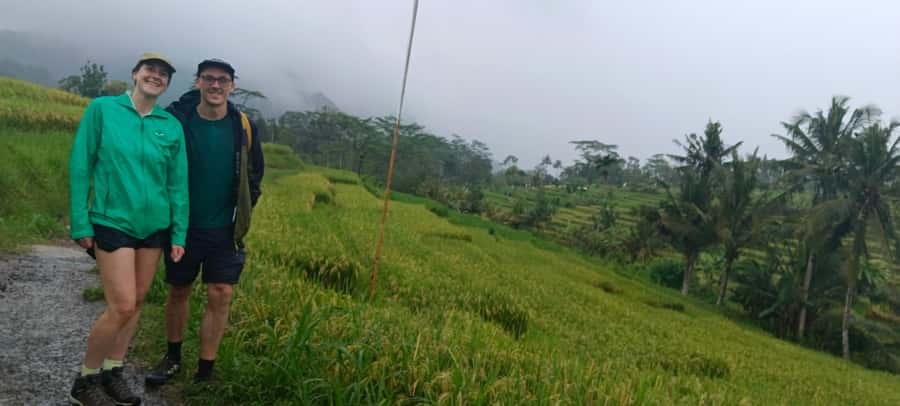
Sidemen is one of those Bali places where the scenery is already working in the background: farms, canals, and daily life. The big win here is that you spend time with a guide who can explain what you’re seeing instead of just pointing. That turns the trek from a quick viewpoint stop into a small education you can walk through.
You also get a calmer feel than the most hectic tourist corridors. It’s still scenic, but the tone is more “everyday village rhythms” than “watching a show.” That’s why the village walk matters just as much as the paddies.
You can also read our reviews of more tours and experiences in Sidemen Village.
Where you meet: Ming homestay at Tabola, or pickup in central Sidemen
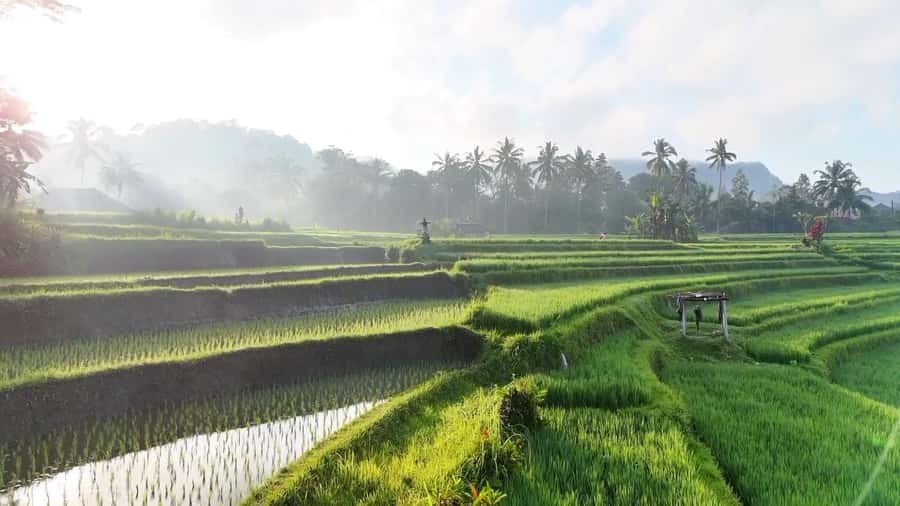
Your tour starts at the front of Ming homestay in Tabola village. If you’re staying closer to the center of Sidemen, the guide can come to your hotel so you can start the walk from there.
This matters more than it sounds. If you’re organizing your own timing, the meeting point can make or break the day. A pickup also helps if you want an easier transition from breakfast to walking without extra hassle.
The “secret stop” safety briefing that sets the tone
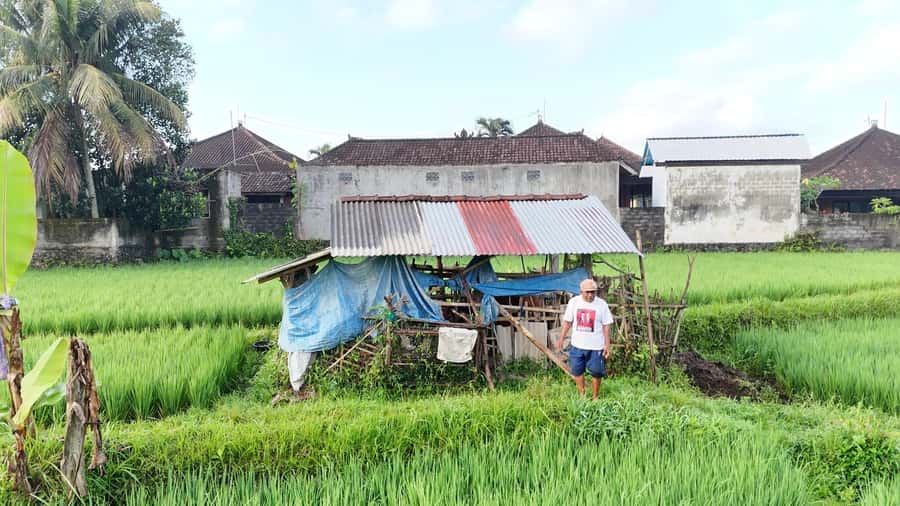
Before you head out fully, there’s a safety briefing staged at a first stop (listed as a secret stop). It lasts long enough to be more than a quick lecture, and it’s there to set expectations for how the paths work in real conditions.
This is especially useful because parts of the route can get slippery. One person even stepped into muddy water and the guide responded quickly and kindly. You’ll feel better if you know from the start what to watch for underfoot and where the route can be uneven.
Walking the rice paddies: irrigation lessons you can see
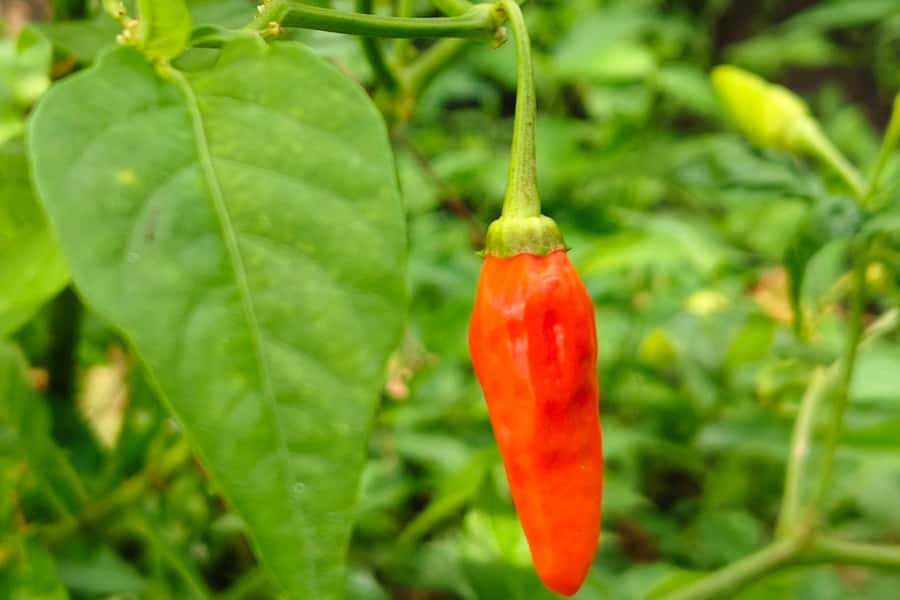
The core of this experience is the guided walk through Sidemen’s rice paddies. The guide explains the local agriculture and the irrigation systems, and that’s what makes the terraces worth your time.
Here’s what you’ll take away as you walk:
- You start to recognize how water management shapes the fields.
- You understand that rice growing isn’t just “flood and wait.” It’s coordinated, planned, and maintained.
- You notice how the route follows the logic of farming—paths and channels connect naturally when someone shows you what to look for.
The best part is that the explanation happens while you’re moving. So the concepts stick, and you can translate the talk into what your eyes are doing in real time.
Beyond rice: vegetable fields, farms, and what grows around the terraces
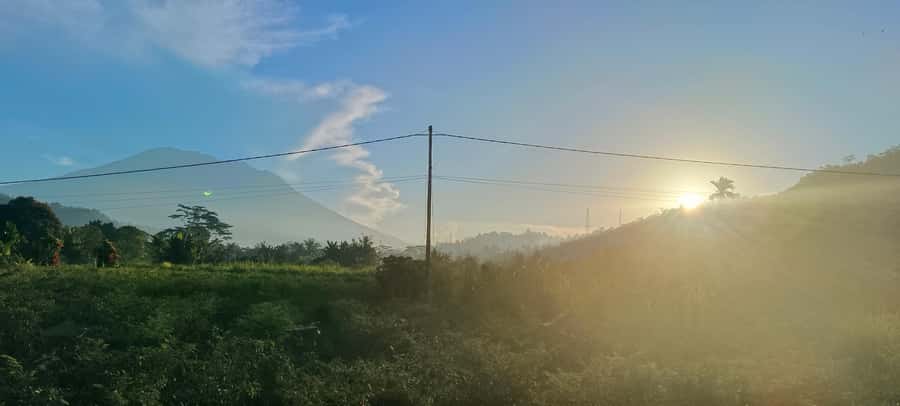
Sidemen isn’t only rice. On this walk, you pass through different types of farm fields, including vegetables in addition to rice. That variety helps you understand the area as a working food system rather than a single crop view.
One guide (Kadek) was praised for taking people through different farm sections and explaining what makes Sidemen special. If you like food and farming topics, this is the part where you’ll feel the value of going with a local guide who can connect crop choices to daily life.
Village life in Sidemen: the peaceful part you don’t get from a viewpoint
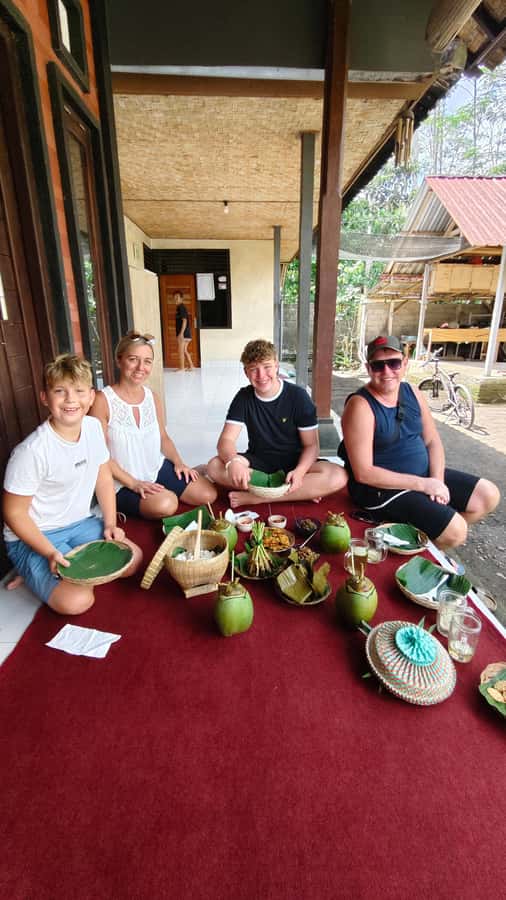
After (or alongside) the farm paths, the tour shifts into the village of Sidemen and the local way of life. This is where you move from “agriculture as scenery” to “agriculture as community.”
Guides like Juni and Kadek have been described as talking about life in the community, local culture, and nature in the area. That social context is what makes the trek feel human. You’ll likely come away seeing the village not as a backdrop, but as the reason the terraces exist.
Views, photos, and how the route stays photogenic
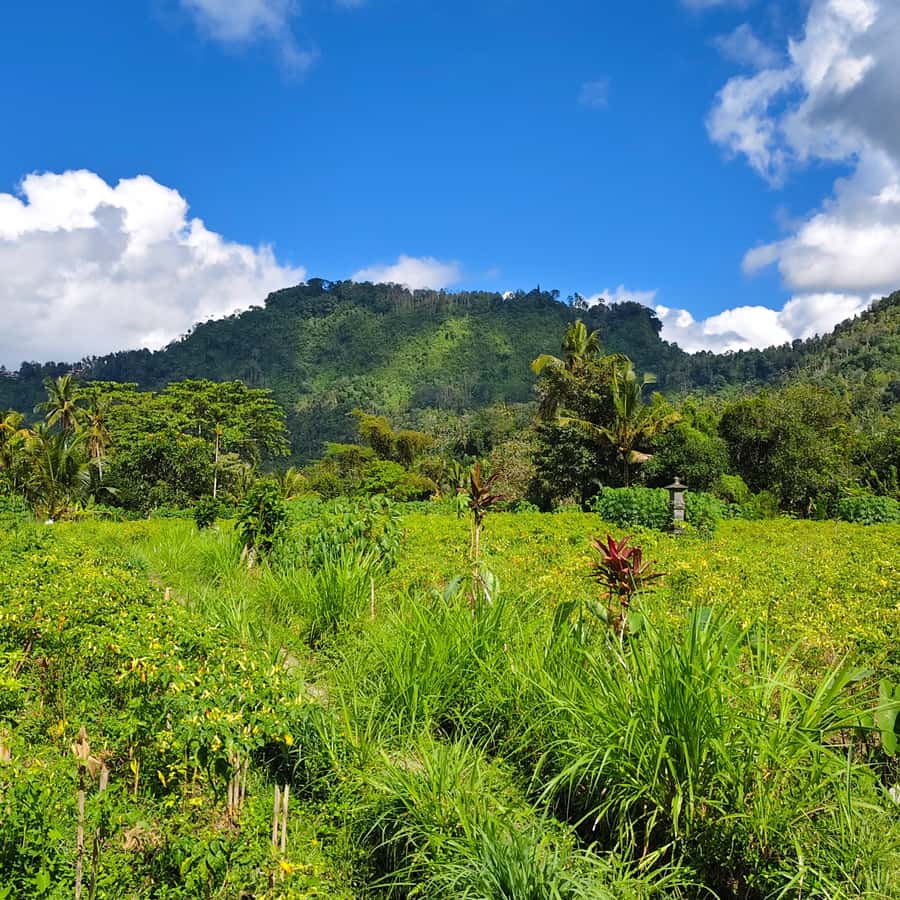
The tour includes chances to see and photograph stunning rice field views. It’s not just “stand here and take a picture.” Guides often help with framing and positioning, and some have even offered to take photos for you.
The photo value is real, but I also like that you’re walking between views. You’re not trapped in one spot for long. The result is a steady flow of scenery with less waiting and less crowds.
If you want the best shots, keep your expectations realistic in muddy weather. Your photos will still be beautiful, but the ground may be wet. Bring a camera strap or a way to keep your gear from getting splashed.
Timing and pace: 2 to 7 hours, plus that longer early briefing
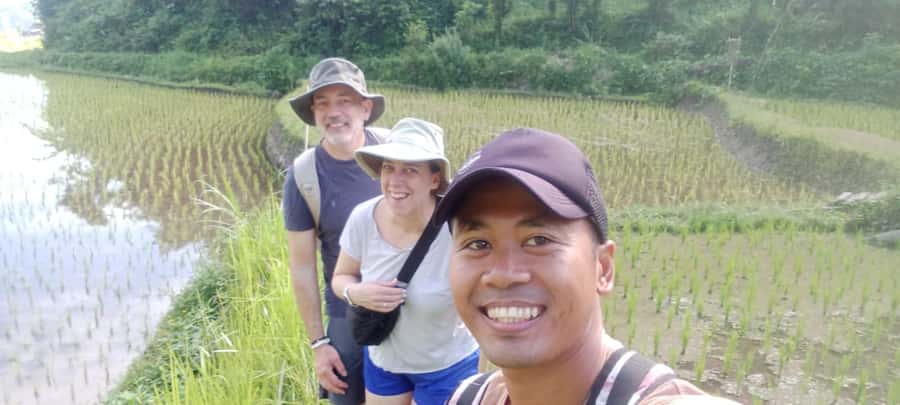
The duration is listed as 2 to 7 hours, depending on starting times and the day’s plan. Since there’s a safety briefing that runs about 2 hours, some versions of the experience will feel like a full morning or half-day activity.
Pace will also depend on whether you’re in a private or small group. People have shared that small-group arrangements can feel personalized, with less crowd pressure and more time for questions and photos. If you enjoy asking things and going slower through the views, small groups tend to work best.
Price and what $17 covers (and what it doesn’t)
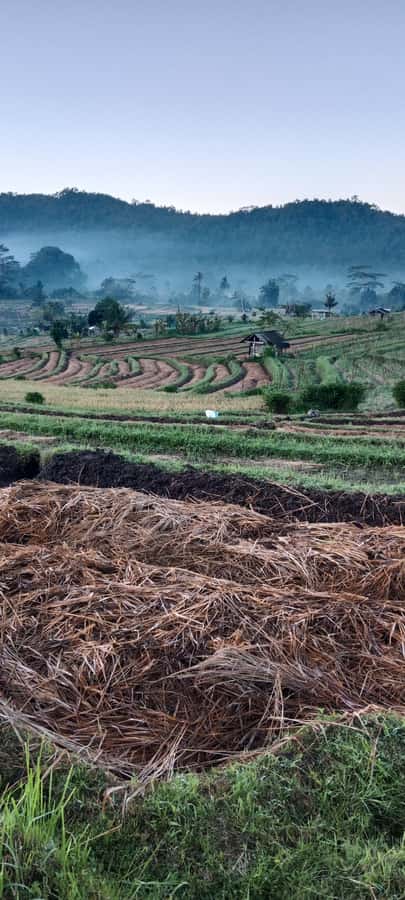
This experience is priced around $17 per person. For that, you’re paying for a guided walking tour, with explanations of local agriculture and irrigation systems, plus time to photograph views.
What’s not included matters:
- Transportation to and from Sidemen
- Meals and drinks
- Personal expenses
So the real cost isn’t only the $17. If you’re coming from elsewhere in Bali, add your transport plan. If you’ll be out for several hours, plan for water at minimum (and bring snacks if you like, since meals aren’t included).
One helpful note from people who compared options: some feel the online price can be higher than what you might find with local offers. I can’t promise what every booking channel charges, but it’s a fair strategy to ask around locally if price is a big factor for you.
What to bring: simple gear that saves your day
You’ll get the most out of this trek if you come prepared. The basic list is clear, and you’ll thank yourself later:
- Comfortable shoes (for wet paths)
- Hat for sun
- Camera (recommended)
- Sunscreen
- Water (carry a bottle)
If you’re walking in rainy conditions, consider packing a small dry bag for your phone/camera. And if you hate soggy surprises, change of socks in your daypack can be a lifesaver. One person needed help after falling into muddy water, and it’s a reminder that comfort isn’t only about heat.
Weather reality: muddy paths and how guides respond
One of the most useful parts of understanding this trek is accepting that it can be wet and muddy. People have noted fewer visitors in wet conditions, which can make the terraces feel more peaceful. But it also means the ground may be messy.
The encouraging part: guides can be flexible. In one case, a guide finished early after an accident and even offered shoes. In another, someone felt unwell and the guide adjusted so the guest could stay comfortable. That flexibility is what you want when you’re walking through uneven farmland.
My practical advice: if there’s rain, treat this like a nature walk, not a city sidewalk. Walk slower than you think you need to. Watch each step, not just the view.
Who this Sidemen trek suits best
This walk is a great fit if you want:
- Agriculture explanations (especially irrigation and rice growing)
- A village and farm experience that feels quiet and real
- A scenic walk where the guide answers questions as you go
- A private or small-group day rather than a big bus-style tour
It’s less suitable if you have mobility limitations or need wheelchair access, since it’s a walking route through uneven ground and farmland. If that’s you, it’s worth searching for a different format.
Should you book this Sidemen rice terraces trek?
Book it if you want the kind of Bali outing where the views come with context. The $17 price makes sense when you factor in what’s included: a guided walk, explanation of irrigation and farming, and photo-worthy scenery. If you care about understanding how the terraces work, this is exactly the sort of experience that rewards curiosity.
Skip it (or be extra selective) if you’re not comfortable with muddy footing. Also budget for yourself: transport and meals aren’t included, so plan water and snacks if you’ll be out for hours.
If you do book, show up with proper shoes, a hat, and patience for wet ground. You’ll get a quieter, more human side of Bali than most checklist tours.
FAQ
Where is the meeting point?
You meet at the front of Ming homestay in Tabola village. If you’re staying in the center of Sidemen, the guide can come pick you up so you can start the tour from your hotel.
How long is the trek?
The duration is listed as 2 to 7 hours, depending on starting times and the day’s plan.
How much does it cost?
The price is $17 per person.
What’s included in the price?
You get a guided walking tour through Sidemen’s rice paddies, insight into local agriculture and irrigation systems, and opportunities to see and photograph the rice-field views.
Are meals included?
Meals and drinks are not included. If you want lunch, you would need to arrange it as an additional option.
What languages do the guides speak?
The live guide offers Indonesian and English.
What should I bring?
Bring comfortable shoes, a hat, a camera, sunscreen, and water.
Is it suitable for wheelchair users or mobility impairments?
No. It is not suitable for people with mobility impairments or wheelchair users.
Is smoking allowed?
Smoking is not allowed during the activity.