REVIEW · SIDEMEN VILLAGE
Sidemen Trekking: A Walk from a Different Perspective
Book on GetYourGuide →Operated by SIDEMEN TREKKING · Bookable on GetYourGuide
Sidemen trekking is small-town Bali on foot. It’s the kind of walk where the rice fields feel less like a photo stop and more like daily life. You’ll follow one trail from the market up toward viewpoints over the terraces and Mount Agung, then finish by a local warung.
What I really like are the local details you can’t get from a scooter loop: irrigation (Subak), farming work, and how villagers move through temple and village paths. The other big win is the small group (up to 10) plus an English-speaking guide who can point out what’s happening in the fields right now.
One thing to consider: this is not a casual stroll for flip-flops. The route is narrow, sometimes slippery, and it’s designed as a one-way walk that you won’t retrace back to the start.
In This Review
- Key points that make this trek worth your time
- Why Sidemen rice terraces feel different from the usual Bali stops
- From Upa Boga in Pasar Sidemen to rice fields under Mount Agung viewpoints
- Jembatan Kuning (Yellow Bridge) and the Subak irrigation system that keeps everything going
- Dukuh village lanes and Babakan Dukuh Rice Terrace photo stops
- What you’ll see in the fields: daily farming work, not just scenery
- The hanging bridge and slippery rice walls: how to walk safely and comfortably
- Price and value: is $13 really enough for 2 hours?
- Logistics that matter: one-way route, start/finish points, and transport
- Who this trek fits best—and who should skip it
- Should you book Sidemen Trekking?
- FAQ
- Meeting point and how to find the tour start
- Where does the trek start exactly?
- Where does the trekking tour end?
- Is hotel pick-up or drop-off included
- How long is the trekking experience?
- Is this a round-trip hike?
- What should I wear or bring
- Can I visit the market before the trek
- Is the tour guided and in English
Key points that make this trek worth your time
- One-way route through varied plantations, so you see more than you would on an out-and-back trail
- Start at Pasar Sidemen (market area), then transition fast into rice-field life
- Subak irrigation education as you walk past irrigation systems tied to how water is shared
- Jembatan Kuning (Yellow Bridge) over Tukad Yeh Unda, a classic photo and crossing moment
- Babakan Dukuh Rice Terrace viewpoints where you get valley views and a sense of scale
- English live guide + bottled water, usually making the whole experience feel smoother
Why Sidemen rice terraces feel different from the usual Bali stops
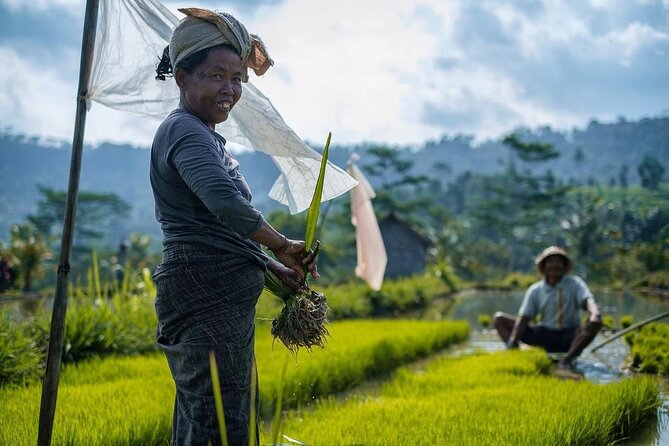
Sidemen sits in Bali’s east with a calmer rhythm than the usual central sightseeing. Here, the rice terraces are not just scenery behind a café. They’re part of how people eat, work, and celebrate daily routines.
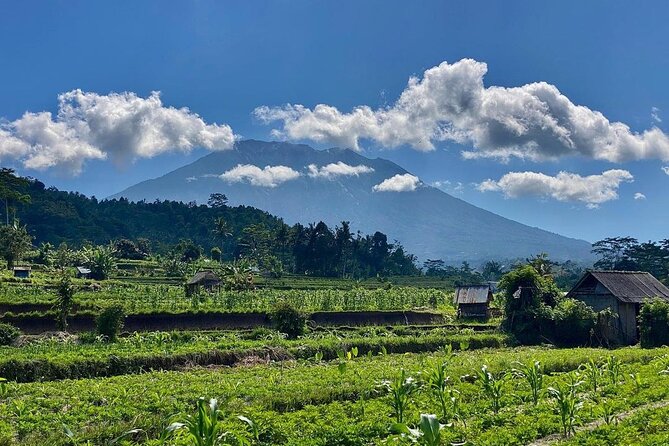
I like this trek because it’s built around that reality. You don’t just look at fields from one angle. You walk through village lanes, pass working plots, and see the terraces as layers of living space. The views over the valley can include Mount Agung on clear days, and that helps the whole area feel bigger than the photos.
The other reason this experience works is the guide. You’ll hear about local farming methods, irrigation, and what you’re seeing as you walk. People in Sidemen take agriculture seriously, and a good guide helps you notice it instead of just walking past it.
You can also read our reviews of more tours and experiences in Sidemen Village.
From Upa Boga in Pasar Sidemen to rice fields under Mount Agung viewpoints
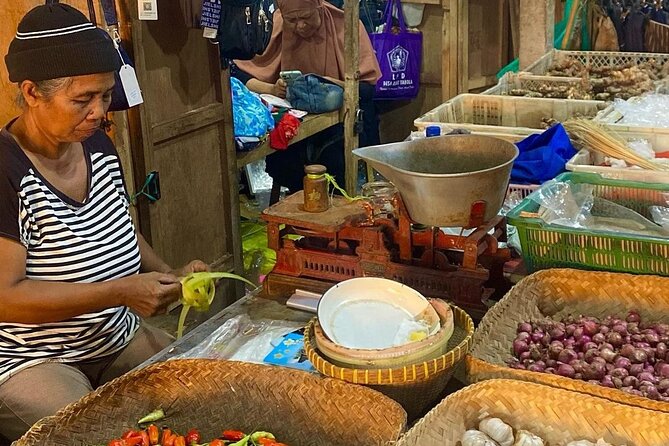
The walk starts at Pasar Sidemen on the main street. You’re looking for the shop sign Upa Boga (the activity start point is listed at Toko Upa Boga Pertenunan). Once you arrive, the guide meets you there.
From the market area, the route keeps moving toward the rice paddies. Expect a climb and then a steady rhythm of up-and-down streets. That “hills + terraces” shape is part of the point: it keeps the scenery changing and lets you see the fields from different levels.
You’ll also get viewpoints where you can admire rice terraces from afar before you head closer to the working plots. This matters because you get two kinds of understanding:
- Distance shows how the terraces form systems and valleys.
- Close-up shows the plants, the paths, and the human scale.
A guide’s job here is huge. It’s one thing to walk through a pretty area. It’s another to understand why the water runs where it runs and what crops are doing when you pass them.
Jembatan Kuning (Yellow Bridge) and the Subak irrigation system that keeps everything going
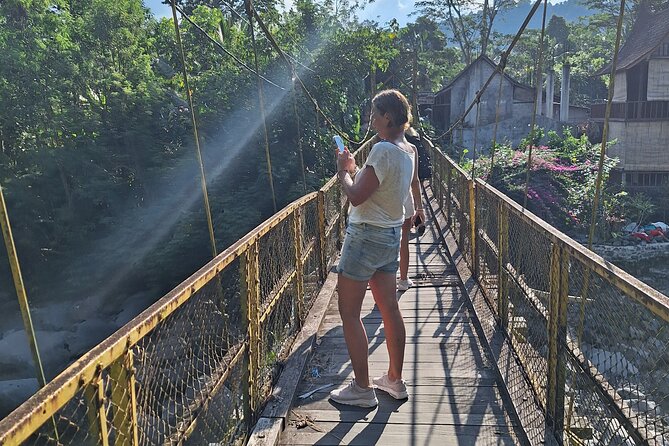
One of the most memorable moments on this trek is the hanging wooden bridge, listed as Jembatan Kuning Tukad Yeh Unda. It’s designed for both motorbikes and humans, so it’s not some fragile tourist prop. You’ll cross it as part of the route, and yes, it’s a classic photo stop.
Right after, the trek shifts into what makes Sidemen farming feel so grounded: the irrigation logic. The walk includes education about the traditional Subak system—how water is managed, shared, and routed to support rice cultivation. The route specifically mentions passing by Subak of Ogang as part of this story.
For me, that’s where the trek goes from scenic to meaningful. When you understand water management, you start noticing things you’d normally miss: where paths cut across plots, how irrigation lines shape the fields, and why certain areas are maintained the way they are.
Also, the guide can explain in plain terms how farming works in practice—not just as an ancient tradition. You’ll walk past villagers and see work in motion, not just staged “culture” moments.
Dukuh village lanes and Babakan Dukuh Rice Terrace photo stops
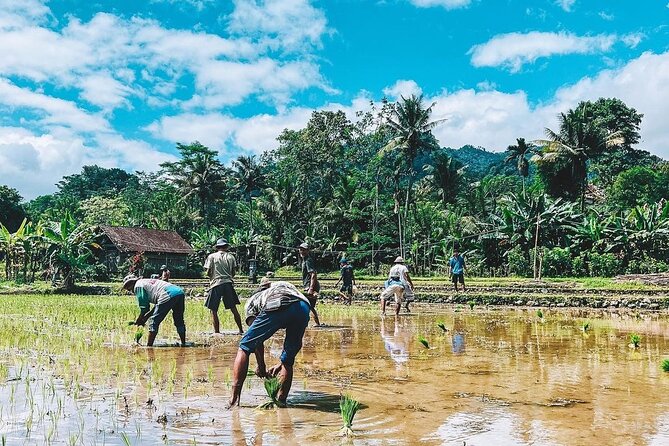
As you continue, you’ll pass through Dukuh village. This is where the trek balances open views with everyday life: small lanes, local buildings, and spaces used by villagers for prayer. You’ll walk up and down streets before returning to rice-field paths again.
The next big visual moment is Babakan Dukuh Rice Terrace. This is another dedicated stretch with photo stops and sightseeing time. You’ll likely get the kind of wide valley views that make Sidemen feel like a whole world of its own—especially when the light hits the terraces and the layers show up clearly.
What I like here is the “slow enough” pace. The trek isn’t long, but it leaves room for short stops, photos, and questions. Many guides also help take pictures of the group, and some guides are known for keeping the vibe fun while staying organized.
What you’ll see in the fields: daily farming work, not just scenery
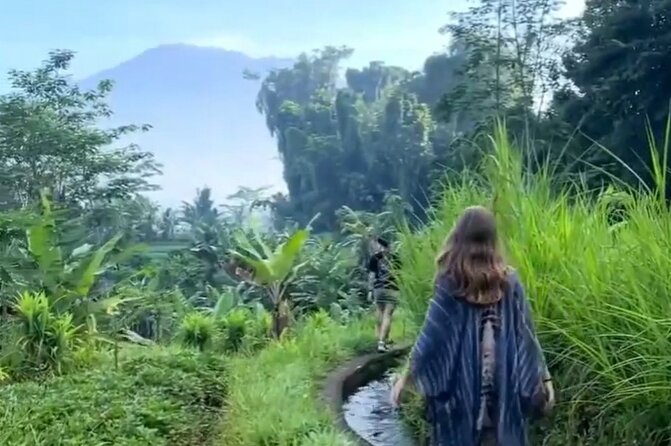
A Sidemen walk like this is best if you pay attention to small details. You’ll pass areas where people are working through the agricultural cycle—things like plowing, cultivating, planting, and harvesting. The route is designed so you don’t just see “rice,” you see the rhythms of labor.
The experience description also points out that you can spot varieties of mixed plantations and learn about local crop culture. One added value from the guides: because they’re local, they can explain what you’re looking at as you walk. Some guides also share first-hand context that comes from growing up around farming.
You’ll also get glimpses of everyday village life: the practical routes people use, the way temple spaces appear along the way, and how the terrain guides movement. It’s the kind of “daily life” viewing that feels respectful because it’s happening around you, not performed for you.
The hanging bridge and slippery rice walls: how to walk safely and comfortably
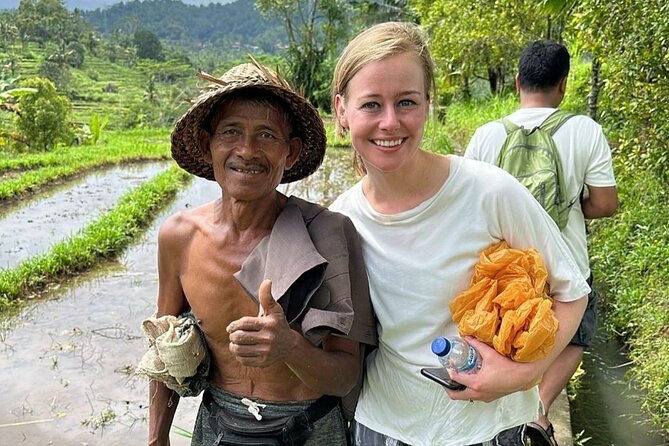
This trek is short, but it’s not designed for casual footwear. Sandals and flip-flops are not allowed, and the walking is described as narrow and sometimes slippery in places. Several notes also point to the field paths requiring balance, since you may walk on the narrow ridges between plots.
Here’s my practical checklist:
- Wear hiking shoes or sports shoes with grip (not smooth soles).
- Pack sunscreen, a hat, and sunglasses.
- Skip sandals entirely. The rules are clear.
- If rain rolls in, a light rain layer helps. Some people report rain during the walk.
- Consider long pants since some parts can include high grass and insects.
One more reality check: rice-field country can include bugs. There are accounts of small bites and insects like red ants. That’s not dangerous for most people, but it’s a good reason to protect your legs and stay alert.
Price and value: is $13 really enough for 2 hours?
At $13 per person for a 2-hour guided trek, the value is strong—especially because the essentials are included. You get a live guide and bottled water.
What you should account for is what’s not included. There’s no hotel pick-up and drop-off, so your transport cost may decide whether the trip feels like a deal or not. If you’re already in Sidemen, you’re usually set. If you’re staying elsewhere, plan the easiest way to reach the market start point and then get picked up after the finish.
Here’s the practical way I’d think about value:
- You’re paying for local guidance, route navigation, and safety on narrow paths.
- The hike is short, so you’re not spending a whole day on logistics.
- The finish at a specific warung gives you a clean endpoint for transport.
If you like authenticity more than comfort-first sightseeing, this price makes sense.
Logistics that matter: one-way route, start/finish points, and transport
Two logistics points can make or break your experience.
1) The trek is one way.
The route is designed so you don’t return the same path. That’s great for variety, but it means you can’t just walk out and then casually decide to turn back if you’re tired.
2) The trek ends at Warung Ume Anyar.
Your finish point is Warung Ume Anyar Restaurant in Ogang Village. That’s where you line up transport. If you’re driving with a local driver, plan pickup around 2 to 2.5 hours after the start.
For getting to the start point, the activity notes recommend arranging transport through your hotel. Grab may be tricky because some hotels in Sidemen don’t allow Grab drivers to pick up from the property (drop-off only). I’d rather be safe and set this up in advance.
Who this trek fits best—and who should skip it
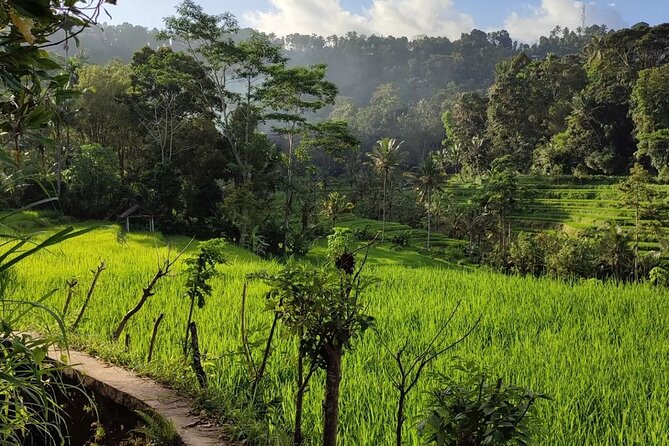
This trek is a good match if you:
- enjoy walking for a couple hours,
- want real village and farming life (not just viewpoints),
- want a guide to explain irrigation systems like Subak and what you’re seeing.
But it’s not for everyone. It’s listed as not suitable for:
- children under 5,
- pregnant women,
- people with heart problems,
- people over 60,
- anyone with low fitness.
Also, you should be comfortable with uneven ground and narrow, possibly slippery sections. If that sounds stressful, consider a gentler option in Bali’s more flat areas.
Should you book Sidemen Trekking?
Book it if you want a short, guided walk that feels grounded in how Sidemen really works: market-to-fields, bridges, village lanes, and rice-terrace viewpoints under the broader story of irrigation. The guide adds most of the value here—people like Wayan, Komang, Daria, Adidas, Adi, and Gede are mentioned as examples of the type of English-speaking guides you might meet, often with strong explanations and good photo help.
Skip it if you need frequent rest, step-by-step paved paths, or if narrow trails and slippery ridges sound like a safety concern. Also, if your transport is complicated and you don’t want to coordinate it, you might decide against it since pick-up/drop-off isn’t included.
If you do book, go prepared. Bring grip shoes, sun protection, and water (you’ll get bottled water, but you’ll still want to be ready). Then let the route do what it’s designed for: the one-way flow through rice and village life.
FAQ
Meeting point and how to find the tour start
The meeting point is at Pasar Sidemen (Sidemen Traditional Market) on the main street. Look for the shop with the sign Upa Boga, and the guide will come to meet you there.
Where does the trek start exactly?
It starts at Pasar Sidemen, connected with the Upa Boga shop area (listed as Toko Upa Boga Pertenunan).
Where does the trekking tour end?
The trek finishes at Warung Ume Anyar Restaurant, located in Ogang Village.
Is hotel pick-up or drop-off included
No. Hotel pick-up and drop-off are not included, so you’ll need to arrange your own transport to the start and from the finish.
How long is the trekking experience?
The duration is 2 hours.
Is this a round-trip hike?
No. The route is designed as a one-way trek so you experience varied plantations and scenery without returning on the same path.
What should I wear or bring
Bring sunglasses, a hat, hiking shoes or sports shoes, and sunscreen. Sandals or flip-flops are not allowed.
Can I visit the market before the trek
Yes. The optional market visit is Pasar Sidemen, which is open from 5:00 AM to 10:00 AM. If you want to explore it before trekking, a morning session is recommended.
Is the tour guided and in English
Yes. The tour includes a live guide in English, and the group is kept small (limited to 10 participants).