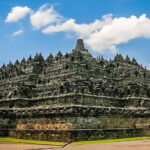
Forget Borobudur crowds for one day. This Yogyakarta day trip trades the big-name temples for Selogriyo Temple in quiet rice country and a photo-friendly Kedung Kayang Waterfall at the foot of Merapi. You get a guided walk, round-trip hotel transport, and a small group size that keeps the day feeling human instead of rushed.
I especially like the long stretch of trekking through terraced fields. It’s the kind of walk where you notice the pace of farm life—paddy, beans, corn, and more—and you’re not constantly stepping around tour buses. I also love how the day finishes with the waterfall views framed by Merapi, with plenty of chances to stop for photos and soak in the fresh air.
One thing to plan for: this is an active day. The hike back from Kedung Kayang can be tiring, and lunch isn’t included, so you’ll want to budget time and money for food when you’re there.
In This Review
- Key highlights worth showing up for
- Why Selogriyo and Kedung Kayang beat the big-name stops
- Morning pickup from Yogyakarta: the comfort part of the trip
- Walking the rice terraces to Selogriyo Temple
- A coffee stop you’ll actually remember
- Selogriyo Temple details: history in a quiet setting
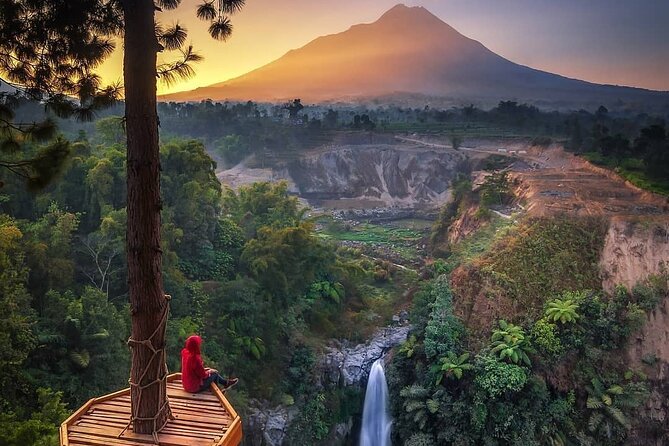
- Kedung Kayang Waterfall at the foot of Merapi
- Water footing: plan for wet steps and shallow streams
- Pacing: slow and calm, with one tougher return climb
- Price and value at about $55: what you’re paying for
- Small-group dynamics and guide quality you can feel
- What to bring for a rice terrace and waterfall day
- Who should book this tour (and who might want a different day)
- Should you book this Selogriyo Temple and Kedung Kayang tour?
- FAQ
- How long is the Selogriyo and waterfall tour?
- Does the tour include hotel pickup in Yogyakarta?
- How big is the group?
- Are entrance fees included?
- Is lunch included?
- Do I need good weather for the experience?
- What ticket format do I get?
- Is free cancellation available?
- What should I wear or bring for the waterfall part?
Key highlights worth showing up for
- A quiet temple day near Magelang: Selogriyo is remote-feeling and built for calm.
- Merapi-backed waterfall photos: Kedung Kayang offers dramatic volcano backdrop views.
- Small group size (max 10): easier conversations and fewer waiting games.
- Hotel pickup in an air-conditioned vehicle: helps you start fresh and travel comfortably.
- Coffee stop with a viewpoint: try local coffee near the temple area.
- An active walk with real footing: you’ll cross wet, muddy bits near the falls.
Why Selogriyo and Kedung Kayang beat the big-name stops
If you’ve seen photos of Borobudur and Prambanan, you already know the temples. What you might not have seen is the ordinary Java that happens between those famous landmarks. This trip is built around that in-between world: terraced rice steps, small gardens, and a Hindu temple set into the hillside.
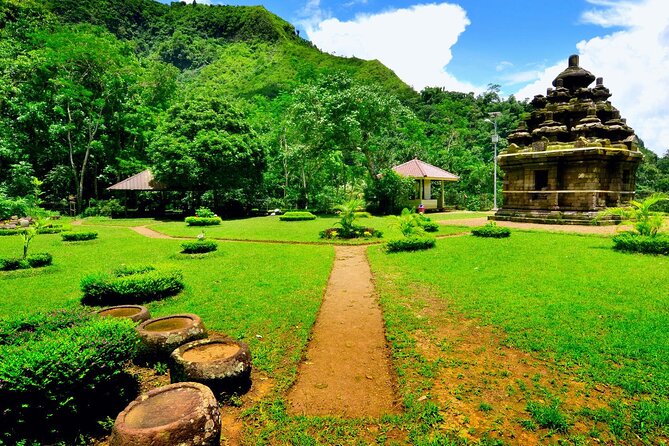
Selogriyo Temple is a 9th-century Hindu site, and the setting feels like it was chosen for peace, not crowds. Even when you’re on a trail, you still get room to look around and breathe. Then the day shifts to Kedung Kayang, where the waterfall becomes the main event and Merapi volcano sits behind it like a permanent photo frame.
You can also read our reviews of more tours and experiences in Yogyakarta.

Morning pickup from Yogyakarta: the comfort part of the trip
This tour runs about 10 hours, and it starts with round-trip transport from your Yogyakarta city hotel area. You’ll ride in an air-conditioned vehicle, which matters more than it sounds when you’re spending the day in sun, humidity, and later in the cooler air near the falls.
Pickup is offered, and the small group setup (maximum 10 travelers) helps keep things tidy. You’re not stuck watching the bus disappear while the rest of the group has already “found” lunch.
One practical note: car time can be part of the experience. You’re headed toward the Magelang region and the Merapi area, so expect a real day out of the city, not a quick hop-and-drop.
Walking the rice terraces to Selogriyo Temple
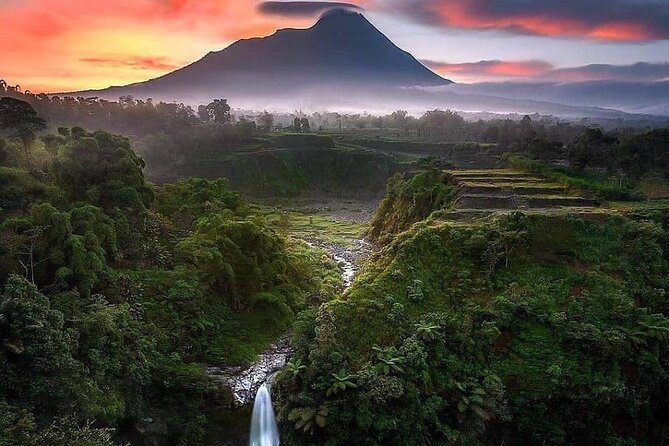
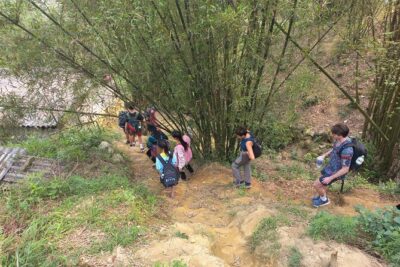
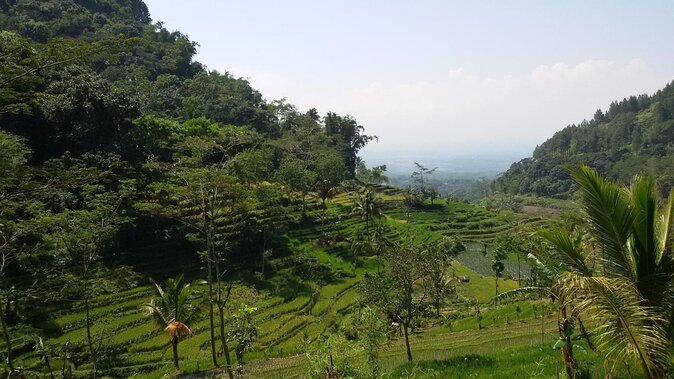
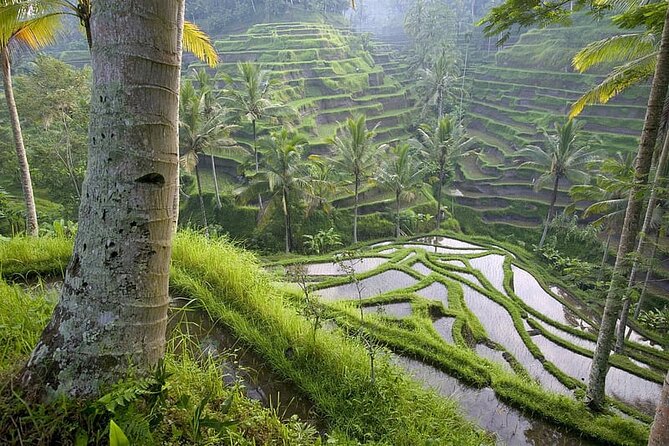
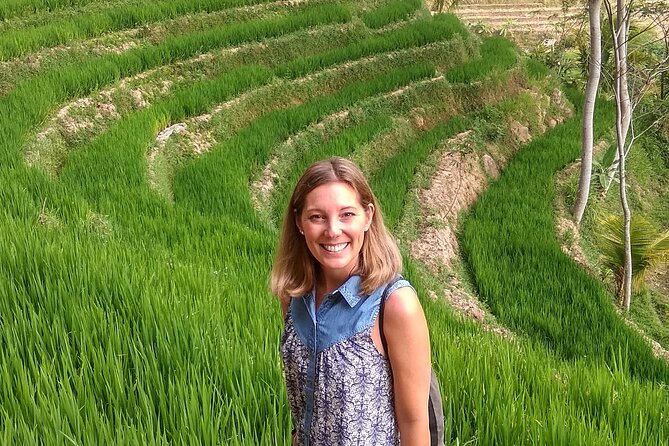
The trekking portion is the heart of the morning. You walk through terraced rice fields and mixed crops like paddy, beans, and corn, with hills and volcanic scenery around you. It feels agricultural in a good way: you can tell this is land people work every day.
The path is described as steady and fairly well maintained, not a constant steep grind. You’ll do a few steps when you get closer to the temple, but the bigger story is the walking rhythm and the views as the terraces layer out.
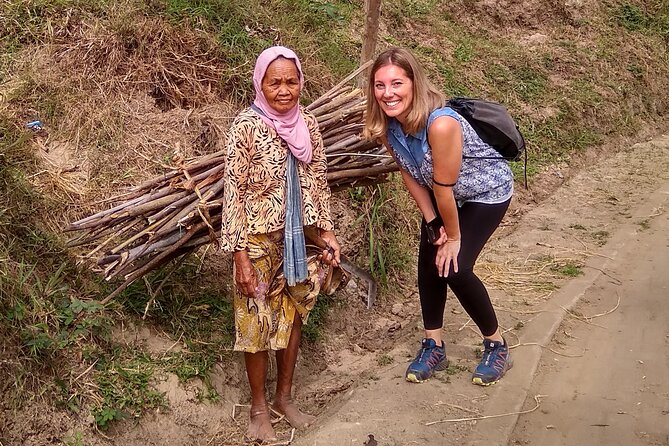
Along the way, you also get chances to slow down and talk with locals. Some guides are proud of the farming side of the region, and it shows. Names that come up often for friendly guidance include Arma, Sigit, Maxi, Didik, and Thomas. If your guide speaks English well, this kind of hike becomes way more than exercise.
A coffee stop you’ll actually remember
Near the temple area, you can pause for coffee at a small place connected to the hills behind Selogriyo. One stop is described as Waroeng Kopi Selogriyo, and the coffee has the kind of view that makes you understand why people linger. If you’re the type who likes souvenirs you’ll actually use, this is also one of the easiest ways to take a taste of the area home.
Selogriyo Temple details: history in a quiet setting
Selogriyo Temple isn’t a giant temple complex designed for traffic. It’s a 9th-century Hindu temple you reach by walking through the fields. That change in “scale” is the point. Instead of pushing through crowds, you can actually look at the temple’s distinctive structure and the gardens around it.
The temple itself sits in an area described near the bottom of Mount Sumbing, between the Giyanti ridge and Condong ridge (Magelang area). That matters because you’re not just visiting a monument; you’re visiting a hillside setting shaped by the volcano system of Central Java.
Some people find the temple the main highlight. Others find it the calm interlude before the waterfall. If you love temples, you’ll get something here. If you’re chasing spectacle only, you may find it more serene than dramatic.
Kedung Kayang Waterfall at the foot of Merapi
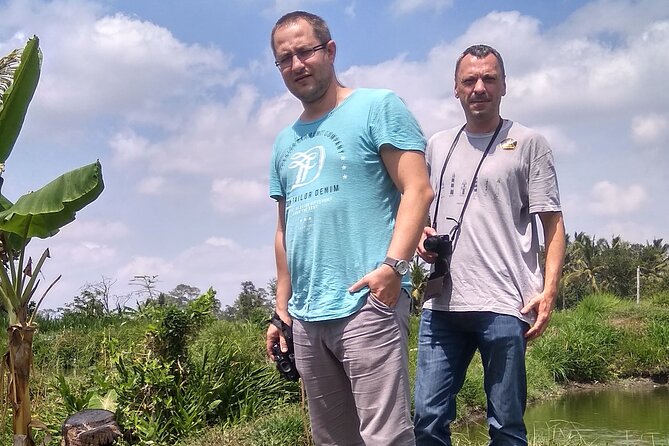
Afternoon energy shifts from walking terraces to chasing a waterfall. Kedung Kayang is described as a hidden waterfall at the base of Merapi volcano. The air there is cooler and fresher, and the water is described as clean, which is exactly what you want when you’ve been trekking.
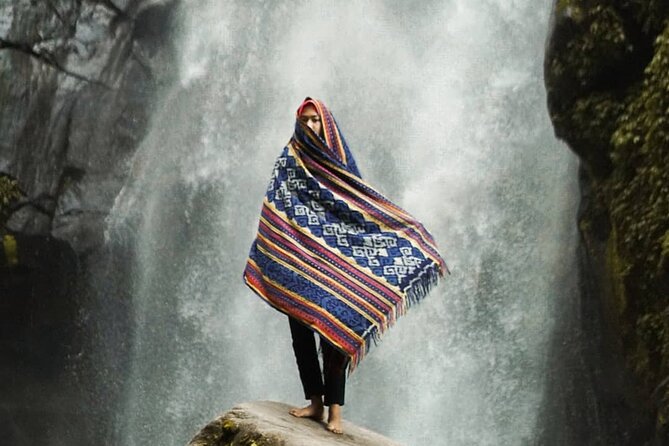
The waterfall area gives you multiple photo angles. You can get views from up top and from the bottom, and there are platforms designed for pictures with Merapi in the background. Many people end up spending extra time here because it’s one of the few places on the route where the scenery feels bigger than your to-do list.
Water footing: plan for wet steps and shallow streams
Here’s the part you can’t ignore: to get to Kedung Kayang, you may cross shallow streams and then walk onto wet or muddy trails with a few steps. Bring footwear that can handle that, or use flip-flops/water sandals if that’s your style.
A few travelers also recommend packing a towel, wearing shorts, and using shoes suitable for short hikes (not flimsy slippers). If you want an easy day, this is where preparation matters.
Pacing: slow and calm, with one tougher return climb
This is not a race tour. Many comments describe it as relaxed and slow-paced. There’s time built in for breaks, scenery pauses, and a coffee stop, plus time at each main site.
The rice terrace walk is often described as not steep until the final push to the temple area. There’s even a mention of a drink stop halfway down when you’re close to the temple.
The one place where effort matters is the waterfall section. If you go all the way down to see the falls from the lower areas, you should be prepared to climb back up. Some people manage it just fine; others feel it in the legs afterward.
Price and value at about $55: what you’re paying for
At $55 per person, the value is strong if you care about the full day out of the city. You’re not just paying for a guide. The price includes:
- Air-conditioned vehicle transport
- All fees and taxes
- Admission tickets for the stops
- A small group experience (max 10)
What’s not included is lunch. That’s the trade-off. The good part is you usually have flexibility to eat something local that fits your taste and budget. The downside is you can’t assume lunch is handled.
So how do you judge the deal? I’d say it’s good value because transport + admission + guided experience would cost more piecemeal if you tried to DIY it from Yogyakarta.
Small-group dynamics and guide quality you can feel
One of the best parts of this kind of tour is how easily you can ask questions while walking. With a group capped at 10, it’s easier to hear your guide and easier to get a photo or a quick explanation without juggling the whole schedule.
Guide names that have been specifically praised include Arma, Sigit, Maxi, Didik, Hibza, Deny, Thomas, and Mika. What stands out is not just friendliness, but the ability to make the day practical—farming context on the terrace walk, and strong photo support at the waterfall.
Some guides are also described as sharing photos after the trip. That’s a nice bonus if you’d rather focus on enjoying the moment than timing every shot.
What to bring for a rice terrace and waterfall day
You’re mixing dry hiking and wet waterfall trails. Pack accordingly.
- Sunscreen and a hat for the rice fields walk
- Water sandals or flip-flops for stream crossings and wet sections
- A towel (useful if you’re getting close to the water)
- Shorts and shoes that can handle a short hike
- A trash mindset: one note mentions seeing trash around the waterfall area, so bring a small bag to pack out what you can
Also consider motion comfort. You’ll be in a vehicle part of the day, then on foot. If you’re sensitive to motion sickness or uneven steps, bring what you normally use.
Who should book this tour (and who might want a different day)
Book it if you want a Yogyakarta day trip that feels like Java life instead of just landmark checklists. This suits people who enjoy walking, photos, and cultural settings in quieter places.
It’s also a good choice if you’re tired of big crowd energy. The whole point is trading the city buzz for rice terraces and a calmer temple-waterfall sequence.
Consider a different day if:
- You’re not comfortable with active hiking and the return climb near the waterfall.
- You want a temple-only focus (Selogriyo is peaceful, not huge-and-flashy).
- You can’t handle walking on wet, muddy footing.
Should you book this Selogriyo Temple and Kedung Kayang tour?
Yes, if you want the Central Java countryside experience with real trekking and a memorable waterfall backdrop. The combination of Selogriyo Temple (quiet, 9th-century Hindu history) and Kedung Kayang (Merapi views with waterfall access) gives you variety in one day.
I’d book it especially if you:
- Like small groups (max 10) and better conversations
- Want fewer tourist headaches
- Are willing to plan for wet feet and some leg work
If you’d rather do something more relaxed with minimal walking, then you might skip this one. But if you’re okay with active travel and you want photos that feel earned, this is a strong use of a day around Yogyakarta.
FAQ
How long is the Selogriyo and waterfall tour?
It runs about 10 hours (approx.) total, including time at Selogriyo Temple and at Kedung Kayang Waterfall.
Does the tour include hotel pickup in Yogyakarta?
Yes. Round-trip transfers are offered from Yogyakarta city hotel areas, using an air-conditioned vehicle.
How big is the group?
The maximum group size is 10 travelers.
Are entrance fees included?
Yes. Admission tickets and all fees and taxes are included.
Is lunch included?
No. Lunch is not included in the tour price.
Do I need good weather for the experience?
Yes. The experience requires good weather, and if it’s canceled due to poor weather you’ll be offered a different date or a full refund.
What ticket format do I get?
The tour uses a mobile ticket.
Is free cancellation available?
Yes, free cancellation is available up to 24 hours in advance for a full refund. If you cancel less than 24 hours before the start time, the amount paid is not refunded.
What should I wear or bring for the waterfall part?
Wear footwear that can handle wet, muddy areas and possible shallow stream crossings. Many people suggest water sandals or flip-flops, plus a towel. Sunscreen and a hat help for the rice terrace walk.