REVIEW · YULARA
Uluru: Guided Trek of Uluru’s Base in a Small Group
Book on GetYourGuide →Operated by SEIT · Bookable on GetYourGuide
Sunrise at Uluru changes everything. I love how this tour gets you walking the full base walk in the best light, with an expert guide turning the morning into more than just photos.
I also like the small-group pace and the way you hear creation-story links to places as you move, with breakfast worked into the route. One real consideration: you’re walking about 10.5 km early in the morning, so you need solid shoes and a willingness to start cold and keep going.
Key points to know before you go
- Full base route, not a quick loop: you cover the perimeter walk and hit major cultural and natural spots.
- Sunrise timing with early pickup: you start before the warm so the rock looks and feels different.
- Tjukurpa stories tied to actual locations: Liru and Kuniya, Mala people, plus rock art context.
- Mutitjulu Waterhole + Kantju Gorge: you get water and gorge scenery, not just the monolith view.
- Breakfast on the trail: an outback picnic carry pack with tea and coffee keeps you going.
- Max 11 people in the group: easier questions, better attention, and a calmer feel.
In This Review
- Sunrise timing on Uluru: why your morning starts before you feel ready
- Small-group pickup from Ayers Rock Resort: easier, calmer, and more personal
- Walking Uluru’s full base: 10.5 km, mostly easy, still a real morning effort
- Your outback breakfast on the trail: fuel that fits the route
- Mutitjulu Waterhole and rock art stops: the places that make the story click
- Tjukurpa on the Kuniya and Mala walks: stories you remember because you walked to them
- Kantju Gorge: where the walk turns from monolith to living terrain
- Audio guide option and language support: good if you want extra context
- Your guide matters: from Lucia to Dimitri to Michael and Andy
- National park entry ticket: the one thing you pay separately
- Price and value at $169: what you get for the money
- Who this sunrise base trek is perfect for
- Should you book it?
- FAQ
- What’s the duration of the Uluru base guided trek?
- How far do you walk during the tour?
- Is the national park entry ticket included?
- Where is pickup from?
- What’s included in the price?
- Are there audio guides available, and what languages are offered?
- Is the group limited in size?
- What should I bring or wear?
Sunrise timing on Uluru: why your morning starts before you feel ready
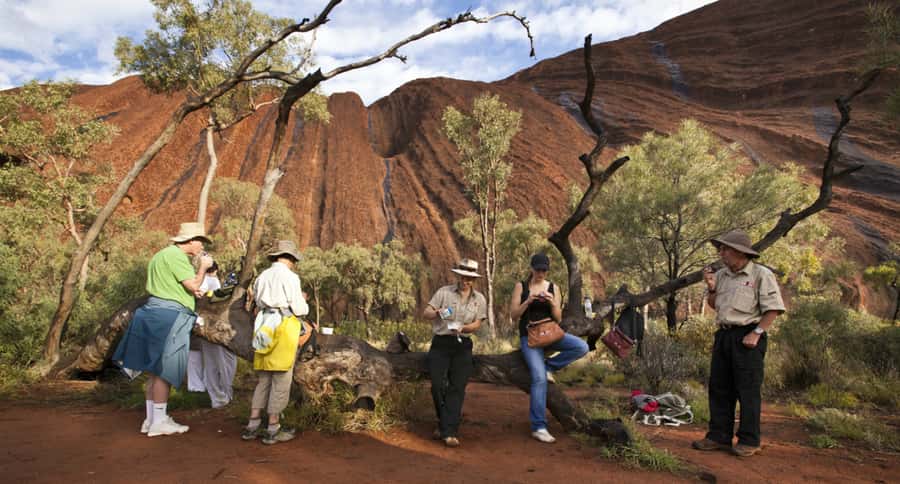
Uluru is famous for sunrise, but the smart part here is not just the sunrise itself. You’re picked up about an hour before sunrise, then you head into Uluru Kata Tjuta National Park and begin your base walk before the first proper light hits.
That timing matters for three reasons. First, the rock glows as the sky brightens, and the surface texture shows up more clearly than later in the day. Second, the air is cooler, which makes a long walk far more doable. Third, you spend more of your morning with open space and fewer distractions, so the guide’s stories land better.
It also helps to remember that early mornings can be chilly. Even if the day turns warm, you’ll likely want a warm layer for the pickup and first stretch. If you hate waking up early, consider this your warning label: it is worth it, but only if you can handle the start time.
Small-group pickup from Ayers Rock Resort: easier, calmer, and more personal
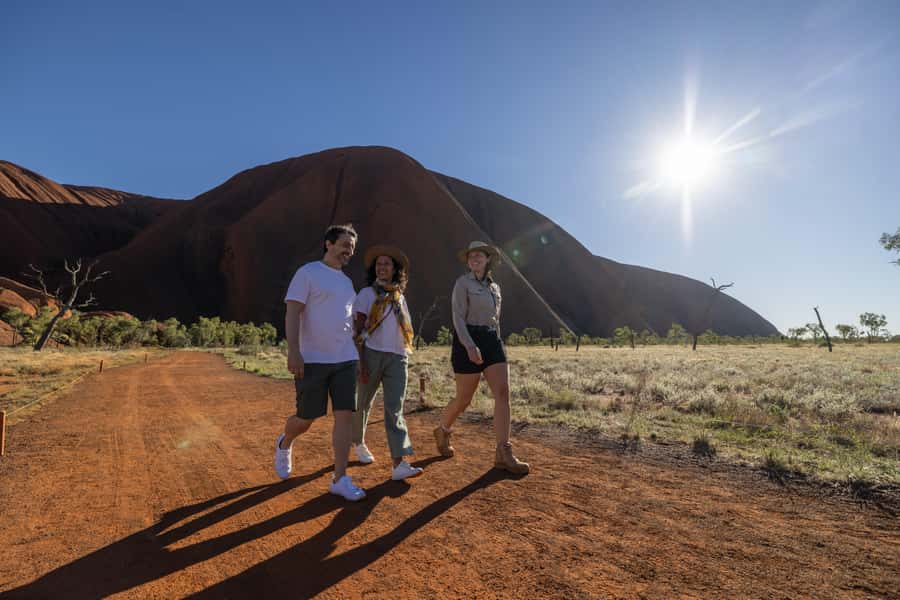
The tour uses a comfortable vehicle capped at 11 participants. That limit isn’t just a crowd-size flex. It changes your experience. You hear better, your guide can answer questions without rushing, and the group stays tight when you stop for views, water, and photo breaks.
Pickup is straightforward, too, but do check your exact meeting point. The pickup is from the front of the hotel reception at Ayers Rock Resort hotels. If you’re staying at Emu Walk Apartments, pickup is at Desert Gardens Hotel next door. If you’re at The Lost Camel, pickup is at Sails in the Desert next door.
Transport gets strong marks, with many people praising the ride quality and comfort. A/C is often appreciated on these routes once the sun starts doing its job.
Walking Uluru’s full base: 10.5 km, mostly easy, still a real morning effort
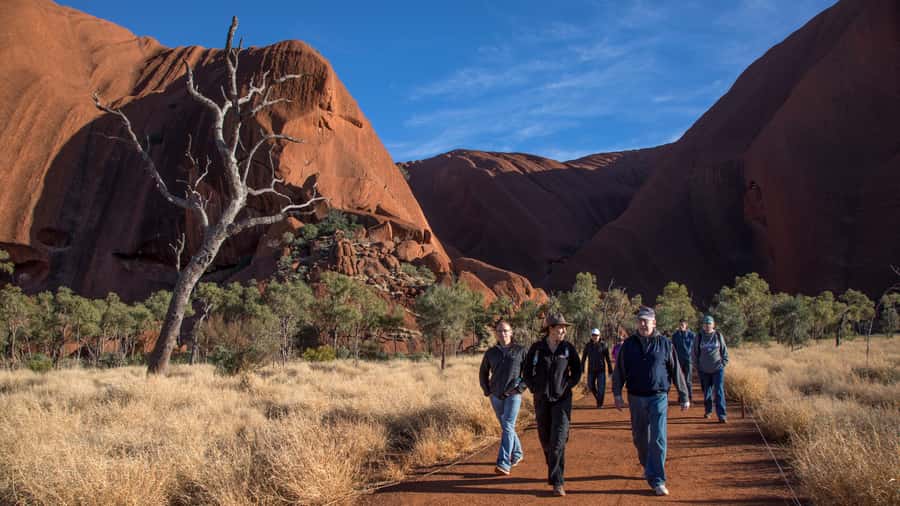
This is a guided trek around Uluru’s perimeter. You’re walking roughly 10.5 km over about 6 hours total. The route is designed for a steady pace with planned stops for stories, photos, and breaks.
What surprises people is that “full base walk” sounds like it should be short segments added together. In practice, it’s one continuous experience. You’re on tracks and gravel, and it’s generally manageable if you’re reasonably fit, but the distance means you need to plan for endurance.
In reviews, a few folks noted the walk feels easier than the distance sounds—mainly because the path is not technical. Still, the early start and the length make it feel like a true hike, not a casual stroll. If you’re planning to do other activities the same day, don’t stack too much. You’ll earn the rest later.
One extra helpful detail: some guides adjust the direction and stopping rhythm to reduce direct sun later in the morning. So if you’re the type who gets sunburn fast, that pacing and routing choice matters.
Your outback breakfast on the trail: fuel that fits the route
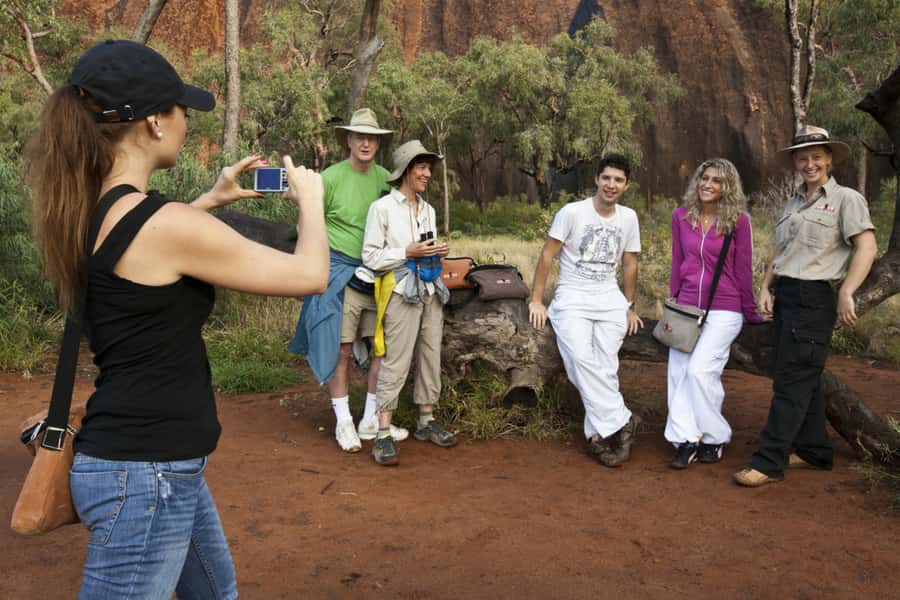
About mid-walk, you stop for an outback picnic breakfast. It’s served as a carry pack, plus you get tea and coffee. That’s a practical win. You don’t end up hangry at hour three, and you’re not trying to eat on the move.
A carry-pack breakfast also means you’re not waiting around in a café while everyone else finishes their photos. The meal is folded into the morning so you keep your momentum.
For the essentials, pack like you’re going into the outback. Bring your water bottle, plus a hat and sunscreen. Wear walking gear you can handle for hours outdoors. In cooler months, add warmer clothing for the early pickup and the first part of the trek.
One small trick that shows up in the field: some people like a light face covering or even a fly net style accessory if insects are an issue. It’s not required, but it can make the last stretch feel more comfortable.
Mutitjulu Waterhole and rock art stops: the places that make the story click
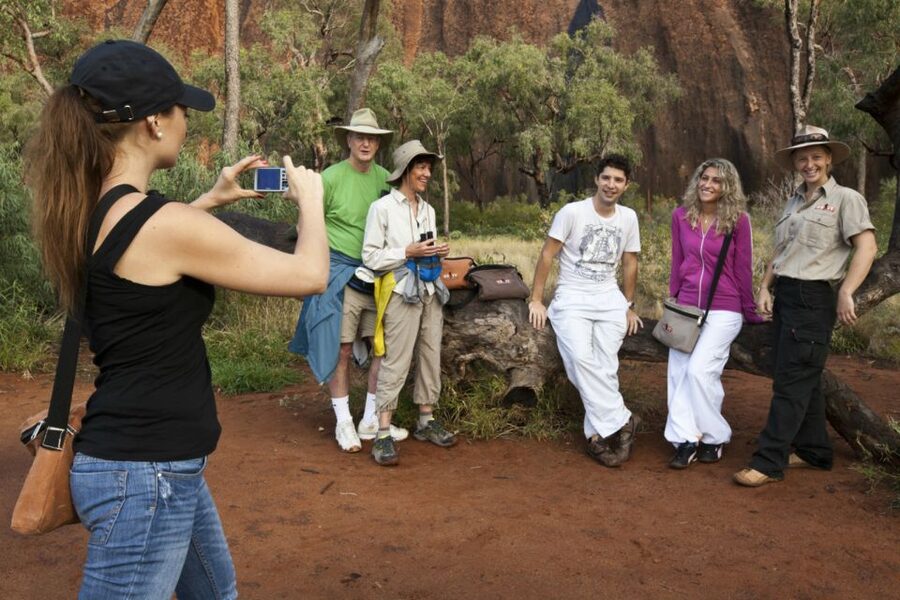
A big reason this tour stands out is how it connects scenery to meaning. You don’t just see spots. You learn why those spots matter, including the role of the Anangu (traditional owners) and how places connect to Tjukurpa (creation stories).
Along the route, you visit rock art sites and make time at Mutitjulu Waterhole. Mutitjulu is one of those places where you can feel the difference between looking at a landmark and understanding why it’s alive with significance. The guide explains what you’re seeing and how it ties into culture and the environment.
This is the kind of storytelling that pays off because it’s delivered while you’re standing near the actual features. You’re not hearing a history talk in a bus seat. You’re walking, pausing, looking at the rock, and getting the meaning that helps everything make sense.
Tjukurpa on the Kuniya and Mala walks: stories you remember because you walked to them
The guide shares Tjukurpa stories tied to specific legs of the walk. Two of the most mentioned storylines are:
- Liru and Kuniya: you hear this while walking the Kuniya section and related stops.
- Mala people: you hear the Mala story during the walk that connects you to Kantju Gorge areas.
Here’s why that matters for you: these stories aren’t random narration. They’re a way of understanding how people interpret landforms, water, and markings across the rock. Once you hear the right story at the right place, the entire base walk stops being a checklist and starts feeling like one connected journey.
You’ll also get explanation on geology and the way flora and fauna fit into the environment around Uluru. That makes the trek more useful if you care about the “how” behind the magic, not just the “wow.”
Kantju Gorge: where the walk turns from monolith to living terrain
Uluru is the headline, but Kantju Gorge brings variety and shows how the area is more than one huge rock.
On this tour, you reach Kantju Gorge as part of the guided route that includes the storytelling connected to the Mala people. Practically, it’s a change in your viewpoint: you shift from broad base views to a more enclosed, rugged feel, and the gorge setting gives you a different kind of photo and a different kind of mental reset.
It also breaks the morning into sections. That helps with stamina, because every time you think you’re reaching the end, you hit another meaningful stop.
Audio guide option and language support: good if you want extra context
The tour uses a live guide in English, but there are optional audio guides in several languages. If you speak French, German, Spanish, Italian, Russian, or Mandarin (Chinese), you can use the provided iPod-style audio guide.
This is useful when you want extra context while still following the guide’s explanations in real time. You can listen to both, or use the audio guide as a second layer so you don’t miss details if there’s wind, footsteps, or a group question.
If you’re not using the audio option, don’t worry. The guide’s delivery is clearly a core part of the value, and the small-group size helps you catch what you might otherwise miss.
Your guide matters: from Lucia to Dimitri to Michael and Andy
This kind of experience lives or dies by the guide. The strongest feedback names guides who brought the morning to life with culture, geology, and a calm sense of safety.
For example, people highlight guides such as Lucia, Dimitri, Lara/Laura, Michael, Andy, Tim, Lilly, Rachel, Max, Georgia, and Dana. The common thread is not just facts. It’s how the guide connects those facts to the places you’re walking past.
You also see small, thoughtful touches in feedback, like guides looking after hydration and comfort. One person even mentioned frozen lemon grass towels as a cooling bonus on the morning trek. Those extras aren’t the main reason to book, but they do make the experience feel cared for.
National park entry ticket: the one thing you pay separately
One cost to plan for: Uluru Kata Tjuta National Park entry tickets are not included in the tour price.
You can purchase the ticket directly at the entry station. Tickets are valid for three consecutive days from the date of issue. If you’re planning multiple park stops during your stay, this matters. You’ll want to time the ticket purchase so you get the most out of your days in the park.
Price and value at $169: what you get for the money
At $169 per person for about 6 hours, this is not the cheapest way to see Uluru. But the value is in what’s included:
- Guided walking of the full Uluru base
- Pickup from Ayers Rock Resort area hotels in a vehicle sized for a small group
- Outback picnic breakfast carry pack, plus tea and coffee
- Professional driver/guide delivering culture, geology, flora, and fauna context
- Optional multi-language audio support
The extra you pay for is mainly the national park entry ticket. If you were to try to piece together a self-guided base walk, you’d still face sunrise timing, route planning, and the big question of how to understand the markings and stories tied to each stop. This tour solves that with a guide and a structured route.
Where it’s best value is when you’re at Uluru for the first time and want the biggest “meaning per hour” you can get without being overwhelmed by options.
Who this sunrise base trek is perfect for
Book this if you want:
- A guided way to see the full base walk, not a partial loop
- Sunrise photos and the cooler morning air
- Aboriginal culture and Tjukurpa explanations tied to places you visit
- A small group where you can ask questions and not feel like a number
You might skip it (or at least think hard) if:
- You dislike early mornings and long walks
- You have trouble walking about 10.5 km, even on relatively easy paths
- You want a very relaxed, slow-moving experience with minimal walking
A good fit is someone who enjoys understanding what they’re seeing. If you like your travel with both awe and interpretation, this works well.
Should you book it?
For me, the decision comes down to one question: do you want Uluru explained while you’re actually there, walking the base from dawn?
If yes, this tour is a strong choice. The combination of sunrise timing, full base coverage, and Tjukurpa storytelling at the real stops makes it more than a sightseeing walk. If your goal is simply to get a few quick views and go, you may feel this is more effort than you wanted.
If you do book, plan smart: wear walking shoes, bring water, pack sun protection, and add a warm layer for the early part of the day. Do that, and you’ll get one of the best ways to experience Uluru as a living, meaningful place instead of just a landmark.
FAQ
What’s the duration of the Uluru base guided trek?
It runs for about 6 hours.
How far do you walk during the tour?
You walk approximately 10.5 km.
Is the national park entry ticket included?
No. Uluru Kata Tjuta National Park entry tickets are not included, and you can purchase them at the entry station. Tickets are valid for three consecutive days from the date of issue.
Where is pickup from?
Pickup is from the front of your hotel reception within Ayers Rock Resort hotels. If you’re at Emu Walk Apartments, pickup is at Desert Gardens Hotel next door. If you’re at The Lost Camel, pickup is at Sails in the Desert next door.
What’s included in the price?
Included are an outback picnic breakfast supplied in a carry pack, tea and coffee, hotel pickup from the Ayers Rock Resort area, and a professional driver/guide.
Are there audio guides available, and what languages are offered?
Yes. Audio guides are included for Spanish, Chinese, French, German, Italian, Russian, with the tour guide delivering the live commentary in English.
Is the group limited in size?
Yes. The small group is limited to a maximum of 11 participants.
What should I bring or wear?
Wear sensible walking shoes. Bring a water bottle and sun protection such as a hat and sunscreen. Cooler months may require warmer clothing.