REVIEW · ULAANBAATAR
Mongolia Nomad Trek • On-Foot & Horseback ~ 15 Day
Book on Viator →Operated by Tusker Trail Kilimanjaro Adventures · Bookable on Viator
A big chunk of Mongolia’s west still runs on horses, weather, and tradition. This trek in the Altai Mountains has you walking and riding through river valleys, high passes, and open steppe, with Eddie Frank guiding the whole thing. You also get front-row access to nomadic life, including Kazakh eagle hunting and horseback games.
I love that Eddie Frank mixes real horsemanship with a trek that actually uses horses and camels for practical support. I also love how the days combine movement and culture, from ger camp nights to visits with Kazakh and Tuvan communities.
One consideration: this is physically demanding, and the itinerary can involve snow at higher elevations, plus it depends on good weather. If you do not handle cold, altitude changes, and long walking days well, you may feel the strain.
In This Review
- Key highlights to know before you go
- The Mongolian Altai trek that feels like real movement, not just sightseeing
- Ulaanbaatar warm-up: Tuushin hotel and a national theater night
- Flying west to Bayan Ulgii: ger camp logistics and Kazakh culture
- Khoton Nuur Lake camp: first riding lessons and Tusker Nadaam games
- River-valley trekking with camels in the mix (and why that’s smart)
- The mountain pass day: snow, steep descents, and sheer views
- Petroglyphs and Tuvan shaman traditions: culture stops that feel tied to place
- A rest day on a plateau and the climb toward Potanin Glacier
- Final trekking day: giving your horse its head and leaving the glacier zone
- Returning to Ulaanbaatar: Tuushin hotel again and a night out
- Price and value: what $8,250 covers in the real world
- Who should book this trek (and who should pause)
- Should you book the Mongolia Nomad Trek with Tusker Trail?
- FAQ
- How long is the Mongolia Nomad Trek and horse trek?
- What is the price per person?
- Where does the tour start?
- Is pickup offered?
- Do I get help if I’m new to horseback riding?
- Are meals included?
- Is it a private tour?
- What if the weather is poor?
Key highlights to know before you go
- Eddie Frank’s riding coaching: beginner-friendly clinics plus everyday practice in the saddle
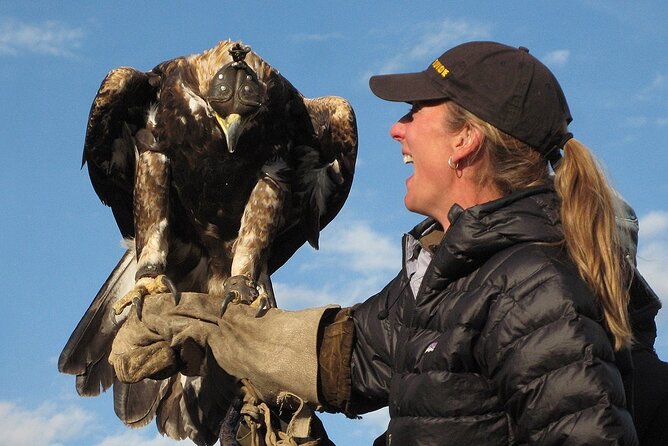
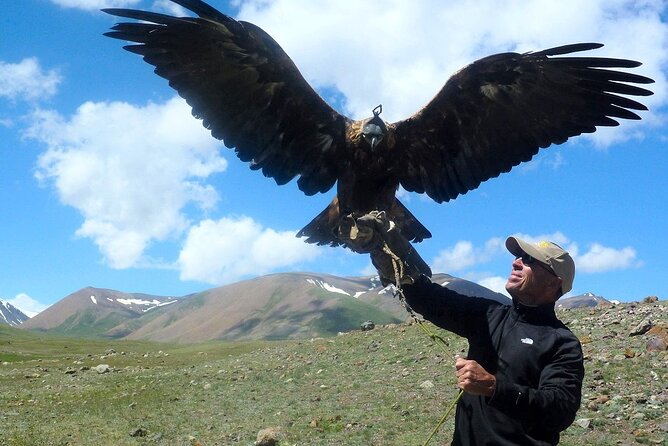
- Kazakh eagle hunting access: possible close-up encounters in Ulgii
- Khoton Nuur and Tsagaan Gol valleys: long, scenic days on foot and by horse with big viewpoints
- Nomadic horseback games (Tusker Nadaam): entertainment that also feels like living culture
- Petroglyph stop in the Altai: ancient rock art tied to deep regional history
- Potanin Glacier and Tavn Bogd country: high tundra trekking near Khuiten Peak
The Mongolian Altai trek that feels like real movement, not just sightseeing
Most treks give you photos. This one gives you travel rhythm. You ride, you trek, you camp, you eat, you reset your gear, then you go again. In the Altai Mountains along Mongolia’s western border with China, that rhythm matters, because the terrain controls the schedule.
You start in Mongolia’s capital, Ulaanbaatar, then head west to Bayan-Olgii Province (often written as Bayan Ulgii). That shift is part of the value. The city days help you land gently and understand local culture. Then the mountains take over with river valleys, passes, and wide open grasslands.
And yes, you’ll be outside a lot. That is the point. The weather and light change fast in this part of Mongolia, and you’ll feel it in how the day goes—especially on hiking days that may include cold or snow.
You can also read our reviews of more tours and experiences in Ulaanbaatar.
Ulaanbaatar warm-up: Tuushin hotel and a national theater night
Your adventure begins in Ulaanbaatar (UB). After landing at Buyant Uhaa Airport, you meet your Mongolian guide and head to the Tuushin hotel for two nights.
UB is a smart place to start for two reasons. First, you get a buffer day to adjust before flights and long road travel. Second, you get a taste of modern Mongolia layered over older traditions, which helps once you’re out in the nomadic west.
Day 2 is built for choosing your own city pace. You can browse restaurants, street food stands, museums, and local cashmere shopping, then your guide brings you to the national theater for a cultural performance at night. The included show at the State Academic Theatre Of Opera And Dance is a nice way to get oriented to Mongolian heritage without spending your whole first days stuck in research mode.
Practical note: UB free time usually means you’ll want to plan a simple strategy. Pick one or two museums or markets, then save your energy for the travel day ahead.
Flying west to Bayan Ulgii: ger camp logistics and Kazakh culture
On day 3, you fly about 3 hours west to Bayan Ulgii. Altitude and geography start showing up quickly here, even before you’re deep in the trek.
You’ll drop your gear at your ger camp and then head out to explore the local outdoor market. This is where your trip’s culture thread becomes concrete: the western provinces have a strong Kazakh presence, and you get a chance to look for Kazakh eagle hunters for an up-close encounter with their birds of prey.
This day also handles a key practical problem: how to pack for a moving expedition. Late in the day, your gear and clothing shift into waterproof Tusker duffels so it’s easier to pack onto camels. That matters because you’ll trek on foot with less load, while the expedition team handles the heavy items.
A short drive later brings you to Ulgii airport for a flight back to Ulaan Bataar area? The itinerary includes flight segments around Ulgii and Mongolia logistics, so expect some travel handoffs in this region. The overall payoff is that you’re not just teleporting—you’re building a real base before the trek begins in earnest.
Khoton Nuur Lake camp: first riding lessons and Tusker Nadaam games
Day 4 is a full day drive southwest toward Khoton Nuur, via Tsengel and across the Khovd River. Then you camp on the lake shore for two days.
This is your first true trek base. The Khoton Nuur area gives you that classic western Altai setting: water, mountains, and wide space. Camps here are important because they reset your day. You get a camp dinner and time to settle in before you add long hiking and riding.
Day 5 is where your horse days become real. After breakfast on the lakeshore, Eddie gives riding basics using the Australian saddles. That sounds small, but saddle setup is huge for comfort and control, especially when you’re learning.
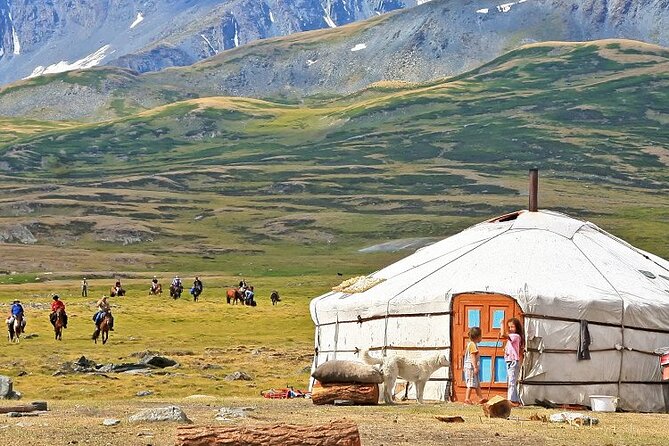
Then you go for a slow ride in a forested area above the lake. You also visit local Kazakh nomads in their gers (tents), learn about traditions, and attend exciting nomadic horse games called Tusker Nadaam. After the games, local women bring out handmade crafts, which makes the souvenir part feel like a cultural exchange instead of a sales stop.
If you care about doing riding well—not just sitting on a horse—this is one of the best days on the whole program. You’ll build skills early, not after you’re already tired and high up.
River-valley trekking with camels in the mix (and why that’s smart)
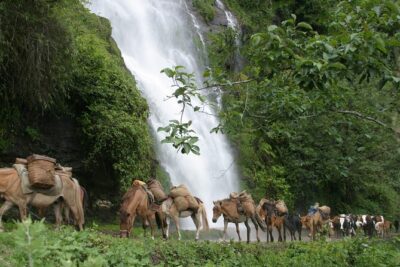
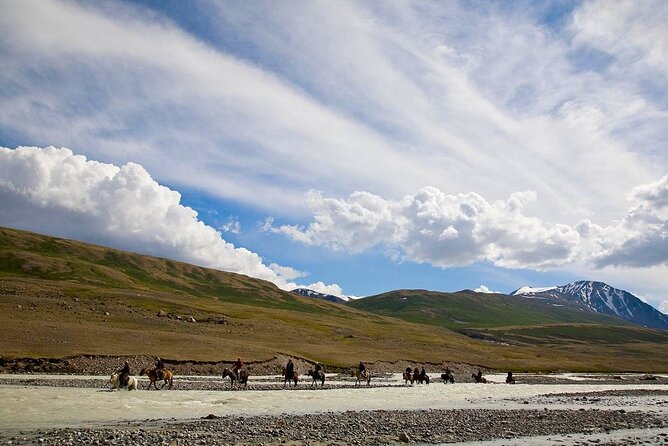
Once you start trekking from the Khoton Nuur region, the expedition uses a practical travel system. The camels load up the gear, so your hands and legs get less punished by carrying too much.
On day 6, you trek through alpine forest northward. You’ll also learn what you’re walking through: the glacial depression holding Khoton Lake shows horizontal benches that reflect ancient lake levels and glacial dam activity. That kind of explanation makes the scenery feel earned because you know what formed it.
From there, the days keep connecting river systems. You cross to the east side of the Tsagaan Gol River and set up camp on Cheben Hill, looking down on grassy plains with a few ger camps and goats. Then on subsequent days, you descend toward the Tsagaan Gol gorge and trek along the riverbank.
Here’s what you should expect on these river days: sometimes hikers go higher because the river can flood in places, while riders can continue along the banks. That split plan is a big deal. It means the group is not trying to force one route regardless of conditions.
You’ll also camp in striking spots, including places where the white Tsagaan River flows in front of camp. That is one of the luxuries of this style of travel: you’re not just doing “activity hours,” you’re reaching good camp positions that make evenings feel settled, not rushed.
The mountain pass day: snow, steep descents, and sheer views
Day 9 brings the mountain pass ahead. You trek out of the river gorge and ascend toward a 10,350 ft pass. From the other side you get spectacular views of the Sheveet Uul gorge.
This is also the day that can test your legs and your cold tolerance. If there has been precipitation, you might hike part of the day through snow and dig a path through. That is not a casual winter walk. It’s more like survival choreography: careful steps, teamwork, and not getting sloppy because you’re tired.
Then you descend a steep incline on foot and camp at Sheveed Uul Gorge. The main value of days like this is that the mountain pass isn’t just a workout—it’s a threshold. You leave the river-gorge rhythm and enter a more open high-country perspective, which sets you up for glacier country later.
Petroglyphs and Tuvan shaman traditions: culture stops that feel tied to place
A hard day of hiking is easier to carry when you understand why you’re in that specific place. Day 10 does that by pairing a visit to a small ger community with a major cultural landmark: petroglyphs.
You stop at a ger community to visit Tuvan locals who follow traditional shamanistic beliefs. Then at your lunch spot, you discover ancient petroglyphs: the Petroglyphs of the Mongolian Altai are among the largest, oldest, and most pristine concentrations of rock art in North Asia. The earliest images date back about 11,000 years, extending into the 9th century.
That is mind-bending context for a trek that’s also physically demanding. Instead of feeling like you’re “interacting” on the way, you’re seeing a cultural landscape tied to long-term human movement across these mountains.
After a steep descent into the Tsagaan Gol river valley, you camp for two nights with glaciers and peaks visible in the distance. This is a good mental reset after the pass day: the walk is big, but the camp environment lets you breathe.
A rest day on a plateau and the climb toward Potanin Glacier
Day 11 is a rest day, with a scenic hike to a beautiful blue lake hidden up on a plateau. You’ll also have time for laundry and general downtime. For many people, that alone is worth its weight in gold. Trek days in Mongolia add grit fast, and a reset makes future hiking feel easier.
Day 12 ramps up again with a challenging trek over frost-heave uphill to the Potanin Glacier in the Altai Tavn Bogd region. You’ll be in tundra and above the treeline, with lichen-covered rocks, alpine meadows, and high mountain swamps.
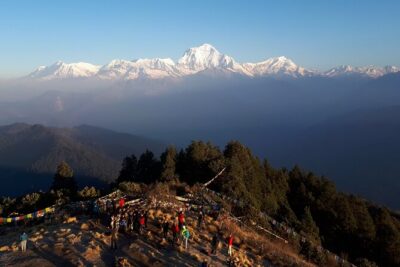
This is also where the trip’s high-country geography becomes specific. The Potanin Glacier sits at the foot of Khuiten Peak (14,350 ft), the highest point in Mongolia. You also pass near Nairamdal Peak, a triple border point associated with Mongolia, Russia, and China—very few animals adapt here because the conditions are harsh.
I like how the itinerary doesn’t treat these big names like trivia. It ties them to what you’re walking through: colder ground, rough terrain, and a higher sense of exposure to the elements.
Final trekking day: giving your horse its head and leaving the glacier zone
On day 13, you leave the Tavn Bogd peaks behind and move north and east to the Ranger station gate to the national park. This is your last day trekking, and it comes with a clear finishing feel.
You have a last chance to ride with your horse, including the chance to give your horse its head and have a nice run. That matters for two reasons. It’s fun, obviously. But it also caps the learning arc that started with Eddie’s riding clinic earlier in the trip.
Then the expedition shifts modes again: you unload the camels, meet your vehicles, and head back to Bayan Ulgii for an overnight at the ger camp.
This is where a lot of treks start to drag in my opinion—when everything turns into logistics. Here, the transition is staged. You get that last riding moment before you switch back to vehicles and flights.
Returning to Ulaanbaatar: Tuushin hotel again and a night out
Day 14 brings a flight back toward Ulaanbaatar, and you overnight at the Tuushin hotel again. This time, it includes a night out on the town.
That might sound like a small detail, but I think it’s one of the smartest ways to close a physically intense trek. You go from high-altitude trekking to city meals and a night where you don’t have to think about camp timing.
Day 15 finishes with a transfer to Chinggis Khaan International Airport for onward plans, with a sad goodbye to your Mongolian guide.
Price and value: what $8,250 covers in the real world
At $8,250 per person, this is not a budget trip. It’s also not priced like a “tour” that happens near a road. You’re paying for a multi-day field operation: flights, private transportation, multiple camp meals, and a team that moves you across remote terrain where local knowledge is the difference between a good trip and a rough one.
A big part of the value is how the days are structured around what you actually need:
- You’re not carrying everything thanks to camel support and waterproof Tusker duffels.
- Your riding learning is coached by Eddie with regular clinic-style instruction.
- Meals are largely covered (breakfast, lunch, and dinner across the days), which matters in places where food options are limited to what the camp can provide.
You should also factor in that good weather can be required for the program to run smoothly. When you’re paying this level of cost, you want an operator that handles conditions and keeps the experience coherent—and from the way the itinerary is built, this trek seems designed to work with real Mongolian field conditions, not just a paper plan.
Who should book this trek (and who should pause)
This trek suits you if:
- You have strong physical fitness and you’re okay with steep hiking, long walking days, and possible snow.
- You want horseback riding coaching, not just a ride.
- You care about nomadic life and cultural stops tied to the region, including eagle hunting, ger community visits, and horse games.
You might pause if:
- You’re sensitive to cold, altitude changes, or rough terrain like frost-heave ground near glaciers.
- You’re not comfortable with days that can involve steep descents and slow progress in higher passes.
Also, consider your comfort with remote travel. This is private and only your group participates, which can feel special and personal. It also means the trip depends on the expedition team’s field decisions, and you’ll follow along rather than control every variable.
Should you book the Mongolia Nomad Trek with Tusker Trail?
If you want Mongolia that feels lived-in and in-motion, this is a strong choice. The biggest reason to book is the mix of horse coaching and serious terrain—river valleys, passes, and glacier country—done with practical support like camel gear hauling and waterproof packing.
If you’re the type who wants one signature glacier photo and then back to the car, you might find the hard walking days less fun. But if you like adventure, building skills, and learning what you’re standing on, this trek has the ingredients that create a lifelong trip.
If you’re on the fence, ask yourself one question: can you handle a physically serious trek where the mountains may put weather in charge? If yes, you’ll likely love how this experience connects riding, culture, and high-altitude Mongolia into one continuous story.
FAQ
How long is the Mongolia Nomad Trek and horse trek?
It’s an approximately 15-day tour, running from arrival in Ulaanbaatar through flights, drives, trekking, and horseback time, and ending with departure from Chinggis Khaan International Airport.
What is the price per person?
The price listed is $8,250.00 per person.
Where does the tour start?
The start is in Ulaanbaatar at Buyant Uhaa Airport.
Is pickup offered?
Yes, pickup is offered.
Do I get help if I’m new to horseback riding?
Yes. Eddie Frank provides riding clinics and also gives riding basics using the Australian saddles at the start of the horseback portion.
Are meals included?
Yes. Breakfast (13), lunch (13), and dinner (13) are included.
Is it a private tour?
Yes, it’s a private tour/activity, and only your group participates.
What if the weather is poor?
The experience requires good weather. If it’s canceled due to poor weather, you’ll be offered a different date or a full refund.