REVIEW · NAYA PUL
Pokhara: 5-Day Annapurna Base Camp Trek with Hot Spring
Book on GetYourGuide →Operated by Himalayan Nomad Treks Pvt. Ltd. · Bookable on GetYourGuide
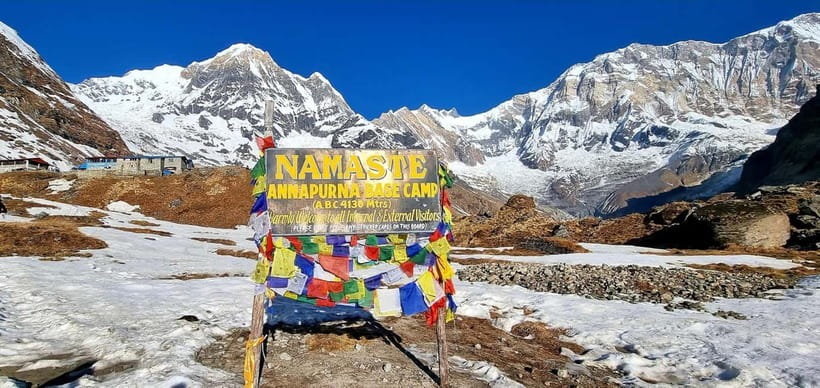
Pokhara to Annapurna Base Camp feels like stepping into a giant stone amphitheater. You’ll climb from about 2,200m villages up to 4,130m Base Camp, then finish with a soak at natural hot springs. The trip is also built for real trail time—jeeps for the rough starts, then hiking most of the way.
I really like the setup here: a licensed English-speaking guide and trekking permits taken care of, so you’re not dealing with paperwork during a tough week. I also like that the tour can be standard (buy meals along the way) or all-inclusive (meals included), which helps you match the trek to your budget and appetite.
The main consideration is how intense a 5-day plan can feel at altitude. One hiker noted they had to manage rough weather in off-season, including sections involving snow/avalanche debris on the descent, so if you’re not comfortable with long days and icy ground, you’ll likely want a longer itinerary or a season with steadier conditions.
In This Review
- Key Points Before You Commit
- Trekking Into Annapurna: The 5-Day Promise from Pokhara
- Day-by-Day: Samrung, Sinuwa, Deurali, Base Camp, and the Descent
- Day 1: Lakeside Pokhara to Sinuwa (2200m) via Scenic Jeep + Trek
- Day 2: Sinuwa to Deurali (3200m) Through Forest and Rhododendrons
- Day 3: Deurali to Annapurna Base Camp (4130m) for the Main Moment
- Day 4: Base Camp Sunrise and the Long Descent to Lower Sinuwa (2200m)
- Day 5: Lower Sinuwa to Jhinu Dada Hot Springs to Pokhara (2200m to Lakeside)
- Jhinu Dada Hot Springs on Day 5: Recovery, Not Just a Photo Stop
- Permits, Licensed Guides, and What’s Included in the $150
- Fitness, Weather, and Altitude: The Real Decisions You Control
- How to judge if 5 days fits you
- Off-season reality
- Altitude habits that actually help
- Food Options, Private Rooms, and the Trail Rhythm
- Gear List You’ll Be Glad You Packed (and What You’re Given)
- Who This Trek Suits Best (and Who Might Want a Different Plan)
- Book It or Skip It: A Practical Decision Guide
- FAQ
- FAQ
- How long is this Annapurna Base Camp trek?
- Where does the trek start from, and is pickup included?
- Is this tour private?
- Does the price include trekking permits?
- What meal options are available?
- What about lodging during the trek?
- Is a guide provided, and what languages do they speak?
- Does the itinerary include hot springs?
Key Points Before You Commit
- Annapurna Base Camp at 4,130m in just 5 trekking days means fast altitude gains—take it slow early.
- Jhinu Dada hot springs on the final day are a smart recovery tool after a long descent.
- You’ll hike through villages and rhododendron forests, not just “peak views,” so the trail stays varied.
- Your tour includes permits + TIMS paperwork, which matters in the Annapurna region.
- Guides like Kaji and Jeet are specifically praised for support, pacing, and clear care on the route.
- The $150 price can be good value if you use the included gear and choose the right meal package.
Trekking Into Annapurna: The 5-Day Promise from Pokhara
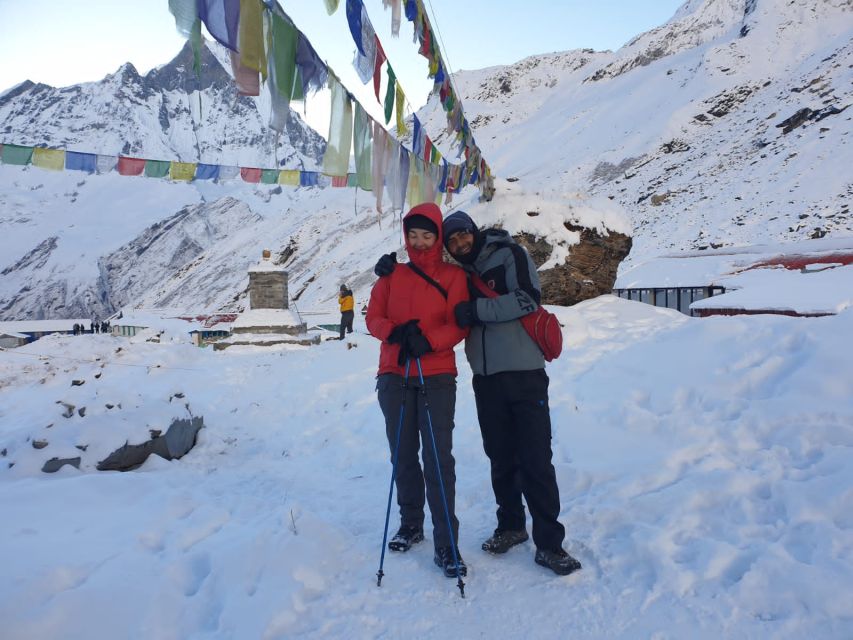
This is a focused Annapurna Base Camp trek, designed as a five-day hit: start from Pokhara, reach Base Camp, then come back down and reward your legs with hot springs. If you want a classic Himalayan experience without turning it into a two-week project, this route fits.
The “why it’s worth it” is simple. You’re not only chasing the big moment at the amphitheater of peaks—you’re also walking through changing forest, village life, and mountain valleys. That mix helps the week feel full, not repetitive, especially on Day 2 where you climb deep into forested sections and rhododendron country.
The other big piece is how much is handled for you. You get a guide, trekking permits, and the necessary fees for the Trekker’s Information Management System. That’s one less stress when you’re trying to breathe, walk, and stay warm as elevation climbs.
You can also read our reviews of more tours and experiences in Naya Pul.


Day-by-Day: Samrung, Sinuwa, Deurali, Base Camp, and the Descent
Let’s break down what each day actually means for your body and your photos.
Day 1: Lakeside Pokhara to Sinuwa (2200m) via Scenic Jeep + Trek
You start early from Lakeside Pokhara, with hotel pickup. The itinerary has you leaving by jeep for a scenic drive (about 3 hours) and then switching to trekking (about 4 hours) to reach Sinuwa around 2,200m.
Why Day 1 matters: it’s your “warm-up with culture.” The route uses a good highway stretch with views of the Seti River, mountains, and paddy fields. You also get a night in Sinuwa, which helps you avoid the classic mistake of treating the trek like one long straight line.
Practical tip: even though Day 1 includes a jeep chunk, don’t overpack your first trekking segment with too much speed. The walk is long enough to start building your rhythm.
Day 2: Sinuwa to Deurali (3200m) Through Forest and Rhododendrons
Day 2 is a serious climb—about 7 hours on foot—rising from Sinuwa to Deurali (3200m). This is where the trail shifts into more dramatic forest scenes, with rhododendron blooms called out along the ascent.
Why this day is special: it’s the bridge between “easy valley trekking” and “real altitude trekking.” You’ll feel the air get cooler and thinner as you gain elevation through trees and quieter stretches. When the views open up, they tend to hit hard because you’re not at the peak yet—you’re still earning it.
Drawback to plan for: because it’s long and upward, you’ll want to pace yourself early and keep your breathing controlled. If you blow out your legs on Day 2, Day 3 can feel much harder.
Day 3: Deurali to Annapurna Base Camp (4130m) for the Main Moment
On Day 3 you climb to Annapurna Base Camp at 4,130m, roughly 5 hours of trekking from Deurali. This is the day with the “so this is what the Annapurna amphitheater looks like” feeling.
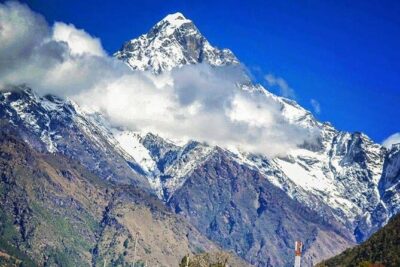
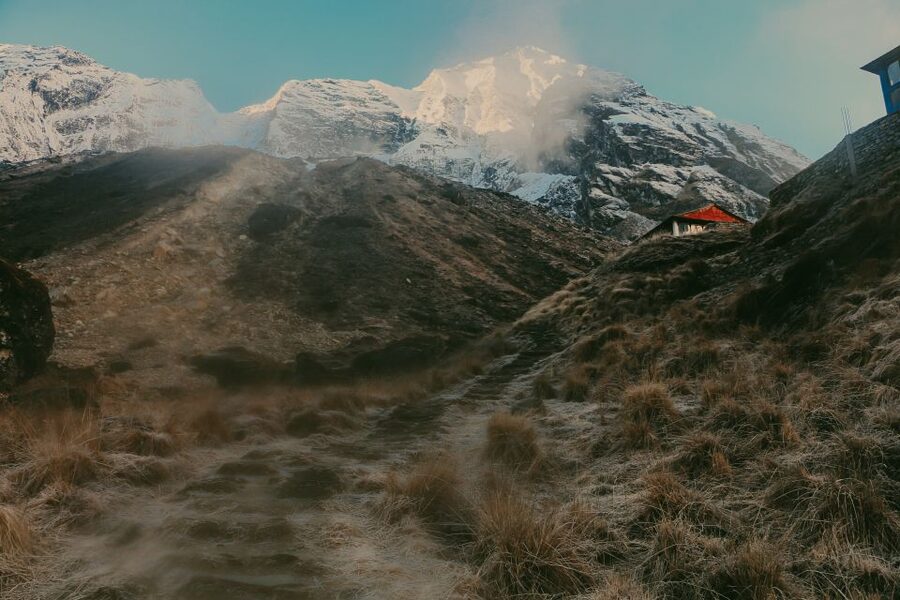
You’ll be greeted by towering peaks and glaciers around the Base Camp area. You’ll also have time to enjoy the moment—especially important because you’re going to sleep at altitude that night.
What to watch: going higher fast can make people breathe harder and drink less. Keep your water and snacks simple, keep moving steadily, and don’t chase speed. Base Camp is the reward, but it’s also a place where fatigue can sneak in.

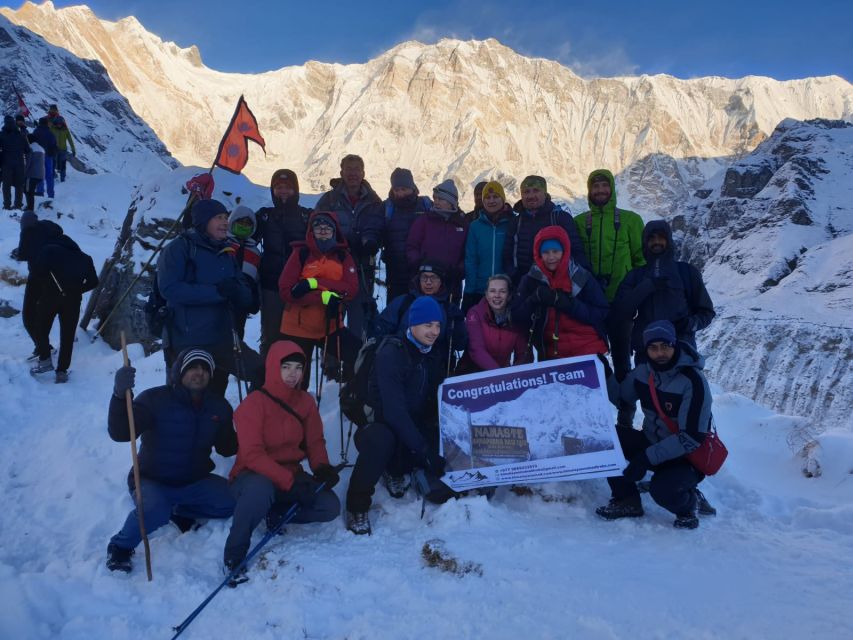
Day 4: Base Camp Sunrise and the Long Descent to Lower Sinuwa (2200m)
Day 4 starts with the typical payoff: sunrise over the peaks. After that, you trek down from Base Camp to Lower Sinuwa (about 8 hours).
This is where the trek changes. Day 3 is about ascent; Day 4 is about control—foot placement, keeping warm, and managing the strain on knees and ankles. Descents can feel longer than ascents, even when the distance isn’t the headline, because you’re using different muscles and you’re tired.
Safety note from real-world experience: one hiker reported off-season conditions that turned rough on the way down, including the need to navigate sections involving four avalanches during descent. The takeaway for you is straightforward: your guide’s judgement matters when snow and unstable conditions show up.
Day 5: Lower Sinuwa to Jhinu Dada Hot Springs to Pokhara (2200m to Lakeside)
Day 5 is your recovery day, but it still includes trekking. You descend from Lower Sinuwa toward Jhinu Dada hot springs (about 4 hours trekking), then continue by jeep back to Pokhara (about 3 hours).
The hot springs are the whole point of the finish. After several days of steady walking and one very long descent, you’re likely to feel stiffness—so this is a satisfying way to end the trip without just heading straight back to daily life.
Then you reach Lakeside Pokhara, with time to reflect and unwind.
Jhinu Dada Hot Springs on Day 5: Recovery, Not Just a Photo Stop
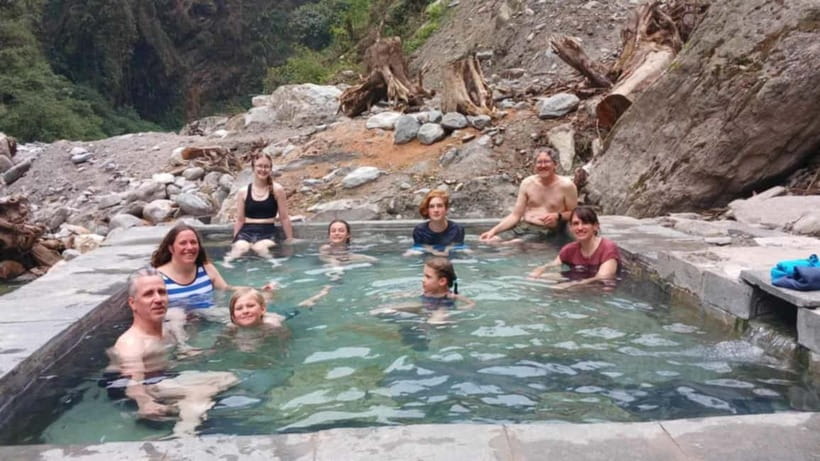
The hot springs here are more than a novelty. After a week moving up to 4,130m and then spending most of Day 4 coming down for about 8 hours, your body needs a reset.
What makes this ending smart is timing. The soak comes right after you’re done trekking, so you don’t have to travel far in cold discomfort. You can treat it like a “cool-down routine,” not like an add-on.
Practical expectations: the springs are natural. So the experience may be basic and a bit earthy—don’t expect a spa scene. Go in with the mindset that heat and water are the feature.
Permits, Licensed Guides, and What’s Included in the $150
Let’s talk value. The price listed is $150 per person for the 5-day program, and that number matters only if the included items reduce your real-world costs and risk.
Here’s what you’re getting that protects you:
- Hotel pickup and drop-off
- An authorized licensed English-speaking guide
- Trekking permits + necessary paperwork + TIMS fee(s)
- Private accommodation during the trek
- Luggage storage facility
- Trekking gear items: trekking poles, sleeping bag, and a duffduel bag
- Deluxe transportation aligned with the itinerary and number of people
- Coverage of staff costs (meals, accommodation, insurance, and transportation)
Then you choose how meals work:
- Standard option: you can purchase meals along the way
- All Inclusive Full Package: breakfast, lunch, dinner are included during the trek
A key value point: permits and TIMS aren’t “just bureaucracy” in Nepal. They’re part of how the region stays regulated. If your plan doesn’t include them, you can burn time dealing with paperwork when you’d rather be walking.
Guide quality is also part of value. Two guides get named in real experiences on this route: Kaji is credited with helping through tough descent conditions, and Jeet is praised for being funny, attentive, and constantly checking that people were resting properly. That’s the kind of care that keeps a trek manageable when conditions change.
Fitness, Weather, and Altitude: The Real Decisions You Control
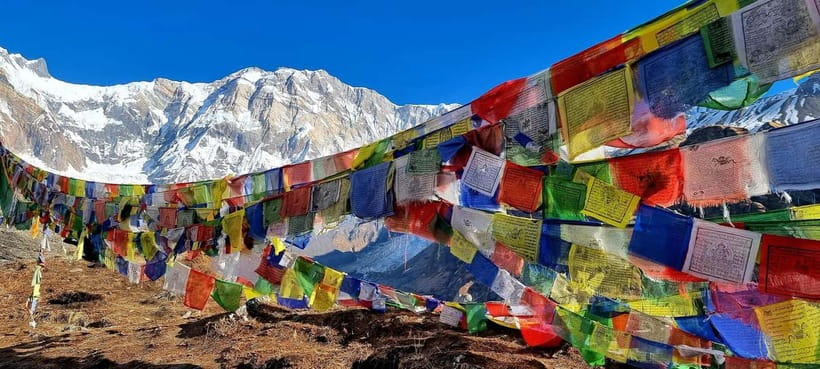
Even with a guide, you’re still the one moving your own body. This route climbs from roughly 2200m to 4130m and then drops back down over the course of five days.
How to judge if 5 days fits you
If you can hike comfortably for 5–8 hours, you can likely handle this itinerary. But balance it against altitude. On Day 2, you’re looking at 7 hours up. On Day 4, you’re looking at 8 hours down. That’s where small mistakes become big fatigue.
If you’re unsure, the advice is simple: consider stretching your trek to 7 days when you can. One person specifically wished they had more time to enjoy views and hikes instead of compressing it into a heavy schedule.
Off-season reality
Weather can vary. One hiker noted that going during off-season meant harsher weather than expected. Their descent involved challenging sections tied to avalanche activity, and their guide played a major role in managing it safely.
This doesn’t mean “don’t go.” It means go with eyes open:
- Pack for cold and potential ice.
- Take longer breaks rather than trying to keep a perfect pace.
- Trust the guide’s calls on conditions, not your pride.
Altitude habits that actually help
You don’t need complicated training for this, but you do need smart habits:
- Walk slower than you think you need on the way up.
- Eat small snacks often.
- Keep warm even when you feel sweaty.
- Don’t start your Day 3 push like it’s a race.
Food Options, Private Rooms, and the Trail Rhythm
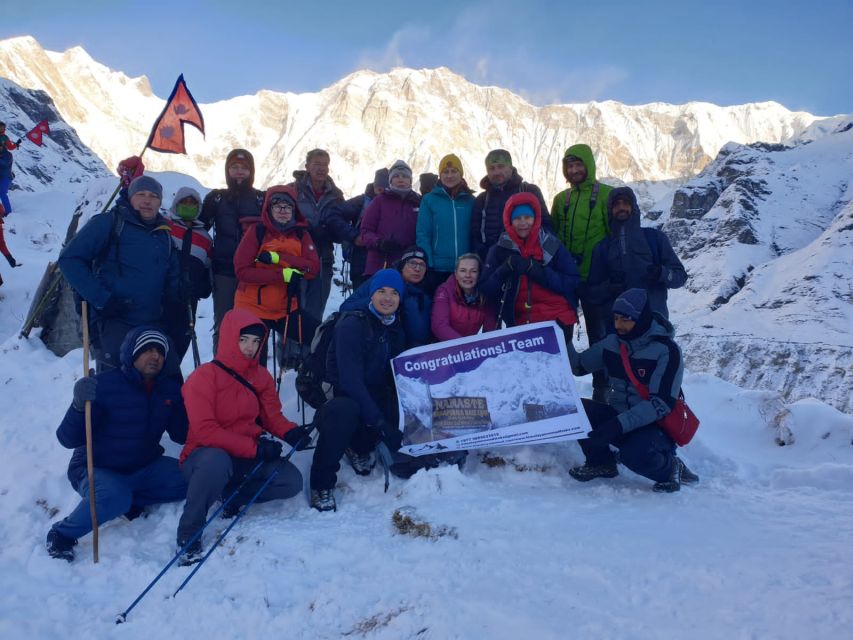
You’re not sleeping in dorm-style chaos. This program includes private accommodation during the trek, which is genuinely helpful when you’re tired and oxygen is limited. Quiet matters at altitude.
Meals depend on which package you pick:
- Standard: you buy meals along the way.
- All-inclusive: breakfast, lunch, dinner are included during the trekking days.
If you pick standard, you’ll want to plan for how often you’ll stop and what you’ll order. If you pick all-inclusive, you reduce decision fatigue and the constant searching for what’s open.
Either way, keep your food expectations realistic. In mountain villages, you won’t find a fine-dining menu. You will find enough energy to keep moving—especially if you stick to simple foods your stomach tolerates.
Gear List You’ll Be Glad You Packed (and What You’re Given)
The tour includes several items: trekking poles, a sleeping bag, and a duffel bag. That’s a big help if you’re traveling light or don’t want to buy equipment in Nepal.
You still need to bring the basics listed:
- Passport or ID card
- Camera
- Sunscreen
- Shorts (yes, even in cooler areas, for layered comfort)
- Hiking shoes
- Daypack
- Jacket
- Change of clothes
- Comfortable clothes
- Hat
- Socks
- Trekking gear (beyond poles/duffel if you use your own setup)
- Sunglasses
Simple advice: if you have a reliable pair of hiking shoes, bring them. Don’t count on breaking in a new pair on a 5-day high-altitude route.
Also plan clothing like a layer cake. Even when you’re sweating on the climb, you can get cold quickly at higher elevation and during long descents.
Who This Trek Suits Best (and Who Might Want a Different Plan)
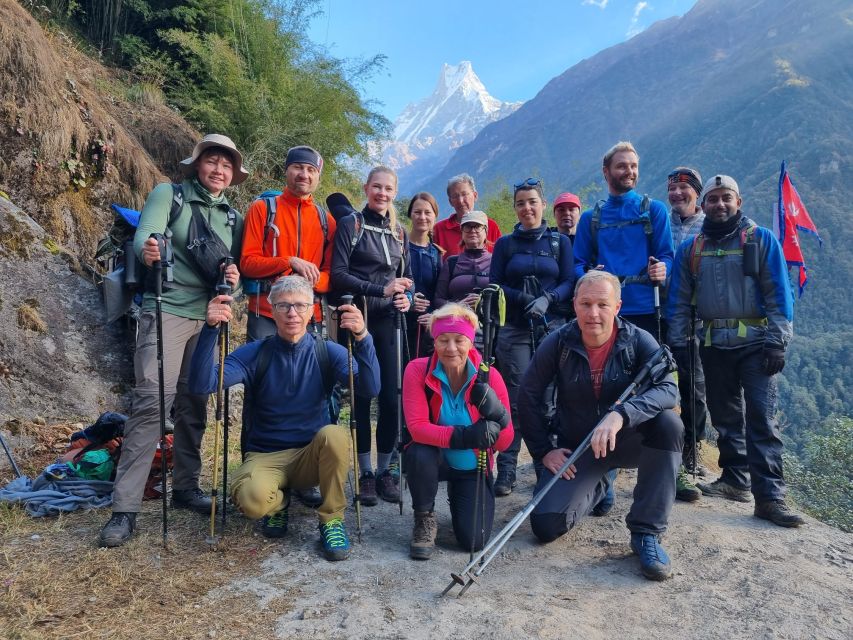
This trek fits best if you:
- Want the classic Annapurna Base Camp destination in a short window
- Are comfortable with long hiking days
- Prefer having a guide handle permits, paperwork, and logistics
- Like the idea of ending with hot springs rather than just finishing and immediately traveling
It may not fit as well if you:
- Get uncomfortable on long days without much buffer
- Are very sensitive to cold or uncertain trail conditions
- Want a slower pace with more time at viewpoints
If you’re in that last group, consider adding days. Even one extra day can turn a “survival hike” into a “journey.”
Also note: porters can be arranged for extra cost if you need one. If you pack heavy, that can be the difference between finishing with strength versus finishing with dread.
Book It or Skip It: A Practical Decision Guide
So should you book this tour?
If you want Annapurna Base Camp in five days, you’re physically ready for hard hiking (up and down), and you appreciate a guided plan that includes permits and equipment, I think it’s a strong choice. The price can be meaningful because the trek gear (poles, sleeping bag, duffel), guide, permits, and transport are bundled into the package.
If you’re not sure about long hikes, snow/ice risk, or off-season conditions, don’t force it. Either pick a season with better stability or choose a longer itinerary so your body has time to adapt.
One last practical note: the tour offers free cancellation up to 24 hours in advance for a full refund, which is handy if weather or personal plans shift.
FAQ
FAQ
How long is this Annapurna Base Camp trek?
It’s a 5-day trek from Pokhara to Annapurna Base Camp, with trekking time built into each day and jeep transfers on parts of the route.
Where does the trek start from, and is pickup included?
The trek starts from Lakeside, Pokhara, and hotel pickup and drop-off are included. You should wait in the hotel lobby about 10 minutes before the scheduled pickup time.
Is this tour private?
Yes. It’s listed as a private group.
Does the price include trekking permits?
Yes. Trekking permits, all necessary paperwork, and TIMS fees are included.
What meal options are available?
You can choose a standard option where you purchase meals along the way, or an all-inclusive package that includes breakfast, lunch, and dinner during the trek.
What about lodging during the trek?
Private accommodation during the trek is included.
Is a guide provided, and what languages do they speak?
You get an authorized licensed English-speaking guide, and the listed languages for the live tour guide include English, Hindi, and Nepali.
Does the itinerary include hot springs?
Yes. On Day 5, you’ll go through Jhinu Dada Hot Springs for a relaxing soak before returning toward Lakeside, Pokhara.
If you tell me your hiking level (and what month you’re considering), I can help you judge whether this 5-day version feels right or if you’d be happier with a longer plan.