REVIEW · MERZOUGA
Overnight Camel trek in Merzouga dunes
Book on Viator →Operated by camels house · Bookable on Viator
Camel rides in the Sahara hit different.
This 2-day Merzouga trek is built around Erg Chebbi dunes at golden hour and a real Berber desert camp experience. I like how the schedule mixes big views with simple desert life: a proper tagine dinner, a campfire drum circle, and even sandboarding time before night falls. One thing to consider: your desert sleep is in a Berber tent set up for two people per tent (or a family), so it is not a solo private setup.
I also appreciate the smooth flow from town to dunes. You get 4×4 transfer from the Camels House area, then the camels take over for the main desert time, with sunrise built in for the second day.
Key setup detail: pickup starts from Camels House near Ksar Merzouga, and the activity runs in the afternoon through the next morning.
In This Review
- Key things I’d plan around
- Why an overnight Merzouga camel trek feels worth it
- Getting to the dunes from Camels House (and why the timing matters)
- Day 1: camel trek, sandboarding, sunset dune climb, then Tuareg drums
- From meet-up to first camel rhythm
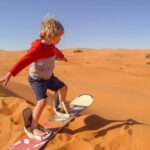
- Sandboarding while the dunes are still bright
- The high-dune sunset moment
- Dinner in a Berber tent, then a campfire show
- Sleeping in a Berber tent under Erg Chebbi stars
- Day 2: sunrise over the dunes, breakfast, then back to Camels House
- Food and music: the parts you’ll remember after the photos fade
- Traditional tagine dinner
- Drum circle and Tuareg-style songs
- Stargazing as a quiet counterpoint
- Wildlife spotting: what to expect (and how to enjoy it)
- Price and value: what $40.71 actually buys you
- Group size and how it shapes your night
- Who should book this Merzouga overnight camel trek
- FAQ
- Can I pick up from Camels House?
- What’s included in the price?
- Is lunch included?
- How long is the overnight trek?
- Where do I sleep during the night?
- Is there a shower on the return?
- Should you book this overnight camel trek in Merzouga
Key things I’d plan around
- Erg Chebbi sunset climb: you head up to catch the light and take photos.
- Sandboarding in the dunes: included and timed during Day 1.
- Berber camp dinner + Tuareg-style drums: dinner first, then music, then stargazing.
- Sunrise breakfast in the desert: you wake up to dunes, not a room key.
- Shared Berber tent setup: one tent for two persons or a family.
- Return with shower: you come back to Camels House for breakfast and a hot shower.
Why an overnight Merzouga camel trek feels worth it
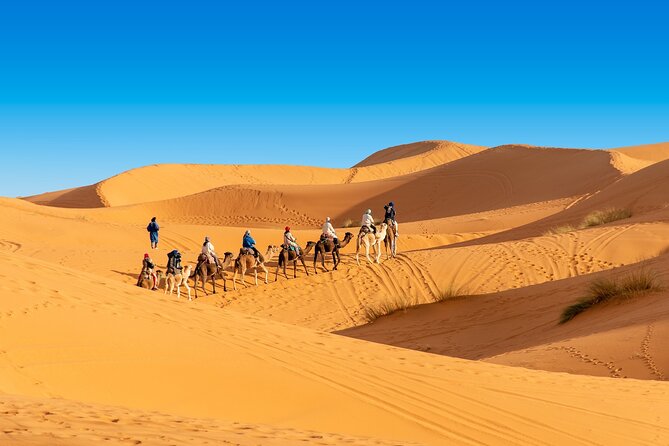
Merzouga is famous for Erg Chebbi dunes, but the overnight part changes the whole experience. Day trips can be a quick photo stop. An overnight trek turns the Sahara into a slow rhythm: movement on camel, a long sunset pause, then a night under stars before you head back.
This particular format also gives you more than just riding. You get sandboarding time, a tagine dinner in a Berber camp setting, and a drum circle built into the evening mood. If you want the desert to feel like something lived in, not just something you drive through, this is the right style.
It’s also good value for what’s included. For a price around $40.71 per person, you are not only paying for the camel ride—you’re paying for the whole desert “evening + overnight + sunrise return” package, including meals.
You can also read our reviews of more tours and experiences in Merzouga.
Getting to the dunes from Camels House (and why the timing matters)
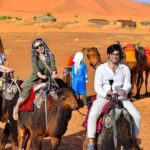
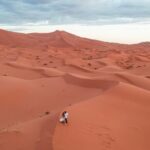
The experience starts at Camels House in Ksar Merzouga, right by Erg Chebbi. You’ll meet your camel guide and get a short camel-riding briefing before the ride begins.
From there, you’re transferred by 4×4 from the camels’ house area to the start point. This matters because it saves you from wasting your day on extra driving before the real work starts—getting out into the dunes.
Timing is also part of the deal. Day 1 begins in the afternoon. That’s intentional: it sets you up to climb into position for sunset rather than arriving too late, when the best light is already gone.
Day 1: camel trek, sandboarding, sunset dune climb, then Tuareg drums
Day 1 is all about building anticipation and then cashing it in with sunset.
From meet-up to first camel rhythm
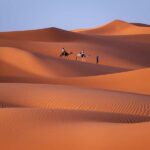
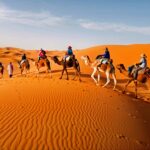
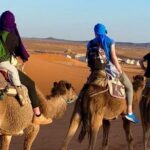
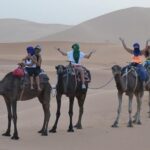
After you connect with your guide, you’ll do a quick camel-riding rundown. Then the camel trek takes you toward the dunes camp area. The camp is placed out in the Erg Chebbi dunes, so when you arrive, you’re already surrounded by the desert.
Sandboarding while the dunes are still bright
A big plus here is sandboarding. You do it on the same day, while the sun is still active and the dunes feel easy to read from a distance. It’s included, which means you don’t have to make extra plans or pay another fee once you’re already out there.
Practical note: sandboarding is fun, but you’ll get sand in places sand should not be. Wear something you can live with afterward, and bring a way to rinse off when you’re back.
The high-dune sunset moment
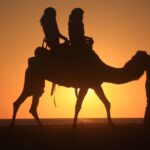
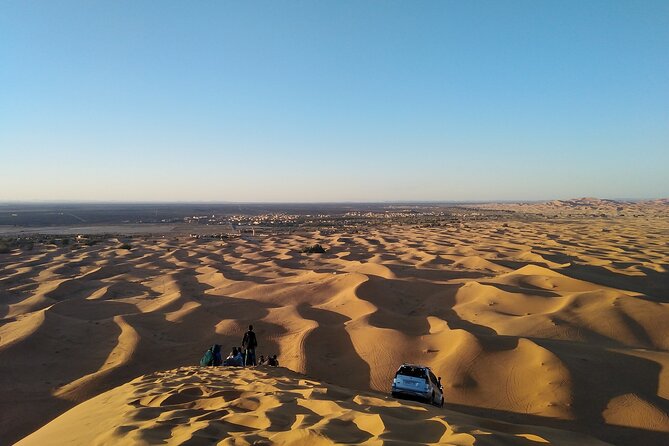
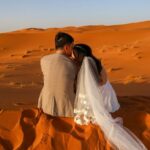
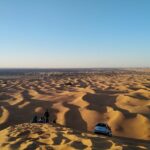
Once the camp is set, you’ll climb to watch the sunset from the higher dunes. This is where you get that classic Erg Chebbi look—rippling sand ridges and warm light spreading over the desert.
The itinerary specifically includes the idea of going up to the highest dune for photos, then returning to camp. That structure is good because you’re not scrambling around when the light is fading.
Dinner in a Berber tent, then a campfire show
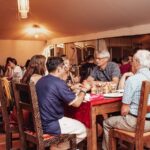
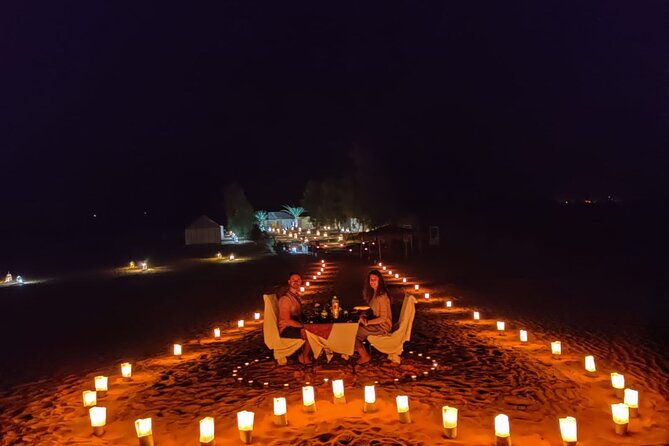
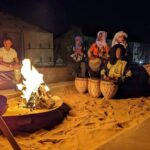
Evening rolls into a tagine-style Moroccan dinner served in the Berber camp setting. After dinner, you’ll gather around a campfire for drums and traditional songs (Tuareg-style). Then you get stargazing time.
If you care about atmosphere, this is the part to lean into. The music isn’t just background. It’s part of how the camp feels at night—human voices, rhythm against silence, sand under everything.
Sleeping in a Berber tent under Erg Chebbi stars
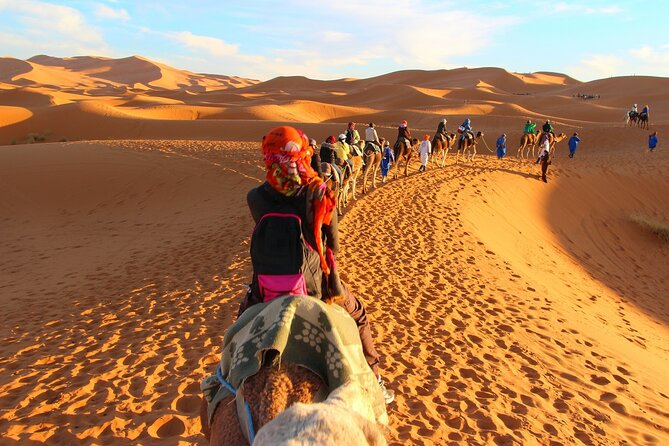
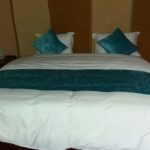
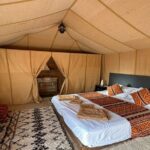
Overnight desert camps can range from charming to chaotic. This one is designed around a simple setup: you have your own private tent for every two persons (or a family), then you fall asleep with the dunes around you.
A key practical reality: because tents are shared by design, the experience feels social. That’s not a problem if you’re comfortable with it. It’s just good to know up front so you can choose your expectations.
The benefit of sleeping in the desert zone is that you’re not waking up in a parking lot somewhere. You’re waking up in the same dunes world you watched at sunset. That continuity makes the morning feel like part of the story, not a second act tacked on later.
Day 2: sunrise over the dunes, breakfast, then back to Camels House
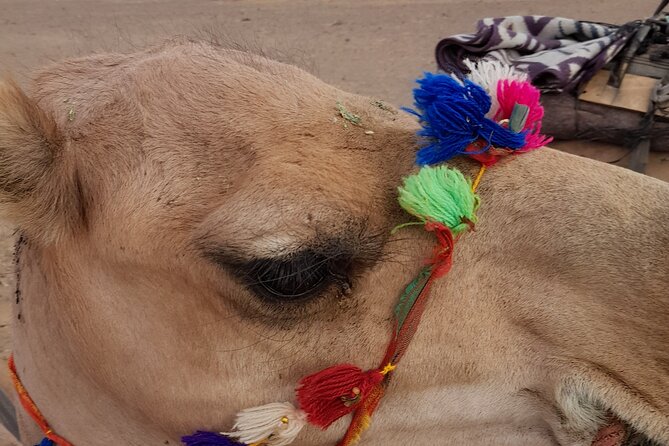
Day 2 is built around the payoff moment: sunrise.
You’ll wake up to watch the sunrise over the dunes, then you’ll head back to the hotel area for Berber breakfast and a shower. That hot shower detail matters more than it sounds. After a night outside, it turns the return from just a finish line into a real reset.
Then you do a late-morning camel trek back to Merzouga, and the activity ends back at the meeting point (Camels House). The overall day keeps the desert time short and sweet after the morning show.
Food and music: the parts you’ll remember after the photos fade
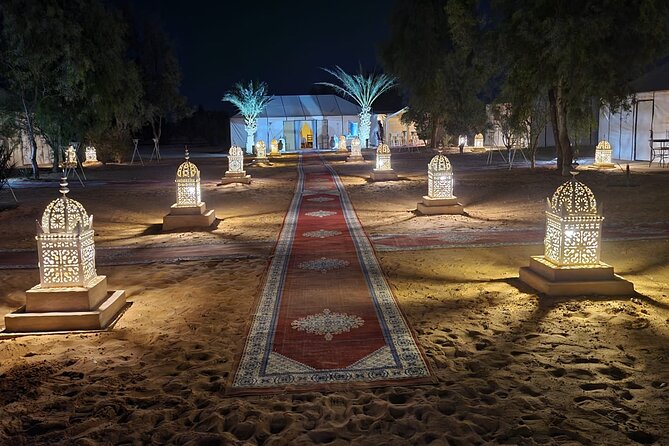
A lot of people come for the dunes. You’ll still remember the dunes, sure. But what sticks for me is how the evening is paced around food and music.
Traditional tagine dinner
Dinner is served as a traditional Moroccan tagine. The value here is that you’re eating in the same place the experience is happening, not rushing back to town for a quick meal. That makes the desert feel like a whole evening, not just a two-hour add-on.
Drum circle and Tuareg-style songs
The campfire drum circle is one of the most praised aspects of this style of trek. It’s the moment when the desert stops feeling like scenery and starts feeling like a cultural event happening in real time.
I also like that the program doesn’t treat music as optional. It’s part of the evening flow right after dinner and before stargazing.
Stargazing as a quiet counterpoint
After the energy of drums and songs, stargazing gives you that calm contrast. It’s not a separate attraction you have to hunt for. It just happens because you’re sleeping out there.
Wildlife spotting: what to expect (and how to enjoy it)
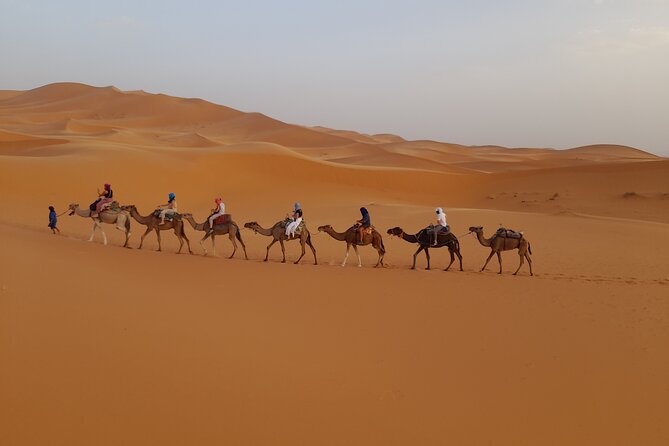
The desert is full of life, just not life you can see when you’re zipping past in a car. This tour includes time where you can search for desert reptiles and mammals as you trek.
You should keep expectations realistic. You’re looking, not guaranteeing sightings. The best mindset is to stay quiet, move slowly when asked, and pay attention to your guide’s cue if they spot signs.
If you care about animals and want to feel like you’re paying attention instead of just photographing, this adds meaning to the camel ride. Even when you see nothing, you come away more aware of how the desert works.
Price and value: what $40.71 actually buys you
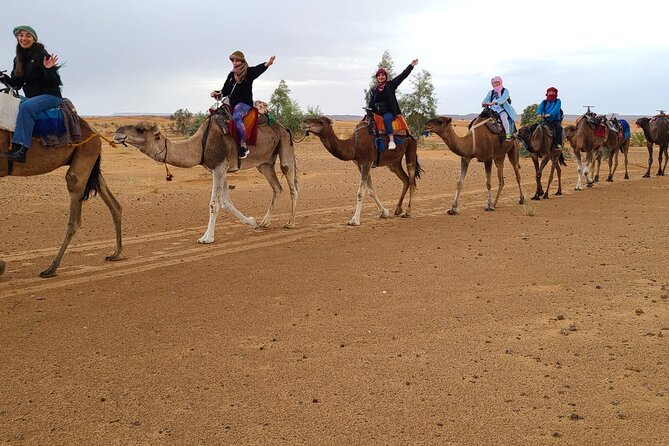
At about $40.71 per person, this trek packs in a lot for the money—especially compared to doing each piece separately.
Here’s what you’re paying for, in plain terms:
- Camel ride for the desert portion
- 4×4 transfer from Camels House area to the trek start
- Sandboarding in the dunes
- Sunset and sunrise dune viewing
- Overnight in a Berber desert camp
- Dinner and breakfast (tagine for dinner, Berber breakfast the next morning)
- Berber music/campfire and stargazing
Lunch is not included, so you’ll want to plan your day around that. Also, the shared tent setup affects comfort more than people expect, so mentally file this as a true desert camping experience rather than a hotel-style overnight.
On top of the inclusions, this tour tends to score very high. You’ll find the strongest praise for the music around the fire, the food, and the overall vibe of the people running it. When a camp keeps the tone warm and welcoming after a long travel day, you feel it.
Group size and how it shapes your night
This experience has a maximum of 30 travelers. That number matters because it sets the ceiling for how busy the camp can feel.
It also means your camp might be lively one night and calmer another. On some departures, the group can be small enough that the camp feels more intimate. If you’re the type who prefers quiet conversations and slower vibes, you might love that.
Either way, the evening program still works because it is built into the desert setting—dinner, then music, then stargazing—so you’re not just waiting around for the next activity.
Who should book this Merzouga overnight camel trek
Book it if you:
- want Erg Chebbi dunes with real time for sunset and sunrise
- like a camp atmosphere with tagine dinner and drum circle
- want the convenience of meals + transport + activities bundled together
- don’t mind a shared Berber tent setup
Consider another option if you:
- need a fully private, hotel-style overnight
- get stressed by shared spaces and simple camping conditions
- want a long, slow desert day that starts early in the morning (this one starts in the afternoon)
This is a strong fit for couples, friends, and solo travelers who enjoy meeting people and sharing an evening around the fire.
FAQ
Can I pick up from Camels House?
Yes. Pickup/transfer is offered, and the meeting point is Camels House near Ksar Merzouga.
What’s included in the price?
The experience includes camel ride, 4×4 transfer from Camels House area, sandboarding, sunset and sunrise dune viewing, overnight in a Berber desert camp, dinner and breakfast, and Berber music/campfire plus stargazing.
Is lunch included?
No. Lunch is not included.
How long is the overnight trek?
It runs about 2 days.
Where do I sleep during the night?
You sleep in an authentic Berber tent. The setup is one tent for every two persons or a family.
Is there a shower on the return?
Yes. After the morning return to the hotel area, you have shower time along with breakfast.
Should you book this overnight camel trek in Merzouga
My take: if you want Morocco’s Sahara to feel like more than a photo stop, this is an excellent way to do it. The strongest reasons to book are the full sunset-to-sunrise arc, the included sandboarding, and the evening built around tagine dinner, campfire music, and stargazing.
The main tradeoff is simple: you’re sleeping in a shared Berber tent setup, and you’ll need to plan for no lunch included. If that works for you, you’ll likely find the value hard to beat for the price—and the whole experience tends to leave people talking about the night by the fire.
If you’d like, tell me your travel month and whether you prefer small groups or don’t mind busier nights, and I’ll suggest the best way to time this with the rest of your Merzouga trip.