REVIEW · MUSCAT
Full Day Tour from Wakan to Jebel Akhdar Trekking
Book on Viator →Operated by WikiTours Adventures · Bookable on Viator
Ten hours of mountain trail in Oman.
This trek is interesting because it strings together Wakan Village at 2,000 meters and a long climb through working farmland, then rewards you with a high viewpoint over Wadi Mistel before you finish toward the Green Mountains. I like how the day is built around real hiking—9 kilometers up through terraced fields, farms, and waterways—rather than just scenic stops. The one consideration: it’s a full-day effort that takes steady stamina, and it runs only with good weather.
You’ll be picked up in the Muscat area (pickup is offered), and the drives from Muscat are about 2 hours each way, so you’ll start early and use the ride time to get your bearings fast. The group size stays small (maximum 12), which helps the pace stay manageable.
On the Jebel Akhdar side, the payoff shifts from trail views to mountain agriculture. This area is known for a wide range of crops, including the pomegranate that locals say is among the finest, plus rose water made by locals—so you finish with something different besides just scenery.
In This Review
- Key highlights to expect on this Wakan to Jebel Akhdar trek
- Wakan to Jebel Akhdar: why this route feels more than scenic
- Getting there from Muscat: the Al Sahwa Public Park start
- Wakan Village at 2,000 meters: terraced gardens with mountain views
- The 9-kilometer uphill section: terraced fields, farms, and water
- Towr of Wakan and the climb’s midpoint rhythm
- Wakan Horn: rest, photos, and Wadi Mistel scenery
- Continuing to the Green Mountains: shifting from trail to agriculture
- Time on your feet: how the 10-hour day breaks down
- Price and value: $850 per group up to 4 (and why admission is free)
- Group size, pacing, and what a max of 12 means for your day
- What to bring: practical gear for terraced slopes and long views
- Who should book this Wakan to Jebel Akhdar trek
- Should you book this Wakan to Jebel Akhdar trekking day?
- FAQ
- How long is the Wakan to Jebel Akhdar trekking tour?
- Where is the meeting point in Muscat?
- Is pickup included?
- What fitness level do I need?
- How many people are in the maximum group?
- How much does it cost and is it per person?
- Is there an admission ticket cost?
- What is the cancellation policy?
- What does the tour depend on?
Key highlights to expect on this Wakan to Jebel Akhdar trek
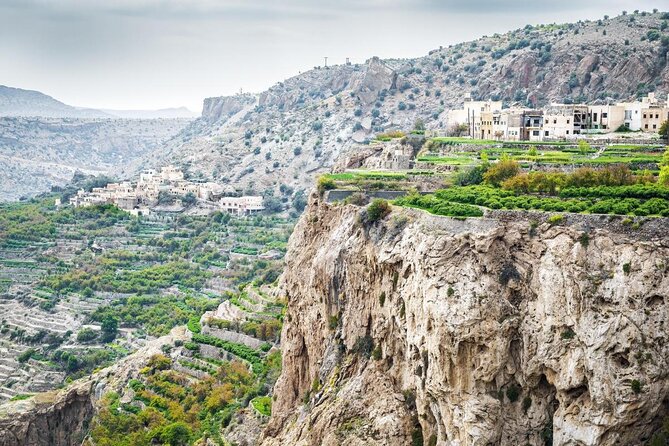
- Wakan starts high at about 2,000 meters, in the Western Hajar Mountains
- A real uphill workout with about 9 kilometers of climbing through terraced fields
- Farm life along the way: terraced gardens, waterways, and agricultural areas
- A photo-and-rest moment at Wakan Horn with views toward Wadi Mistel
- Jebel Akhdar’s agriculture theme: pomegranates and rose water reputation
- Small group feel with a maximum of 12 travelers
Wakan to Jebel Akhdar: why this route feels more than scenic
This isn’t just a walk for pictures. The route connects a high village setting with working mountain farms, then brings you toward Jebel Akhdar’s broader agricultural identity. You’re moving through altitude and atmosphere, and the terrain changes from terraced fields to ridge-top viewpoints.
I also like that the day is structured around “work, then reward.” You climb through cultivated slopes first, then you get a planned rest where the views open up. That rhythm makes it easier to judge your pace instead of burning out too soon.
You can also read our reviews of more tours and experiences in Muscat.

Getting there from Muscat: the Al Sahwa Public Park start
Your day begins and ends at Al Sahwa Public Park (H6RX+79R), Seeb. Pickup is offered, which matters because you’re committing to a full day and you don’t want to spend your energy figuring out transfers.
The driving time from Muscat is about 2 hours to start, and then about 2 hours back to Muscat afterward. That means the schedule is built around road time as well as trail time—so even if you’re fit, plan on being “on the clock” for roughly 10 hours total.
Practical tip: keep your morning routine simple. If you’re coming from Muscat, use the drive to hydrate and get your layers sorted, because you’ll be transitioning from comfortable road weather to mountain trekking conditions.
Wakan Village at 2,000 meters: terraced gardens with mountain views
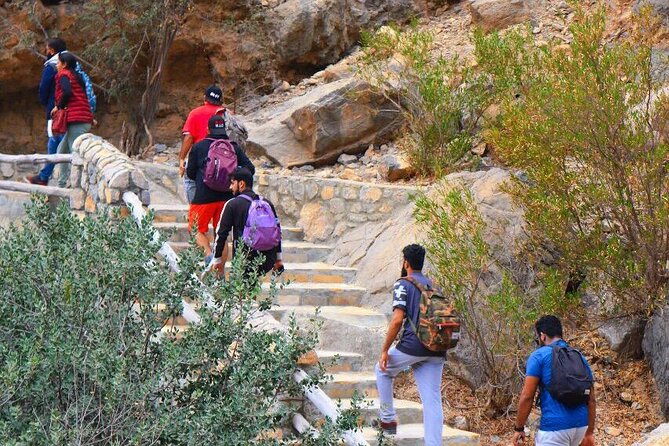
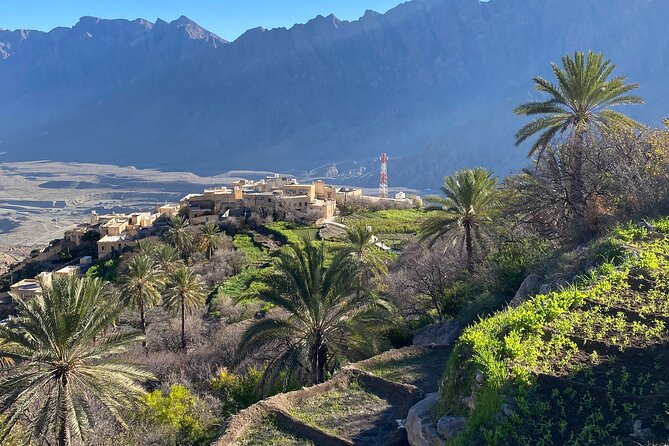
Wakan Village is the starting point at around 2,000 meters in the Western Hajar Mountains. It’s a small mountain village with terraced gardens that look out over the surrounding mountains, with Wadi Mistel dropping below.
One useful detail for your expectations: Wakan sits within Wilayt Nakhal in the South Batinah Governorate, but it’s right near the border with Al Dakhiliyah through the Hajar mountain range. That helps explain why you’re hiking through a corridor that feels culturally and geographically “in between”—not just one straight valley.
What I like here is the early sense of place. You start in a village setting rather than a parking lot. That makes the climb feel like you’re walking into the mountains, not just walking around them.
The 9-kilometer uphill section: terraced fields, farms, and water
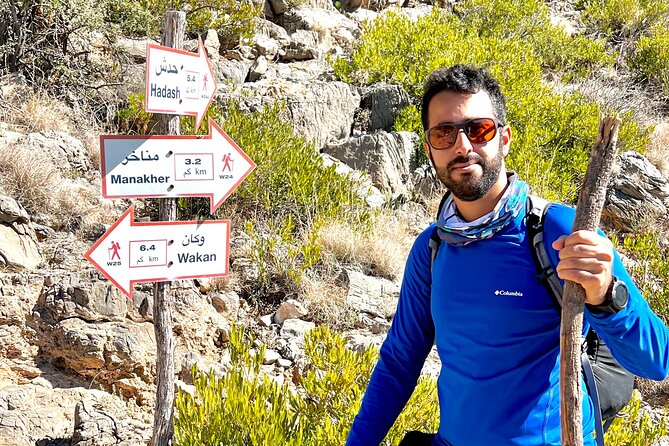
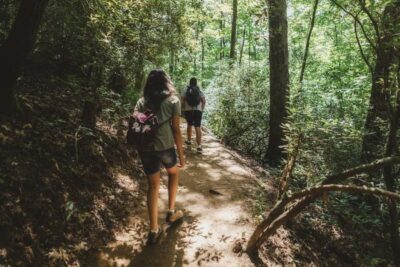
The core hiking stretch climbs some 9 kilometers up terraced fields. You’ll pass through farms, along stunning waterways, and through the agricultural spaces that have shaped the slopes for generations.
A long uphill segment like this is where smart pacing matters. Go steady, not heroic. If you feel tempted to sprint early, remember that the day is designed for a long climb followed by a viewpoint stop and then continued hiking. You’ll enjoy the scenery more when you’re not fighting your breathing.
Also, because this section is about working farmland and waterways, you’ll likely find the trail context changes often—open patches, cultivated areas, and spots where the path feels more constrained by the slope. Sturdy shoes help, and so does keeping your eyes on footing as much as your eyes on scenery.
Towr of Wakan and the climb’s midpoint rhythm
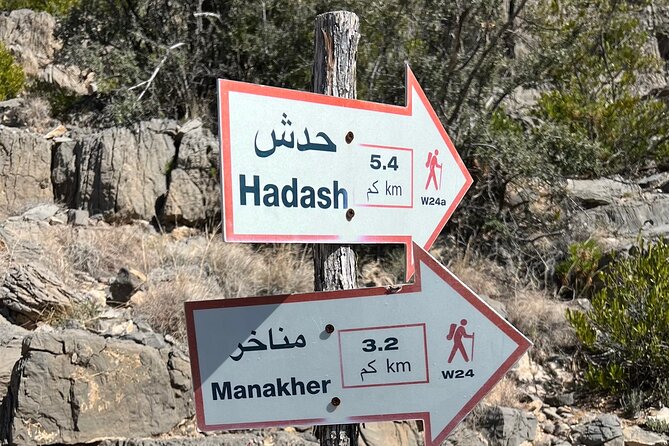
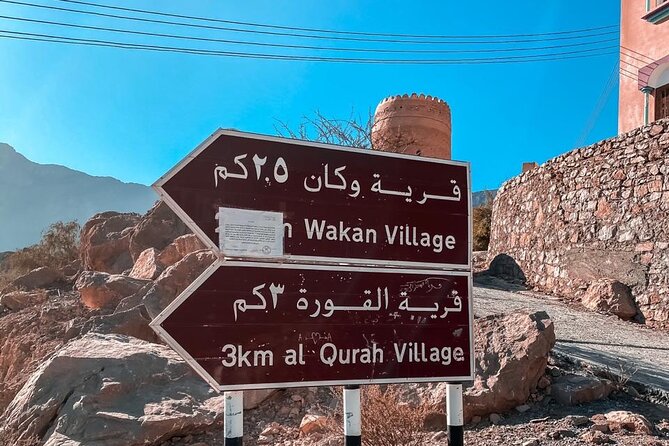
After the ascent through the terraced fields, the hike brings you to the Towr of Wakan area as you continue onward. Even though you’re not spending the day only in villages, the route keeps returning you to the idea that this is a lived-in mountain system—fields and farms that depend on careful terrain management.
This matters for value because it makes the hike feel grounded. You’re not only observing from a distance. You’re traveling through the spaces where the mountain’s agriculture actually happens.
If you’re planning for energy, this is a good mental checkpoint. When you reach this point, you can remind yourself that the rest of the day includes another high point and then a continued hike toward the Green Mountains.
Wakan Horn: rest, photos, and Wadi Mistel scenery
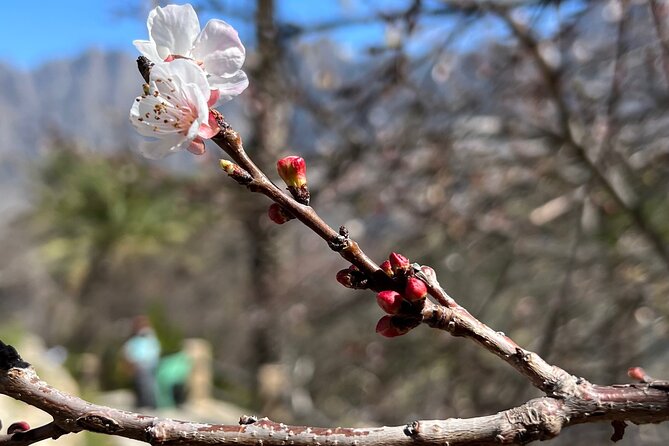
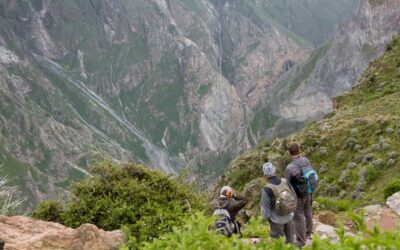
From the highest area (Wakan Horn), you stop to rest and take pictures of the amazing scenery of Wadi Mistel. This is the moment that turns the long climb into a story you can actually remember.
Even if you’re not a big “photo person,” use this break for a proper reset: stand, breathe, drink water, and scan the valley views. A viewpoint stop like this can make a huge difference in how the rest of your day feels, because you’re not forcing yourself uphill without any payoff.
One more thing to plan for: your body is still warmed up from hiking, so don’t be surprised if the temperature feels different at the higher point. Bring layers you can adjust quickly.
Continuing to the Green Mountains: shifting from trail to agriculture
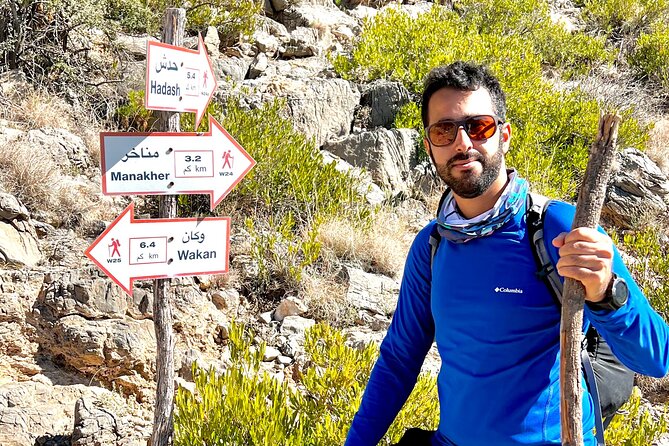
After the Wakan Horn stop, you continue onward toward the Green Mountains. The emotional feel of the hike shifts here: you’ve already earned your big viewpoint, so now the focus becomes staying comfortable on the trail and moving toward Jebel Akhdar.
That transition is part of the charm. Many hikes give you one dramatic view and then that’s it. Here, the day keeps rolling—so you’re not just hiking toward one postcard and then heading back.
As you move into the Jebel Akhdar side, the story becomes about agriculture and local production. Jebel Akhdar is famous for the diversity of its agricultural products, including the finest pomegranate, known locally for delicious taste. It’s also linked with locals making rose water, a detail that helps you see why these mountains matter beyond hiking.
Time on your feet: how the 10-hour day breaks down
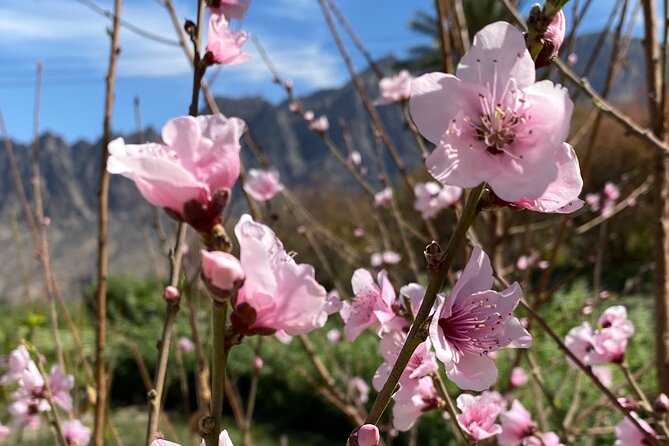
This is roughly a 10-hour full-day experience. The driving time from Muscat is about 2 hours in, and about 2 hours back out. That leaves the rest of the day for hiking and the stops along the route.
The practical takeaway: you should treat this as a full hiking day, not a casual stroll. You’ll want to start hydrated, wear shoes you can trust, and keep snacks/water handy if that’s part of your usual hiking routine.
If your fitness level is only “tourist walk” mode, you’ll probably feel the climb. The tour asks for moderate physical fitness, so be honest with yourself about whether you can handle steady uphill for a long stretch.
Price and value: $850 per group up to 4 (and why admission is free)
The price is $850.00 per group with up to 4 people. That’s the biggest value question: what does that cost translate into per person?
- If you fill the group capacity (4 people), you’re looking at about $212.50 per person.
- If you’re a smaller party, the cost per person climbs because the price is per group, not per seat shared with strangers.
For that kind of money, the value comes from a few specific inclusions: pickup is offered, the day runs about 10 hours with long drive legs, and there’s a free admission ticket component stated for the day. You’re also getting a guided hiking experience rather than just a car transfer.
If you’re traveling with 2–4 people who want the same pace and route, it can be a strong deal. If you’re traveling solo, it may or may not feel worth it depending on your flexibility, because you won’t automatically lower the per-person price unless the group fills.
Group size, pacing, and what a max of 12 means for your day
The tour has a maximum of 12 travelers. That’s large enough to feel like a tour group, but small enough that the hiking day doesn’t become chaotic.
In practical terms, a capped group size helps with timing. Stops for rest and photos work better when you’re not waiting behind a long line. It also makes it easier for the team to manage the flow on uphill sections.
If you prefer to hike at a steady rhythm rather than stop every few minutes, this size is generally a good compromise.
What to bring: practical gear for terraced slopes and long views
The route includes a long uphill climb, rest stops, and viewpoint time at a higher elevation area. You’ll want the basics for a full trekking day.
I’d pack around these priorities:
- Comfortable hiking shoes with grip for uneven trail and terraced edges
- Sun protection (hat/sunglasses) since you’ll be exposed at points during a long day
- A light layer for temperature changes at higher points
- Water and simple snacks that fit your hiking style
Also, take the viewpoint stop seriously. Set up your photos without rushing, and use that break to regroup before continuing toward the Green Mountains.
Who should book this Wakan to Jebel Akhdar trek
This trek is a great fit if you:
- like hiking that includes real elevation gain (not just flat walking)
- enjoy moving through working landscapes—terraced fields and farms
- want big valley views at Wadi Mistel, with a rest stop built in
- are curious about Jebel Akhdar’s agricultural reputation, including pomegranate and rose water
It may not be the best choice if you need mostly level terrain or if you’re worried about a full day where the schedule includes both mountain hiking and long drives.
Should you book this Wakan to Jebel Akhdar trekking day?
If your ideal Oman day includes a long uphill climb, village-to-mountain views, and a finish that ties into local agriculture, I’d say this is worth your time. The route has a clear payoff arc: ascent through terraces, a high rest at Wakan Horn, then continued hiking toward Jebel Akhdar and its famous pomegranate and rose water connections.
Book it if you can handle moderate physical effort and you’re traveling in a period when conditions are good. I’d be cautious if weather is unstable on your dates or if you’re not comfortable committing to roughly 10 hours with about 2-hour road time each way.
FAQ
How long is the Wakan to Jebel Akhdar trekking tour?
The tour is approximately 10 hours.
Where is the meeting point in Muscat?
The tour starts at Al Sahwa Public Park (H6RX+79R, Seeb, Oman) and ends back at the same meeting point.
Is pickup included?
Yes, pickup is offered.
What fitness level do I need?
The tour requires moderate physical fitness.
How many people are in the maximum group?
The tour has a maximum of 12 travelers.
How much does it cost and is it per person?
It costs $850 per group (up to 4).
Is there an admission ticket cost?
Admission is listed as free.
What is the cancellation policy?
Free cancellation is allowed up to 24 hours in advance for a full refund. If you cancel less than 24 hours before the start time, the amount paid is not refunded.
What does the tour depend on?
The experience requires good weather. If it’s canceled due to poor weather, you’ll be offered a different date or a full refund.