REVIEW · MU CANG CHAI
Full Day Private Trekking Mu Cang Chai
Book on GetYourGuide →Operated by Indigenous Adventures · Bookable on GetYourGuide
Eight hours, and the terraces feel personal.
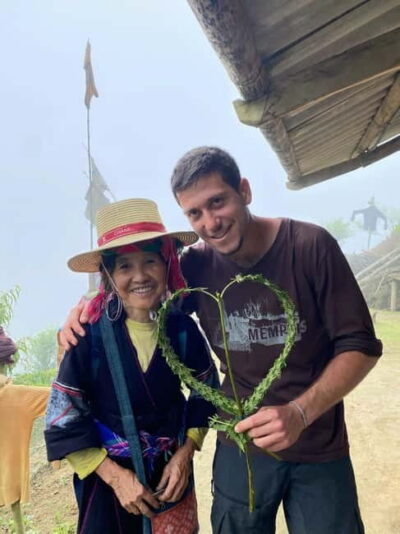
On this full-day private trekking in Mu Cang Chai, I like how H’mong guide Yien doesn’t just point at views—he explains village life and customs as you hike. You’ll walk through rice country with real local rhythm, hitting famous terrace shapes like Mũi Giày and the viewing area of Đồi Mâm xôi La Pán Tẩn. The one trade-off: it’s a demanding hike with lots of up-and-down on uneven paths, so it’s not a good fit if you have back problems or other mobility limits.
This is the kind of tour where small comforts help a lot. Lunch is included (vegetarian or vegan available), and you also get a full bottle of water—so you’re not hunting for snacks mid-trek. Pickup and drop-off are built in too, with options around the Nga Ba Kim market area, including Le Champ Tu Le Resort Hot Spring & Spa.
What makes it feel different from a standard viewpoint day is how far you get beyond the obvious spots. You’ll visit Hau De village, walk to Hau De waterfall, and spend time at hill viewpoints like the Hill of Wind and Panoramic hill—often before the crowd energy kicks in.
In This Review
- Key things that make this trekking day work
- Private Mu Cang Chai trekking: what you gain vs. go it alone
- Getting to the start near Nga Ba Kim market (and why it’s simple)
- Stop-by-stop: how the route builds the day’s best views
- 8:00 am start: into rice-terrace country
- 8:30 am Hau De village: the human side of the terraces
- 9:40 am Hau De waterfall: a break that isn’t random
- 10:30 am Hill of Wind: a viewpoint with terrace names attached
- 11:30 am Mũi Giày (shoe rice field): the iconic shape stop
- 12:00 pm lunch: local food and a real rest window
- 13:00 pm continue the journey: switching from morning rhythm to afternoon goals
- 14:00 pm Raspberry hill: checking in at Đồi Mâm xôi La Pán Tẩn
- 14:30 pm centre of terrace fields: closer views, more texture
- 15:40 pm Panoramic hill: the wide payoff
- 16:00 pm return: tired legs, satisfied eyes
- Pace, gear, and what to expect from the walking
- Lunch, water, and the small details that keep the day enjoyable
- Price and value: why $67 can feel fair
- Who this private trek suits best
- Should you book this trekking day?
- FAQ
- FAQ
- How long is the Full Day Private Trekking in Mu Cang Chai?
- Is this a private tour?
- What’s included in the price?
- What time does the trekking start and end?
- Where do you get picked up and dropped off?
- Who isn’t this trekking tour suitable for?
Key things that make this trekking day work
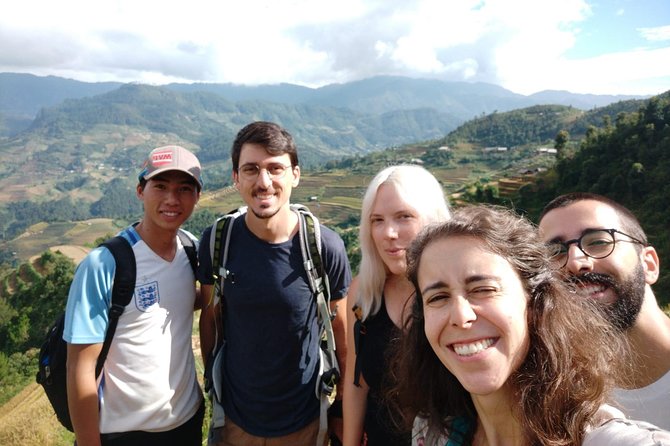
- English-speaking local guide (Yien) who shares H’mong culture and everyday details, not just route facts
- Real village stops like Hau De village, plus time at Hau De waterfall
- Signature terrace viewpoints named in the route: Mũi Giày, Mâm Xôi bé, and Đồi Mâm xôi La Pán Tẩn
- Lunch + 1.5L water included, with vegetarian/vegan welcome
- A private group pace, so you can pause for photos without feeling rushed
Private Mu Cang Chai trekking: what you gain vs. go it alone
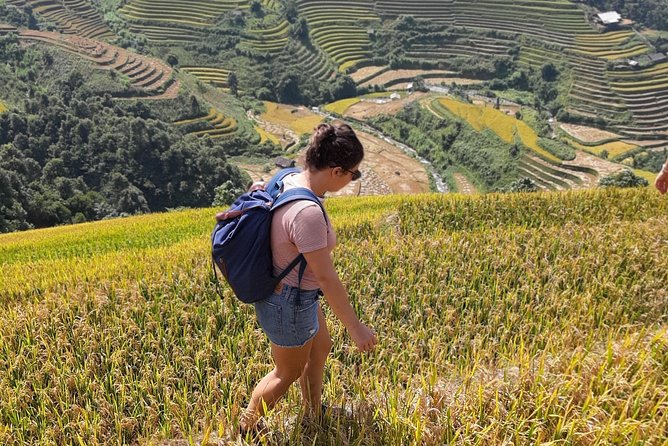
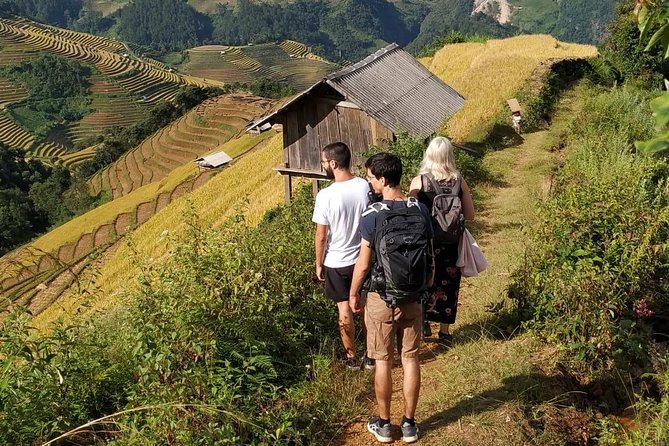
Mu Cang Chai’s rice terraces can look stunning from the road. The catch is that you only get the full experience when you’re willing to walk into the fields and pathways that locals use. That’s exactly where this tour shines: you’re not just touring the “postcard” side—you’re moving through working terrain, with your guide translating what you’re seeing into context.
Having a local H’mong guide matters more than you might think. From the route-style day you’re getting here, you’ll spend real time in places like Hau De village and small terrace zones, and your guide helps you make sense of what you’re looking at. When Yien explains customs and how people live alongside the terraces, it changes the way the day feels.
And because this is a private group, your pace is your pace. You can slow down for photos, take breaks without negotiating with a big group, and ask questions as you walk. If you prefer travel that’s active but not chaotic, this setup fits well.
The downside is physical: this is not a flat stroll. Expect sustained walking and repeated uphill/downhill movement.
You can also read our reviews of more tours and experiences in Mu Cang Chai.
Getting to the start near Nga Ba Kim market (and why it’s simple)
The day runs for about 8 hours. Pickup is included from hotel/locations within roughly 3km around Nga Ba Kim market, with multiple drop-off options so you’re not stuck figuring out local transport.
Your specific pickup point can include places like:
- Le Champ Tu Le Resort Hot Spring & Spa (Tú Lệ area, QL32)
- Tea & Coffee Ăn Vặt Tú Lệ
- La Pán Tẩn
- Mù Cang Chải District
- Garrya Mù Cang Chải
- Cầu Ba Nhà
Practical tip: when pickup time comes, wait at the hotel entrance about 5 minutes before. That small habit keeps you from losing time to last-minute calls and re-checks.
Stop-by-stop: how the route builds the day’s best views
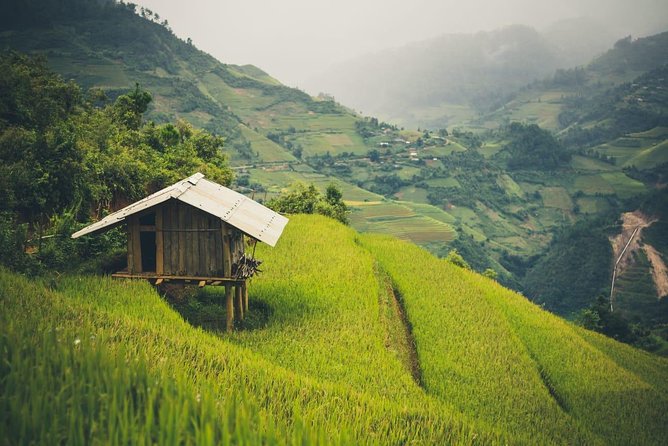
This tour’s timing is structured to hit terrace moments while still keeping the hike manageable. The day starts around 8:00 am and returns to the starting point at about 4:00 pm.
8:00 am start: into rice-terrace country
Right when you begin, the tone changes fast. You’re moving away from the standard “look from above” idea and into the rhythm of a working hillside. You’ll start with enough momentum to settle in, but the pace is guided—your H’mong guide leads you along the loop with constant walking and short pauses.
What I like here: the first phase sets you up for later viewpoints. By the time you reach the first village and waterfall, you already understand the terrain and how the terraces shape the paths.
8:30 am Hau De village: the human side of the terraces
Hau De village is where the day stops being just about views. You’ll visit the village and get a guided walk that ties the scenery to community life.
Even if your time is limited, this kind of stop helps you see the terraces as more than scenery. It’s where you understand why these fields matter locally—how people live, move, and work on the hills.
9:40 am Hau De waterfall: a break that isn’t random
The hike moves from village to Hau De waterfall, which works well because it’s a natural reason to slow down. Waterfall viewpoints also tend to feel cooler and quieter than exposed ridge stops, which helps you reset.
A small consideration: paths around waterfalls can be slippery depending on recent rain. Bring shoes with real grip and don’t rush this section.
10:30 am Hill of Wind: a viewpoint with terrace names attached
Next you’re heading to the Hill of Wind, with a view toward Mâm Xôi bé. This part matters because it connects terrace shapes to local names you’ll hear from your guide.
If you’re the type who likes to understand what you’re photographing—rather than just clicking—this is a great time to ask questions. Terrace views here are framed in a way that makes the names feel useful, not just decorative.
11:30 am Mũi Giày (shoe rice field): the iconic shape stop
Then comes one of the route’s most recognizable terrace formations: Mũi Giày. The name alone hints at the shape, and you’ll get time to look and take photos.
This is one of those “yes, it’s worth stopping” moments because the terrace design is clear from the right angle. If you show up without a guide, it’s easy to miss the exact spot where the view makes sense.
12:00 pm lunch: local food and a real rest window
Lunch is timed after the morning set of walking and viewpoints. You’ll have about an hour, with local-style lunch included, and vegetarian or vegan options are welcome.
One detail I really appreciate: food isn’t just an afterthought. With this kind of hike, lunch becomes your energy reset. In practice, you’ll want to eat like you’ll hike again right after—because you will.
13:00 pm continue the journey: switching from morning rhythm to afternoon goals
After lunch, the route keeps moving. This portion is where the hike becomes more about persistence than novelty. Your guide keeps you pointed toward the best angles, and the afternoon viewpoints land in time windows that feel like a payoff.
If you’re a photo-first traveler, this is where you’ll want to keep your phone/camera organized. Afternoon stops can be short, and you’ll want your hands free for the walking segments.
14:00 pm Raspberry hill: checking in at Đồi Mâm xôi La Pán Tẩn
Now the day spotlights Đồi Mâm xôi La Pán Tẩn, often called the Raspberry hill rice field area in the route. You’ll have a “check in” moment here, plus time to experience the terraces from this higher perspective.
Important for your planning: entry tickets to this area are included, so you don’t have to sort that out on the day.
14:30 pm centre of terrace fields: closer views, more texture
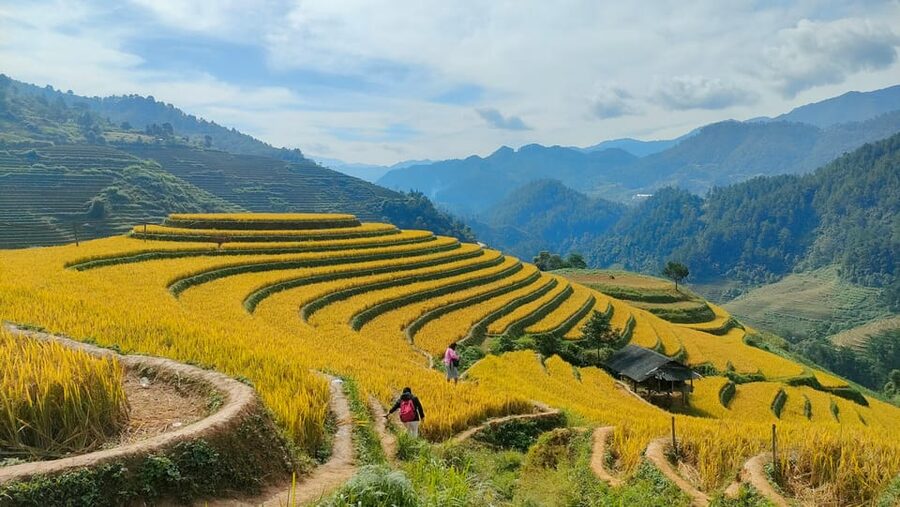
Then you move to the centre of the terrace fields. This is different from ridge-style viewpoints. Instead of looking at the terraces like a single picture, you start to see how paths, water channels, and terracing create texture.
This is where you feel like you’re walking inside the place—not just standing near it.
15:40 pm Panoramic hill: the wide payoff
At Panoramic hill, the route gives you the wide look again. This works as a closing act because by now your brain has “loaded” the terrain. The terraces stop being abstract and start making sense as a system that shapes movement and life.
When I’m hiking and the best view comes near the end, it usually means the earlier stops did their job. That’s the logic here: village and waterfall first, icon terrace shapes next, panoramic view as the final ribbon.
16:00 pm return: tired legs, satisfied eyes
You finish back at the starting point. Expect fatigue in your legs, but also a sense that you saw more than a line of viewpoints. The loop format and the mix of village + terraces is what makes the day feel complete.
Pace, gear, and what to expect from the walking
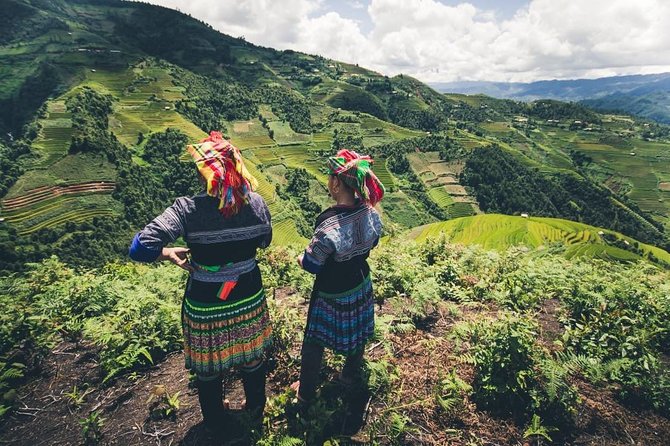
This trek is about an 8-hour experience and includes a hike that’s roughly 10km in the route style. You’ll be going up and down, and you’ll likely feel it in your calves and knees even if you’re reasonably fit.
You’ll want:
- Hiking shoes with grip
- Sunscreen (you’ll be exposed at viewpoints)
- Comfortable clothes you can move in
- A daypack for water/small essentials
One more practical thought: bring a light layer if weather changes. The tour is scheduled for a full day, and hills can shift temperature quickly.
Also note who should skip it:
- Children under 5
- Pregnant women
- People with back problems
- Wheelchair users
- People over 220 lbs / 100 kg
If you’re within that range but unsure, tell the operator before booking.
Lunch, water, and the small details that keep the day enjoyable
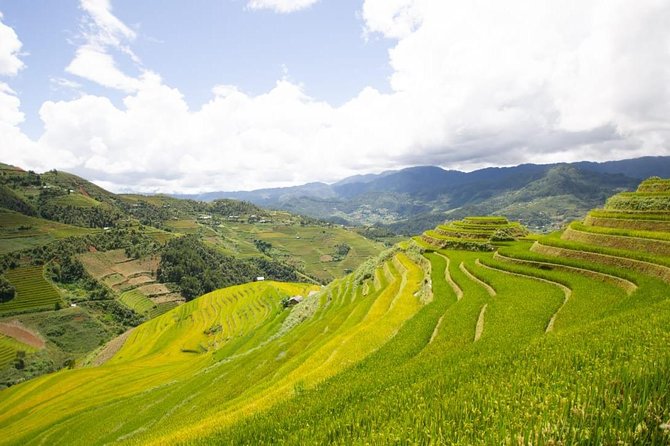
You get 1.5L of bottled water per person, plus lunch included. That’s a big deal on a hike. When water is handled for you, you can focus on pace and footing instead of stopping to hunt for supplies.
Lunch is local-style and can be vegetarian or vegan. If you have dietary needs, confirm them in advance so your meal matches what you eat.
The best part about the meal here is that it’s not just fuel. With this route, lunch feels like part of the day with a local family connection. Yien’s meal setup is one of the reasons people remember the day, especially when the food tastes like someone cared about it, not just made it fast.
Price and value: why $67 can feel fair
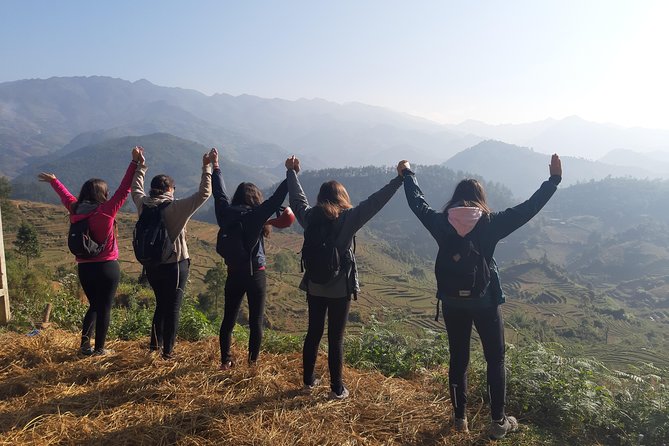
At $67 per person, you’re paying for more than a guide. You’re buying:
- a local English-speaking guide (Yien and other team members for English/Vietnamese)
- private pacing for your group
- lunch
- 1.5L water
- entry tickets to Đồi Mâm xôi La Pán Tẩn
- pickup/drop-off within the Nga Ba Kim market area
For a private trekking day in a rural rice-terrace setting, this can be good value—especially if you’re already planning to pay for a guide and entrance fees on your own. The best “value math” here is when you split the day between activities you’d otherwise piece together: transport + guide + tickets + meals.
If you’re traveling alone and expect a cheaper group bus tour, this will cost more. But if you want time in villages, terrace angles that actually make sense, and not feeling rushed, the private format often pays off.
Who this private trek suits best
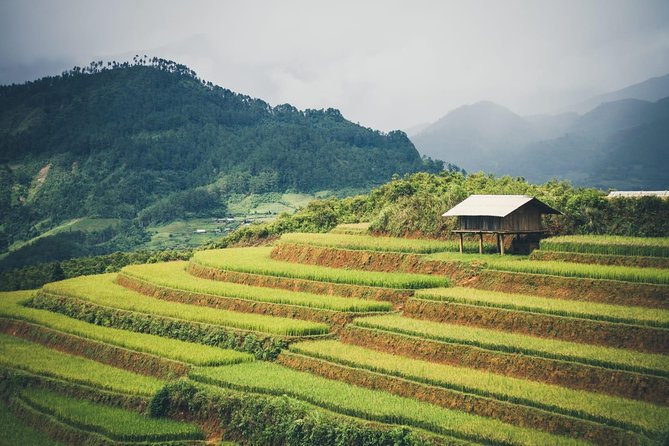
This tour is best for you if:
- you want rice terrace views but also want to understand the H’mong community side
- you prefer a private group and a guide who answers questions
- you’re comfortable with a long hike (uneven paths and up/down walking)
- you like photo stops with specific terrace names and locations
It’s not a great match if you want a low-effort day, have mobility limits, or need a stroller/wheelchair-friendly route.
If you’re coming to Mu Cang Chai mainly for photos, you’ll still enjoy this. Just don’t expect a “ride between viewpoints” style day. You’ll earn the angles with your legs.
Should you book this trekking day?
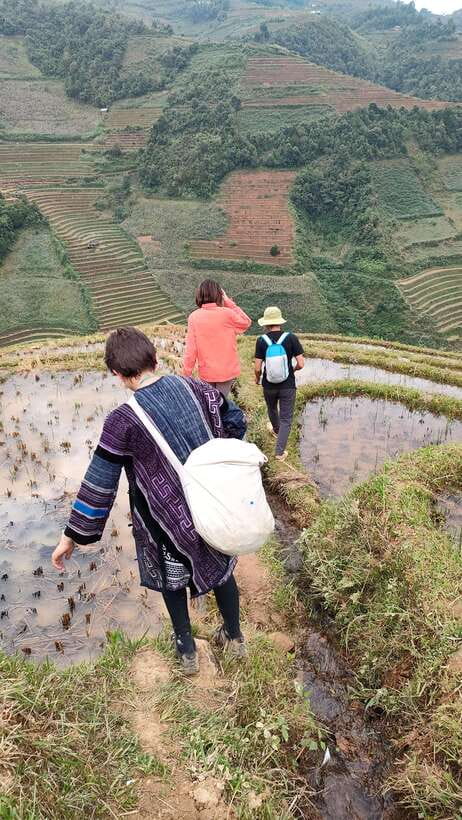
If you want Mu Cang Chai that feels like real life—not just a drive-by view—this is a strong choice. The mix of Hau De village, Hau De waterfall, named terrace stops like Mũi Giày, and the Đồi Mâm xôi La Pán Tẩn area gives you variety in one day. Add in lunch, water, and a guide like Yien who explains customs in good English, and you get a day that feels complete.
Book it if you’re physically up for a full hiking day and you like small, human moments along the way. Skip it if you need a gentle walk or you have conditions that make downhill/uphill unsafe for you.
FAQ
FAQ
How long is the Full Day Private Trekking in Mu Cang Chai?
The tour lasts about 8 hours, and you’ll see starting times when you check availability.
Is this a private tour?
Yes. It’s listed as a private group experience.
What’s included in the price?
Lunch (local style, vegetarian or vegan welcome), 1.5L bottled water per person, a local English-speaking guide, entry tickets to Đồi Mâm xôi La Pán Tẩn, and pickup/drop-off within about 3km around Nga Ba Kim market.
What time does the trekking start and end?
It starts around 8:00 am and returns to the starting point around 4:00 pm.
Where do you get picked up and dropped off?
Pickup and drop-off include several options such as Tea & Coffee Ăn Vặt Tú Lệ, La Pán Tẩn, Le Champ Tu Le Resort Hot Spring & Spa, Mù Cang Chải District, Garrya Mù Cang Chải, and Cầu Ba Nhà.
Who isn’t this trekking tour suitable for?
It’s not suitable for children under 5 years, pregnant women, people with back problems, wheelchair users, and people over 220 lbs / 100 kg.