REVIEW · UBUD
Sidemen Trekking: A Walk from a Different Perspective
Book on Viator →Operated by Sidemen Trekking · Bookable on Viator
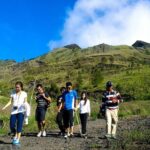
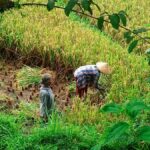
Rice terraces tell a better story in Sidemen. This is a relaxed walk through rural Bali, starting at the Pasar Sidemen market and moving onto working rice paddy paths with Mount Agung looming in the distance. I especially love how the guide storytelling turns simple scenery into everyday life, from farming routines to temple moments, without making it feel like a lecture.
What makes this outing hit is that it stays small (up to 10 people) and runs about 2 hours, with bottled water included. You’ll move up and down village lanes, follow irrigation lines, cross a hanging wooden bridge, then end at a restaurant where you can cool off with food or a drink.
One thing to consider: the rice field paths can be narrow, uneven, and sometimes slippery. This isn’t a hard hike, but you’ll want solid shoes and good balance.
In This Review
- 5 key reasons this Sidemen trek works so well
- Sidemen rice terraces from a local walking line
- From Pasar Sidemen to rice paddies aimed at Mount Agung
- Crossing the hanging wooden bridge and spotting village temple life
- Rice terraces, viewpoints, and the part where you slow down
- How the rice farming stories turn into real understanding
- Price and value: what $13.75 buys you here
- Timing, weather, and how to plan your morning
- Meeting point details and getting to the start
- End point at Warung Ume Anyar and your easiest next step
- What to bring so the walk stays comfortable
- Who should book this Sidemen Trekking walk
- Should you book Sidemen Trekking?
- FAQ
- Where do I meet for Sidemen Trekking?
- How long is the trek?
- What is included in the price?
- What should I bring with me?
- Is hotel pickup and drop-off included?
- Where does the trek end?
- Can I explore the Pasar Sidemen market before the walk?
- What happens if the weather is bad or I need to cancel?
5 key reasons this Sidemen trek works so well
- Market start, real community feel: You begin in Pasar Sidemen, not at a random parking lot.
- Irrigation routes you’d miss alone: The walking lines are tied to how water runs through the fields.
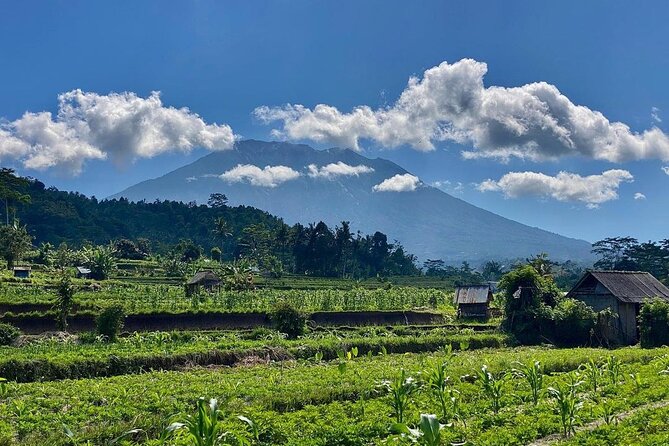
- Mount Agung views at walking speed: You get open sightlines without needing a strenuous climb.
- Local guides bring farming to life: Names like Adidas, Adi, Darya, and Wayan show up in guest stories, all with practical explanations.
- Finish at Warung Ume Anyar: Your trek ends where you can actually sit down and recover.
Sidemen rice terraces from a local walking line
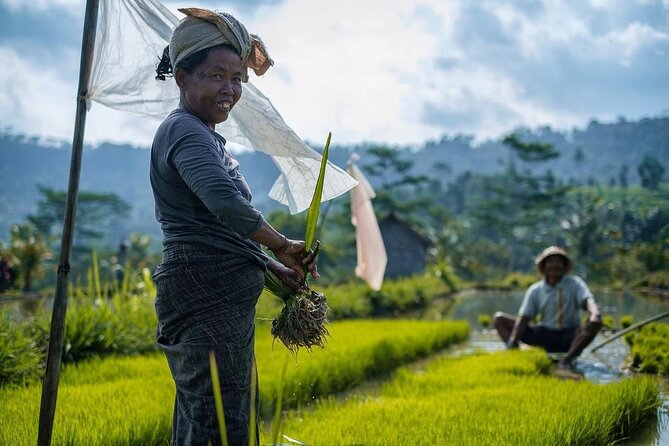
If you think Bali is only temples and beach sunsets, Sidemen is where the “how people live” part shows up. This trek is built around rice farming as a daily system, not just a photo set. You’ll see terraces from multiple angles, watch water-related paths connect villages to fields, and get a sense of why this area matters culturally.
I like that the route never rushes you. Even when the trails get narrow, your guide sets the pace so you can look up, stop for viewpoints, and notice what’s around you. And because it’s a small group, you’re not spending the whole walk stuck behind a parade.
You should also know it’s not a hard-core hike. It’s more like an outdoor neighborhood walk, with stretches of uneven ground and occasional steps where you’ll need to pay attention.
You can also read our reviews of more tours and experiences in Ubud.

From Pasar Sidemen to rice paddies aimed at Mount Agung
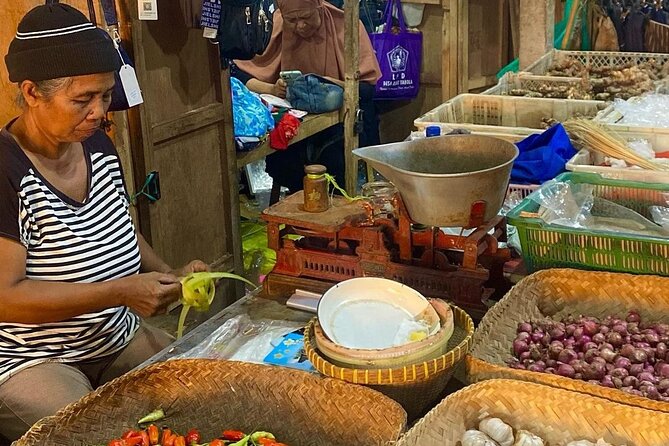
The trek begins at Pasar Sidemen, at a specific shop marked Upa Boga. That’s helpful because Sidemen’s streets can be busy, and having an exact meeting place reduces the “where is everyone” stress.
From there, you head into the traditional market and village area, then start moving toward the rice paddies. The direction matters: the route is oriented toward Mount Agung, so you’re not just walking sideways across fields. You gradually gain perspective as you go—first with village buildings and temple life, then with open terrace viewpoints.
A few practical notes I’d take seriously if you’re planning your morning:
- Expect a mix of paved lanes and dirt paths.
- Parts of the route through the fields can be on narrow, sometimes uneven footing.
- In rice season, the ground conditions can change fast—mud happens.
The upside is that you don’t need to be an athlete. The route is about walking in the right places, not pounding long distances.
Crossing the hanging wooden bridge and spotting village temple life
This walk includes a hanging wooden bridge that’s designed for both motorbikes and people. That’s a great detail because it tells you what kind of trail this is: it’s not just for tourists. It’s part of the working movement between homes and fields.
As you move along irrigation ways, you’ll also pass areas used for local prayer. This matters more than it sounds. In places where religion and farming are connected, you’ll often see offerings and routines tied to daily schedules. The guide usually helps you read what you’re seeing, so it doesn’t feel random.
You’ll notice the route also goes up and down through village streets. That keeps the walk interesting, and it also means the views don’t only come at the end. You’ll often get a fresh angle as you crest a lane or step into a terrace section.
Rice terraces, viewpoints, and the part where you slow down
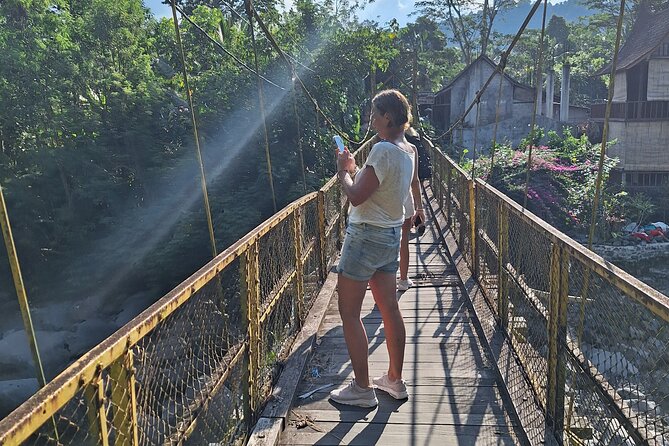
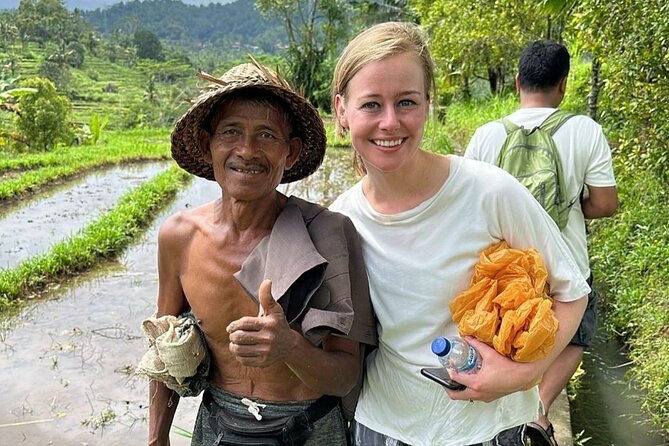
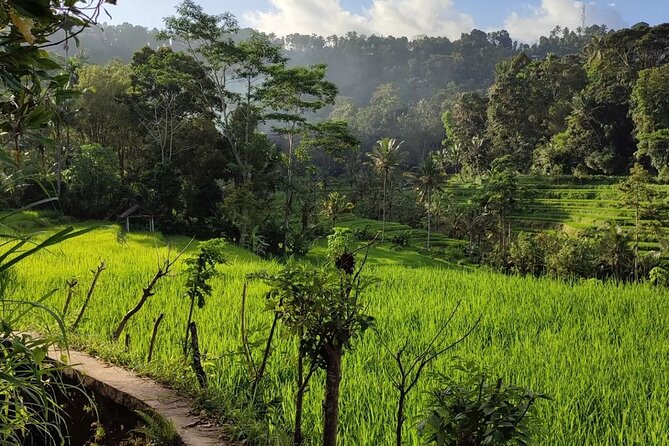
The best moments are the terrace viewpoints. You’ll look at rice field steps from afar, but the really memorable part is seeing them from a different walking perspective—on paths farmers use, not just the wider edges.
A guide is a big reason this works. Some terrace routes aren’t easy to spot if you’re walking on your own. Guides help you find the lines that give you both safe footing and a good sightline. In guest notes, guides like Adidas and Adi are praised for knowing where to go and explaining what you’re walking over.
You should plan for this reality:
- Some rice paths are elevated and narrow.
- The footing can be slippery, especially after water or if it’s been humid.
- You may get a little dirty. That’s part of the deal.
I’d treat this as a “slow sightseeing walk.” If you show up in sandals, you’ll likely feel annoyed later. If you show up with hiking shoes, you’ll be free to enjoy the scenery and the stories.
How the rice farming stories turn into real understanding
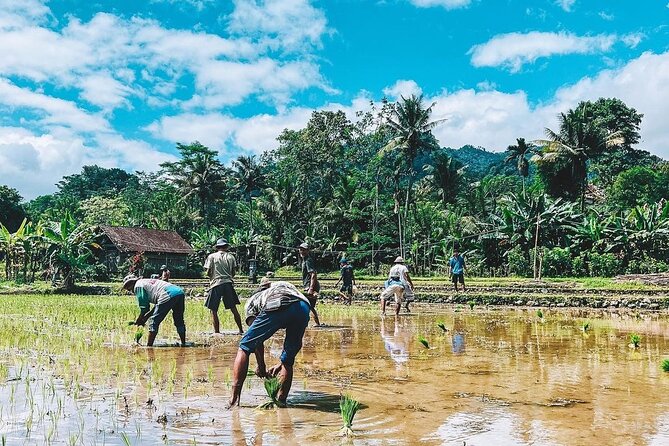
The explanations are the heart of this trek. The walk gives you the setting, but your guide gives you the meaning. People doing the walk with guides such as Adidas, Darya, and Wayan often mention learning about:
- the rice growing process,
- how irrigation supports farming,
- how seasonal crops work,
- and how Balinese Hindu life links to everyday routines.
One guest experience highlighted that in December you might see harvested rice in some parts, while other crops are being planted. That’s a good reminder: Sidemen is alive year-round. What you see depends on the season, so your guide’s timing-based context can make a big difference.
Another theme from guest stories is that guides don’t just talk at you. They point out practical details—like the plants connected to farming and the small working moments you might otherwise ignore. That’s why this feels more authentic than a standard scenic loop.
Also, if you enjoy hearing how tourism changes places, some guides include commentary about Bali’s social shifts. It’s not heavy, but it can be a useful layer.



Price and value: what $13.75 buys you here

At about $13.75 per person for a 2-hour walk, this isn’t a luxury price. It’s closer to paying for a guide, access to working paths, and a route design that keeps you on the right tracks.
What you get that’s genuinely “value” instead of just marketing:
- A small group size (up to 10).
- Bottled water included.
- A guided route that takes you beyond common viewpoints and into local walking lines.
- A built-in endpoint at Warung Ume Anyar, so you’re not stuck figuring out where to eat after.
What you don’t get (and you should mentally budget for):
- Hotel pickup and drop-off.
- Tips.
- The food and drinks at the restaurant (though it’s there if you want it).
So the value question becomes simple: are you the type who enjoys learning while walking? If yes, this price is reasonable for the time, access, and guidance. If you only want a scenic photo stop, you might feel the cost isn’t worth it.
Timing, weather, and how to plan your morning
This trek is typically about 2 hours, with guidance that it can run closer to 2–2.5 hours depending on pacing and conditions. That timing matters because you need a plan for transport at the end.
Weather is also a real factor. The experience requires good weather, and if it’s canceled due to poor conditions, you’ll be offered a different date or a full refund. That means you should avoid booking a trek if you’ve locked yourself into a non-flexible schedule.
If you want to add something before the walk, Pasar Sidemen is open from 5:00 AM to 10:00 AM. A morning market visit can work nicely because you start your trek already in the right mood: local, awake, and moving.
Meeting point details and getting to the start
The meeting point is Pasar Sidemen, at the Upa Boga shop. If you’re staying in Sidemen, arrange transport through your hotel. Grab is available, but pickup rules and driver availability can be inconsistent in the area.
This is one of those places where local knowledge helps. If you want your morning to stay calm, have your hotel sort a way to the market, then treat the trek as your main plan.
If you’re coming from farther away and you’re driving yourself, build in extra time for finding the exact stall area. The trek is short, and you don’t want to miss the start window.
End point at Warung Ume Anyar and your easiest next step
The trek ends at Warung Ume Anyar Restaurant, located in Ogang Village (finish point along Jl. Raya Sidemen Ogang, Sangkan Gn.). This is a practical choice because you’re not finishing in the middle of nowhere.
You can relax right away with a drink or a meal. And if you want to keep logistics easy, it’s also the kind of finish point where asking for help organizing a taxi makes sense.
Your best transport plan is to arrange pickup in advance. The suggestion is to line it up about 2–2.5 hours after the trek starts. Grab can work, but drivers are limited and some may request offline payment or extra charges. Pre-planning avoids that post-trek waiting game.
There’s also an optional walk back to the start: around 3 km, or 30–40 minutes along the main road. That’s useful only if you don’t mind an extra stretch after walking already.
What to bring so the walk stays comfortable
The tour is designed for travelers with moderate physical fitness, but comfort comes down to what’s in your bag. The mandatory items are listed for a reason:
- Sun hat
- Hiking boots or shoes
- Sunscreen
- Sunglasses
I’d also add two common-sense pieces based on the terrain you’ll face:
- Bring something grippy. Rice paths can be slick.
- Consider light clothing you don’t mind getting dusty.
And yes, use the sunscreen early. You’ll be in open air for viewpoints and terrace sections, and the sun doesn’t care that you’re trying to have a calm rural moment.
Who should book this Sidemen Trekking walk
This trek suits you if you want:
- rural Bali without the big-tour feel,
- rice fields plus real village life,
- a guide who connects farming, irrigation, and Balinese Hindu routines.
It’s also great if you like short experiences with a strong sense of place. Two hours passes quickly when you’re stopping for viewpoints and learning what you’re seeing.
You might rethink it if:
- you have trouble maintaining balance on narrow, uneven paths,
- you want only flat, wide walking surfaces,
- or you hate getting a little muddy.
For many people, this is the sweet spot: not a strenuous trek, but not a fake, padded stroll either.
Should you book Sidemen Trekking?
I’d book it if your goal is authentic rural Bali and you’re happy to walk on farmer routes you’d never find alone. The mix of market start, irrigation walking, a bridge crossing, rice terrace viewpoints, and a sit-down finish at Warung Ume Anyar makes the experience feel complete.
It’s also a solid choice for good value: you pay for a guided route and small-group access, not for a long, complicated day. If you’re the type who enjoys practical explanations—like how rice farming works and why Mount Agung matters for the view and the area—you’ll likely come away glad you spent your morning here.
If you want a tough mountain challenge, look elsewhere. If you want a meaningful local walk with good footing and smart planning, this one fits.
FAQ
Where do I meet for Sidemen Trekking?
You meet at Pasar Sidemen, at the shop with the sign Upa Boga.
How long is the trek?
The trek lasts about 2 hours, and it may be closer to 2–2.5 hours depending on the pace and conditions.
What is included in the price?
Bottled water is included.
What should I bring with me?
You should bring a sun hat, hiking boots or shoes, sunscreen, and sunglasses.
Is hotel pickup and drop-off included?
No. Hotel pickup and drop-off are not included, so you’ll need to arrange transport yourself.
Where does the trek end?
The trek ends at Warung Ume Anyar Restaurant in Ogang Village.
Can I explore the Pasar Sidemen market before the walk?
Yes. Pasar Sidemen is open from 5:00 AM to 10:00 AM, and it’s recommended to book a morning session if you want to visit first.
What happens if the weather is bad or I need to cancel?
The experience requires good weather. If it’s canceled due to poor weather, you’ll be offered a different date or a full refund. Free cancellation is available up to 24 hours in advance for a full refund.