REVIEW · TA VAN
SAPA 2 Day trekking & 1 night Homestay with LOCAL PEOPLE
Book on GetYourGuide →Operated by Do Sung Sapa Trekking and Homestay · Bookable on GetYourGuide
Sapa changes fast when you start walking. I really like the way Do Sung brings the trail to life with English that comes from real life in Sapa, plus a homestay with her family and neighbors. It’s not the usual cookie-cutter tour; it’s built around local rhythm and local stories.
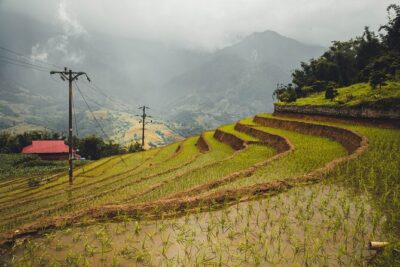
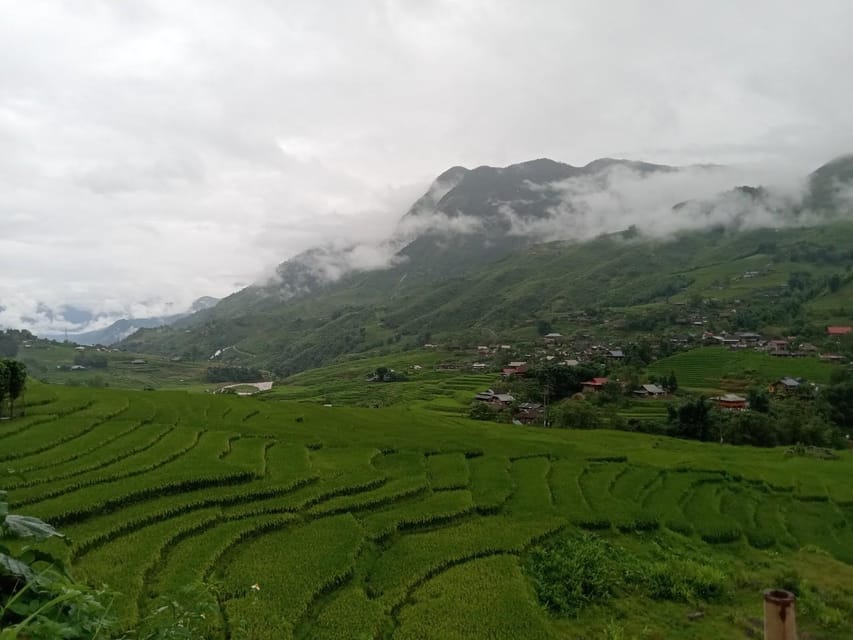
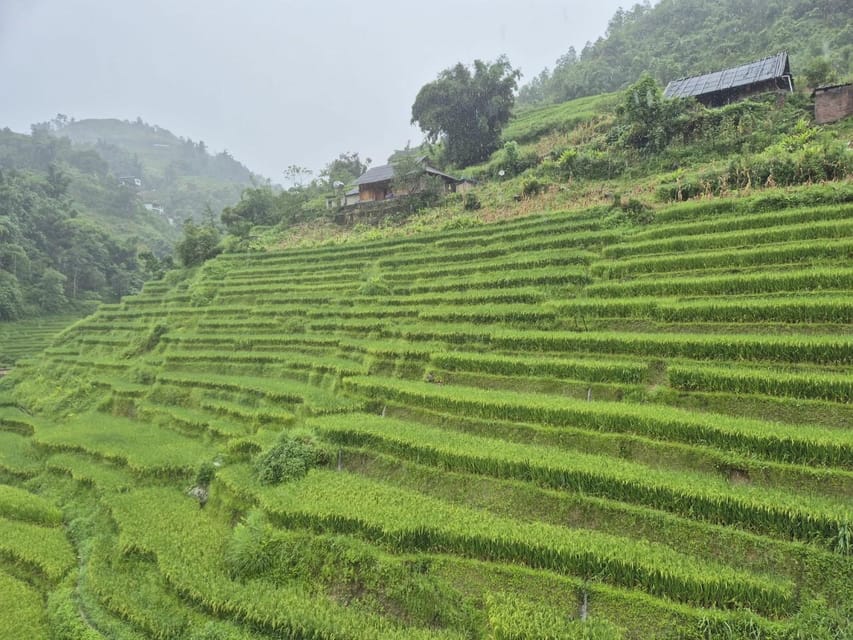
I also love the views on this route. From the early climb you can see Fansipan (3,143 m) and look over Sapa, then later you’ll walk through the Muong Hoa valley rice terraces with mountain-and-river views that make the effort feel worth it.
The main thing to consider is physical comfort. This trek includes uphill and downhill on small trails, and if it rains they can get slippery, so you’ll want good footwear and steady footing (and the tour isn’t suitable for people over 95).
In This Review
- Key highlights you’ll feel fast
- Meeting Do in Sapa: getting oriented with a real local guide
- Day 1 on the trail to Dragon Mountain and Black Hmong villages
- A realistic note on Day 1
- Homestay in Hầu Thào: dinner, hot showers, and rice wine with family
- Day 2: Red Dao villages, waterfalls, bamboo forest, and Lao Chải
- The $56 value: what you get, and what you should budget for
- What the itinerary really teaches you (beyond the photos)
- Who this Sapa trek and homestay is best for
- What to bring and how to stay comfortable
- FAQ
- FAQ
- How long is the trek and homestay?
- Where does the tour start and end?
- Do I need to be very fit?
- Is the guide available in English?
- What meals are included?
- Is there water provided during the trek?
- What villages will we visit?
- What’s included for getting back to Sapa?
- Can I cancel and get a full refund?
- Should you book this Sapa trek and homestay?
Key highlights you’ll feel fast
- English-speaking local guidance from Do and her experience with ethnic communities
- Fansipan views plus wide Sapa panoramas from the first climb
- Muong Hoa rice terrace scenery and a natural-path trekking style
- Black Hmong village life at Hang Da and Hau Thào, with time to rest at a homestay
- Bamboo forest and a Red Dao waterfall stop on Day 2
- Family meals included, including dinner with the homestay family and breakfast on Day 2
Meeting Do in Sapa: getting oriented with a real local guide
You’ll start in Sapa either at your hotel or in front of Sapa’s main church. Your guide will then take you about 1 km within town before the hike really begins, which helps you get your bearings before you hit the hills.
This tour runs as a small group (up to 15 people). That matters here. On narrow trails, a smaller group keeps the pace comfortable and gives your guide more space to explain what you’re seeing—especially around village culture and daily work.
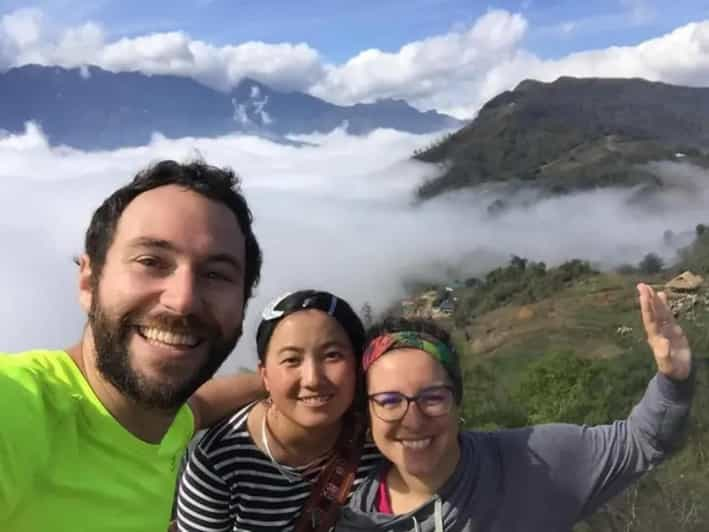
Do is an English-speaking guide with 10 years of experience. That’s a big deal in this area because village life doesn’t come with easy signage. When someone can explain the context clearly, the walk stops feeling like sightseeing from a distance.
You can also read our reviews of more tours and experiences in Ta Van.
Day 1 on the trail to Dragon Mountain and Black Hmong villages
Day 1 is the longer walking day: about 5 to 6 hours and roughly 14 km total. The route starts with a climb up a small trail—first about 2 km upward—so you’ll feel your legs warm up early.
From there, the payoff is the view. You’ll reach a point where you can see Fansipan, the highest mountain in Indochina (3,143 m), and you’ll look out over Sapa town. This is also where the Muong Hoa valley rice terrace scenery becomes visible in a way that makes you understand why people come here for days, not hours.
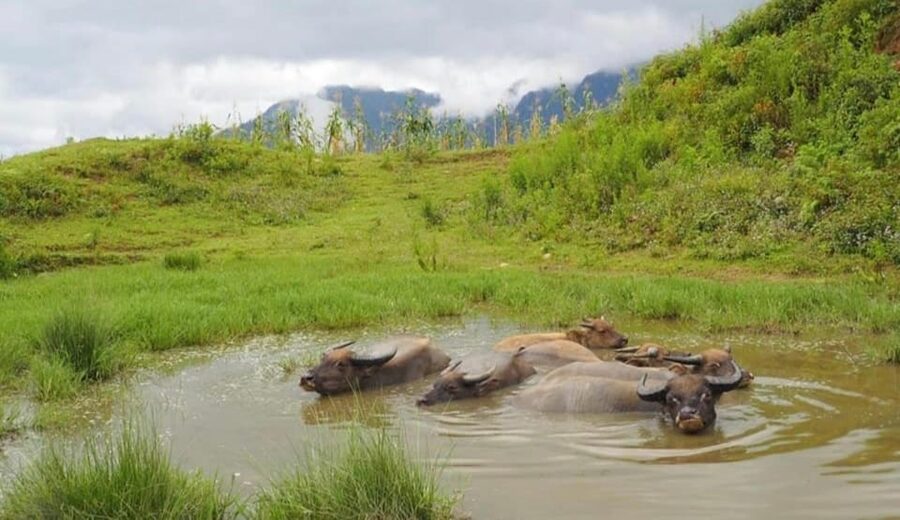
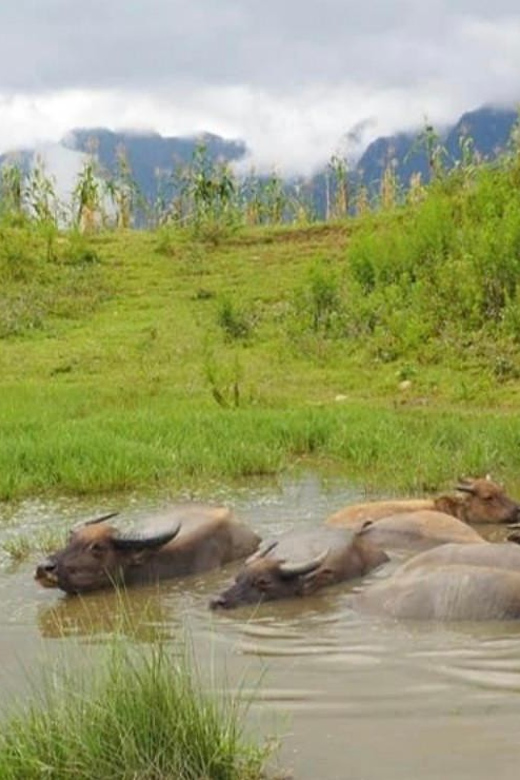
After enjoying the mountain-and-valley panorama, the hike moves downhill toward Hang Da, a village of the Black Hmong community. As you walk the mountainside, you may see animals such as buffalo, cows, and pigs—the kind of rural details that don’t show up in city tours.
Then there’s lunch at a small restaurant run by a local family. This is one of those moments where you’ll likely stop thinking about the kilometer count and start paying attention to how people actually eat and rest between farm tasks.
In the afternoon you’ll continue to Hầu Thào (Hau Thào) village of the Black Hmong community. If the timing is right, you might see local people working in the fields—harvesting or planting rice—so the trek doesn’t just show buildings. It shows activity.
A realistic note on Day 1
Day 1 includes walking on mountain paths, so plan on uneven footing and frequent stops for photos and explanations. Your guide will set the pace, but you should still think of this as a trekking day, not a casual stroll.
Homestay in Hầu Thào: dinner, hot showers, and rice wine with family
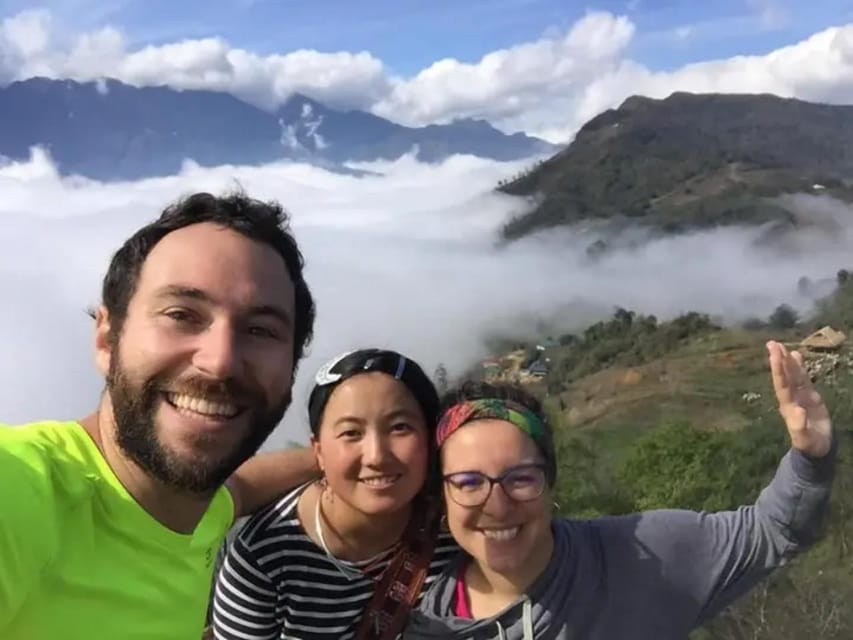
When you arrive at the homestay in Hầu Thào, you’ll get time to rest. The tour includes a hot shower, which can be a relief after a day of climbing and changing weather.
Dinner is part of the experience, and it’s shared with the homestay family. Food is included for the homestay night, and it’s exactly the kind of meal that feels different from restaurant dining because it comes out of family routines rather than a menu designed for visitors.
You may also get a chance to try rice wine, often called happy water. Whether you try it or not, the point is that the evening is about spending time with the family, not just collecting a checklist of cultural moments.
What I like about this setup is that you’re not rushed. You get a window to settle in, chat, and see how the family lives after the trek is done. Based on what people said about Do and her family, it’s the human welcome that turns a homestay from basic accommodation into something memorable.
Day 2: Red Dao villages, waterfalls, bamboo forest, and Lao Chải
Day 2 starts with breakfast at 8:30 am. Then you continue walking for about 3 to 4 hours total and around 7 km. This second day is shorter on paper, but it still includes paths that go up and down, so you’ll want the same careful shoes.
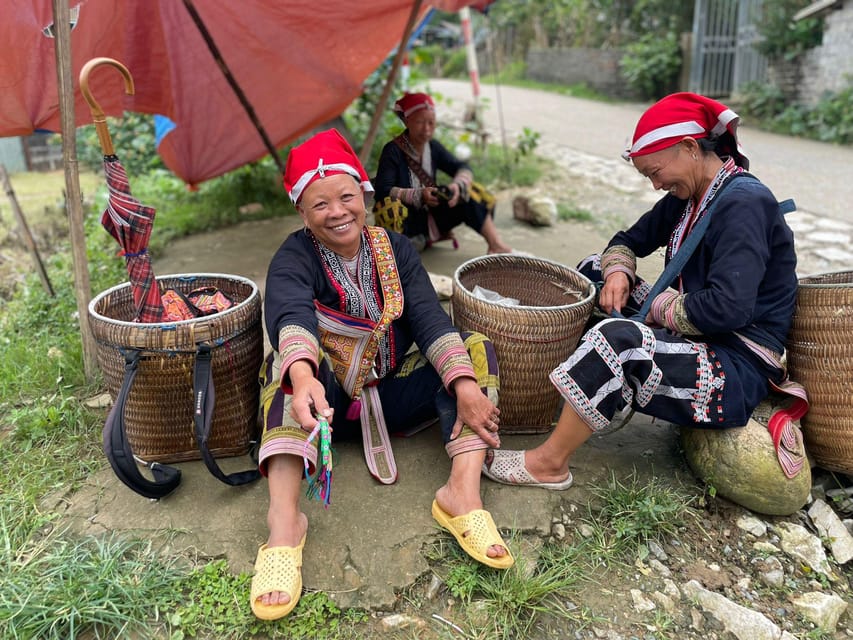
Your first village stop is Giang Tả Chải, home to the Red Dao community. One highlight here is a small waterfall visible from the village area. Even if you don’t stay long, it’s a nice natural break between the village life sections of the walk.
From there you move toward a bamboo forest, which is exactly the kind of scenery change that keeps a two-day trek from feeling repetitive. Then you continue to Tả Van village, another point where you’ll pass through a real everyday setting rather than only viewpoints.
On the way, you’ll see rice fields again, which helps connect the story of the valley across two days. Then the route continues to Lao Chải village, where you stop for lunch.
After lunch, the trekking portion ends and car or motorbike pickup brings you back to Sapa. That handoff is practical—after two days of walking, you don’t want a long transfer on top of it.
The $56 value: what you get, and what you should budget for
At $56 per person for a 2-day trek and 1-night homestay, the value depends on what you care about. If you want a guided route that includes meals and village visits, this is priced like a full local experience rather than just transport.
Included in the tour:
- English-speaking local guide (Do, plus support as part of a local setup)
- 1 water per person per day
- Lunch for both trekking days
- Family dinner at the homestay
- Breakfast on Day 2
- Tickets to village areas
- Car/motorbike back to Sapa
Not included:
- Personal travel insurance
- Extra drinks during hiking (the tour only provides water)
My practical take: bring a bit of extra cash or plan ahead for additional drinks beyond the included water. Also, since extra water isn’t included for free, staying hydrated may mean topping up on your own.
What the itinerary really teaches you (beyond the photos)
This route is built around a simple idea: you see the terrain first, then you see how people live with it.
Day 1 starts with mountain and terrace views—Fansipan, Sapa town, and the Muong Hoa valley rice fields. That gives you the geographic context for everything else. Then you walk down into village life where farming and daily routines are the main storyline.
Day 2 brings you to additional communities (Red Dao plus more village stops) and adds natural features like the waterfall and bamboo forest. It’s not just culture for culture’s sake. It’s culture plus geography plus the working landscape.
That’s why the homestay night matters. It’s the bridge between “watching” village life and actually experiencing how a family structures an evening after a day of tasks.
Who this Sapa trek and homestay is best for
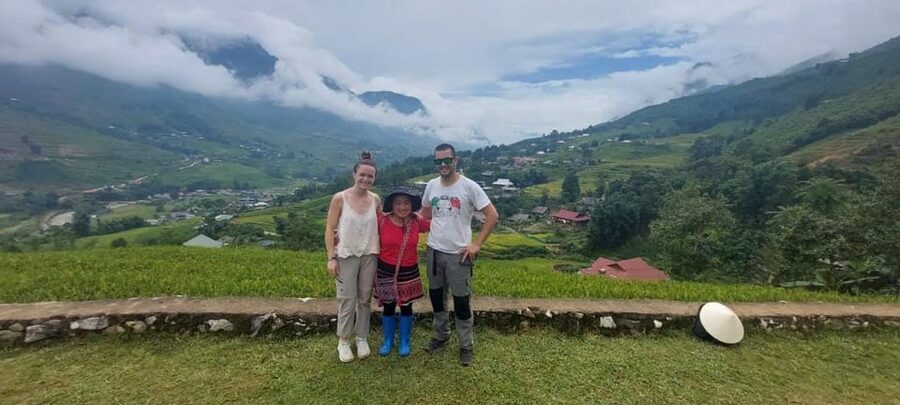
This tour is a strong match if you want:
- A local, English-guided trek with real village time
- A route with rice terraces, bamboo forest, waterfall, and mountain views
- A homestay experience where dinner is with a family (not just sleeping near locals)
You’ll likely enjoy it most if you’re comfortable with walking for multiple hours per day and you don’t need everything to be fully flat and easy.
It’s not suitable for people over 95, and it’s not ideal if you have low mobility or balance concerns. Even if your pace is slow, the trail includes uphill and downhill segments and can turn slippery when it rains.
What to bring and how to stay comfortable
The tour guidance is clear on gear. Bring:
- Comfortable shoes (and/or dedicated hiking shoes)
- Sun hat and sunscreen
- Change of clothes
- Motion sickness prevention (useful because you may travel by car or motorbike during pickups)
- A plan for weather: if rain hits, trails can get slippery, so traction and careful footwork matter
One more practical tip: pack your day clothing with the idea that Day 1 is longer and you’ll want something fresh for the homestay evening. It’s included to help you rest, not to suffer.
FAQ
FAQ
How long is the trek and homestay?
The experience runs for 2 days total with 1 night in a homestay. Day 1 includes about 5 to 6 hours of trekking, and Day 2 includes about 3 to 4 hours.
Where does the tour start and end?
The guide will meet you at your hotel in Sapa or in front of Sapa’s main church. The tour ends back at the meeting point area in Sapa.
Do I need to be very fit?
You should be in good health because the trek has uphill and downhill sections and can get slippery if it rains. People over 95 years old are not suitable for this tour.
Is the guide available in English?
Yes. The tour includes a local guide who speaks English.
What meals are included?
You get lunch for both trekking days, family dinner during the homestay night, and breakfast on Day 2.
Is there water provided during the trek?
Yes. The tour includes 1 water per person per day.
What villages will we visit?
The route includes Hang Da village (Black Hmong), Hầu Thào village (Black Hmong), Giang Tả Chải village (Red Dao), plus Tả Van and Lao Chải village areas.
What’s included for getting back to Sapa?
After trekking on Day 2, car or motorbike pickup returns you to Sapa.
Can I cancel and get a full refund?
There is free cancellation up to 24 hours in advance for a full refund.
Should you book this Sapa trek and homestay?
If you want Sapa at a human scale—rice terraces, village paths, and a homestay night with dinner and conversation—this is a very good fit. The English local guidance from Do, the mix of mountain views and working villages, and the included meals make it feel like a complete experience rather than a stripped-down hike.
If you’re looking for something fully relaxed, choose a gentler route with fewer climbs. This one is built for people who like walking and don’t mind changing weather conditions on mountain trails.