REVIEW · ORLANDO
Orlando Tree Trek Adventure Park
Book on Viator →Operated by Orlando Tree Trek · Bookable on Viator
Tree top obstacles beat another theme-park line.
Orlando Tree Trek Adventure Park turns your Orlando day into a hands-on aerial adventure, with climbing challenges suspended 10 to 50 feet in the air. What I like most is how the course is built for progression: you start easier, then earn harder lines with elements like cargo nets, swinging logs, bridges, trapeze swings, and zip lines. I also love the strong safety orientation—waiver first, then harnessing, then a required demo course that shows you how to use the equipment before you commit.
Here’s the one thing to weigh: this is not a casual stroll. You need solid comfort using your arms and core, plus you must meet the park’s gear rules (including a 44-inch waist or smaller), and you can’t wear the wrong shoes or loose items. If you or your kids are nervous about heights, plan to go slow and lean on the guides.
In This Review
- Quick Hits Before You Go
- A Pine-Forest Ropes Course Near Walt Disney World
- What the 10–50 Feet-Up Experience Really Feels Like
- Your Start Line: Waiver, Harnessing, and the Required Demo
- Six Courses and 97+ Games: How the Obstacles Progress
- Timing, Departure Waves, and Staying With Your Group
- What to Bring: Gloves, Water, and the Shoe Rules That Matter
- Who Orlando Tree Trek Fits Best (and Who Should Think Twice)
- Guide Support Makes the Difference Up There
- The Bottom Line: Is It Worth Booking?
- FAQ
- How long does Orlando Tree Trek take?
- What are the age and height requirements?
- Is climbing equipment included?
- Do I need gloves or can I bring my own?
- What should I wear?
- If someone in my group doesn’t want to climb, can they still come?
Quick Hits Before You Go
- 97+ games across 6 courses so you’re not just doing one loop
- Progressive challenge levels that start approachable and get tougher
- Mandatory demo course so you learn the harness system before climbing
- Small groups up to 15 travelers, which usually means staff can keep a close eye
- Near Walt Disney World area, so it’s a great add-on day without long travel
- Anyone who skips climbing can use walking trails below while friends tackle the course
A Pine-Forest Ropes Course Near Walt Disney World
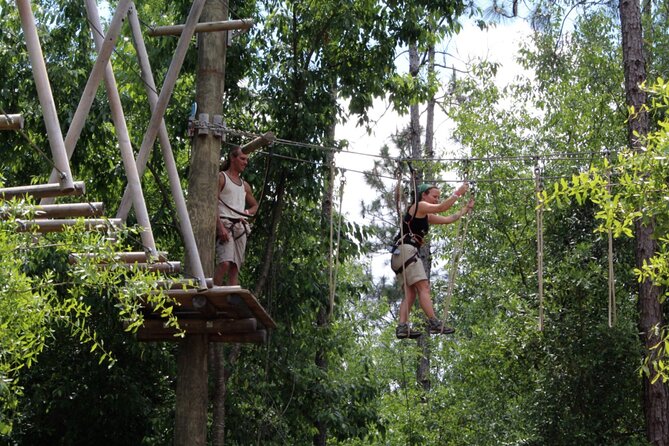
Orlando Tree Trek Adventure Park sits in the Walt Disney World area, in a pine-forest setting that feels a lot more outdoorsy than you’d expect given how close you are to the resort buzz. The atmosphere is part of the draw: you trade crowds and carousels for a real workout in fresh air.
The park’s setup is designed for aerial movement—your route winds through trees on a system of specially designed poles, with obstacles hung at different heights. That matters because your confidence (or fear) will change as you go higher, and you’ll actually feel that progression over the course of the day.
What the 10–50 Feet-Up Experience Really Feels Like
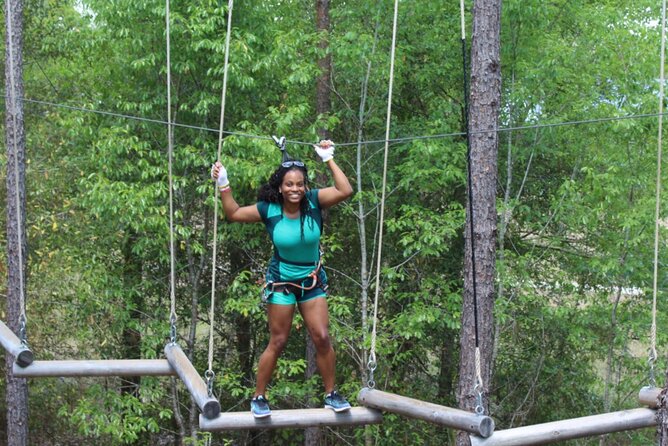
This is a ropes course, but the “rope” part isn’t the whole story. Yes, you’re on suspended lines and obstacles, but the challenge comes from how often you have to shift your weight, grip, step, and control your body while wearing a harness.
Most of your route happens anywhere from 10 to 50 feet above the ground, which means you get:
- Cargo nets where your hands do the work
- Swinging logs that test balance
- Bridges and platforms that reward steady foot placement
- Zip lines and trapeze-style moves that feel like the reward after effort
You should expect it to be physical. Your forearms will get involved. Your legs help you move, but the grip and tension are what make this a true activity day—not just a photo stop.
Your Start Line: Waiver, Harnessing, and the Required Demo
The experience kicks off with the kind of safety routine you want to see before you’re 20 feet up. You start with a required waiver form, then you get harnessed, and then you complete a mandatory demo course.
The demo course is your “learn it before you need it” moment. It familiarizes you with the climbing equipment and gives you sample challenges that mirror what you’ll face overhead. In particular, you’ll learn how the harness setup works, including the click-it style connection system used to attach to the course.
I also found the human factor important here. Staff members on-site are consistently described as thorough, and guides are clearly tuned to keeping you moving at the right pace. Names that pop up in guide feedback include Ryan, Josiah, and Nick, and each is noted for being clear and supportive when you have questions.
Six Courses and 97+ Games: How the Obstacles Progress
The park is built as a multi-course adventure. You’re not just repeating the same stunt. The format includes 6 courses with more than 97 games, which helps explain why most people plan on 2–3 hours on the course.
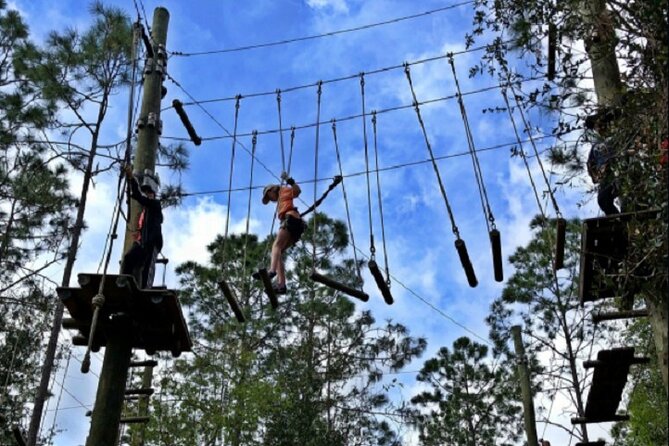
What makes this feel fair is the progression. The course generally starts with easier elements—enough to get you comfortable with the harness and movement—then ramps up as your skills improve. Overhead, you’ll see a mix of obstacles like:
- Cargo nets and net crossings
- Swinging logs
- Various bridges (some fixed, some requiring balance)
- Boards and other movement stations
- Zip lines as a payoff
- Trapeze swing elements
One useful reality check: not every obstacle is always available. Some course elements can be out of service at times, so don’t expect every single person to do every single station in the same way on every visit. The good news is that the park still runs a full set of activities.
Timing, Departure Waves, and Staying With Your Group
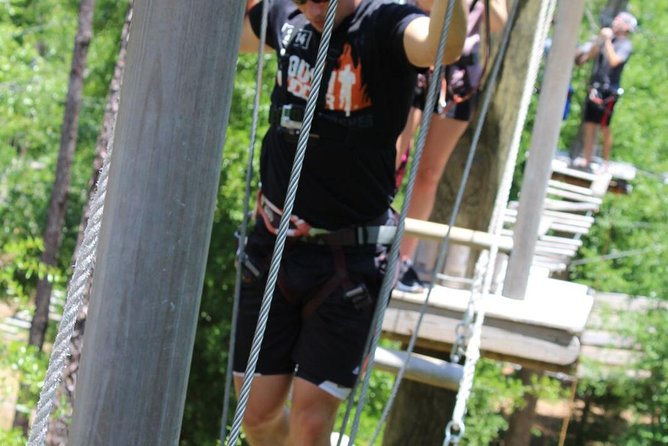
The park runs with a departure schedule that starts at 8:30 am and then goes out roughly every 30 minutes, with the last departure later in the day. Seasonal changes can affect the timing, so you’ll want to verify your specific day’s schedule before you head out.
Even with a planned time, understand this: the climbing flow is self-led once you’re on your course. Staff will teach and monitor, but you’re the one moving at your pace through each level. That’s great for independence, but it can also split groups if some people move faster or decide to stop earlier.
If you’re going as a family or with friends, I’d set expectations before you start. Decide what “done” looks like for each person (finish the red level, try the big zip line, etc.), and plan a meeting spot if you separate for a bit. The park controls safety through harness checks and staff oversight, so expect occasional stops for guidance as you progress to later elements.
Also, the park has a clear rule that you must arrive at your scheduled time. Arrive late and you’ll feel it fast—because once you miss your start window, your day schedule gets messy.
What to Bring: Gloves, Water, and the Shoe Rules That Matter
The experience includes climbing equipment and the demo course. What it does not include is gloves and drinks. That’s a big deal for comfort.
Here’s what I recommend you do:
- Bring water or plan to purchase drinks on-site (the course is a full-body workout)
- Get gloves if you want better grip and less hand fatigue
- Eat before you go, especially with kids or teens—this is active time, not a stroll
Footwear and clothing are not optional details. You must not wear open-toed shoes, loose clothing, or jewelry, and hair must be tied back. These rules protect you around the course equipment and help you avoid snags while climbing.
Also consider weather. This is an outdoor activity that depends on good conditions. If it’s too hot, too wet, or otherwise unsafe, plans can change. In warm months, an early start can be the difference between a fun day and a sweaty slog.
One more practical tip from what people emphasize: bug spray can be worth packing. You’re in a pine-forest setting, and outside time is outside time.
Who Orlando Tree Trek Fits Best (and Who Should Think Twice)
Orlando Tree Trek is designed as a family adventure for ages 7 and up, with a height-based and fit-based system to keep the equipment use safe. If your group includes kids, you’ll want to check height reach requirements closely:
- Children must meet a 4’7 height reach requirement
- Youth must meet a 5’9 height reach requirement
- Adult/Seniors must meet a 5’11 height reach requirement
There’s also a waist fit rule: you must have a 44-inch waist or smaller to participate. That’s a key factor for some teens and adults who are close to the edge.
If you’re wondering whether this is for you:
- If you enjoy active days, puzzles of movement, and outdoors, you’ll likely love it.
- If you struggle with heights but are willing to try, you can still have a great day—because the course starts manageable and you can build confidence as you go.
- If you’re looking for something gentle, this probably isn’t the right match.
One more note: for people who don’t want to climb, there are walking trails below the course so they can follow from the ground. That can help groups stay together socially, even if someone opts out of climbing.
Guide Support Makes the Difference Up There
The staff experience is one of the strongest themes in the feedback. Guides are consistently described as attentive to safety and helpful with technique. Names that stand out in guide praise include Ryan, Josiah, and Nick, and people single out their teaching style—explaining harness use, making first-time climbers comfortable, and staying present without hovering.
That matters because ropes courses are equal parts movement and confidence. Even when you’re physically capable, fear can slow you down. A guide who explains what comes next and how to handle the next obstacle can turn a “panic moment” into just another step.
If you want an extra-smooth first run, ask questions during the demo and early in the course. Don’t wait until you’re stuck at a higher obstacle—get clarity when the course is still easy enough to practice.
The Bottom Line: Is It Worth Booking?
If your Orlando itinerary includes Disney World, this is a great contrast day. You’ll get a real physical challenge, a break from indoors, and a pine-forest setting that feels more authentic than another boxed attraction.
I’d book Orlando Tree Trek Adventure Park if:
- You’re bringing kids 7+ who can follow safety instructions
- You want a day that’s active and rewarding, not just scenic
- You’re comfortable with the idea that you’ll climb, grip, and work your way through levels
I would think twice if:
- You (or someone in your group) can’t meet the height reach or 44-inch waist requirements
- Your goal is low-effort fun
- You expect the whole group to move at exactly the same pace (because the course is self-led once you’re in)
FAQ
How long does Orlando Tree Trek take?
The climbing portion takes about 2–3 hours to complete the entire course, and your overall visit is roughly in that same time range.
What are the age and height requirements?
The minimum age is 7. Height reach requirements are listed as 4’7 for children, 5’9 for youth, and 5’11 for adults/seniors.
Is climbing equipment included?
Yes. Climbing equipment is included, and you also get a demo course.
Do I need gloves or can I bring my own?
Gloves are not included. You’re allowed to bring what you need, but you should plan on having gloves for comfort and grip.
What should I wear?
No open-toed shoes. Avoid loose clothing and jewelry, and tie your hair back.
If someone in my group doesn’t want to climb, can they still come?
Yes. Those who don’t want to participate can follow along on walking trails below the course.