REVIEW · NAIROBI
Mount Kenya Trek
Book on Viator →Operated by Bushtroop Tours and Safaris · Bookable on Viator
Mount Kenya has a way of getting under your skin fast. This 5-day trek from Nairobi up through Sirimon Gate and toward Lenana is built around small-group guiding and real care on the trail, with staff like Michael, Peterson, and Julius Kinuthia highlighted in recent trip experiences. I like that you’re never left guessing, since the pace and choices are guided camp-to-camp, not winged on your own; one key drawback is the physical demand, including an early 3:00 am start on summit day and stony, slippery sections where good footwear matters.
The food is one of the best parts of this trip. I love that you can expect hearty meals, with reports of great vegan meals prepared by chef Steven, plus the calm “we’ve got you” attitude that makes hard days feel manageable. If you prefer short hikes and slow sightseeing, this may feel like too much, but if you’re after real mountain time, it’s a strong fit.
In This Review
- Key things to know before you go
- Why this Mount Kenya route works: Sirimon Gate to Lenana timing
- Price and logistics: what $840 buys you in real trail value
- Day 1: Nairobi to Nanyuki, then Sirimon Gate and Judmier Camp (3,300m)
- Day 2: Old Moses area to Mackinders Valley views, then Shipton Camp (4,200m)
- Day 3: Acclimatization hike to Kami Hut and Hauseberg Lakes
- Day 4: The 3:00 am quarry climb to Lenana, then Mintos Hut to Meru Bandas
- Day 5: 15 km descent, forest clearance, 4×4 back to Chogoria, then Nairobi
- Guides, communication, and the food that keeps you moving
- What to pack (and why waterproof shoes actually matter here)
- Who this trek suits best (and who might want another plan)
- Should you book this Mount Kenya Trek with Bushtroop?
- FAQ
- FAQ
- How long is the Mount Kenya Trek?
- What does the trek cost?
- Does this tour offer pickup?
- Are admission tickets included?
- What fitness level do I need?
- Can I cancel for a full refund?
Key things to know before you go
- Small group size (max 12 travelers) makes the hike feel personal, not rushed.
- Included admission tickets help keep the budget cleaner.
- Camp altitude jump management includes a dedicated acclimatization day.
- Hauseberg Lakes day gives you a rewarding hike without going straight for the top.
- Stony quarry + early summit timing means you should plan for early starts and careful footing.
- Chef-led meals, including vegan options can make a big difference on tough days.
Why this Mount Kenya route works: Sirimon Gate to Lenana timing
This trek is designed like a smart climbing rhythm: you go up in steps, sleep at altitude, and then give your body a reason to adjust. Day 1 starts from Nairobi with an 8:00 am departure and a long drive toward Nanyuki town, then you move into the mountain route via Sirimon Gate at 2,440m. From there, the trail changes character as you climb—forest gives way to heath land—so you’re not just hiking the same view for five days straight.
The big value here is the way the schedule supports acclimatization. After reaching Shipton Camp (4,200m), there’s a whole Day 3 focused on getting your legs and lungs ready rather than forcing a summit attempt too quickly. That’s the difference between a trip that feels like a grind and one that feels like a plan.
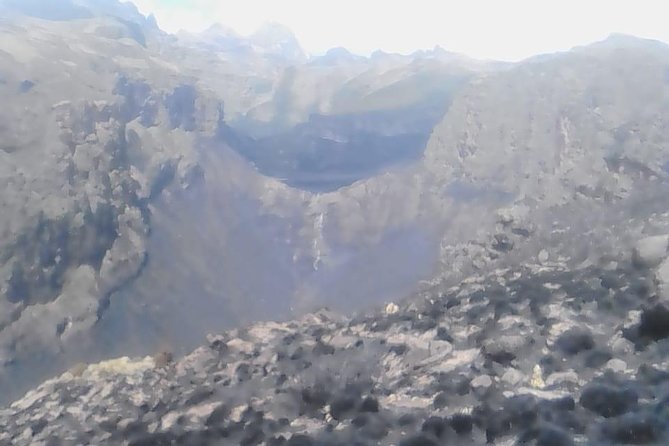
And yes, summit day is early. You leave at 3:00 am for a steep, stony ascent through a quarry-like section toward the lower Hall Tarns, reaching Lenana around 6:30 am and getting the sunrise before descending. If you’re the type who hates alarm clocks, you’ll still survive—just know that the mountain schedule runs on mountain time.
You can also read our reviews of more tours and experiences in Nairobi.
Price and logistics: what $840 buys you in real trail value
At $840 per person for roughly 5 days, the headline cost is one thing, but the value comes from what’s included and how the logistics reduce stress.
You get:
- Pickup offered
- Mobile ticket
- Admission tickets included
- A guided itinerary with meals across camp days
- A small group limit (max 12), which usually means better pacing and less waiting
In at least one trip experience, the overall organization also included hotel in Nairobi and airport transfer as part of the broader plan. That matters because the start and end of mountain treks are often where trips fall apart—lost time, last-minute scrambling, and uncertainty. When that stuff is handled, you can focus on the trail.
The tradeoff is simple: you’re paying for structure. If you want full DIY freedom—your own gear strategy, your own walking pace, your own schedule—this is not that style. But if you want the mountain experience with people watching details for you, it’s a good deal for the service level.
Day 1: Nairobi to Nanyuki, then Sirimon Gate and Judmier Camp (3,300m)
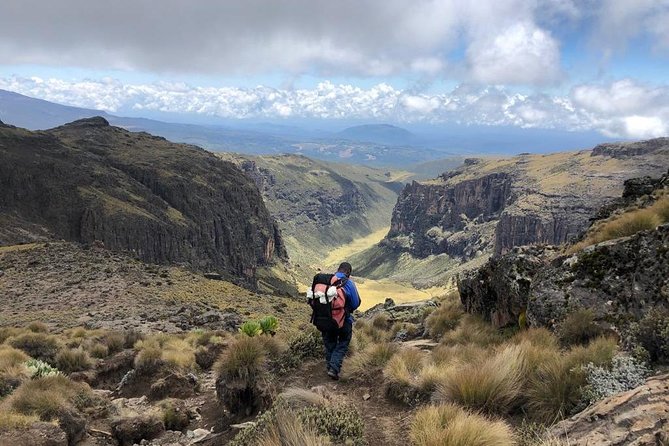
Day 1 is both travel day and mountain day, and it starts strong with an 8:00 am departure from Nairobi. You drive about 4 hours to Nanyuki town for lunch, then continue to Sirimon Gate (about 1 hour) at 2,440m.
After that, the hiking begins. You follow a track that winds uphill through forest, then transitions into heath land after about 3 hours. The route keeps building until you veer right toward Judmier Camp (3,300m) for dinner and overnight.
What I like about Day 1 is the way it eases you into altitude while still feeling like you’re making progress. You’re not immediately dropped into the steepest grind. You’re climbing, but the trail has phases, so your mind stays engaged: forest to heath land is a real change in how the trek feels underfoot and in the air.
Possible consideration: Day 1 still ends at 3,300m. If you arrive tired from travel, you’ll want to keep your pace gentle and let your body settle. On mountain treks, the best first day is the one where you don’t spend extra effort trying to prove something.
Day 2: Old Moses area to Mackinders Valley views, then Shipton Camp (4,200m)
Breakfast starts, then you follow the track uphill and fork left at the junction. About one hour after Old Moses Camp, the trail crosses the Ontulili River. After that, you go right contouring through moorland, crossing the Liki North and continuing uphill toward Mackinders Valley.
This is where the route turns scenic in a practical way: Mackinders Valley offers panoramic views up the valley toward the main peaks. That’s one of those moments where your effort makes sense instantly—your brain gets proof that you’re headed to something big.
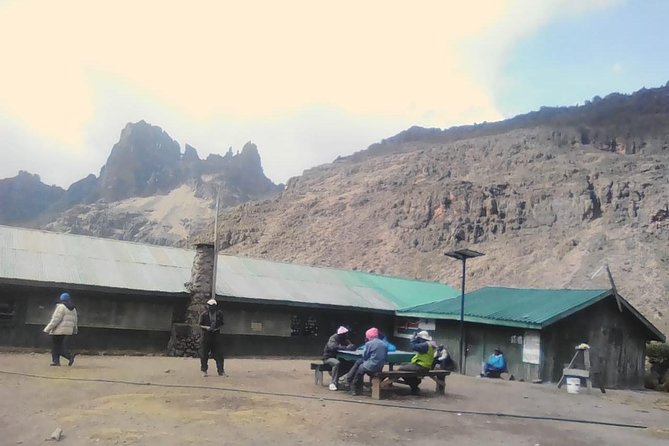
Then you finish the day at Shipton Camp (4,200m) for dinner and overnight. Shipton is high enough that you’ll feel it, but it’s also the staging point where the trek stops pushing and starts preparing.
A drawback to plan for: Day 2 is longer and higher than Day 1. Even if you feel fine at the start, altitude can sneak in late in the walk. Keep an eye on your breathing, take breaks before you feel desperate, and let your guide control the pacing.
Day 3: Acclimatization hike to Kami Hut and Hauseberg Lakes
This is the day that makes the whole trek safer and more enjoyable. You spend Day 3 acclimatizing, walking to Kami Hut, then down to Hauseberg Lakes, including Hauseberg Tarn and Nanyuki Tarn. After soaking in that high-altitude water-and-sky contrast, you walk back to Shipton Camp for dinner and overnight.
I like acclimatization days like this because they serve two purposes at once. First, you’re getting your body used to the altitude through movement, not sitting around doing nothing. Second, you’re still hiking, so the day doesn’t feel like dead time.
You should treat this as a “work day, not a race.” Even though you’ll cover distance, the goal is acclimatization, not bragging rights. If you go too hard, you’ll pay for it later—especially with summit morning looming.
Day 4: The 3:00 am quarry climb to Lenana, then Mintos Hut to Meru Bandas
Day 4 starts with the hardest kind of sentence: leave at 3:00 am. The climb is described as a steep, stony quarry that cuts through a cliff, clearing out visible sections toward the lower Hall Tarns. This is the part of the trek where good footing matters as much as stamina.
You reach Lenana around 6:30 am, then enjoy sunrise. After that, you descend to Mintos Hut for breakfast (around 2 hours), then continue further down to Mount Meru Bandas (2,950m) for dinner and overnight.
What makes this day so memorable is the sequence. You’re climbing in the dark and cold-feeling hours, then the whole mood flips with sunrise—light spills over the peaks, and suddenly the effort feels worth it. Then you shift into recovery mode with breakfast at Mintos, which helps you reset for the continued descent.
Practical consideration: stony quarry sections can be rough on knees and ankles, especially if you rush. Let your guide set the rhythm, and consider trekking poles if you have them. Even if you feel strong at the start, save your form for the downhill later.
Day 5: 15 km descent, forest clearance, 4×4 back to Chogoria, then Nairobi
Day 5 is a long exhale. You descend about 2 hours and cover roughly 15 km down to the forest clearance where you catch a 4×4 transfer vehicle to Chogoria Village. From Chogoria, you connect with your transfer vehicle back to Nairobi.
This ending matters more than people expect. When you’re coming down, the body is tired but the weather and terrain can still be unpredictable. Using a 4×4 from the forest clearance helps keep the finale from turning into another hours-long grind.
You also get breakfast and lunch on the final day, which is a nice buffer after a tough descent day.
The big thing to remember: “descent” doesn’t mean “easy.” Your legs still work hard controlling your steps. Expect it to feel like a workout even when your day starts calmer than Day 4.
Guides, communication, and the food that keeps you moving
The strongest theme across trip experiences is the people. Guides are described as dedicated, knowledgeable, hospitable, and friendly, with multiple mentions of Michael and Peterson. Another name that came up is Julius Kinuthia, praised for organization and for sharing learning about wildlife and Kenya as a whole.
That’s not just nice to hear. On a trek like Mount Kenya, a good guide changes your day in small ways: when you pause, how you handle altitude discomfort, what pace you keep, and how confidently you move through route turns and stony sections. When guides are attentive, the trek feels smoother and less scary.
Then there’s the food. One set of experiences calls out great vegan meals and explicitly mentions chef Steven. Meal quality may sound like a luxury when you’re planning logistics, but on a multi-day climb it affects your energy, your mood, and your willingness to keep going on tough hours.
Communication also seems solid, including efficiency and clear coordination, plus reports that COVID protocols were observed. You should still plan to follow current health guidance on your own end, but it’s a reassuring sign that the trip is run with care.
What to pack (and why waterproof shoes actually matter here)
The trek clearly involves forest-to-heath changes, moorland, river crossings, and at least some wetter stretches. One trip note specifically points out partly swampy terrain and advises waterproof shoes. That’s a simple, practical tip.
Bring:
- Waterproof or water-resistant trekking shoes with solid grip
- Layers for early-morning cold (especially with the 3:00 am start)
- Rain protection for wet sections and misty weather
- A daypack and the basics you’ll need between meal stops
Also, think about footwear for stony climbs and descents. If your shoes are slippery on rocks, you’ll feel it most on Day 4’s quarry-like section and again on Day 5’s long downhill.
If you’re unsure about your gear, ask your operator ahead of time what they recommend for wet and rocky conditions. You’ll hike safer and enjoy more.
Who this trek suits best (and who might want another plan)
You’re told to have moderate physical fitness, and the schedule supports that. The trek is not described as gentle. It includes long hiking days, high camps, and early mornings, so you’ll want to feel comfortable walking uphill for multiple hours and handling steep, uneven ground.
This is a great fit if you:
- Want a guided Mount Kenya route with camp organization
- Like the rhythm of acclimatization and structured progression
- Care about food quality and supportive guidance
- Prefer a small group experience (max 12)
It might be less ideal if you:
- Want a relaxed, short-day experience
- Have a knee/ankle condition that struggles with steep rocky descents
- Hate dawn starts and prefer later wake times
If you’re willing to put in the effort and you enjoy being outdoors for real, you’ll probably come away with a stronger sense of the mountain—not just photos.
Should you book this Mount Kenya Trek with Bushtroop?
I’d book it if you want the mountain done right: guided pacing, a clear route plan, included admission, and support that shows up in the details—like competent guiding and meals that keep you fueled. The best sign is the repeat praise for the guide team (names like Michael and Peterson), plus chef Steven getting called out for vegan meals.
I’d pause before booking if you know you dislike very early mornings, or if you expect a walk that’s more light stroll than serious hike. Day 4 is an attention-test day, and Day 5 finishes with a long descent—both demand solid footing and patience.
If you’re ready for a real 5-day climb experience with people who take care of you, this trek is a smart choice.
FAQ
FAQ
How long is the Mount Kenya Trek?
The duration is listed as 5 days (approx.).
What does the trek cost?
The price is $840.00 per person.
Does this tour offer pickup?
Yes, pickup is offered.
Are admission tickets included?
Yes, admission tickets are included.
What fitness level do I need?
The tour states that travelers should have a moderate physical fitness level.
Can I cancel for a full refund?
Yes, you can cancel for free up to 24 hours in advance for a full refund. If you cancel less than 24 hours before the experience’s start time, the amount paid will not be refunded.