REVIEW · ANCHORAGE
Matanuska Glacier Ice Fall Trek
Book on Viator →Operated by Planet Earth Adventures, LLC · Bookable on Viator
Ice on your boots, answers in your guide. This Matanuska Glacier Ice Fall Trek turns a long day in Anchorage into a hands-on walk on real glacier ice, with instruction built in for what you’re seeing and why it matters. You’ll start early, get geared up, and spend real time close to glacier features like crevasses, seracs, and ice formations.
I especially like two things about this tour. First, the 3-hour trek focuses on walking on the glacier itself, not just stopping for photos and moving on. Second, the included safety gear and pickup/drop-off cut down on hassle: hotel pickup and drop-off, crampons, a helmet, plus light snacks and bottled water.
One possible drawback: this is a long morning through afternoon stretch and there’s no lunch stop. You’ll get light snacks and water, so plan to eat beforehand (and pack realistic expectations).
In This Review
- Key things to know before you go
- From Anchorage to a glacier walk: why the schedule works
- The real highlight: your three-hour trek on Matanuska Glacier
- What you’ll see up close: crevasses, seracs, and blue ice
- Guides and the MICA connection: what makes the experience feel smooth
- Gear, snacks, and what to plan for a 7-hour day
- Price and value: what $299 gets you, and what it doesn’t
- Physical fitness and who this glacier walk suits best
- The decision: should you book the Matanuska Glacier Ice Fall Trek?
- FAQ
- How long is the glacier trek?
- What time and where do we meet in Anchorage?
- Is hotel pickup included?
- What equipment is provided for walking on ice?
- Is lunch included?
- What is the minimum age to join the trek?
- What happens if the weather is poor?
- Final call: book or skip
Key things to know before you go
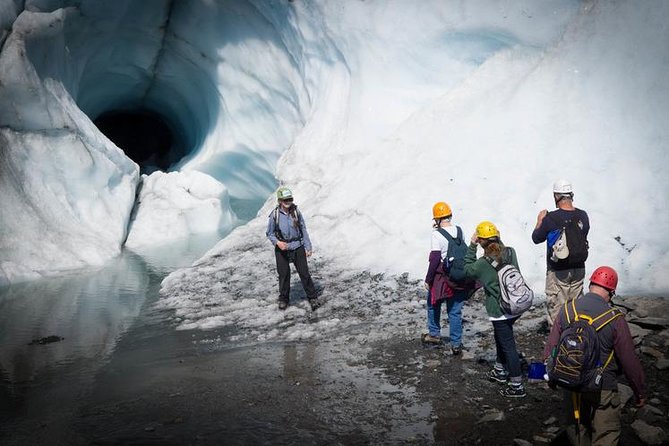
- A real guided walk on glacier ice: about three hours on the glacier with route choices based on conditions and your group’s abilities.
- Safety gear is part of the price: crampons, helmet, and optional trekking poles.
- Close-up glacier features: crevasses, seracs, and striking blue ice formations you can view up close.
- Small group feel: maximum 11 travelers, which usually helps the guide keep you moving and informed.
- Early start from downtown Anchorage: meeting at the William A. Egan Civic & Convention Center at 7:00 am.
From Anchorage to a glacier walk: why the schedule works
This tour is built for people who want more than a distant view. You start at 7:00 am at the William A. Egan Civic & Convention Center (555 W 5th Ave, Anchorage). That early timing matters in glacier country because you’ll want stable conditions and daylight for both the trek and the photos.
A big reason I like the timing is that the day is structured, but not rushed in the middle. The walking block is roughly three hours, so you’re not “in and out” like a quick stop. You’ll have enough time for the guided instruction, the careful footing on ice, and the moments when you slow down and really look at what’s in front of you.
The group size caps at 11 travelers, which changes the vibe. Smaller groups tend to mean more attention from the guide and a better chance of staying together while the route shifts based on conditions.
You can also read our reviews of more tours and experiences in Anchorage.
The real highlight: your three-hour trek on Matanuska Glacier
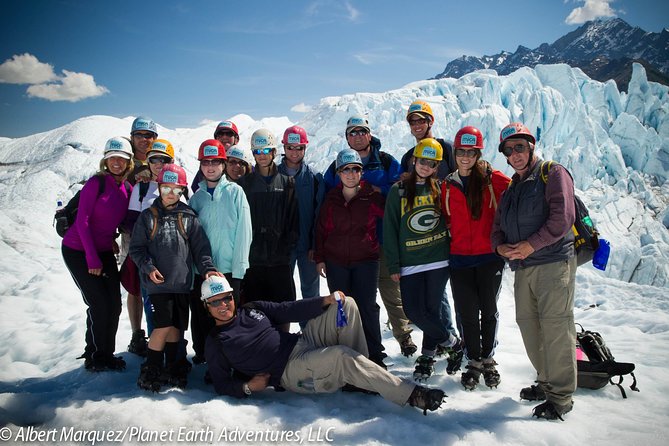
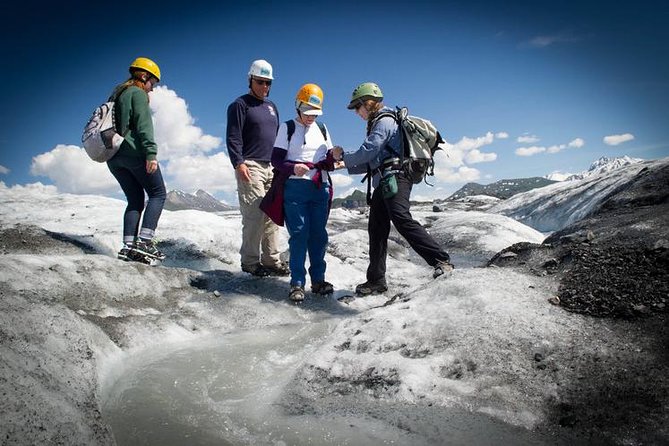
Your main moment is the three-hour glacier trek. You’ll strap on crampons and walk on the ice with your guide instructing you along the way. This is not just a “stand and stare” visit; you’re moving across a surface that’s constantly changing.
That constant change is important to understand before you arrive. The tour route depends on:
- glacier conditions that day
- what the guide thinks is safest
- the abilities of the group
So even if you’ve seen photos online, your exact path may differ. That’s not a bad thing—it’s part of what makes this feel authentic rather than scripted.
You can also expect the kind of terrain where small mistakes add up. Your crampons help, but you’ll still want to pay attention and follow instructions. If you’re the type who hates uncertainty, this might feel different than a typical hiking tour. If you’re curious and ready to learn, it’s a fun way to earn your photos: you’re earning them by doing the walk.
What you’ll see up close: crevasses, seracs, and blue ice
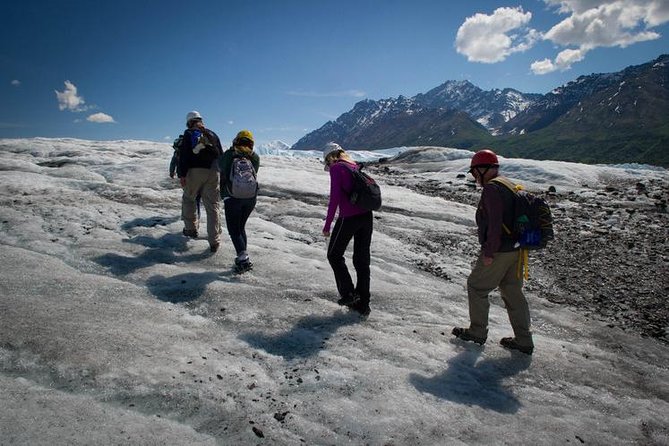
This tour is designed around glacier features you can actually get near. On the walk, you’ll see:
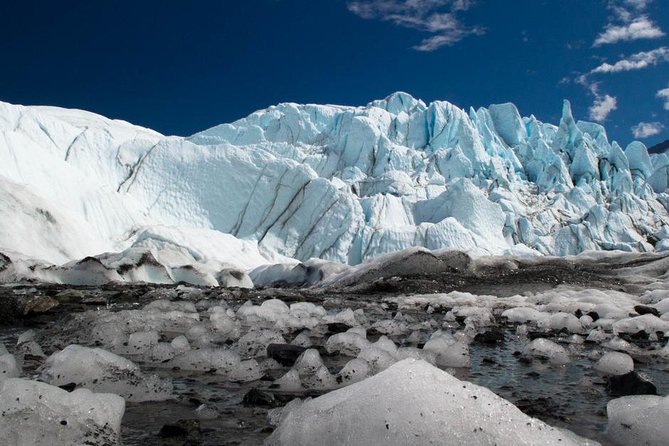
- crevasses (deep cracks in the ice)
- seracs (blocks of ice that break into jagged towers or walls)
- ice formations with vivid color and texture
The most dramatic moments tend to come from how ice reflects light. Blue ice is often the result of denser ice and how sunlight penetrates and is absorbed/reflected through the glacier. You’ll also notice that glacier “surfaces” rarely look like smooth snowfields. Up close, they show layers, fractures, and shapes that feel almost sculpted.
From a practical point of view, the guide’s job is to help you see patterns without turning it into a science lecture you can’t enjoy. You’ll come away with a deeper knowledge of glaciers and how they form, but you’ll learn it by looking at real features as you walk toward and around them.
And for photography: you’re not limited to one angle. As the route changes, you’ll have chances to view ice formations from different positions. Just remember that glaciers don’t hold still. If the day’s conditions favor one area of the icefall features, you’ll be redirected there instead of forcing a fixed viewpoint.
Guides and the MICA connection: what makes the experience feel smooth
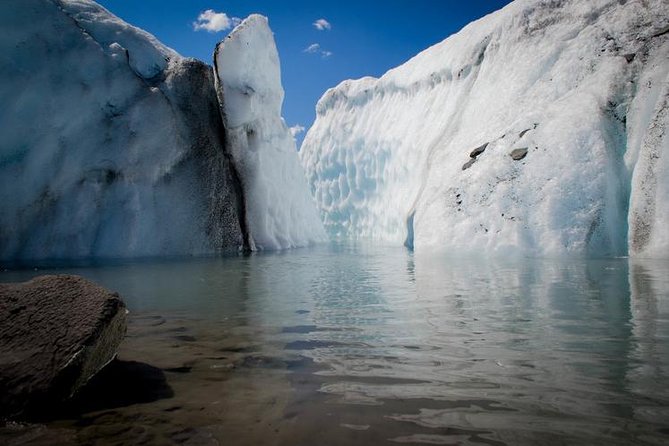
This trek is operated in partnership with MICA guides, and the switch between teams has been described as well coordinated. In other words, you’re not left wondering who’s leading what or when the handoff happens—you get moved through the day with people who know the glacier setting.
I’ve seen specific guide names come up in feedback: Morgan has been praised for being professional and providing strong glacier knowledge, while Arthur and Albert have been highlighted for their expertise and for being effective with both guiding and driving logistics earlier in the day. Even if you don’t get those exact guides, the point is consistent: the tour experience depends heavily on the person teaching you, and the people involved are meant to deliver that.
So what should you look for when you’re on the ice? Watch how the guide explains safe movement and route logic. If you ask questions, a good guide will connect what you see—cracks, blocks, ice colors—to the bigger idea of how glaciers behave over time.
Gear, snacks, and what to plan for a 7-hour day
The good news: your essential glacier gear is handled for you. Included in the price are:
- crampons
- helmet
- trekking pole (optional)
- light snacks and bottled water
- professional guide
- hotel pickup and drop-off (airport drop-off also available at the end)
That’s valuable because winter trekking gear can be expensive to buy and annoying to haul around. Here, you’re paying for the right equipment and instruction together.
The tradeoff is what’s not included. The tour does not stop for lunch, and food and drinks beyond the light snacks/water are on you. Plan around that. If you show up hungry, the glacier walk will feel harder than it needs to, especially with cold and exertion.
Also think about how the tour says it operates in most weather conditions, as long as you dress appropriately. That means you should expect real cold and potentially damp conditions. Bring layers you can control (zip, vent, remove if needed), and plan for your hands and feet to be your comfort bottleneck.
One more practical note: if you’re staying somewhere that isn’t an obvious hotel pickup, private-home pickup isn’t included. You’ll need to contact the operator for the nearest pickup location. If that applies to you, confirm before the morning of the tour so you don’t end up sprinting across town while the van waits.
Price and value: what $299 gets you, and what it doesn’t
At $299 per person for an approximately 7-hour day, this isn’t a budget “experience.” But it’s also not just paying for a view. You’re paying for:
- guided glacier instruction during the walk
- safety equipment (crampons and helmet)
- controlled group logistics and transfers from downtown Anchorage
- light snacks and bottled water
When you compare glacier tours, value usually comes down to three questions:
1) Do you walk on the glacier or just observe?
2) Is the safety gear included?
3) Does the guide explain what you’re seeing, or are you just along for the ride?
This tour is built around 1 and 2, and it leans into 3. The walking time is substantial, and the included gear removes the guesswork.
What it doesn’t include—food/lunch and extra drinks—matters less if you plan ahead. If you treat it like a full-day meal plan, you’ll be disappointed. If you arrive fed and snack-ready, the price starts to feel fair for what you’re actually doing.
Physical fitness and who this glacier walk suits best
The tour calls for moderate physical fitness. Translation: you should be comfortable with steady walking and being on uneven icy ground for extended periods. You don’t need to be a mountaineer, but you do need to be willing to focus on footing and follow instructions.
This is also a great fit if you want to learn while you’re moving. If your idea of Alaska is “I want to understand what I’m looking at,” the guide-led instruction is a major part of the value.
It’s less ideal if:
- you’re looking for a low-effort stroll
- you’re uncomfortable with cold outdoor conditions
- you dislike the idea that the exact route depends on conditions and group abilities
There are also age limits. Minimum age for the standard trek is 10 years old. Children can’t be carried in arms, backpacks, or strollers. For younger kids, you can book a private trek starting at age 8, but you’ll need to contact the operator for details.
The decision: should you book the Matanuska Glacier Ice Fall Trek?
If you want a guided, hands-on Anchorage glacier day where you walk on the ice and learn glacier features up close, I’d book it. The included gear, the real walking time, and the small group size make it feel like a true activity, not a drive-by photo stop.
Book it especially if you:
- want crampon walking experience with instruction
- care about seeing crevasses and seracs up close
- prefer fewer people and more guide attention (max 11)
I’d think twice if you:
- need guaranteed lunch (there isn’t one)
- hate early starts (7:00 am pickup/meeting starts your day)
- can’t handle a cold-weather outdoor experience
FAQ
How long is the glacier trek?
The main trek on Matanuska Glacier is about three hours.
What time and where do we meet in Anchorage?
The tour starts at 7:00 am at the William A. Egan Civic & Convention Center, 555 W 5th Ave, Anchorage, AK 99501.
Is hotel pickup included?
Yes. Hotel pickup and drop-off are included, and airport drop-off is available at the end of the tour. Pickup from private homes, apartments, or B&Bs isn’t included; you’ll need to contact the operator for the nearest pickup location.
What equipment is provided for walking on ice?
You’ll receive crampons and a helmet. A trekking pole is included but marked optional.
Is lunch included?
No. Food and drinks aren’t included, and the tour does not stop for lunch. You’ll have light snacks and bottled water.
What is the minimum age to join the trek?
The minimum age is 10 for the standard trek. A private trek is available for children under 10 starting at age 8.
What happens if the weather is poor?
The tour operates in most weather conditions, but if it’s canceled due to poor weather, you’ll be offered an alternative date or a full refund.
Final call: book or skip
If you’re ready for a guided crampon walk and you want real glacier features up close, this is a smart Anchorage day. Plan for no lunch, dress for cold outdoor conditions, and you’ll set yourself up for a glacier experience that feels earned and educational.