REVIEW · SIEM REAP
Kbal Spean Trekking Tour with Banteay Srei & Landmine Museum
Book on GetYourGuide →Operated by About Cambodia Travel and Tours · Bookable on GetYourGuide
A day in Siem Reap that doesn’t center on Angkor ruins? That’s the draw of this trek. You’ll hike up to Kbal Spean to see the famous riverbed carvings (the River of a Thousand Lingas), then pair it with the pink-sandstone temples of Banteay Samre and Banteay Srei, plus a visit to the Cambodia Landmine Museum.
I like the balance here: nature + temple art + a real-world history stop. I also like that you’re not just dropped at places—your English-speaking licensed guide provides guided touring and explanations. The one caution: this trip includes hiking and is not suitable for wheelchair users, so you’ll want to be comfortable walking on uneven paths.
You can think of it as an 8-hour arc that moves from forest trail to intricate carvings, then into pink-stone details, and finally into something heavier. If you’re the type who likes your Cambodia day to feel varied instead of repetitive, this fits well.
In This Review
- Key points to know before you go
- Why the Kbal Spean trek feels like a real change of pace
- Your 8-hour route: how the day flows from pickup to return
- Banteay Samre: your first hit of temple detail (and an easy photo moment)
- Kbal Spean: the riverbed carvings hike and why the timing matters
- Banteay Srei’s pink sandstone: where the details reward close looking
- Cambodia Landmine Museum: a heavy stop that makes the day human
- Local village time: a small taste of everyday Cambodia
- Price and value: what the $35 covers, and what you must budget extra
- Who should book this trek (and who should rethink it)
- Practical tips to make the day smoother
- Final call: should you book the Kbal Spean + Banteay Srei + Landmine Museum day?
- FAQ
- How long is the Kbal Spean trekking tour?
- Is the guide available in English?
- What’s included in the $35 per person price?
- Do I need an Angkor entrance ticket?
- How much is the Landmine Museum ticket?
- Is this tour private or shared?
- Is there free cancellation?
- Is the tour wheelchair accessible?
Key points to know before you go
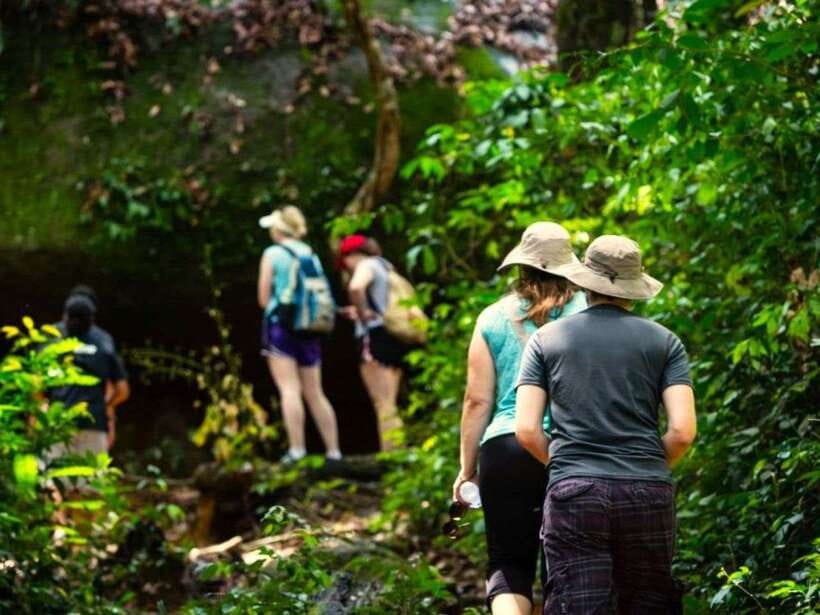
- Kbal Spean’s riverbed carvings: You’re walking to the River of a Thousand Lingas, not just looking at ruins from a bus window.
- Pink sandstone temple art time: You’ll get focused guided visits at Banteay Samre and Banteay Srei, not rushed photo ops only.
- A guided history stop at the Landmine Museum: Expect a sober look at Cambodia’s past, guided through the visit.
- Hotel pickup and air-con transfers: You start and end with pickup at your hotel lobby and ride in a luxury vehicle.
- Small group or private format: Choose private if you want quieter pacing during the hike and temple stops.
Why the Kbal Spean trek feels like a real change of pace
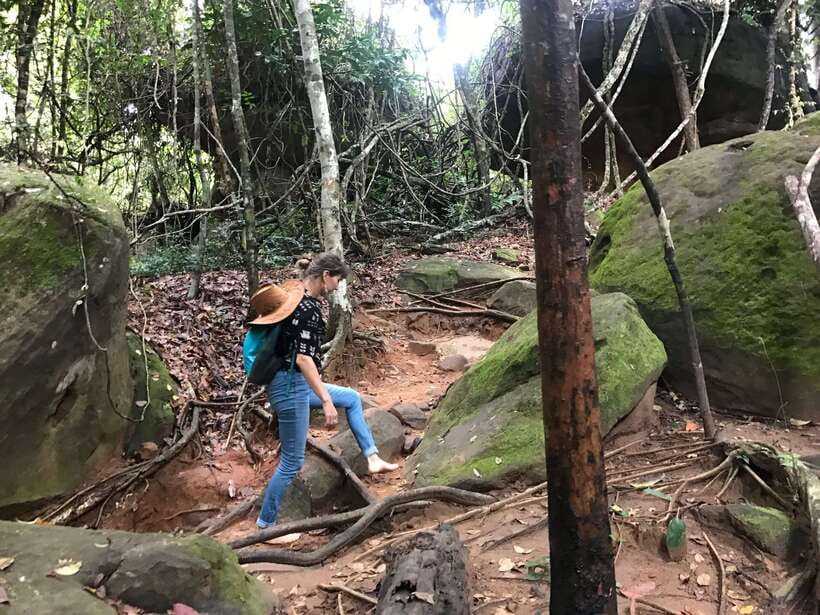
Most Siem Reap days revolve around temple complexes with big gates and long lines. This one gives you something different: you’re heading away from the main Angkor temple circuit and into a mountain trek that culminates in carvings on the riverbed itself.
The Kbal Spean highlight is specific for a reason. The site is known as the River of 1000 Lingas, and what makes it interesting is the way the carvings relate to nature—water, rock, and carving all part of the same idea. Even if you’re not a religion-history specialist, you’ll probably notice how carefully the stonework is shaped and placed.
One more plus: the trek isn’t described as a single straight line with no personality. It includes time for wildlife viewing and you’ll pass through lush forest areas. That means the day can feel alive, not just scheduled.
You can also read our reviews of more tours and experiences in Siem Reap.
Your 8-hour route: how the day flows from pickup to return
This tour runs about 8 hours, starting with pickup from your hotel in Krong Siem Reap. You meet your guide in the hotel lobby, then transfer to the day’s first stops by air-conditioned vehicle.
A key detail for planning: the visit lengths are built around short temple windows and a longer hiking block. You’ll spend around 40 minutes at Banteay Samre, then about 2.5 hours at Kbal Spean. Banteay Srei and the Landmine Museum each get about 1 hour, before you return to your hotel.
That pacing matters. It gives you enough time to actually walk and look at what you came for, without turning the day into one long grind. But it’s still compact enough that you’ll stay in “tour mode” from pickup to drop-off.
If you’re the kind of traveler who likes a plan but also wants breathing space, this format tends to work well—especially in a private or small group setup.
Banteay Samre: your first hit of temple detail (and an easy photo moment)
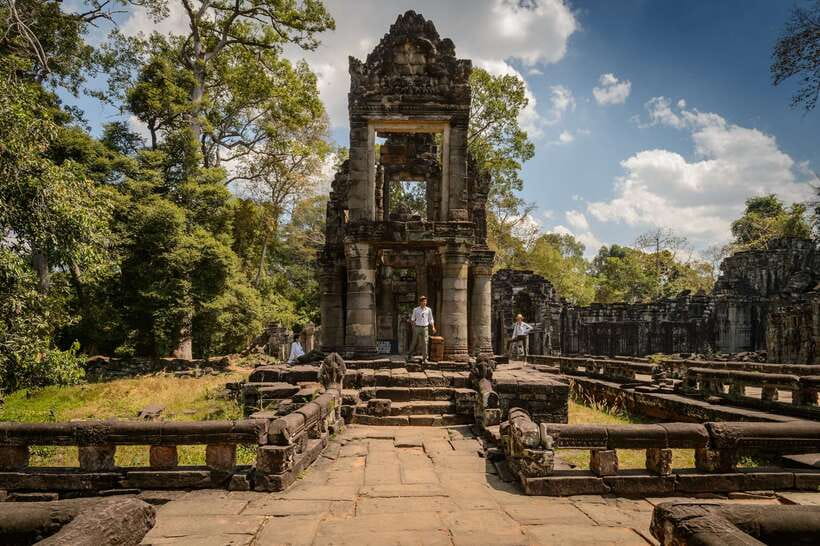
The day starts with Banteay Samre, where you’ll have photo stops, a guided visit, sightseeing, and a short walk with scenic views on the way. The time on site is listed as about 40 minutes.
This stop works as a warm-up in two ways. First, it’s one of the temples that people often pair with Banteay Srei, and it helps you get oriented in style before you move into the pink-sandstone showpiece. Second, the included walking and guided touring means you’re not just taking pictures from the outside.
In practical terms, use this time to get your bearings. If you’re curious about what you’re seeing—carvings, architectural details, and layout—ask your guide questions here. The explanations you get at the next stop will land better if your brain already has a framework.
Kbal Spean: the riverbed carvings hike and why the timing matters
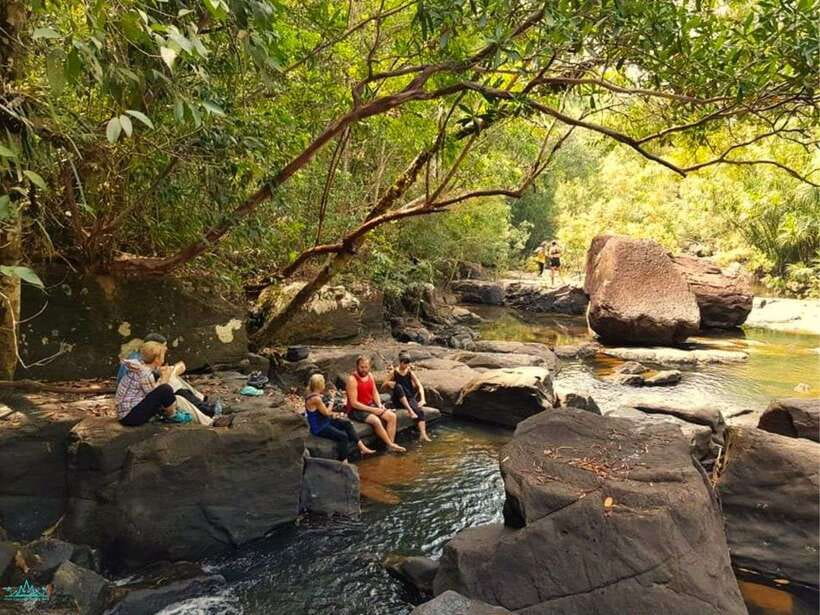
Kbal Spean is the centerpiece, and you’ll have about 2.5 hours there. That includes a photo stop, guided tour, sightseeing, and hiking, with built-in wildlife viewing time.
Here’s what makes this part feel special: you’re moving from trail into a specific destination tied to a famous theme—the River of a Thousand Lingas. The carvings are what you’re coming for, but the experience isn’t only about the destination. The trek through forest adds contrast: shade, sounds, and the sense of getting further from the main tourist circuit.
What to watch for on the ground: the path can require steady footing. Since the tour is explicitly not wheelchair accessible, it’s a good sign to plan for uneven terrain and a real walking component. Wear shoes you trust. If your feet are happy, you’ll enjoy the carvings more.
Also, bring your camera mindset. This isn’t only about one view. The guided visit and photo stops suggest you’ll take in multiple angles of the riverbed carving area and related surroundings. If you go into it expecting a quick look, you’ll miss the point. Give yourself time to look slowly.
Wildlife viewing is included, but you should treat it as a possibility rather than a guarantee. The forest setting creates the chance, and that’s part of what you’re paying for.
Banteay Srei’s pink sandstone: where the details reward close looking
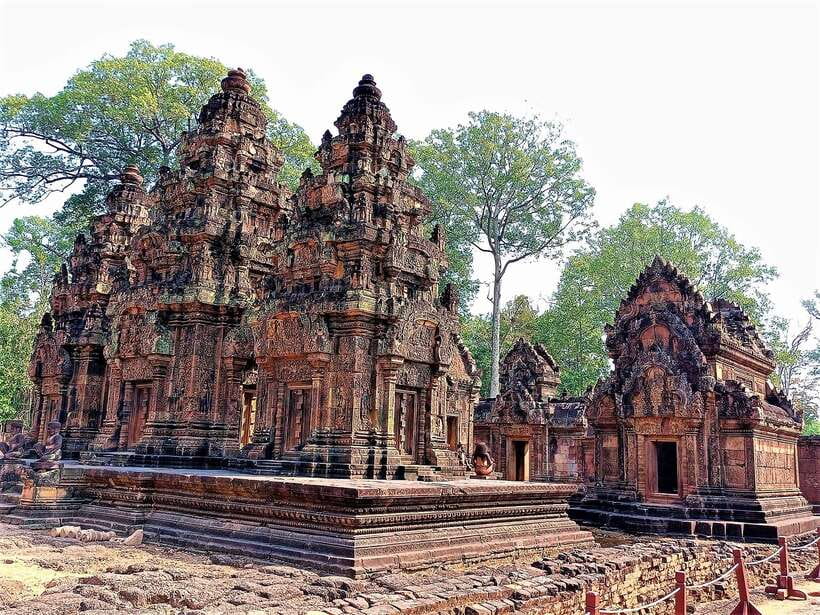
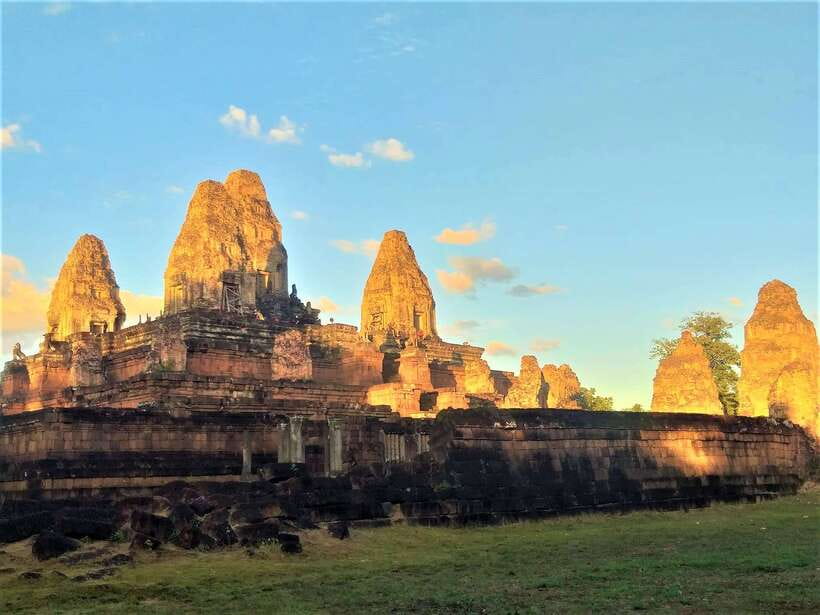
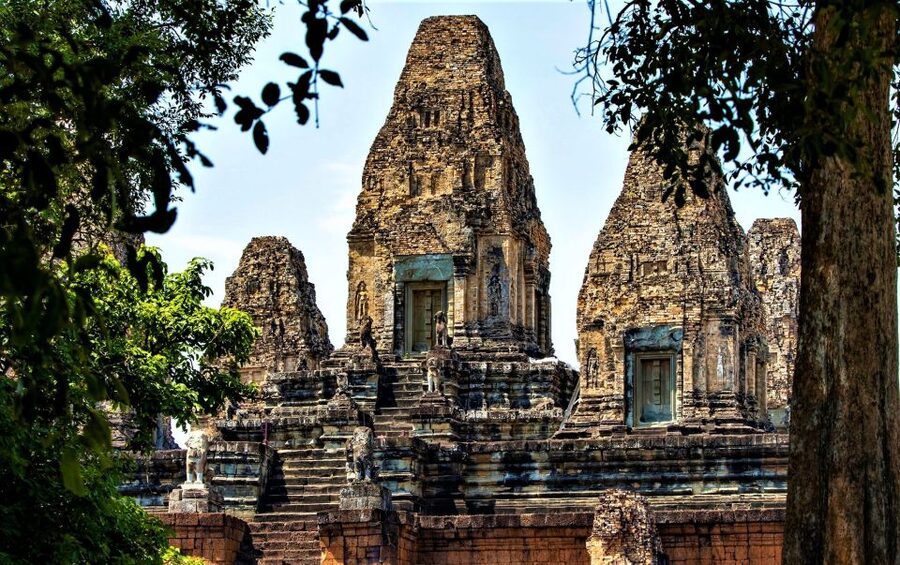
After Kbal Spean, you’ll head to Banteay Srei. You’re scheduled for about 1 hour, with photo stops, guided tour, sightseeing, and walking/scenic viewing.
Banteay Srei is known for its pink sandstone, and the reason that matters is texture and detail. When the stone is this distinctive, carvings and bas-reliefs can look sharper and more intentional. From a visitor’s point of view, that means your viewing doesn’t need to be rushed. You’ll likely find yourself stepping closer to see how elements are cut and layered.
The guided portion is important here. Temple art can feel like decoration if you don’t know what you’re looking at. With a licensed English-speaking guide, you can turn what might have been “pretty stone” into something you actually understand—symbols, layout ideas, and what parts are meant to be where.
One practical tip: Banteay Srei’s short time window is a gift and a constraint. Use it to focus on a few key sections rather than sprinting across everything. If you linger where the carving work is strongest, you’ll get more satisfaction than if you try to see it all.
Cambodia Landmine Museum: a heavy stop that makes the day human
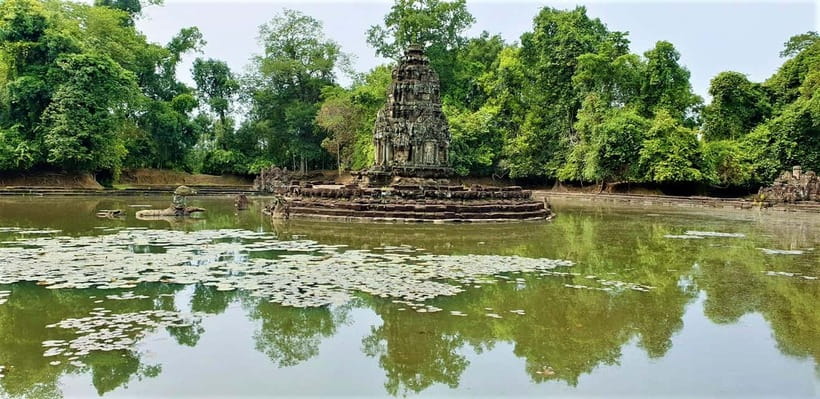
The Cambodia Landmine Museum visit is about 1 hour, and it includes photo stop time, a guided visit, sightseeing, and walking/scenic viewing.
This is the emotional pivot of the tour. The museum is there to give insight into Cambodia’s poignant history, and that tone is different from the temple and forest stops. You’ll be moving from beautiful carvings and pink stone into something that forces perspective.
A good guide makes a big difference on stops like this. In this case, your guide is described as knowledgeable, and you’ll want that. Ask questions. Listen closely. This isn’t a box-checking stop; it’s a context-building one.
Practical advice: keep your phone powered and charged, but don’t rely on photos for meaning. If you’re the type who processes information best by walking and reading, this visit fits that style. The included hour is long enough to take things in without feeling trapped.
Local village time: a small taste of everyday Cambodia
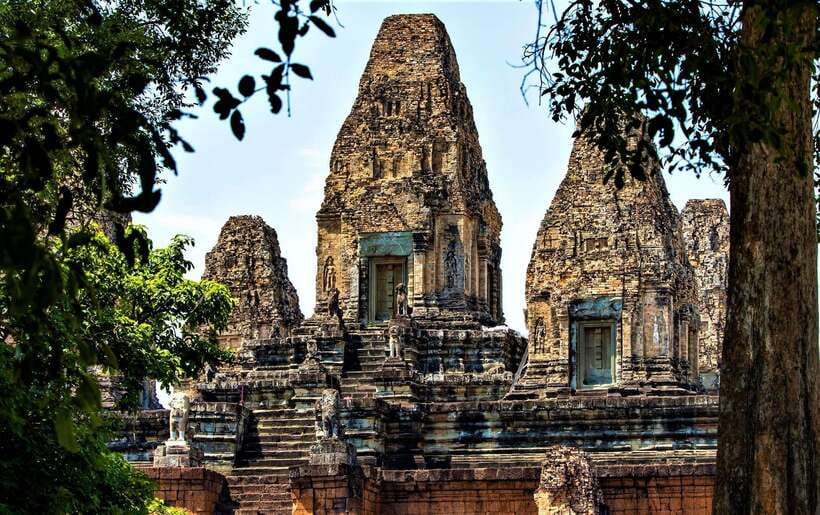
Along the way, the highlights mention a visit to Local Viage (local village). The itinerary details don’t give a specific duration for this part, but it’s clearly intended to add a lived-in feeling beyond monuments.
This is worth treating as a “small look,” not a cultural performance. If the stop is more brief than you expect, it can still be useful. It helps you see how the places you’re visiting connect to normal life nearby.
If you want to be a respectful visitor, keep your questions thoughtful and avoid turning people or routines into a spectacle. Even when the time is short, kindness and patience make the biggest difference.
Price and value: what the $35 covers, and what you must budget extra
The listed price is $35 per person for an 8-hour day with hotel pickup/drop-off, an air-conditioned vehicle, an English-speaking licensed tour guide, water, and fresh tissue for the trip.
That’s a fair value baseline because you’re paying for planning and execution: pickup logistics, private/small-group guiding, and the transport between multiple sites. A lot of tours that look similar online don’t include the same level of guidance support.
Now add the costs you must plan for separately:
- Angkor entrance ticket: $37/person (stated as covering the sightseeing sites in this tour)
- Landmine Museum ticket: $5/ticket
- Tipping for the guide and driver
So your likely total before tips is $35 + $37 + $5 = $77 per person. That number matters less than what you get for it: you’re combining a mountain trek with temple stops and a museum visit in a single day, with guided support and private transport.
If you’re traveling with a partner or small group, private or small-group options can make the day feel more personal without turning it into a full-day ordeal.
Who should book this trek (and who should rethink it)
This tour fits best if you want variety and guided context. It’s ideal for people who:
- like a walk/hike day rather than only sitting on a bus
- want to see the River of a Thousand Lingas carvings and not just hear about them
- care about more than temples and want historical context through the Landmine Museum
- appreciate a knowledgeable English guide who can explain what you’re seeing
It’s also a good option if you’ve already done the main Angkor highlights and you’re looking for something different within Siem Reap Province.
Who might rethink it:
- If you have mobility challenges, the tour is not suitable for wheelchair users, and the hiking component likely won’t work well for anyone who can’t manage uneven terrain.
- If you hate any form of walking, the Kbal Spean hike and additional temple walks could feel like too much.
Practical tips to make the day smoother
A few things to prepare based on how the tour is structured:
- Wear sturdy shoes for hiking and temple walking. This is the biggest comfort factor.
- Bring sun protection. You’ll spend time outdoors on both the trek and temple stops.
- Have a question list ready for your guide. The Landmine Museum and temple carvings are better with explanation than with guessing.
- If you’re booking a private version, use it to set a calmer pace at Kbal Spean. The extra flexibility helps when you want time to look.
Also, since you’ll be paying separate tickets (Angkor entrance and Landmine Museum), plan ahead so the day stays smooth.
Final call: should you book the Kbal Spean + Banteay Srei + Landmine Museum day?
I think you should book this tour if you want a Siem Reap day that connects three very different sides of the country: forest and riverbed carvings at Kbal Spean, detailed pink-sandstone temple viewing at Banteay Srei and Banteay Samre, and a guided visit that gives meaning through the Landmine Museum.
The main reason to skip is simple: the hiking component and lack of wheelchair accessibility. If you’re comfortable walking and you like your sightseeing with real context, this is strong value for an all-in-one day.
FAQ
How long is the Kbal Spean trekking tour?
The duration is 8 hours.
Is the guide available in English?
Yes, the tour includes a live English-speaking tour guide.
What’s included in the $35 per person price?
It includes hotel pickup and drop-off, a licensed English guide, private transfer by air-conditioned vehicle, water and fresh tissue, and services charge and current government VAT.
Do I need an Angkor entrance ticket?
Yes. You need an Angkor entrance ticket for $37 per person for the sightseeing sites included on this tour.
How much is the Landmine Museum ticket?
The Landmine Museum ticket is $5 per ticket, and it is not included in the $35 price.
Is this tour private or shared?
You can choose private or small groups.
Is there free cancellation?
Yes. You can cancel up to 24 hours in advance for a full refund.
Is the tour wheelchair accessible?
No. The tour is not suitable for wheelchair users.